Polymarket Faces Ban In Indonesia Amid Growing Global Crackdown

bitcoinist2026-05-26 tarihinde yayınlandı2026-05-26 tarihinde güncellendi

Özet

Indonesia has blocked access to the prediction market platform Polymarket, joining a growing global regulatory crackdown. The ban was enacted after a widely shared bet on the premature end of President Prabowo Subianto's term drew attention. Authorities declared that platforms facilitating real-money wagers on events, even using crypto or blockchain, constitute illegal gambling. The government is also targeting social media accounts promoting such services and warning the public against participation. This move aligns with actions taken by other jurisdictions. Several countries, including Taiwan, Thailand, China, India, Singapore, Colombia, and Argentina, have previously restricted or blocked Polymarket, often citing its unlicensed gambling operations. In March, Brazil's central bank banned prediction markets like Polymarket over regulatory non-compliance. In the United States, the sector faces scrutiny from lawmakers. A formal investigation was recently launched into Polymarket and Kalshi regarding suspicious trades and compliance measures, coinciding with legal setbacks for the companies in Nevada and Washington.

Amid the global crackdown on online gambling and prediction markets, Indonesia has joined the list of jurisdictions imposing restrictions on Polymarket and similar platforms after a bet on the President’s term drew online attention.

Indonesia Blocks Access To Polymarket

Indonesia recently blocked access to the prediction market platform Polymarket after a widely shared bet on the premature end of Prabowo Subianto’s presidency gained traction on social media last week.

In an official statement, the Ministry of Communication and Digital Affairs announced the ban, affirming that the measure aims to protect the public, particularly the younger generation and users of the digital space.

Director General of Digital Space Supervision Alexander Sabar affirmed that platforms facilitating real-money wagers on event outcomes are considered gambling, even when framed as “prediction markets” and using blockchain technology or crypto assets.

“The government will not tolerate any form of online gambling in Indonesia. Activities like Polymarket involve monetary betting and speculation on events with uncertain outcomes, which violates applicable Indonesian laws,” Alex emphasized.

Therefore, authorities will block access to other prediction market services suspected of “facilitating online gambling practices.” In addition, the government is tracking down social media accounts affiliated with or promoting Polymarket to ensure the ban is enforced across other platforms.

The Ministry also urged the public not to access or engage in digital betting-based speculation activities, including those using crypto, as these activities could violate Indonesian laws and cause financial losses for users.

Global Regulatory Pressure Mounts

Indonesian authorities noted that their decision to restrict access to Polymarket aligns with other global legal frameworks. As the announcement stated, several other jurisdictions have also implemented measures against Polymarket and other prediction market platforms, arguing that they resemble online gambling practices.

Over the past two years, Taiwan, Thailand, China, and India have imposed restrictions on Polymarket under their respective local laws, while Singapore, Colombia, and India have officially blocked the platform.

In March, Argentinian authorities ordered a nationwide blockade of Polymarket after it predicted inflation data. As reported by Bitcoinist, a Buenos Aires court directed internet service providers, Google, and Apple to block access to the platform, arguing that it operated as an unlicensed online gambling platform.

Meanwhile, Brazil’s central bank announced a ban on prediction markets and betting platforms in March, including Polymarket and Kalshi. The authorities affirmed that the platforms failed to comply with local regulations on derivatives trading and raised concerns about investor protections and market integrity.

Prediction markets have also faced scrutiny in the US, with policymakers and State-level authorities putting pressure on the sector. Last week, House of Representatives member James Comer launched a formal investigation into Polymarket and Kalshi following a series of suspicious trades linked to classified US military operations and key geopolitical events.

The lawmaker announced that he had sent a letter to the CEOs of both companies seeking information on how their platforms detect and prevent insider trading. He also asked for details on how they verify user identities and enforce bans on users from restricted jurisdictions. On the same day, the two prediction market giants lost their bids to halt the gambling-related enforcement actions against them in Nevada and Washington.
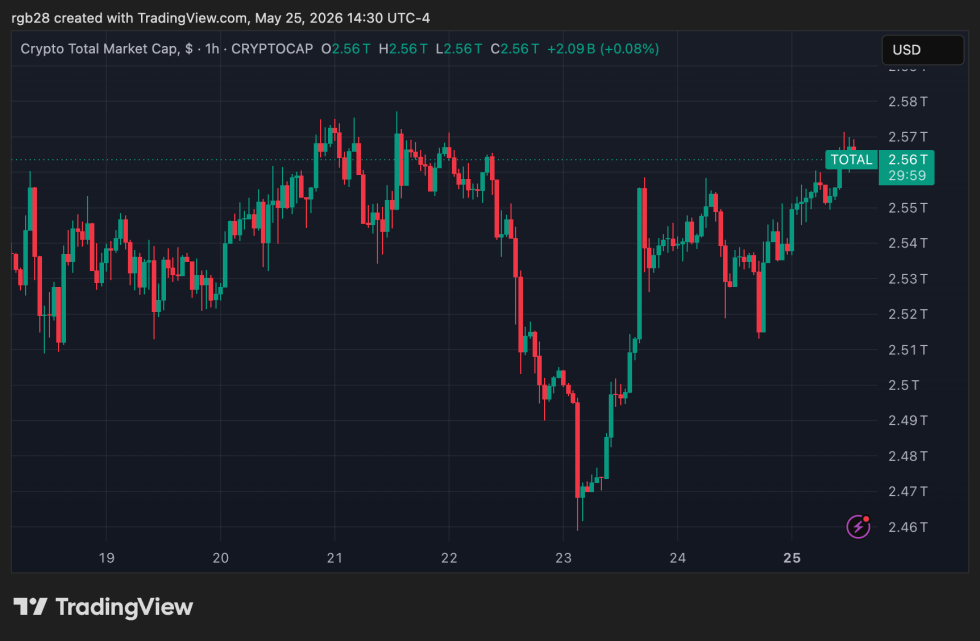
The total crypto market capitalization is at $2.56 trillion in the one-week chart. Source: TOTAL on TradingView


İlgili Sorular

QWhat was the specific event or bet on Polymarket that directly triggered Indonesia's decision to ban the platform?

AThe direct trigger was a widely shared bet on the platform predicting the premature end of Prabowo Subianto's presidency, which gained significant traction on social media.

QAccording to Indonesia's Director General of Digital Space Supervision, Alexander Sabar, why are prediction markets like Polymarket considered gambling under Indonesian law?

AHe stated that any platforms facilitating real-money wagers on event outcomes are considered gambling, regardless of whether they are framed as 'prediction markets' or use blockchain technology or crypto assets, as they involve monetary betting on uncertain outcomes.

QBesides Indonesia, which other countries are mentioned in the article as having officially blocked access to Polymarket?

AThe article mentions Singapore, Colombia, India, and Argentina as countries that have officially blocked access to Polymarket.

QWhat was the reason given by Brazilian authorities for their ban on prediction market platforms like Polymarket and Kalshi in March?

ABrazilian authorities stated that the platforms failed to comply with local regulations on derivatives trading and raised concerns about investor protections and market integrity.

QWhat action did U.S. House Representative James Comer take regarding Polymarket and Kalshi, and what specific information did he request?

AHe launched a formal investigation and sent letters to the CEOs of both companies. He requested information on how their platforms detect and prevent insider trading, verify user identities, and enforce bans on users from restricted jurisdictions.

İlgili Okumalar

Blocked Its Own Treasure, WeChat AI Steps Up

Tencent's stock surged over 10% on June 2nd amid reports that WeChat, with 1.43 billion monthly users, is finalizing tests for a native AI Agent. The reported feature, accessible by swiping right from the main interface, allows users to issue commands in natural language. The AI then decomposes tasks and automatically calls upon relevant Mini Programs within WeChat to complete actions like ordering food, booking tickets, or making payments, creating a closed-loop service execution system. This strategic shift follows the internal conflict and subsequent "blocking" of Tencent's standalone AI app, Yuanbao, by WeChat for violating sharing rules during a 2026 Spring Festival promotion. The incident highlighted a lack of internal consensus and exposed the weakness of competing in the standalone AI assistant arena against rivals like ByteDance's Doubao (345M MAU) and Alibaba's Qianwen. The new WeChat AI Agent aims to leverage WeChat's unique assets—its massive user base, standardized Mini Program APIs, WeChat Pay, and identity system—to move from simple content generation to actual task execution. Analysts note this changes the competitive landscape from model benchmarks to which AI can connect to more real-world services. However, success depends on key variables: the capability of Tencent's underlying Hunyuan model, managing massive inference costs, and redesigning incentives for Mini Program developers whose traffic might be bypassed. The move is seen as an attempt to keep user service intent within WeChat's ecosystem as AI begins to redefine how users access services.

marsbit32 dk önce

Blocked Its Own Treasure, WeChat AI Steps Up

marsbit32 dk önce

ByteDance Adopts Arm CPUs, Jensen Huang: So Sad I Didn't Buy Arm

**Summary:** At Computex 2026, Arm CEO Rene Haas announced that ByteDance and Oracle have adopted Arm's self-designed Arm AGI data center CPU. The company expects significant revenue growth from this product, projecting $20 billion in demand for the 2027/2028 fiscal years. Haas noted that restricting AI-capable CPUs from the US to China is nearly impossible due to their widespread applications. Arm's stock has surged dramatically this year, notably rising 16% after NVIDIA's Arm-based Vera CPU and RTX Spark announcements. A highlight was the informal, humorous on-stage conversation between Haas and NVIDIA CEO Jensen Huang. Huang joked about NVIDIA's failed attempt to acquire Arm and playfully lamented selling his Arm shares. Both executives showed a clear sense of camaraderie and shared regret over the missed merger. Key technical topics were discussed: 1. **AI PC Design:** Huang explained NVIDIA's RTX Spark superchip (with a 20-core Arm CPU) is designed for future AI agents that will autonomously run and use tools on PCs, blending local and cloud processing. 2. **Agent vs. OS:** Huang emphasized the operating system remains crucial, as AI agents rely on its APIs and tools to function. 3. **Growth Constraints:** He identified the shift to "useful AI" that generates profitable tokens as a primary driver for immense, almost limitless, computational demand. Haas outlined Arm's strategy across PC and data centers. For PCs, Arm collaborates with partners like NVIDIA and MediaTek, offering its compute subsystem (CSS) for custom SoCs. In data centers, its Arm AGI CPU (built on TSMC's 3nm process) has gained major partners including OpenAI, Meta, and now ByteDance and Oracle. Arm presented a multi-year roadmap for its in-house CPU line. The article concludes that while GPUs dominated the AI training race, the explosion of AI agents is shifting significant focus to CPUs for inference, state management, and tool orchestration. The industry is trending towards vertical integration, with companies like cloud providers designing chips and chip/IP firms offering full solutions, all competing to deliver more efficient computing per watt.

marsbit52 dk önce

ByteDance Adopts Arm CPUs, Jensen Huang: So Sad I Didn't Buy Arm

marsbit52 dk önce

New Wall Street Play: Yen Shorts Still Adding, But Japan Stocks Don't Rely on Carry Trade Unwinding

On June 3rd, USD/JPY hit 160.44, its highest level since July 2024, while the Nikkei 225 surged past 68,000 points. Contrary to popular narratives of an imminent "carry trade unwind" akin to August 2024, data reveals a more complex picture. Speculative net short positions in yen futures have actually increased, reaching -114,667 contracts by late May, suggesting traders are doubling down rather than retreating. Meanwhile, Japan's Finance Ministry conducted its largest-ever single-round FX intervention (11.73 trillion yen) in April-May but failed to hold the 160 yen line. The Nikkei's rally is not driven by carry trade dynamics. Foreign investors are aggressively buying Japanese stocks, with net purchases in 2026 running nearly 16 times higher than 2025 levels. This inflow is concentrated in AI and semiconductor-related stocks like SoftBank and Socionext, fueled by positive sector outlooks, rather than being a flight from unwinding yen shorts. Furthermore, the Nikkei has continued climbing despite the Bank of Japan's (BOJ) rate hikes to 0.75%. This disconnect exists because the current equity boom is fueled by AI-driven foreign investment, not reliant on cheap yen funding. However, this relationship remains fragile. Should the BOJ hike rates further (e.g., to 1.0%) while dollar weakness increases carry trade costs, the trajectories of the yen and Japanese stocks could reconverge, potentially triggering volatility.

marsbit57 dk önce

New Wall Street Play: Yen Shorts Still Adding, But Japan Stocks Don't Rely on Carry Trade Unwinding

marsbit57 dk önce

Broadcom's Q3 Guidance Misses Expectations by $12 Billion, After-Hours Trading Plummets Over 13%, AI Narrative "Cooling"?

On June 3, Broadcom released record Q2 FY26 results with revenue of $22.19B, up 48% YoY, and AI chip sales of $10.8B, up 143%. Adjusted EPS of $2.44 beat estimates. However, its Q3 AI semiconductor revenue guidance of $16B, while up over 200% YoY, fell roughly $1.2B (7%) short of analyst consensus expectations of $17.2B. This miss, coupled with slightly weaker-than-expected software revenue, triggered a severe market reaction. CEO Hock Tan maintained the FY26 AI revenue outlook of over $100B but did not raise it, disappointing investors who had priced in more robust growth. The stock plummeted over 13% in after-hours trading, erasing roughly $270B in market cap. The sell-off extended to peers like Marvell. A key concern for markets, particularly for Chinese optical module suppliers, was Tan's comment that the contribution of AI networking (e.g., Ethernet switches, optical interconnect chips) to AI revenue, currently near 40%, is expected to normalize to around 30% over time, signaling a potential peak in growth for that segment. Despite the guidance shortfall, Tan reiterated that AI demand remains "insatiable" and reaffirmed the long-term target of exceeding $100B in AI revenue by FY27. The reaction highlights the heightened sensitivity and premium valuation placed on AI-exposed stocks, where anything less than stellar guidance can prompt significant profit-taking. The broader question is whether this represents a cooling AI narrative or a correction in overstretched valuations.

marsbit57 dk önce

Broadcom's Q3 Guidance Misses Expectations by $12 Billion, After-Hours Trading Plummets Over 13%, AI Narrative "Cooling"?

marsbit57 dk önce

İşlemler

Spot
Futures

Popüler Makaleler

BAN Nasıl Satın Alınır

HTX.com’a hoş geldiniz! Comedian (BAN) satın alma işlemlerini basit ve kullanışlı bir hâle getirdik. Adım adım açıkladığımız rehberimizi takip ederek kripto yolculuğunuza başlayın. 1. Adım: HTX Hesabınızı OluşturunHTX'te ücretsiz bir hesap açmak için e-posta adresinizi veya telefon numaranızı kullanın. Sorunsuzca kaydolun ve tüm özelliklerin kilidini açın. Hesabımı Aç2. Adım: Kripto Satın Al Bölümüne Gidin ve Ödeme Yönteminizi SeçinKredi/Banka Kartı: Visa veya Mastercard'ınızı kullanarak anında Comedian (BAN) satın alın.Bakiye: Sorunsuz bir şekilde işlem yapmak için HTX hesap bakiyenizdeki fonları kullanın.Üçüncü Taraflar: Kullanımı kolaylaştırmak için Google Pay ve Apple Pay gibi popüler ödeme yöntemlerini ekledik.P2P: HTX'teki diğer kullanıcılarla doğrudan işlem yapın.Borsa Dışı (OTC): Yatırımcılar için kişiye özel hizmetler ve rekabetçi döviz kurları sunuyoruz.3. Adım: Comedian (BAN) Varlıklarınızı SaklayınComedian (BAN) satın aldıktan sonra HTX hesabınızda saklayın. Alternatif olarak, blok zinciri transferi yoluyla başka bir yere gönderebilir veya diğer kripto para birimlerini takas etmek için kullanabilirsiniz.4. Adım: Comedian (BAN) Varlıklarınızla İşlem YapınHTX'in spot piyasasında Comedian (BAN) ile kolayca işlemler yapın.Hesabınıza erişin, işlem çiftinizi seçin, işlemlerinizi gerçekleştirin ve gerçek zamanlı olarak izleyin. Hem yeni başlayanlar hem de deneyimli yatırımcılar için kullanıcı dostu bir deneyim sunuyoruz.

468 Toplam GörüntülenmeYayınlanma 2024.12.11Güncellenme 2026.06.02

BAN Nasıl Satın Alınır

Tartışmalar

HTX Topluluğuna hoş geldiniz. Burada, en son platform gelişmeleri hakkında bilgi sahibi olabilir ve profesyonel piyasa görüşlerine erişebilirsiniz. Kullanıcıların BAN (BAN) fiyatı hakkındaki görüşleri aşağıda sunulmaktadır.

活动图片












