Polymarket Faces Ban In Indonesia Amid Growing Global Crackdown

bitcoinist2026-05-26 tarihinde yayınlandı2026-05-26 tarihinde güncellendi

Özet

Indonesia has blocked access to the prediction market platform Polymarket, joining a growing global regulatory crackdown. The ban was enacted after a widely shared bet on the premature end of President Prabowo Subianto's term drew attention. Authorities declared that platforms facilitating real-money wagers on events, even using crypto or blockchain, constitute illegal gambling. The government is also targeting social media accounts promoting such services and warning the public against participation. This move aligns with actions taken by other jurisdictions. Several countries, including Taiwan, Thailand, China, India, Singapore, Colombia, and Argentina, have previously restricted or blocked Polymarket, often citing its unlicensed gambling operations. In March, Brazil's central bank banned prediction markets like Polymarket over regulatory non-compliance. In the United States, the sector faces scrutiny from lawmakers. A formal investigation was recently launched into Polymarket and Kalshi regarding suspicious trades and compliance measures, coinciding with legal setbacks for the companies in Nevada and Washington.

Amid the global crackdown on online gambling and prediction markets, Indonesia has joined the list of jurisdictions imposing restrictions on Polymarket and similar platforms after a bet on the President’s term drew online attention.

Indonesia Blocks Access To Polymarket

Indonesia recently blocked access to the prediction market platform Polymarket after a widely shared bet on the premature end of Prabowo Subianto’s presidency gained traction on social media last week.

In an official statement, the Ministry of Communication and Digital Affairs announced the ban, affirming that the measure aims to protect the public, particularly the younger generation and users of the digital space.

Director General of Digital Space Supervision Alexander Sabar affirmed that platforms facilitating real-money wagers on event outcomes are considered gambling, even when framed as “prediction markets” and using blockchain technology or crypto assets.

“The government will not tolerate any form of online gambling in Indonesia. Activities like Polymarket involve monetary betting and speculation on events with uncertain outcomes, which violates applicable Indonesian laws,” Alex emphasized.

Therefore, authorities will block access to other prediction market services suspected of “facilitating online gambling practices.” In addition, the government is tracking down social media accounts affiliated with or promoting Polymarket to ensure the ban is enforced across other platforms.

The Ministry also urged the public not to access or engage in digital betting-based speculation activities, including those using crypto, as these activities could violate Indonesian laws and cause financial losses for users.

Global Regulatory Pressure Mounts

Indonesian authorities noted that their decision to restrict access to Polymarket aligns with other global legal frameworks. As the announcement stated, several other jurisdictions have also implemented measures against Polymarket and other prediction market platforms, arguing that they resemble online gambling practices.

Over the past two years, Taiwan, Thailand, China, and India have imposed restrictions on Polymarket under their respective local laws, while Singapore, Colombia, and India have officially blocked the platform.

In March, Argentinian authorities ordered a nationwide blockade of Polymarket after it predicted inflation data. As reported by Bitcoinist, a Buenos Aires court directed internet service providers, Google, and Apple to block access to the platform, arguing that it operated as an unlicensed online gambling platform.

Meanwhile, Brazil’s central bank announced a ban on prediction markets and betting platforms in March, including Polymarket and Kalshi. The authorities affirmed that the platforms failed to comply with local regulations on derivatives trading and raised concerns about investor protections and market integrity.

Prediction markets have also faced scrutiny in the US, with policymakers and State-level authorities putting pressure on the sector. Last week, House of Representatives member James Comer launched a formal investigation into Polymarket and Kalshi following a series of suspicious trades linked to classified US military operations and key geopolitical events.

The lawmaker announced that he had sent a letter to the CEOs of both companies seeking information on how their platforms detect and prevent insider trading. He also asked for details on how they verify user identities and enforce bans on users from restricted jurisdictions. On the same day, the two prediction market giants lost their bids to halt the gambling-related enforcement actions against them in Nevada and Washington.
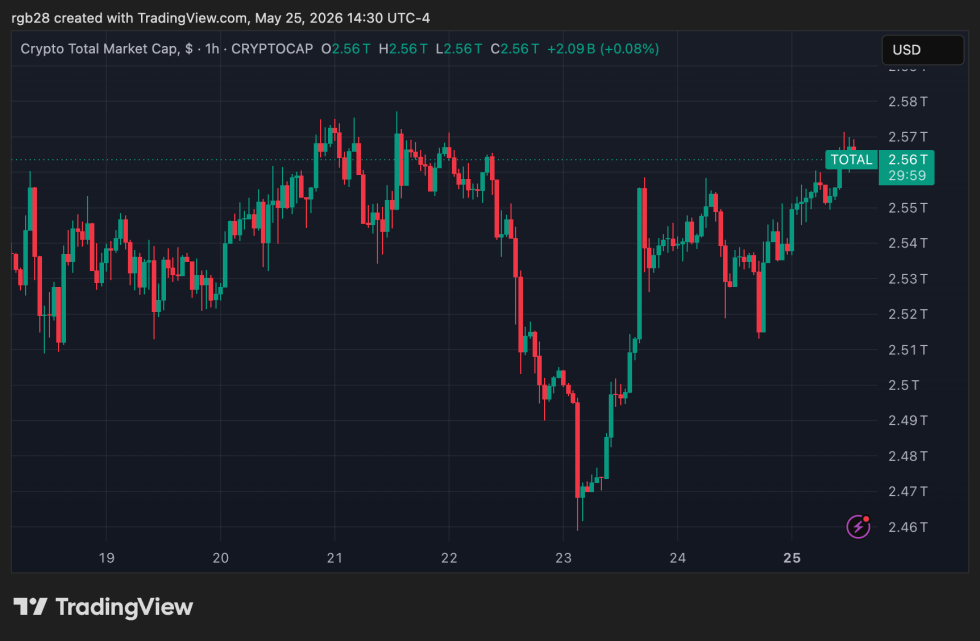
The total crypto market capitalization is at $2.56 trillion in the one-week chart. Source: TOTAL on TradingView

İlgili Sorular

QWhat was the specific event or bet on Polymarket that directly triggered Indonesia's decision to ban the platform?

AThe direct trigger was a widely shared bet on the platform predicting the premature end of Prabowo Subianto's presidency, which gained significant traction on social media.

QAccording to Indonesia's Director General of Digital Space Supervision, Alexander Sabar, why are prediction markets like Polymarket considered gambling under Indonesian law?

AHe stated that any platforms facilitating real-money wagers on event outcomes are considered gambling, regardless of whether they are framed as 'prediction markets' or use blockchain technology or crypto assets, as they involve monetary betting on uncertain outcomes.

QBesides Indonesia, which other countries are mentioned in the article as having officially blocked access to Polymarket?

AThe article mentions Singapore, Colombia, India, and Argentina as countries that have officially blocked access to Polymarket.

QWhat was the reason given by Brazilian authorities for their ban on prediction market platforms like Polymarket and Kalshi in March?

ABrazilian authorities stated that the platforms failed to comply with local regulations on derivatives trading and raised concerns about investor protections and market integrity.

QWhat action did U.S. House Representative James Comer take regarding Polymarket and Kalshi, and what specific information did he request?

AHe launched a formal investigation and sent letters to the CEOs of both companies. He requested information on how their platforms detect and prevent insider trading, verify user identities, and enforce bans on users from restricted jurisdictions.

İlgili Okumalar

Will the Next Crypto Bull Run Start with On-Chain Trading of SpaceX?

This article presents a scenario-based forecast for the crypto industry from 2026 to 2029, arguing that the next major cycle will be driven not by technological narratives but by legal access to real-world assets. The author predicts that by mid-2026, pre-IPO perpetual contracts for top private companies like SpaceX, OpenAI, and Anthropic on platforms like Hyperliquid will become the primary gateway for accessing quality assets, as most crypto-native tokens fail to capture real value. The much-hyped AI x Crypto intersection largely fails except for prediction markets, which thrive on betting on AI model supremacy. By 2027, public blockchain foundations are forced to choose between catering to retail speculation or building compliant infrastructure for institutions, with many opting for the latter. Growth in stablecoins and tokenized private credit/equity hits a "triple ceiling" due to regulatory and political uncertainty rather than market demand. The pivotal shift is forecast for 2028. A major liquidation event in pre-IPO perpetuals exposes the structural flaw of synthetic markets lacking a real underlying asset anchor. In response, regulatory changes finally allow the public solicitation of private securities resales to verified accredited investors. This creates a legitimate secondary market for real company equity, which then becomes the core asset class of the new bull market, relegating synthetic perps to a niche role. By 2029, the industry becomes "boring" but foundational. Tokens without claims on real cash flows or assets cease trading. Stablecoin growth is steady but politically capped. Crypto infrastructure fades from view as it gets absorbed into traditional finance backends. The article's central thesis is that the key bottleneck for crypto's next phase is legal and regulatory channels for real asset ownership, not technology.

marsbit1 saat önce

Will the Next Crypto Bull Run Start with On-Chain Trading of SpaceX?

marsbit1 saat önce

The Value Distribution of Stablecoins

**Summary: The Value Distribution of Stablecoins** The article argues that stablecoins are evolving from mere trading tools into broader channels for dollar access. It divides the stablecoin ecosystem into four layers to analyze how value is distributed: 1. **Issuance Layer:** Mints stablecoins, holds reserve assets, and captures the spread between reserve yield and user costs (e.g., Tether, Circle). This layer currently earns the largest profit margin. 2. **Infrastructure Layer:** Connects stablecoins to the traditional financial system, handling fiat on/off-ramps, banking integration, compliance (KYC/AML), and asset management (e.g., Bridge, BVNK). This is the "unglamorous" but critical work, building the essential bridges between crypto and real-world finance. 3. **Acquiring/Distribution Layer:** Integrates stablecoins into merchant systems, manages payment flows, and provides enterprise financial software (e.g., Stripe, Coinbase). They act as the access point for businesses. 4. **Application Layer:** The end-users and businesses that ultimately use stablecoins for payments, settlements, or as a store of value. They benefit from convenience but have little pricing power. The core thesis is that while the issuance layer currently dominates profits, the often-overlooked **infrastructure layer holds significant long-term potential**. The real challenge and barrier to mass adoption is not the on-chain transfer of stablecoins (which is simple), but the complex "last mile" integration into existing business workflows, banking systems, and regulatory frameworks across different countries. Companies in this layer are currently in a "land grab" phase, investing heavily to build networks, secure bank partnerships, and establish compliance pathways. While their position is currently pressured by the profitable issuers above and distribution platforms below, the article suggests that if stablecoins become a default financial rail for businesses, the infrastructure providers who have done the hard work of integration will ultimately gain strong pricing power and become entrenched, essential players.

marsbit8 saat önce

The Value Distribution of Stablecoins

marsbit8 saat önce

The Value Distribution of Stablecoins

The Value Distribution of Stablecoins The article argues that stablecoins are evolving from a mere trading tool into a broad "dollar channel." It analyzes the industry's value chain through four layers: 1. **Issuance Layer (e.g., Tether, Circle):** The top layer that mints stablecoins, holds reserve assets, and captures the thickest interest rate spread. 2. **Infrastructure Layer (e.g., Bridge, BVNK):** Connects stablecoins to the traditional financial system, handling critical but complex "dirty work" like fiat on/off-ramps, banking integration, compliance (KYC/AML), and cross-border settlement. 3. **Acquiring/Distribution Layer (e.g., Stripe, Coinbase):** Embeds stablecoins into merchant systems, manages payment flows, and integrates with enterprise software. 4. **Application Layer:** End-users and businesses that ultimately use stablecoins for payments, settlement, or storing value. The author posits that while the issuance layer currently captures the most profit, the most overlooked and potentially critical layer is infrastructure. The core challenge for stablecoin adoption isn't the on-chain transfer (which is simple), but bridging the gap between blockchain and the real-world financial system. This involves solving practical problems for businesses: fiat conversion, reconciliation, tax handling, and user onboarding. Infrastructure companies are currently in a difficult "land-grab" phase—building networks, securing banking relationships, and achieving compliance country-by-country. They face pressure from both the profitable issuance layer above and distribution platforms below. However, the author suggests this layer is building a crucial moat. Once stablecoins become a default business rail, the infrastructure players who have done the hard work of integration may gain significant, durable value and pricing power.

链捕手8 saat önce

The Value Distribution of Stablecoins

链捕手8 saat önce

İşlemler

Spot
Futures

Popüler Makaleler

BAN Nasıl Satın Alınır

HTX.com’a hoş geldiniz! Comedian (BAN) satın alma işlemlerini basit ve kullanışlı bir hâle getirdik. Adım adım açıkladığımız rehberimizi takip ederek kripto yolculuğunuza başlayın. 1. Adım: HTX Hesabınızı OluşturunHTX'te ücretsiz bir hesap açmak için e-posta adresinizi veya telefon numaranızı kullanın. Sorunsuzca kaydolun ve tüm özelliklerin kilidini açın. Hesabımı Aç2. Adım: Kripto Satın Al Bölümüne Gidin ve Ödeme Yönteminizi SeçinKredi/Banka Kartı: Visa veya Mastercard'ınızı kullanarak anında Comedian (BAN) satın alın.Bakiye: Sorunsuz bir şekilde işlem yapmak için HTX hesap bakiyenizdeki fonları kullanın.Üçüncü Taraflar: Kullanımı kolaylaştırmak için Google Pay ve Apple Pay gibi popüler ödeme yöntemlerini ekledik.P2P: HTX'teki diğer kullanıcılarla doğrudan işlem yapın.Borsa Dışı (OTC): Yatırımcılar için kişiye özel hizmetler ve rekabetçi döviz kurları sunuyoruz.3. Adım: Comedian (BAN) Varlıklarınızı SaklayınComedian (BAN) satın aldıktan sonra HTX hesabınızda saklayın. Alternatif olarak, blok zinciri transferi yoluyla başka bir yere gönderebilir veya diğer kripto para birimlerini takas etmek için kullanabilirsiniz.4. Adım: Comedian (BAN) Varlıklarınızla İşlem YapınHTX'in spot piyasasında Comedian (BAN) ile kolayca işlemler yapın.Hesabınıza erişin, işlem çiftinizi seçin, işlemlerinizi gerçekleştirin ve gerçek zamanlı olarak izleyin. Hem yeni başlayanlar hem de deneyimli yatırımcılar için kullanıcı dostu bir deneyim sunuyoruz.

478 Toplam GörüntülenmeYayınlanma 2024.12.11Güncellenme 2026.06.02

BAN Nasıl Satın Alınır

Tartışmalar

HTX Topluluğuna hoş geldiniz. Burada, en son platform gelişmeleri hakkında bilgi sahibi olabilir ve profesyonel piyasa görüşlerine erişebilirsiniz. Kullanıcıların BAN (BAN) fiyatı hakkındaki görüşleri aşağıda sunulmaktadır.

活动图片