Policy Pilot First: Central Bank Explores Direct 'Money Distribution', Digital Yuan Users Already Benefiting

比推2026-01-21 tarihinde yayınlandı2026-01-21 tarihinde güncellendi

Özet

China's digital yuan (e-CNY) has entered a significant upgrade phase, transitioning from a non-interest-bearing digital cash (M0) to an interest-bearing asset classified as M1. As of January 1, 2026, users holding funds in verified tier 1-3 digital yuan wallets can earn interest at the current demand deposit rate of 0.05% per annum, paid quarterly. This move, a world-first for a central bank digital currency (CBDC), aims to boost user adoption by providing a tangible benefit for holding the digital currency, which had previously struggled to compete with established payment platforms like Alipay and WeChat Pay despite extensive pilot programs and government subsidies. A key structural change is the shift away from the 100% reserve requirement for commercial banks. Banks can now use a portion of the e-CNY deposits for lending and developing financial products, transforming the digital yuan from a cost center into a potential profit source and incentivizing them to promote it more actively. In contrast, non-bank payment institutions must still maintain 100% reserves. Beyond payments, the digital yuan is positioning itself as a programmable financial infrastructure. Its smart contract capability, though using a restricted Turing-complete design for security, enables complex applications like controlled fund disbursement for pre-paid services, family budgeting, and government subsidies. It also supports offline transactions via NFC. A major strategic focus is cross-border payme...

Author: Nancy, PANews

Original Title: While Wall Street Still Debates, Digital Yuan Already 'Distributes Money' to Users


Historically, in financial customer acquisition battles, 'distributing money to users' has always been the simplest and most effective weapon.

Over a decade ago, products like Yu'ebao used visible, calculable yields to pry open the cognitive boundaries of ordinary people towards financial products, also launching a frontal assault on traditional finance.

A similar game is playing out again across the ocean. These days, Wall Street elites and crypto-native giants are arguing fiercely over market structure bills related to stablecoin yields. One side attempts to defend the high walls of traditional finance through regulation, while the other tries to compete for the market with real money.

Shifting focus back to China, the digital yuan is undergoing a critical upgrade. As is well known, after several years of pilot programs, red envelope incentives, scenario promotions, and policy pushes have been deployed in turn, but the digital yuan has consistently struggled to become commonplace in every household.

As the digital yuan enters version 2.0 this year, it begins to possess interest-bearing capabilities, giving users, for the first time, an intuitive and practical reason to hold it: earning interest on holdings. Simultaneously, the digital yuan also transitions from being classified as M0 to M1, charting a longer-term path through smart contracts to become an underlying digital payment infrastructure.

Entering the Interest-Bearing Era, Upgrading to a 'Yield-Bearing Stablecoin'

If judged solely by scale, the progress of the digital yuan hasn't been slow.

After a decade of R&D exploration and pilot promotion, the digital yuan has reached a considerable size. As of the end of November 2025, it had cumulatively processed 3.48 billion transactions, with a transaction value of 167 trillion yuan; 230 million personal wallets and 18.84 million corporate wallets were opened, with pilot coverage extending to 26 regions across 17 provinces (autonomous regions, municipalities).

From infrastructure construction and technical verification to payment scenario implementation, the digital yuan has completed the phased goal of moving from usable to practical. This progress benefits both from the continuous improvement of underlying technology and strong policy-level promotion, creating usage opportunities for the digital yuan through methods like red envelope subsidies and consumption rebates.

But is the digital yuan truly common in daily life? The answer is unfortunately not optimistic.

Placed within the larger payment system, the contrast is particularly stark. In the third quarter of 2025 alone, Chinese non-bank payment institutions handled online payment business volume amounting to 85.28 trillion yuan, with 338.019 billion transactions. Not to mention, commercial payment networks formed by platforms like Alipay and WeChat Pay have long penetrated high-frequency scenarios such as daily necessities, clothing, housing, and transportation. Whether in terms of transaction scale, user stickiness, or fund settlement capacity, they far surpass what the digital yuan currently offers.

For most ordinary users and businesses, the digital yuan is just renminbi in a different guise; its essence remains funds sitting idle in an account, not earning interest. There is no difference from the user's perspective compared to balances in WeChat or Alipay wallets, so users naturally lack the motivation to change long-established usage habits.

This situation finally saw a turning point on January 1, 2026, when the digital yuan officially upgraded to a 'yield-bearing stablecoin'.

According to the latest policy, users can download the digital yuan App from official app stores and have funds in Tier 1, Tier 2, and Tier 3 real-name wallets accrue interest based on the listed demand deposit interest rate. The current annual interest rate is 0.05%, with interest settlement dates on March 20, June 20, September 20, and December 20 each year; it is important to note that anonymous wallets (Tier 4 wallets) opened solely with mobile number verification do not accrue interest for now.

This means users now have a channel for their short-term idle funds to appreciate, with automatic interest calculation and zero operational cost. Although this interest rate is not high, it provides a reason for users to retain funds and gives the digital yuan a competitive advantage compared to traditional financial products.

In the crypto world, stablecoin yield is not new, often achieved through DeFi, staking, or shadow interest rates. However, these mechanisms also come with challenges such as smart contract vulnerabilities, depegging risks, and regulatory uncertainty.

In contrast, the yield of the digital yuan is established within a safe and controllable framework under central bank supervision, ensuring fund stability and security. The digital yuan is included in the deposit insurance scope, enjoying the same safety guarantees as ordinary deposits, with coverage for compensation up to a limit of 500,000 yuan. This safety structure, backed by national credit, is fundamentally different from the crypto world's reliance on code and consensus mechanisms.

With this latest upgrade of the digital yuan, China has become the first economy globally to pay interest on a central bank digital currency.

Bidding Farewell to 100% Reserves, Banks Finally Have Motivation

Besides insufficient motivation on the user side, bank participation and incentive were also major challenges in promoting the digital yuan.

Initially, the digital yuan was positioned as M0 (digital cash). This design limited its application scenarios and could not generate yield for users. More importantly, it adopted a 100% reserve requirement system. This meant that commercial banks could not utilize the digital yuan deposited by users for fund utilization or lending; every unit of digital yuan received by banks had to be fully surrendered to the central bank and frozen in central bank accounts.

Consequently, banks not only failed to generate income from these funds but also bore significant operational costs for wallet opening, scenario expansion, anti-money laundering, customer service, etc. Therefore, banks lacked sufficient motivation to actively promote the digital yuan.

"The traditional account system has little room for innovation left. After the digital yuan is positioned as M1, it is becoming a piece of financial infrastructure, giving market institutions more space," according to a bank insider cited by Caixin Net.

The situation changed as the digital yuan gradually ascended to an M1 form.

In the new M1 model, the digital yuan balance in customers' real-name bank wallets becomes a liability of the commercial banks. Banks only need to deposit a portion of the funds with the central bank according to the statutory reserve requirement ratio; the remaining funds can be used for independently developing value-added services, such as launching exclusive wealth management products for digital yuan.

This institutional adjustment provides banks with more profit potential, incentivizing their active participation in building the digital yuan ecosystem. It also transforms banks from cost centers into profit centers, thereby enhancing their motivation to promote the digital yuan.

Currently, banks including Industrial and Commercial Bank of China (ICBC), Agricultural Bank of China (ABC), Bank of China (BOC), China Construction Bank (CCB), Bank of Communications, China Postal Savings Bank, and China Merchants Bank all provide digital wallet services.

It is important to note that non-bank payment institutions (such as Alipay and WeChat Pay) still need to maintain 100% reserves and cannot enjoy the relatively flexible fund operation space like banks.

Shedding the Payment Label, Smart Contracts Become New Financial Infrastructure

The digital yuan is gradually shedding its label as a 'payment substitute' and transforming towards a stickier digital financial infrastructure.

Unlike WeChat and Alipay, which are essentially payment tools storing traditional currency, the digital yuan is itself a form of money, used like electronic cash. Also, the digital yuan is not built on a blockchain but based on a newly designed account system. However, programmability based on smart contracts is its core competitive advantage, enabling it to be embedded into more complex performance and regulatory scenarios.
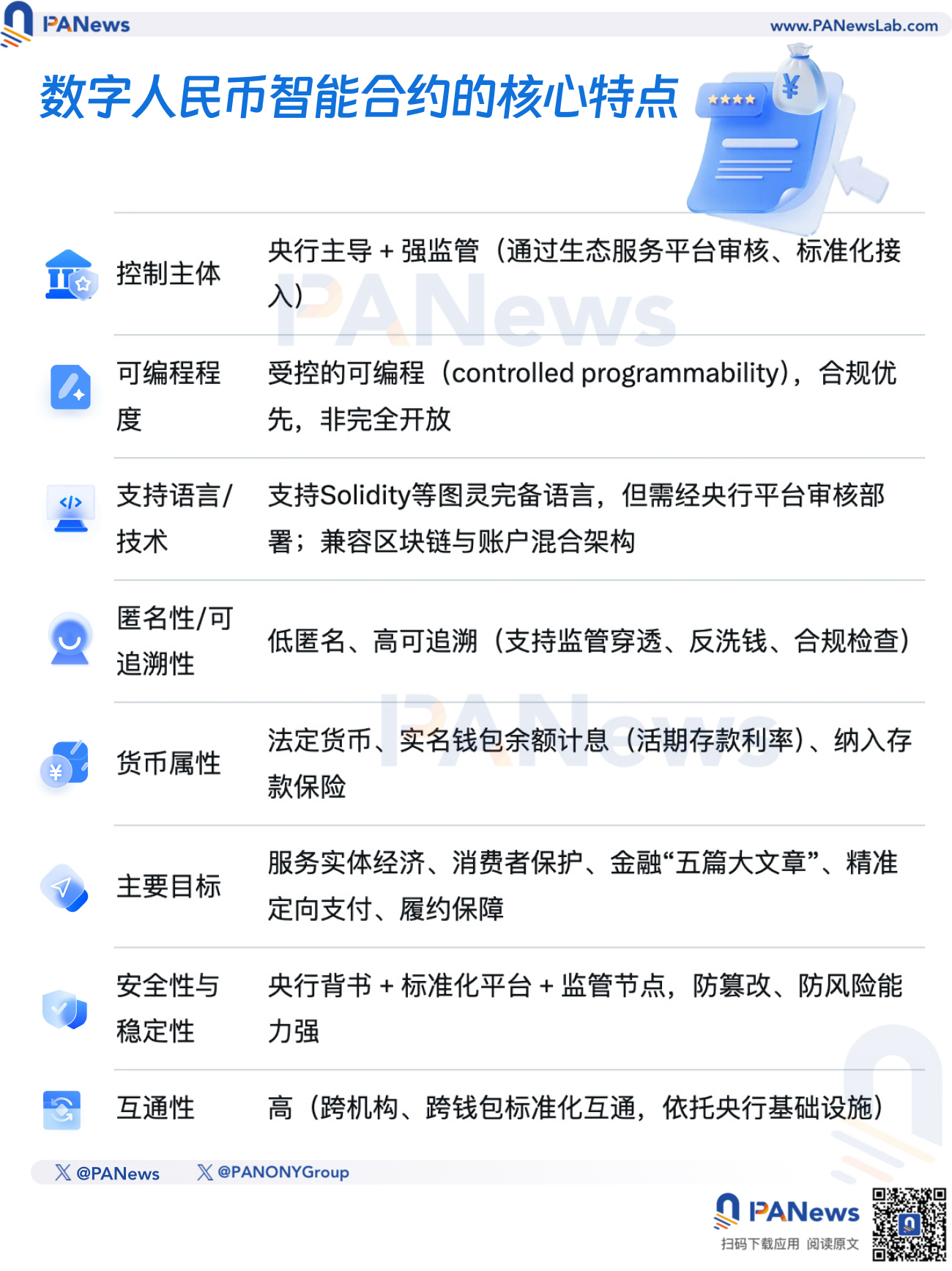
For example, in the pre-paid field, the digital yuan can achieve fund management modes like 'thawing in installments, paying per use'; in family and campus scenarios, parents can restrict children's accounts to specific consumption ranges; in government subsidy areas, the use of funds can also be precisely controlled.

In terms of technical implementation, according to disclosures by Caixin Net, the digital yuan adopts a restricted Turing-complete design, only supporting templated scripts permitted by the central bank. This design, while limiting certain functions, effectively ensures system security and controllability. Compared to the fully Turing-complete smart contracts of the crypto world, this design of the digital yuan avoids common risks like vulnerabilities, attacks, and governance failures in smart contracts. It is worth mentioning that the development of digital yuan smart contracts supports multiple programming languages, including fully Turing-complete languages compatible with Ethereum like Solidity. Therefore, development potential is not limited.

Furthermore, the digital yuan has demonstrated payment resilience. Its dual-offline payment function allows both payer and payee to complete transactions via手机NFC (Near Field Communication) in a no-network environment. This capability is irreplaceable in emergency scenarios and special environments. In contrast, in crypto systems, whether Bitcoin or stablecoin payments, they almost all rely on continuous internet connection to complete ledger synchronization and final settlement.
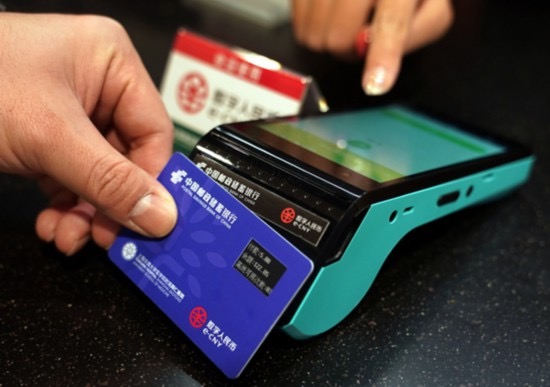
To bridge the 'digital divide' and adapt to the usage habits of different groups such as the elderly, students, and overseas visitors to China, the digital yuan also offers various forms of hard wallets, including IC cards, wearable devices (e.g., watches), SIM cards, and mobile terminals. This is fundamentally different from crypto hard wallets, which are primarily used for 'cold storage' of private keys as a defense against hacking attacks; digital yuan hard wallets focus more on the inclusivity of high-frequency payments. However, currently limited by the cost of deploying merchant acceptance terminals and the willingness to upgrade, the actual usage scope of digital yuan hard wallets remains limited, and their practical penetration effect still requires further observation.

Currently, the digital yuan is accelerating its evolution into a full-scenario currency. Its applications have broken through the retail sphere, forming replicable and promotable application models in areas like wholesale payments, public services, social governance, and even cross-border settlement, covering both online and offline scenarios. It is expected to further become an indispensable infrastructure in the digital economy.

Cross-border payment, in particular, is an important direction after its upgrade, supporting three-level transfers for countries, merchants, and individuals. As stablecoins rapidly penetrate the global cross-border payment field, the digital yuan is accelerating its 'going global' journey, becoming an important driving force for the internationalization of the renminbi. Through cross-border payments, the digital yuan can not only improve payment efficiency and reduce costs but also secure a place in the global payment system. For example, when overseas tourists consume in China, they don't need to exchange foreign currency; they can simply use the digital yuan App to scan a code and complete payment in their local currency at the real-time exchange rate. Currently, cross-border transfers conducted via mBridge have cumulatively exceeded $55 billion, with 95% settled using digital yuan.

In summary, for the digital yuan to truly complete the leap from a policy tool to a mass-market product, the real test may have just begun. But its path and potential are clearer than ever before.


Twitter:https://twitter.com/BitpushNewsCN

Bitpush TG Discussion Group:https://t.me/BitPushCommunity

Bitpush TG Subscription: https://t.me/bitpush

Original Link:https://www.bitpush.news/articles/7604656

İlgili Sorular

QWhat is the major upgrade that digital yuan (e-CNY) underwent on January 1, 2026, and how does it benefit users?

AThe major upgrade is that digital yuan transitioned to an 'interest-bearing stablecoin.' Users with verified (Class I, II, and III) wallets can now earn interest on their holdings at the current demand deposit rate of 0.05% per annum, paid quarterly. This provides users with a reason to hold digital yuan as their short-term idle funds can now generate yield automatically and with zero operational cost.

QHow did the initial M0 (digital cash) positioning of the digital yuan limit its adoption by commercial banks, and how has the shift to M1 changed this?

AInitially, as M0, the digital yuan operated on a 100% reserve system. This meant commercial banks had to deposit 100% of the digital yuan they received with the central bank, freezing those funds. Banks could not use them for lending or other profitable activities, making the system a cost center with little incentive for promotion. The shift to M1 reclassifies the funds in user wallets as a liability of the commercial banks. Now, banks only need to deposit a portion (the required reserve ratio) with the central bank and can use the remaining funds to develop profitable services, such as exclusive wealth management products, turning digital yuan into a potential profit center and incentivizing banks to promote it.

QWhat is a key technological advantage of the digital yuan's smart contracts compared to those in the crypto world, according to the article?

AA key technological advantage is its security and controllability. The digital yuan uses a 'restricted Turing-complete' design, which only supports templated scripts permitted by the central bank. This design, while still supporting languages like Solidity, effectively avoids common risks found in fully Turing-complete smart contracts in the crypto world, such as vulnerabilities, attacks, and governance failures, ensuring system safety and control.

QBesides retail payments, in which other significant area is the digital yuan expanding its application, and what is a specific example provided?

AThe digital yuan is expanding significantly into cross-border payments. A specific example is the mBridge project, through which cross-border transfers have cumulatively exceeded $55 billion, with 95% of these settlements conducted using the digital yuan. This facilitates more efficient and lower-cost international transactions and serves as a key driver for the internationalization of the renminbi.

QHow does the security backing for the digital yuan's value differ from that of crypto-based stablecoins?

AThe value of the digital yuan is backed by the full faith and credit of the Chinese state. It is included within the deposit insurance system, guaranteeing compensation of up to 500,000 yuan per account in case of bank failure. This state-backed security framework is fundamentally different from crypto stablecoins, which rely on code, algorithmic mechanisms, or collateral reserves that are subject to smart contract risks, de-pegging events, and regulatory uncertainty.

İlgili Okumalar

VCs on 2025 Crypto Investments: 84% of 118 Tokens Break Issue Price, Only One Type of Company is Quietly Making Money

Crypto investor Ching Tseng categorizes the market into four quadrants based on two axes: crypto-native vs. traditional finance (TradFi)-oriented, and having traction vs. no traction. In 2025, 84.7% of 118 tracked token launches fell below their issuance price, with a median fully diluted valuation drop of 71%. Crypto-native projects without traction are experiencing massive capital destruction, often relying on speculative narratives without sustainable revenue or user retention. Crypto-native teams with traction, often built in prior cycles, generate real revenue but face structural challenges with their tokens lacking direct value capture mechanisms. While some have implemented successful buyback programs, the core issue remains finding growth beyond crypto volatility. TradFi-oriented startups without traction face long, costly enterprise sales cycles but benefit from a robust M&A environment, with crypto acquisitions reaching a record $8.6 billion in 2025. The current winners are TradFi-oriented companies with traction, particularly in the Real World Asset (RWA) tokenization space, which grew from $5.5B to $18.6B in 2025. They are winning through enterprise sales, building alliances, and improving unit economics on established compliance stacks. Their main risk is being bypassed by large incumbent institutions building their own infrastructure. The overarching theme is market maturation, where narrative alone is insufficient for long-term success.

marsbit11 dk önce

VCs on 2025 Crypto Investments: 84% of 118 Tokens Break Issue Price, Only One Type of Company is Quietly Making Money

marsbit11 dk önce

İşlemler

Spot
Futures

Popüler Makaleler

$BANK Nedir

Bank AI: Bankacılıkta Devrimsel Bir Adım Giriş Teknolojideki hızlı ilerlemelerin damgasını vurduğu bir çağda, Bank AI, yapay zeka (AI) ve bankacılık hizmetleri kesişiminde yer almaktadır. Bu yenilikçi proje, finansal manzarayı yeniden tanımlamayı, operasyonel verimliliği, güvenlik önlemlerini ve müşteri deneyimlerini AI'nin gücüyle geliştirmeyi hedefliyor. Bank AI yolculuğuna çıkarken, projenin içeriğine, operasyonel dinamiklerine, tarihsel bağlamına ve önemli kilometre taşlarına dalacağız. Bank AI Nedir? Bank AI, yapay zekanın çeşitli bankacılık operasyonlarına entegrasyonunu hedefleyen dönüştürücü bir girişimi temsil etmektedir. Bu proje, süreçleri otomatikleştirmek, risk yönetimi protokollerini geliştirmek ve kişiselleştirilmiş hizmetler aracılığıyla müşteri etkileşimini artırmak için AI'nin yeteneklerinden yararlanmaktadır. Bank AI'nin temel hedefleri şunlardır: Bankacılık Fonksiyonlarının Otomasyonu: AI teknolojilerini kullanarak, Bank AI rutin görevleri otomatikleştirmeyi, insan kaynakları üzerindeki yükü azaltmayı ve verimliliği artırmayı amaçlamaktadır. Geliştirilmiş Risk Yönetimi: Proje, dolandırıcılık ve diğer tehditlere karşı güvenlik önlemlerini güçlendirerek riski tahmin edip tanımlamak için AI algoritmalarını kullanmaktadır. Bankacılık Hizmetlerinin Kişiselleştirilmesi: Bank AI, müşteri verilerini ve davranışlarını analiz ederek, özel finansal ürünler ve hizmetler sunmaya odaklanmaktadır. Müşteri Deneyimini İyileştirme: Chatbotlar ve sanal asistanlar gibi AI destekli çözümlerin uygulanması, kullanıcıların daha insana yakın etkileşimler yaşamasını sağlamayı hedeflemekte, bankalarla etkileşim biçimlerini devrim niteliğinde değiştirmektedir. Bu hedeflerle, Bank AI, bankacılığı daha verimli, güvenli ve kullanıcı odaklı hale getiren önemli bir oyuncu olarak kendini konumlandırmaktadır. Bank AI'nin Yaratıcısı Kimdir? Bank AI'nin yaratıcısı hakkında detaylar bilinmemektedir. Bu nedenle, mevcut bilgilerde belirli bir kişi veya organizasyon tanımlanmamıştır. Projenin başlangıcı etrafındaki anonimlik soruları gündeme getirse de, bunun iddialı vizyonu ve hedefleri üzerinde bir olumsuz etkisi yoktur. Bank AI'nin Yatırımcıları Kimlerdir? Proje yaratıcılarında olduğu gibi, Bank AI'nin yatırımcıları veya destekleyen organizasyonları hakkında da özel bilgiler açıklanmamıştır. Bu bilgiler olmadan, projenin ilerlemesini destekleyen finansal destek ve kurumsal destek hakkında bir çerçeve çizmek zordur. Yine de, böyle yenilikçi bir alanda gelişimi sürdürmek için sağlam bir yatırım temelinin önemi büyüktür. Bank AI Nasıl Çalışır? Bank AI, geleneksel bankacılık çerçevelerinden ayıran benzersiz faktörlere odaklanarak birden fazla yenilikçi alanda faaliyet göstermektedir. İşte temel operasyonel özellikler: Otomasyon: Makine öğrenimi algoritmalarını uygulayarak, Bank AI bankalar içindeki çeşitli manuel süreçleri otomatikleştirir. Bu, operasyonel maliyetleri azaltır ve insan çalışanların daha stratejik faaliyetlere yönelmelerini sağlar. Gelişmiş Risk Yönetimi: Risk yönetimi uygulamalarına AI entegrasyonu, bankaların dolandırıcılık gibi potansiyel tehditleri doğru bir şekilde tahmin etme araçlarıyla donatılmasını sağlar, böylece müşteri bilgileri ve varlıkları güvence altına alınır. Özelleştirilmiş Finansal Tavsiyeler: Müşteri etkileşimlerinden sürekli olarak öğrenerek, AI sistemleri kullanıcı ihtiyaçlarının daha iyi anlaşılmasını sağlar ve finansal kararlar hakkında özelleştirilmiş tavsiyeler sunar. Geliştirilmiş Müşteri Etkileşimleri: AI destekli chatbotlar ve sanal asistanlar kullanarak, Bank AI daha etkileşimli bir müşteri deneyimi sunar, kullanıcıların sorularını hızlı bir şekilde çözmelerine imkan tanır, bekleme sürelerini azaltır ve memnuniyet seviyelerini artırır. Bu operasyonel özellikler, Bank AI'yi bankacılık sektöründe bir öncü olarak konumlandırmakta ve hizmet sunumu ile operasyonel mükemmeliyet için yeni standartlar belirlemektedir. Bank AI Zaman Çizelgesi Bank AI'nin gidişatını anlamak için tarihsel bağlamına bir göz atmak gerekmektedir. Aşağıda önemli kilometre taşlarını ve gelişmeleri vurgulayan bir zaman çizelgesi bulunmaktadır: 2010'ların Başları: AI entegrasyonunun bankacılık hizmetlerine olan ilgisi arttı, bankacılık kurumları potansiyel faydalarını tanımaya başladılar. 2018: Bankaların temel müşteri hizmetleri ve geliştirilmiş güvenlik yönetimi için risk yönetim sistemlerinde chatbotlar gibi AI araçları kullanmaya başlamasıyla AI teknolojilerinin uygulanmasında belirgin bir artış yaşandı. 2023: AI'nin karmaşıklığı artmaya devam etti ve belge işleme ile gerçek zamanlı yatırım analizi gibi daha karmaşık görevler için üretken AI devreye alındı. Bu yıl, AI teknolojisi sayesinde bankaların sahip olduğu yeteneklerde önemli bir sıçrama yaşandı. 2024-Güncel Durum: Bu yıl itibarıyla, Bank AI yükselişte, devam eden araştırmalar ve geliştirmeler bankacılık operasyonlarındaki yetenekleri daha da artırmaya hazırlanıyor. AI uygulamalarının sürekli araştırılması, heyecan verici gelişmelere işaret etmektedir. Bank AI Hakkında Anahtar Noktalar Bankacılıkta AI Entegrasyonu: Bank AI, bankacılık süreçlerini kolaylaştırmak ve kullanıcı deneyimlerini geliştirmek için yapay zekanın benimsenmesine odaklanmaktadır. Otomasyon ve Risk Yönetimi Vurgusu: Proje, rutin görevlerin yükünü azaltmayı amaçlarken, tahmine dayalı analizlerle güvenlik çerçevelerini geliştirmeye büyük önem vermektedir. Kişiselleştirilmiş Bankacılık Çözümleri: Müşteri verilerinden yararlanarak, Bank AI bireysel kullanıcı ihtiyaçlarına yönelik özelleştirilmiş bankacılık hizmetleri sunar. Gelişime Bağlılık: Bank AI, teknolojinin sürekli evrimi ile uyumlu olmasını sağlamak ve güncel kalmak için sürekli araştırma ve geliştirme çabalarına bağlı kalmaktadır. Sonuç Özetle, Bank AI bankacılık endüstrisinde önemli bir adımı temsil etmekte, yapay zekayı kullanarak operasyonel paradigmaları yeniden şekillendirmekte, güvenliği artırmakta ve müşteri memnuniyetini teşvik etmektedir. Yaratıcı ve yatırımcılar hakkındaki bilgi eksikliklerine rağmen, Bank AI'nin net hedefleri ve işlevsel mekanizmaları, devam eden evrimi için güçlü bir temel sunmaktadır. AI teknolojisi gelişmeye ve bankacılık sektörüyle birleşmeye devam ettikçe, Bank AI finansal hizmetlerin geleceğini önemli ölçüde etkilemeye hazır durumda, bankacılıkla olan anlayışımızı ve etkileşim biçimlerimizi geliştirmektedir.

145 Toplam GörüntülenmeYayınlanma 2024.04.06Güncellenme 2024.12.03

$BANK Nedir

BANK Nasıl Satın Alınır

HTX.com’a hoş geldiniz! Lorenzo Protocol (BANK) satın alma işlemlerini basit ve kullanışlı bir hâle getirdik. Adım adım açıkladığımız rehberimizi takip ederek kripto yolculuğunuza başlayın. 1. Adım: HTX Hesabınızı OluşturunHTX'te ücretsiz bir hesap açmak için e-posta adresinizi veya telefon numaranızı kullanın. Sorunsuzca kaydolun ve tüm özelliklerin kilidini açın. Hesabımı Aç2. Adım: Kripto Satın Al Bölümüne Gidin ve Ödeme Yönteminizi SeçinKredi/Banka Kartı: Visa veya Mastercard'ınızı kullanarak anında Lorenzo Protocol (BANK) satın alın.Bakiye: Sorunsuz bir şekilde işlem yapmak için HTX hesap bakiyenizdeki fonları kullanın.Üçüncü Taraflar: Kullanımı kolaylaştırmak için Google Pay ve Apple Pay gibi popüler ödeme yöntemlerini ekledik.P2P: HTX'teki diğer kullanıcılarla doğrudan işlem yapın.Borsa Dışı (OTC): Yatırımcılar için kişiye özel hizmetler ve rekabetçi döviz kurları sunuyoruz.3. Adım: Lorenzo Protocol (BANK) Varlıklarınızı SaklayınLorenzo Protocol (BANK) satın aldıktan sonra HTX hesabınızda saklayın. Alternatif olarak, blok zinciri transferi yoluyla başka bir yere gönderebilir veya diğer kripto para birimlerini takas etmek için kullanabilirsiniz.4. Adım: Lorenzo Protocol (BANK) Varlıklarınızla İşlem YapınHTX'in spot piyasasında Lorenzo Protocol (BANK) ile kolayca işlemler yapın.Hesabınıza erişin, işlem çiftinizi seçin, işlemlerinizi gerçekleştirin ve gerçek zamanlı olarak izleyin. Hem yeni başlayanlar hem de deneyimli yatırımcılar için kullanıcı dostu bir deneyim sunuyoruz.

660 Toplam GörüntülenmeYayınlanma 2025.05.09Güncellenme 2025.05.09

BANK Nasıl Satın Alınır

Tartışmalar

HTX Topluluğuna hoş geldiniz. Burada, en son platform gelişmeleri hakkında bilgi sahibi olabilir ve profesyonel piyasa görüşlerine erişebilirsiniz. Kullanıcıların BANK (BANK) fiyatı hakkındaki görüşleri aşağıda sunulmaktadır.

活动图片