PNC Bank launches Bitcoin trading for eligible clients via Coinbase integration

cointelegraph2025-12-09 tarihinde yayınlandı2025-12-09 tarihinde güncellendi

Özet

PNC Bank has launched direct spot Bitcoin trading for eligible private bank clients, becoming the first major U.S. bank to integrate buy, hold, and sell functions within its own digital platform. This initiative, part of a partnership with Coinbase, uses Coinbase’s Crypto-as-a-Service infrastructure. Initially available to high-net-worth clients, PNC plans to expand access over time. The move reflects a broader trend of major banks increasing crypto offerings, though many focus on custody or Bitcoin ETFs rather than direct trading. Growing interest among wealthy investors is driving demand, with a significant portion moving assets away from advisors who don’t offer crypto access.

PNC Bank has begun offering direct spot Bitcoin trading to eligible private bank clients, becoming the first major US bank to enable buy, hold and sell functions inside its own digital platform.

According to a Tuesday release, the launch marks the first phase of PNC’s partnership with Coinbase. Announced in July, the collaboration is supported by Coinbase’s Crypto-as-a-Service trading and custody stack.

PNC Private Bank serves high- and ultra-high-net-worth individuals, families, family offices and business owners. The bank plans to expand access to additional client groups and add more capabilities over time.

According to Federal Reserve data, PNC ranks as the eighth-largest commercial bank in the US, with about $564 billion in assets and more than 2,300 branches across the country.
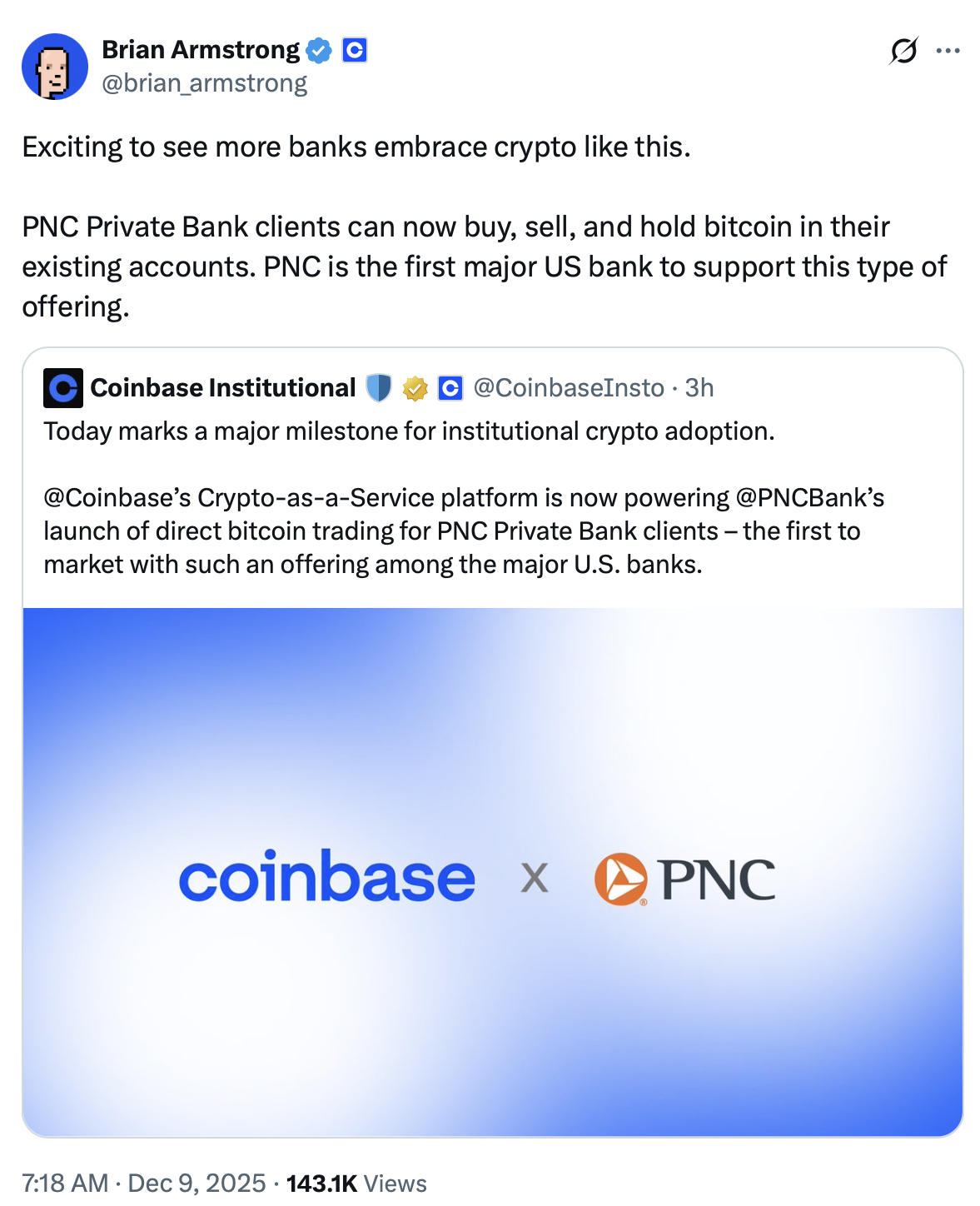
Source: Bryan Armstrong

While several major US banks have expanded their crypto offerings this year, most are targeting custody services or investment products, such as exchange-traded funds (ETFs).

On Dec. 2, Bank of America said that beginning next year, it will allow its wealth management clients to access four Bitcoin ETFs issued by Bitwise, Fidelity, Grayscale and BlackRock.

The ETFs provide investors with exposure to the Bitcoin (BTC) price through a regulated fund that trades on stock exchanges, without the need to buy and hold the digital asset directly.

Related: 21Shares taps Standard Chartered for custody as TradFi tightens grip on crypto

Wealthy clients are increasingly attracted to crypto

As crypto adoption becomes more mainstream, asset managers and crypto exchanges are expanding services to wealthy clients.

In June, JPMorgan announced that it would allow its trading and wealth-management clients to use crypto ETFs as collateral for loans. The bank also said it would begin factoring clients’ crypto holdings into assessments of their overall net worth.

Binance recently introduced a concierge-style service for family offices, asset managers and private funds entering the crypto market.

Crypto allocations are also rising in Hong Kong, mainland China and Singapore, with some planning to put about 5% of their portfolios into digital assets. Wealth managers in the region reported that client inquiries are increasing and new cryptocurrency funds are generating strong interest.

The growing demand for cryptocurrency among wealthy investors is reshaping the financial-adviser market. A Zerohash survey of 500 US investors aged 18 to 40 conducted in November found that 35% moved money away from advisers who didn’t offer crypto access.
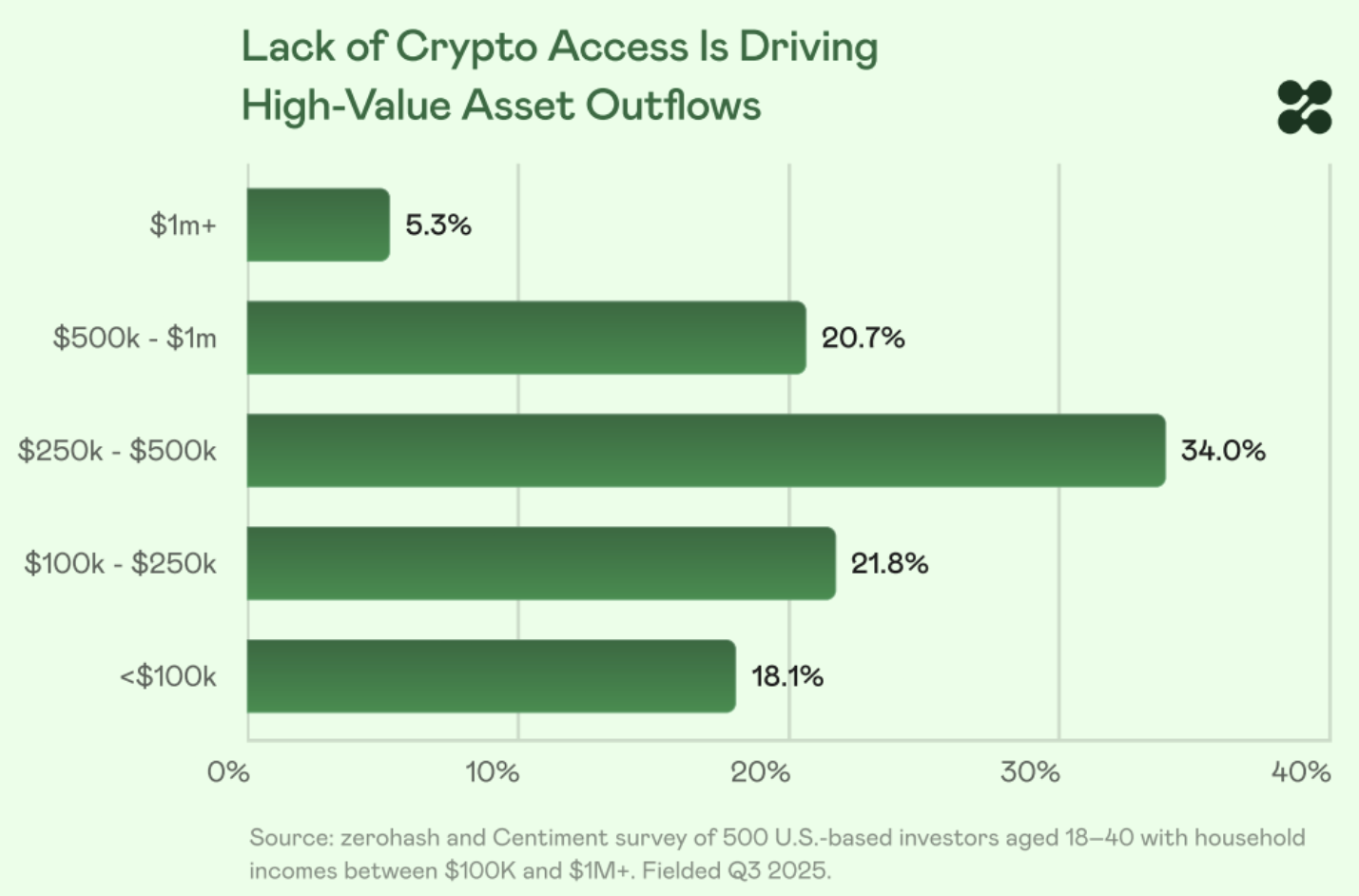
Share of investors who shifted assets from their advisers due to crypto. Source: Zerohash

Magazine: Quantum attacking Bitcoin would be a waste of time: Kevin O’Leary



İlgili Okumalar

4 Key Themes Orchestrating the 2025 Crypto Symphony

Four Keywords Outline Crypto's 2025 Journey: Trump Effect, DAT Treasuries, Stock Tokenization, and the October Crash. 2025 was a pivotal year for crypto, marked by mainstream adoption, regulatory shifts, and extreme volatility. The year unfolded in four distinct acts: **Spring: The Trump Effect.** Following his January inauguration, President Trump's pro-crypto stance fueled a market surge. The "official" TRUMP meme coin created a wealth frenzy, and BTC approached $110k. Key developments included appointing a crypto-friendly SEC chairman and initiating a Bitcoin strategic reserve using seized assets, though not without controversy. **Summer: DAT Treasury Companies & Stablecoins.** A Trump-led global tariff war triggered a "Black Monday" crash in April. The market rebounded with the rise of DAT (Digital Asset Treasury) companies, following Circle's landmark IPO. Public companies like Sharplink and Bitmine pivoted to hold massive ETH treasuries, sparking a trend that later saw many face significant paper losses as hype faded. **Autumn: Stock Tokenization & Hype Cycles.** The success of stablecoins and Circle's stock performance ignited the RWA sector. Platforms like xStocks and MyStonks pioneered tokenized stock trading, a trend even Nasdaq sought to join. Meanwhile, hype surrounded new Perp DEXs like Aster and stablecoin projects like Plasma and the Trump-affiliated WLFI, though many saw dramatic price collapses later. **Winter: The October Crash & Prediction Markets.** After a new BTC high, a Trump-announced tariff hike on October 11th triggered a historic market crash, resulting in an estimated $30-40 billion in liquidations. In the aftermath, prediction markets Polymarket and Kalshi emerged as dominant players, both achieving multi-billion dollar valuations as they became central to navigating the volatile political and financial landscape. The year demonstrated that while crypto is increasingly shaped by U.S. policy and TradFi adoption, it remains a high-stakes arena of immense opportunity and risk.

marsbit4 dk önce

4 Key Themes Orchestrating the 2025 Crypto Symphony

marsbit4 dk önce

İşlemler

Spot
Futures
活动图片