Plunging 10% Then Surging: Weekend Crude Oil Market Watch

marsbit2026-04-20 tarihinde yayınlandı2026-04-20 tarihinde güncellendi

Özet

Following a 10% plunge, oil prices surged over the weekend as geopolitical tensions in the Strait of Hormuz escalated dramatically. The initial market optimism, driven by the strait’s brief reopening on Friday, quickly reversed on Saturday when Iran reinstated restrictions and fired on vessels, halting nearly all traffic. In response, oil contracts rose approximately 4.52%, while S&P futures fell nearly 0.8%. U.S. President Trump alternated between diplomatic gestures—sending an envoy for talks—and threats to destroy Iranian infrastructure if no deal was reached. Iran rejected further negotiations, fearing a U.S. attack before the midweek ceasefire deadline. This triggered another spike in oil, surpassing Saturday’s highs, and further pressured equity markets. Crypto-related stocks underperformed significantly. Market optimism is expected to be punished, and the week ahead hinges on whether Iran maintains its refusal to negotiate.

Friday's reopening of the critical Hormuz Strait waterway triggered widespread risk-on sentiment in the markets: U.S. stocks soared, crude oil prices plummeted, U.S. Treasury yields fell, as the belief spread that the worst was over and the disruption to global energy supplies had eased.

However, these moves may prove to be premature.

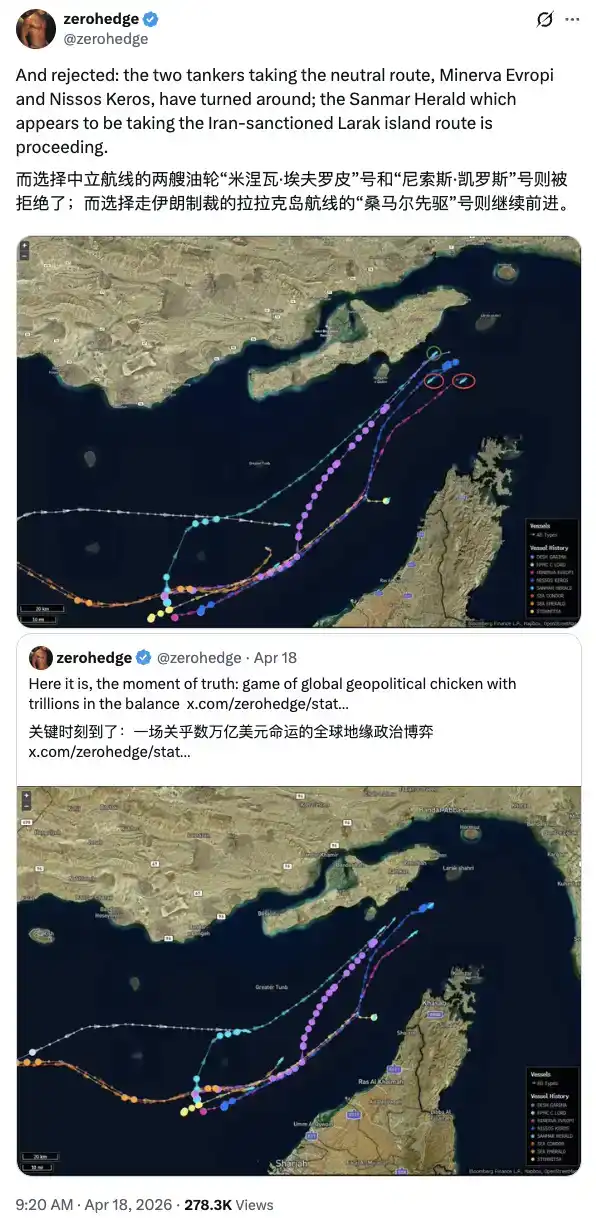
At 9:20 AM on the 18th (Saturday), reports broke that two oil tankers had been denied passage through the Strait of Hormuz. Trump immediately applied public pressure: if no deal was reached by Wednesday, the U.S. would continue blockading Iranian ports. At 16:00 that day, Iran announced the re-imposition of restrictions on the Strait and opened fire on vessels attempting to pass—two Indian ships turned back into the Persian Gulf after being shelled, bringing shipping traffic in the Strait to a near standstill.
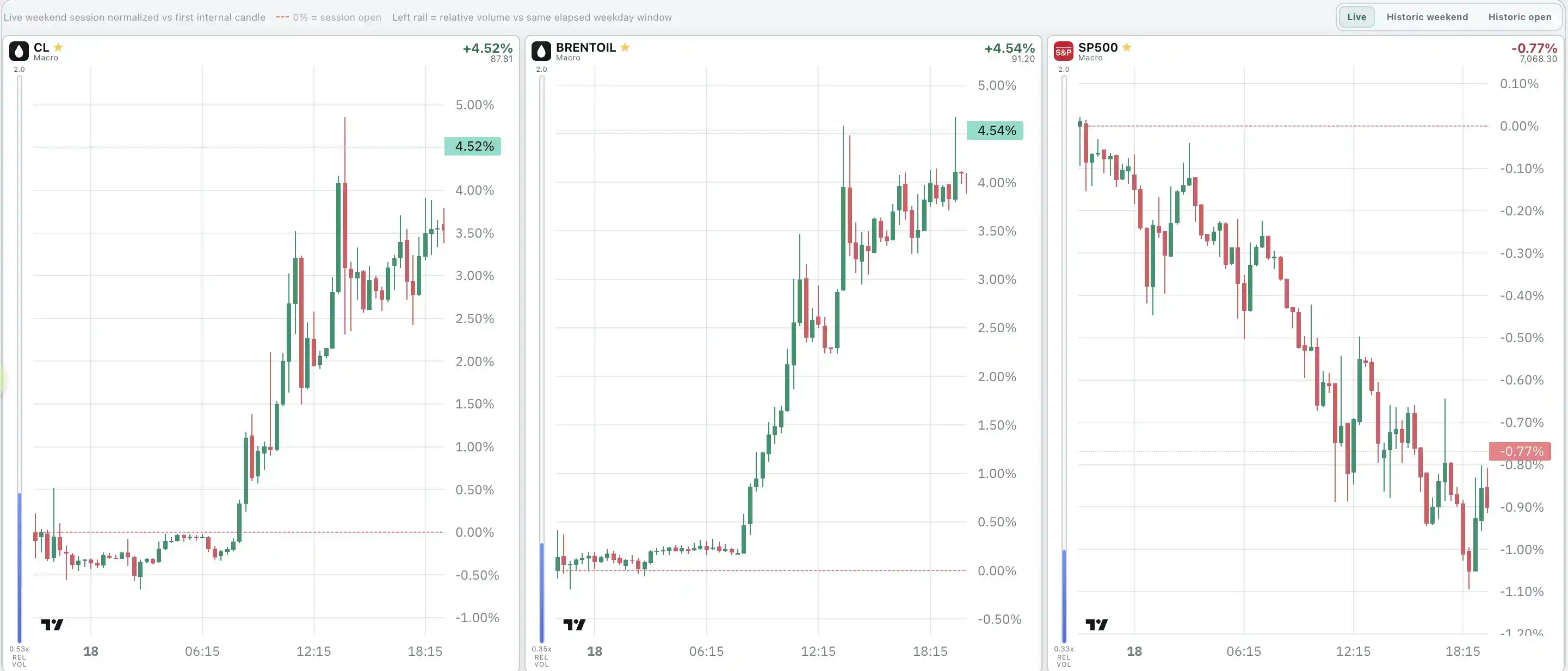
Traders reacted swiftly on TradeXYZ, with crude oil contracts gaining about 4.52% compared to the weekend closing price, and S&P index contracts falling nearly 0.8%.
Trump then shifted his stance, revealing that envoy Steve Witkoff would travel to Pakistan for talks with the Iranian side on Tuesday, potentially extending the negotiation window until Wednesday.

He then turned around and posted on Truth Social, stating, "The deal we offered is very fair and reasonable, I hope they accept it, because if they don't, the U.S. will destroy every power plant and every bridge in Iran."
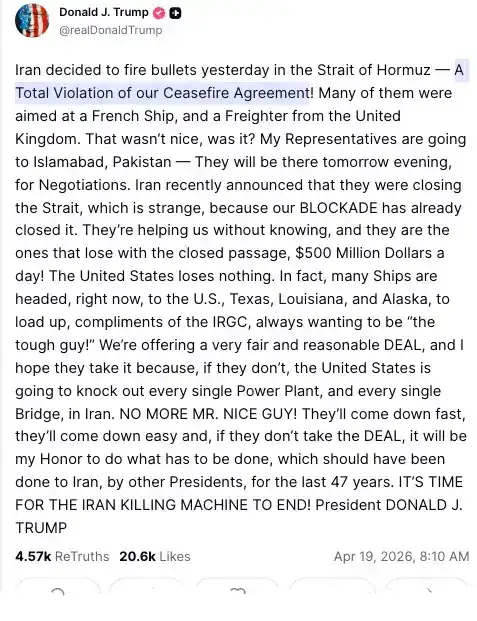
Iran was clearly not buying it. At 1:53 AM on the 20th, the Iranian side announced its refusal to participate in a second round of talks; according to Axios, Tehran's assessment was that the U.S. might launch an attack before the Tuesday night ceasefire expiration.

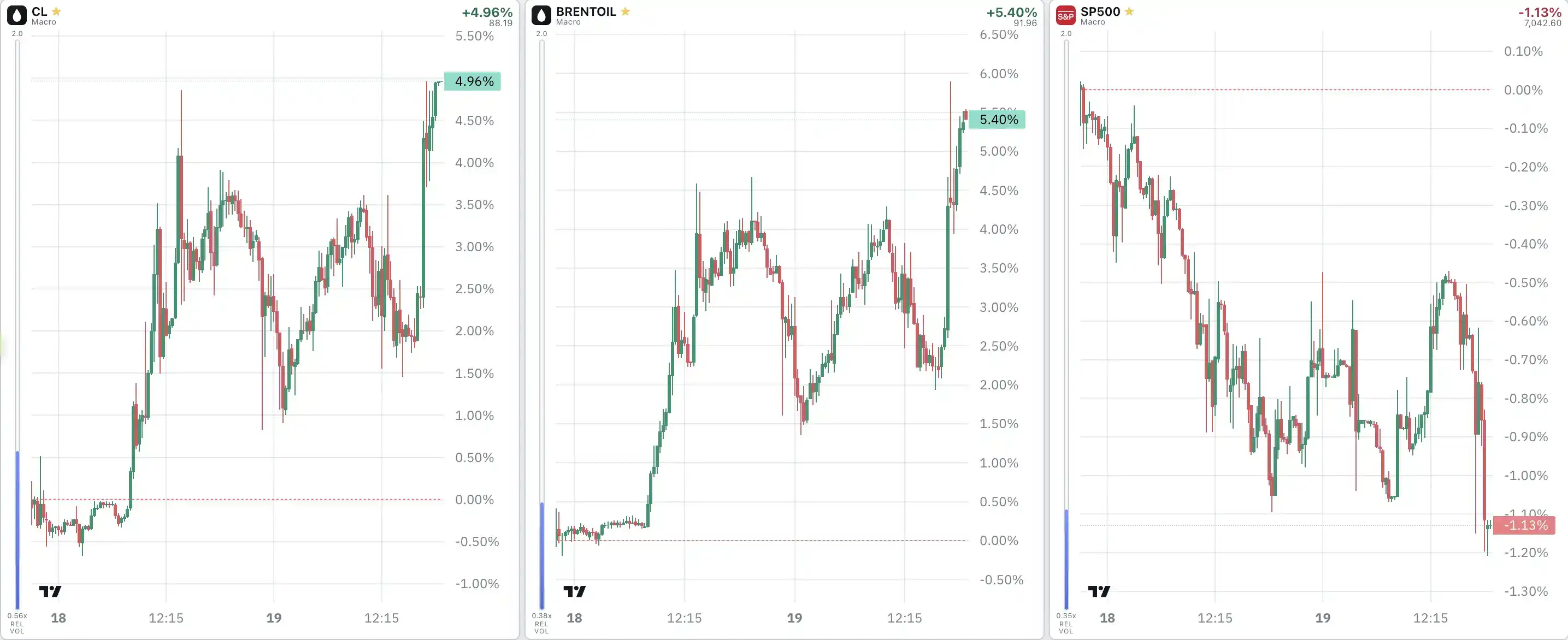
Driven by this news, crude oil surged again, clearing the highs from the 18th, while the S&P index correspondingly broke below the lows from the 18th.
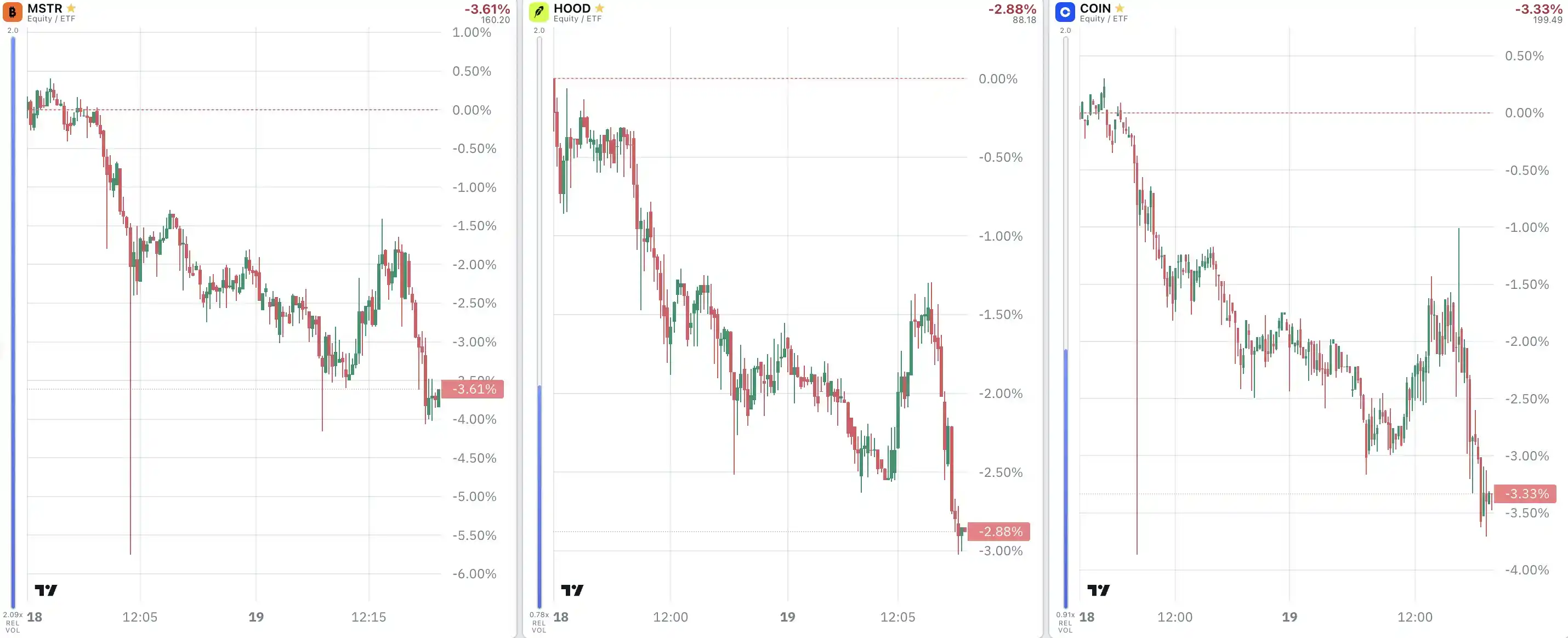
On the individual stock front, three crypto-related stocks significantly underperformed others.
Predictably, the spreading optimism in the market last week will be punished. This week's market movements will largely depend on whether Iran can maintain its no-negotiation stance.

İlgili Sorular

QWhat event initially caused the surge in risk appetite in the markets on Friday?

AThe reopening of the Strait of Hormuz shipping lane.

QWhat specific action did Iran take on Saturday that reversed the initial market optimism?

AIran re-imposed restrictions on the Strait of Hormuz and fired on vessels attempting to pass through, causing shipping to nearly halt.

QHow did crude oil futures react on TradeXYZ following the news of the Strait of Hormuz incident?

ACrude oil contracts rose by approximately 4.52% compared to the weekend's closing price.

QWhat was the content of Donald Trump's threat on Truth Social if Iran did not accept the U.S. deal?

AHe stated that if Iran did not accept the deal, the U.S. would 'destroy every power plant and every bridge in Iran.'

QWhat was the final event that caused crude oil to surge again and erase the previous day's highs?

AIran's announcement that it would refuse to participate in the second round of negotiations, fueled by reports that the U.S. might launch an attack before the ceasefire expired.

İlgili Okumalar

The Value Distribution of Stablecoins

**Summary: The Value Distribution of Stablecoins** The article argues that stablecoins are evolving from mere trading tools into broader channels for dollar access. It divides the stablecoin ecosystem into four layers to analyze how value is distributed: 1. **Issuance Layer:** Mints stablecoins, holds reserve assets, and captures the spread between reserve yield and user costs (e.g., Tether, Circle). This layer currently earns the largest profit margin. 2. **Infrastructure Layer:** Connects stablecoins to the traditional financial system, handling fiat on/off-ramps, banking integration, compliance (KYC/AML), and asset management (e.g., Bridge, BVNK). This is the "unglamorous" but critical work, building the essential bridges between crypto and real-world finance. 3. **Acquiring/Distribution Layer:** Integrates stablecoins into merchant systems, manages payment flows, and provides enterprise financial software (e.g., Stripe, Coinbase). They act as the access point for businesses. 4. **Application Layer:** The end-users and businesses that ultimately use stablecoins for payments, settlements, or as a store of value. They benefit from convenience but have little pricing power. The core thesis is that while the issuance layer currently dominates profits, the often-overlooked **infrastructure layer holds significant long-term potential**. The real challenge and barrier to mass adoption is not the on-chain transfer of stablecoins (which is simple), but the complex "last mile" integration into existing business workflows, banking systems, and regulatory frameworks across different countries. Companies in this layer are currently in a "land grab" phase, investing heavily to build networks, secure bank partnerships, and establish compliance pathways. While their position is currently pressured by the profitable issuers above and distribution platforms below, the article suggests that if stablecoins become a default financial rail for businesses, the infrastructure providers who have done the hard work of integration will ultimately gain strong pricing power and become entrenched, essential players.

marsbit5 saat önce

The Value Distribution of Stablecoins

marsbit5 saat önce

The Value Distribution of Stablecoins

The Value Distribution of Stablecoins The article argues that stablecoins are evolving from a mere trading tool into a broad "dollar channel." It analyzes the industry's value chain through four layers: 1. **Issuance Layer (e.g., Tether, Circle):** The top layer that mints stablecoins, holds reserve assets, and captures the thickest interest rate spread. 2. **Infrastructure Layer (e.g., Bridge, BVNK):** Connects stablecoins to the traditional financial system, handling critical but complex "dirty work" like fiat on/off-ramps, banking integration, compliance (KYC/AML), and cross-border settlement. 3. **Acquiring/Distribution Layer (e.g., Stripe, Coinbase):** Embeds stablecoins into merchant systems, manages payment flows, and integrates with enterprise software. 4. **Application Layer:** End-users and businesses that ultimately use stablecoins for payments, settlement, or storing value. The author posits that while the issuance layer currently captures the most profit, the most overlooked and potentially critical layer is infrastructure. The core challenge for stablecoin adoption isn't the on-chain transfer (which is simple), but bridging the gap between blockchain and the real-world financial system. This involves solving practical problems for businesses: fiat conversion, reconciliation, tax handling, and user onboarding. Infrastructure companies are currently in a difficult "land-grab" phase—building networks, securing banking relationships, and achieving compliance country-by-country. They face pressure from both the profitable issuance layer above and distribution platforms below. However, the author suggests this layer is building a crucial moat. Once stablecoins become a default business rail, the infrastructure players who have done the hard work of integration may gain significant, durable value and pricing power.

链捕手5 saat önce

The Value Distribution of Stablecoins

链捕手5 saat önce

İşlemler

Spot
Futures
活动图片