Philippines blocks Coinbase, Gemini amid wider crackdown on unlicensed VASPs

cointelegraph2025-12-24 tarihinde yayınlandı2025-12-24 tarihinde güncellendi

Özet

Amid a wider crackdown on unlicensed virtual asset service providers (VASPs), the Philippines has blocked access to major global cryptocurrency exchanges Coinbase and Gemini. The National Telecommunications Commission directed local internet service providers to restrict access to 50 platforms flagged by the central bank for operating without authorization. This action signifies a regulatory shift from informal tolerance to strict enforcement, making local licensing mandatory for market access. The country had previously banned Binance and identified other unlicensed exchanges like OKX, Bybit, and KuCoin. Meanwhile, regulated entities are expanding crypto services, with partnerships enabling stablecoin payroll and banking-integrated crypto trading.

Internet service providers (ISPs) in the Philippines began blocking major crypto trading platforms as regulators moved to enforce local licensing rules on crypto service providers.

Users reported that as of Tuesday, access to global cryptocurrency exchanges Coinbase and Gemini was unavailable in the Philippines. Cointelegraph independently confirmed that both platforms were inaccessible across multiple local ISPs.

A report by the Manila Bulletin said the ISP blocks followed an order from the National Telecommunications Commission, which directed providers to restrict access to 50 online trading platforms flagged by the Bangko Sentral ng Pilipinas (BSP), the central bank, as operating without authorization.

The central bank did not publish a full list of the platforms hit by the order. However, the change signals an ongoing shift by local regulators from informal tolerance to enforcement, making local licensing the deciding factor for crypto market access in the Philippines.
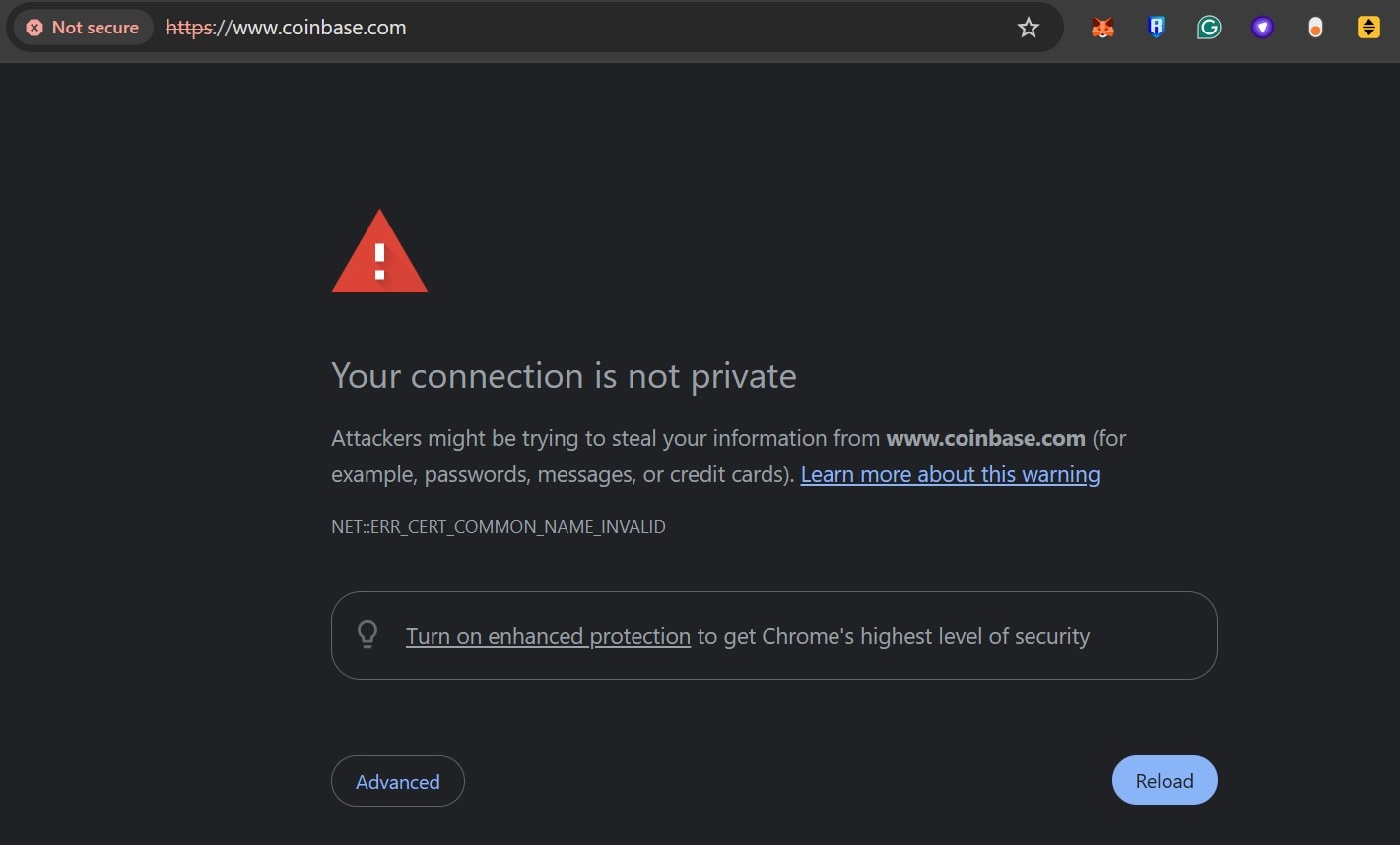
Crypto exchange Coinbase is now inaccessible in the Philippines. Source: Cointelegraph

Coinbase, Gemini join Binance in Philippines access block

While the Philippines has only recently blocked Coinbase and Gemini, the country has made enforcement moves against unlicensed crypto exchanges in the past.

In December 2023, the country started a 90-day countdown, giving Binance time to comply with local regulations before enforcing a ban on the crypto trading platform.

The Philippines Securities and Exchange Commission (SEC) said the period was meant to allow Filipinos to remove their funds from the exchange.

On March 25, 2024, the NTC ordered local ISPs to block Binance. Nearly a month later, the SEC ordered Apple and Google to block the exchange’s application from their stores.

After the ban was enforced, the Philippines SEC said it could not endorse ways for Filipinos to retrieve their funds.

More recently, the SEC identified 10 exchanges, including OKX, Bybit and KuCoin, operating without licenses.

Related: Grab deepens stablecoin push with StraitsX Web3 wallet and settlements

Regulated players roll out crypto products

While the country cracks down on unregulated platforms, compliant companies have been rolling out crypto-related infrastructure in the country.

On Nov. 19, regulated crypto exchange PDAX partnered with payroll provider Toku to let remote workers receive their salaries in stablecoins. This allows workers to convert earnings to pesos without wire fees or delays.

On Dec. 8, digital bank GoTyme rolled out crypto services in the Philippines following a partnership with US fintech firm Alpaca. With the rollout, 11 crypto assets can be bought and stored through the platform's banking application.

Magazine: Sei wallets in Xiaomi, Bhutan’s gold on Solana: Asia Express

İlgili Sorular

QWhy did the Philippines block access to Coinbase and Gemini?

AThe Philippines blocked access to Coinbase and Gemini because the National Telecommunications Commission, acting on an order from the central bank (BSP), directed ISPs to restrict access to these and other platforms flagged for operating without a local license.

QWhich government bodies were involved in the enforcement action against unlicensed crypto exchanges?

AThe enforcement action involved the Bangko Sentral ng Pilipinas (BSP), which flagged the unlicensed platforms, and the National Telecommunications Commission (NTC), which ordered internet service providers to block them. The Securities and Exchange Commission (SEC) was also involved in actions against other exchanges like Binance.

QWhat was the previous major enforcement action taken against an unlicensed crypto exchange in the Philippines before Coinbase and Gemini?

APrior to blocking Coinbase and Gemini, the Philippines enforced a ban on Binance. This process began with a 90-day countdown in December 2023 and culminated in the NTC ordering ISPs to block the platform in March 2024, followed by the SEC ordering its removal from app stores.

QWhat is the significance of this crackdown for the regulatory environment in the Philippines?

AThe crackdown signifies a major shift in the Philippines' regulatory stance, moving from informal tolerance to strict enforcement. It establishes local licensing as the decisive factor for crypto market access, prioritizing consumer protection and regulatory compliance.

QDespite the crackdown, what crypto-related services are being launched by compliant companies in the Philippines?

ACompliant companies are rolling out new services. Regulated exchange PDAX partnered with Toku to enable salaried payments in stablecoins, and digital bank GoTyme, in partnership with Alpaca, launched a service allowing users to buy and store 11 different crypto assets through its banking app.

İlgili Okumalar

First Batch of Keynote Speakers and Partners Announced! Web2+3 Summit: Defining the Next Generation of Digital Economy

Web2+3 Summit: Defining the Next Generation of Digital Economy The 6th BEYOND International Technology Innovation Expo (BEYOND Expo 2026), Asia's largest tech and ecosystem exhibition, is launching a dedicated Web2+3 stage for the first time. Co-hosted by BEYOND Expo and ChainNeXT Group, the Web3 Summit will take place from May 28–30, 2026. Against the backdrop of accelerating global tech integration, the boundaries between Web2 and Web3 are rapidly blurring. With clearer global regulations for blockchain-driven internet (Web3) and the special issuance of a Hong Kong dollar stable币 license by the Hong Kong SAR government on April 10, 2026, Web3's decentralized principles are quickly merging with traditional industries (Web2) such as e-commerce, finance, and artificial intelligence. Focused on blockchain-driven digital economy elements, the summit will center on three core principles—implementability, commercial viability, and compliance. It will bring together top Web3 experts to discuss key integration areas like stablecoin payment finance (PayFi), real-world asset tokenization (RWA), and decentralized AI (DeAI), unveiling new opportunities for industrial innovation. The first wave of confirmed speakers includes Jack Kong (Director of Hong Kong Cyberport, Chairman of Nano Labs), Yat Siu (Chairman of Animoca Brands), Michael Wu (Co-founder & CEO of Amber Group), Michael Heinrich (Co-founder & CEO of 0G), and Art Abal (Co-founder of Vana). More Web3 ecosystem pioneers, AI, and fintech experts will be announced soon. Core forum topics include: - Web2+DeAI: New AI Paradigms Driven by Decentralized Infrastructure - Web2+RWA: Real-World Asset Tokenization and Global Liquidity - Web2+PayFi: Cross-Border Payments and Financial Innovation Powered by Crypto Infrastructure - Web2+3 AI: Autonomous Agents and the Crypto Economy - Web2+3 Wealth: On-Chain and Off-Chain Integrated Investment Ecosystems - Web2+3 Commerce: A New Landscape for Global Trade Driven by Stablecoins Additional agenda details will be released in the near future.

marsbit4 saat önce

First Batch of Keynote Speakers and Partners Announced! Web2+3 Summit: Defining the Next Generation of Digital Economy

marsbit4 saat önce

İşlemler

Spot
Futures
活动图片