Overnight, Crypto Moguls Were Severely Mocked by 'Vanity Fair'

marsbit2026-03-18 tarihinde yayınlandı2026-03-18 tarihinde güncellendi

Özet

Crypto industry leaders, including Cathie Wood (ARK Invest), Olaf Carlson-Wee (Polychain), and Michael Novogratz (Galaxy Digital), faced widespread mockery after a Vanity Fair cover story portrayed them in an unflattering light. The article, titled “Crypto’s True Believers Demand to Be Taken Seriously,” depicted the billionaires as eccentric and out-of-touch—highlighting their interests in alien life, extreme survivalism, and going barefoot, while questioning their influence on global power structures. Industry insiders criticized the piece for reinforcing negative perceptions. A former fashion photographer noted the deliberately demeaning composition of the photos, such as camera angles that diminished Wood’s stature and shadowy, unflattering shots of Novogratz. The coverage was seen as a deliberate attempt to ridicule the crypto elite rather than engage with the industry seriously. The incident sparked broader reflection: some argued that seeking validation from traditional media contradicts crypto’s original anti-establishment ethos. As one founder noted, “We weren’t built for Vanity Fair or Forbes. We were built to rebel against everything they represent.” The episode underscores the tension between crypto’s growing political influence and its struggle for cultural legitimacy.

Author: Gu Yu, ChainCatcher

Overnight, a group photo of crypto moguls flooded the X timelines of all crypto practitioners, accompanied by overwhelming ridicule and criticism.

The protagonists in the picture include industry heavyweights such as ARK Invest CEO Cathie Wood, Polychain founder Olaf Carlson-Wee, and Galaxy Digital founder Michael Novogratz, but this still couldn't stop the storm, which even intensified.
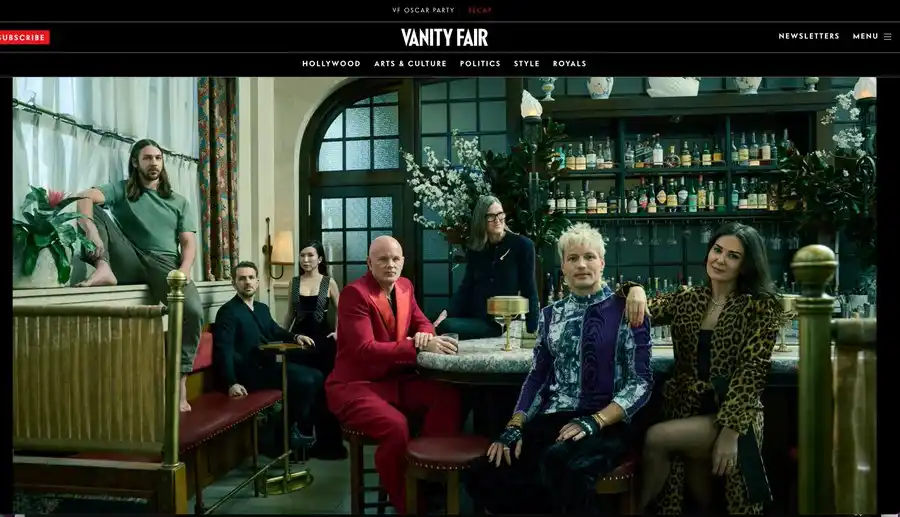
Upon closer examination of this group photo, it can be identified as a work from the venerable celebrity magazine 'Vanity Fair,' published in the latest issue's cover story 'Cryptocurrency's True Believers Demand to Be Taken Seriously.'

Through close observation of the industry's core circle, this article delves into how, after enduring multiple rounds of regulatory storms and market crashes, the crypto industry is attempting to redefine the global power landscape in 2026 through massive political donations and a 'messianic' grand narrative.

Although the stories of crypto industry moguls have already appeared in a series of traditional magazines like 'Fortune' and 'The New York Times,' 'Vanity Fair,' as a media outlet deeply versed in celebrity culture, clearly has a more 'sinister' reporting perspective. The article doesn't dwell much on complex industry trends but instead spends considerable ink on the starkly contrasting private life details of these 'power restructurers.'

In the author's portrayal, these billionaires are depicted as a group of eccentrics who are both detached from reality and eager to dominate it: on one hand, they discuss the future of human civilization in mansions in Puerto Rico; on the other hand, they are obsessed with searching for extraterrestrial life, practicing extreme survivalism, and even often going barefoot in public.

Triple Crown Digital partner Noelle Acheson commented on this, saying, 'We can laugh (and indeed we want to laugh) at 'Vanity Fair's' photos, at the awkward poses and perplexing character portrayals... but the deeper question is: Is this how the mainstream media views the cryptocurrency industry? If so, we have a lot of work to do.'

In the view of most industry insiders, this article not only fails to positively portray cryptocurrency practitioners but also highlights stereotypes about the crypto industry.

Tally co-founder Dennison Bertram further revealed that this article is 'Vanity Fair' magazine deliberately mocking cryptocurrency and its related figures, with both text and photos filled with deep disdain and sarcasm. Before getting involved in cryptocurrency, he had worked as a fashion photographer for over a decade.

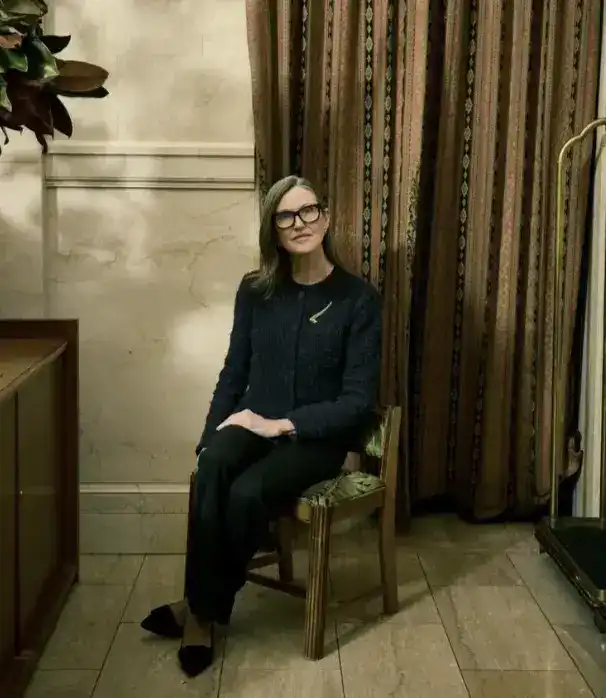
He analyzed Cathie Wood's individual portrait as an example: 'Here, Cathie Wood is deliberately made to appear small. The camera looks down on her, and the composition deliberately downplays her stature. The messy curtains, her crossed ankles, and the intentionally placed luggage cart all contribute to the deliberately created冷酷无情 (cold and ruthless) effect in the frame. Could there be a more mean-spirited visual effect than this?'
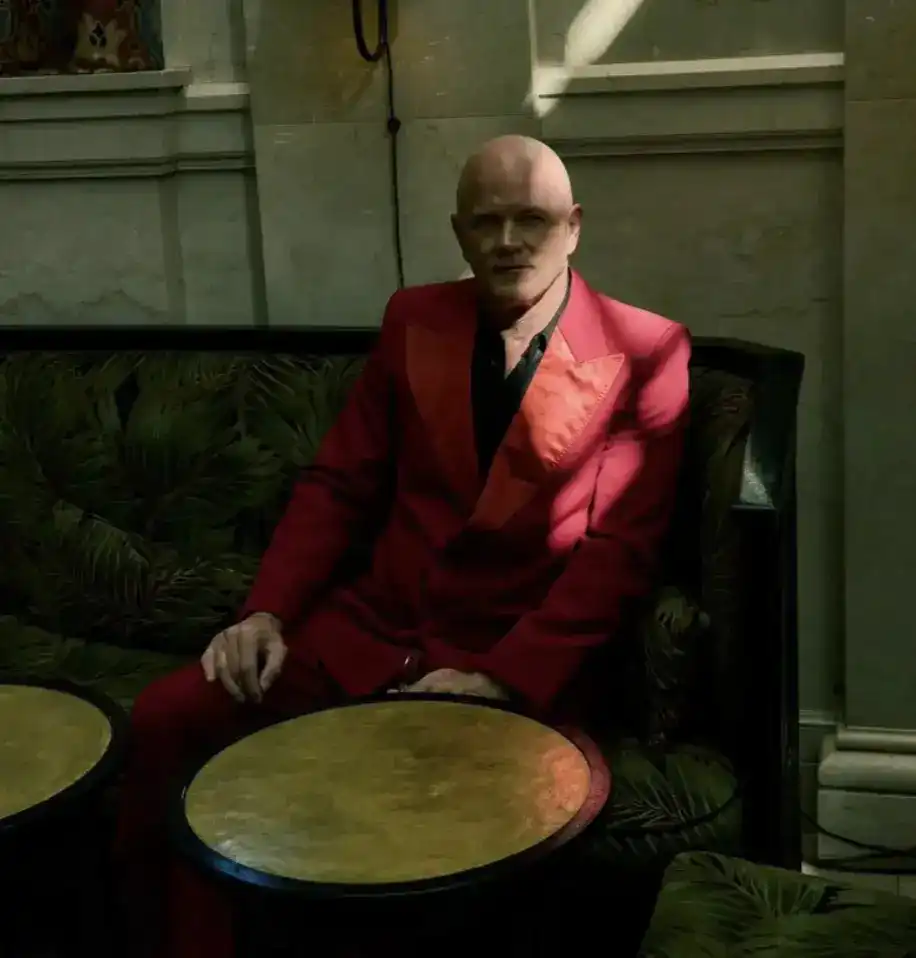
Looking at Michael Novogratz's photo: 'His eyes are squinted, looking fierce. Why? Because he's wearing glasses. He's holding them, almost invisible. His face is deliberately cast in shadow, appearing very menacing. Again, it's a mess, everything is crooked, nothing is整齐划一 (neat and uniform). Is this a positive image? I don't think so at all.'
A group of moguls who rose to the top through the crypto industry, originally attempting to seek more recognition and support from the outside world through 'Vanity Fair' magazine, unexpectedly fell into a huge 'trap' and ended up appearing as clown-like figures in the public eye. This is undoubtedly a painful lesson.

At this point, the very act of seeking validation in mainstream magazines has itself become an object of criticism. Nozomi founder Jinelle D'Lima believes that Satoshi Nakamoto and the cypherpunks never sought approval. 'The key point is, you don't need their approval: capital flows don't need it, the network runs without it, everything operates without it. We weren't built to cater to 'Vanity Fair' or 'Forbes.' We were built to resist everything they represent: gatekeepers, the establishment, and those who decide what is legitimate and what is illegal.'

'Now we're on the cover. Could it be any more ironic? This isn't like us. We were never supposed to be these people.' Jinelle D'Lima said.

The reason 'Vanity Fair's' report has become a vortex of controversy is that it reveals an awkward predicament for the crypto industry: Even though the industry attempts to exchange astronomical political donations and 'capitulation' to the mainstream financial system for 'serious treatment' from mainstream circles, within the aesthetic and value systems of mainstream culture, these new elites are still viewed as a subcultural group with cult-like overtones.

This PR disaster might be telling everyone: the true power of the crypto industry has never been in the mainstream media coverage, but in the code that can run just fine without needing to be 'taken seriously'.


İlgili Sorular

QWhat was the main criticism from the crypto community regarding Vanity Fair's article and photos?

AThe crypto community criticized Vanity Fair for portraying industry leaders in a mocking and disrespectful manner, using unflattering photos and emphasizing eccentric personal details rather than serious industry trends, which reinforced negative stereotypes.

QHow did Dennison Bertram analyze the photographic techniques used in Cathie Wood's portrait?

ADennison Bertram, a former fashion photographer, analyzed that Cathie Wood was deliberately made to appear small through a top-down camera angle, cluttered background with messy curtains, crossed ankles, and a luggage cart, creating a冷酷无情 (cold and ruthless) visual effect.

QWhat deeper issue did Noelle Acheson raise about the Vanity Fair coverage?

ANoelle Acheson raised the concern that if this is how mainstream media perceives the cryptocurrency industry, then there is still significant work to be done to improve its image and understanding among traditional outlets.

QAccording to Jinelle D'Lima, what is seeking validation from mainstream magazines like Vanity Fair contrary to?

AJinelle D'Lima stated that seeking validation from mainstream magazines contradicts the original ethos of crypto pioneers like Satoshi Nakamoto and cypherpunks, who built the industry to resist gatekeepers, institutions, and those who decide legitimacy, rather than to seek their approval.

QWhat lesson did the Vanity Fair incident teach the crypto industry about its power and acceptance?

AThe incident highlighted that the crypto industry's true power lies in its code and decentralized operation, which function without needing validation from mainstream media or traditional financial systems, and that seeking acceptance from these circles may result in misrepresentation and ridicule.

İlgili Okumalar

This Week's Key Events Preview | U.S. to Release April CPI Data; U.S. Senate Banking Committee to Review "Digital Asset Market Structure Act of 2025"

Weekly News Preview: Key events for May 12-16 include major economic and crypto industry developments. On Tuesday, May 12, the U.S. will release its April CPI data. Additionally, the gaming blockchain Ronin will begin a 10-hour migration to an Ethereum Layer 2, built on OP Stack with EigenDA for data availability. This aims to leverage Ethereum's security and settle RON's annual inflation below 1%. Base's first independent network upgrade, "Base Azul," is scheduled for mainnet activation on Wednesday, May 13, focusing on security, performance, and developer experience enhancements. Thursday, May 14, sees the U.S. Senate Banking Committee voting on the "Digital Asset Market Structure Act of 2025." In other news, Solana DeFi protocol Carrot will shut down, setting a final withdrawal deadline due to impacts from the Drift exploit. The Moscow Exchange will launch futures trading for Solana, Ripple, and Tron indices (RUB-settled) for qualified investors. Multiple service closures are scheduled for Friday, May 15. Dmail Network will begin winding down due to unsustainable infrastructure costs and failed commercialization. Users must export data before this date. Separately, the Cosmos-based lending blockchain UX Chain will fully shut down. Finally, on Saturday, May 16, gaming infrastructure provider Lattice will wind down operations, with its Redstone Layer 2 network ceasing. Users are urged to withdraw assets, especially from contracts like Uniswap pools, before the shutdown.

链捕手6 dk önce

This Week's Key Events Preview | U.S. to Release April CPI Data; U.S. Senate Banking Committee to Review "Digital Asset Market Structure Act of 2025"

链捕手6 dk önce

Morning Post | Trump Media Group Releases Q1 Financial Report; Top Three DeFi Applications Return Nearly $100 Million in Revenue to Token Holders in 30 Days; Michael Saylor Shares Bitcoin Tracker Info Again

**Title: Daily Briefing | Trump Media Group Releases Q1 Report; Top 3 DeFi Apps Return Nearly $100M to Token Holders; Michael Saylor Signals Potential Bitcoin Buy** **Summary:** Key developments in the past 24 hours include: * **Economic Outlook:** Goldman Sachs has pushed back its forecast for the next two Federal Reserve interest rate cuts to December 2026 and March 2027, citing persistent inflationary pressures from energy costs. This delayed timeline is expected to tighten liquidity flow into risk assets, including cryptocurrencies. * **DeFi & Revenue:** Data from DefiLlama shows that three leading DeFi applications—Hyperliquid, Pump.fun, and EdgeX—collectively distributed $96.3 million in revenue to their token holders over the last 30 days. This trend highlights a shift in the crypto community's focus towards real protocol earnings and sustainable economic models. * **Corporate Bitcoin Moves:** Michael Saylor, founder of MicroStrategy (note: referred to as 'Strategy' in the text, likely a typographical error), has signaled potential upcoming Bitcoin purchases by posting a "Bitcoin Tracker" update, following a pattern that typically precedes the company's official disclosure of new acquisitions. * **Market Integrity:** Prediction market platform Polymarket announced updates to address platform issues, including identifying and banning clusters of accounts involved in "ghost-fill" activities and implementing measures to prevent bulk account creation. * **Regulation:** The Bank of England Governor warned that stablecoin regulation could lead to tensions between US and international regulators. In South Korea, the National Tax Service has launched a pilot program to entrust seized virtual assets to private custody firms for management. * **Meme Token Trends:** GMGN data lists the top trending meme tokens on Ethereum (e.g., HEX, SHIB), Solana (e.g., FWOG, TROLL), and Base (e.g., SKITTEN, PEPE) over the past day. **Financial Note:** Trump Media & Technology Group reported a Q1 loss of approximately $4 billion, primarily attributed to unrealized losses on its Bitcoin and other digital asset holdings.

链捕手36 dk önce

Morning Post | Trump Media Group Releases Q1 Financial Report; Top Three DeFi Applications Return Nearly $100 Million in Revenue to Token Holders in 30 Days; Michael Saylor Shares Bitcoin Tracker Info Again

链捕手36 dk önce

Telegram Takes Direct Control of TON, Social Traffic Rewrites the Public Chain Narrative

Telegram founder Pavel Durov announced that Telegram will replace the TON Foundation as the core driver and largest validator of The Open Network (TON). Key initiatives include a sixfold reduction in transaction fees, performance upgrades, and improved developer tools within the next few weeks. This marks a strategic shift from Telegram merely providing user access to deeply integrating TON into its platform's core infrastructure. The goal is to transform Telegram's massive social traffic into sustainable on-chain activity. While viral mini-apps like Notcoin have demonstrated Telegram's ability to drive user adoption, TON aims to support frequent, low-value transactions inherent to social platforms—such as tipping, in-app payments, and game rewards. Ultra-low fees and sub-second finality (0.6 seconds) are crucial to making blockchain interactions seamless and nearly invisible within the Telegram user experience. However, Telegram's increased central role raises questions about network decentralization. Durov argues that Telegram's participation will attract more large validators, thereby enhancing decentralization. TON also offers high annual staking rewards (18.8%), aiming to retain capital within its ecosystem. The fundamental challenge for TON is no longer leveraging Telegram's user base, but becoming an indispensable, seamless infrastructure layer for Telegram's everyday applications—moving from an adjacent chain to an embedded utility.

marsbit38 dk önce

Telegram Takes Direct Control of TON, Social Traffic Rewrites the Public Chain Narrative

marsbit38 dk önce

Telegram Takes Direct Control of TON, Social Traffic Reshapes Public Chain Narrative

Telegram's founder, Pavel Durov, has announced a major shift in the development of The Open Network (TON). Telegram will now become the core driver of TON, replacing the TON Foundation and becoming its largest validator. The focus will be on technical upgrades over the next few weeks, including slashing network fees by six times to near-zero and improving finality time to 0.6 seconds. This move signifies a deeper integration between Telegram and TON, moving beyond just providing a user base. The goal is to transform Telegram's vast social traffic and built-in features—like Mini Apps, payments, and bots—into sustainable, on-chain usage scenarios. The reduced fees and faster speeds are crucial for enabling the small, frequent transactions typical of social interactions. While this promises stronger execution and product alignment, it raises questions about centralization. Durov argues Telegram's involvement will attract more validators, enhancing decentralization, but the outcome remains to be seen. Additionally, TON's high annual staking reward of 18.8% aims to retain capital within the ecosystem. The key challenge for TON is no longer just leveraging Telegram's entry point, but becoming an invisible, seamless infrastructure layer within Telegram's daily use. Its success hinges on converting viral attention into lasting, embedded utility.

Odaily星球日报47 dk önce

Telegram Takes Direct Control of TON, Social Traffic Reshapes Public Chain Narrative

Odaily星球日报47 dk önce

İşlemler

Spot
Futures
活动图片




