Over $31 Million Stolen from Humanity, Is the Team Behind It Paving the Way for a New Project?

Odaily星球日报2026-06-09 tarihinde yayınlandı2026-06-09 tarihinde güncellendi

Özet

The article reports a major security incident involving Humanity Protocol (H), resulting in over $31 million stolen. The team attributes the hack to a private key leak from a Humanity Foundation member, leading to a rapid sale of H tokens and a 90% price drop. However, prominent on-chain investigator ZachXBT suggests the event might be an "exit scam" orchestrated by the team, rather than an external hack. This suspicion is fueled by the team's controversial history, including past management failures, legal issues, and previous scandals like outsourced technology and problematic airdrops. Further investigation reveals that the core team behind Humanity is already involved with a new project called "Everything," which recently secured funding. This has led to community speculation that the alleged hack is a deliberate scheme to abandon the H project while shifting focus and resources to their new venture, leaving investors to bear the losses. The article questions whether this is a genuine security failure or a premeditated "rug pull" strategy.

Original | Odaily Planet Daily(@OdailyChina)

Author | Wenser(@wenser 2010)
When it rains, it pours. The crypto market has once again been hit by a major security incident with over $30 million in stolen funds.

In the early hours this morning, on-chain monitoring showed that the Humanity Protocol was hacked, with over 17 wallets holding H tokens compromised, resulting in total losses exceeding $19 million. Subsequently, the scale of the lost funds expanded to over $31 million. After the successful attack, the hacker quickly swapped the H tokens for ETH to facilitate subsequent money laundering.

Terence, the founder of Humanity, later confirmed that the incident was due to the private key of a Humanity Foundation member being leaked and exploited by hackers. Following this news, the price of the H token plummeted below $0.08, with a 24-hour drop of over 90%.

Against the backdrop of a minor rebound in the broader market, the "bear market staple" has played out once again. Is it hackers being unpreventable, or is there more to the story?

When a "Human-Induced Security Incident" Occurs at Humanity: Team Member Private Key Leak OR Project Team's Deliberate Plot?

According to the latest official response from Humanity, project founder Terence confirmed that the private key of a Humanity Foundation member had been leaked. As a precaution, please do not interact with cross-chain bridges or any liquidity pools until safety is confirmed. The Foundation is working with security experts and exchange partners to handle the matter and will provide ongoing updates. Furthermore, the official advises users to temporarily revoke permissions granted to the project's contract addresses until the official investigation results are disclosed.

Meanwhile, the "hack" continues. According to LookonChain monitoring, the Humanity hacker minted an additional 100 million H tokens on BSC, valued at $11.4 million, indicating that the sell-off may continue.

As of the time of writing, the address associated with the Humanity hacker holds over 31.35 million H tokens, valued at approximately $3.82 million; holds about 18,000 ETH, valued at over $30.11 million; its BNB holdings have also increased to 2,443, worth nearly $1.5 million; and it continues to mint more H tokens.

On-chain address monitoring information for the hacker can be found at: https://arkm.com/explorer/entity/dcfac174-1b67-46d6-8cab-5b8e955ca921.
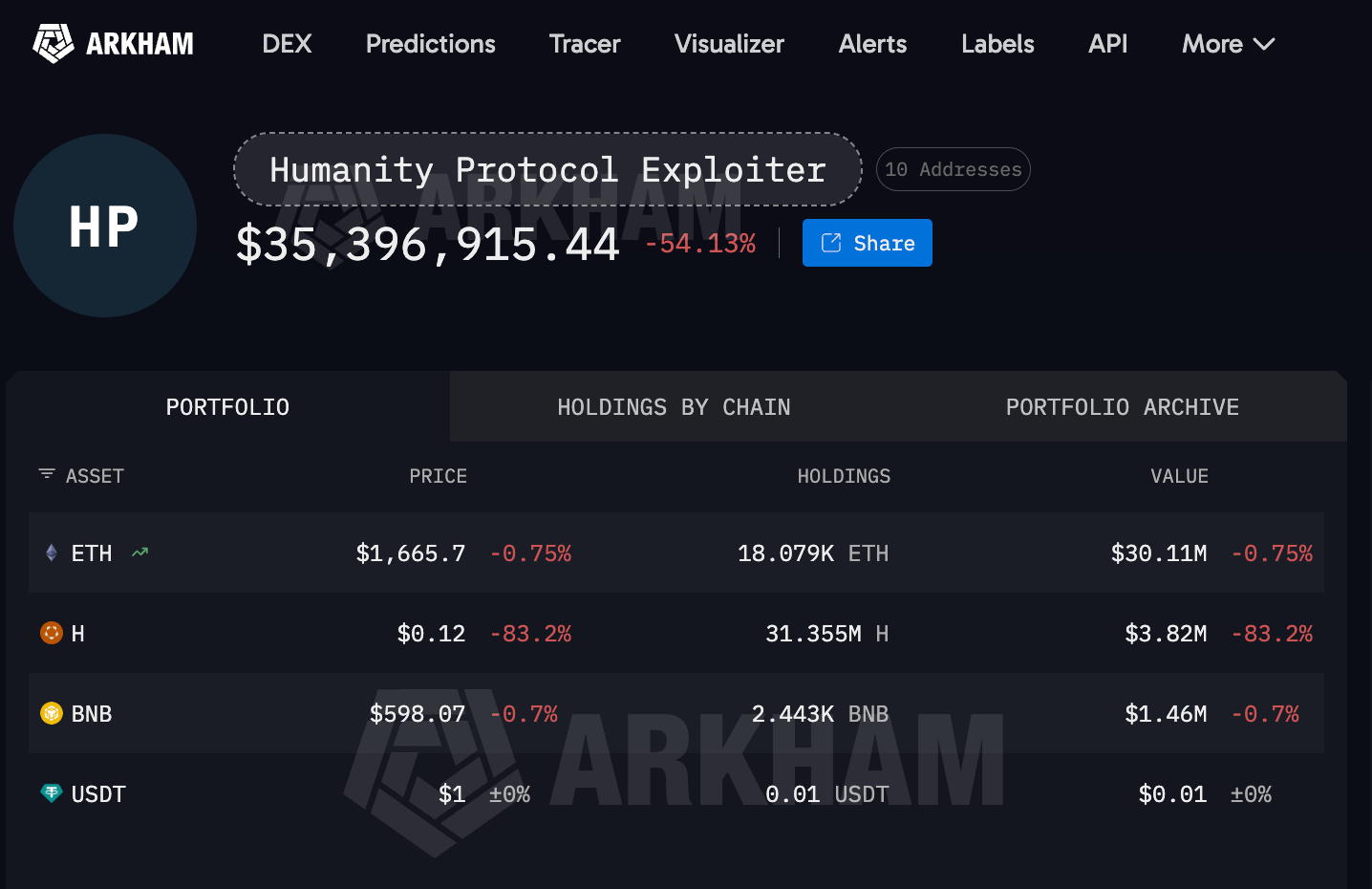
Regarding this major security incident with over $30 million in stolen funds, on-chain detective ZachXBT also offered his preliminary investigation conclusions:

He first posted, "Unclear if hack or team maliciously rugged. Looking at the chart and the concentrated supply, the H team was likely working with an active market maker. However, all H tokens were sold on (on-chain) DEXs, not CEXs."

Subsequently, he gave a preliminary conclusion, stating: "This 'security incident' was likely planned. I don't believe the team's corresponding story at all; it's just an excuse made by ill-intentioned people to get away." It's worth mentioning that the Humanity project team does indeed have a "dark history."

Humanity Team's Dark History: Technical Outsourcing, Airdrop Drama, and Team Scandals

In fact, the crypto community's dissatisfaction with Humanity is not without reason.

Previously, when WorldCoin gained fame as a "human iris identity verification project," Humanity, as a "palm print verification identity security protocol," quickly capitalized on the hot concept and rose to prominence. At that time, it was highly sought after as a partner for KYC or identity verification in numerous crypto project airdrops. However, on the other hand, its background team, its promoted "palm print security verification technology," and its token airdrop process all sparked market controversy. For more details, see "From Palm Print 'Revolution' to Access Control Manufacturer, Tearing Apart Humanity's Two-Faced 'Technological' Charade."

Not only that, in June last year, on-chain investigator Specter pointed out in a post: "After understanding the team composition of Humanity, it's concerning: Among the 4 team leaders, 3 have problematic past records involving mismanagement, lawsuits, or financial irregularities."
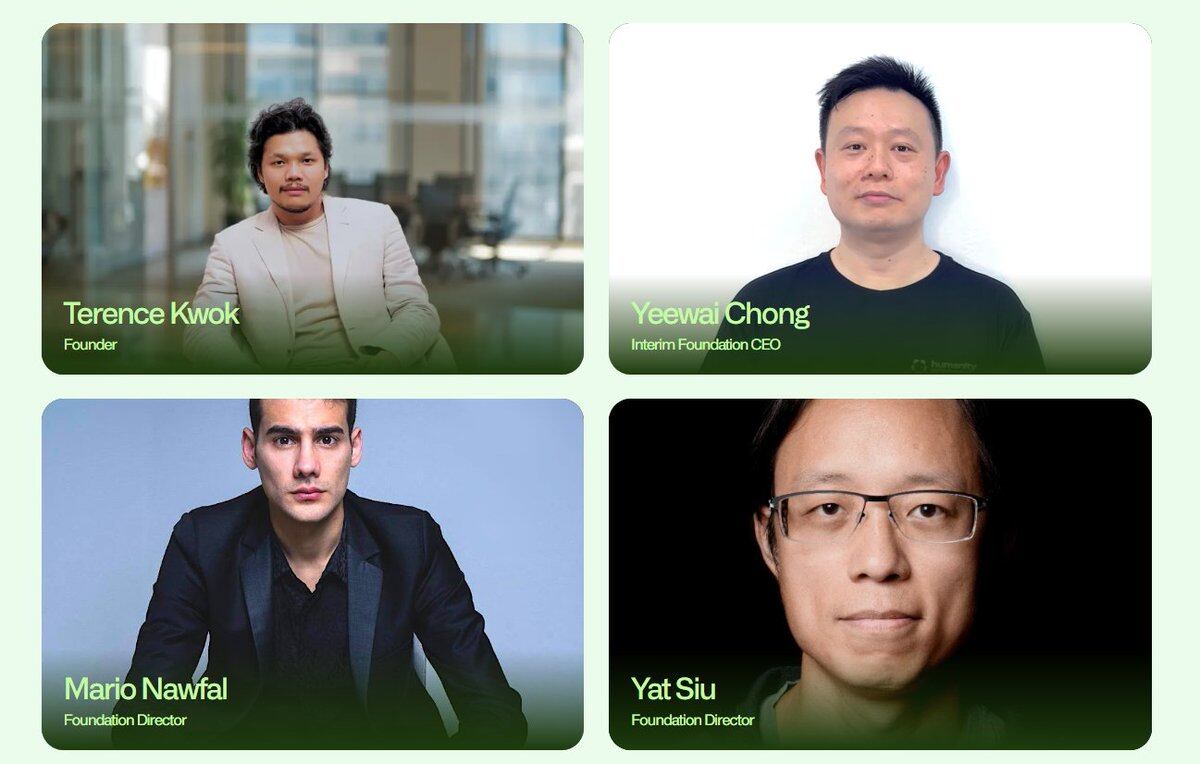
Among them, project founder and CEO Terence Kwok has a previous "entrepreneurial history." He founded Tink Labs, which once raised $200 million and reached a peak valuation of $1.5 billion, but ultimately went bankrupt in 2019 due to "mismanagement."

Foundation head Mario Nawfal has previously been accused of withholding wages and is implicated in improper financing, false promises, and coercing whistleblowers into silence. He also has a series of "blemished histories": the project Froothie was fined in Australia for false advertising; sued by Juicero; accused of invoice manipulation during his tenure at NFT Tech; and engaged in controversial behavior with BitClout token trading.

As for Yat Siu, founder of Animoca Brands, one of Humanity's backers, he was previously involved in violations related to blockchain and crypto investments, leading to his company being delisted from the Australian Securities Exchange.

Coupled with Humanity's past incidents being exposed, such as "Shenzhen technical outsourcing," large-scale sybil attacks in token airdrops, and airdrops worth single-digit amounts for loyal users, this theft incident is hard not to be seen as having ulterior motives.

Appearing Hacked, Actually a Golden Cicada Shedding Its Shell? Humanity Team Accused of Already Shifting to a New Project

Soon, more information was revealed by the crypto community and on-chain detective ZachXBT.

After suggesting that the Humanity theft might be a planned event, ZachXBT again posted, questioning Humanity's official account: "You chose to hype your token for weeks without any real substance and think the crypto community would blindly believe your story? Please disclose all your active market-making agreements with related entities in Hong Kong first."

Subsequently, he even shared a previous tweet from crypto KOL Irene Zhao, which mentioned: "2 years ago, I made a 100x return on my KOL round investment in H tokens; now, I have also participated in the KOL round financing for Everything, a new project incubated by the Humanity team."
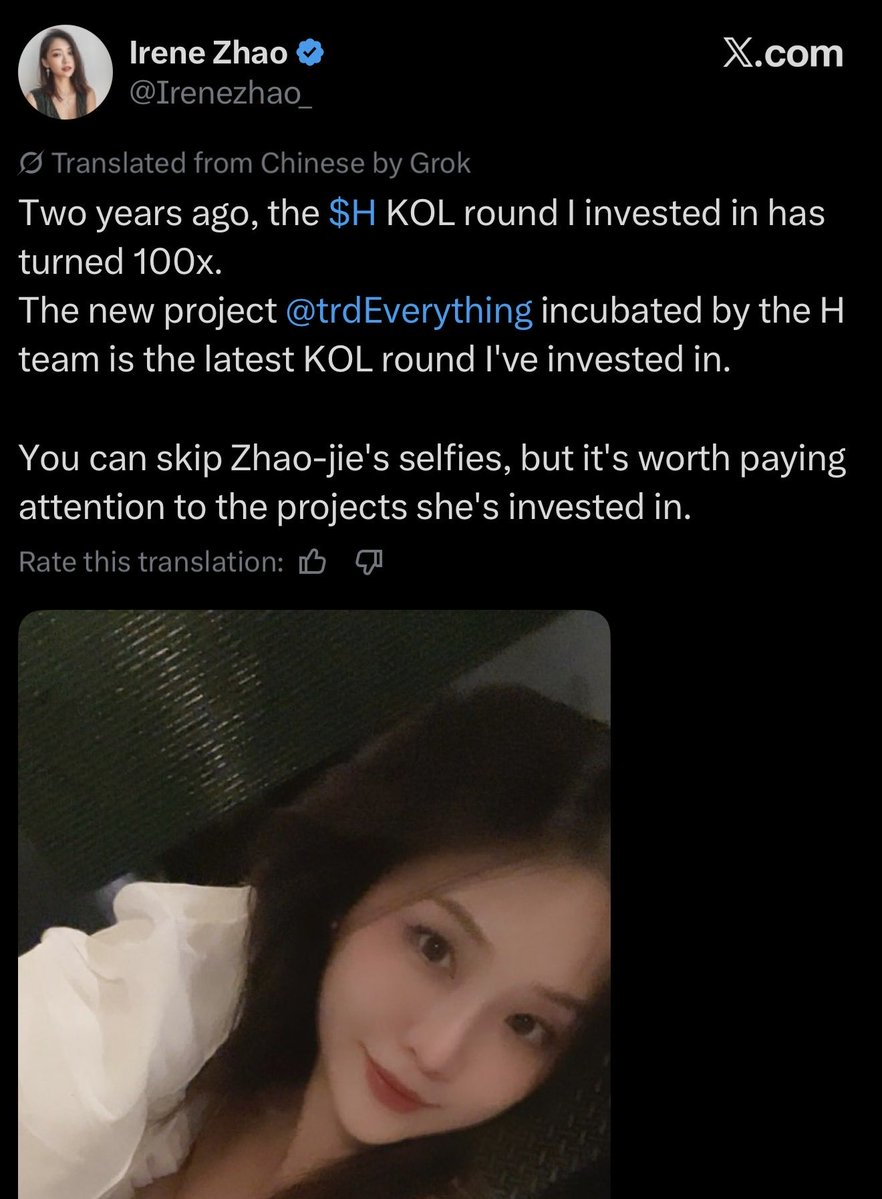
In January this year, Everything, which promotes the concept of an "all-in-one exchange," announced the completion of a $6.9 million seed round. The round was led by Humanity's venture capital arm, Humanity Investments, with participation from Animoca Brands, Hex Trust, WallStreetBets creator Jamie Rogozinski, and Three Point Capital. The platform emphasizes its advantage in integrating perpetual contracts, spot markets, prediction markets, and payment functions.

Looking at it now, it's a familiar taste (combining current hotspots), a familiar recipe (similar investor team composition). Often, we have to admire the keen sense and superb execution of these "entrepreneurial veterans." As for the KOLs and investors involved, perhaps all benefits have already been divided behind the scenes, leaving the losses for the token traders on stage.

Of course, in the crypto market, projects and token prices are always two sides of the same coin. As for how the H token price performs subsequently, it may still depend on the handling plan of the Humanity project team and the stage performance of the market makers.


İlgili Sorular

QAccording to the article, what was the official explanation given by the Humanity Protocol team for the massive security breach?

AThe official explanation, as confirmed by Humanity founder Terence, was that a private key belonging to a member of the Humanity Foundation was compromised and exploited by hackers.

QWhat was the estimated total loss from the Humanity Protocol attack as detailed in the report?

AThe estimated total loss from the attack exceeded $31 million. Initially, over 17 wallets holding H tokens were drained for over $19 million, and the scale later expanded to over $31 million.

QWho is ZachXBT and what was his preliminary conclusion about the nature of the incident?

AZachXBT is a well-known on-chain investigator. His preliminary conclusion was that the security event was likely a deliberate, man-made scheme, suggesting it was an exit strategy rather than a genuine hack.

QWhat new project is mentioned as being incubated by the Humanity team, according to the article?

AThe new project mentioned is called 'Everything', a platform described as an all-in-one exchange. It was announced in January and raised $6.9 million in seed funding, led by Humanity's venture arm, Humanity Investments.

QWhat are some of the alleged 'black histories' or past controversies associated with key members of the Humanity team mentioned in the article?

AThe article mentions several controversies: Founder Terence Kwok's previous venture Tink Labs collapsed due to mismanagement; Foundation lead Mario Nawfal allegedly had issues with unpaid wages, false promises, and questionable financial practices; and investor Yat Siu's company was delisted from the Australian Stock Exchange for irregularities in blockchain investments.

İlgili Okumalar

As Consensus Accelerates, What Are Young Investors Betting On?

Title: As Consensus Forms Faster, What Are Young Investors Betting On? In the rapid evolution of tech investment, a new generation of young investors is navigating a landscape where AI, robotics, commercial aerospace, and quantum computing are advancing simultaneously. Traditional investment logic based on financial models is giving way to a need for deep technical understanding and the ability to act before industry consensus forms. An analysis of trends from the "WAIC FUTURE TECH" list of young investment leaders reveals key shifts in focus. The first major trend is the movement of AI from the digital screen into the physical world. Investment is shifting from large language models and chatbots towards embodied AI, robotics, AI hardware, and edge computing. While demonstrations generate excitement, the real challenge lies in achieving scalable, reliable, and cost-effective delivery in complex real-world environments like factories and logistics. Success depends not just on algorithms but on the integration of sensors, actuators, and control systems. Second, the competitive focus for large models is moving beyond raw capability toward building an "intelligence flywheel." The goal is to create self-reinforcing systems where user interaction generates data, improving the model, which in turn enhances the user experience and attracts more engagement. Companies that successfully embed AI into workflows to create these closed-loop systems can build lasting value that isn't easily erased by the next model upgrade. Third, facing a potential bottleneck in high-quality human-generated data, investors are looking at new underlying technologies. Reinforcement learning and self-play, as demonstrated by AlphaGo Zero, offer paths for AI to generate its own experience. Scientific foundation models, which aim to build general AI capabilities for fields like life sciences and materials discovery, represent a non-consensus direction that could unlock new frontiers of knowledge and data. Finally, in deep-tech areas like quantum computing, commercial aerospace, and space-based infrastructure, patient capital is essential. These fields have long, uncertain development and validation cycles involving complex engineering, supply chains, and regulations. Investment here requires a long-term view, focusing on foundational team capabilities and the eventual emergence of market demand, even if commercial returns are distant. Collectively, these trends illustrate how young investors are adapting to a new era. They are learning to make earlier, technically-informed judgments, balance hype with real-world viability, and provide the patient capital needed to build the deep-tech foundations of the future.

marsbit4 dk önce

As Consensus Accelerates, What Are Young Investors Betting On?

marsbit4 dk önce

Can Japan Buy Growth with AI? Will the Bond Market Believe It?

Japan's cabinet has introduced the 2026 Basic Policy on Economic and Fiscal Management and Reform, shifting its primary fiscal target. The new framework moves away from the traditional annual primary balance goal and instead prioritizes a stable reduction of the debt-to-GDP ratio. This change is tied to a strategy of increased "responsible proactive fiscal" spending, aiming to boost long-term growth through investments in strategic sectors like AI, semiconductors, energy, and robotics. The government estimates total public and private investment in 62 key technologies could exceed 370 trillion yen by 2040. The market reaction has been mixed and cautious. While equity markets may respond to policy signals, bond markets are focused on fiscal credibility. Concerns center on whether the weakening of the clear primary balance anchor could lead to looser fiscal discipline. If investors doubt that these strategic investments will generate sufficient productivity gains, tax revenue, and nominal growth to outpace rising interest costs, they may demand higher yields on Japanese Government Bonds (JGBs). Recent volatility in the yen and JGB yields, with the 10-year yield briefly reaching 2.9%, reflects this skepticism. The success of this new framework hinges on two factors: whether Japan can achieve a nominal growth rate consistently higher than its long-term interest rates, and whether future budgets demonstrate disciplined control over bond issuance. The government's narrative is that strategic investment is essential to break Japan's cycle of low growth, aging, and labor shortages. However, the bond market will continuously assess the credibility of this plan, pricing the risk that it may represent fiscal expansion rather than a viable growth strategy.

marsbit41 dk önce

Can Japan Buy Growth with AI? Will the Bond Market Believe It?

marsbit41 dk önce

Misjudged A-Shares: Resilience, Expectations, and Confidence

China's A-share market recently faced selling pressure, especially in tech sectors, initially triggered by a global tech sell-off that began in South Korea. However, the article argues this is a case of "mistaken injury" and highlights the market's underlying resilience. This resilience stems from three main pillars: **1) Tech Sector Fundamentals:** Unlike Korea's market dominated by a few memory chip stocks, China's tech sector is diversified across computing, communications, electronics, and semiconductors, supported by dual narratives of global AI supply chains and domestic substitution. Core areas like optical modules and fiber optics continue to show strong earnings growth. **2) "National Team" Support:** State-backed institutions and large corporations have made significant market purchases and announced buybacks, providing liquidity and signaling confidence. This is seen as a stabilizing policy signal, often associated with market bottoms. **3) Broader Market Pillars:** Other major sectors are showing endogenous recovery momentum. Consumer stocks benefit from stabilizing CPI and signs of sector recovery (e.g., liquor price hikes). Cyclical sectors like aluminum have high earnings, potential price increases due to tight supply, and low valuations. The financial sector offers stable dividends and low valuations. The conclusion is that the sell-off was driven by external contagion, not a collapse in fundamentals. With strong policy support and recovering momentum across key sectors, the A-share market possesses the toughness to regain stability.

marsbit1 saat önce

Misjudged A-Shares: Resilience, Expectations, and Confidence

marsbit1 saat önce

İşlemler

Spot
活动图片




