OSL Group Accelerates Global Stablecoin and Payment Expansion with $200M Capital Raise

TheNewsCrypto2026-01-29 tarihinde yayınlandı2026-01-29 tarihinde güncellendi

Özet

OSL Group, a Hong Kong-listed digital asset company, has raised $200 million in new equity financing to accelerate its global expansion in stablecoin trading and regulated payment services. As the first exchange licensed by the Hong Kong Monetary Authority, OSL provides regulated OTC trading, digital asset custody, and tokenized wealth management services. The funds will support strategic acquisitions, global expansion, and infrastructure development. This move aligns with growing global interest in stablecoins, exemplified by recent developments and regulatory discussions.

The Hong Kong–listed digital asset company, OSL Group, has secured $200 million in new equity financing to accelerate its global expansion in stablecoin trading and regulated payment services.

According to a press statement issued on January 29, OSL Group was the first exchange to obtain a license from the Hong Kong Monetary Authority. It provides regulated platforms for OTC trading, digital asset custody, and tokenized wealth management.

In 2025, “OSL Group has been fully committed to developing a compliant stablecoin trading and payment ecosystem,” noted in the statement. As it completed the acquisition of Banxa and launched OSL BizPay, a business-to-business payment platform aimed at corporate and institutional clients. Additionally, the OSL had introduced USDGO, a stablecoin backed by U.S. dollars.

Ivan Wong, CFO of OSL Group, said, “Beyond strengthening our capital base and diversifying our shareholder structure, these funds will enable us to seize timely opportunities to acquire licensed trading and payment entities worldwide, further solidifying our first-mover advantage as we advance our compliance-driven global strategy,” noted in the press release.

According to the proposed plan, the raised $200 million will help support strategic acquisitions, expand OSL Group’s global presence, improve product and technology infrastructure, and cover general working capital needs.

Rising Interest in Stablecoins Amid Rejections

Today, the OSL Group announced a $200 funds raise for Stablecoin expansion, alongside Abu Dhabi-based Universal Digital having introduced USDU, the first UAE Central Bank-approved U.S. dollar-pegged stablecoin, as the interest in stablecoin is growing.
Meanwhile, last week, the American Bankers Association (ABA) expressed concerns over yield-paying stablecoins, where crypto leaders rejected these claims. To bring a solution, the White House is planning a meeting with major crypto company leaders and traditional banks to discuss the U.S. crypto market structure bill.

Highlighted Crypto News:

‌Solana (SOL) Price Prediction 2026, 2027-2030

TagsOSL GroupStablecoin

İlgili Sorular

QWhat is the purpose of OSL Group's $200 million capital raise?

AThe $200 million capital raise aims to accelerate OSL Group's global expansion in stablecoin trading and regulated payment services, support strategic acquisitions, expand global presence, improve product and technology infrastructure, and cover general working capital needs.

QWhich regulatory license did OSL Group obtain first in Hong Kong?

AOSL Group was the first exchange to obtain a license from the Hong Kong Monetary Authority.

QWhat are the key products and services launched by OSL Group in 2025 according to the article?

AIn 2025, OSL Group completed the acquisition of Banxa, launched OSL BizPay (a B2B payment platform), and introduced USDGO, a stablecoin backed by U.S. dollars.

QHow does OSL Group's CFO, Ivan Wong, view the significance of the funding?

AIvan Wong stated that beyond strengthening the capital base and diversifying shareholder structure, the funds will enable OSL to seize opportunities to acquire licensed trading and payment entities worldwide, solidifying their first-mover advantage in compliance-driven global strategy.

QWhat recent global development in stablecoins is mentioned alongside OSL Group's announcement?

AAlongside OSL's announcement, Abu Dhabi-based Universal Digital introduced USDU, the first UAE Central Bank-approved U.S. dollar-pegged stablecoin, reflecting growing global interest in stablecoins.

İlgili Okumalar

Debate: Korean Workers Fear Unemployment, While Musk Envisions a Society 'Without Work'?

While South Korean auto workers fear job losses from robotics, Elon Musk envisions a future where AI and robots render most work optional. This article explores the growing tension between immediate anxieties over automation and long-term visions of a post-work society. The piece begins with recent strikes at Hyundai's Korean plants, where unions, amid standard wage negotiations, also sought job guarantees against advancing robotics—specifically mentioning Boston Dynamics' Atlas. This reflects how anxiety about technological displacement is emerging even before robots are fully capable of replacing skilled labor on assembly lines. The author argues that while current robotics still struggle with the nuanced, experiential knowledge of veteran workers, the *perception* of imminent replacement is fueling social conflict prematurely. This modern "Luddite" sentiment is compared to the 19th-century English textile workers who smashed machines. Historically, Luddites weren't simply anti-technology; they were protesting the rapid devaluation of their skills and the unequal distribution of productivity gains. Similarly, today's workers ask who will bear the cost of transition and share in the new wealth created by machines. In contrast, figures like Elon Musk propose an optimistic endpoint: with AI and robotics driving extreme abundance, the link between work and survival could break. He suggests concepts like "Universal High Income" could allow society to share the technological bounty, transforming work from a necessity into a choice. The core challenge, however, lies in the transition. The author notes that technology's benefits diffuse slowly, while its disruptive costs—job losses, skill obsolescence—can be concentrated and immediate. The risk is a painful interim period where productivity gains are captured by a few before new social contracts, safety nets, and retraining systems are established. The conclusion calls for proactive governance. Just as past industrial revolutions gave rise to labor standards and social safety nets, the robotics era needs its own frameworks. These should address job transition support, distribution of productivity gains, safety liability, and ethical deployment. Embracing such "constraints" is not opposition to progress but a necessary step to ensure technology benefits society broadly. The discussion sparked by Hyundai's workers, therefore, is not premature but essential.

marsbit3 dk önce

Debate: Korean Workers Fear Unemployment, While Musk Envisions a Society 'Without Work'?

marsbit3 dk önce

CATL Invests in a 00s Graduate from Harbin Institute of Technology

Contemporary Amperex Technology Co., Limited (CATL) has exclusively invested in the Pre-A round of RoboParty, a company founded by 22-year-old Huang Yi. A former student at Harbin Institute of Technology, Huang built a bipedal humanoid robot in his dorm room and later dropped out to launch RoboParty in Shanghai. The company focuses on developing a fully open-source platform for humanoid robots, combining self-developed hardware, operating systems (Party OS), and foundational models. RoboParty's strategy emphasizes open-source collaboration to accelerate development and build a developer ecosystem, positioning itself as foundational infrastructure for embodied AI. Since its 2025 founding, the team—composed largely of top-tier university graduates—has secured six funding rounds in eight months, with investors including Matrix Partners, Xiaomi, and now CATL. This investment by CATL's corporate venture arm signals strong industry confidence in RoboParty's potential for real-world manufacturing and complex scenarios. Huang Yi prioritizes technological excellence and developer community growth over rapid commercialization. The company has already garnered significant interest from developers and research institutions globally. With a focus on continuous, rapid iteration and open innovation, RoboParty aims to prove the versatility of humanoid robots and drive the field toward an open-source future.

marsbit6 dk önce

CATL Invests in a 00s Graduate from Harbin Institute of Technology

marsbit6 dk önce

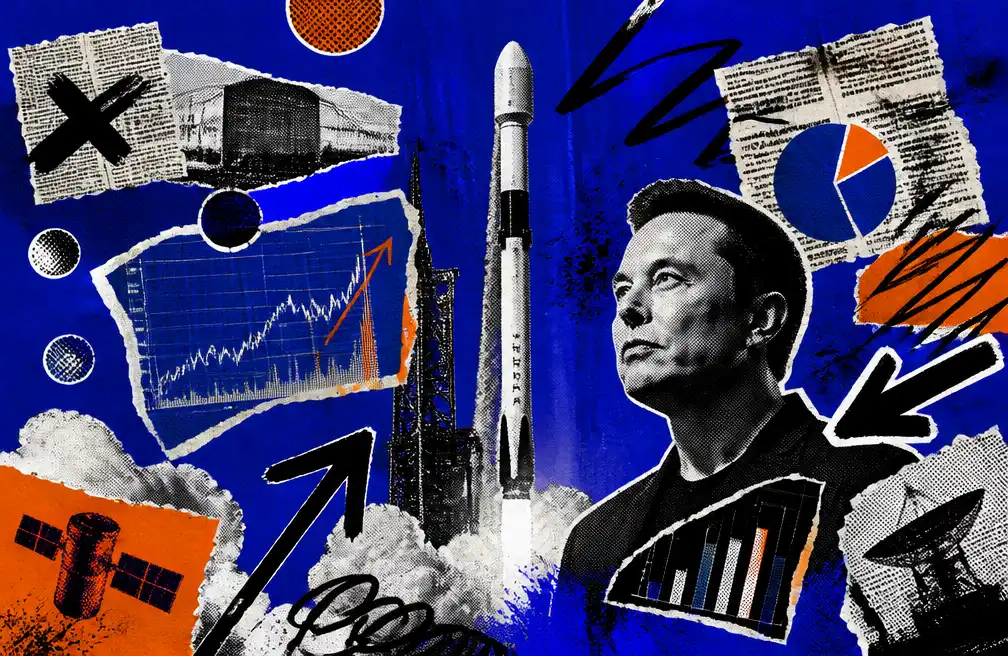
Will SpaceX's First Quarterly Report Rescue Its Stock Price Under the Pressure of 1.2 Billion Shares Unlocking?

SpaceX is set to release its first quarterly earnings report since going public, a key test for its stock which has declined 20% from its IPO price. Approximately 9.12 billion shares are set to unlock on August 6, with an additional 3.19 billion following a week later, creating potential selling pressure from early investors. A strong report may be the only catalyst to reverse the downtrend. The report will cover three segments: Space, Connectivity (Starlink), and AI. The AI business, centered on the merged xAI, is the biggest uncertainty. While it generated $818 million in revenue last quarter, it also reported a $2.5 billion operating loss and $7.7 billion in capital expenditures. New data center rental agreements with Anthropic and Google, particularly the substantial $1.25 billion monthly deal with Anthropic, add significant revenue variability this quarter. Investors await guidance on AI's future outlook and the timeline for launching AI computing satellites via Starship. Starlink remains the stable profit driver, ending last quarter with 10.3 million subscribers. Key metrics will be user growth, average revenue per user (ARPU), and enterprise/government contract backlogs. The Space segment, which posted a $657 million operating loss last quarter, will be scrutinized for updates on Starship development following its 13th test flight and the pace of Falcon 9 launches, many of which support internal Starlink deployment. Wall Street expects Q2 revenue of around $6.9 billion and EBITDA of $2.1 billion. However, as this is the first earnings report, analyst forecasts lack a historical baseline and could see significant variance. With a current market cap of ~$1.4 trillion and a high valuation, the market's reaction post-earnings will hinge on the report's strength, the magnitude of post-lockup selling, and ongoing investor concerns.

marsbit7 dk önce

Will SpaceX's First Quarterly Report Rescue Its Stock Price Under the Pressure of 1.2 Billion Shares Unlocking?

marsbit7 dk önce

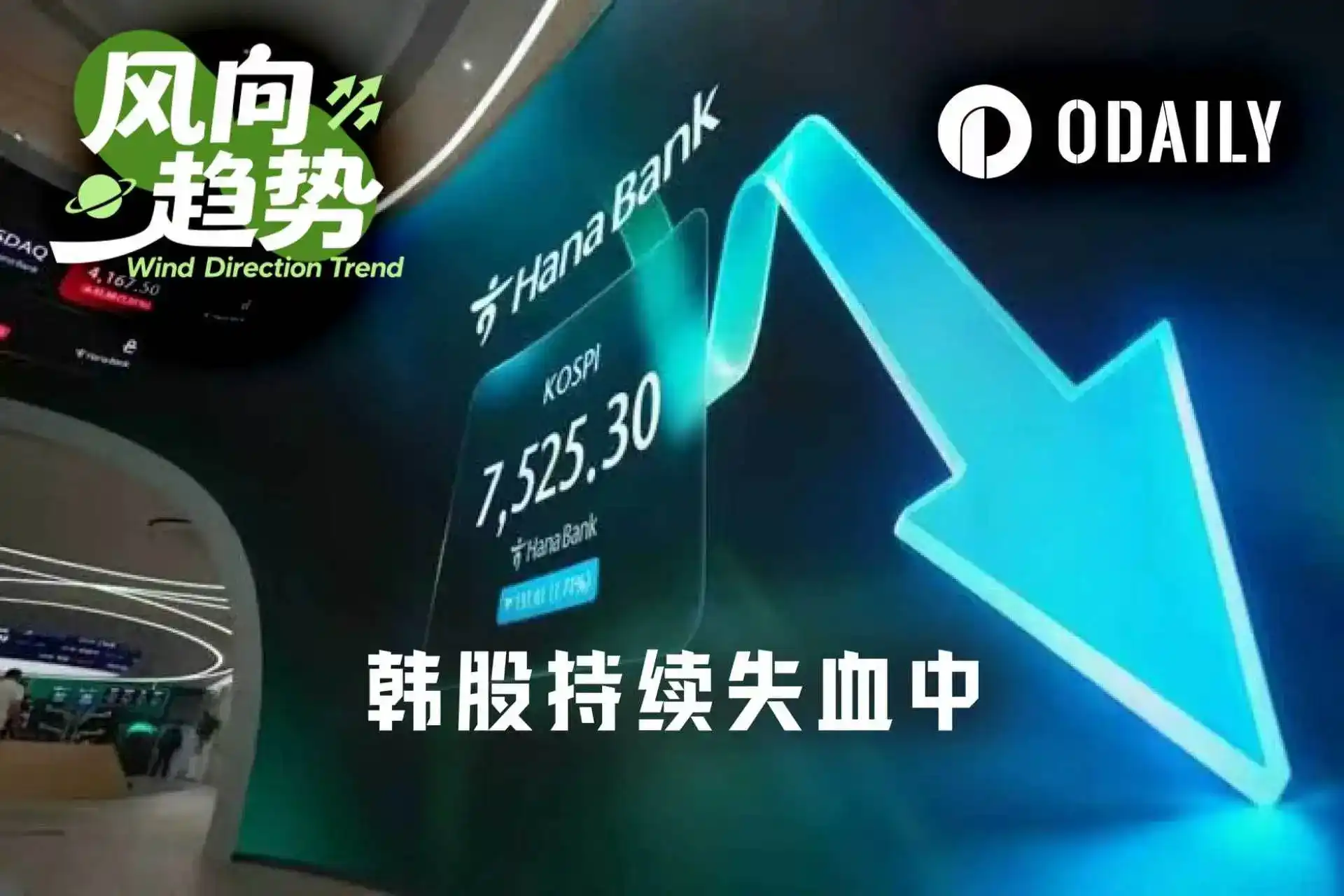
Soaring 20% Then Dropping 5%: When Will the Bottom of the Korean Stock Market Be?

"South Korean stocks face a turbulent period as the KOSPI index, after a 20% surge, fell 5% to 6257 points. The market is grappling with severe issues: over 500,000 leveraged retail accounts have been liquidated, and more than 24 trillion won has flowed from stocks into bank deposits for safety. This reflects a significant loss of market liquidity and shaken investor confidence. In response, Korean financial regulators are taking action. They have tripled the minimum保证金 (margin) requirement for single-stock leveraged ETF trades to 30 million won and are considering granting themselves "emergency intervention" powers. These could include capping leverage ratios and setting investment limits on these ETFs, seen by many as amplifying market volatility. Initial results show a 75% drop in these products' trading volume post-regulation. The market downturn has political repercussions, pushing President Yoon Suk-yeol's approval rating to a new low. Meanwhile, foreign investors made a record net purchase of 7.18 trillion won during a recent rebound, while domestic retail investors sold off massively. Morgan Stanley has upgraded South Korean stocks to "overweight," citing the ongoing "leverage unwinding" and potential for a 36% upside, with giants like Samsung Electronics and SK Hynix providing valuation support. However, analysts caution that the market's structure remains vulnerable to foreign capital flows, and the current low may not be the bottom."

marsbit22 dk önce

Soaring 20% Then Dropping 5%: When Will the Bottom of the Korean Stock Market Be?

marsbit22 dk önce

İşlemler

Spot
活动图片