Opinion: The AI Bubble in Stocks Has Arrived. Why I'm Turning to Bet on Bitcoin?

marsbit2026-07-02 tarihinde yayınlandı2026-07-02 tarihinde güncellendi

Özet

This article argues that the AI-driven stock market surge shows clear signs of a bubble. The author, citing Howard Marks' cycle theory, presents a checklist of behaviors signaling a market top—excessive optimism, easy capital, and the belief "no price is too high"—and finds the current AI stock mania matches most criteria. Consequently, the author has sold AI-related ETFs and shifted focus to accumulating Bitcoin within a $50k-$60k range, viewing it as a scarcer asset with a wider margin of safety amid high equity valuations. The piece contrasts the narrow, frothy AI rally with what it sees as a more rational long-term opportunity in Bitcoin, especially given indicators like high CAPE ratios and selective risk appetite. The author's personal strategy involves holding significant cash, with capital allocated across trading, long-term accumulation (primarily BTC), and illiquid investments.

Author:Investing Beanstock

Translation:Deep Tide TechFlow

Deep Tide's Guide: AI stocks are soaring, but this trader is actually selling tech stocks and turning to bottom-fish Bitcoin. He used Howard Marks's cycle theory to examine the current market point by point and found that AI already meets almost all the characteristics of a "bubble top." For investors, this article provides a calm framework for cycle positioning, helping you judge whether it's time to be greedy or fearful now.

The stock market is experiencing an AI-driven, frenzied bull market, which should come as a surprise to no one.

Not being positioned feels downright stupid—because capital expenditure (CAPEX) will only continue to rise, and the forward valuations of all these stocks will only become crazier.

I won't comment on specific stocks or indices; banks and financial media worldwide are already providing blanket coverage. I'm more interested in figuring out—or at least trying to decipher—what stage of the market we're in. Not just in cryptocurrency, but across the entire financial markets.

To do this, I drew heavy inspiration from one of my favorite books: Howard Marks's *Mastering the Market Cycle*.

Most people understand cycles as a series of events. Most also understand that these events typically follow each other in a regular sequence: an upswing is followed by a downswing, and then eventually a new upswing. But to fully understand cycles, this isn't enough. Events in a cycle shouldn't just be seen as one following another; more importantly, each event *causes* the next to happen.
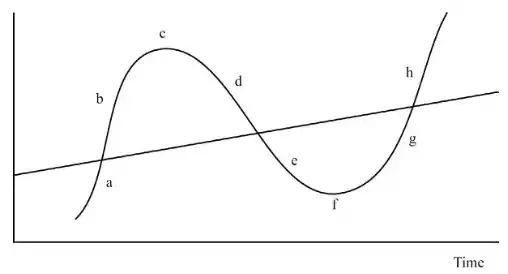
The straight line = the midpoint. The market's pendulum is the wavy line oscillating around the midpoint. Together they form the market cycle, driven by various market forces that cause it to deviate from the midpoint from time to time.

The movement of cyclical phenomena can be easily recognized in several stages:

a: Recovery from an overly depressed low extreme or "trough" towards the midpoint.

b: Continuing past the midpoint to swing towards the high extreme or "peak."

c: Reaching the peak.

d: Correcting downward from the peak back to the midpoint or mean.

e: Continuing the downward movement past the midpoint towards a new low.

f: Reaching the trough.

g: Recovering from the trough back to the midpoint.

h: The cycle repeats.

So Where Are We Now?
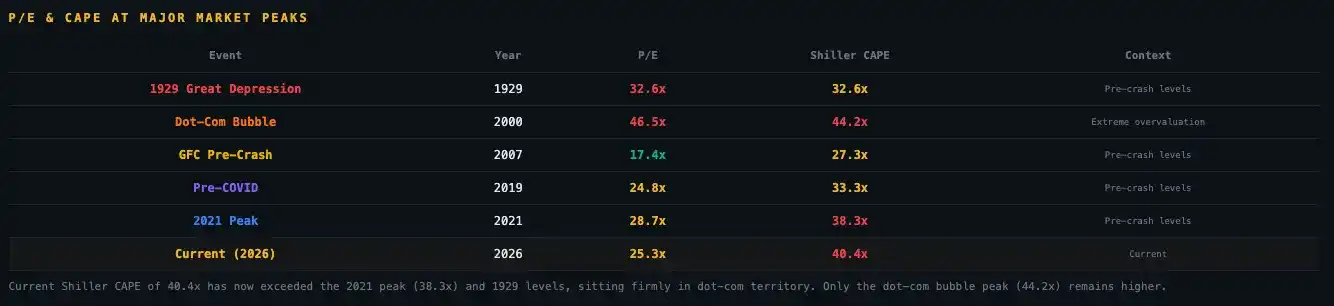
Is this a bubble? I think it's quite evident at this point that AI indeed *is* a bubble. According to Marks, a bubble is signaled when the sentiment that "price doesn't matter" is strong.

In a bubble, investors often conclude that you can make money by borrowing (using leverage) to buy the frenzied asset. No matter what your borrowing rate or funding fee is, the asset will surely appreciate faster than that.

"No price is too high" is the ultimate ingredient of a bubble, a fairly obvious signal that the market has gone too far.

There are actually conflicting schools of thought, believing the market can stay far above its intrinsic value and still reward multiples due to the frenzy.

What to Do?

Since we can't be sure when the bubble will burst, in my view, we have two clear approaches to portfolio allocation.

Dollar-Cost Averaging (I mean real DCA, no timing, you just buy in boring, mechanical dribs and drabs. The more batches you split into, the smoother your final cost basis, that's the whole point.)

Heavy cash allocation, but still allowing yourself to participate in the market through tactical/satellite positions, like active trading.

I personally prefer the second method. But that's because I actively monitor the markets day in and day out; I rely on my own market experience and intuition to navigate all this.

DCA isn't a bad method either. But it does require one to truly extend their time horizon. Not 1 or 3 years, but at least 5 years to really see results. Most people DCA for a few weeks, or try to DCA while also timing, and it backfires. If you plan to DCA into a particular investment, make sure you fully understand that business/industry, and then just stick to it in a super boring, repetitive way and go on with your life.

In my 2025 review and reflection post, I mentioned allocating 25% of my portfolio to passive ETFs, including QQQ, SOXQ, XAR, URA, and UFO. I think a large part of the gains came from QQQ and SOXQ, but I sold all of it in May because I believe the market had swung far past the midpoint.

I also said I was overall bearish on crypto until early 2026 (which turned out right), I managed to keep a lot of cash, and am now patiently deploying a portion into BTC. The target accumulation range is $50k–$60k, so I've already started allocating as of writing this.

"Crypto Is Dead, Pivot to AI"

Honestly, my only regret is not allocating more to speculative private market exposure in Anthropic and xAI. I think frontier models still offer the purest AI exposure, compared to public market "picks and shovels" types, like the GPU/semiconductor/storage narrative. Since those are already consensus, I don't think chasing them now offers asymmetric upside. That ship sailed a long time ago. Stocks like MU are up almost 10x in a year, and stocks like SNDK basically move like memecoins. Upside might still be there, but downside risk looks worse.

But the CAPEX! Yes, this might translate into real incremental value in the future, but it's still speculative. Overly speculative, excess money all funneling into the same thing, I've seen this movie before.

Is it disappointing to miss a big chunk of the AI bull run? Sure, it stings a bit. But I still have exposure, and it's doubled. I really don't think it's responsible to tell someone AI stocks are truly worth buying at today's valuations, unless they *really* know what they're doing and are in it for the long term (most aren't, they're here for quick money).

Market Sanity Checklist

Now, let's go back to how Marks judges if we are near/approaching a market top:

The economy is growing; economic reports are positive.

Corporate profits are rising and beating expectations.

The media only reports good news.

The securities markets are strong.

Investors are becoming increasingly confident and optimistic.

Risk is perceived as scarce and mild.

Investors believe taking risks is the necessary path to profits.

Greed drives behavior.

Demand for investment opportunities exceeds supply.

Asset prices exceed intrinsic value.

Capital markets are wide open; raising money or rolling over debt is easy.

Defaults are rare.

Skepticism is low, confidence is high, meaning risky trades can be made.

No one can imagine things going wrong. No favorable development seems impossible.

Everyone assumes things will get better forever.

Investors ignore the possibility of loss, only worry about missing out.

No one can think of a reason to sell, and no one is forced to sell.

There are more buyers than sellers.

If the market dips, investors are happy to buy.

Prices reach new highs.

The media celebrates this exciting event.

Investors become euphoric and carefree.

Equity holders marvel at their own cleverness; perhaps they'll buy more.

Those who stayed on the sidelines feel regret; therefore, they capitulate and buy.

^ This means:

Future returns are low (or negative).

Risk is high.

Investors should forget about missed opportunities, only worry about losing money.

This is a time for caution!

So, how many of these do you think the current stock market is exhibiting?

On the flip side of the "market top" checklist, the opposite scenario can also manifest:

The economy slows; reports are negative.

Corporate profits are flat or falling, missing expectations.

The media only reports bad news.

The market is weak.

Investors become worried and despondent.

Risk is perceived as everywhere.

Investors believe taking risks is just a way to lose money.

Fear dominates investor psychology.

Demand for securities is less than supply.

Asset prices are below intrinsic value.

Capital markets are closed; it's hard to issue securities or refinance debt.

Defaults surge.

Skepticism is high, confidence is low, meaning only safe trades can be made, or none at all.

No one thinks improvement is possible. No outcome seems too negative to happen.

Everyone assumes things will get worse forever.

Investors ignore the possibility of missing opportunities, only worry about losing money.

No one can think of a reason to buy.

There are more sellers than buyers.

"Don't try to catch a falling knife" replaces "buy the dip."

Prices reach new lows.

The media focuses on this depressing trend.

Investors become despondent and panicked.

Equity holders feel stupid and disillusioned. They realize they don't really understand the reasons behind their investments.

Those who didn't buy (or who sold) feel vindicated and are praised for their cleverness.

Those who held capitulate and sell at depressed prices, furthering the downward spiral.

^ This means:

Implied future returns are sky-high.

Risk is low.

Investors should forget about the risk of losing money, only worry about missing opportunities.

This is a time to be aggressive!

Based on the checklist above, I do think BTC is exhibiting many of these (especially in the Saylor/MSTR situation). So I do feel BTC presents a more attractive investment prospect compared to today's high-flying AI stocks.

However, note that the above progressions are simplified, they may not even appear in the same order, nor necessarily appear in every market cycle, but these behaviors are real, they are indeed elements that rhyme in markets over decades.
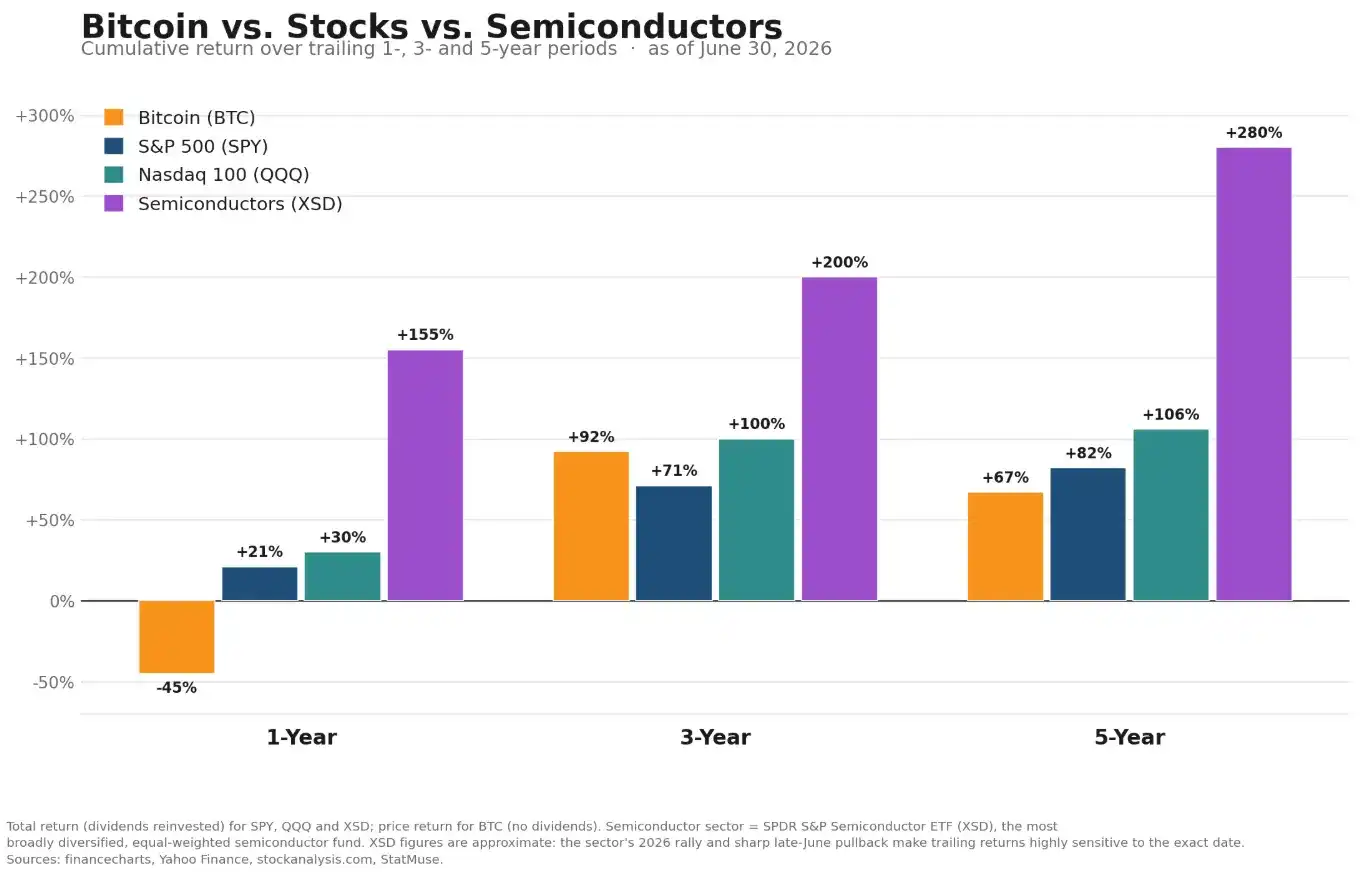
The AI revolution has clearly benefited tech stocks, especially semiconductors over 1/3/5 year periods.

But investing is never done by looking in the rearview mirror (unfortunately, most people do and take reference from the past), advantage emerges where people ignore/dismiss it. We need to look at "what happens 1 to 10 years from now," not what today's environment is.

Looking at the chart above, saying you're a crypto investor and you should have invested in stocks would look silly.

Based on the above chart, if you chose stocks, statistically speaking, the likelihood of future underperformance is high.

Also, reading this in 2026 might sound like a joke now, but based on past lessons from cycles and an understanding of forward return/valuation fundamentals, I do think BTC will outperform stocks over the next few years.

The Most Dislocated Macro Environment Ever

We are also in one of the most dislocated, irrational market environments ever.

Under new Fed Chair Wash, interest rates are currently at 3.5–3.75%, and he's also publicly struck a hawkish tone. But rates aren't compressing; stocks instead keep rising, all because AI will cure cancer and everyone will make infinite money forever, right?

The Shiller CAPE ratio for stocks has broken above 40 for the first time, the first time since the peak of the dot-com bubble era. US stock market capitalization is now near 2x its GDP, valuations are higher than during the 2000 bubble.

Multiple expansions during a tightening cycle, this is textbook definition of dislocation.

This dislocation is primarily driven by a three-engine narrative/liquidity machine.

AI CAPEX supercycle: Large hyperscale cloud providers spending up to $725 billion in 2026, nearing $1 trillion, now accounting for over 30% of the entire S&P 500.

Late-cycle fiscal stimulus: Lower corporate and personal taxes/tariff rebates boosting nominal earnings, even as the Fed tightens.

Passive index fund flows: Index funds mechanically funnel every 401(k) dollar into the largest market cap companies, regardless of price. Boomers are now forced to buy these hyperscale cloud provider stocks at all-time highs, and they continue.

Risk Appetite Is Selective

Today capital is rushing into AI/semiconductors, while everything else including Bitcoin (last cycle's darling) is barely growing or bleeding. This is not a universally greedy market, but one funneling all capital into a single narrative (AI and its related verticals).

In 2025, AI-related stocks accounted for roughly 80% of the entire US stock market gains. Behind these all-time highs, market breadth is extremely narrow, most stocks aren't even contributing to the rally (unless you're AI-related).

Cracks Are Forming

The entire edifice assumes AI CAPEX can be met with real demand, and that energy-driven inflationary shocks will subside/not matter. Core PCE rose from 3% to 3.3%, oil prices surged from $57 to $113 during the Iran war then fell to $76, this is exactly why rate cuts were ruled out.

Cracks have already shown.

In the last full week of June, South Korea's KOSPI halted trading twice, Samsung and SK Hynix fell 12% in a single day, a warning of seller count versus remaining buyers.

Dalio also said his bubble gauge is near 1929 and 2000 levels, Buffett... still holds a record $381 billion in cash. Prices have become dependent on narrative, positioning, and leverage, there really isn't much margin of safety left.

My Personal Plan

Considering all of the above, here's how I, as a capital allocator, think about the whole picture.

Please note this is highly tailored to my own life situation, investment goals, and personality. Please do your own research, none of this constitutes financial advice.

I currently split my capital into 3 distinct buckets and manage accordingly based on a specific bucket.

Trading capital (highest risk, highest volatility, highest variance)

Long-term accumulation capital (buy-and-hold type I don't intend to sell)

Illiquid capital (private equity – SPVs, alternative investments)

How to allocate capital to which bucket is highly dependent on market environment and liquidity.

Right now, I keep most cash for Bucket 2. I've drastically reduced allocation to Bucket 1 due to deteriorating market edge. In crypto, I currently only deem BTC, HYPE, and LIT worth holding. Looking at stocks is playing musical chairs. Given current valuations, long-term allocation to stocks also doesn't make sense.

For Bucket 3, the amount is mostly fixed, about 20% of my net worth. Given its illiquidity and years needed to realize full returns, this bucket remains largely unchanged for the foreseeable future.

As of writing, I'm mostly cash (>80%), with allocation weights across the 3 buckets at 10%, 70%, 20% respectively.

Under Bucket 2, I've made 4 buys of spot BTC so far, average price around $59k. I'm also interested in certain ETFs, which I'll disclose when I decide on a long-term allocation.

In summary, nothing too fancy. More like fishing, waiting for that big fish. I don't mind catching a few small ones before the big one comes, but the point is to keep fishing, stay focused, and not give up.

Perpetual DEX Airdrop Farming Still an Edge

Although my trading decreased in June, I think one massively undervalued edge in crypto is perpetual DEX farming, especially Variational.
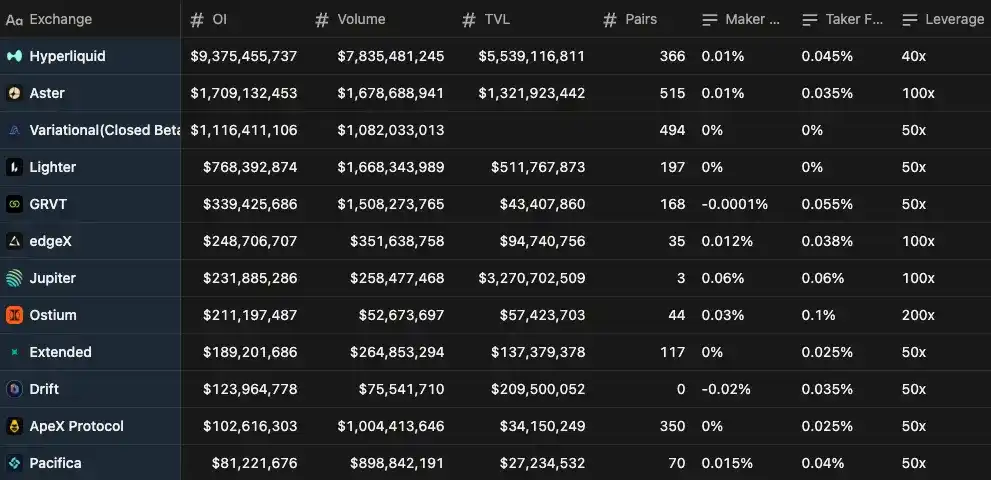
Though primarily driven by airdrop incentives, it's still ranked top 3 among perpetual DEXs, excluding the clear market leader Hyperliquid.

Variational is still in private beta, meaning you need an invite to use. What's special? It's an RFQ-based perpetual DEX, theoretically meaning they can list all sorts of pairs (even the most obscure) and still have deep liquidity, unlike order books that need crazy bootstrapping.

I mainly use it to trade commodities like crude oil, gold, silver, copper, and some other pairs. Focusing on open interest and holding long-term gets the most efficient points.
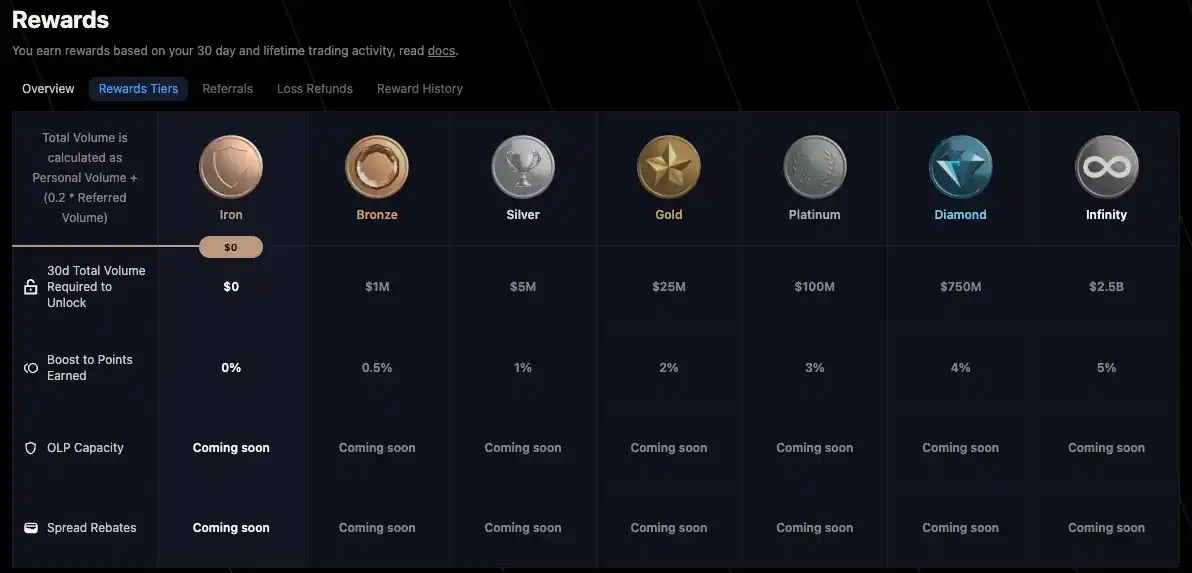
Referrals get a 15% points boost, my code automatically grants you SILVER tier for 90 days upon sign-up.

Other platforms I'm still farming with significant point allocation are:

The TGE target for all mentioned perpetual DEXs is Q3 2026.

I think the fear around STRC is overdone. But this financial engineering does alter investor behavior around it. Unwillingness to allocate until Saylor finishes selling $1B of BTC is now a key "bottom signal."

At $58k BTC price, I think valuations are reasonable. It's even below the 200-day moving average now.

This means H2 2026 could be a significant period for long-term accumulators. I do think there will be one last capitulation and heavy forced selling (including Saylor), likely coinciding with stocks starting to weaken.

While this isn't a pure BTC bullish post, I think among all assets that exist today, BTC offers one of the widest margins of safety, even if the ultimate low is about 15–20% down from here.

Think about it, in a long-term stagflation environment, scarce assets perform best. It was gold in the past, an asset outside the monetary system that existed for millennia.

I think ten years from now, accumulating BTC today will be seen as one of the most rewarding moments in a long time.

While stocks will indeed rise over time in the future, at this moment, I can't justify buying at such high valuations and am happy to watch from the sidelines until it comes back to earth.

What do you think? How are you thinking about capital allocation now?

Trend Kriptolar

İlgili Sorular

QAccording to the author, what are the two main portfolio allocation methods suggested for dealing with the current market, which one does he prefer, and why?

AThe author suggests two methods: 1) DCA (Dollar-Cost Averaging) in a true, non-timing, mechanical way. 2) Being heavy on cash while allowing participation through tactical/satellite positions like active trading. He personally prefers the second method. The reason is that he actively monitors the market daily and relies on his market experience and intuition to navigate it. He finds DCA requires a genuine long-term horizon (at least 5 years) and strict discipline, which most people lack as they often try to time the market within it.

QBased on Howard Marks' framework from 'The Cycle', what key characteristics does the author believe the current AI-driven stock market is exhibiting that signal a potential bubble top?

AThe author believes the AI-driven market exhibits many characteristics from Howard Marks' 'market top' checklist. Key ones include: prices seeming irrelevant ('no price is too high'), the belief that leverage is a sure path to profit, widespread investor confidence and optimism, greed driving behavior, asset prices exceeding intrinsic value, easy capital raising, low skepticism, high confidence enabling risky trades, and investors worrying more about missing out (FOMO) than losing money. He argues the market shows 'price doesn't matter' sentiment, a hallmark of a bubble.

QWhy does the author view Bitcoin as a more attractive investment prospect compared to high-flying AI stocks at this moment?

AThe author views Bitcoin as more attractive because he believes it is exhibiting many characteristics from the *opposite* side of Howard Marks' checklist—the one indicating a market bottom or undervalued state. He implies BTC shows signs like fear dominating investor psychology, prices potentially below intrinsic value, high skepticism, low confidence, and investors worrying about losing money rather than missing gains. He also cites BTC trading below its 200-day moving average around $58,000, offering a wider 'margin of safety' and reasonable valuation, especially in a potential long-term stagflation environment where scarce assets historically perform well.

QWhat are the three main drivers the author identifies as creating the current 'dislocated' and 'irrational' macro market environment?

AThe author identifies three main drivers: 1) The AI Capital Expenditure Supercycle, with hyperscalers spending massively (projected $725B in 2026), now representing over 30% of the S&P 500. 2) Late-cycle fiscal stimulus, including tax and tariff rebates boosting nominal profits even as the Fed tightens policy. 3) Passive index fund flows, where funds mechanically funnel retirement savings (like 401(k)s) into the largest market-cap companies regardless of price, forcing buying at historic highs.

QHow has the author personally allocated his capital across different 'buckets' based on the current market outlook, and what is he specifically accumulating in his 'long-term accumulation' bucket?

AThe author has allocated his capital into three buckets: 1) Trading capital (highest risk), 2) Long-term accumulation capital (buy-and-hold), and 3) Illiquid capital (private equity/SPVs). Given the current market, he has significantly reduced allocation to bucket 1 due to poor market edge. He holds most of his cash for bucket 2 (>80% cash overall). His current weightings are approximately 10% for bucket 1, 70% for bucket 2, and 20% for bucket 3. Within bucket 2 (long-term accumulation), he is specifically accumulating spot Bitcoin, having made four buys at an average price of around $59,000.

İlgili Okumalar

İşlemler

Spot

Popüler Makaleler

DOGE M Nedir

Doge Matrix ($doge m): Topluluk Destekli Kripto Paranın Yeni Türü Giriş Kripto para dünyası sürekli evrilen bir manzaraya sahipken, yeni projeler sürekli olarak ortaya çıkmakta ve her biri yatırımcıların ve meraklıların ilgisini çekmeyi hedeflemektedir. Bu alandaki en son katılımcılardan biri, $doge m sembolü ile temsil edilen Doge Matrix'tir. Bu proje, Dogecoin etrafındaki popüler meme kültürüne dayanan kökleri sayesinde dikkat çekmiş ve web3 alanında kendine bir yer edinmiştir. Bu makale, Doge Matrix'in genel bir analizini sunmayı amaçlamakta; genel bakış, yaratıcı, yatırımcılar, işlevsellik, zaman çizelgesi ve dikkat çekici yönleri kapsayacaktır. Doge Matrix ($doge m) Nedir? Doge Matrix, görünüşte Dogecoin'in geniş çekiciliği üzerine inşa edilen, topluluk destekli bir kripto para projesidir. Dogecoin, Shiba Inu maskotu ve meme kökenleri ile bilinen bir dijital para birimidir. Doge Matrix'in genel hedefleri geniş bir şekilde tanımlanmamış olsa da, topluluk katılımı ve desteğini kullanma taahhüdü ile karakterize edilmektedir. Geleneksel kripto paralardan farklı olarak, genellikle altyapı teknolojileri aracılığıyla fayda veya içsel değer vurgulayan Doge Matrix, kripto paraların kültürel fenomenini benimseyen bir alanda kendini konumlandırmaktadır; özellikle meme tabanlı varlıkların ethos'u ile özdeşleşenlere hitap etmektedir. Dogeoin topluluğunun güçlü yönlerinden yararlanan Doge Matrix, daha geniş bir ekosistemin parçası olarak faaliyet göstermekte ve kripto para ve dijital alanla ilgilenen kullanıcıların katılımını ve etkileşimini davet etmektedir. Doge Matrix'in ($doge m) Yaratıcısı Kimdir? Doge Matrix'in yaratıcısının kimliği bilinmemektedir. Bu şeffaflık eksikliği, bazı projelerin kurucularının kimliklerini açıklamadan başlatıldığı kripto para alanında yaygın bir durumdur. Kurucu ekip hakkında bilgi eksikliği, potansiyel yatırımcılar arasında projenin hesap verebilirliği ve yönü hakkında sorular doğurabilir. Doge Matrix'in ($doge m) Yatırımcıları Kimlerdir? Şu anda, Doge Matrix'i destekleyen yatırımcılar veya yatırım fonları hakkında kamuya açık bir bilgi bulunmamaktadır. Proje, esasen topluluk desteğine dayanmakta ve kurumsal yatırım yerine bu desteği kullanmaktadır. Bu model, girişimin topluluk destekli doğası ile uyumlu olup, projenin yönünün katılımcılar tarafından şekillendirildiği bir ortam yaratmaktadır. Doge Matrix ($doge m) Nasıl Çalışır? Doge Matrix'in operasyonel mekanizmaları ile ilgili ayrıntılar biraz belirsizdir ve bu durum, meme coin alanındaki projelerin genel bir eğilimini yansıtmaktadır; burada yenilikçi işlevsellikler her zaman net bir şekilde ifade edilmemektedir. Bununla birlikte, Doge Matrix'in mevcut kripto para ekosisteminden yararlanmayı ve kullanıcı katılımını teşvik etmeyi amaçladığı görünmektedir; ayrıca Dogecoin ile ilişkilendirilen tanıdık kültürel referansları kullanmaktadır. Potansiyel olarak benzersiz özellikleri, teknolojik ilerlemelerden ziyade topluluk etkileşimlerinden kaynaklanmakta ve token sahipleri arasında paylaşılan deneyimleri ve işbirliğini vurgulamaktadır. Kesin yenilikler açıkça belirtilmemiş olsa da, proje, topluluk üyelerinin katılabileceği, fikir paylaşabileceği ve projenin potansiyelini ileriye taşıyabileceği bir alan yaratmaktadır. Doge Matrix'in ($doge m) Zaman Çizelgesi Projenin zaman çizelgesine bakmak, şimdiye kadar tanımlayıcı olayları ortaya koymaktadır: 25 Kasım 2024: Doge Matrix, erken tarihindeki önemli bir dönüm noktası olarak tüm zamanların en yüksek değerine ulaştı. 1 Ocak 2025: Aksine, Doge Matrix tüm zamanların en düşük değerine ulaştı ve bu durum, kripto paralarla sıkça ilişkilendirilen dalgalanmayı göstermektedir; özellikle bir projenin yaşam döngüsünün erken aşamalarında. Devam Ediyor: Proje, topluluğu tarafından aktif bir şekilde işlem görmeye ve desteklenmeye devam etmekte, ancak belirli gelecekteki dönüm noktaları veya hedefler henüz açıklanmamıştır. Doge Matrix ($doge m) Hakkında Ana Noktalar Topluluk Odaklılık Doge Matrix'in merkezinde topluluk katılımına olan taahhüt bulunmaktadır. Proje, üyeleri arasında işbirliği ve ortak hedefler üzerine inşa edilmiştir ve kolektif çabanın önemini vurgulamaktadır. Genellikle tanımlı bir liderlik yapısına sahip merkezi projelerin aksine, Doge Matrix şu anda her topluluk üyesinin sesinin önemli olduğu daha akışkan bir yönetişim yaklaşımını sergilemektedir. Dalgalanma Kripto para piyasası, dalgalanması ile ünlüdür ve Doge Matrix de bu durumdan muaf değildir. Fiyat geçmişi, yüksek ve düşük değerler arasında önemli dalgalanmaları yansıtmaktadır; bu durum birçok yeni kripto para için tipik olmakla birlikte, yeni token'lara yapılan yatırımlarla ilişkili riskleri vurgulamaktadır. Ayrıntılı Bilgi Eksikliği Doge Matrix hakkında en çarpıcı özelliklerden biri, teknolojik altyapısı ve operasyonel mekanizmaları ile ilgili ayrıntılı bilginin kıtlığıdır. Bu belirsizlik, potansiyel yatırımcıların projeye katılmadan önce kapsamlı bir araştırma yapmalarını gerektirmektedir. Sonuç Özetle, Doge Matrix ($doge m), topluluk katılımı ve kültürel anlamda önem taşıyan projelerin yeni bir dalgasını temsil etmektedir. Belirli ayrıntılardan yoksun olsa da—örneğin, net bir liderlik, tanımlı hedefler ve ayrıntılı işlevsellik—proje, meme kültürünün yerleşik çekiciliğinden yararlanarak kripto topluluğunda ilgi uyandırmayı başarmıştır. Kripto para alanındaki herhangi bir yatırımda olduğu gibi, doğasında var olan riskleri anlamak ve kapsamlı bir araştırma yapmak, potansiyel katılımcılar için esastır. Doge Matrix, kripto endüstrisinin dinamik, bazen öngörülemez doğasının bir hatırlatıcısı olarak durmakta; sürekli evrim ve topluluk destekli girişimlere olan heyecan ile işaretlenmektedir.

397 Toplam GörüntülenmeYayınlanma 2025.02.03Güncellenme 2025.02.03

DOGE M Nedir

$M Nedir

Mantis'i Anlamak ($M): Zincirler Arası İşlemde Yeni Bir Dönem Web3 ve kripto para dünyasının sürekli gelişen manzarasında, yeni projeler kullanıcı deneyimini artırmayı ve merkeziyetsiz finans ekosistemindeki işlevsel olanakları genişletmeyi amaçlayan yenilikçi çözümler sunmaya çalışıyor. Dikkat çeken projelerden biri, zincirler arası etkileşim ve niyet tabanlı uzlaşma ilkeleri üzerine kurulu öncü bir protokol olan Mantis ($M). Bu makale, Mantis'in temel işlevselliği, yaratıcıları, yatırım destekleri, yenilikçi özellikleri ve kritik dönüm noktaları dahil olmak üzere temel yönlerini inceliyor. Mantis ($M) Nedir? Mantis, çok alanlı niyet uzlaşma protokolü olarak tanımlanır ve kullanıcıların çeşitli blockchain platformları arasında karmaşık finansal işlemleri sorunsuz bir şekilde gerçekleştirmelerini sağlar. Protokol, üç ana katman üzerinden çalışır: Niyet İfadesi: Kullanıcılar, DISE LLM adlı gelişmiş bir AI dil modeli aracılığıyla doğal dil kullanarak işlem hedeflerini ifade edebilirler. Örneğin, bir kullanıcı belirli bir kayma toleransı ile Ethereum (ETH) ile Solana (SOL) takası yapmak istediğini ifade edebilir. İcra: Bu katman, kullanıcı niyetlerini yerine getirmek için rekabet eden bir çözücü ağı kullanır. İşlemler, kullanıcı taleplerinin en iyi şekilde karşılanmasını sağlayan İsteklerin Tesadüfü (CoWs) ve Emir Akışı İhaleleri (OFAs) gibi mekanizmalarla gerçekleştirilir. Uzlaşma: Mantis, Inter-Blockchain Communication (IBC) protokolünü kullanarak atomik zincirler arası işlemleri mümkün kılar ve kullanıcıların Ethereum, Solana ve Cosmos dahil olmak üzere çeşitli desteklenen zincirler arasında işlem yapmalarını sağlar. Mantis, tüm süreç boyunca işlemlerin bütünlüğünü korumak için kriptografik kanıtlar kullanarak yerel getiri üretimi sunmak üzere tasarlanmıştır. Yaratıcılar ve Geliştirme Ekibi Mantis, blockchain etkileşim çözümlerine vurgu yapan araştırma odaklı bir kuruluş olan Composable Foundation tarafından tasarlanmıştır. Bu vakıf, Mantis'in mimarisi ve işlevselliğini bilgilendiren kapsamlı araştırma ve geliştirme çabalarına katkıda bulunan Harvard Üniversitesi ve Lizbon Üniversitesi gibi saygın akademik kurumlarla işbirliği yapmaktadır. Composable Foundation'ın blockchain alanında yeniliği teşvik etme konusundaki kararlılığı, Mantis'i çoklu blockchain ağları arasında artan etkileşim talebine yönelik sağlam bir çözüm olarak konumlandırmaktadır. Yatırımcılar ve Destek Bireysel yatırımcılarla ilgili belirli detaylar kamuya açıklanmamış olsa da, Mantis çeşitli kuruluşlardan önemli destek almaktadır: IBC destekli zincirlerden ekosistem hibeleri, protokolün büyümesini ve merkeziyetsiz finans ekosistemleri içindeki entegrasyonunu destekler. Altyapı sağlayıcılarıyla stratejik ortaklıklar, Mantis'in ağ yeteneklerini ve dağıtım stratejilerini geliştirmektedir. Composable Foundation'ın hazinesi aracılığıyla finansman, sürekli gelişim ve operasyonel maliyetler için sürdürülebilir finansal destek sağlamaktadır. Bu işbirlikçi çabalar, paydaşlar arasında zincirler arası işlevselliği artırmanın önemine ve Mantis'in altyapısal yeniliklerinin potansiyel faydasına dair bir uzlaşmayı yansıtmaktadır. Ana Yenilikler Mantis, işlevselliğini ve faydasını artıran birkaç öncü yenilikle kendini farklı kılar: Zincir Bağımsız Niyetler: Kullanıcılar, herhangi bir desteklenen zincirden işlem başlatabilirken, başka bir zincirde uzlaşma yapabilirler. Bu esneklik, kullanıcıları güçlendirir ve farklı platformlar arasında etkileşimi artırır. AI Destekli Arayüz: DISE LLM entegrasyonu, kullanıcıların doğal dil kullanarak karmaşık DeFi işlemleri gerçekleştirmelerini sağlar, böylece etkileşimleri basitleştirir ve blockchain teknolojisini daha geniş bir kitleye erişilebilir hale getirir. Zincirler Arası MEV Yakalama: Mantis, çözücüler arasında rekabet yoluyla maksimum çıkarılabilir değer (MEV) için iç bir pazar oluşturur. Bu yenilikçi yaklaşım, karmaşık işlemlerde daha büyük verimlilik ve değer çıkarımı sağlar. Modüler Uzlaşma Katmanı: Protokol, sıfır bilgi kanıtları ve iyimser rolluplar gibi çeşitli doğrulama yöntemlerini destekleyerek, ortaya çıkan blockchain teknolojilerine uyum sağlayabilen çok yönlü bir çerçeve sunar. Tarihsel Zaman Çizelgesi Mantis'in gelişimi, yolculuğunu ve büyümesini belirleyen birkaç kritik dönüm noktası ile işaretlenmiştir: | Yıl | Dönüm Noktası | |———–|————————————————————————–| | 2022 | Composable Foundation'ın araştırma bölümünde ilk konsept geliştirilmesi. | | Q3 2024 | Solana ve Ethereum arasında köprüleme yetenekleri ile testnet'in başlatılması. | | Q1 2025 | Ana ağ lansmanı ile birlikte beklenen Token Üretim Etkinliği (TGE). | | Q2 2025 | DISE LLM entegrasyonu ve zincirler arası yeteneklerin genişletilmesi bekleniyor. | | 2025 H2 | Daha fazla IBC güncellemeleri ile 15'ten fazla zincir için planlanan destek. | Bu zaman çizelgesi, Mantis'in evrimini, kavramsal tartışmalardan aktif uygulamaya ve gelecekteki büyüme aşamalarına kadar özetlemektedir. Ekosistem Büyüme Stratejisi Mantis'in ekosistem büyüme stratejisi, kullanıcı katılımını ve geliştirici etkileşimini teşvik etmeyi amaçlayan birkaç girişim içermektedir: Kredi Sistemi: Kullanıcılar, likidite sağlayarak ve referans programlarına katılarak protokol kredileri kazanabilirler. Bu krediler, gelecekte teşvikler için kullanılabilir, böylece güçlü bir kullanıcı topluluğu oluşturur. Modüler Yazılım Geliştirme Kiti (SDK): Bu araç seti, geliştiricilerin Mantis'in altyapısını kullanarak niyet odaklı modellere dayalı uygulamalar oluşturmasını sağlar ve böylece ekosistem içinde yeniliği teşvik eder. Yönetim Modeli: Protokol olgunlaştıkça, $M token sahipleri protokol yönetiminde söz sahibi olacak, önerilen güncellemeler ve değişiklikler üzerinde oy kullanabilecek, böylece topluluk katılımını ve merkeziyetsizliği artıracaktır. Mantis, zincirler arası mimaride önemli bir ilerlemeyi temsil etmektedir. Gelişmiş AI algoritmalarını sağlam bir uzlaşma çerçevesi ile sorunsuz bir şekilde entegre ederek, Mantis çoklu zincir ekosistemlerindeki parçalanma sorunlarını ele almayı hedeflemektedir. Yenilikçi yaklaşımı, geliştirilmiş kullanıcı deneyimlerini önceliklendirirken, merkeziyetsizlik ve güvenlik ilkelerine bağlı kalmakta ve blockchain teknolojilerinin gelecekteki etkileşimi için yeni bir standart belirlemektedir. Mantis, büyüme ve uygulama yolculuğuna devam ederken, Web3 ve merkeziyetsiz finans alanındaki rekabetçi manzarada dikkatle izlenmesi gereken bir proje olma vaadini taşımaktadır. Sınırları aşma ve kullanıcı katılımını artırma konusundaki odaklanmasıyla, Mantis kripto para alanındaki gelecekteki gelişmelerin ayrılmaz bir parçası olmaya hazırlanıyor.

50 Toplam GörüntülenmeYayınlanma 2025.03.18Güncellenme 2025.03.18

$M Nedir

M Nasıl Satın Alınır

HTX.com’a hoş geldiniz! MemeCore (M) satın alma işlemlerini basit ve kullanışlı bir hâle getirdik. Adım adım açıkladığımız rehberimizi takip ederek kripto yolculuğunuza başlayın. 1. Adım: HTX Hesabınızı OluşturunHTX'te ücretsiz bir hesap açmak için e-posta adresinizi veya telefon numaranızı kullanın. Sorunsuzca kaydolun ve tüm özelliklerin kilidini açın. Hesabımı Aç2. Adım: Kripto Satın Al Bölümüne Gidin ve Ödeme Yönteminizi SeçinKredi/Banka Kartı: Visa veya Mastercard'ınızı kullanarak anında MemeCore (M) satın alın.Bakiye: Sorunsuz bir şekilde işlem yapmak için HTX hesap bakiyenizdeki fonları kullanın.Üçüncü Taraflar: Kullanımı kolaylaştırmak için Google Pay ve Apple Pay gibi popüler ödeme yöntemlerini ekledik.P2P: HTX'teki diğer kullanıcılarla doğrudan işlem yapın.Borsa Dışı (OTC): Yatırımcılar için kişiye özel hizmetler ve rekabetçi döviz kurları sunuyoruz.3. Adım: MemeCore (M) Varlıklarınızı SaklayınMemeCore (M) satın aldıktan sonra HTX hesabınızda saklayın. Alternatif olarak, blok zinciri transferi yoluyla başka bir yere gönderebilir veya diğer kripto para birimlerini takas etmek için kullanabilirsiniz.4. Adım: MemeCore (M) Varlıklarınızla İşlem YapınHTX'in spot piyasasında MemeCore (M) ile kolayca işlemler yapın.Hesabınıza erişin, işlem çiftinizi seçin, işlemlerinizi gerçekleştirin ve gerçek zamanlı olarak izleyin. Hem yeni başlayanlar hem de deneyimli yatırımcılar için kullanıcı dostu bir deneyim sunuyoruz.

483 Toplam GörüntülenmeYayınlanma 2025.07.02Güncellenme 2026.06.02

M Nasıl Satın Alınır

Tartışmalar

HTX Topluluğuna hoş geldiniz. Burada, en son platform gelişmeleri hakkında bilgi sahibi olabilir ve profesyonel piyasa görüşlerine erişebilirsiniz. Kullanıcıların M (M) fiyatı hakkındaki görüşleri aşağıda sunulmaktadır.

活动图片