OpenSea Insider Trading Case Ends Without A Retrial – Details

bitcoinist2026-01-24 tarihinde yayınlandı2026-01-24 tarihinde güncellendi

Özet

Former OpenSea product manager Nathaniel Chastain will not face a retrial for insider trading after federal prosecutors dropped the case. This follows an appeals court overturning his earlier conviction, citing incorrect jury instructions. Prosecutors reached a deferred prosecution agreement, leading to the dismissal of charges. As part of the deal, Chastain will forfeit approximately 15.98 ETH and has already served a three-month prison sentence. The case, the first insider trading prosecution involving NFTs, highlights a legal gap between traditional fraud statutes and digital assets. The ruling may influence how confidential information is treated as property in future crypto-related cases.

Nathaniel Chastain, a former product manager at OpenSea, will not face a retrial after federal prosecutors chose to drop their re-review of his insider trading case.

Reports say the US Attorney’s Office reached a deferred prosecution agreement with Chastain that will lead to dismissal of the charges once the agreement runs its course.

What Prosecutors Decided

Prosecutors told a Manhattan federal court they would not retry Chastain following an appeals court ruling that tossed his earlier conviction.

Under the deferred prosecution deal, the government will dismiss the case about a month after notifying the court, and Chastain has agreed to forfeit roughly 15.98 ETH tied to the trades. He has already served three months in prison from his original sentence.
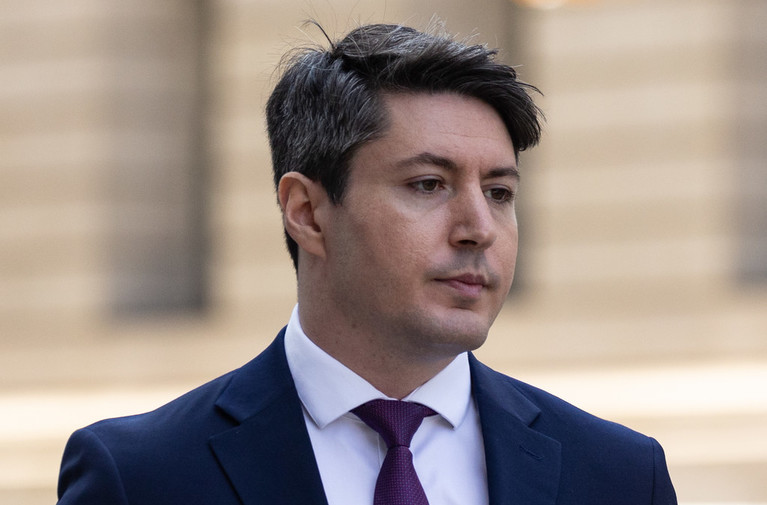
Nathaniel Chastain, former product manager at OpenSea, arrives at federal court in New York, US, on Tuesday, Aug. 22, 2023. Photo: Yuki Iwamura/Bloomberg

How The Appeals Court Changed The Case

According to the US Court of Appeals for the Second Circuit, the jury in the first trial had been given the wrong instructions about what the wire fraud law covers.

The judges said confidential information only counts as property under the statute when it has commercial value to the employer, and jurors might otherwise convict someone for behavior that is unethical but not criminal. That legal point is at the heart of the reversal.

Reports note that prosecutors had called the matter the first-ever insider trading case tied to NFTs. Now, lower courts and enforcement teams will have to think carefully before using traditional fraud laws to police activity in NFT markets.

The ruling highlights a gap between old statutes and new kinds of online goods, which may push lawmakers to give clearer rules for how to treat confidential business signals related to crypto platforms.

BTCUSD currently trading at $88,903. Chart: TradingView

OpenSea: The Case’s Earlier Chapters

Chastain was first charged in mid-2022 after prosecutors said he bought certain NFTs before they were featured on OpenSea’s homepage, then sold them after prices rose.

He was convicted at trial in 2023 of wire fraud and money laundering and received a sentence that included three months behind bars. The US Attorney’s Office originally described the scheme as a novel use of insider knowledge in digital markets.

With the deferred prosecution agreement in place for OpenSea, prosecutors can close this chapter without a new trial.

Chastain’s forfeiture of crypto assets and his already served time mean the government has secured some remedy, while the appellate decision leaves open big questions about when private business information can be treated as property for federal fraud charges.

Legal teams, judges, and regulators are likely to keep a close eye on how similar cases are handled in the future.

Featured image from Getty Images, chart from TradingView

İlgili Sorular

QWhy was Nathaniel Chastain's conviction overturned by the appeals court?

AThe appeals court overturned the conviction because the jury in the first trial was given incorrect instructions. The judges ruled that confidential information only qualifies as property under the wire fraud statute when it has commercial value to the employer, and the previous instructions could have led to a conviction for unethical but not criminal behavior.

QWhat is the outcome of the deferred prosecution agreement for Nathaniel Chastain?

AUnder the deferred prosecution agreement, the government will dismiss the case about a month after notifying the court. In exchange, Chastain has agreed to forfeit approximately 15.98 ETH and has already served his three-month prison sentence from the original conviction.

QWhat was Nathaniel Chastain originally convicted of in relation to his actions at OpenSea?

ANathaniel Chastain was originally convicted in 2023 of wire fraud and money laundering. Prosecutors alleged he used insider knowledge to purchase NFTs before they were featured on OpenSea's homepage and then sold them for profit after their prices increased.

QWhy is this case considered significant for the NFT market and legal enforcement?

AThis case is significant because it was the first-ever insider trading case tied to NFTs. The appellate ruling highlights a gap between traditional fraud laws and new digital goods, indicating that courts and enforcement teams must carefully consider how to apply old statutes to NFT market activity, potentially pushing for clearer regulations.

QWhat did Nathaniel Chastain agree to forfeit as part of his deal with prosecutors?

AAs part of the deferred prosecution agreement, Nathaniel Chastain agreed to forfeit approximately 15.98 ETH, which was tied to the trades he made using insider information while he was a product manager at OpenSea.

İlgili Okumalar

Bitcoin Withdrawals Continue: 8 Years of Storage in a Coldcard Cold Wallet Ended in Zero

Coldcard Hardware Wallet Hacked: Losses Mount Due to Vulnerable Seed Generation A critical vulnerability in Coldcard hardware wallets has led to a continued wave of fund thefts. According to Galaxy Research, the total stolen has reached 1,367.05 BTC (approx. $88.6 million) from 4,585 addresses, a significant increase from the initial 594.5 BTC reported on July 30, 2026. Most of the stolen funds remain on the attackers' addresses. The issue is not with the current firmware, which Coinkite has updated, but with seed phrases generated on vulnerable devices between March 2021 and the release of fixed firmware versions. Due to a programmer error, devices switched from using a hardware random number generator to the software-based Yasmarang generator, which was initialized with publicly accessible data like the chip's serial number. This made the seed phrases predictable through offline brute-force attacks, meaning wallets remain at risk until funds are moved to a new wallet generated with the patched firmware. Affected devices include Mk2/Mk3 with firmware 4.0.1–4.1.9 (and up to 5.0.3), Mk4/Mk5 up to version 5.6.0, and Q models up to 1.5.0Q. The only exceptions are seeds created with a high-entropy method like at least 50 independent dice rolls or a strong unique BIP-39 passphrase. All other owners must generate a new seed on the fixed firmware and transfer their assets. A case highlighting the human impact involves a 39-year-old long-term investor who lost 2 BTC (approx. $130,000) in minutes. He had accumulated the Bitcoin over eight years through physical labor, viewing it as a financial lifeline and a retirement plan in a country suffering from hyperinflation. His story underscores that even conservative "buy and hold in cold storage" strategies can be compromised by such underlying technical flaws. From a technical perspective, this incident echoes historical failures where weak random number generators undermined cryptographic security, challenging the assumption that offline storage is automatically foolproof.

cryptonews.ru4 saat önce

Bitcoin Withdrawals Continue: 8 Years of Storage in a Coldcard Cold Wallet Ended in Zero

cryptonews.ru4 saat önce

İşlemler

Spot
活动图片





