Opening Claude's Brain Is Useless; The True Key to the AI Black Box Lies in Ontology Engineering

marsbit2026-07-17 tarihinde yayınlandı2026-07-17 tarihinde güncellendi

Özet

"Dissecting Claude's Brain Is Futile: The Real Key to the AI Black Box Lies in Ontology Engineering" This article critiques the limitations of Anthropic's "J-Space" research, which attempts to explain AI models by observing their internal neural activation patterns, akin to fMRI brain scans. While this "internalist" approach offers unprecedented visibility into model states, it fundamentally conflates observability with true explainability. The core issue is that understanding a model's output requires more than tracing neural activity; it necessitates examining the meaning of the information it processes—its relationship to the world, semantic norms, and human cognitive frameworks. The author proposes a paradigm shift: moving from a neuroscience-inspired focus on the model itself to an "information ontology" approach centered on the knowledge the model handles. Drawing from Kant's philosophical categories, the argument posits that true explainability lies in structuring and understanding information within a formal conceptual framework, not in peering into the "black box." The practical application of this theory is ontology engineering. Ontologies provide a structured, computable framework for knowledge, serving as a semantic anchor for model outputs. The article details a bidirectional synergy: Large Language Models (LLMs) can automate and scale ontology construction, while ontologies, in turn, enhance AI explainability. They act as a verification framework, allowing mo...

"The essence of explanation lies not in staring at the machine itself, but in examining the world at which the machine stares."

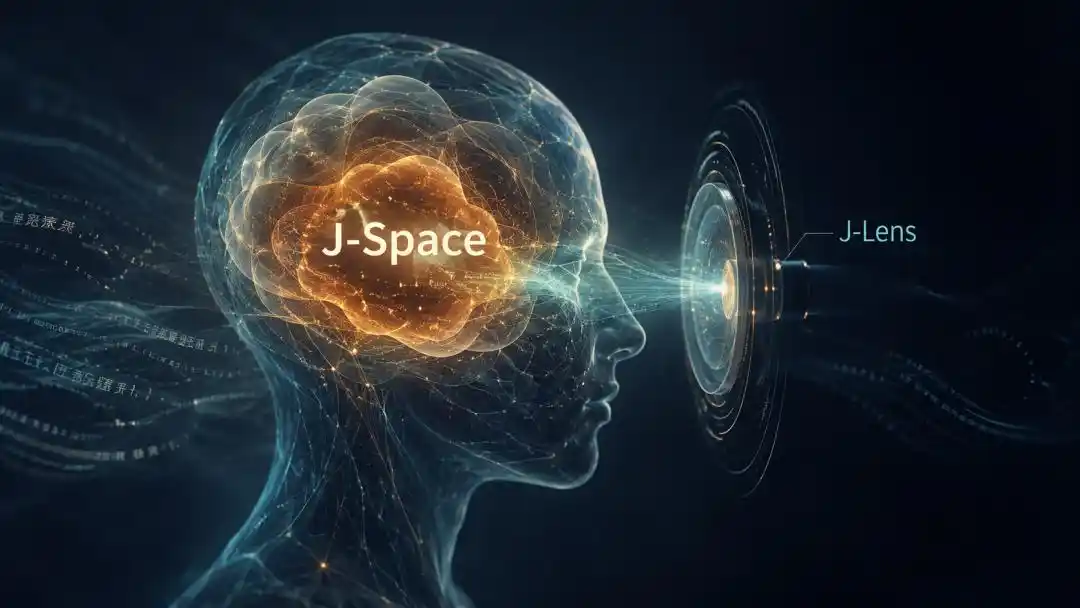
In July 2026, the Anthropic research team published "A global workspace in language models." Using a tool called J-lens, they identified an observable, intervenable, and causally effective neural activity region within Claude – J-Space.

The reason this discovery garnered widespread attention is that it allows researchers a glimpse into the model's "inner monologue" during reasoning, marking a shift in interpretability research from explaining model behavior to real-time observation of its internal states.
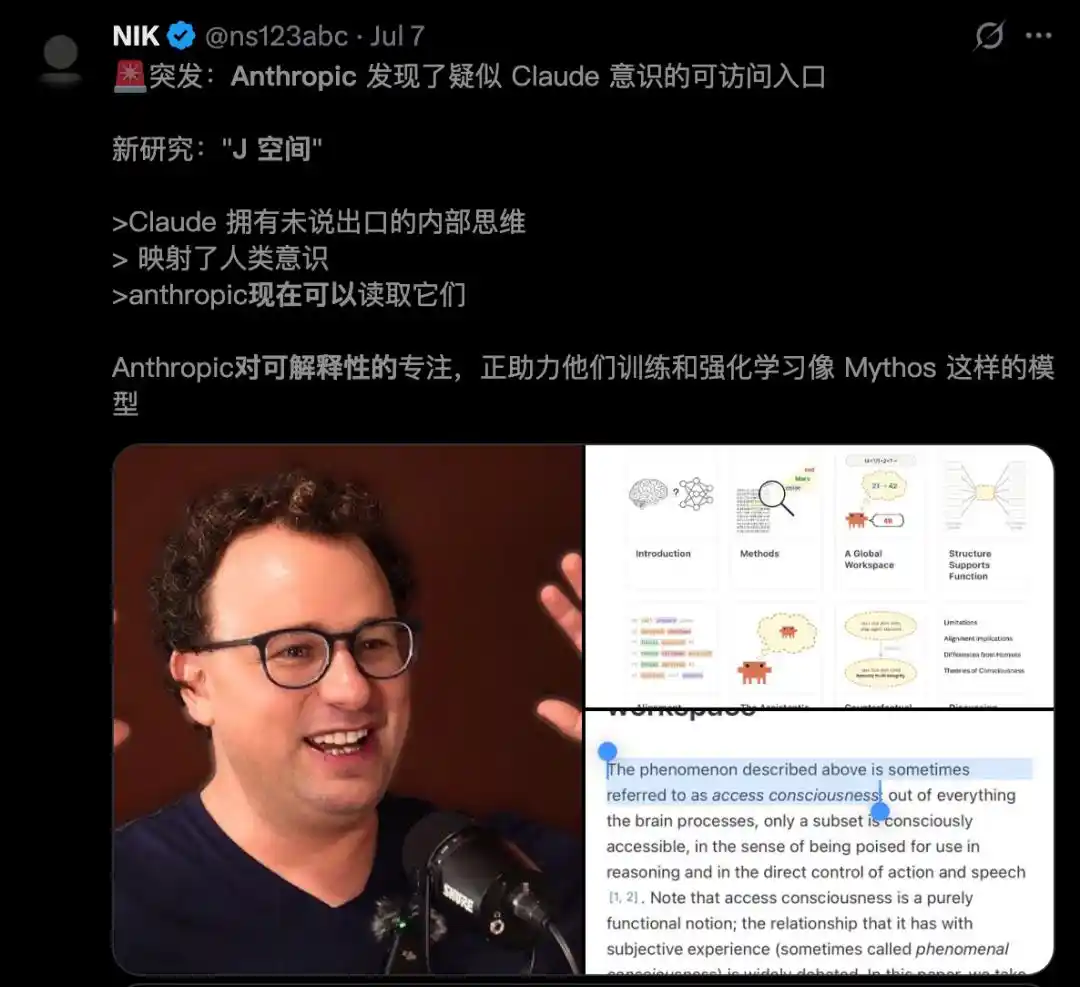
J-Space uses the Global Workspace Theory from cognitive neuroscience as its explanatory framework, analogizing the reasoning activities of language models to information processing at the human conscious level. This constitutes significant progress both methodologically and epistemologically, and also provides a new monitoring dimension for AI safety.

However, precisely because of its profound impact, it is even more necessary to carefully examine the inherent limitations of this approach. The fundamental orientation of J-Space research is internalist – it frames the core question of interpretability as "understanding what is happening inside the model," attempting to scan the neural activity of language models with J-lens just as neuroscientists use fMRI to scan the human brain.

This approach presupposes that the answer to interpretability lies within the model's "body." Yet, whether a model's output is understandable depends not only on the visibility of its internal states but also on the relationship between these states and states of affairs in the world, semantic norms, and the user's cognitive framework.

Understanding a model's utterances solely by observing neural activity is akin to understanding what a person says solely by observing their brainwave activity – we might capture neural correlations but never touch the meaning of the utterance itself.
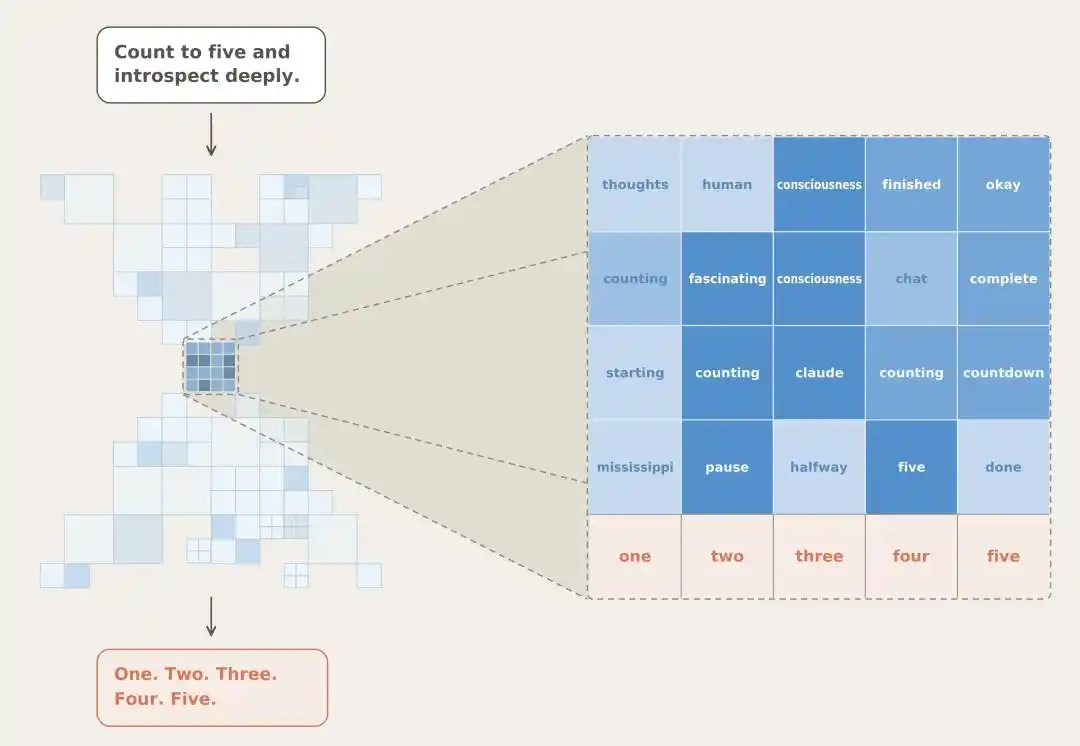
Furthermore, J-Space borrows the Global Workspace Theory, a theory about consciousness, to explain language models. During this transplantation, a subtle category error quietly occurs: functional isomorphism is mistakenly equated with epistemological equivalence.

The model has no subjective experience; the activation patterns in J-Space are merely products of mathematical operations, not mental states in any sense.

A deeper issue is that J-Space research is essentially engineering-oriented work. It narrows "interpretability" to "observability" and "intervenability." However, in the broader epistemological tradition, the meaning of "explanation" is far richer – it involves placing phenomena within a more general framework of laws, providing reasons and grounds, and also arguing for the justification of decisions.

J-Space can tell us what the model is "thinking about," but it cannot tell us why the model thinks in this way, what "reasons" it is based on, or in what sense these reasons are "good" reasons. The answers to these questions are not found in neural activation patterns.

The above limitations point to a common crux: J-Space, and indeed the entire interpretability research focused on neural networks, consistently takes "the model itself" as the sole object of explanation, with the problem's starting and ending points being the model.
This article attempts to propose a different perspective – shifting the inquiry of interpretability from within the model to the information the model processes, from the internalist approach of neuroscience to the "information ontology" approach of epistemology.

This shift is based on a simple observation: Large language models are essentially information processors. Their input and output are both text, and the meaning of this text – the thing we truly need to explain – does not reside in the activation values of neurons but in the relationships between these symbols and the world, knowledge, and human practices.

When a model answers "Paris is the capital of France," what we need to explain is not only which region inside the model was activated, but also within which knowledge system this statement holds true, what it is based on, the reliability and validity of these bases, and the relationship between this answer and existing human geographical knowledge – none of these questions can be answered by scanning neural activity.

Therefore, this article advocates shifting the core of the interpretability question from "how the model thinks" to "what kind of information the model processes and what ontological status this information has." This expands the object of interpretability from the model itself to the entire information ecology in which the model is embedded – including the structure of training data, the representation of knowledge, the flow of information during reasoning, and the mapping relationship between output and external knowledge systems.

Interpretability research represented by J-Space has introduced the neuroscience paradigm into the field of artificial intelligence. Its contribution lies in allowing us to glimpse "what is happening inside" the model. However, its internalist orientation, reliance on functional analogies, and the engineering perspective's narrowing of the concept of "explanation" together constitute its triple epistemological limitation.

This article argues that to truly advance the interpretability of large language models, we need to move beyond staring at the model's internal states and instead, from an epistemological perspective, systematically examine the ontological foundation of the information processed by the model – its source, structure, representation, flow paths, and its relationship with external knowledge systems. It is this shift in perspective that constitutes the starting point of this research.

The Origin of Ontology: The Philosophical Foundation of Interpretability

"Concepts without intuitions are empty, intuitions without concepts are blind."

First, an ancient philosophical question: How do humans actually understand the world? Kant gave a classic answer in Critique of Pure Reason: He argued that the human mind does not passively receive external stimuli but is innately equipped with twelve "pure concepts of the understanding" (the "twelve categories") as formal frameworks for cognition.

Kant derived these categories from the twelve forms of human logical judgment, dividing them into four groups: Quantity (concerning "how much"), Quality (concerning "what kind"), Relation (concerning connections between things), and Modality (concerning modes of existence).

Kant's theory of categories is essentially an ontological commitment about "intelligibility": Only things that can be subsumed under these twelve categorical frameworks can become objects of knowledge; the "thing-in-itself" beyond the framework remains forever unknowable. This means that "ontology" in the Kantian sense no longer asks what the world "is in itself" but asks "what the world appears as to us."

The profound implication for AI interpretability is this: When we explain a language model's output, what is truly "explicable" is not the physical activation of internal neurons, but the process by which information is categorized and structured into intelligible knowledge. Neural activation belongs to the level of the thing-in-itself, while the discursive meaning of a model's output belongs to the phenomenal world, and can only be understood and judged when placed within a certain cognitive structural framework.

Ontology is the "key" to AI interpretability. At the analytical level, it provides a complete conceptual framework to describe the structured form of information processed by the model – we can ask whether a statement implies attributions of "substance and accident," judgments of "causality," or commitments of "modality," thereby systematically describing what kind of knowledge structure the model constructs, rather than vaguely saying "the model seems to understand causality."

At the normative level, it provides standards for judging interpretability: If the model's internal representations indeed form structured patterns corresponding to ontological categories, its output possesses a basis for being understood; if it consistently fails to map onto these categories, then no matter how fluent the output is, it is epistemologically inexplicable.

Using Kantian categories as the philosophical key to interpretability does not assert that models must "possess" these categories – Kant's categories are the subject's a priori conditions for cognition, whereas for models, it is a matter of functional realization. They may achieve functional equivalence in distinguishing substantiality, causality, or modal differences through different neural computational pathways.

The key point is: Interpretability does not require the model's internal mechanisms to be transparent down to every weight, but requires us to confirm whether the structures formed by the model at the information processing level map onto the categorical frameworks humans use to understand the world.

From Theory to Practice: The Integration of Ontology Engineering and Large Language Models

Ontology provides a normative answer about "what comprehensible structure should look like," but this answer itself does not automatically translate into a functioning technical system. Ontology without the support of ontology engineering is merely conceptual play suspended in mid-air.

Ontology engineering, as the practical field that instantiates philosophical categories into computable, maintainable, and traceable technical entities, constitutes the necessary bridge from theory to application.

Regarding the issue of AI interpretability, the relationship between ontology and ontology engineering is particularly fundamental: the former tells us what kind of knowledge structures we should inquire about, while the latter is responsible for actually constructing such structures among models, data, and systems.

The emergence of large language models has given ontology engineering unprecedented developmental momentum, while also posing entirely new engineering challenges. Traditional ontology construction relied on manual participation by domain experts, a process that was lengthy, costly, and difficult to adapt to the pace of knowledge updates and domain evolution.

Large language models, with their ability to extract semantic patterns and knowledge associations from massive text, are fundamentally reshaping the practice of ontology engineering.

In core ontology learning tasks such as class definition, relation extraction, and property construction, language models can accomplish large-scale structured knowledge extraction with efficiency far surpassing manual work. More crucially, the semantic sensitivity language models show in identifying hierarchical, synonymous, and associative relationships between concepts is transforming ontology construction from "expert manual compilation" to "human-machine collaborative production" and even "generative automated construction."

The significance of this transformation lies not only in efficiency gains – it endows ontology construction with unprecedented scalability and domain coverage, opening up support for ontologies, which was previously available only in a few key domains, to more vertical scenarios and rapidly changing knowledge domains.

Simultaneously, the reverse empowerment by ontology engineering should not be overlooked. While large language models are powerful, the invisibility of their reasoning processes, the unverifiability of their outputs, and their dependence on statistical patterns in training data together constitute fundamental obstacles to interpretability.

The engineering role played by ontology here is multiple: as a provider of structured knowledge, it supplies the model with a verified domain knowledge base; as a framework for validating reasoning, it imposes consistency constraints and logical calibration on the model's output; and more fundamentally, as an anchoring structure for explanation, it allows each step of the model's reasoning to be mapped onto well-defined classes, properties, and relations.

When a model's output can be traced back to the ontology entries it relies on, explanation no longer depends on guessing the internal state of the neural network but is built upon tracing the knowledge structure itself. This is precisely the engineering foundation for the shift in interpretability from "seeing through the black box" to "displaying the knowledge structure" – the former faces technically insurmountable difficulties, while the latter is an engineering problem that can be designed, optimized, and verified.

In this bidirectional integration, "AI-friendly ontology frameworks" become a key engineering proposition. Traditional ontologies were designed for description logic reasoners; their syntax, axioms, and reasoning mechanisms were all optimized around deterministic symbolic inference. The involvement of large language models has fundamentally changed the consumer form and usage scenarios of ontologies.

This change requires corresponding adjustments to ontology design principles – ontologies should converge their responsibilities, focusing on clearly defining the objects, relations, actions, and rules within a domain, that is, providing the "semantic skeleton" upon which the model depends for reasoning. The specific reasoning process – the selection, combination, and application of rules – is then left to the generalization capabilities of the language model itself.

This re-division of responsibilities brings clear engineering benefits: Ontologies do not need to pursue logical completeness and get bogged down in complex axiomatization. Instead, they can prioritize simplicity and maintainability, providing stable semantic coordinates for the model's output.

Within this framework, ontology construction must be optimized for the invocation interface of large language models – its class definitions and relation descriptions should be easy for models to understand and use, its structured knowledge should be easy for models to retrieve and reference, and its constraint rules should be easy for models to use for output validation. Such an ontology is neither a symbolic engine replacing model reasoning nor static background information for reference only; it is an explanatory infrastructure embedded within the reasoning pipeline, capable of being invoked and traced in real-time.

The Future of Interpretability: Explaining the Model vs. Explaining the Impact

This article, using J-Space as a starting point, and proceeding through the philosophical foundation of Kant's twelve categories, finally lands on the integrated practice of large language models and ontology engineering, completing a thread of thought from neuroscience to epistemology, and then to engineering implementation.

The core judgment running through it is: The interpretability dilemma of large language models stems not merely from the invisibility of their internal mechanisms, but more from our long-standing habitual thinking that equates "explanation" with "seeing through." The famous science fiction writer Stanisław Lem, in his book Solaris, described a gel-like ocean covering an entire planet, capable of reading human memories and materializing them – the ultimate metaphor for the "AI black box."

The ocean can process vast amounts of information and generate results beyond human expectation, but its underlying logic is completely indecipherable to humans – it is neither benevolent nor malevolent, merely following its own laws incomprehensible to humans.

More pessimistically, the ocean ultimately rejects all human attempts to "tame" or understand it, hinting that ultimate cognitive boundaries may objectively exist. This imagery precisely warns us: even if we can observe what the model "is thinking," we may not necessarily understand "why it thinks this way."

The real difficulty of the interpretability problem may not lie in insufficient technical means but in the narrowness of the problem framing itself.

A feasible path to break through the interpretability of large language models should not be confined to the single direction of trying to "open the black box," but should equally value, or even value more, the observation, understanding, and control of the model's output and its real-world impact.

Ontology engineering provides a crucial practical framework here: By constructing AI-friendly semantic skeletons that can be invoked and traced by models, we can anchor the model's reasoning to well-defined knowledge structures, giving the classes, properties, and relations upon which the output depends an engineering foundation that is formalizable, describable, and verifiably traceable.
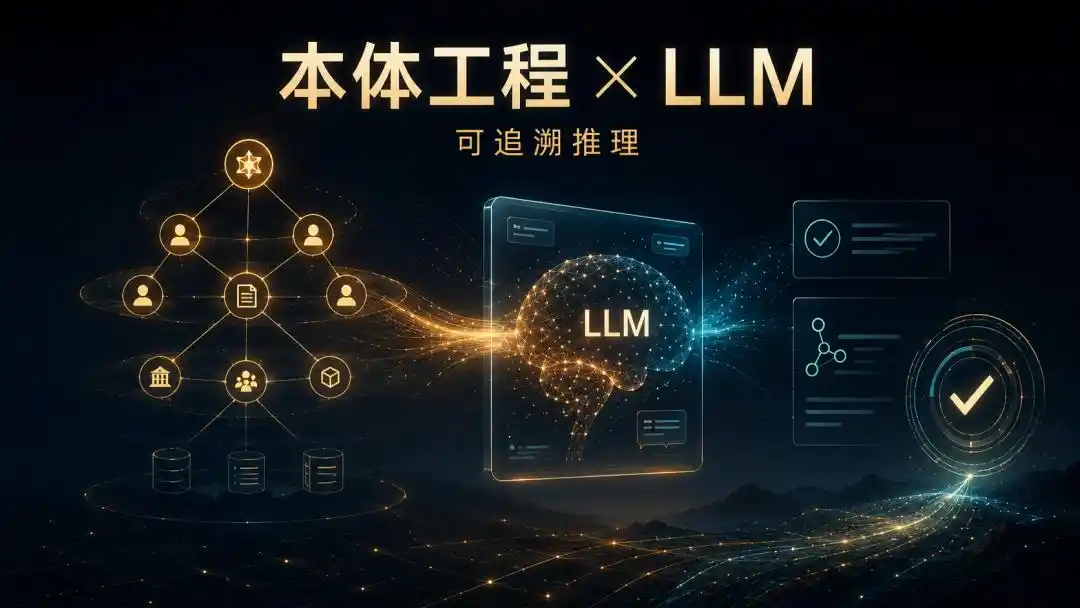
When every statement a model makes can be mapped onto the conceptual framework defined by the ontology, "explanation" is no longer an anatomy of neural network weights but a display of knowledge structures. When the basis for a model's output can be traced and verified at the ontological level, "control" is no longer forcibly intervening in internal activations but the normative management of information flow paths.

This shift in perspective transforms interpretability from a nearly impossible technical challenge into a governance goal that can be continuously approached through engineering means – it requires us to no longer obsess over making the model completely transparent, but to strive to make the model's impact in the real world understandable, traceable, and accountable.

Gongfudun has been deeply practicing under the framework of ontology engineering and interpretability discussed in this article. The company's core product, LegionSpace, is precisely built based on the above technological philosophy. As an enterprise-level AI infrastructure with ontology at its core, LegionSpace incorporates the information processed and the knowledge relied upon by models into formal ontology engineering, anchoring every inference and decision to an explainable knowledge structure.

Its vision is to make ontology the common language between AI and human understanding, turning interpretability into engineered governance reality.

This article is from the WeChat public account "New Zhiyuan," author: ASI Apocalypse

Trend Kriptolar

İlgili Sorular

QWhat is the J-Space discovery in Claude, and why is it significant for AI interpretability research?

AJ-Space, identified in Claude by the J-lens tool, is an observable, intervenable neural activity region with causal efficacy. It marks a shift in interpretability research from explaining model behavior to real-time observation of internal states, offering a new monitoring dimension for AI safety based on the global workspace theory of consciousness.

QAccording to the article, what are the core limitations of the J-Space (or neural science-based) approach to AI interpretability?

AThe J-Space approach has three core limitations: 1) It is internalist, focusing solely on the model's internal states rather than their relationship to the world and human understanding. 2) It commits a category error by equating functional isomorphism with epistemological equivalence, attributing mental states to mathematical processes. 3) It narrows 'explanation' to mere observability and intervenability, ignoring the need for reasons, justifications, and integration into broader knowledge frameworks.

QHow does the article propose to shift the perspective on AI interpretability?

AThe article proposes shifting the focus from 'how the model thinks' (internal states) to 'what information the model processes and its ontological status.' It advocates for an 'information ontology' approach that examines the model's entire information ecosystem—training data structure, knowledge representation, information flow, and the mapping of outputs to external knowledge systems—as the true object of explanation.

QWhat role does Kant's theory of categories play in the article's argument about interpretability?

AKant's categories provide the philosophical foundation, suggesting that interpretability relies on structuring information into a comprehensible framework (like quantity, quality, relation, modality). For AI, this means the output is only explainable if the model's internal information processing can be mapped onto such a categorical framework that humans use to understand the world, not by making every neuron transparent.

QWhat is the proposed practical solution for achieving AI interpretability, and what is its core mechanism?

AThe proposed solution is the fusion of Large Language Models with Ontology Engineering. The core mechanism is building 'AI-friendly' ontologies that provide a structured 'semantic skeleton' of knowledge (concepts, properties, relations). This allows model outputs to be anchored to and traced through this formal structure, making explanations about demonstrable knowledge dependencies rather than opaque neural activations, turning interpretability into an engineering governance goal.

İlgili Okumalar

Xi Jinping Attends Opening Ceremony of World Artificial Intelligence Conference 2026 and High-Level Meeting on Global AI Governance, Delivers Keynote Speech

On July 17, 2026, Chinese President Xi Jinping delivered a keynote speech titled "Working Together to Build a Fair and Equitable Global Governance System on Artificial Intelligence" at the opening ceremony of the 2026 World Artificial Intelligence Conference and High-level Conference on Global AI Governance in Shanghai. President Xi pointed out that the rapid development of AI, alongside the accelerated global changes, presents both significant opportunities and governance challenges. He raised critical questions for humanity regarding human-machine coexistence, safety, ethics, and bridging divides. China advocates for a people-oriented, benevolent approach to AI, making it a force for common prosperity and security, and jointly building a fair and reasonable global AI governance system. Xi Jinping put forward a four-point proposal: 1. **Uphold Openness for Win-Win Cooperation and Drive Innovation:** Seize the historic opportunity by encouraging open-source collaboration and sharing to foster AI innovation, industry growth, and application, empowering all sectors. 2. **Enhance Risk Awareness and Ensure Security and Controllability:** Attach great importance to AI's inherent and derivative risks. Build systems for laws, technical monitoring, risk warning, and emergency response to safeguard security, prevent misuse, and ensure human control. Oppose the practice of politicizing national security in AI. 3. **Encourage Inclusiveness and Promote Cultural Exchange:** Shape AI's values with humanity's common values. Use AI to enhance understanding and tolerance between civilizations, fostering a garden of diverse cultures. 4. **Advocate Solidarity and Improve Global Governance:** Practice true multilateralism, leverage the UN's role, and strengthen coordination on AI development strategies, governance rules, and technical standards to form a widely accepted global governance framework. Assist Global South countries in capacity building to bridge the digital divide and avoid new historical inequities. Xi highlighted that as a responsible major country, China, in its 15th Five-Year Plan period, is committed to being a provider of international public goods in AI, contributing Chinese solutions. China has promoted an "AI Plus" initiative, with its core intelligent economy exceeding RMB 10 trillion. To support global AI development, China will provide 5,000 AI training opportunities for developing countries, establish international AI application cooperation centers with regional organizations, and deploy its "Mazu" meteorological AI warning system in 30 countries. The establishment of the World Artificial Intelligence Cooperation Organization in Shanghai marks a significant milestone. Leaders from Kazakhstan, Cambodia, Thailand, and the UN Secretary-General delivered speeches, commending China's contributions to global AI governance and echoing President Xi's proposals. They agreed that AI's opportunities and challenges are borderless, requiring cooperative, inclusive, and equitable international efforts to ensure a secure, prosperous future that leaves no country behind. The conference issued a Chair's Statement. President Xi and his wife hosted a welcome banquet for international dignitaries on July 16. Senior Chinese officials attended the events.

链捕手1 dk önce

Xi Jinping Attends Opening Ceremony of World Artificial Intelligence Conference 2026 and High-Level Meeting on Global AI Governance, Delivers Keynote Speech

链捕手1 dk önce

Who Is Shaping Ethereum's Future: The Takeover by Token-Holding Companies Could Be the Best Thing for ETH in Years

**Title: Who is Building Ethereum's Future? Corporate ETH Holders Take Over Funding, Possibly the Best Thing for ETH in Years.** **Summary:** The Ethereum Foundation is scaling back due to fiscal concerns, but publicly traded companies holding large amounts of ETH, like Bitmine and SharpLink, are stepping in to fund protocol development. These firms collectively hold nearly 5% of ETH's circulating supply and are using their staking yields to pay for R&D. Unlike MicroStrategy, which merely accumulates Bitcoin, these ETH treasury companies are reinvesting profits directly into the protocol's development—potentially allowing all ETH holders to benefit from this free "spillover." Key drivers for this shift include these companies' stalled business model. Their "flywheel" of issuing stock to buy more ETH broke as their stock prices fell below the net value of their crypto holdings (mNAV < 1). With their ETH holdings also deeply underwater, simply waiting for price appreciation failed. By funding Ethereum's roadmap—through new non-profits like ETH Labs and Ethereum Institutional—they aim to increase the utility and value of the underlying asset that dominates their balance sheets. This creates a new alignment of interests: these companies are highly incentivized to see Ethereum succeed and are less likely to sell en masse. However, risks remain. The exact funding amounts are undisclosed, and these treasury firms themselves are vulnerable if ETH prices fall further, which could halt their contributions. **Additional Context:** The article also contrasts Jito's new "token-centric" proposal (JIP-38), which credibly directs platform fees to token buybacks, with Venice's less concrete promises, highlighting the importance of where revenue legally lands and who controls the mechanisms. Other notable industry updates include the rise of TradFi perpetuals on Hyperliquid, new Bitcoin staking via Stacks, and various DeFi product launches.

marsbit1 saat önce

Who Is Shaping Ethereum's Future: The Takeover by Token-Holding Companies Could Be the Best Thing for ETH in Years

marsbit1 saat önce

Visa Takes Another Step Upstream in the Stablecoin Industry

Visa has launched the Visa Stablecoin Platform (VSP), a comprehensive enterprise platform enabling banks and fintechs to handle stablecoins directly within Visa's existing payments and treasury workflows, covering approximately 15,000 financial institutions and over 200 million merchants. The platform launches with the new OUSD stablecoin and also supports USDC and USDG, providing integrated wallet infrastructure, controls, and workflows for various institutional use cases. This move marks Visa's strategic progression within the stablecoin ecosystem. It began as a user, piloting USDC for settlement in 2021, later evolving into a distributor through cards like Bridge and empowering banks with its VTAP platform. VSP consolidates these capabilities into a unified hub, positioning Visa as the central entry point for its stablecoin services rather than an issuer. Crucially, Visa is opting not to issue its own stablecoin, a move that would create conflicts with partners like Circle and Paxos and entail significant regulatory burdens. Instead, Visa leverages its neutral network role. The choice of OUSD—a zero-fee, alliance-managed stablecoin—allows Visa to benefit from the issuance layer economically without becoming a direct competitor. This strategy aims to make Visa's network the default infrastructure layer in the stablecoin era, avoiding the need to mint its own coin.

Foresight News1 saat önce

Visa Takes Another Step Upstream in the Stablecoin Industry

Foresight News1 saat önce

İşlemler

Spot

Popüler Makaleler

$S$ Nedir

SPERO'yu Anlamak: Kapsamlı Bir Genel Bakış SPERO'ya Giriş İnovasyonun manzarası gelişmeye devam ederken, web3 teknolojilerinin ve kripto para projelerinin ortaya çıkışı dijital geleceği şekillendirmede önemli bir rol oynamaktadır. Bu dinamik alanda dikkat çeken projelerden biri SPERO, $$s$$ olarak adlandırılmaktadır. Bu makale, SPERO hakkında ayrıntılı bilgi toplamak ve sunmak amacıyla, meraklılar ve yatırımcıların web3 ve kripto alanlarındaki temellerini, hedeflerini ve yeniliklerini anlamalarına yardımcı olmayı amaçlamaktadır. SPERO,$$s$$ Nedir? SPERO,$$s$$, kripto alanında merkeziyetsizlik ve blok zinciri teknolojisi ilkelerini kullanarak etkileşimi, faydayı ve finansal kapsayıcılığı teşvik eden bir ekosistem yaratmayı amaçlayan benzersiz bir projedir. Proje, kullanıcıların yenilikçi finansal çözümler ve hizmetler sunarak eşler arası etkileşimleri yeni yollarla kolaylaştırmayı hedeflemektedir. SPERO,$$s$$'nin temel amacı, bireyleri güçlendirmek ve kripto para alanındaki kullanıcı deneyimini artıran araçlar ve platformlar sağlamaktır. Bu, daha esnek işlem yöntemlerini mümkün kılmayı, topluluk odaklı girişimleri teşvik etmeyi ve merkeziyetsiz uygulamalar (dApp'ler) aracılığıyla finansal fırsatlar yaratmayı içermektedir. SPERO,$$s$$'nin temel vizyonu kapsayıcılık etrafında dönmekte olup, geleneksel finansal sistemlerdeki boşlukları kapatmayı ve blok zinciri teknolojisinin faydalarından yararlanmayı hedeflemektedir. SPERO,$$s$$'nin Yaratıcısı Kimdir? SPERO,$$s$$'nin yaratıcısının kimliği bir miktar belirsizdir, çünkü kurucusu(ları) hakkında ayrıntılı arka plan bilgisi sağlayan sınırlı kamuya açık kaynaklar bulunmaktadır. Bu şeffaflık eksikliği, projenin merkeziyetsizlik taahhüdünden kaynaklanabilir—birçok web3 projesinin paylaştığı bir etik anlayışı, bireysel tanınmanın yerine kolektif katkıları önceliklendirmektedir. Topluluk ve onun kolektif hedefleri etrafında tartışmaları merkezileştirerek, SPERO,$$s$$, belirli bireyleri öne çıkarmadan güçlendirme özünü taşımaktadır. Bu nedenle, SPERO'nun etik anlayışını ve misyonunu anlamak, tek bir yaratıcının kimliğini belirlemekten daha önemlidir. SPERO,$$s$$'nin Yatırımcıları Kimlerdir? SPERO,$$s$$, kripto sektöründe yeniliği teşvik etmeye adanmış girişim sermayedarlarından melek yatırımcılara kadar çeşitli yatırımcılar tarafından desteklenmektedir. Bu yatırımcıların odak noktası genellikle SPERO'nun misyonuyla uyumlu olup, toplumsal teknolojik ilerlemeyi, finansal kapsayıcılığı ve merkeziyetsiz yönetimi vaat eden projeleri önceliklendirmektedir. Bu yatırımcı temelleri, yalnızca yenilikçi ürünler sunan projelere değil, aynı zamanda blok zinciri topluluğuna ve ekosistemlerine olumlu katkılarda bulunan projelere de ilgi duymaktadır. Bu yatırımcıların desteği, SPERO,$$s$$'yi hızla gelişen kripto projeleri alanında dikkate değer bir rakip haline getirmektedir. SPERO,$$s$$ Nasıl Çalışır? SPERO,$$s$$, onu geleneksel kripto para projelerinden ayıran çok yönlü bir çerçeve kullanmaktadır. İşte benzersizliğini ve yeniliğini vurgulayan bazı temel özellikler: Merkeziyetsiz Yönetim: SPERO,$$s$$, kullanıcıların projenin geleceğiyle ilgili karar alma süreçlerine aktif olarak katılmalarını sağlayan merkeziyetsiz yönetim modellerini entegre etmektedir. Bu yaklaşım, topluluk üyeleri arasında sahiplik ve hesap verebilirlik duygusunu teşvik etmektedir. Token Kullanımı: SPERO,$$s$$, ekosistem içinde çeşitli işlevler sunmak üzere tasarlanmış kendi kripto para token'ını kullanmaktadır. Bu token'lar, işlemleri, ödülleri ve platformda sunulan hizmetlerin kolaylaştırılmasını sağlayarak genel etkileşimi ve faydayı artırmaktadır. Katmanlı Mimari: SPERO,$$s$$'nin teknik mimarisi, modülerlik ve ölçeklenebilirliği destekleyerek projenin evrimi sırasında ek özelliklerin ve uygulamaların sorunsuz bir şekilde entegrasyonuna olanak tanımaktadır. Bu uyum sağlama yeteneği, sürekli değişen kripto manzarasında geçerliliği sürdürmek için hayati öneme sahiptir. Topluluk Katılımı: Proje, işbirliği ve geri bildirim teşvik eden mekanizmalar kullanarak topluluk odaklı girişimlere vurgu yapmaktadır. Güçlü bir topluluk oluşturarak, SPERO,$$s$$, kullanıcı ihtiyaçlarını daha iyi karşılayabilir ve piyasa trendlerine uyum sağlayabilir. Kapsayıcılığa Odaklanma: Düşük işlem ücretleri ve kullanıcı dostu arayüzler sunarak, SPERO,$$s$$, daha önce kripto alanında yer almamış bireyler de dahil olmak üzere çeşitli bir kullanıcı tabanını çekmeyi hedeflemektedir. Bu kapsayıcılık taahhüdü, erişilebilirlik yoluyla güçlendirme misyonuyla uyumludur. SPERO,$$s$$ Zaman Çizelgesi Bir projenin tarihini anlamak, gelişim yolculuğu ve kilometre taşları hakkında kritik bilgiler sağlar. Aşağıda, SPERO,$$s$$'nin evriminde önemli olayları haritalayan önerilen bir zaman çizelgesi bulunmaktadır: Kavram Geliştirme ve Fikir Aşaması: SPERO,$$s$$'nin temelini oluşturan ilk fikirler, blok zinciri endüstrisindeki merkeziyetsizlik ve topluluk odaklılık ilkeleriyle yakından uyumlu olarak geliştirildi. Proje Beyaz Kağıdının Yayınlanması: Kavramsal aşamayı takiben, SPERO,$$s$$'nin vizyonunu, hedeflerini ve teknolojik altyapısını ayrıntılı bir şekilde açıklayan kapsamlı bir beyaz kağıt yayımlandı ve topluluk ilgisini ve geri bildirimini toplamak amacıyla sunuldu. Topluluk Oluşturma ve Erken Katılımlar: Projenin hedefleri etrafında tartışmalar yürüterek destek toplamak ve erken benimseyenler ile potansiyel yatırımcılar için bir topluluk oluşturmak amacıyla aktif iletişim çabaları gerçekleştirildi. Token Üretim Etkinliği: SPERO,$$s$$, yerel token'larını erken destekçilere dağıtmak ve ekosistem içinde başlangıç likiditesini sağlamak amacıyla bir token üretim etkinliği (TGE) gerçekleştirdi. İlk dApp'in Yayınlanması: SPERO,$$s$$ ile ilişkili ilk merkeziyetsiz uygulama (dApp) faaliyete geçti ve kullanıcıların platformun temel işlevleriyle etkileşimde bulunmalarını sağladı. Sürekli Gelişim ve Ortaklıklar: Projenin tekliflerine sürekli güncellemeler ve iyileştirmeler yapılmakta olup, blok zinciri alanındaki diğer oyuncularla stratejik ortaklıklar, SPERO,$$s$$'yi rekabetçi ve gelişen bir oyuncu haline getirmiştir. Sonuç SPERO,$$s$$, web3 ve kripto paranın finansal sistemleri devrim niteliğinde dönüştürme ve bireyleri güçlendirme potansiyelinin bir kanıtıdır. Merkeziyetsiz yönetime, topluluk katılımına ve yenilikçi tasarlanmış işlevselliğe olan bağlılığıyla, daha kapsayıcı bir finansal manzaraya doğru bir yol açmaktadır. Hızla gelişen kripto alanındaki herhangi bir yatırımda olduğu gibi, potansiyel yatırımcılar ve kullanıcılar, SPERO,$$s$$ içindeki devam eden gelişmelerle ilgili olarak kapsamlı bir araştırma yapmaları ve düşünceli bir şekilde katılmaları teşvik edilmektedir. Proje, kripto endüstrisinin yenilikçi ruhunu sergileyerek, sayısız olasılığını keşfetmeye davet etmektedir. SPERO,$$s$$'nin yolculuğu hala devam ederken, temel ilkeleri, teknoloji, finans ve birbirimizle etkileşim biçimimizi etkileyebilir.

185 Toplam GörüntülenmeYayınlanma 2024.12.17Güncellenme 2024.12.17

$S$ Nedir

AGENT S Nedir

Agent S: Web3'te Otonom Etkileşimin Geleceği Giriş Web3 ve kripto para dünyasında sürekli gelişen manzarada, yenilikler bireylerin dijital platformlarla etkileşim biçimlerini sürekli olarak yeniden tanımlıyor. Bu tür öncü projelerden biri olan Agent S, açık ajans çerçevesi aracılığıyla insan-bilgisayar etkileşimini devrim niteliğinde değiştirmeyi vaat ediyor. Otonom etkileşimlerin yolunu açarak, Agent S karmaşık görevleri basitleştirmeyi ve yapay zeka (AI) alanında dönüştürücü uygulamalar sunmayı hedefliyor. Bu detaylı inceleme, projenin karmaşıklıklarına, benzersiz özelliklerine ve kripto para alanındaki etkilerine dalacaktır. Agent S Nedir? Agent S, bilgisayar görevlerinin otomasyonunda üç temel zorluğu ele almak üzere özel olarak tasarlanmış çığır açıcı bir açık ajans çerçevesidir: Alan Spesifik Bilgi Edinimi: Çerçeve, çeşitli dış bilgi kaynaklarından ve iç deneyimlerden akıllıca öğrenir. Bu çift yönlü yaklaşım, alan spesifik bilgi açısından zengin bir veri havuzu oluşturmasını sağlar ve görev yürütmedeki performansını artırır. Uzun Görev Ufukları Üzerinde Planlama: Agent S, karmaşık görevlerin verimli bir şekilde parçalanmasını ve yürütülmesini kolaylaştıran deneyim artırımlı hiyerarşik planlama kullanır. Bu özellik, çoklu alt görevleri etkili ve verimli bir şekilde yönetme yeteneğini önemli ölçüde artırır. Dinamik, Homojen Olmayan Arayüzlerle Başlama: Proje, ajanlar ve kullanıcılar arasındaki etkileşimi geliştiren yenilikçi bir çözüm olan Ajan-Bilgisayar Arayüzü'ni (ACI) tanıtmaktadır. Çok Modlu Büyük Dil Modellerini (MLLM'ler) kullanarak, Agent S çeşitli grafik kullanıcı arayüzlerini sorunsuz bir şekilde gezinebilir ve manipüle edebilir. Bu öncü özellikler aracılığıyla, Agent S, makinelerle insan etkileşimini otomatikleştirmede karşılaşılan karmaşıklıkları ele alan sağlam bir çerçeve sunarak, AI ve ötesinde birçok uygulama için zemin hazırlıyor. Agent S'nin Yaratıcısı Kimdir? Agent S'nin kavramı temelde yenilikçi olsa da, yaratıcısı hakkında spesifik bilgiler belirsizliğini koruyor. Yaratıcı şu anda bilinmiyor, bu da projenin yeni aşamasını veya kurucu üyeleri gizli tutma stratejik tercihini vurguluyor. Anonimlikten bağımsız olarak, odak çerçevenin yetenekleri ve potansiyeli üzerinde kalıyor. Agent S'nin Yatırımcıları Kimlerdir? Agent S, kriptografik ekosistemde oldukça yeni olduğundan, yatırımcıları ve finansal destekçileri hakkında ayrıntılı bilgiler açıkça belgelenmemiştir. Projeyi destekleyen yatırım temelleri veya organizasyonları hakkında kamuya açık bilgilerdeki eksiklik, finansman yapısı ve gelişim yol haritası hakkında sorular doğuruyor. Destekleyicilerin anlaşılması, projenin sürdürülebilirliğini ve potansiyel pazar etkisini değerlendirmek için kritik öneme sahiptir. Agent S Nasıl Çalışır? Agent S'nin temelinde, çeşitli ortamlarda etkili bir şekilde çalışmasını sağlayan son teknoloji bir sistem yatmaktadır. İşleyiş modeli birkaç ana özellik etrafında inşa edilmiştir: İnsan Benzeri Bilgisayar Etkileşimi: Çerçeve, bilgisayarlarla etkileşimleri daha sezgisel hale getirmeyi amaçlayan gelişmiş AI planlaması sunar. Görev yürütmedeki insan davranışını taklit ederek, kullanıcı deneyimlerini yükseltmeyi vaat eder. Anlatı Belleği: Yüksek düzeyde deneyimlerden yararlanmak için kullanılan Agent S, görev geçmişlerini takip etmek amacıyla anlatı belleğini kullanarak karar verme süreçlerini geliştirir. Episodik Bellek: Bu özellik, kullanıcılara adım adım rehberlik sağlayarak, çerçevenin görevler gelişirken bağlamsal destek sunmasına olanak tanır. OpenACI Desteği: Yerel olarak çalışabilme yeteneği ile Agent S, kullanıcıların etkileşimleri ve iş akışları üzerinde kontrol sağlamasına olanak tanır ve Web3'ün merkeziyetsiz felsefesiyle uyumlu hale gelir. Dış API'lerle Kolay Entegrasyon: Çeşitli AI platformlarıyla uyumluluğu ve çok yönlülüğü, Agent S'nin mevcut teknolojik ekosistemlere sorunsuz bir şekilde entegre olmasını sağlar ve geliştiriciler ile organizasyonlar için cazip bir seçenek haline getirir. Bu işlevsellikler, Agent S'nin kripto alanındaki benzersiz konumuna katkıda bulunarak, karmaşık, çok aşamalı görevleri minimum insan müdahalesi ile otomatikleştirir. Proje geliştikçe, Web3'teki potansiyel uygulamaları dijital etkileşimlerin nasıl gelişeceğini yeniden tanımlayabilir. Agent S'nin Zaman Çizelgesi Agent S'nin gelişimi ve kilometre taşları, önemli olaylarını vurgulayan bir zaman çizelgesinde özetlenebilir: 27 Eylül 2024: Agent S'nin kavramı, “Bilgisayarları İnsan Gibi Kullanan Açık Bir Ajans Çerçevesi” başlıklı kapsamlı bir araştırma makalesi ile tanıtıldı ve projenin temelini sergiledi. 10 Ekim 2024: Araştırma makalesi arXiv'de kamuya açık olarak yayınlandı ve çerçevenin derinlemesine bir incelemesini ve OSWorld benchmark'ına dayalı performans değerlendirmesini sundu. 12 Ekim 2024: Agent S'nin yetenekleri ve özellikleri hakkında görsel bir içgörü sağlayan bir video sunumu yayımlandı ve potansiyel kullanıcılar ve yatırımcılarla daha fazla etkileşim sağlandı. Bu zaman çizelgesindeki işaretler, sadece Agent S'nin ilerlemesini değil, aynı zamanda şeffaflık ve topluluk katılımına olan bağlılığını da göstermektedir. Agent S Hakkında Ana Noktalar Agent S çerçevesi gelişmeye devam ederken, birkaç ana özellik öne çıkmakta ve yenilikçi doğasını ve potansiyelini vurgulamaktadır: Yenilikçi Çerçeve: İnsan etkileşimine benzer bir bilgisayar kullanımı sağlamak üzere tasarlanan Agent S, görev otomasyonuna yeni bir yaklaşım getiriyor. Otonom Etkileşim: GUI aracılığıyla bilgisayarlarla otonom olarak etkileşim kurabilme yeteneği, daha akıllı ve verimli hesaplama çözümlerine doğru bir sıçrama anlamına geliyor. Karmaşık Görev Otomasyonu: Sağlam metodolojisi ile karmaşık, çok aşamalı görevleri otomatikleştirerek süreçleri daha hızlı ve daha az hata payı ile gerçekleştirebilir. Sürekli İyileştirme: Öğrenme mekanizmaları, Agent S'nin geçmiş deneyimlerden öğrenmesini sağlar ve sürekli olarak performansını ve etkinliğini artırır. Çok Yönlülük: OSWorld ve WindowsAgentArena gibi farklı işletim ortamlarında uyumlu olması, geniş bir uygulama yelpazesine hizmet edebilmesini sağlar. Agent S, Web3 ve kripto alanında kendini konumlandırırken, etkileşim yeteneklerini artırma ve süreçleri otomatikleştirme potansiyeli, AI teknolojilerinde önemli bir ilerlemeyi temsil etmektedir. Yenilikçi çerçevesi aracılığıyla, Agent S dijital etkileşimlerin geleceğini örneklemekte ve çeşitli sektörlerde kullanıcılar için daha sorunsuz ve verimli bir deneyim vaat etmektedir. Sonuç Agent S, AI ve Web3'ün birleşiminde cesur bir sıçramayı temsil ediyor ve teknoloji ile etkileşim biçimimizi yeniden tanımlama kapasitesine sahip. Henüz erken aşamalarında olmasına rağmen, uygulama olanakları geniş ve çekici. Kritik zorlukları ele alan kapsamlı çerçevesi ile Agent S, otonom etkileşimleri dijital deneyimin ön plana çıkmasına taşımayı hedefliyor. Kripto para ve merkeziyetsizlik alanlarına daha derinlemesine girdikçe, Agent S gibi projelerin teknoloji ve insan-bilgisayar işbirliğinin geleceğini şekillendirmede önemli bir rol oynayacağı kesin.

659 Toplam GörüntülenmeYayınlanma 2025.01.14Güncellenme 2025.01.14

AGENT S Nedir

S Nasıl Satın Alınır

HTX.com’a hoş geldiniz! Sonic (S) satın alma işlemlerini basit ve kullanışlı bir hâle getirdik. Adım adım açıkladığımız rehberimizi takip ederek kripto yolculuğunuza başlayın. 1. Adım: HTX Hesabınızı OluşturunHTX'te ücretsiz bir hesap açmak için e-posta adresinizi veya telefon numaranızı kullanın. Sorunsuzca kaydolun ve tüm özelliklerin kilidini açın. Hesabımı Aç2. Adım: Kripto Satın Al Bölümüne Gidin ve Ödeme Yönteminizi SeçinKredi/Banka Kartı: Visa veya Mastercard'ınızı kullanarak anında Sonic (S) satın alın.Bakiye: Sorunsuz bir şekilde işlem yapmak için HTX hesap bakiyenizdeki fonları kullanın.Üçüncü Taraflar: Kullanımı kolaylaştırmak için Google Pay ve Apple Pay gibi popüler ödeme yöntemlerini ekledik.P2P: HTX'teki diğer kullanıcılarla doğrudan işlem yapın.Borsa Dışı (OTC): Yatırımcılar için kişiye özel hizmetler ve rekabetçi döviz kurları sunuyoruz.3. Adım: Sonic (S) Varlıklarınızı SaklayınSonic (S) satın aldıktan sonra HTX hesabınızda saklayın. Alternatif olarak, blok zinciri transferi yoluyla başka bir yere gönderebilir veya diğer kripto para birimlerini takas etmek için kullanabilirsiniz.4. Adım: Sonic (S) Varlıklarınızla İşlem YapınHTX'in spot piyasasında Sonic (S) ile kolayca işlemler yapın.Hesabınıza erişin, işlem çiftinizi seçin, işlemlerinizi gerçekleştirin ve gerçek zamanlı olarak izleyin. Hem yeni başlayanlar hem de deneyimli yatırımcılar için kullanıcı dostu bir deneyim sunuyoruz.

1.8k Toplam GörüntülenmeYayınlanma 2025.01.15Güncellenme 2026.06.02

S Nasıl Satın Alınır

Tartışmalar

HTX Topluluğuna hoş geldiniz. Burada, en son platform gelişmeleri hakkında bilgi sahibi olabilir ve profesyonel piyasa görüşlerine erişebilirsiniz. Kullanıcıların S (S) fiyatı hakkındaki görüşleri aşağıda sunulmaktadır.

活动图片