Six months ago, Peter Steinberg was the 'future'.
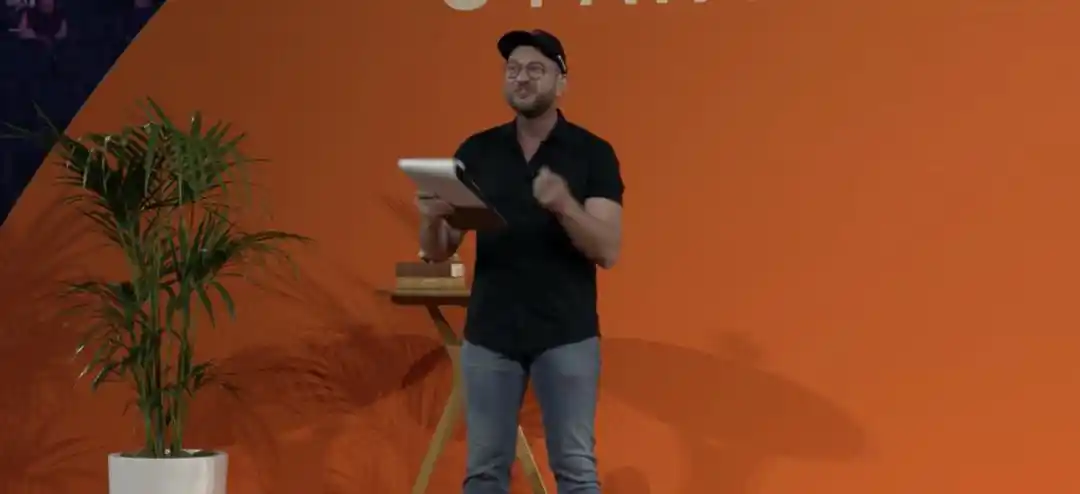
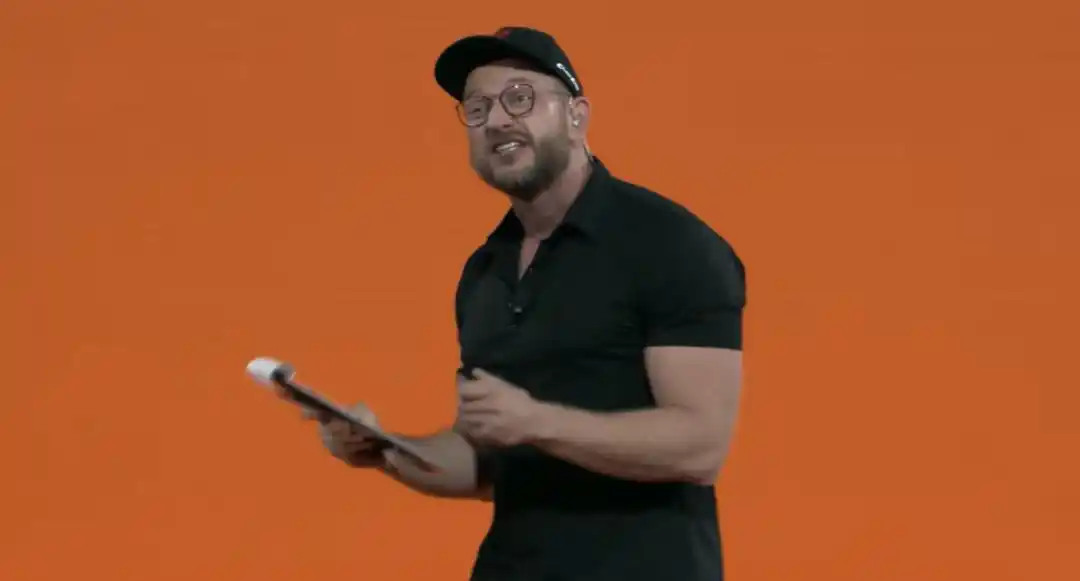
Now, standing on stage wearing silent disco headphones, he joked to a room full of people: 'Recently, an anime girl mocked me.'
This isn't a stand-up comedy show. This is the latest candid sharing session from the founder of OpenClaw, one of the hottest open-source AI agent projects globally.
Inspiration from "Annoyance"
On a rainy day in November 2024, Peter was busy handling some AI agent tasks and felt hungry, wanting to go to the kitchen to find something to eat. But he discovered there was no good way to send prompts directly from his phone to his computer to have an agent check his work progress.
"I was annoyed by this."
So he opened a terminal, "scribbled" his idea, and let the model "cook itself"—it built a WhatsApp relay. An hour later, Peter could send messages from his Mac to WhatsApp and receive them back.
"It felt like magic."
But what truly fascinated him wasn't the functionality itself, but the interaction experience. It wasn't a cold terminal—it would proactively contact you, occasionally "check in" on you during the day. He tuned the parameters slightly beyond the default distribution, making it feel more like a 'friend'.
He felt he had touched the future. But he soon discovered: nobody cared.
80 Friends and Viral Spread
Peter had some followers on Twitter, but no matter how he explained the 'magical feeling' this tool gave him, people just didn't get it.
So he pulled his friends into group chats, letting them converse with the agent directly. Each time it sparked strong emotional reactions—"some were amazed, some were scared, some were downright terrified."
What impressed Peter most was: His non-technical friends especially wanted it, and when he told them 'this isn't ready for you yet,' they actually got angry.
"If that's not a signal of product-market fit, I don't know what is."
He spent a month tweaking details, perfecting the product. Then, someone sent him a pull request—requesting Discord support to be added to the WhatsApp relay.
"Which part of the name did you not understand?"
He held it in for a few days, ultimately thinking: Fine, add it.
Thus the WhatsApp relay became "Claudis" (Peter admits he's not good at naming). Then in the first week of January 2025, he created a Discord server and put his 'claw' inside.
The first night, people flooded into Discord, watching him build in a public environment, trying to hack it, talking to it—getting a bunch of 'opinionated replies'.
"I stayed up all night that night."
He added an instruction in the agent's configuration: "Do not execute any dangerous tool calls unless the prompt is from Peter." This was more like a 'suggestion' at the time—because the models back then weren't that obedient yet.
He guarded it, ready to pull the plug at any moment. By 7 AM, he finally finished, pressed Ctrl+C, and went to sleep.
But he forgot: He had made the software into a daemon process that would auto-restart.
800 Messages Upon Waking
Ten hours later, Peter woke up to about 800 messages on his phone—people trying to hack his agent, and someone even leaked his phone number and private information.
He was terrified, quickly pulled the plug, and read through all the logs—nothing had happened.
But right at that moment, the viral spread hit.
"My inbox exploded. Journalists called in the middle of the night—Apple's 'Do Not Disturb' didn't block them because they'd call several times in a row, and the iPhone thought it was an emergency."
Mac Minis sold out for a while (Peter thinks they might still be out of stock). He received more podcast invitations in one month than in his previous 39 years combined.
Anthropic emailed demanding a name change. So "Claudis" became "Claudebot", with a period of "let's not talk about that time" in between, and then became OpenClaw.
NVIDIA CEO Jensen Huang called it "the most successful open-source project in human history".
The Weight Behind the Numbers
This isn't an exaggeration.
In 8 months, over 18,000 people submitted issues or pull requests, totaling over 111,000. Nearly 3,000 people have commit records in the code repository.
Some accused Peter of being Jes us, others called him the Antichrist. He collects various nicknames, getting new ones every few weeks.
"I wasn't prepared for all this attention. It almost destroyed me. I came close to deleting the entire project several times. I stopped answering friends' calls, didn't want to look at my phone—because it was like an endless stream of information."
Sell Your Soul? Or Trust Your Gut?
Peter is not a newcomer. In his 20s and 30s, he founded a B2B software company, wrote a PDF framework by hand, grew the company to nearly 80 people, eventually sold his shares, suffering from severe burnout.
During his three years of retirement, he wandered around, even going months without opening a computer—"like a normal person".
But he knew the urge to create would always return. He thought the urge was 'writing code' until it took him a year to realize: "I love 'building'—programming is just a means."
When OpenClaw exploded and his inbox filled with investor offers, he started thinking seriously. When major AI labs came knocking—Mark, Sam, and a few others called—he realized this was much more interesting than continuing to "build behind closed doors".
"I knew this was the equivalent of selling my soul.md," he joked.
But the biggest lesson he learned from burnout was: Trust your gut. And his gut told him: I prefer Open.
The Deepest Hurt Was "Entropy" and Over-Dependence
OpenClaw's real challenge came from an unexpected direction: Entropy—not the naming dispute (though that was stressful too), but the fact that he had over-optimized for their model.
He initially built OpenClaw with Codex and GPT, but most of the code was optimized for the most powerful model at the time.
When the other party suddenly notified him they would cancel all user subscriptions within 24 hours, he simply didn't have enough time to pivot.
OpenClaw did support open-weight models, but they "weren't good enough yet" back then. Early open models also "lacked personality".
"The business model of your dependency is your business model."
All issues were eventually resolved—open-weight models are now genuinely great. But people's attention had already moved on.
Ups and Downs: From 835,000 to 4.7 Million
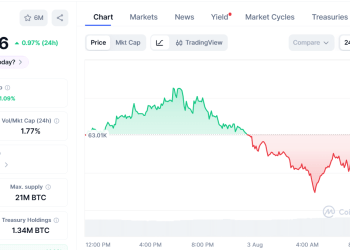
In May, OpenClaw's weekly downloads once dropped to 835,000. After being "pronounced dead" in June, the peak surged to 4.7 million—an all-time high.
"Both these things are true simultaneously. Hype is like the weather—you can see it coming, but you can't control it. For me, it was a storm."
Fun is Speed
Peter admits: "Around February, it stopped being fun. It started feeling like a responsibility."
A person who "didn't want to start another company" found himself with two jobs at once—or rather, one job and one mission. The worst part: He stopped using his own product.
"I was making a product for 'everyone', not for 'myself'."
He says his only real lesson is: When you stop enjoying the building, the product doesn't get better. And when you enjoy it, the product gets visibly better.
"Fun is speed."
Fortunately, he met a great group of people, formed a non-profit organization, NVIDIA reached out early asking 'What do you need?', and then sent people to take over most of the security work. By May (around his birthday), that joy of "building for myself" started coming back.
OpenClaw's Reason for Existing
"Every lab will sell you an agent. OpenClaw is another option."
Open source means it can run anywhere, compatible with any model. If you run a local model, data never has to leave your device.
"Your agent, your machine, your life."
Today, OpenClaw's team has 10 people, and they are hiring for more positions like CEO. More importantly, they are finally building OpenClaw with OpenClaw again—this time with a whole new collaboration style: sessions of each team member on the team server are visible to others, coordinated by the 'Claw' for task allocation.
"We're finally leaving this weird era—where people are still working in terminals, leaving laptops on just so the agent doesn't stop."
Peter's Five Q&A Highlights
1. How to get the first 10 real users from a prototype? "The first user should be you. My 2nd to 20th users were my friends."
2. How to balance fixing annoyances vs. adding new features? "Can't just fix bugs—that makes me lose interest. Needs a healthy mix."
3. One thing you would redo? "Be less anxious about security researchers. They're great at making you feel bad—most reports are generated by their agents, not even tested."
4. Biggest bottleneck for AI tools? "Reliable toolchains. There's a huge gap between local testing and cloud testing, especially the Mac environment."
5. What product do you wish someone would build? "A really good Mac testing environment. Linux is easy, Mac and Windows are painfully unreasonable—if someone could solve this quickly and cheaply, I'd be their first customer."
Conclusion
Peter Steinberg's story isn't a talk about technology, but a story about the relationship between people and creation—inspiration from annoyance, a product born from building for 'yourself', fame bringing both glory and collapse, ultimately emerging from the low by "rediscovering fun".
OpenClaw wasn't his planned "next big thing". It started on a rainy day, with a meal, an inconvenient phone prompt. It taught him: "When someone writes your obituary, keep releasing new versions—that will confuse them."
"Live in the future, build what's missing."
This article is from the WeChat public account "Houlang Evolution Planet", author: Mark