OpenAI Experiences Internal Strife Again! Major Leadership Shake-Up on the Eve of IPO

marsbit2026-04-06 tarihinde yayınlandı2026-04-06 tarihinde güncellendi

Özet

OpenAI is experiencing significant internal turmoil and executive reshuffling just as it prepares for a potential IPO later this year. Key changes include COO Brad Lightcap transitioning to a special projects role, Chief Marketing Officer Kate Rouch resigning for health reasons, and Chief App Officer Fidji Simo taking a medical leave. These departures and reassignments have raised concerns about management stability during a critical period. Additionally, tensions have emerged between CEO Sam Altman and CFO Sarah Friar over the IPO timeline. Altman is pushing for a faster launch, aiming to go public before competitor Anthropic, and has publicly committed to $600 billion in future AI infrastructure investments. Friar, however, advocates for a more cautious approach, citing the immense internal preparation required and uncertainties around the company’s financial sustainability given slowing revenue growth and massive compute expenditure commitments. These developments have led to speculation about OpenAI’s ability to execute a successful IPO this year, with external observers and industry insiders questioning both its business model and internal cohesion amid fierce competition and financial pressures.

OpenAI, eager to go public before Company A, turns around only to find:

Ahhh, the house is on fire!!

On one hand, there is intense personnel turmoil at the top—the COO is moving to a special project, and several key executives are leaving or taking leave;

On the other hand, the CEO leading the IPO and the CFO controlling the purse strings are reported to be at odds over the timeline.

How should we put it? Compared to the recent billion-dollar funding round and the new progress on GPT-6, this reversal came way too fast.

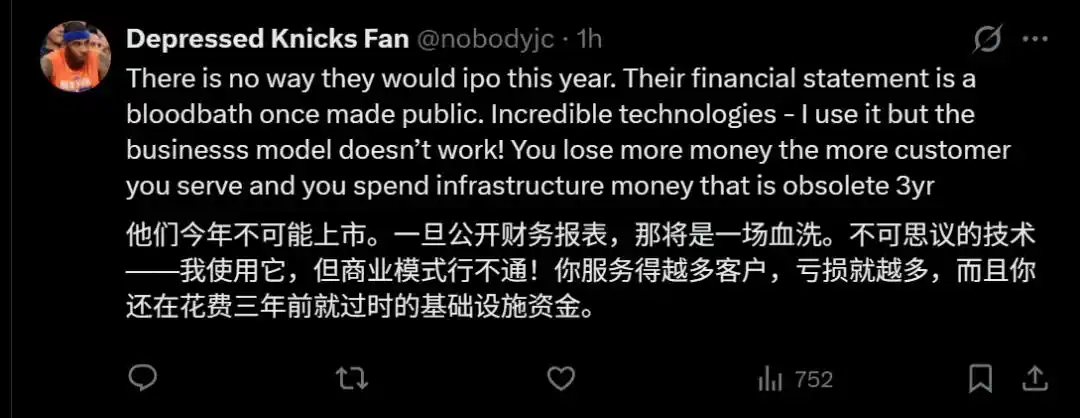
As the news broke, netizens also raised new doubts about whether OpenAI can successfully go public this year:

Sam's tensions with everyone else on Earth are intensifying.
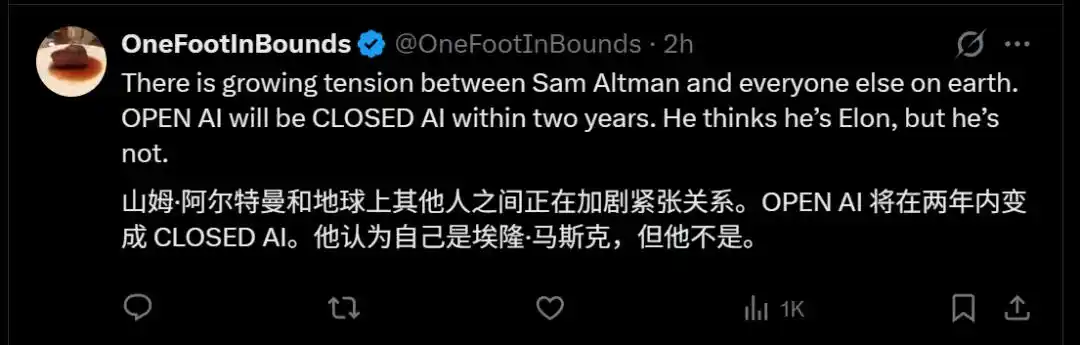
They can't go public this year... After trying it, the business model doesn't seem viable.
So, what exactly is happening at OpenAI?

IPO Imminent, Leadership in Turmoil

The first thing happening at OpenAI is quite intriguing:

Right at the critical juncture of securing a record $122 billion in funding and sprinting towards an IPO, several key executives are either changing roles, taking leave, or leaving.

According to Bloomberg, its long-time Chief Operating Officer Brad Lightcap will transition to a new role, leading "special projects" and reporting directly to CEO Altman.

Although the "special projects" are not explicitly defined, one of the responsibilities is related to OpenAI's strategic shift towards the B2B market—

overseeing the formation of joint ventures with private equity firms to sell software to enterprises.

On the surface, Brad Lightcap seems to have been given a significant responsibility, but in terms of title, he has indeed lost his identity as "OpenAI's chief steward."

As a result, netizens unanimously think Brad Lightcap has been "kicked upstairs."

The person replacing Brad Lightcap as COO is Denise Dresser, who was appointed as Chief Revenue Officer at OpenAI just late last year.

Before joining OpenAI, Denise Dresser was the CEO of the globally renowned collaboration platform Slack, particularly skilled in commercial expansion.

But after only three months in the role, she was pushed into the COO position, so this adjustment doesn’t look like a "routine handover" at all.

Taking a step back, even if the changes involving the first two executives are explained as part of OpenAI's normal strategic adjustments—

after all, the overall direction is for commercial considerations.

But the fact that two other executives, one taking leave and the other leaving, and happening around the same time, seems to hint at something else?

One of them on leave is Fidji Simo, who joined OpenAI as Chief App Officer last May.

It's worth noting that she was a major hire for OpenAI—she spent 10 years at Facebook (now Meta), directly responsible for the entire Facebook App, later moved to Instacart as CEO, and took the company public during a overall downturn in tech stocks.

And now, she stated in an internal memo to employees that due to "particularly poor health over the past month," she has decided to take several weeks off for recovery.

During her leave, OpenAI President Greg Brockman will temporarily take over her role, overseeing the product department.

The one leaving is Chief Marketing Officer Kate Rouch, also citing health reasons—leaving to focus on cancer treatment.

She also specifically mentioned that if her condition allows, she might return in a limited capacity later.

OpenAI is currently looking for a new Chief Marketing Officer.

Seeing this, some might ask: Aren't health reasons normal?

Yes, they are. But precisely because it's so normal, so faultless, it makes people even more suspicious.

Not to mention, doesn't this seem like a scene from "The Return of the Empress"?

The specific events are familiar to everyone, so we won't elaborate here, just one point—at that time, many people (including the current president of OpenAI) also expressed their stance or temporarily laid low using leave as a reason.

So, on the surface, everything has a reasonable explanation—role change is strategic, leave is for health, and departure is understandable.

But when the timelines overlap, it's hard not to think one step further:

Why exactly at this critical juncture of the IPO sprint?

After all, for a company heading towards the capital market, the most important things are stability and predictability, especially the continuity of the core management team.

And now, OpenAI is collectively staging such a drama.

Altman and CFO Diverge on IPO Timeline

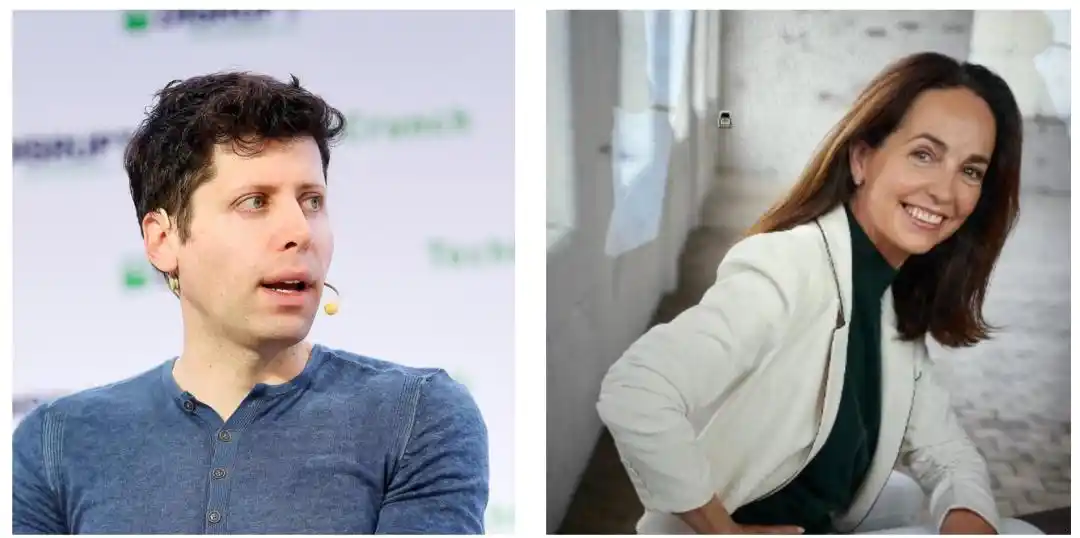
What's worse, there are signs that the relationship between the CEO and CFO, these two key roles, is also quite delicate.

They have major disagreements on the IPO timeline:

Altman seeks "speed", hoping to go public in Q4 of this year before Anthropic (Company A was rumored to be planning an IPO as early as October).

To go public faster, he also publicly承诺 (committed - note: the original Chinese word 承诺 (chéngnuò) means promise/commit) to invest $600 billion over the next five years (anyway, putting the word out first).

And it's important to know that OpenAI itself once estimated that it would burn through over $200 billion before generating positive cash flow.

CFO Sarah Friar seeks "stability", believing the amount of internal preparation work needed for the IPO is enormous, and targeting this year is somewhat aggressive.

As a financial expert who previously took Square public, she expressed her concerns privately to colleagues earlier this year.

Especially since the IPO is backed by Altman's "$600 billion" promise, she is uncertain whether such massive investments in AI servers will truly be needed in the coming years, and whether the slowing revenue growth can support these commitments.
This strategic divergence has also cast a shadow over their working relationship.

It is reported that although the two appeared harmonious at a private dinner Altman hosted for investors earlier this year, those around them have vaguely sensed:

This is only superficial; their relationship has become strained.

A clear example is that in recent months, when Altman was discussing server expenses with senior executives of a top investment firm, Sarah Friar was not included.

If she had never participated before, it might be different, but the key is that Sarah Friar was present at previous events discussing the same topic.

So even other attendees felt that Altman might indeed have done it on purpose.

And even more unusually, since last August, Sarah Friar's reporting line was adjusted—

no longer reporting directly to CEO Altman, but to the head of the applications business.

In the eyes of outsiders, "this is a rare organizational arrangement in any large company."

At this point, the "discord" between the two has gradually come to light.

So the question is, is Sarah Friar's concern justified? Especially regarding Altman's承诺 (commitment) of $600 billion.

The answer is: It really is.

According to public information, this $600 billion is primarily for computing power expenditure—OpenAI has signed long-term server leasing agreements with Oracle, Microsoft, and Amazon totaling approximately $665 billion, valid until 2030.

The key is that this is not a "pay-as-you-go" contract; in some cases, OpenAI must commit billions of dollars years in advance to fund partners building custom data centers for it.

This dramatically increases the spending pressure on OpenAI.

But on the other end, OpenAI's revenue is not proportional to its burn rate—

Although it just secured $122 billion in new funding from NVIDIA, Amazon, etc., they privately warned investors in February that its cash consumption by 2030 would be more than double previous forecasts.

Moreover, due to increasingly fierce competition from Anthropic and Google Gemini, its gross profit margin on revenue already fell short of expectations last year.

Under multiple pressures, the CEO of old rival Company A also jumped in to subtly mock—

If one misjudges the speed of technology-driven revenue growth, locking in massive data center investments years in advance would be "disastrous," even leading to bankruptcy.

Although the OpenAI president later countered this comment in a podcast, the financial pressure on OpenAI has indeed reached a point that cannot be ignored.

One More Thing

It is worth mentioning that CEOs and CFOs "clashing" before an IPO is not uncommon.

A long time ago, Airbnb had a similar situation, but the outcome then was—

The CFO left, the leadership turmoil triggered a wave of executive departures, but the CEO still successfully took Airbnb public.

(P.S.: The Airbnb CEO is also an informal advisor to Altman, and the two have a good personal relationship).

It remains to be seen how this will end.

Reference links:[1]https://x.com/WesRoth/status/2040776475214012560[2]https://www.theinformation.com/articles/openai-ceo-cfo-diverge-ipo-timing[3]https://x.com/i/status/2040894109817393240

This article is from the WeChat public account "QbitAI", author: Focus on Frontier Technology

İlgili Sorular

QWhat major leadership changes are happening at OpenAI ahead of its planned IPO?

AOpenAI is undergoing significant leadership changes, including COO Brad Lightcap transitioning to a special projects role, Chief Revenue Officer Denise Dresser being promoted to COO, Chief Application Officer Fidji Simo taking a leave of absence, and Chief Marketing Officer Kate Rouch resigning.

QWhat is the reported disagreement between CEO Sam Altman and CFO Sarah Friar?

ACEO Sam Altman wants to pursue a fast IPO in Q4 of this year to beat competitor Anthropic to market, while CFO Sarah Friar advocates for a more cautious approach, believing the internal preparation workload is too large for a 2024 target and expressing concerns about the financial commitments.

QWhat financial pressure is OpenAI facing according to the article?

AOpenAI faces immense financial pressure from long-term server leasing agreements totaling approximately $665 billion with partners like Oracle, Microsoft, and Amazon, which require significant upfront capital commitments. This is compounded by revenue that is not keeping pace with the burn rate and increased competition.

QWhy are the timing and nature of the executive changes seen as suspicious?

AThe changes are seen as suspicious because they are concentrated at a critical juncture just before a planned IPO, a period when stability and predictability in the core management team are paramount for investor confidence. The coincidental timing of multiple high-profile departures and role changes, all with seemingly 'normal' explanations, has led to speculation about internal turmoil.

QWhat precedent does the article mention for a CEO and CFO disagreeing before an IPO?

AThe article mentions that a similar situation occurred at Airbnb, where the CFO departed and executive turmoil led to other高管离职s, but the CEO ultimately still successfully took the company public. It also notes that Airbnb's CEO is an informal advisor to Sam Altman.

İlgili Okumalar

Anthropic Cries Wolf: Is the AGI Threat Real, or Just an IPO Story?

Anthropic has published an article titled "When AI builds itself," discussing the emerging concept of "recursive self-improvement," where AI begins to actively participate in designing, training, testing, and optimizing its own subsequent versions. The company presents internal data showing that by May 2026, over 80% of code merged into its codebase was written by Claude, its AI model. Claude's capabilities have expanded to handling complex, open-ended engineering tasks, achieving a 76% success rate in such areas, and even contributing to research processes, such as optimizing code performance and conducting AI safety experiments. Anthropic outlines an evolution from human-driven development to AI-assisted workflows, culminating in the current stage where AI agents can autonomously write, run, and delegate code. The company cautions that the path toward a "closed loop," where AI continuously improves itself, is becoming visible. It calls for coordinated global mechanisms to potentially slow or pause frontier AI development to allow safety research and societal structures to catch up. However, the timing of this warning coincides with Anthropic's preparations for an IPO, framing the narrative not just as a safety concern but also as a demonstration of Claude's advanced capabilities and its integral role in accelerating Anthropic's own R&D—creating a potential "flywheel" effect for competitive advantage. This contrasts with OpenAI's recent, more policy-oriented discussion of the same risks, highlighting the competitive dynamics in the AI industry as companies position themselves in both the technological and regulatory landscape.

marsbit27 dk önce

Anthropic Cries Wolf: Is the AGI Threat Real, or Just an IPO Story?

marsbit27 dk önce

BIT Research: ETF Purchases Have Slowed, Strategy (MicroStrategy) Has Slowed, What Else Can Drive Bitcoin's Rise?

Market Refocus on Inflation and Rate Expectations Weighs on Bitcoin Currently, the market is in a phase of macro-repricing dominated by inflation and interest rate expectations. Bitcoin, which previously benefited from easy liquidity and low inflation, is seeing its core bullish drivers weaken. These drivers were market expectations for interest rate cuts and strong inflows from Bitcoin ETFs and institutions like MicroStrategy (referred to as "Strategy" in the text). The logic has shifted. Recent high inflation data (e.g., CPI hitting 3.8% in a May 2026 report) has caused the market to sharply reduce its rate cut expectations for 2025 and even price in potential hikes. This is a key constraint for Bitcoin, as it lacks cash flows and is highly sensitive to rate expectations. Concurrently, institutional capital flows have slowed significantly. Following the hot CPI data, Bitcoin ETFs saw accelerated outflows, with around $4.3 billion leaving over a period. MicroStrategy's ability to keep adding substantial Bitcoin to its balance sheet is also diminishing. Together, ETF and MicroStrategy holdings total roughly $110 billion, but their momentum as growth engines is cooling. In summary, Bitcoin's current pressure stems not from its own fundamentals but from a changing macro environment. As long as inflation stays elevated, Bitcoin is likely to remain in a consolidating phase. However, historically, inflation eventually peaks. Once it recedes and rate cut expectations rebuild, institutional capital could return, potentially fueling a new and more robust recovery phase for Bitcoin.

marsbit35 dk önce

BIT Research: ETF Purchases Have Slowed, Strategy (MicroStrategy) Has Slowed, What Else Can Drive Bitcoin's Rise?

marsbit35 dk önce

Earning 1000 Trillion in Half a Year, 'Pocketing' 20 Million per Capita: This Round of Wealth Creation in the Korean Stock Market is Unprecedented in Scale

The South Korean stock market is experiencing an unprecedented wealth surge in 2026, with household equity and fund asset values soaring by over 1,000 trillion KRW (~$730bn) year-to-date. This translates to an average per capita wealth increase of roughly 20 million KRW, fueled by a historic 109% rally in the KOSPI index. The boom is driven by three converging forces: an AI-driven semiconductor supercycle boosting giants like Samsung and SK Hynix; the government's "Value-Up" market reforms addressing long-standing corporate governance issues; and aggressive real estate regulations that have locked capital within financial markets, preventing profits from flowing back into property. This has triggered a wealth effect, boosting high-end consumption significantly. However, the gains are highly concentrated. The two semiconductor behemoths account for over half the index's value, but retail investors own relatively low stakes in them, systematically missing the biggest rallies. Wealth and consumption benefits are skewed towards luxury goods and imported cars, bypassing mainstream retail. Further risks stem from excessive leverage, with high trading volume in leveraged ETFs, and a market sentiment heavily reliant on the AI sector's fortunes and speculative rumors. While this cycle marks a potential shift from real estate to equities as a primary wealth generator for Koreans, its sustainability, amid structural imbalances and leverage, remains a critical test.

marsbit40 dk önce

Earning 1000 Trillion in Half a Year, 'Pocketing' 20 Million per Capita: This Round of Wealth Creation in the Korean Stock Market is Unprecedented in Scale

marsbit40 dk önce

Behind ZEC's Over 30% Plunge: An 'Unlimited Minting' Vulnerability with No Way to Prove if It Was Ever Exploited

A critical vulnerability was discovered in Zcash's Orchard privacy pool, allowing for the theoretical creation of undetectable counterfeit ZEC. Researcher Taylor Hornby found the flaw on May 29th, 2024, within the Orchard circuit's cryptographic constraints, which could let an attacker bypass asset conservation rules. Although a rapid emergency fix was deployed within days via a coordinated soft and hard fork, a core uncertainty remains: due to Orchard's privacy features, it is impossible to cryptographically prove whether this "unlimited mint" flaw was exploited in the nearly four years since the pool's 2022 launch. This uncertainty, rather than the patched flaw itself, triggered a market panic, causing ZEC's price to drop over 30%. While the Zcash Foundation stated no evidence of exploitation was found, independent entity Shielded Labs emphasized the impossibility of definitively proving no counterfeit ZEC was ever created. The incident highlights the unique trust challenge in privacy systems. To address this, developers are proposing a new network upgrade with enhanced auditing to allow verifiable proof of supply integrity. Notably, the researcher utilized the newly released AI model Claude Opus 4.8 as a tool during the security review, signaling the growing role of advanced AI in uncovering complex cryptographic vulnerabilities.

marsbit42 dk önce

Behind ZEC's Over 30% Plunge: An 'Unlimited Minting' Vulnerability with No Way to Prove if It Was Ever Exploited

marsbit42 dk önce

İşlemler

Spot
Futures
活动图片