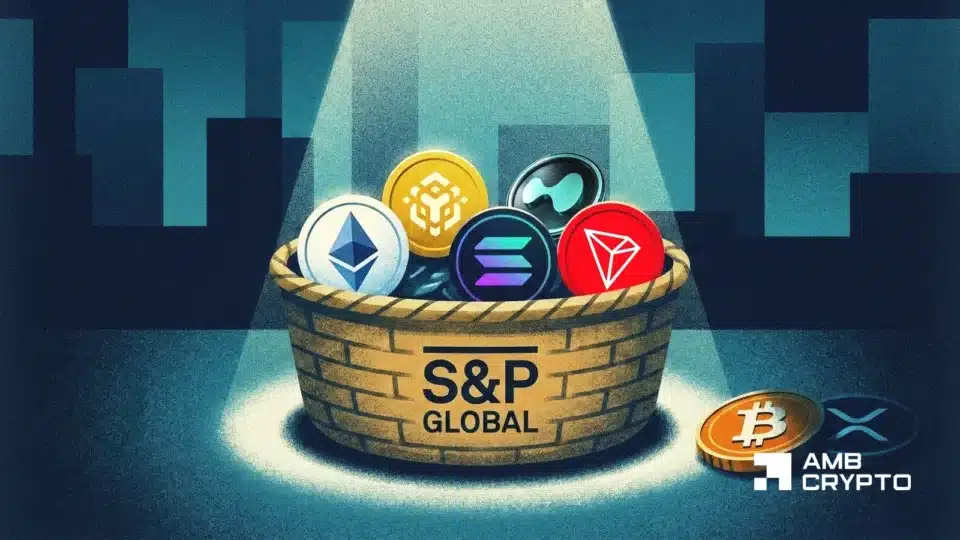
Ondo partnership fuels Solana’s 2026 push into Wall Street capital

ambcrypto2026-01-22 tarihinde yayınlandı2026-01-22 tarihinde güncellendi

Özet

Ondo Finance's partnership with Solana is accelerating the network's push into institutional finance by launching over 200 tokenized assets. This collaboration builds on the growing Real-World Asset (RWA) sector, which saw 250% year-over-year growth in 2025 and has become a key bridge between DeFi and traditional finance. Solana enters 2026 with over $1 billion in RWA total value locked (TVL), $200 million of which comes from public equity assets, signaling strong Wall Street participation. Despite market volatility, SOL has maintained a price above $120 for 10 weeks and is outperforming many peers with a 4.5% gain since the start of 2026. The Ondo partnership reinforces Solana’s institutional adoption, driving ETF interest and positioning its 2026 growth cycle as conviction-driven.

No doubt, 2025 really pushed crypto and Wall Street closer together.

The real driver behind this momentum? The RWA sector. By making tokenized assets tradable on-chain, it turned what was once a niche experiment into a practical bridge between DeFi and institutional finance.

In other words, the RWA sector became a direct link between on-chain activity and big-money adoption. Given that, it’s not surprising that RWAs were 2025’s top performers, posting an impressive 250% YoY growth.

With that kind of momentum, it makes sense that most L1s are now trying to ride the wave and push more RWA adoption. Case in point: Solana [SOL] teaming up with Ondo Finance to launch 200+ tokenized assets.

And honestly, the timing couldn’t be better.

Solana is kicking off 2026 with its RWA TVL already past $1 billion, making the Ondo partnership a smart move to attract even more interest. In short, RWA flows are now emerging as a key growth metric for the network.

But here’s the real question: With the market still volatile, is this just a smart move or a strategic play to help Solana build conviction by leaning into the fastest-growing sector?

Institutional adoption driving Solana’s 2026 cycle

Solana’s Wall Street presence is clearly no longer just a dream.

In fact, with tokenized assets trading on-chain, more Wall Street capital is making its way onto the network. That’s accounting for 20% of Solana’s $1 billion+ RWA TVL, or about $200 million locked in as public equity assets.

Meanwhile, ETFs aren’t far behind. While Bitcoin [BTC] is seeing big outflows from its major ETF players, Solana is still pulling in capital, with net inflows hitting nearly $6 million over the past two trading days.

In short, the recent Ondo partnership marks a clear strategic pivot, bringing Solana even closer to its growing institutional foothold. Already, the impact is showing in the price action, with SOL leading the gains.

Even amid ongoing FUD, Solana has consistently held above the $120 level for the past 10 weeks. In fact, it’s now 4.5% above its 2026 open, while many of its high-cap peers are seeing roughly half that ROI so far.

In essence, Solana’s RWA adoption is keeping the FOMO alive (as seen in SOL ETFs), and the recent Ondo partnership is adding even more momentum, shaping SOL’s 2026 cycle to be more institutionally led, where conviction outweighs capitulation.


Final Thoughts

  • With $1 billion in RWA TVL and 200+ tokenized assets via the Ondo partnership, Solana is bridging on-chain activity with institutional capital.
  • Despite market volatility, SOL has held above $120 for 10 weeks, outperforming peers, signaling that conviction is outweighing capitulation in its 2026 cycle.


Trend Kriptolar

İlgili Sorular

QWhat is the main driver behind the growing connection between crypto and Wall Street as discussed in the article?

AThe main driver is the RWA (Real World Asset) sector, which makes tokenized assets tradable on-chain, creating a practical bridge between DeFi and institutional finance.

QWhat significant partnership did Solana announce to push RWA adoption, and how many assets are involved?

ASolana teamed up with Ondo Finance to launch over 200 tokenized assets.

QWhat was Solana's RWA Total Value Locked (TVL) at the start of 2026, and what portion of it comes from Wall Street capital?

ASolana's RWA TVL was past $1 billion at the start of 2026, with 20% of that (approximately $200 million) coming from Wall Street capital locked in as public equity assets.

QHow has Solana's SOL price performance been described in relation to its peers amid market volatility?

ASOL has consistently held above the $120 level for the past 10 weeks and is 4.5% above its 2026 open, outperforming many of its high-cap peers who are seeing roughly half that ROI.

QAccording to the article, what is emerging as a key growth metric for the Solana network?

ARWA (Real World Asset) flows are now emerging as a key growth metric for the Solana network.

İlgili Okumalar

Gate Research Institute: The 'Wall Street-ization' Wave of Crypto Financial Products – Competition or Integration?

The article titled "Gate Research Institute: Are Crypto Financial Products Sparking a 'Wall Street' Wave—Competition or Convergence?" explores the evolving relationship between the crypto ecosystem and traditional finance (TradFi). The piece begins by reflecting on Bitcoin's original 2009 vision of decentralization, disintermediation, and moving away from banks. It then contrasts this with the 2024 landscape, where key crypto assets like Bitcoin are increasingly held through Wall Street products like ETFs issued by giants like BlackRock. The article questions whether this signifies that TradFi is systematically taking over the rights to issue, price, custody, and distribute crypto financial assets. The core argument is that this is not a zero-sum takeover but rather a bidirectional convergence where each side addresses the other's weaknesses. Crypto offers 24/7 global markets, programmable settlement, and open access but lacks compliant channels, institutional-grade custody, deep fiat liquidity, and mainstream distribution. TradFi possesses these but is constrained by legacy systems, limited operating hours, and slow settlement. Two primary convergence paths are highlighted: * **Path A (CEX to TradFi):** Exemplified by Gate, which has progressed from offering tokenized stocks and CFDs to providing direct, real stock trading (US, Hong Kong, South Korea) within its platform, using USDT. * **Path B (TradFi to Crypto):** Exemplified by Robinhood, which has integrated crypto trading, acquired exchanges like Bitstamp, and is moving traditional assets like stocks onto the blockchain via tokenization and its own Layer 2. Both paths are ultimately competing to become the next-generation, unified financial account—a "super account" where users can seamlessly trade cryptocurrencies, stocks, ETFs, RWA (Real World Assets), and tokenized treasury products in one interface. The growth of RWA and tokenized treasuries (e.g., BlackRock's BUIDL) is presented as the asset-layer fusion, providing stable, yield-bearing assets on-chain and acting as a bridge between the two worlds. In conclusion, the "Wall Street-ization" of crypto is framed as a mutual transformation. Decentralized ideals persist in the protocol layer, while at the application layer, a more efficient, global, and accessible unified capital market is emerging from this convergence. The future competition lies not between crypto exchanges and stockbrokers, but between platforms vying to offer the most comprehensive asset coverage, liquidity, and user experience within a single account.

marsbit3 dk önce

Gate Research Institute: The 'Wall Street-ization' Wave of Crypto Financial Products – Competition or Integration?

marsbit3 dk önce

Claude's Major New Feature: Screen Recording + Voice, Distilling Your Skills into AI Tasks in One Click

Claude has introduced a major new feature called "Record a Skill," available for Pro, Max, and Team users. This function, found in the Claude desktop app's CoWork menu, allows users to create reusable AI skills simply by recording their screen and providing voice narration while performing a task. Claude then automatically analyzes the recording and generates a functional Skill. A hands-on test confirmed the feature works seamlessly. Users start recording via the Skills manager, perform their workflow while verbally explaining the steps and logic, and avoid including sensitive information. After recording, Claude processes the content and creates the Skill, which can be saved and later invoked with a slash command (/). This eliminates the need for manual adjustments or writing complex instruction files. The innovation goes beyond mere efficiency. Previously, creating a Skill required writing a detailed SKILL.md file in Markdown—a significant barrier for non-technical users. "Record a Skill" bypasses this by directly capturing both actions and the implicit reasoning shared in the narration. This lowers the barrier to knowledge transfer and automation, addressing a core challenge in corporate knowledge management: the difficulty of getting experts to write and maintain documentation. However, the feature also highlights a shift in the nature of work. A case study from March 2026 showed a freelancer whose five-year client relationship was effectively replaced by a hand-coded Claude Skill automating their content workflow. With the even lower barrier of screen recording, the ability to distill personal expertise into automatable skills accelerates this trend. The "moat" for work is moving from simply knowing how to do a task to mastering tasks that are difficult or impossible to automate.

marsbit7 dk önce

Claude's Major New Feature: Screen Recording + Voice, Distilling Your Skills into AI Tasks in One Click

marsbit7 dk önce

Feeding AI "Noise" Can Also Boost Scores, This Work Enables Positive Transfer with Noise

Feeding "Noise" to AI Can Improve Performance: A Method Enables Positive Transfer from Noise This work, Semi-Supervised Noise Adaptation (SSNA), introduces a Noise Adaptation Framework (NAF) that challenges traditional transfer learning. Instead of requiring a labeled source domain of real data (e.g., images, text), NAF uses randomly generated Gaussian noise as the source. For a target task with C classes, it constructs C noise clusters by sampling from Gaussian distributions. Although this synthetic noise contains no semantic meaning, NAF trains it to form a discriminative class structure in a shared representation space—clustering same-class noise and separating different classes. The key is aligning this learned structure from the noise domain to the real, sparsely labeled target domain. A small number of target labels are still essential to establish the correspondence between noise clusters and actual classes. The training objective combines: 1) supervised loss on the few labeled target samples, 2) classification loss for the noise to build its structure, and 3) a distribution alignment loss (using Negative Domain Similarity) to minimize the gap between the noise and target domains in the shared space. Experiments show significant gains in few-label settings. With just 4 labels per class, NAF with a ResNet-18 backbone improves accuracy over a standard supervised baseline (ERM) by +12.35% on CIFAR-10, +7.61% on CIFAR-100, +4.38% on DTD-47, and +2.74% on Caltech-101. It also benefits fine-grained datasets and scales to ImageNet-1K (with 100 labels/class) and text classification (AG News). NAF can be integrated into existing semi-supervised methods like FixMatch for further gains. Ablation studies confirm the transferred benefit comes from the discriminative structure of the noise, not randomness itself. Collapsing all noise into a single point causes negative transfer, while increasing separation between noise cluster centers improves performance. The amount of noise per class is less critical once a basic structure forms. In conclusion, this work demonstrates that for positive transfer, the semantic content of source data may not be necessary. What can be effectively transferred is the *organizational structure* of categories within a representation space. This offers a promising alternative for scenarios where real source data is unavailable due to privacy, copyright, or procurement constraints.

marsbit8 dk önce

Feeding AI "Noise" Can Also Boost Scores, This Work Enables Positive Transfer with Noise

marsbit8 dk önce

İşlemler

Spot

Popüler Makaleler

PUSH Nasıl Satın Alınır

HTX.com’a hoş geldiniz! Push Protocol (PUSH) satın alma işlemlerini basit ve kullanışlı bir hâle getirdik. Adım adım açıkladığımız rehberimizi takip ederek kripto yolculuğunuza başlayın. 1. Adım: HTX Hesabınızı OluşturunHTX'te ücretsiz bir hesap açmak için e-posta adresinizi veya telefon numaranızı kullanın. Sorunsuzca kaydolun ve tüm özelliklerin kilidini açın. Hesabımı Aç2. Adım: Kripto Satın Al Bölümüne Gidin ve Ödeme Yönteminizi SeçinKredi/Banka Kartı: Visa veya Mastercard'ınızı kullanarak anında Push Protocol (PUSH) satın alın.Bakiye: Sorunsuz bir şekilde işlem yapmak için HTX hesap bakiyenizdeki fonları kullanın.Üçüncü Taraflar: Kullanımı kolaylaştırmak için Google Pay ve Apple Pay gibi popüler ödeme yöntemlerini ekledik.P2P: HTX'teki diğer kullanıcılarla doğrudan işlem yapın.Borsa Dışı (OTC): Yatırımcılar için kişiye özel hizmetler ve rekabetçi döviz kurları sunuyoruz.3. Adım: Push Protocol (PUSH) Varlıklarınızı SaklayınPush Protocol (PUSH) satın aldıktan sonra HTX hesabınızda saklayın. Alternatif olarak, blok zinciri transferi yoluyla başka bir yere gönderebilir veya diğer kripto para birimlerini takas etmek için kullanabilirsiniz.4. Adım: Push Protocol (PUSH) Varlıklarınızla İşlem YapınHTX'in spot piyasasında Push Protocol (PUSH) ile kolayca işlemler yapın.Hesabınıza erişin, işlem çiftinizi seçin, işlemlerinizi gerçekleştirin ve gerçek zamanlı olarak izleyin. Hem yeni başlayanlar hem de deneyimli yatırımcılar için kullanıcı dostu bir deneyim sunuyoruz.

700 Toplam GörüntülenmeYayınlanma 2024.12.13Güncellenme 2026.06.02

PUSH Nasıl Satın Alınır

Tartışmalar

HTX Topluluğuna hoş geldiniz. Burada, en son platform gelişmeleri hakkında bilgi sahibi olabilir ve profesyonel piyasa görüşlerine erişebilirsiniz. Kullanıcıların PUSH (PUSH) fiyatı hakkındaki görüşleri aşağıda sunulmaktadır.

活动图片