OmniPact Secures $50 Million to Advance Trust Infrastructure

TheNewsCrypto2026-03-07 tarihinde yayınlandı2026-03-07 tarihinde güncellendi

Özet

OmniPact, a decentralized protocol building a trust layer for peer-to-peer transactions, has raised $50 million in a private funding round from a consortium of anonymous institutional investors and family offices. The funds will accelerate the development of its mainnet, cross-chain features, and decentralized arbitration module. A significant portion will support security audits of core contracts, the testnet launch scheduled for Q1 2026, and team expansion to integrate real-world asset (RWA) and AI agent transaction capabilities. Co-founder and CEO Alex Johnson stated that the investment validates their vision of a neutral, transparent, and trustless foundation for commerce. The protocol uses smart contracts as on-chain guarantors, combining algorithmic custody with decentralized arbitration and reputation systems to eliminate intermediaries and enable secure exchanges of both physical and digital assets. Founded in 2024, OmniPact aims to solve the "trust problem" in Web4 and traditional commerce by returning control and security to users worldwide.

New York, United States, March 7th, 2026, Chainwire

OmniPact, a decentralized protocol building a trust layer for peer-to-peer transactions of physical and digital assets, announced today it has raised $50 million in a private funding round. The investment will speed up the development of its mainnet, integration of cross-chain features, and deployment of its decentralized arbitration module.

The funding round was backed by a consortium of institutional investors and family offices that requested anonymity. Investors voiced confidence in OmniPact’s technical roadmap and its ability to set new standards for secure, intermediary-free transactions across Web4 and traditional commerce.

A significant share of the proceeds will fund the final development and security audits of OmniPact’s core contracts and multi-chain infrastructure. The funds will also support the protocol’s testnet launch, scheduled for Q1 2026, and expand the engineering team to accelerate the integration of real-world asset (RWA) and AI agent transaction capabilities.

“The funding validates our thesis that the future of commerce requires a neutral, transparent, and trustless foundation,” said Alex Johnson, Co-founder and CEO of OmniPact. “Our infrastructure eliminates intermediaries entirely, returning power to users. This investors’ confidence lets us execute our roadmap and bring secure, decentralized custody to a global audience.”

OmniPact protocol addresses the “trust problem” in peer-to-peer transactions by using smart contracts as on-chain guarantors. Combining algorithmic custody with decentralized arbitration and reputation systems, it enables secure exchanges without centralized platforms—with the new funding set to bring this vision to market.

About OmniPact

OmniPact is a decentralized protocol founded in 2024 with the mission to create a neutral, transparent, and trustless foundation for peer-to-peer commerce. By leveraging smart contracts as on-chain guarantors, OmniPact enables secure transactions of physical and digital assets without intermediaries. The protocol combines algorithmic custody, decentralized arbitration, and reputation systems to solve the “trust problem” in both Web4 and traditional commerce. With a focus on cross-chain interoperability and real-world asset integration, OmniPact is committed to returning control and security to users worldwide. For more information, visit [www.omnipact.io].

Contact

OmniPact Secures $50 Million to Advance Trust Infrastructure
Alex Johnson
OmniPact
omni@omnipact.io

İlgili Sorular

QWhat is the total amount of funding that OmniPact secured and what is its primary purpose?

AOmniPact secured $50 million in a private funding round. The primary purpose of the investment is to speed up the development of its mainnet, integration of cross-chain features, and deployment of its decentralized arbitration module.

QHow does the OmniPact protocol aim to solve the 'trust problem' in peer-to-peer transactions?

AOmniPact addresses the 'trust problem' by using smart contracts as on-chain guarantors. It combines algorithmic custody with decentralized arbitration and reputation systems to enable secure exchanges without the need for centralized platforms.

QWhat specific areas of development will the new funding be allocated to, according to the announcement?

AThe funding will be allocated to the final development and security audits of OmniPact’s core contracts and multi-chain infrastructure. It will also support the protocol’s testnet launch and expand the engineering team to accelerate the integration of real-world asset (RWA) and AI agent transaction capabilities.

QWho backed the funding round and what was their stated reason for investing?

AThe funding round was backed by a consortium of institutional investors and family offices that requested anonymity. They voiced confidence in OmniPact’s technical roadmap and its ability to set new standards for secure, intermediary-free transactions across Web4 and traditional commerce.

QWhat is the scheduled launch date for OmniPact's testnet and what is the company's founding mission?

AOmniPact's testnet launch is scheduled for Q1 2026. The company was founded in 2024 with the mission to create a neutral, transparent, and trustless foundation for peer-to-peer commerce.

İlgili Okumalar

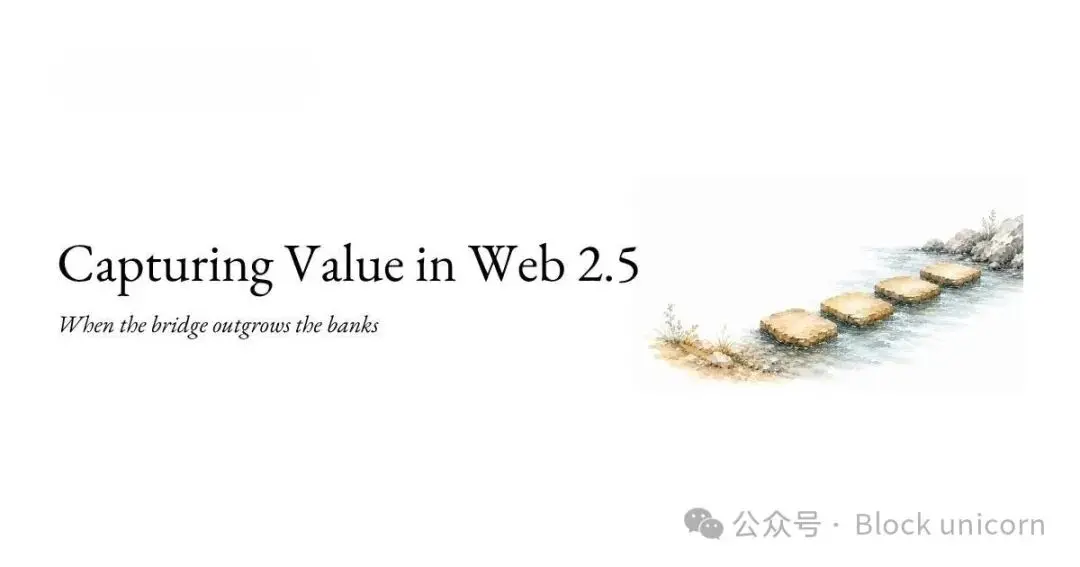
Who Captures Value in Web 2.5?

Title: Who Captures Value in Web 2.5? Summary: For most of financial history, moving money was difficult and slow. Cryptocurrencies and stablecoins promised faster, cheaper transfers. However, their true potential is realized not by replacing traditional finance but by acting as an efficient, invisible settlement layer beneath it—a hybrid model called "Web 2.5." This fusion combines the regulation and familiar interfaces of traditional finance with the low-cost, programmable, always-on settlement of crypto. The critical question is: where does value accumulate in this new system? The answer lies in the coordination or "translation" layer that bridges the two financial worlds. History shows that the middleman connecting systems often captures immense value, as seen with Visa or SWIFT. This layer controls the flow of funds and can extract fees, collect float interest, and wield significant power (e.g., sanctions). Now, four main models are competing to become this dominant translation layer: protocols (like Chainlink), market utilities, banking cooperatives, and central bank clubs. For instance, Chainlink, in partnership with a consortium of banks, is piloting real-time FX settlement. SWIFT is building its own blockchain-based ledger layer. The Bank for International Settlements is testing tokenized central bank reserves. Ultimately, Web 2.5 is more promising than a purely decentralized utopia because it doesn't require abandoning existing systems. Instead, crypto becomes a commoditized, hidden infrastructure enabling faster, cheaper transactions within the traditional financial framework. The winning coordination layer will hold the power and capture the economic value in this new landscape.

链捕手3 saat önce

Who Captures Value in Web 2.5?

链捕手3 saat önce

İşlemler

Spot
活动图片