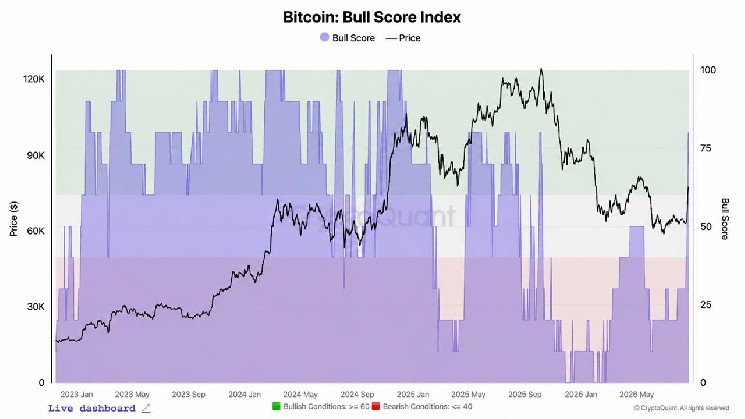
Long-term Bitcoin holders are continuing to sell, while the market's capacity to absorb these sales is rapidly shrinking. This supply-demand imbalance has plunged the cryptocurrency market into a slow and persistent decline. Since hitting its all-time high of $126,000 in January this year, Bitcoin has fallen nearly 30%, currently hovering around $85,000 and struggling to find effective support.
As reported by Bloomberg on Thursday, blockchain data shows that those "OGs" (early Bitcoin holders who have held for years) are cashing out at the fastest pace in recent years. A report from K33 Research points out that since the beginning of 2023, the number of Bitcoins that haven't moved for at least two years has decreased by 1.6 million, worth approximately $140 billion. In 2025 alone, nearly $300 billion worth of Bitcoin, dormant for over a year, re-entered circulation. Data from blockchain analytics firm CryptoQuant shows that the past 30 days have seen one of the most intense selling periods by long-term holders in over five years.
At the same time, the demand forces that had been absorbing this selling pressure over the past year are fading. Exchange-traded fund (ETF) flows have turned negative, derivatives trading volume has dropped significantly, and retail participation has noticeably decreased. The same supply is now hitting a more fragile market with fewer active buyers.
This pressure became particularly pronounced after October 10th. Unexpected comments from President Trump about punitive tariffs at that time triggered $19 billion in liquidations, setting a record for the largest single-day leveraged crash in cryptocurrency history. Since then, traders have been withdrawing from the derivatives market, with no significant rebound in sight.
Chris Newhouse, Research Director at Ergonia, a research firm focused on decentralized finance, stated that the market is experiencing a kind of slow bleed, characterized by persistent spot selling meeting weak buy-side liquidity, creating a gradual decline that is harder to reverse than a leverage-driven crash.
For most of the past period, this selling was absorbed by demand from newly launched exchange-traded funds and inflows from crypto investment institutions. But now, this demand has subsided. ETF flows are negative, derivatives trading volume is down, retail participation is thinning, and the market's absorption capacity has been significantly weakened.
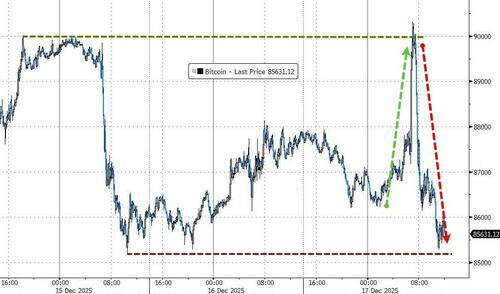
Bitcoin briefly jumped to $90,000 on Wednesday, which traders attributed to the liquidation of a large number of short positions, but it quickly resumed its decline. The original cryptocurrency fell back to the lower end of the trading range seen since the October crash, dropping as much as 2.8% to $85,278.
Vetle Lunde, Senior Analyst at K33, pointed out that the current selling wave is historically rare in scale. Unlike previous cycles, these reactivated Bitcoins were not driven by altcoin trading or protocol incentives, but by the deep liquidity brought by U.S. ETFs and institutional demand, allowing OG holders to realize profits at six-figure prices and significantly reduce ownership concentration. OG is slang used by cryptocurrency enthusiasts to describe early adopters and investors.
He stated that the selling volumes this year and last represent the second and third largest reactivations of long-term holder supply in Bitcoin's history, second only to 2017.
According to data from Coinglass, the open interest in Bitcoin options and perpetual futures remains well below pre-October crash levels. This decline indicates that most traders are still on the sidelines, and such markets account for the majority of cryptocurrency trading volume. Meanwhile, basis trades, a strategy commonly used by hedge funds to profit from the price difference between spot and futures markets, have also become unprofitable.
Despite the heavy selling pressure, Lunde believes the selling by long-term holders may be nearing its end. Based on observations of historical on-chain flows, this reactivation is approaching a threshold.
"Looking ahead, selling pressure from long-term holders appears closer to saturation, with roughly 20% of the Bitcoin supply reactivated over the past two years," Lunde wrote. "The selling by OGs is expected to subside in 2026, as Bitcoin shifts to net buyer demand amid deeper institutional integration, and the two-year+ supply will begin to rise."
However, before that, it must still face the reality test of the supply-demand imbalance. Whether the market can find stable support at current price levels, in the absence of new demand, remains an open question.