OKX Star: 50% of Global Economic Activity Will Run on Blockchain in the Future

marsbit2025-12-08 tarihinde yayınlandı2025-12-08 tarihinde güncellendi

Özet

OKX CEO Star, speaking at Abu Dhabi Finance Week, presented a bold vision: within decades, 50% of global economic activity will run on blockchain. He argues this shift is driven by the internet generation’s demand for a financial infrastructure that matches their digital, mobile, and AI-integrated lifestyles. Blockchain is evolving into a programmable global financial layer—a "financial internet" that enables value to move instantly, globally, and continuously, overcoming limitations of legacy systems. It offers trustless, transparent, and open infrastructure, reducing systemic risk and breaking down financial silos. The transition is already underway: stablecoin settlement volumes exceed Visa, on-chain assets near $3 trillion, and crypto wallets surpass 500 million globally. Regulatory frameworks are developing, and institutional adoption is accelerating. Key developments include Bitcoin becoming "digital gold" for the under-40 generation and stablecoins emerging as a preferred global payment method. Traditional assets like bonds and funds are also moving on-chain, operating 24/7 with greater transparency and compliance. Star concludes that the next decade will see not just crypto adoption, but a generational shift toward a unified, on-chain global economy where identity, assets, and transactions are native to the internet—a more efficient, transparent, and accessible system for all.

On December 8, OKX CEO Star was invited to attend Abu Dhabi Finance Week and delivered a keynote speech titled "Project 50% – How Economies Powered by Blockchain Level the Playing Field".

The full text of Star's speech (edited):

I am deeply honored to be invited to participate in Abu Dhabi Finance Week, a highly forward-looking global financial event. Today, I would like to share with you a concise yet bold judgment: the internet generation, which grew up with the internet, is creating a new on-chain economy; in the coming decades, approximately 50% of global economic activity will run on the blockchain. This is not a speculative prediction but an inevitable demand of the new generation for financial infrastructure that aligns with their lifestyle in an era of deep integration of digitalization, mobility, and artificial intelligence.

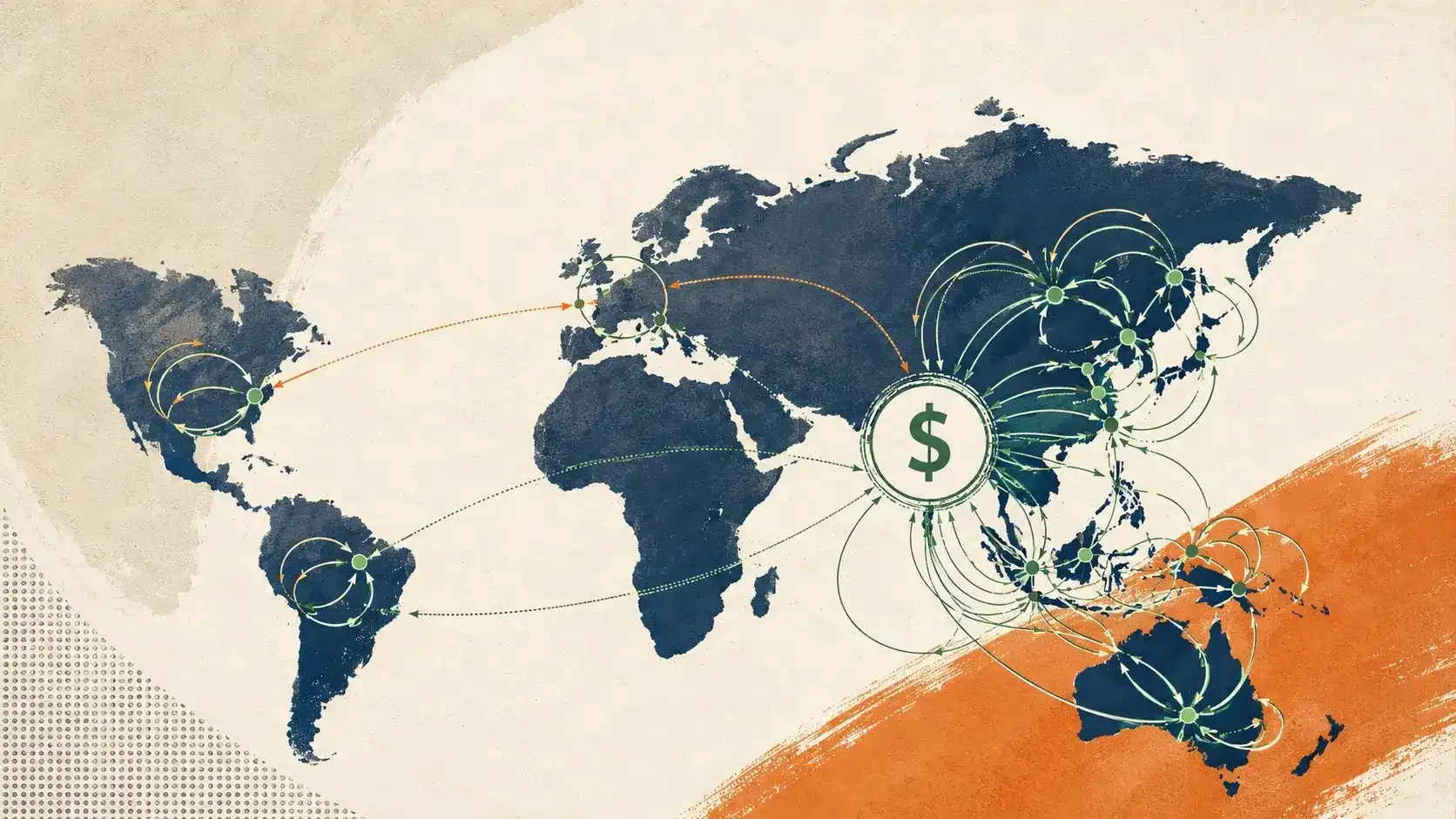
To understand this trend, let us look back at history and explore the paradigm shift in infrastructure that iterates every decade: the 1990s were the internet era, the 2000s were the mobile era, and the 2010s were the cloud computing era. Today, we are ushering in a grander new narrative—a programmable global financial infrastructure. This is the "financial internet" tailored for the internet generation, with the core vision of enabling value to flow instantly, globally, and 24/7, just like information. Blockchain technology is making this vision a reality.

Behind this transformation is the comprehensive upgrade of economic systems driven by the global digital population. The reason blockchain stands out lies in its ability to break through the limitations of legacy systems from the internet era: it builds a trustless, programmable storage infrastructure that supports round-the-clock instant global value transfer; it reduces systemic risks by continuously enhancing transparency and creates an open, interconnected network ecosystem, breaking the "silo effect" of traditional global finance. Throughout every technological iteration cycle, more open, transparent, and efficient systems ultimately prevail, and the new generation is always the first to embrace change. Today, this transformation is no longer a conceptual hype but has entered a phase of large-scale development and implementation: the settlement volume of stablecoins has surpassed Visa, on-chain asset scale is approaching $3 trillion, and the number of global cryptocurrency wallets has exceeded 500 million; meanwhile, regulatory agencies in countries such as the United States and Singapore are actively establishing corresponding regulatory frameworks to promote orderly industry development. The world is accelerating toward a unified global on-chain financial operating system, and the internet generation is the core driving force behind this process.

It is worth noting that the current on-chain financial infrastructure has matured and is capable of large-scale applications, meeting institutional-level demands and handling hundreds of millions of transactions, with security standards comparable to bank accounts. On the OKX platform, users can already experience the convenience brought by this technological innovation: we support the Apple ecosystem account system, provide gas-free premium services, and offer performance comparable to Web2 applications; at the same time, OKX has deployed numerous emerging blockchain networks, achieving millions of transactions per second processing capacity, and combined with on-chain identity authentication, on-chain analysis, and auditability features, we are setting new industry standards for transparency. It can be said that the maturity of technology, the improvement of compliance systems, and the readiness of the internet generation's demands are resonating in sync.

A clear signal has emerged: Bitcoin has become the "digital gold" for the internet generation. As the first mainstream crypto asset in history, it possesses core characteristics such as transparency, decentralization, and independence from the control of any single country, with its primary holders being people under the age of 40. This generation grew up in the era of globalized internet and mobile connectivity, and for them, digital value is far more meaningful than physical gold. Today, an increasing number of global financial institutions are incorporating Bitcoin into their balance sheets, rapidly transforming it from a marginal asset to a mainstream asset—this shift precisely indicates that the world is ready to embrace the programmable digital financial era.

Let us focus on currency itself: stablecoins are emerging as a new global payment channel, particularly favored by young users and emerging markets. The circulation of USD stablecoins has reached trillions within months, and regional stablecoins such as the Australian dollar and euro have also become mainstream financial tools. Through programmability, they enable real-time settlement and compliant transactions, gradually replacing traditional inefficient cross-border settlement models. For the internet generation, cross-temporal and cross-spatial fund transfers should be as instant and convenient as sending an email.

The impact of this transformation extends beyond the payment field, with its scale and depth breaking through the boundaries of traditional financial systems. Today, banks, sovereign wealth funds, and various asset management institutions are entering the on-chain ecosystem, and traditional assets such as funds and government bonds are gradually entering on-chain trading scenarios. These assets operate 24/7 on-chain, with liquidity and pricing transparency, while being equipped with robust compliance mechanisms. Thus, asset tokenization is no longer an experimental endeavor but is gradually becoming the default infrastructure of modern financial markets.

Looking ahead to the next decade, this is not only a decade of large-scale adoption of crypto assets but also a decade of generational migration in the global economic operating model. For the internet generation, currency, markets, and identity will all be on-chain, and all financial activities will be completed within a unified underlying system. When these elements are organically integrated, a complete internet-native economic architecture will officially take shape. Blockchain will become the true global financial internet, where everyone will have a universal on-chain identity and self-custody wallet, enabling autonomous control of funds and efficient cross-jurisdictional asset interactions, while兼具 real-time transparency and auditability. This global financial system, tailored for the fully online population, will lead the future not because it is "trendy" but because of its inherently superior systemic advantages.

Thank you.

İlgili Sorular

QWhat bold prediction did OKX CEO Star make about the future of global economic activity and blockchain technology?

AOKX CEO Star predicted that in the coming decades, approximately 50% of global economic activity will run on the blockchain.

QAccording to the speech, what are the core limitations of legacy internet-era systems that blockchain technology overcomes?

ABlockchain overcomes limitations by building a trustless, programmable storage infrastructure for 24/7 global value transfer, increasing transparency to reduce systemic risk, and creating an open, interconnected network that breaks the 'island effect' of traditional global finance.

QWhat evidence was presented to show that on-chain finance is moving beyond a conceptual phase into large-scale development?

AThe evidence includes stablecoin settlement volumes surpassing Visa, on-chain asset scale approaching $3 trillion, over 500 million global cryptocurrency wallets, and regulatory frameworks being actively established in countries like the United States and Singapore.

QWhy is Bitcoin described as 'digital gold' for the internet generation?

ABitcoin is described as 'digital gold' because it is transparent, decentralized, not controlled by any single nation, and its primary holders are people under 40 years old who grew up in the globalized internet and mobile era, making digital value more meaningful to them than physical gold.

QHow are stablecoins transforming the global payment landscape, as outlined in the speech?

AStablecoins are becoming a new global payment channel, favored by younger users and emerging markets. They enable programmatic real-time settlement and compliant transactions, with trillions in circulation, and are replacing traditional, inefficient cross-border settlement models.

İlgili Okumalar

$292 Million KelpDAO Cross-Chain Bridge Hack: Who Should Foot the Bill?

On April 18, 2026, an attacker stole 116,500 rsETH (worth ~$292M) from KelpDAO’s cross-chain bridge in 46 minutes—the largest DeFi exploit of 2026. The stolen assets were deposited into Aave V3 as collateral, causing $177–200M in bad debt and triggering a cascade of losses across nine DeFi protocols. Aave’s TVL dropped by ~$6B overnight. This legal analysis argues that KelpDAO and LayerZero Labs share concurrent liability, with fault apportioned 60%/40%. KelpDAO negligently configured its bridge with a 1-of-1 decentralized verifier network (DVN)—a single point of failure—despite LayerZero’s explicit recommendation of a 2-of-3 setup. LayerZero, which operated the compromised DVN, failed to secure its RPC infrastructure against a known poisoning attack vector. Both protocols’ terms of service cap liability at $200 (KelpDAO) or $50 (LayerZero), but these limits are likely unenforceable due to unconscionability, gross negligence exceptions, and potential securities law invalidation (if rsETH is deemed a security under the Howey test). Aave’s governance also faces fiduciary duty claims for raising rsETH’s loan-to-value ratio to 93%—far above competitors’ 72–75%—without adequately assessing bridge risks, amplifying the systemic fallout. Practical recovery targets include LayerZero Labs (a registered Canadian entity), KelpDAO’s founders, auditors, and identifiable Aave governance delegates. The incident underscores escalating legal risks for DeFi protocols, infrastructure providers, and governance participants.

marsbit17 dk önce

$292 Million KelpDAO Cross-Chain Bridge Hack: Who Should Foot the Bill?

marsbit17 dk önce

Insider Trading in War: 5 People Involved, the Highest Earner Was Arrested

On April 24, the U.S. Department of Justice arrested U.S. Army Special Forces Staff Sergeant Gannon Ken Van Dyke for insider trading related to the capture of Venezuelan President Nicolás Maduro on January 3. Van Dyke allegedly profited over $400,000 by placing bets on a prediction market, Polymarket, using insider knowledge of the covert operation. According to the indictment, Van Dyke registered an account (0x31a5) on December 26 and made a series of bets predicting Maduro’s capture and U.S. military involvement in Venezuela. He withdrew most of his funds on the day of the operation and attempted to obscure his tracks by transferring assets through crypto and brokerage accounts. This case marks the first time the DOJ has prosecuted insider trading on Polymarket. PolyBeats had previously identified five suspicious accounts, including Van Dyke’s—the highest earner—in January. The other accounts, with profits ranging from $34,000 to $145,000, remain under unofficial scrutiny but have not been charged. Their lower profits, indirect access to information, and unclear legal boundaries may complicate prosecution. Polymarket has since strengthened its market integrity rules, explicitly prohibiting trading based on confidential or insider information. Van Dyke’s arrest, nearly four months after his trades, signals increased regulatory attention and the persistent traceability of blockchain-based transactions.

marsbit19 dk önce

Insider Trading in War: 5 People Involved, the Highest Earner Was Arrested

marsbit19 dk önce

Bitwise: Bullish on Bitcoin's Performance in the Second Half of the Year, AI and Regulation Will Spark a New Altcoin Season

Bitwise CIO Matt Hougan and Research Lead Ryan Rasmussen express strong bullish sentiment on Bitcoin's long-term prospects, suggesting that its $1 million price target may be too conservative. They argue Bitcoin serves a dual role: as digital gold and a potential global settlement asset, especially amid declining trust in traditional monetary systems. Despite a weak Q1 2026 where nearly all crypto assets and prices saw double-digit declines, the analysts remain optimistic due to strong forward-looking catalysts, including institutional adoption via Bitcoin ETFs from major firms like Morgan Stanley and Goldman Sachs. Geopolitical instability, such as Iran’s mention of using Bitcoin for international payments, increases the value of Bitcoin’s “out-of-the-money call option” as a non-political, global settlement currency. This enhances its appeal beyond a mere store of value. . Additionally, Hougan highlights that a clearer regulatory token framework under current SEC leadership, combined with AI efficiency gains and high-performance blockchains, could fuel a new “altseason” by late 2026. This may lead to a wave of legitimate, value-capturing token projects, unlike the earlier ICO boom. . Bitwise also announced an Avalanche ETF, citing its unique architecture and rapid growth in real-world asset (RWA) tokenization, which has surged 10x to nearly $30 billion in two years. The firm believes Layer 1 blockchains are still early in their growth cycle, with significant potential ahead.

marsbit1 saat önce

Bitwise: Bullish on Bitcoin's Performance in the Second Half of the Year, AI and Regulation Will Spark a New Altcoin Season

marsbit1 saat önce

İşlemler

Spot
Futures
活动图片