Odaily Exclusive丨Polymarket Opens Store in New York, Kalshi Gives Away $50 Supermarket Vouchers: Are Prediction Markets Now Handing Out Eggs Too?

Odaily星球日报2026-02-04 tarihinde yayınlandı2026-02-04 tarihinde güncellendi

Özet

Polymarket and Kalshi, two leading prediction market platforms, are launching offline promotional campaigns in New York to attract users ahead of the Super Bowl. Kalshi hosted a pop-up event at a local supermarket, offering $50 worth of free groceries to participants, while Polymarket is set to open a "free grocery store" in New York on February 12, alongside a $1 million donation to a local food bank. These initiatives aim to engage users with low-barrier, real-world event predictions, such as gas price changes. The campaigns also appear strategically timed to align with local political discussions around food affordability and potential regulatory changes, including proposed bills that could restrict prediction markets in New York. The author notes that such offline tactics echo classic user-acquisition strategies long used in China’s internet industry.

Original | Odaily Planet Daily (@OdailyChina)

Author | Wenser(@wenser 2010)
"Each generation has its own eggs to claim"—the value of this statement continues to rise!

This time, the two giants of the prediction market—Kalshi and Polymarket—are the ones stirring up this egg-grabbing battle.

To gain more attention ahead of the "American Super Bowl," the two platforms recently started their own "offline promotion performances"—Kalshi gave away $50 worth of free groceries to users at a supermarket in New York; Polymarket went even further, directly launching its long-planned "first free grocery store in New York," scheduled to open on February 12. In the competition for attention and user growth, the prediction market giants, valued at tens of billions of dollars, have chosen the most old-school but effective "offline promotion" route.

Regarding this, we immediately contacted Odaily Planet Daily’s New York-based colleague Connie to get the latest on "Kalshi and Polymarket’s offline promotions" and real information such as "how much $50 can actually buy in New York," to share with our readers.

When Prediction Market Giants Dive into Offline Promotions: Kalshi’s Pop-Up, Polymarket’s "Instant Store"

As one of America’s major metropolises, New York has become a battleground and focal point for the two prediction market giants, Kalshi and Polymarket.

Addressing the increasingly pressing issue of rising living costs in New York and across the U.S., Kalshi and Polymarket have rolled out their big moves—
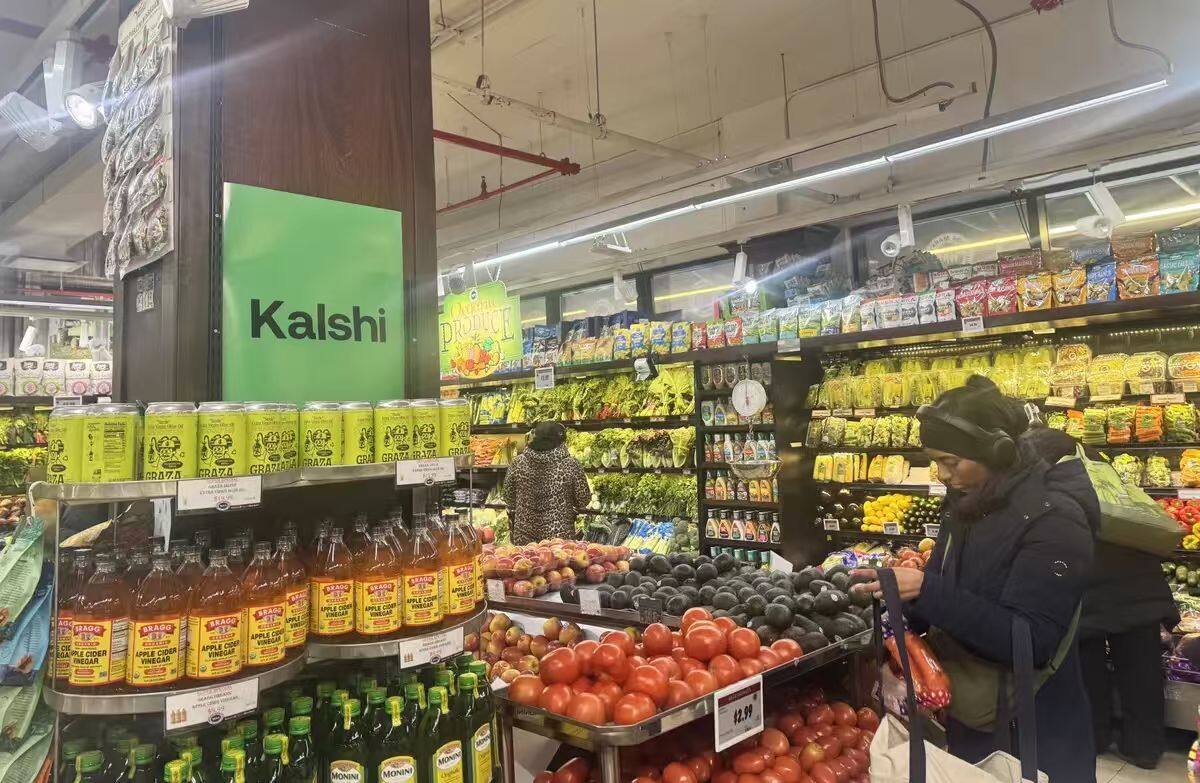
On February 3, Kalshi 【limited time】 offered $50 worth of free groceries to select users at Westside Market on Third Avenue, 84th Street, to attract more users to participate in various real-event predictions on its platform.

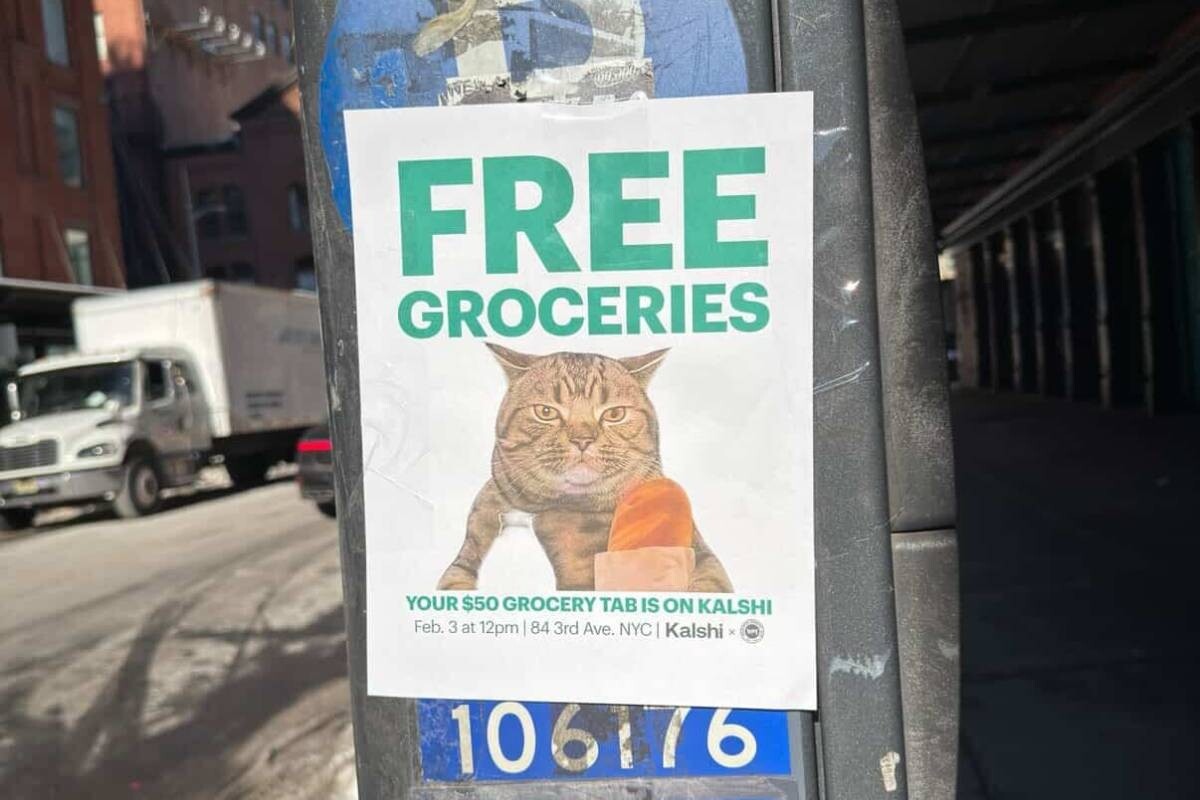
Judging from the surrounding "flyers," "supermarket KT boards," and other promotional materials, Kalshi’s offline promotion更像是一场即兴的“快闪活动”,更像是一场即兴的“快闪活动”更像是一场即兴的“快闪活动”更像是一场即兴的“快闪活动”更像是一场即兴的“快闪活动”更像是一场即兴的“快闪活动”更像是一场即兴的“快闪活动”更像是一场即兴的“快闪活动”更像是一场即兴的“快闪活动”更像是一场即兴的“快闪活动”更像是一场即兴的“快闪活动”更像是一场即兴的“快闪活动”更像是一场即兴的“快闪活动”更像是一场即兴的“快闪活动”更像是一场即兴的“快闪活动”更像是一场即兴的“快闪活动”更像是一场即兴的“快闪活动”更像是一场即兴的“快闪活动”更像是一场即兴的“快闪活动”更像是一场即兴的“快闪活动”更像是一场即兴的“快闪活动”更像是一场即兴的“快闪活动”更像是一场即兴的“快闪活动”更像是一场即兴的“快闪活动”更像是一场即兴的“快闪活动”更像是一场即兴的“快闪活动”更像是一场即兴的“快闪活动”更像是一场即兴的“快闪活动”更像是一场即兴的“快闪活动”更像是一场即兴的“快闪活动”更像是一场即兴的“快闪活动”更像是一场即兴的“快闪活动”更像是一场即兴的“快闪活动”更像是一场即兴的“快闪活动”更像是一场即兴的“快闪活动”更像是一场即兴的“快闪活动”更像是一场即兴的“快闪活动”更像是一场即兴的“快闪活动”更像是一场即兴的“快闪活动”更像是一场即兴的“快闪活动”更像是一场即兴的“快闪活动”更像是一场即兴的“快闪活动”更像是一场即兴的“快闪活动”更像是一场即兴的“快闪活动”更像是一场即兴的“快闪活动”更像是一场即兴的“快闪活动”更像是一场即兴的“快闪活动”更像是一场即兴的“快闪活动”更像是一场即兴的“快闪活动”更像是一场即兴的“快闪活动”更像是一场即兴的“快闪活动”更像是一场即兴的“快闪活动”更像是一场即兴的“快闪活动”更像是一场即兴的“快闪活动”更像是一场即兴的“快闪活动”更像是一场即兴的“快闪活动”更像是一场即兴的“快闪活动”更像是一场即兴的“快闪活动”更像是一场即兴的“快闪活动”更像是一场即兴的“快闪活动”更像是一场即兴的“快闪活动”更像是一场即兴的“快闪活动”更像是一场即兴的“快闪活动”更像是一场即兴的“快闪活动”更像是一场即兴的“快闪活动”更像是一场即兴的“快闪活动”更像是一场即兴的“快闪活动”更像是一场即兴的“快闪活动”更像是一场即兴的“快闪活动”更像是一场即兴的“快闪活动”更像是一场即兴的“快闪活动”更像是一场即兴的“快闪活动”更像是一场即兴的“快闪活动”更像是一场即兴的“快闪活动”更像是一场即兴的“快闪活动”更像是一场即兴的“快闪活动”更像是一场即兴的“快闪活动”更像是一场即兴的“快闪活动”更像是一场即兴的“快闪活动”更像是一场即兴的“快闪活动”更像是一场即兴的“快闪活动”更像是一场即兴的“快闪活动”更像是一场即兴的“快闪活动”更像是一场即兴的“快闪活动”更像是一场即兴的“快闪活动”更像是一场即兴的“快闪活动”更像是一场即兴的“快闪活动”更像是一场即兴的“快闪活动”更像是一场即兴的“快闪活动”更像是一场即兴的“快闪活动”更像是一场即兴的“快闪活动”更像是一场即兴的“快闪活动”更像是一场即兴的“快闪活动”更像是一场即兴的“快闪活动”更像是一场即兴的“快闪活动”更像是一场即兴的“快闪活动”更像是一场即兴的“快闪活动”更像是一场即兴的“快闪活动”更像是一场即兴的“快闪活动”更像是一场即兴的“快闪活动”更像是一场即兴的“快闪活动”更像是一场即兴的“快闪活动”更像是一场即兴的“快闪活动”更像是一场即兴的“快闪活动”更像是一场即兴的“快闪活动”更像是一场即兴的“快闪活动”更像是一场即兴的“快闪活动”更像是一场即兴的“快闪活动”更像是一场即兴的“快闪活动”更像是一场即兴的“快闪活动”更像是一场即兴的“快闪活动”更像是一场即兴的“快闪活动”更像是一场即兴的“快闪活动”更像是一场即兴的“快闪活动”更像是一场即兴的“快闪活动”更像是一场即兴的“快闪活动”更像是一场即兴的“快闪活动”更像是一场即兴的“快闪活动”更像是一场即兴的“快闪活动”更像是一场即兴的“快闪活动”更像是一场即兴的“快闪活动”更像是一场即兴的“快闪活动”更像是一场即兴的“快闪活动”更像是一场即兴的“快闪活动”更像是一场即兴的“快闪活动”更像是一场即兴的“快闪活动”更像是一场即兴的“快闪活动”更像是一场即兴的“快闪活动”更像是一场即兴的“快闪活动”更像是一场即兴的“快闪活动”更像是一场即兴的“快闪活动”更像是一场即兴的“快闪活动”更像是一场即兴的“快闪活动”更像是一场即兴的“快闪活动”更像是一场即兴的“快闪活动”更像是一场即兴的“快闪活动”更像是一场即兴的“快闪活动”更像是一场即兴的“快闪活动”更像是一场即兴的“快闪活动”更像是一场即兴的“快闪活动”更像是一场即兴的“快闪活动”更像是一场即兴的“快闪活动”更像是一场即兴的“快闪活动”更像是一场即兴的“快闪活动”更像是一场即兴的“快闪活动”更像是一场即兴的“快闪活动”更像是一场即兴的“快闪活动”更像是一场即兴的“快闪活动”更像是一场即兴的“快闪活动”更像是一场即兴的“快闪活动”更像是一场即兴的“快闪活动”更像是一场即兴的“快闪活动”更像是一场即兴的“快闪活动”更像是一场即兴的“快闪活动”更像是一场即兴的“快闪活动”更像是一场即兴的“快闪活动”更像是一场即兴的“快闪活动”更像是一场即兴的“快闪活动”更像是一场即兴的“快闪活动”更像是一场即兴的“快闪活动”更像是一场即兴的“快闪活动”更像是一场即兴的“快闪活动”更像是一场即兴的“快闪活动”更像是一场即兴的“快闪活动”更像是一场即兴的“极速快闪活动” (pop-up event), collaborating with local supermarkets to place offline materials for a short time, using "free $50 groceries" as "bait" to attract people to line up, participate, and spectate. This was also confirmed by Connie.
Additionally, it's clear that through this pop-up, Kalshi hopes to get more people to join the prediction market by betting on everyday, low-threshold, easy-to-understand questions like "Will New York City's gas price exceed $3.3 this year?" thereby achieving commercial goals like brand marketing and user activation.
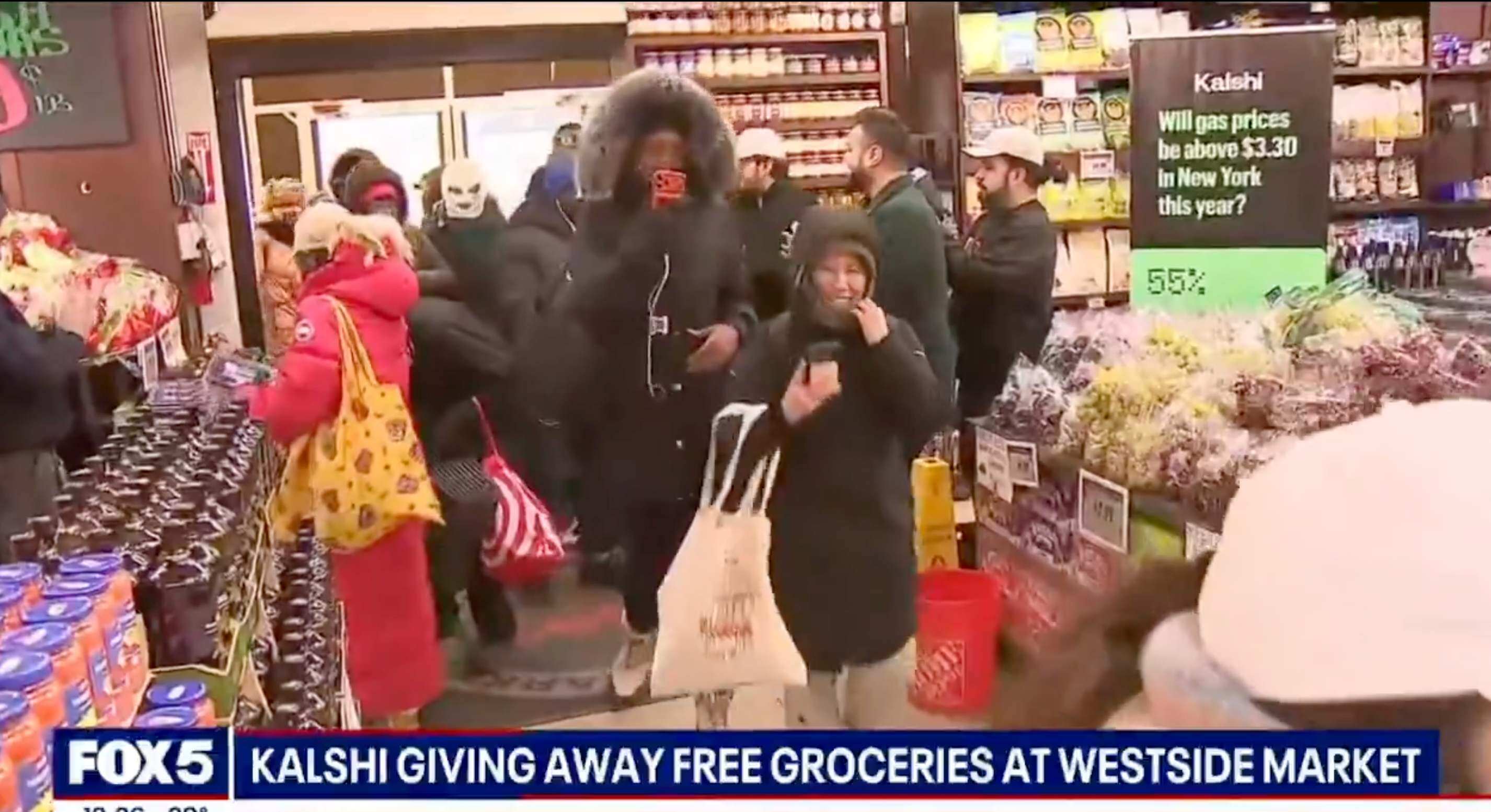
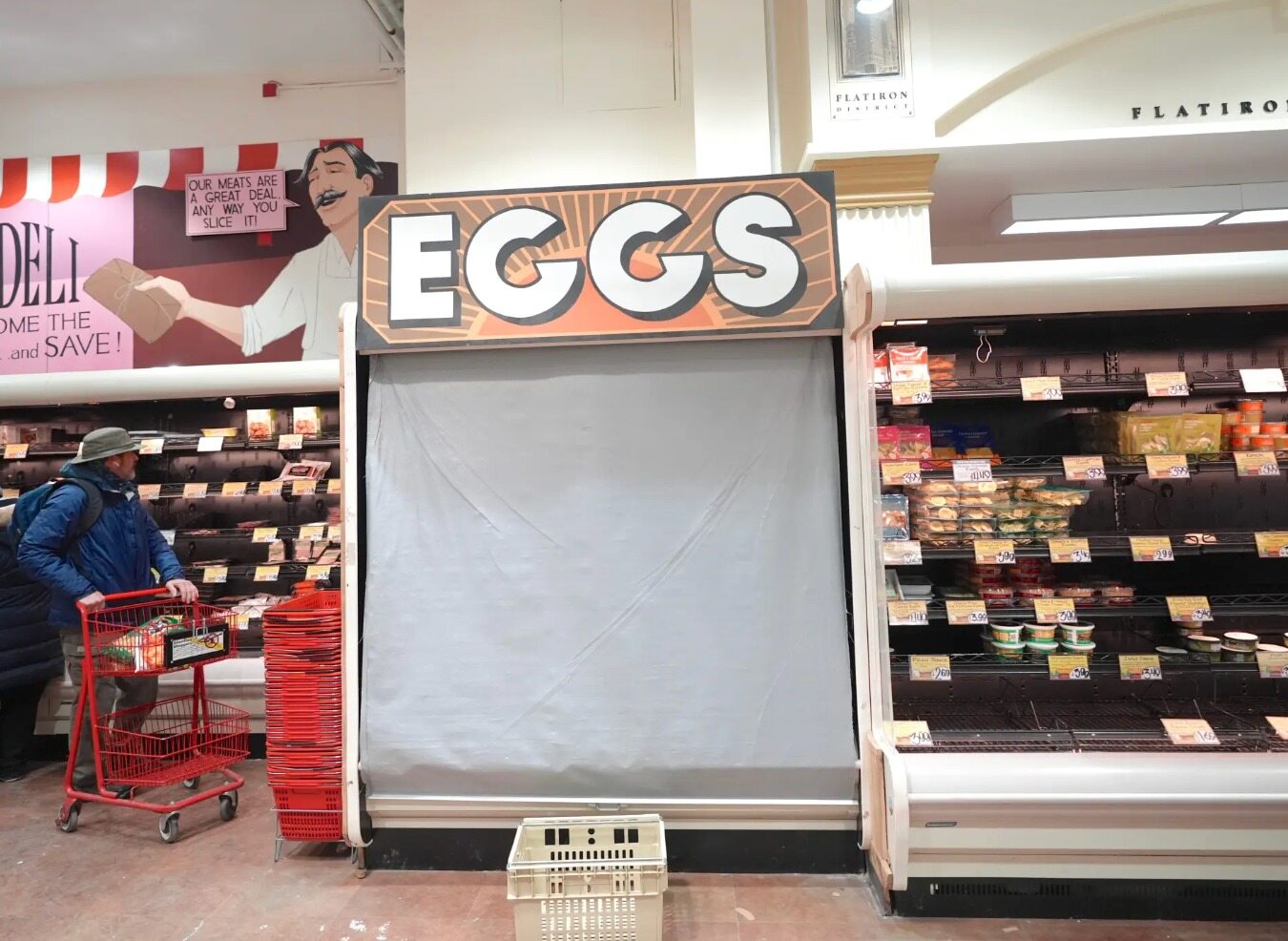
Kalshi co-branded pop-up supermarket eggs were snapped up

Compared to Kalshi's somewhat crude and highly commercial approach, Polymarket's preparations were much more thorough.

On February 3, slightly earlier than Kalshi's announcement, Polymarket officially announced that after months of offline preparation, it plans to open the "first free grocery store in New York" on February 12 (EST) by leasing a physical storefront. Additionally, Polymarket donated $1 million to the New York City Food Bank to address the "hunger issue" in the area.
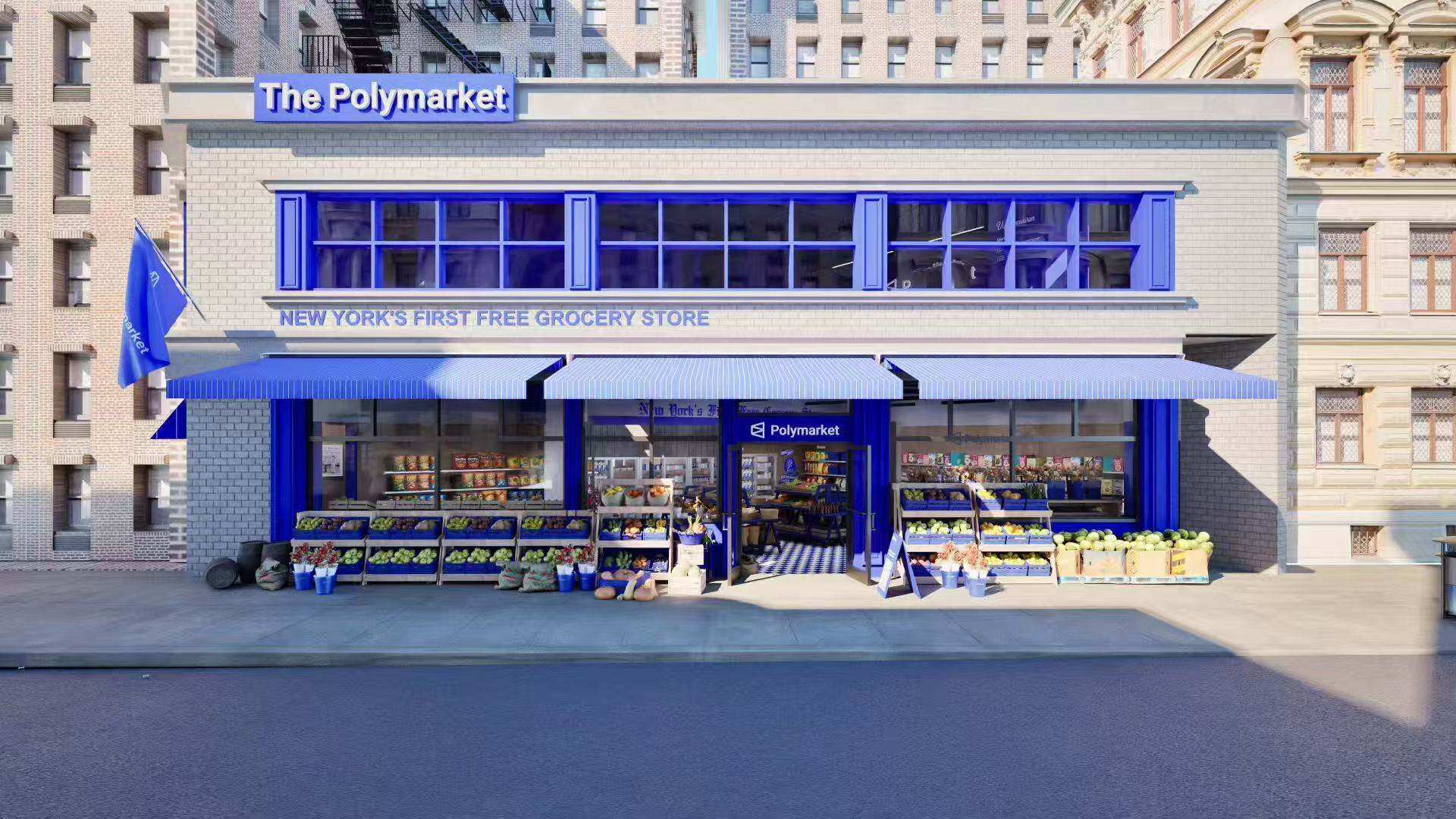
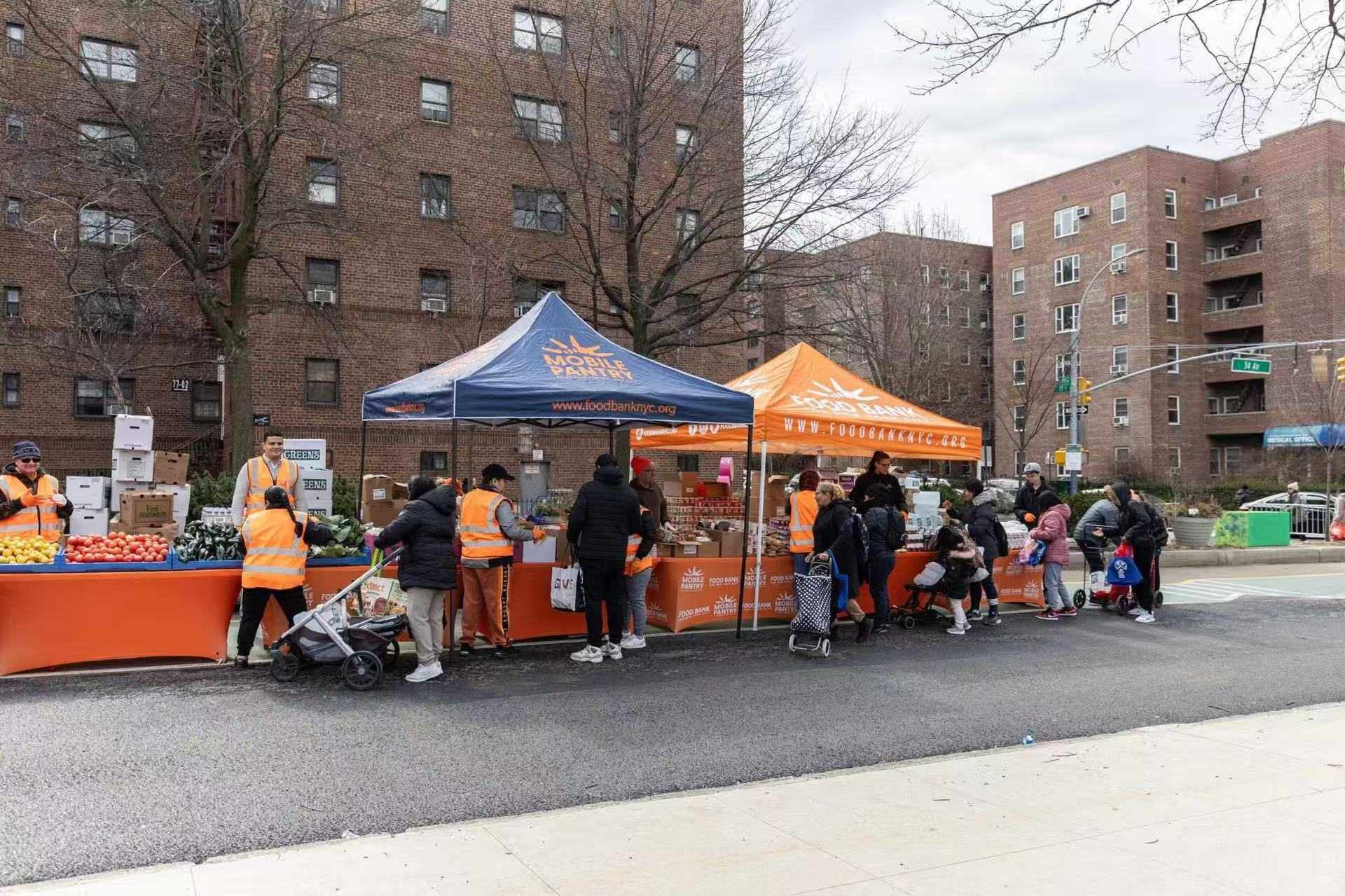
Polymarket also released actual photos of distributing vegetables like tomatoes and eggplants offline, instantly reminiscent of the domestic internet platform's ground promotion era, full of the vibe of "download the APP get eggs" or "first recharge get newcomer gift pack."
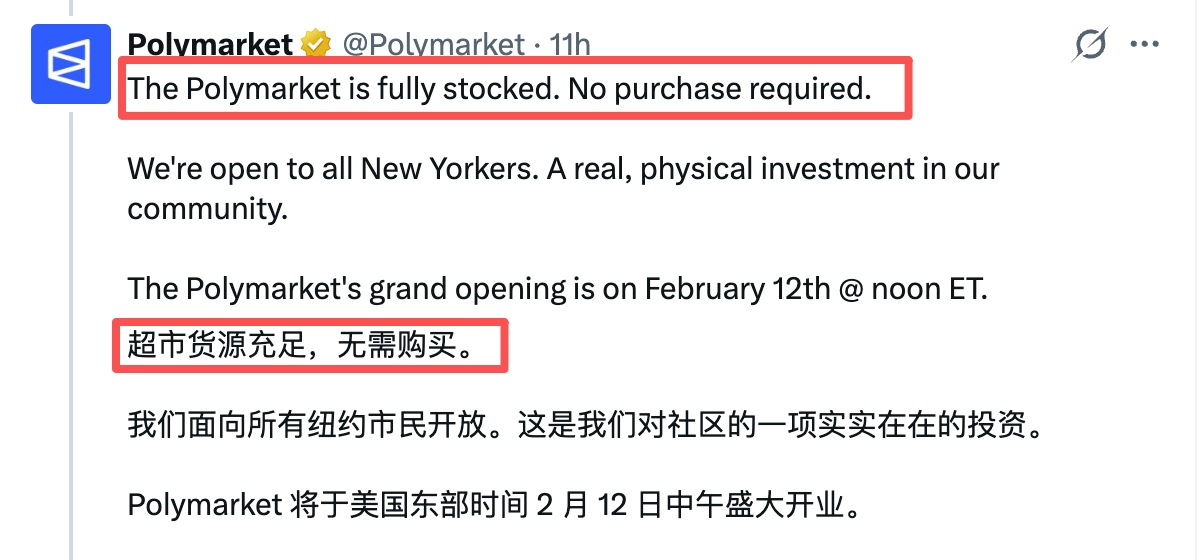
It is worth mentioning that Polymarket not only emphasized that "Polymarket's offline store is well-stocked, no purchase necessary," but also called on everyone to donate to the New York City Food Bank at the end of its tweet, encouraging people to take practical action to solve the real "hunger problem" caused by high food costs and high cost of living.
Seeing this, I can't help but sigh—

Fake crypto project ground promotion: Hold offline conferences, eat seafood feasts, shill various fake concept tokens;

Real crypto project ground promotion: Give away vegetables, give away eggs, open offline stores to distribute free food, do charity and public welfare, call on people to donate and show love.
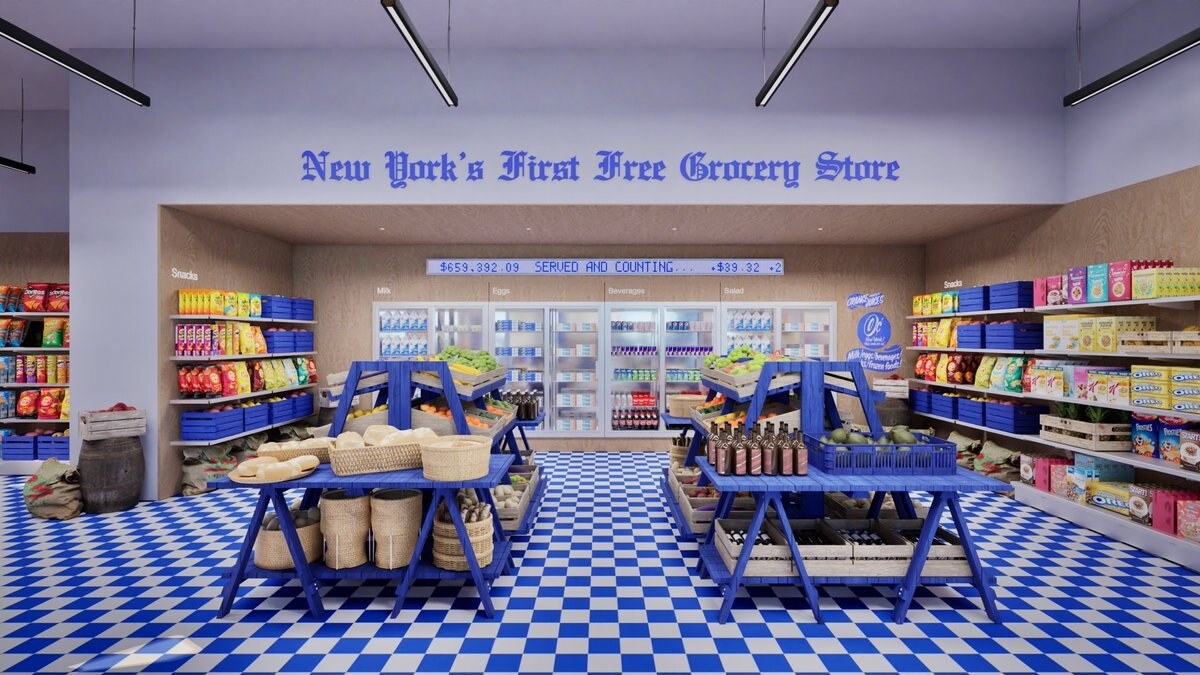
Regarding the real purchasing power of Kalshi and Polymarket's "egg collection activities," we also had a detailed discussion with Connie from Odaily in New York.

The Real Purchasing Power of $50 in New York, USA: 5 McDonald's Meals, 1.5 lbs of Beef, or 2 Days of Food for the Average Person

According to Connie, the real purchasing power of $50 in New York, USA, can be considered "quite valuable."

"Buying a 0.5 lb (about 0.45 kg) portion of beef at a local supermarket in New York costs about $18, so $50 can buy about 1.5 lbs of beef," which is enough protein for an adult's three meals a day. For comparison, the price of one jin (0.5 kg) of beef in China is only about 30 RMB, which is only 1/8 of the cost in New York.
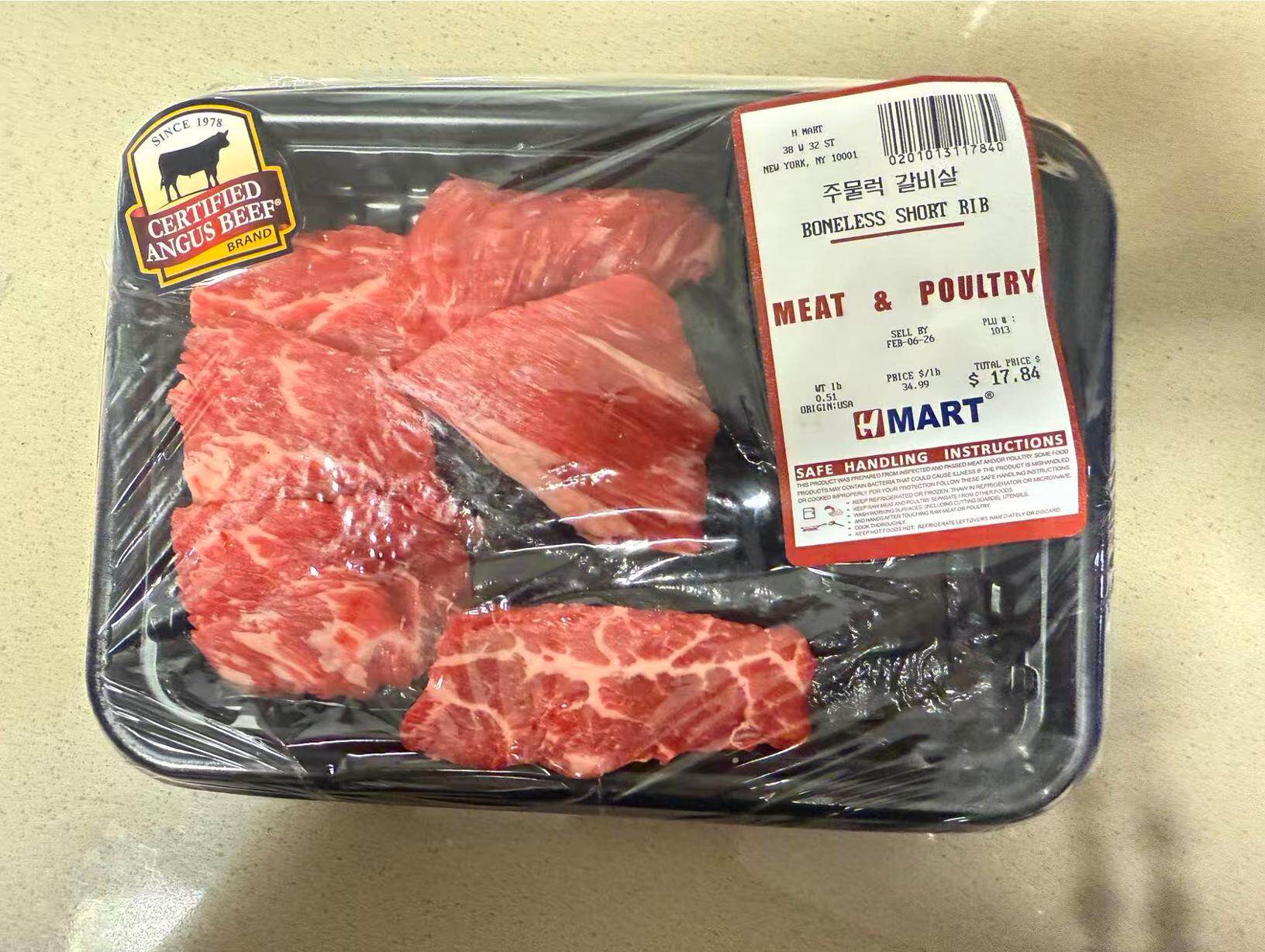
Converting to the well-known "Big Mac Index," the real purchasing power of $50 is also quite astonishing—a cheeseburger combo meal delivery with about 800-1000 calories costs about $10.89, so $50 can buy about 5 combo meals; if you buy a double burger with 580 calories, it only costs about $7.20. Of course, this price is "sky-high" domestically; the same burger combo in China only costs 25-40 RMB, which is only 1/2 the price of the same food in New York.

In other words, spent frugally, $50 is close to covering the food cost for an average person in New York for about 2 days (calculated as 5~6 meals). According to Connie, Kalshi's event attracted many Americans to line up for "free food," and "Americans' enthusiasm for lining up to receive things is even higher than that of Chinese people." Polymarket's "offline free grocery store" is also expected to attract a large crowd to line up and participate. Based on the existing information released by Kalshi and Polymarket, the hard costs of the two platforms' related activities are estimated to be at least $50,000 to $100,000.

Investing so much manpower and resources, beyond doing charity and showing love, Kalshi and Polymarket also have their own "business calculations."

The "Business Strategy" Behind Prediction Market Platforms "Giving Away Eggs": Using Political Issues to Influence Institutional Regulation

None of the above food donation activities by Kalshi and Polymarket were coordinated or communicated with the New York City government; they were spontaneous company actions.

However, the wording and purpose of their external statements are very similar to the "policies" repeatedly emphasized by New York's new mayor, Zohran Mamdani, during his campaign—the latter had proposed "opening publicly owned grocery stores in New York's five boroughs to lower food prices." Furthermore, Zohran Mamdani pointed out that city-owned grocery stores could reduce rent and operating costs through non-profit operating models and the use of public property. This proposal is still in the pilot stage, and a final implementation timetable has not been determined.

On the other hand, as one of the important key states in the U.S., New York's legislators are busy drafting new bills targeting the emerging prediction market industry. Among them, the 《ORACLE Act》 plans to restrict or prohibit New York residents from betting on certain prediction market events and impose stricter restrictions on event-based prediction markets; another piece of legislation plans to require prediction market operators to obtain a state-issued license before operating.

It is clear that some legislative decision-makers still have various concerns about prediction markets, viewing them as similar to unregulated gambling or more susceptible to insider manipulation.

In light of this, although the New York mayor has no direct jurisdiction over the regulation of prediction markets (Odaily Planet Daily Note: Regulatory authority over prediction market platforms belongs to state and federal governments), Kalshi and Polymarket's move may also be an attempt to seek regulatory friendliness through indirect means.

Finally, regardless of the ultimate impact of their "egg-giving" actions, we have to say that China's internet promotion models are at least 5-10 years ahead of the Western world.

İlgili Sorular

QWhat are the two major prediction market platforms mentioned in the article that are conducting offline promotions in New York?

AKalshi and Polymarket.

QWhat specific free benefit did Kalshi offer to users during its flash promotion at a New York market?

AKalshi offered a $50 free food benefit to users.

QWhat is the name of the bill mentioned in the article that aims to restrict or ban New York residents from betting on certain prediction market events?

AThe ORACLE Act.

QHow much did Polymarket donate to the New York City Food Bank, as stated in the article?

APolymarket donated $1 million to the New York City Food Bank.

QAccording to the article, what is the estimated cost of a 0.5-pound portion of beef in a New York supermarket?

AA 0.5-pound portion of beef costs approximately $18 in a New York supermarket.

İlgili Okumalar

Borrowing Money from a Hundred Years Later, Building Incomprehensible AI

Tech giants like Alphabet, Amazon, Meta, and Microsoft are undergoing a radical financial transformation due to AI. Their traditional "light-asset, high-free-cash-flow" model is being dismantled by staggering capital expenditures on AI infrastructure—data centers, GPUs, and power. Combined 2026 guidance exceeds $700 billion, a 4.5x increase from 2022, causing free cash flow to plummet (e.g., Amazon's fell 95%). To fund this, they are borrowing unprecedented sums through long-dated, multi-currency bonds (e.g., Alphabet's 100-year bond). The world's most conservative capital—pensions, insurers—is now funding Silicon Valley's most speculative bet. This shift makes these companies resemble heavy-asset industrials (railroads, utilities) rather than software firms, threatening their premium valuations. Historically, such infrastructure booms (railroads, fiber optics) followed a pattern: genuine technology, overbuilding fueled by competitive frenzy, aggressive debt financing, and a crash triggered by financial conditions—not technology failure. The infrastructure remained, but many original builders and financiers did not survive. The core gamble is a "time arbitrage": using cheap debt today to build scale and lock in customers before AI capabilities commoditize. They are betting that AI revenue will materialize before debt comes due. Their positions vary: Amazon is under immediate cash pressure; Meta's path to monetization is unclear; Alphabet has a robust core business buffer; Microsoft has the shortest path from infrastructure to revenue. The contract is set: the most risk-averse global capital has lent its time to Silicon Valley, awaiting a future that is promised but uncertain.

marsbit31 dk önce

Borrowing Money from a Hundred Years Later, Building Incomprehensible AI

marsbit31 dk önce

The 'VVV' Concept Soars 9x in Half a Year, The New AI Narrative on Base Chain

"The article explores the 'VVV' concept as the new AI-focused narrative within the Base ecosystem, centered around the token $VVV of the privacy-focused, uncensored generative AI platform Venice, led by crypto veteran Erik Voorhees. Venice has seen significant growth in 2026, with its API users surging, partly attributed to exposure from OpenClaw. The platform now boasts over 2 million total users and 55,000 paid subscribers. Correspondingly, the $VVV token price has risen over 9x this year. Key to its performance are tokenomics designed for value accrual: reduced annual emissions, subscription revenue used for buyback-and-burn, and a unique staking mechanism. Staking $VVV yields $sVVV, which can be used to mint $DIEM tokens. Each staked $DIEM provides a daily $1 credit for using Venice's API services, creating tangible utility. The article also highlights other tokens associated with the 'VVV' narrative. $POD, the token of distributed AI network Dolphin (which co-developed Venice's default AI model), saw a massive price surge. $cyb3rwr3n, a project for a Venice credit auction market, gained attention due to perceived connections to Venice's team despite official denials. Finally, $SR of robotics platform STRIKEROBOT.AI rose after announcing a partnership with Venice for robot vision-language model development. Overall, the 'VVV' ecosystem combines AI platform growth, deflationary tokenomics, and innovative utility mechanisms, driving significant investor interest and price action in related tokens."

marsbit39 dk önce

The 'VVV' Concept Soars 9x in Half a Year, The New AI Narrative on Base Chain

marsbit39 dk önce

Anthropic and OpenAI Have Single-Handedly Severed the Logic of Pre-IPO Stock Tokenization

The pre-IPO stock token market is experiencing significant turmoil following strong statements from AI giants Anthropic and OpenAI. Both companies have updated their official policies, declaring that any transfer of their company shares—including sales, transfers, or assignments of share interests—without prior board approval is "invalid" and will not be recognized in their corporate records. This means buyers in such unauthorized transactions would not be recognized as shareholders and would have no shareholder rights. A major point of contention is the use of Special Purpose Vehicles (SPVs), which are legal entities commonly used by pre-IPO token platforms to pool investor funds and indirectly acquire shares from employees or early investors. The companies explicitly state they do not permit SPVs to acquire their shares, and any such transfer violates their restrictions. They warn that third parties selling shares through SPVs, direct sales, forward contracts, or stock tokens are likely engaged in fraud or are offering worthless investments due to these transfer limits. This stance directly threatens the core model of many pre-IPO token platforms, which rely on SPV structures. The announcement revealed additional risks within this model, such as complex "SPV-within-SPV" layering that obscures legal transparency, increases management fees, and creates a chain reaction risk of invalidation. Following the news, tokens like ANTHROPIC and OPENAI on platforms like PreStocks fell sharply (over 20%). The market reaction highlights a divergence: while asset-backed pre-IPO tokens plummeted, purely speculative pre-IPO futures contracts, which are bilateral bets on future IPO prices with no claim to actual shares, remained relatively stable as they are unaffected by the transfer restrictions. The industry is split on the implications. Some believe the fundamental logic of pre-IPO token trading is broken if leading companies reject SPV-held shares, potentially causing a domino effect. Others, like Rivet founder Nick Abouzeid, argue that buyers of such unofficial tokens always knowingly accepted the risk of non-recognition by the company. The statements serve as a stark risk warning and a corrective measure for a market where valuations for some AI-related pre-IPO tokens had soared to irrational levels, far exceeding recent funding round valuations.

marsbit1 saat önce

Anthropic and OpenAI Have Single-Handedly Severed the Logic of Pre-IPO Stock Tokenization

marsbit1 saat önce

Anthropic and OpenAI Personally Sever the Logic of Pre-IPO Crypto-Stocks

The pre-IPO token market has been rocked by strong statements from Anthropic and OpenAI. Both AI giants have updated official warnings, declaring that any sale or transfer of their company shares without explicit board approval is "invalid" and will not be recognized on their corporate records. This directly targets Special Purpose Vehicles (SPVs), the common legal structure used by pre-IPO token platforms. These platforms typically use an SPV to acquire shares from employees or early investors, then issue blockchain-based tokens representing a claim on the SPV's economic benefits. Anthropic and OpenAI's position means that if an SPV's share purchase lacked authorization, the underlying asset could be deemed worthless, nullifying the token's value. Anthropic explicitly warned that any third party selling its shares—via direct sales, forwards, or tokens—is likely fraudulent or offering a valueless investment. The crackdown highlights risks in the popular SPV model, including complex multi-layered "Russian doll" SPV structures that obscure legal ownership, add fees, and concentrate risk. If one layer is invalidated, the entire chain could collapse. Following the announcements, tokens like ANTHROPIC and OPENAI on platforms like PreStocks fell sharply (over 20%). In contrast, purely speculative pre-IPO prediction contracts remained stable, as they involve no actual share ownership. The move is seen as a corrective measure amid a market frenzy where some pre-IPO token valuations (e.g., Anthropic's token hitting a $1.4 trillion implied valuation) far exceeded recent official funding rounds. Opinions are split: some believe this undermines the core logic of pre-IPO token trading if top companies reject SPVs, while others argue buyers always assumed this legal risk when accessing unofficial channels. The statements serve as a stark warning and a potential catalyst for market de-leveraging and clearer boundaries.

Odaily星球日报1 saat önce

Anthropic and OpenAI Personally Sever the Logic of Pre-IPO Crypto-Stocks

Odaily星球日报1 saat önce

İşlemler

Spot
Futures
活动图片