‘No Time To Experiment’: Russia To Establish Strict Crypto Regulations In 2026

bitcoinist2025-12-12 tarihinde yayınlandı2025-12-12 tarihinde güncellendi

Vladimir Chistyukhin, First Deputy Chairman of the Central Bank of Russia (CBR), has shared crucial details of Russia’s upcoming crypto regulations. The framework is expected to amend key laws related to digital financial assets and the securities market, while potentially prohibiting new digital asset purchases for most investors.

New Crypto Framework Could Ban New Purchases

On Thursday, Vladimir Chistyukhin told Russian news media outlet RIA Novosti that the Central Bank of Russia, the Ministry of Finance, Rosfinmonitoring, and other federal agencies have been discussing proposals to regulate the crypto market.

The executive affirmed that the new framework will provide rules on how and through whom crypto transactions will be carried out. He detailed that these will likely be executed only by existing market participants under existing licenses.

As reported by Bitcoinist, CBR’s First Deputy Chairman previously announced that local banks would be allowed to engage in limited crypto operations under strict regulatory conditions.

Nonetheless, the executive has noted that they will need to consider whether exchanges should be included in a separate category that enables them to be eligible for a new license.

In the case of investors, he informed that they are stepping away from their initial Experimental Legal Regime (EPR), introduced at the start of the year. The EPR proposed allowing only “highly qualified investors” to transact directly with digital assets.

Currently, cryptocurrencies are used not only as an investment but also as a means of cross-border payments. This is a very important point that cannot be ignored. Of course, we want to protect Russian retail investors as much as possible from transactions with such a risky asset. On the other hand, we understand that in the current circumstances, in some cases, international payments can only be made using cryptocurrencies. Therefore, the discussion continues.

Now, they are looking to allow qualified investors into the market after passing certain tests, although discussions are not final. There are only about one million qualified investors in Russia, Chistyukhin added, which could place millions of retail investors in the country in a “gray” zone.

Unqualified investors who already acquired cryptocurrencies “will be able to either keep them, sell them, or exchange them for some fiat currency or other assets. There are no restrictions on exiting crypto assets – neither in terms of time nor volume. Only new purchase transactions will be restricted,” he stated.

Russia To Adopt Regulations ‘As Quickly As Possible’

Chistyukhin affirmed that the Russian financial market has “all the necessary infrastructure to work with cryptocurrencies.” Although it will be “essential to amend the laws on digital financial assets, the securities market, and banking legislation.”

Chistyukhin explained that the authorities believe it is “fundamentally important” to legitimize the crypto sector and ensure that it is compliant with the law. To achieve this, regulators are considering establishing strict restrictions and prohibitions. “Anything that falls outside this framework will be considered illegal activity.”

Discussing why the financial authorities decided not to experiment with and test crypto rules, he noted that the country needs to adopt regulations quickly due to “international attention” and “scrutiny.”

The issue of cryptocurrency regulation is attracting serious international attention, primarily from the FATF. (...) We need to adopt regulations as quickly as possible. (...) We simply do not have the time to experiment first and then spend several years analyzing it and launching something permanent.

Therefore, the executive revealed that the legislation could be passed during the spring of 2026 and be enacted before the end of next year. However, Russian watchdogs are preparing transitional periods to give market participants time to move out of the regulatory “gray” zone and into the new legal framework. Liability for illegal operations is expected to come into effect in mid-2027.
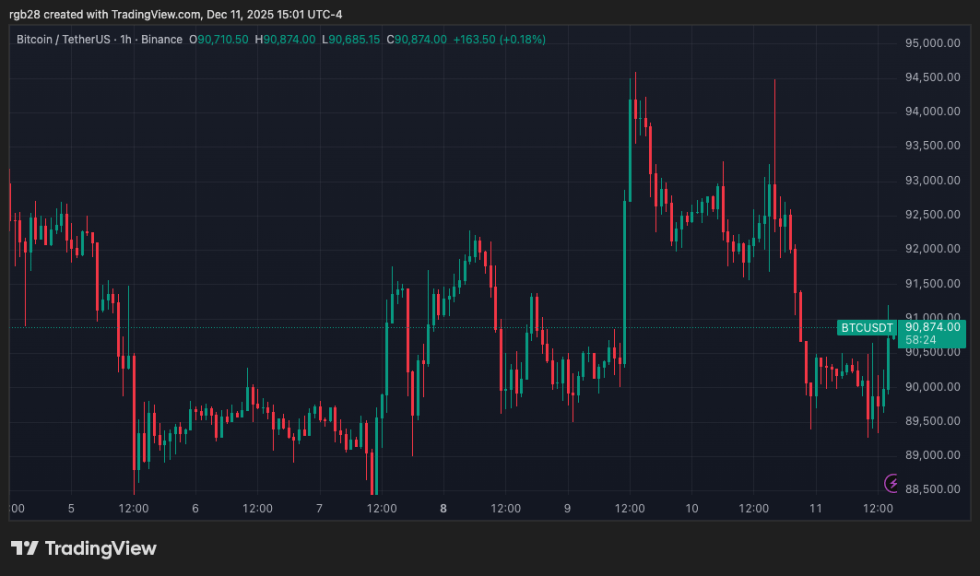
Bitcoin (BTC) trades at $90,874 in the one-week chart. Source: BTCUSDT on TradingView


İlgili Okumalar

Google CEO Admits Lagging Behind in Coding

Google CEO Sundar Pichai acknowledged in a recent interview that Google's Gemini AI models are currently "lagging behind" in coding capabilities, particularly for complex, long-horizon tasks requiring advanced developer expertise. He noted the field is advancing at an "unprecedented" pace, where 30-60 days now brings changes equivalent to five years in the past. Pichai expressed that achieving Artificial General Intelligence (AGI) now seems closer than previously imagined due to rapid progress. While highlighting strengths in text, multimodal, and reasoning tasks, Pichai admitted competitors like Anthropic and OpenAI have focused more intently on coding. He emphasized Google's commitment to catching up, citing internal tools like Antigravity 2.0 and the newly released Gemini 3.5 Flash, which aims to address previous shortcomings. Regarding Google Search's AI-driven overhaul, Pichai stated changes will be gradual to align with user needs, not disrupt the core search experience or its advertising model. He addressed public AI anxiety as understandable, given the technology's potential to reshape jobs and society, but remained optimistic about AI augmenting human capabilities and creating new opportunities. Pichai stressed the need for broad societal dialogue and responsible development as AI approaches more advanced, potentially recursive self-improvement stages. He affirmed Google's long-term commitment to leading in AI while navigating its profound implications responsibly.

marsbit1 saat önce

Google CEO Admits Lagging Behind in Coding

marsbit1 saat önce

The Paradox of Automation: The Stronger the AI, the Busier Humans Become

The Paradox of Automation: The more powerful AI becomes, the more work humans have to do. This article, based on observations from AI-heavy company Every, argues that while AI agents automate tasks like coding, writing, and customer service, they don't eliminate human jobs. Instead, they transform work and create *more* demand for human expertise. AI commoditizes "yesterday's human capabilities" by cheaply generating code, text, and images from past data. This leads to an abundance of similar, generic outputs. Consequently, what becomes scarce and valuable is human judgment in the present moment: knowing *what* is worth doing, *why*, and *how* to do it well. The article identifies two collaboration models: "Agent employees" for delegated tasks and "human-AI collaboration" within tools like Claude Code for complex work. In both cases, humans are essential to set direction, judge quality, and maintain systems. As AI makes execution cheap, human roles shift from executors to designers, reviewers, and meaning-makers. The author addresses "benchmark anxiety" by explaining that AI excels within specific, human-defined problem "frames." As AI masters one frame (e.g., code rewriting), new, more complex frames emerge (e.g., deciding *when* to rewrite). This creates an ongoing cycle where AI chases the frames, but humans remain the "framers." Even with advanced AGI, this dynamic may persist as long as AI lacks true human-like agency and self-directed purpose. The core paradox holds: automation amplifies the need for the very human judgment it seems to replace.

marsbit2 saat önce

The Paradox of Automation: The Stronger the AI, the Busier Humans Become

marsbit2 saat önce

a16z: 7 Charts to Understand How Tokenization is Changing the Nature of Assets

"a16z: 7 Charts on How Tokenization is Changing the Nature of Assets" Tokenized Assets (or Real-World Assets - RWA) are transforming asset forms, liquidity, and financial system construction. The market recently surpassed $30 billion, stabilizing around $34 billion (excluding stablecoins), representing a tenfold increase in less than two years, driven by clearer regulations, mature institutional infrastructure, and increased financial institution adoption. The primary driver of recent growth is tokenized U.S. Treasury bonds. These offer investors efficient, flexible digital access to yield-bearing assets and improve institutional operations like settlement and collateral management. Other asset classes show varied growth: asset-backed credit leads, followed by niche financial assets (e.g., reinsurance, mining notes), while venture capital took longer to scale. Market segmentation shows high concentration. In commodities, tokenized gold dominates (~$5 billion), as its standardized, storable nature fits tokenization well. Bonds are the largest category ($15.2B), but only ~5% are used in DeFi protocols. Conversely, smaller niches like reinsurance tokens see high (~84%) on-chain utilization, highlighting a core industry divide: most current tokenized assets are merely digitized records for easier holding/transfer, lacking the "composability" (free combination/interaction) that is key to blockchain-native finance. The ecosystem is distributed across multiple blockchains, with Ethereum hosting over half the value ($15.7B), followed by BNB Chain, Solana, and others. Future market size predictions vary widely (e.g., $2-$30 trillion by 2030+), but all indicate massive potential from the current small base. Tokenized assets currently represent minuscule fractions of their global counterparts (e.g., 0.01% of global bonds). The current phase focuses on digitizing straightforward assets. The next challenge is to bring more complex financial components on-chain and deeply integrate tokenized assets into composable, internet-native financial infrastructure.

链捕手3 saat önce

a16z: 7 Charts to Understand How Tokenization is Changing the Nature of Assets

链捕手3 saat önce

a16z: How Tokenization is Transforming the Nature of Assets in 7 Charts

"Tokenized Assets: How Tokenization Changes the Nature of Assets" by a16z Crypto The market for tokenized assets, excluding stablecoins, has grown from under $3 billion two years ago to over $340 billion today. US Treasury bonds are the primary growth driver, allowing investors to hold yield-bearing assets digitally and enabling more efficient settlement. Other key sectors include private credit (growing fastest), commodities (dominated by gold), and niche financial assets. However, the market remains concentrated in tokenized US Treasuries and gold. A critical insight is that most tokenized assets currently lack "composability." While the total market is large, only a small fraction is actively used within DeFi protocols. For instance, only about 5% of tokenized bonds and a low percentage of tokenized gold are utilized on-chain. In contrast, assets like reinsurance and private credit tokens show much higher on-chain usage rates (84% and 33%, respectively). This highlights a divide: many tokenized assets are merely digital records on a blockchain without enabling new, programmable financial applications. The Pantera Capital Token Native Index indicates over 70% of tokenized assets have minimal on-chain native functionality. Ethereum remains the dominant blockchain for tokenized assets (over $150B), but the ecosystem is diversifying across chains like BNB Chain, Solana, and Stellar, based on factors like cost and compliance. Major institutions forecast massive future growth, with predictions for the tokenized asset market ranging from $2 trillion to over $30 trillion by the early 2030s. However, compared to the global financial system (e.g., ~$140T bonds, multi-trillion dollar gold market), tokenized assets currently represent a tiny fraction (0.01% or less). The conclusion is that while tokenization has begun by digitizing and streamlining settlement for simpler assets, the next phase involves bringing more complex financial instruments on-chain and deeply integrating them into composable, internet-native financial infrastructure.

Odaily星球日报3 saat önce

a16z: How Tokenization is Transforming the Nature of Assets in 7 Charts

Odaily星球日报3 saat önce

The Revived Codex, Carrying OpenAI's Hopes for IPO

This article analyzes the intense recent development of OpenAI's Codex, positioning it as a crucial component for OpenAI's impending IPO. Over the past two months, Codex has seen a rapid series of major updates focused on integrating into real enterprise workflows. Key new features include enhanced context capture (Appshots, file previews, built-in browser), long-running task execution ("Goal Mode"), remote operation (phone control, lock-screen access), and enterprise management tools (plugin sharing, access tokens, automated risk review). These updates aim to make Codex a comprehensive AI workbench that can "see the scene, push tasks, and manage risks." The author argues that while ChatGPT proves OpenAI's massive user base and API provides foundational revenue, Codex represents OpenAI's clearest path to demonstrating tangible, high-value commercial viability. It targets developers and engineering teams—a segment already accustomed to paying for efficiency gains in costly software development cycles. This is critical because, despite higher overall revenue, OpenAI's adjusted operating margins remain deeply negative, highlighting the challenge of outrunning immense compute costs. The pressure is amplified by competitor Anthropic's success with Claude Code, which has shown that a focused approach on high-value enterprise and developer workflows can lead to a path toward profitability. Codex's aggressive evolution is thus seen as OpenAI's strategic move to capture a similar enterprise-ready, revenue-generating narrative essential for its market debut. In essence, "ChatGPT proved OpenAI has users. Codex needs to prove OpenAI is a business that can make money."

marsbit4 saat önce

The Revived Codex, Carrying OpenAI's Hopes for IPO

marsbit4 saat önce

İşlemler

Spot
Futures

Popüler Makaleler

$BANK Nedir

Bank AI: Bankacılıkta Devrimsel Bir Adım Giriş Teknolojideki hızlı ilerlemelerin damgasını vurduğu bir çağda, Bank AI, yapay zeka (AI) ve bankacılık hizmetleri kesişiminde yer almaktadır. Bu yenilikçi proje, finansal manzarayı yeniden tanımlamayı, operasyonel verimliliği, güvenlik önlemlerini ve müşteri deneyimlerini AI'nin gücüyle geliştirmeyi hedefliyor. Bank AI yolculuğuna çıkarken, projenin içeriğine, operasyonel dinamiklerine, tarihsel bağlamına ve önemli kilometre taşlarına dalacağız. Bank AI Nedir? Bank AI, yapay zekanın çeşitli bankacılık operasyonlarına entegrasyonunu hedefleyen dönüştürücü bir girişimi temsil etmektedir. Bu proje, süreçleri otomatikleştirmek, risk yönetimi protokollerini geliştirmek ve kişiselleştirilmiş hizmetler aracılığıyla müşteri etkileşimini artırmak için AI'nin yeteneklerinden yararlanmaktadır. Bank AI'nin temel hedefleri şunlardır: Bankacılık Fonksiyonlarının Otomasyonu: AI teknolojilerini kullanarak, Bank AI rutin görevleri otomatikleştirmeyi, insan kaynakları üzerindeki yükü azaltmayı ve verimliliği artırmayı amaçlamaktadır. Geliştirilmiş Risk Yönetimi: Proje, dolandırıcılık ve diğer tehditlere karşı güvenlik önlemlerini güçlendirerek riski tahmin edip tanımlamak için AI algoritmalarını kullanmaktadır. Bankacılık Hizmetlerinin Kişiselleştirilmesi: Bank AI, müşteri verilerini ve davranışlarını analiz ederek, özel finansal ürünler ve hizmetler sunmaya odaklanmaktadır. Müşteri Deneyimini İyileştirme: Chatbotlar ve sanal asistanlar gibi AI destekli çözümlerin uygulanması, kullanıcıların daha insana yakın etkileşimler yaşamasını sağlamayı hedeflemekte, bankalarla etkileşim biçimlerini devrim niteliğinde değiştirmektedir. Bu hedeflerle, Bank AI, bankacılığı daha verimli, güvenli ve kullanıcı odaklı hale getiren önemli bir oyuncu olarak kendini konumlandırmaktadır. Bank AI'nin Yaratıcısı Kimdir? Bank AI'nin yaratıcısı hakkında detaylar bilinmemektedir. Bu nedenle, mevcut bilgilerde belirli bir kişi veya organizasyon tanımlanmamıştır. Projenin başlangıcı etrafındaki anonimlik soruları gündeme getirse de, bunun iddialı vizyonu ve hedefleri üzerinde bir olumsuz etkisi yoktur. Bank AI'nin Yatırımcıları Kimlerdir? Proje yaratıcılarında olduğu gibi, Bank AI'nin yatırımcıları veya destekleyen organizasyonları hakkında da özel bilgiler açıklanmamıştır. Bu bilgiler olmadan, projenin ilerlemesini destekleyen finansal destek ve kurumsal destek hakkında bir çerçeve çizmek zordur. Yine de, böyle yenilikçi bir alanda gelişimi sürdürmek için sağlam bir yatırım temelinin önemi büyüktür. Bank AI Nasıl Çalışır? Bank AI, geleneksel bankacılık çerçevelerinden ayıran benzersiz faktörlere odaklanarak birden fazla yenilikçi alanda faaliyet göstermektedir. İşte temel operasyonel özellikler: Otomasyon: Makine öğrenimi algoritmalarını uygulayarak, Bank AI bankalar içindeki çeşitli manuel süreçleri otomatikleştirir. Bu, operasyonel maliyetleri azaltır ve insan çalışanların daha stratejik faaliyetlere yönelmelerini sağlar. Gelişmiş Risk Yönetimi: Risk yönetimi uygulamalarına AI entegrasyonu, bankaların dolandırıcılık gibi potansiyel tehditleri doğru bir şekilde tahmin etme araçlarıyla donatılmasını sağlar, böylece müşteri bilgileri ve varlıkları güvence altına alınır. Özelleştirilmiş Finansal Tavsiyeler: Müşteri etkileşimlerinden sürekli olarak öğrenerek, AI sistemleri kullanıcı ihtiyaçlarının daha iyi anlaşılmasını sağlar ve finansal kararlar hakkında özelleştirilmiş tavsiyeler sunar. Geliştirilmiş Müşteri Etkileşimleri: AI destekli chatbotlar ve sanal asistanlar kullanarak, Bank AI daha etkileşimli bir müşteri deneyimi sunar, kullanıcıların sorularını hızlı bir şekilde çözmelerine imkan tanır, bekleme sürelerini azaltır ve memnuniyet seviyelerini artırır. Bu operasyonel özellikler, Bank AI'yi bankacılık sektöründe bir öncü olarak konumlandırmakta ve hizmet sunumu ile operasyonel mükemmeliyet için yeni standartlar belirlemektedir. Bank AI Zaman Çizelgesi Bank AI'nin gidişatını anlamak için tarihsel bağlamına bir göz atmak gerekmektedir. Aşağıda önemli kilometre taşlarını ve gelişmeleri vurgulayan bir zaman çizelgesi bulunmaktadır: 2010'ların Başları: AI entegrasyonunun bankacılık hizmetlerine olan ilgisi arttı, bankacılık kurumları potansiyel faydalarını tanımaya başladılar. 2018: Bankaların temel müşteri hizmetleri ve geliştirilmiş güvenlik yönetimi için risk yönetim sistemlerinde chatbotlar gibi AI araçları kullanmaya başlamasıyla AI teknolojilerinin uygulanmasında belirgin bir artış yaşandı. 2023: AI'nin karmaşıklığı artmaya devam etti ve belge işleme ile gerçek zamanlı yatırım analizi gibi daha karmaşık görevler için üretken AI devreye alındı. Bu yıl, AI teknolojisi sayesinde bankaların sahip olduğu yeteneklerde önemli bir sıçrama yaşandı. 2024-Güncel Durum: Bu yıl itibarıyla, Bank AI yükselişte, devam eden araştırmalar ve geliştirmeler bankacılık operasyonlarındaki yetenekleri daha da artırmaya hazırlanıyor. AI uygulamalarının sürekli araştırılması, heyecan verici gelişmelere işaret etmektedir. Bank AI Hakkında Anahtar Noktalar Bankacılıkta AI Entegrasyonu: Bank AI, bankacılık süreçlerini kolaylaştırmak ve kullanıcı deneyimlerini geliştirmek için yapay zekanın benimsenmesine odaklanmaktadır. Otomasyon ve Risk Yönetimi Vurgusu: Proje, rutin görevlerin yükünü azaltmayı amaçlarken, tahmine dayalı analizlerle güvenlik çerçevelerini geliştirmeye büyük önem vermektedir. Kişiselleştirilmiş Bankacılık Çözümleri: Müşteri verilerinden yararlanarak, Bank AI bireysel kullanıcı ihtiyaçlarına yönelik özelleştirilmiş bankacılık hizmetleri sunar. Gelişime Bağlılık: Bank AI, teknolojinin sürekli evrimi ile uyumlu olmasını sağlamak ve güncel kalmak için sürekli araştırma ve geliştirme çabalarına bağlı kalmaktadır. Sonuç Özetle, Bank AI bankacılık endüstrisinde önemli bir adımı temsil etmekte, yapay zekayı kullanarak operasyonel paradigmaları yeniden şekillendirmekte, güvenliği artırmakta ve müşteri memnuniyetini teşvik etmektedir. Yaratıcı ve yatırımcılar hakkındaki bilgi eksikliklerine rağmen, Bank AI'nin net hedefleri ve işlevsel mekanizmaları, devam eden evrimi için güçlü bir temel sunmaktadır. AI teknolojisi gelişmeye ve bankacılık sektörüyle birleşmeye devam ettikçe, Bank AI finansal hizmetlerin geleceğini önemli ölçüde etkilemeye hazır durumda, bankacılıkla olan anlayışımızı ve etkileşim biçimlerimizi geliştirmektedir.

145 Toplam GörüntülenmeYayınlanma 2024.04.06Güncellenme 2024.12.03

$BANK Nedir

BANK Nasıl Satın Alınır

HTX.com’a hoş geldiniz! Lorenzo Protocol (BANK) satın alma işlemlerini basit ve kullanışlı bir hâle getirdik. Adım adım açıkladığımız rehberimizi takip ederek kripto yolculuğunuza başlayın. 1. Adım: HTX Hesabınızı OluşturunHTX'te ücretsiz bir hesap açmak için e-posta adresinizi veya telefon numaranızı kullanın. Sorunsuzca kaydolun ve tüm özelliklerin kilidini açın. Hesabımı Aç2. Adım: Kripto Satın Al Bölümüne Gidin ve Ödeme Yönteminizi SeçinKredi/Banka Kartı: Visa veya Mastercard'ınızı kullanarak anında Lorenzo Protocol (BANK) satın alın.Bakiye: Sorunsuz bir şekilde işlem yapmak için HTX hesap bakiyenizdeki fonları kullanın.Üçüncü Taraflar: Kullanımı kolaylaştırmak için Google Pay ve Apple Pay gibi popüler ödeme yöntemlerini ekledik.P2P: HTX'teki diğer kullanıcılarla doğrudan işlem yapın.Borsa Dışı (OTC): Yatırımcılar için kişiye özel hizmetler ve rekabetçi döviz kurları sunuyoruz.3. Adım: Lorenzo Protocol (BANK) Varlıklarınızı SaklayınLorenzo Protocol (BANK) satın aldıktan sonra HTX hesabınızda saklayın. Alternatif olarak, blok zinciri transferi yoluyla başka bir yere gönderebilir veya diğer kripto para birimlerini takas etmek için kullanabilirsiniz.4. Adım: Lorenzo Protocol (BANK) Varlıklarınızla İşlem YapınHTX'in spot piyasasında Lorenzo Protocol (BANK) ile kolayca işlemler yapın.Hesabınıza erişin, işlem çiftinizi seçin, işlemlerinizi gerçekleştirin ve gerçek zamanlı olarak izleyin. Hem yeni başlayanlar hem de deneyimli yatırımcılar için kullanıcı dostu bir deneyim sunuyoruz.

697 Toplam GörüntülenmeYayınlanma 2025.05.09Güncellenme 2026.05.19

BANK Nasıl Satın Alınır

Tartışmalar

HTX Topluluğuna hoş geldiniz. Burada, en son platform gelişmeleri hakkında bilgi sahibi olabilir ve profesyonel piyasa görüşlerine erişebilirsiniz. Kullanıcıların BANK (BANK) fiyatı hakkındaki görüşleri aşağıda sunulmaktadır.

活动图片













