Nebraska Residents Prepare to Vote on Betting Markets Amidst Approaching Kalshi Case

cryptonews.ru2026-08-26 tarihinde yayınlandı2026-08-26 tarihinde güncellendi

Özet

Nebraska residents are preparing to vote on legalizing online sports betting in November, with two separate measures on the ballot: one to permit it and another to establish its regulatory framework. The campaign, funded by major operators like FanDuel and DraftKings, has collected sufficient signatures for both proposals. If passed, 70% of the gambling tax revenue would fund property tax relief, with projections estimating nearly $87 million over five years. However, the initiative faces scrutiny due to an ongoing investigation into petition fraud across the state, though suspicious signatures have been excluded from the certified counts. The measures would limit operators to two online platforms, require in-state servers, and mandate rules by June 2027. Meanwhile, prediction markets like Kalshi already operate in Nebraska without requiring voter approval, highlighting a competitive landscape. Other states, such as North Carolina and Pennsylvania, are taking varied regulatory approaches toward similar markets.

On Friday, the office of Secretary of State Bob Evnen confirmed that the constitutional amendment to allow online sports betting and the initiative to regulate online sports betting have qualified for the November 3rd ballot. As they are considered separately, the state could allow online betting while rejecting the regulatory framework meant to govern it, or vice versa.

On Friday, June 26th, before the July 2nd deadline, the organization 'Tax Relief Nebraska' submitted over 201,000 signatures in support of the amendment and approximately 146,000 for the initiative. The Nebraska Examiner reported at the time that the amendment required about 126,000 valid signatures, and the initiative required around 88,000.

The campaign is funded by the operators who would run the market. According to documents filed with the Nebraska Accountability and Disclosure Commission, companies FanDuel and DraftKings each contributed about $3.5 million. Lynn McNally, the government affairs director for the WarHorse casino, which is acting as the local sponsor, told the Nebraska Examiner that WarHorse has agreements with FanDuel, DraftKings, and MGM to operate under a mechanism that voters have not yet approved.

These operators are already competing with a channel that doesn't require a referendum. Kalshi and Polymarket offer sports contracts nationwide as exchanges registered with the Commodity Futures Trading Commission, and Nebraska is not among the states that have sued or issued cease-and-desist orders against them. Their products are already available in the state while the betting regulation measures are still in the campaign stage.

The legislative initiative stipulates that 70% of gambling tax revenue be directed toward property tax credits—the same share paid by casinos—and a report commissioned by Tax Relief Nebraska estimates revenue from this measure at just under $87 million over five years. Nate Grasz, executive director of the Nebraska Family Alliance, stated that according to this forecast, Nebraskans would place about $435 million in online bets during that period. McNally referenced the current system: state data shows that Nebraska's five casinos generated over $52.3 million in gambling tax revenue in 2025, with approximately $36.6 million going to property tax relief. "If this isn't property tax relief, I don't know what is," she said.

The Lincoln Journal Star first reported that county election officials had turned over information to authorities regarding suspected gambling petition fraud, and the Lancaster County Sheriff's Office expanded its petition fraud investigation to include all four citizen initiatives statewide; on August 19th, Chief Deputy Sheriff Ben Houchin said "thousands and thousands" of signatures were under review.

The six petition circulators arrested thus far were hired to collect signatures for three unrelated city charter petitions in Lincoln, and Tax Relief Nebraska used a different firm. Signatures under suspicion are excluded from the valid signature count, so they are already not reflected in the certified totals. McNally explained that the firm working on the gambling campaign verified signatures for authenticity as they were collected: "It doesn't benefit anyone to submit signatures that are under suspicion."

These measures would limit gambling operators to two online platforms simultaneously and require servers for accepting bets to be located in Nebraska, with the Nebraska Racing and Gaming Commission required to adopt relevant rules by June 1, 2027. Evnen's office must certify the full list of ballot questions by September 11th and will hold hearings in each of the state's three congressional districts. The Examiner noted that these measures will take effect for voters without the need for litigation after certification.

Other states have responded differently to this issue. North Carolina's budget includes a provision to impose a 6% tax on prediction market operators' net revenue from trading fees starting January 1, 2027, while the state declines to grant them licenses, raising the tax on sportsbooks to 23% of gross betting revenue. Pennsylvania House Bill 2711 would prohibit gambling companies from acting as market makers on prediction platforms. Massachusetts deemed licensing the solution: the state reopened the application process in April, and Gaming Commission Chair Jordan Maynard said he was "encouraged that people want to get into the market, while the prediction markets that we categorically don't allow are seeking to get into sports betting."

İlgili Sorular

QWhat two key gambling-related proposals have qualified for the Nebraska ballot on November 3rd?

AA constitutional amendment to authorize online sports betting and a separate initiative to establish a regulatory framework for it have both qualified for the November 3rd ballot in Nebraska.

QWhich companies are the primary financial backers of the campaign to legalize sports betting in Nebraska?

AThe campaign is primarily funded by operators FanDuel and DraftKings, each contributing approximately $3.5 million.

QHow do Kalshi and Polymarket differ from the proposed legal sports betting framework in Nebraska?

AKalshi and Polymarket operate nationwide as CFTC-registered prediction market exchanges, offering sports contracts in Nebraska without a state referendum, unlike the proposed regulated sports betting platforms which require voter approval.

QAccording to the proposed initiative, how would a significant portion of the gambling tax revenue be used?

AThe initiative stipulates that 70% of the gaming tax revenue would be allocated for property tax credits, mirroring the distribution from casinos.

QWhat is the potential consequence of the signature fraud investigation for the gambling petitions in Nebraska?

ASuspicious signatures linked to a separate petition drive (for unrelated Lincoln charter petitions) are being excluded from the valid signature counts, though the gaming campaign used a different firm that verified signatures as they were collected.

İlgili Okumalar

a16z Deep Dive: Stop Chasing the 'AI Smell', Here's a Practical Guide to Writing with AI

"Don't Obsess Over AI Detection: A Practical Guide to Writing Alongside AI" by Steph Zinn (a16z Crypto) This guide moves beyond the flawed premise that AI-generated text can be easily spotted by a set of "tells" and that these features automatically mean poor quality. Instead, it focuses on how writers and founders can use LLMs effectively by understanding, controlling, and editing the common stylistic tendencies of AI-assisted prose. The article breaks down AI writing "tells" into four key dimensions: **1. Rhetorical Features (Insight-Shaped Writing):** AI often produces semantically empty, "corporate-sounding" filler language—vague profundities, hedging phrases, excessive parallelism, and summary statements. The advice is to ruthlessly edit these out, using prompts to make language more specific and direct. **2. Voice Features (The Alexa Voice):** Default AI writing relies on a narrow, fungible vocabulary of low-friction, abstract words and cliché phrases that lack personality. While this generic voice is acceptable for support docs or mass communications, founders should preserve their unique voice for impactful writing. Use LLMs to identify and replace jargon, aiming for concrete, distinctive word choices. **3. Structural Features (Form Without Function):** AI tends towards over-structured text with excessive subheadings, lists, roadmaps, and the rigid "three-point" framework. While clear structure is good for readability and SEO, it shouldn't force ideas into unnatural containers. Choose a structure that serves the format and purpose, borrowing from effective examples. **4. Punctuation Features (Dash Panic):** The overuse of em dashes and colons has become a hallmark, but writers shouldn't avoid useful punctuation just to seem "human." The key is avoiding repetitive, distracting patterns. Use punctuation that is grammatically correct and supports the flow of your argument. The core argument is that many so-called AI flaws are just amplified versions of existing bad writing habits. The goal isn't to eliminate AI's role but to use it as a tool while maintaining editorial control. The final question shouldn't be "Can this be detected as AI?" but "Does this writing effectively do its job?"

marsbit33 dk önce

a16z Deep Dive: Stop Chasing the 'AI Smell', Here's a Practical Guide to Writing with AI

marsbit33 dk önce

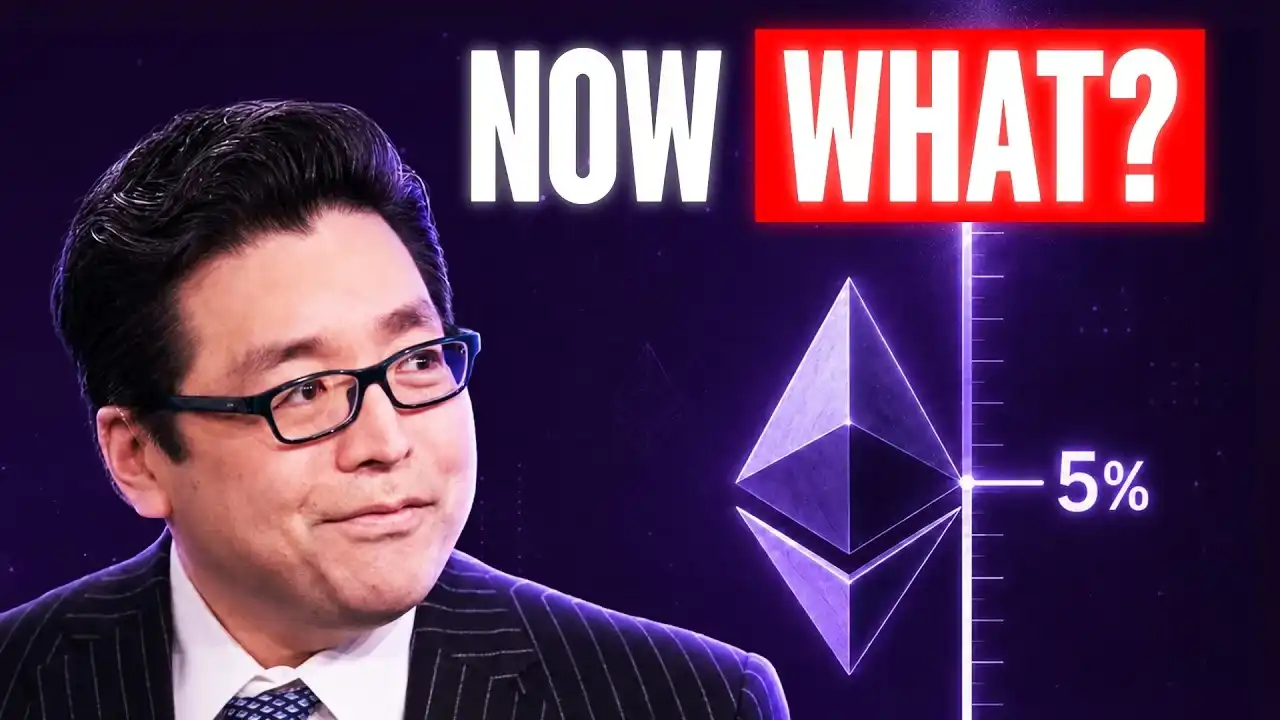
Podcast Notes | Conversation with Tom Lee: Bitmine Acquiring Nearly 5% of Total ETH Supply Is Not the End Goal, ETH Price Target Set at $10,000

In a podcast interview, Tom Lee, Chairman of BitMine Immersion Technologies, discusses the company's strategy to accumulate nearly 5% of the total Ethereum supply within 14 months, using equity financing and avoiding debt. BitMine has consistently purchased ETH for over 60 consecutive weeks, with recent weeks combining buybacks with purchases. The company's substantial ETH holdings generate approximately $300 million in annual staking rewards, covering operational costs like the dividends for its 9.5% perpetual preferred stock (BMNP). Lee positions ETH as a store-of-value asset, likening it to stocks or land, rather than a pure cash-flow instrument. Looking ahead, Lee suggests BitMine may continue buying beyond the 5% target if institutional adoption grows. He outlines a bullish price target for ETH: surpassing $5,000 in a new crypto bull cycle and potentially exceeding $10,000 within 1-2 years, driven by Wall Street tokenization and AI-related demand. The discussion also covers BitMine's evolution into an ecosystem player, funding Ethereum Foundation spin-offs and developing its Maven staking platform. Lee acknowledges his significant financial interests are tied to ETH's price and BitMine's performance. The interview provides a framework for evaluating ETH as a long-term asset, emphasizing staking yield sustainability and future institutional demand, while noting the uncertainties surrounding macro cycles and real-world adoption.

marsbit33 dk önce

Podcast Notes | Conversation with Tom Lee: Bitmine Acquiring Nearly 5% of Total ETH Supply Is Not the End Goal, ETH Price Target Set at $10,000

marsbit33 dk önce

Pricing Risk Assets in 8 Hours: Tonight's PCE to Set the Discount Rate, Nvidia to Test Earnings Tomorrow Morning

"Pricing Risk Assets in 8 Hours: PCE to Set the Discount Rate Tonight, NVIDIA to Test Profits Tomorrow Morning" Risk asset prices hinge on two variables: the numerator (earnings expectations) and the denominator (the discount rate). Both will be recalibrated within eight hours. First, at 20:30 Beijing time, the US Bureau of Economic Analysis releases July PCE inflation data and the second estimate of Q2 GDP. Consensus expects mild core PCE growth, but a surge in key PPI components poses an upside risk. A hotter-than-expected print could push Treasury yields and the dollar higher, threatening the recent rally in Bitcoin (BTC) above $80K, which was fueled by falling yields. A benign reading would support risk assets. Market sentiment is already "greedy" (Fear & Greed Index at 74), making it vulnerable to disappointment. Second, around 04:20, NVIDIA reports its Q2 FY27 earnings. While consensus revenue of ~$91.85B slightly exceeds company guidance, the market has priced in a beat. The key will be the magnitude of the beat and, crucially, the Q3 guidance. As a bellwether for tech and AI narratives, NVIDIA's results will significantly impact overall risk appetite and AI-related crypto tokens. The combination creates four scenarios: 1) Benign PCE & strong NVIDIA guidance confirms the bullish trend. 2) Hot PCE & strong NVIDIA leads to conflicted signals and likely volatility for BTC. 3) Benign PCE & weak NVIDIA guidance pressures tech but offers some macro support for BTC. 4) Hot PCE & weak NVIDIA guidance presents a "double whammy," risking a sharp pullback in BTC toward the $75K-$76K support zone. The outcomes will set the tone for markets ahead of the upcoming Jackson Hole symposium.

marsbit1 saat önce

Pricing Risk Assets in 8 Hours: Tonight's PCE to Set the Discount Rate, Nvidia to Test Earnings Tomorrow Morning

marsbit1 saat önce

İşlemler

Spot
活动图片