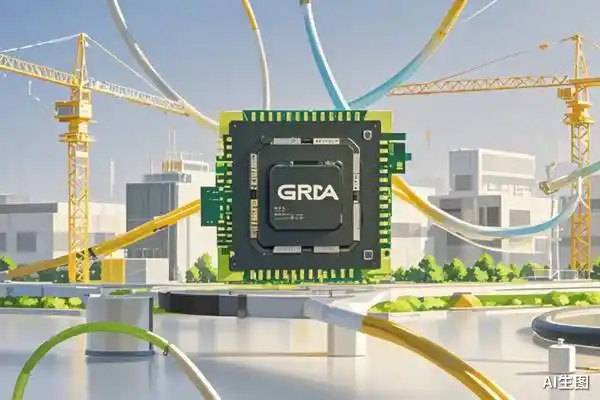
Musk's New Plan: Building an AI Base on the Moon, More Appealing Than Mars Colonization?

比推2026-02-13 tarihinde yayınlandı2026-02-13 tarihinde güncellendi

Özet

Elon Musk is shifting his strategic focus from colonizing Mars to establishing an AI base on the Moon, according to an internal presentation to employees following the merger of SpaceX and xAI. This new vision, dubbed "Lunar Base Alpha," involves building a city on the Moon and using mass drivers to launch AI satellites into deep space. The initiative is positioned as both a new recruitment tool and a unique value proposition for the merged entity, aiming to attract talent and capital by offering an ambitious alternative to conventional Earth-based AI development. Musk argues that achieving computational power exceeding one terawatt annually requires leveraging solar energy available on the Moon. This pivot aligns with SpaceX’s recent move away from its long-term Mars colonization goal, which lacks clear commercial funding, toward more immediately profitable ventures like Starlink satellite launches and NASA’s lunar missions. The Moon base narrative also serves to reinvigorate engineering enthusiasm by framing the project within the theoretical framework of the Kardashev Scale—suggesting that advanced civilizations harness stellar energy through space-based infrastructure. While technically and economically speculative, the momentums reflects a strategy to differentiate xAI from other AI labs, potentially boosting market expectations ahead of a possible IPO and appealing to retail investors.

Author: Ye Huiwen

Original Title: Musk's "New Grand Vision": Lunar Base


Elon Musk is constructing a grand narrative that merges space exploration and artificial intelligence for his newly merged commercial empire, attempting to replace his long-held but difficult-to-monetize Mars colonization plan with the vision of "Lunar Base Alpha" as a new attraction for talent and capital.

According to TechCrunch, during the merger of SpaceX and xAI and the subsequent restructuring, Musk presented this new blueprint to employees: building a city on the Moon and using mass drivers on the lunar surface to launch AI satellites into deep space. This idea was proposed after xAI experienced an exodus of executives, with Musk attempting to use it as a new recruitment strategy and to boost market expectations for the merged company's potential IPO. He stated that to achieve the goal of exceeding one terawatt of computing power annually, it is necessary to go to the Moon and utilize solar energy.

This strategic shift comes as SpaceX publicly abandons its long-held goal of Mars colonization. Compared to the Mars plan, which struggles to secure commercial funding, Musk now favors a science fiction metaphor based on the "Kardashev Scale," suggesting the construction of extraterrestrial infrastructure to capture solar energy for powering large-scale AI models. Musk claims that the company could potentially use "a few percent of the Sun's energy" to train and run AI, a vision aimed at providing the merged entity with a unique value proposition distinct from other AI labs.

For investors, while this vision is highly speculative, it logically attempts to combine SpaceX's launch capabilities with xAI's computing power needs. Despite the significant technological and cost barriers to large-scale supercomputer production on the Moon, this narrative may inspire retail investor enthusiasm, aiming to position SpaceX's stock as the next Tesla while also offering new technical challenges for engineers tired of traditional large language model development.

Strategic Shift: From Mars to Lunar AI Center

Musk unveiled this new vision at the end of a presentation during an xAI all-hands meeting, a segment where he typically showcases Mars landing renderings and discusses a multi-planetary future for humanity. This time, however, the focus was on a lunar base. After outlining plans to establish AI data centers in Earth's orbit, Musk further proposed that to break through the computing power bottleneck, it is essential to venture into deep space. He envisions using large maglev trains (i.e., mass drivers) to project space computers manufactured on the Moon into the solar system.

This shift is not entirely unexpected. TechCrunch notes that SpaceX had previously publicly stepped back from its Mars colonization goal. As early as 2017, due to technical challenges and high costs, SpaceX abandoned plans to adapt the Dragon spacecraft into a Mars lander. The capabilities of its core launch vehicle, Starship, have also been scaled back, refocusing on two more profitable short-term missions: launching Starlink communication satellites and fulfilling NASA's $4 billion crewed lunar landing contract.

In contrast, the Mars plan lacks a clear payer, whereas a lunar base could more directly serve the current logic of AI computing power expansion.

Reshaping Recruitment and Narrative Tools

For the past nine years, Mars colonization has been an extremely effective recruitment tool and brand moat for SpaceX.

The "Occupy Mars" slogan not only united internal employees but also set SpaceX apart from numerous contractors content with government contracts. Now, with xAI incorporated into the corporate structure, Musk needs a new narrative to integrate rocket manufacturing and artificial intelligence businesses. A former executive complained that "all AI labs are doing exactly the same thing, it's boring," and "mass-producing solar system-level supercomputers on the Moon" clearly breaks this homogeneity.

The "Kardashev Scale" cited by Musk—a theory measuring a civilization's level of energy utilization—provides a theoretical framework for this vision. He believes that early civilizations utilize planetary resources, while advanced civilizations build space infrastructure to capture stellar energy. This grand science fiction narrative aims to reignite engineers' passion and赋予 xAI a sense of mission beyond that of traditional software companies.

Business Logic and Market Reaction

Although the concept of building a lunar base seems distant, there is some business logic behind it. Experts point out that with the surging demand and rising costs of data centers on Earth, establishing data centers in Earth orbit could become feasible in the 2030s. SpaceX's acquisition of xAI and utilization of space assets to build data centers might be a bet on the future spatialization of computing power infrastructure.

However, building "self-sufficient cities" on the Moon to produce tons of advanced computers requires a significant reduction in the cost of space access and a solution to raw material transportation issues. This vision is currently seen more as a "stretch goal."

For the market, if this narrative is accepted by retail investors, it could drive up the merged company's valuation. As analyzed by TechCrunch, this is an attempt to transform SpaceX stock into the next market hotspot, while also providing a unique differentiating label for an AI company that might otherwise be known only for large language models.


Original link:https://www.bitpush.news/articles/7611848

İlgili Sorular

QWhat is Elon Musk's new vision for his merged commercial empire, as mentioned in the article?

AElon Musk's new vision is to build a lunar base called 'Lunar Base Alpha,' which involves establishing a city on the Moon and using mass drivers to launch AI satellites into deep space, combining space exploration with artificial intelligence.

QWhy did Musk shift his focus from Mars colonization to a lunar AI center?

AMusk shifted focus because the Mars colonization plan lacked clear commercial funding, while the lunar base aligns better with current AI computing power expansion logic and leverages SpaceX's existing capabilities, such as NASA's $4 billion crewed lunar landing contract.

QHow does Musk plan to use the 'Kardashev Scale' in his new narrative?

AMusk uses the 'Kardashev Scale' as a sci-fi metaphor to frame his vision, suggesting that advanced civilizations build space infrastructure to capture stellar energy, which would power large-scale AI models and provide a unique mission beyond traditional AI labs.

QWhat are the potential commercial benefits of building a lunar AI base, according to the article?

AThe commercial benefits include integrating SpaceX's launch capabilities with xAI's computing needs, potentially making SpaceX stock a market hotspot, differentiating the merged company from other AI labs, and addressing Earth's rising data center costs by space-based infrastructure in the 2030s.

QWhat challenges does the lunar AI base vision face, as highlighted in the article?

AThe vision faces significant technical and cost barriers, such as drastically reducing space travel costs, solving raw material transportation issues, and achieving large-scale supercomputer production on the Moon, making it currently more of an aspirational goal.

İlgili Okumalar

Gensyn AI: Don't Let AI Repeat the Mistakes of the Internet

In recent months, the rapid growth of the AI industry has attracted significant talent from the crypto sector. A persistent question among researchers intersecting both fields is whether blockchain can become a foundational part of AI infrastructure. While many previous AI and Crypto projects focused on application layers (like AI Agents, on-chain reasoning, data markets, and compute rentals), few achieved viable commercial models. Gensyn differentiates itself by targeting the most critical and expensive layer of AI: model training. Gensyn aims to organize globally distributed GPU resources into an open AI training network. Developers can submit training tasks, nodes provide computational power, and the network verifies results while distributing incentives. The core issue addressed is not decentralization for its own sake, but the increasing centralization of compute power among tech giants. In the era of large models, access to GPUs (like the H100) has become a decisive bottleneck, dictating the pace of AI development. Major AI companies are heavily dependent on large cloud providers for compute resources. Gensyn's approach is significant for several reasons: 1) It operates at the core infrastructure layer (model training), the most resource-intensive and technically demanding part of the AI value chain. 2) It proposes a more open, collaborative model for compute, potentially increasing resource utilization by dynamically pooling idle GPUs, similar to early cloud computing logic. 3) Its technical moat lies in solving complex challenges like verifying training results, ensuring node honesty, and maintaining reliability in a distributed environment—making it more of a deep-tech infrastructure company. 4) It targets a validated, high-growth market with genuine demand, rather than pursuing blockchain integration without purpose. Ultimately, the boundaries between Crypto and AI are blurring. AI requires global resource coordination, incentive mechanisms, and collaborative systems—areas where crypto-native solutions excel. Gensyn represents a step toward making advanced training capabilities more accessible and collaborative, moving beyond a niche controlled by a few giants. If successful, it could evolve into a fundamental piece of AI infrastructure, where the most enduring value in the AI era is often created.

marsbit10 saat önce

Gensyn AI: Don't Let AI Repeat the Mistakes of the Internet

marsbit10 saat önce

Why is China's AI Developing So Fast? The Answer Lies Inside the Labs

A US researcher's visit to China's top AI labs reveals distinct cultural and organizational factors driving China's rapid AI development. While talent, data, and compute are similar to the West, Chinese labs excel through a pragmatic, execution-focused culture: less emphasis on individual stardom and conceptual debate, and more on teamwork, engineering optimization, and mastering the full tech stack. A key advantage is the integration of young students and researchers who approach model-building with fresh perspectives and low ego, prioritizing collective progress over personal credit. This contrasts with the US culture of self-promotion and "star scientist" narratives. Chinese labs also exhibit a strong "build, don't buy" mentality, preferring to develop core capabilities—like data pipelines and environments—in-house rather than relying on external services. The ecosystem feels more collaborative than tribal, with mutual respect among labs. While government support exists, its scale is unclear, and technical decisions appear driven by labs, not state mandates. Chinese companies across sectors, from platforms to consumer tech, are building their own foundational models to control their tech destiny, reflecting a broader cultural drive for technological sovereignty. Demand for AI is emerging, with spending patterns potentially mirroring cloud infrastructure more than traditional SaaS. Despite challenges like a less mature data industry and GPU shortages, Chinese labs are propelled by vast talent, rapid iteration, and deep integration with the open-source community. The competition is evolving beyond a pure model race into a contest of organizational execution, developer ecosystems, and industrial pragmatism.

marsbit11 saat önce

Why is China's AI Developing So Fast? The Answer Lies Inside the Labs

marsbit11 saat önce

3 Years, 5 Times: The Rebirth of a Century-Old Glass Factory

Corning, a 175-year-old glass company, is experiencing a dramatic revival as a key player in AI infrastructure, driven by surging demand for high-performance optical fiber in data centers. AI data centers require vastly more fiber than traditional ones—5 to 10 times as much per rack—to handle high-speed data transmission between GPUs. This structural demand shift, coupled with supply constraints from the lengthy expansion cycle for fiber preforms, has created a significant supply-demand gap. Nvidia has invested in Corning, along with Lumentum and Coherent, in a $4.5 billion total commitment to secure the optical supply chain for AI. Corning's competitive edge lies in its expertise in producing ultra-low-loss, high-density, and bend-resistant specialty fiber, which is critical for 800G+ and future 1.6T data rates. Its deep involvement in co-packaged optics (CPO) with partners like Nvidia further solidifies its position. While not the largest fiber manufacturer globally, Corning's revenue from enterprise/data center clients now exceeds 40% of its optical communications sales, and it has secured multi-year supply agreements with major hyperscalers including Meta and Nvidia. Financially, Corning's optical communications revenue has surged, doubling from $1.3 billion in 2023 to over $3 billion in 2025. Its stock price has risen nearly 6-fold since late 2023. Key future catalysts include the rollout of Nvidia's CPO products and the scale of undisclosed customer agreements. However, risks include high current valuations and potential disruption from next-generation technologies like hollow-core fiber. The company's long-term bet on light over electricity, maintained even through the telecom bubble crash, is now being validated by the AI boom.

marsbit12 saat önce

3 Years, 5 Times: The Rebirth of a Century-Old Glass Factory

marsbit12 saat önce

İşlemler

Spot
Futures

Popüler Makaleler

ELON Nasıl Satın Alınır

HTX.com’a hoş geldiniz! Dogelon Mars (ELON) satın alma işlemlerini basit ve kullanışlı bir hâle getirdik. Adım adım açıkladığımız rehberimizi takip ederek kripto yolculuğunuza başlayın. 1. Adım: HTX Hesabınızı OluşturunHTX'te ücretsiz bir hesap açmak için e-posta adresinizi veya telefon numaranızı kullanın. Sorunsuzca kaydolun ve tüm özelliklerin kilidini açın. Hesabımı Aç2. Adım: Kripto Satın Al Bölümüne Gidin ve Ödeme Yönteminizi SeçinKredi/Banka Kartı: Visa veya Mastercard'ınızı kullanarak anında Dogelon Mars (ELON) satın alın.Bakiye: Sorunsuz bir şekilde işlem yapmak için HTX hesap bakiyenizdeki fonları kullanın.Üçüncü Taraflar: Kullanımı kolaylaştırmak için Google Pay ve Apple Pay gibi popüler ödeme yöntemlerini ekledik.P2P: HTX'teki diğer kullanıcılarla doğrudan işlem yapın.Borsa Dışı (OTC): Yatırımcılar için kişiye özel hizmetler ve rekabetçi döviz kurları sunuyoruz.3. Adım: Dogelon Mars (ELON) Varlıklarınızı SaklayınDogelon Mars (ELON) satın aldıktan sonra HTX hesabınızda saklayın. Alternatif olarak, blok zinciri transferi yoluyla başka bir yere gönderebilir veya diğer kripto para birimlerini takas etmek için kullanabilirsiniz.4. Adım: Dogelon Mars (ELON) Varlıklarınızla İşlem YapınHTX'in spot piyasasında Dogelon Mars (ELON) ile kolayca işlemler yapın.Hesabınıza erişin, işlem çiftinizi seçin, işlemlerinizi gerçekleştirin ve gerçek zamanlı olarak izleyin. Hem yeni başlayanlar hem de deneyimli yatırımcılar için kullanıcı dostu bir deneyim sunuyoruz.

252 Toplam GörüntülenmeYayınlanma 2024.12.12Güncellenme 2025.03.21

ELON Nasıl Satın Alınır

Tartışmalar

HTX Topluluğuna hoş geldiniz. Burada, en son platform gelişmeleri hakkında bilgi sahibi olabilir ve profesyonel piyasa görüşlerine erişebilirsiniz. Kullanıcıların ELON (ELON) fiyatı hakkındaki görüşleri aşağıda sunulmaktadır.

活动图片