Compiled by: ChainCatcher
Key Updates:
- Stablecoin infrastructure firm Checker completes $8M financing round with participation from Galaxy Ventures and others
- Deloitte acquires crypto infrastructure company Blocknative via M&A
- Mastercard abandons investment in Zerohash, shifts focus to BVNK for stablecoin payment infrastructure
- a16z likely becomes HYPE's largest external holder, accumulating over $356M
- Tether acquires all SoftBank-held shares in Twenty One Capital (XXI)
- Decentralized derivatives platform Variational completes $50M Series A led by Dragonfly Capital
- Strategy CEO: Among Q1 top 15 institutional shareholders, 13 increased MSTR holdings, total stake up 27%
What happened in the last 24 hours?
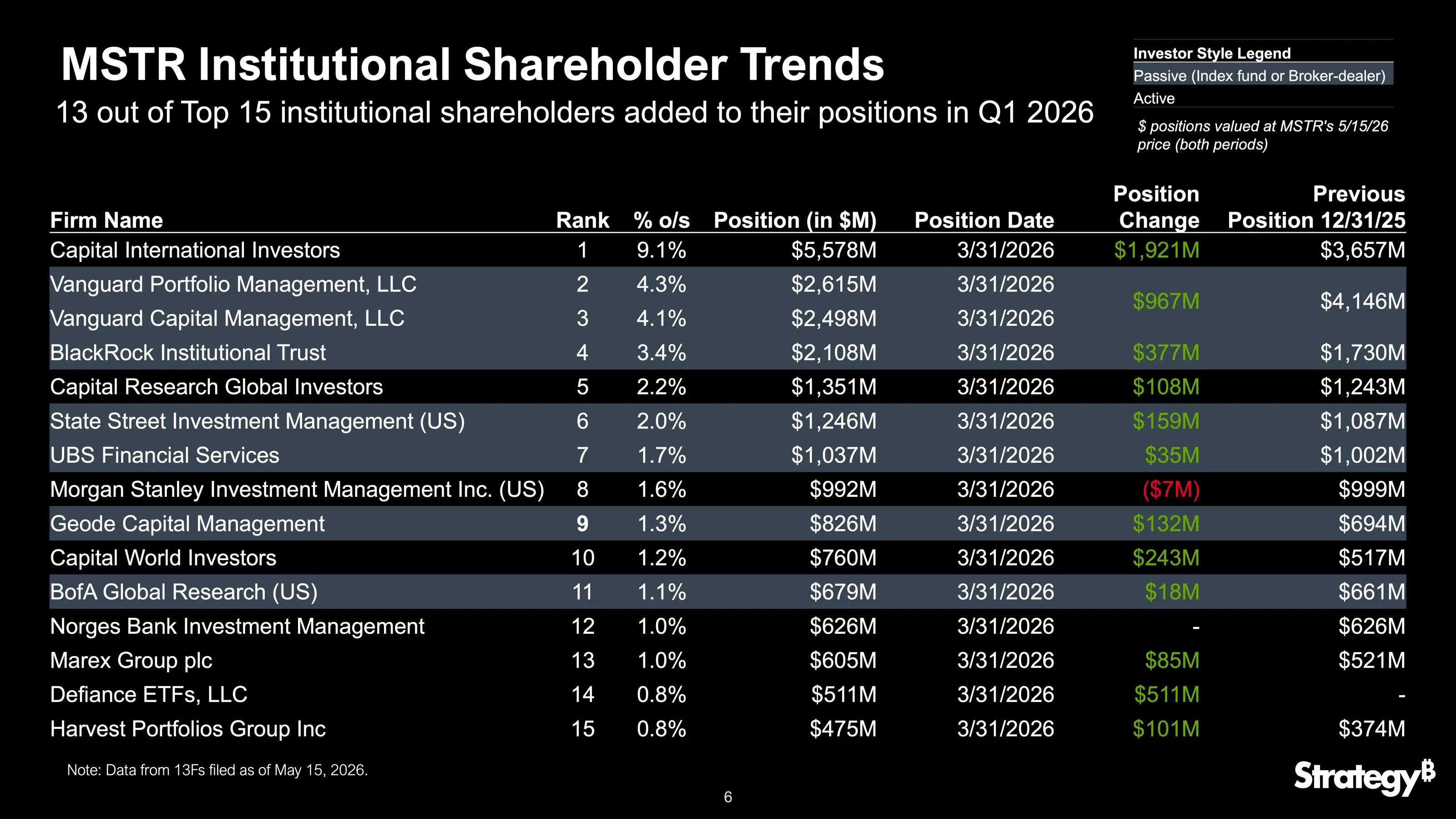
Strategy CEO: Among Q1 top 15 institutional shareholders, 13 increased MSTR holdings, total stake up 27%
ChainCatcher news: Strategy CEO Phong Le stated that in Q1 2026, 13 of Strategy's top 15 institutional shareholders increased their holdings of $MSTR, with their total stake growing by 27%.
Decentralized derivatives platform Variational completes $50M Series A led by Dragonfly Capital
ChainCatcher news, according to Fortune: Decentralized derivatives trading platform Variational announced the completion of a $50 million Series A funding round, led by Dragonfly Capital, with participation from Bain Capital Crypto and Coinbase Ventures.
Headquartered in the Cayman Islands, the company is committed to building an on-chain derivatives protocol for institutions and traditional financial traders. By aggregating liquidity from traditional finance and crypto markets, it aims to provide instantly tradable on-chain markets for real-world assets like oil and commodities. Its core product, the Omni platform, adopts a zero-fee model and incorporates liquidity pool mechanisms to enhance market depth and execution efficiency.
Variational stated that its goal is not to directly compete with centralized exchanges, but rather to connect multiple liquidity sources—including traditional financial market makers and mainstream crypto trading platforms—through a "brokerage" model to solve the "cold start" liquidity problem in on-chain markets.
NYSE parent ICE plans to launch compute futures market
ChainCatcher news, according to Bloomberg: Intercontinental Exchange (ICE), parent company of the New York Stock Exchange, announced plans to launch futures contracts based on "computing power," tracking changes in the cost of GPU and other compute resources supporting the AI industry. The product still requires regulatory approval.
Reportedly, ICE will partner with financial infrastructure company Ornn to develop a derivatives pricing system based on its GPU cost index, which will underpin the compute futures contracts.
Tether acquires all SoftBank-held shares in Twenty One Capital (XXI)
ChainCatcher news, according to an official announcement: Tether International announced the acquisition of all SoftBank-held shares in Twenty One Capital (XXI), becoming a larger controlling shareholder. Following the transaction, SoftBank-appointed board members of XXI have stepped down from the board as per the shareholder agreement.
Tether stated that this move reflects its long-term strategic commitment and confidence in XXI's Bitcoin-centric approach to building a listed company from the ground up. The announcement noted that SoftBank's early involvement provided XXI with significant institutional backing and governance experience, helping the company complete its initial phase layout. Tether will build upon this foundation to propel XXI into its next development stage.
Fintech company Mercury completes $200M financing led by TCV
ChainCatcher news, according to CNBC: Fintech company Mercury announced the completion of a new $200 million financing round, led by TCV, with participation from Sequoia Capital, Andreessen Horowitz (a16z), Coatue Management, and other institutions.
Mercury primarily provides banking services to startups. It currently serves over 300,000 clients and generates approximately $650 million in annualized revenue. The company noted that the recent AI startup boom has significantly driven demand for new company registrations and account openings, becoming a key growth driver.
Simultaneously, Mercury also announced receiving conditional approval from the U.S. Office of the Comptroller of the Currency (OCC) and plans to apply for a federal banking charter to expand lending and payment network (like Zelle) access capabilities, reducing dependence on partner banks. The company's founder stated that the future goal remains an independent listing rather than being acquired.
Goldman Sachs to serve as lead underwriter for SpaceX IPO
a16z likely becomes HYPE's largest external holder, accumulating over $356M
ChainCatcher news, according to on-chain analyst Ai姨 (@ai_9684xtpa) monitoring: a16z (@a16zcrypto) may have become the sixth-largest entity holding HYPE, and likely the largest external holder by scale, assuming the top five positions are occupied by entities within Hype's own ecosystem.
Data shows that a16z initiated a significant accumulation mode in August 2025, amassing a total of 9.18 million HYPE (approx. $356 million) at an average withdrawal price of $38.77. After deducting portions transferred to exchanges and market makers, approximately 8.844 million HYPE remain, distributed across dozens of addresses.
In just the past 11 hours, a16z accumulated an additional 206,000 HYPE (approx. $9.95 million). Since April 16, it has accumulated 2.35 million HYPE (approx. $102 million), and since the start of 2026, it has accumulated 4.92 million HYPE (approx. $183 million). Based on current prices, its unrealized profit per token has reached $79.29 million.
Coinbase, Kraken, and Gemini urge Senate to remove crypto token listing restriction clause
Deloitte acquires crypto infrastructure company Blocknative
ChainCatcher news: Deloitte announced on Tuesday that it has acquired crypto infrastructure company Blocknative primarily through a talent-focused acquisition. According to the announcement, the Blocknative team will in the future "focus on driving Web3 innovation within Deloitte's client ecosystem." Currently, Blocknative's website displays a notice stating the company "is winding down operations." Its Blocknative API and Gas Network services will also be gradually shut down, with operations expected to continue until June 19.
Founded in 2018, Blocknative is a blockchain infrastructure company specializing in real-time mempool monitoring, Gas fee prediction, and transaction management. It provides APIs and related tools for optimizing on-chain transactions; its Gas Network is a decentralized oracle network for providing real-time Gas fee data. This move comes amid a wave of consolidation within the broader crypto ecosystem, alongside increased crypto exposure from traditional firms like Deloitte. Deloitte now provides accounting, auditing, and other enterprise services to crypto companies.
Meme Trending List
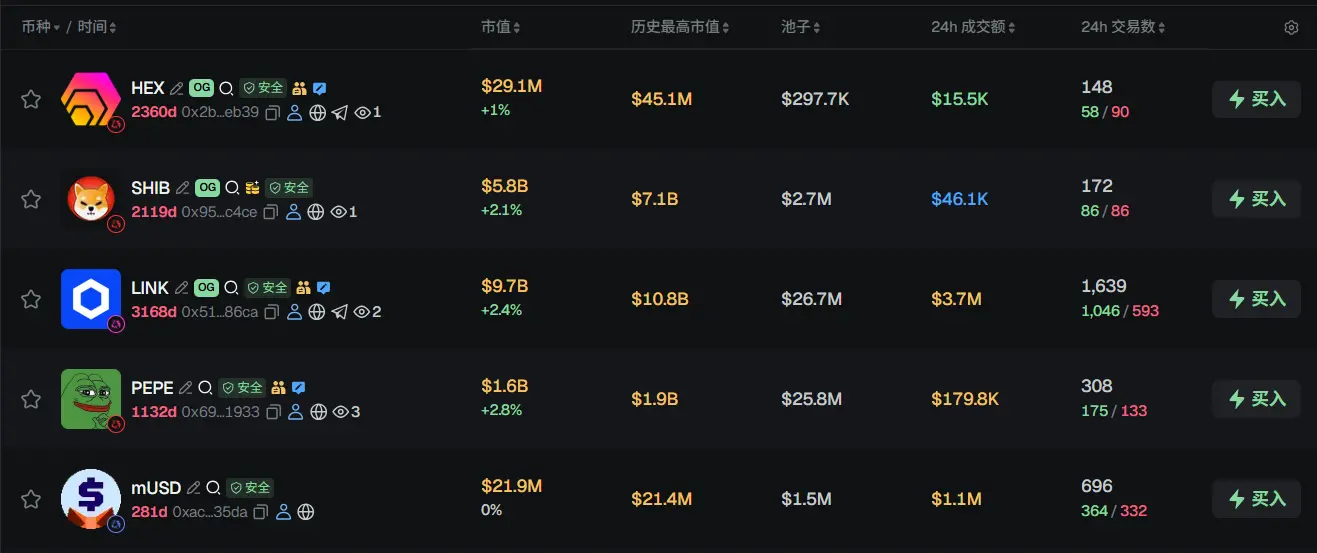
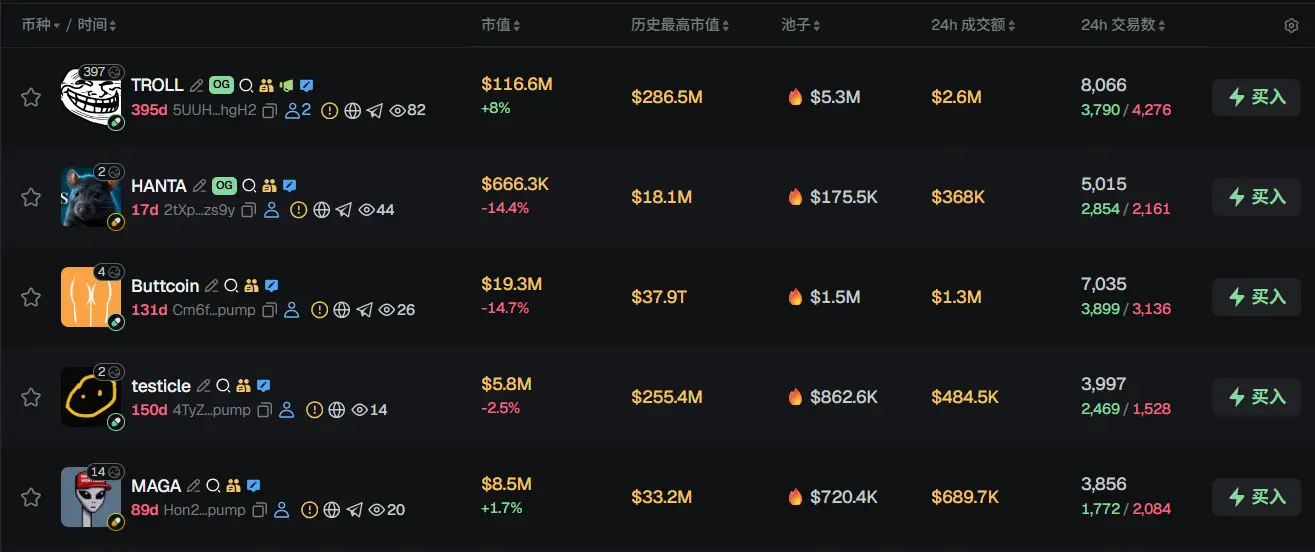
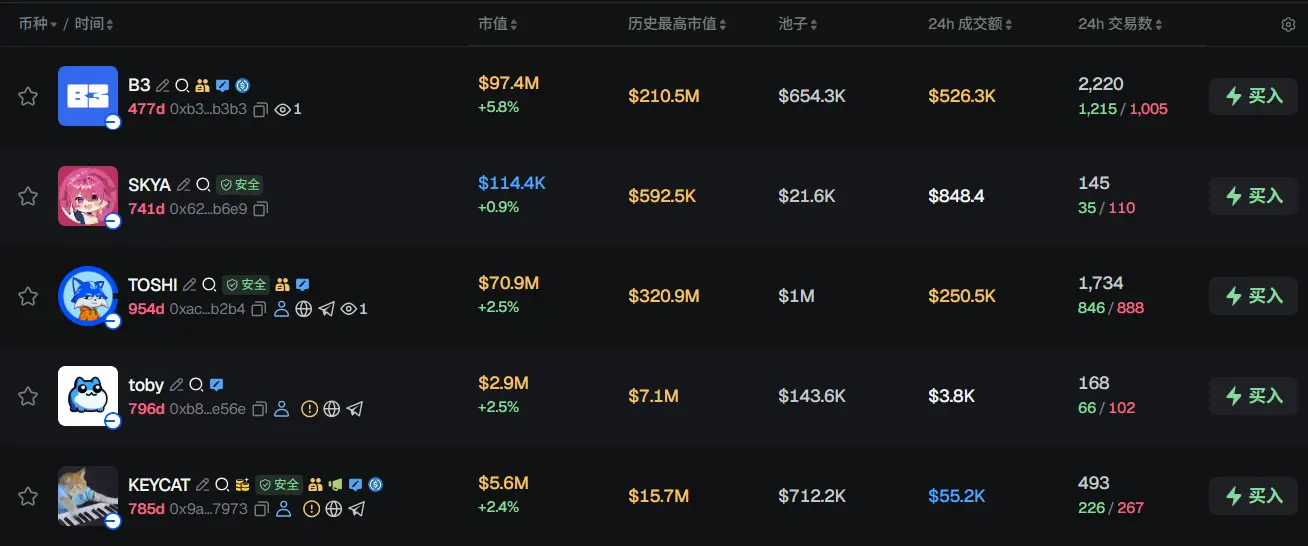
According to data from the Meme token tracking and analytics platform GMGN as of 09:00 May 21:
Top 5 trending tokens on ETH in the past 24h: HEX, SHIB, LINK, PEPE, mUSD
Top 5 trending tokens on Solana in the past 24h: TROLL, HANTA, Buttcoin, testicle, MAGA
Top 5 trending tokens on Base in the past 24h: B3, SKYA, TOSHI, toby, KEYCAT
What are the must-read articles from the past 24 hours?
Duan Yongping's First Crypto Company Investment: Why Circle?
Renowned investor Duan Yongping, hailed as the "Chinese Buffett," recently saw his family wealth management firm, H&H International Investment LLC, file its Q1 2026 13F holdings report with the U.S. SEC as of March 31.
According to the report, the total market value of Duan's investment portfolio surged from $17.49 billion last quarter to $20.004 billion. Besides continuing heavy positions in Apple (AAPL), Berkshire Hathaway (BRK.B), and Nvidia (NVDA), a new addition has drawn the attention of both the crypto industry and value investors: stablecoin giant Circle (NYSE: CRCL).
Harvard and Other Institutions Sell Off, Six Core Talents Depart in a Month: What's Happening with Ethereum?
Recently, the Ethereum Foundation has once again suffered a personnel shock, as core researchers Carl Beek and Julian Ma officially announced their departures.
This year, at least 7 core members or senior contributors have left one after another—from co-executive directors to protocol researchers, from upgrade coordinators to cryptography experts—sparking significant community concern over the foundation's stability and execution capabilities.
Simultaneously, institutional holdings data is emerging. Goldman Sachs reduced its BlackRock ETHA position by about 70%, Harvard University's endowment fund completely sold off its previously acquired roughly $87 million worth of Ethereum ETF holdings, and South Korea's seventh-largest pension relief company recorded an approximately $32.73 million loss from investing in an Ethereum leveraged ETF.
Additionally, the Ethereum Foundation recently unstaked 21,271 ETH from Lido and has repeatedly sold ETH on-chain for treasury rebalancing.
Core internal teams are leaving, large external capital is exiting, and the foundation itself is divesting. Ethereum is being 'voted with their feet' by different types of participants simultaneously.
Crypto Asset Recovery: A Lucrative, Quietly Profitable Business
Today in Hangzhou, I had a long conversation with a friend who specializes in crypto asset recovery.
They've handled quite a few cases over the past year, with individual project amounts typically starting at $1 million USD, some even higher. Before our chat, my understanding of this type of business was also quite superficial, assuming that so-called "crypto asset recovery" mainly involved more dramatic scenarios like theft, fraud, hacking attacks, and on-chain tracking. After our conversation, I discovered that what actually happens on a large scale are more mundane, specific, and often more frustrating issues for the parties involved.
The Tokenized Market Will Reach Trillion-Dollar Scale, But Four Major Hurdles Remain
We are at the dawn of a new financial era. Tokenization is no longer a niche experiment but rapidly evolving into a significant field, with institutions racing to lead one of the largest emerging asset classes, and capital allocators seeking more substantial returns here.
The question today is no longer whether trillions of dollars will move on-chain, but who will lead this process. This article explores the conditions needed to achieve this and the opportunities for operators and entrepreneurs building platforms to custody and trade trillions of dollars in assets.
Tokenized finance has already reached a considerable scale. Stablecoin circulation alone exceeds $300 billion, while the total market value of other tokenized financial assets (including money market funds, private credit, equities, commodities, etc.) surpasses $30 billion. Many of the world's largest asset managers, including BlackRock, Fidelity, and Franklin Templeton, have cumulatively onboarded billions of dollars in real-world assets onto the blockchain.