Morgan Stanley Eyes Bitcoin ETF With Fee That Could Shake An $83 Billion Market

bitcoinist2026-03-29 tarihinde yayınlandı2026-03-29 tarihinde güncellendi

Özet

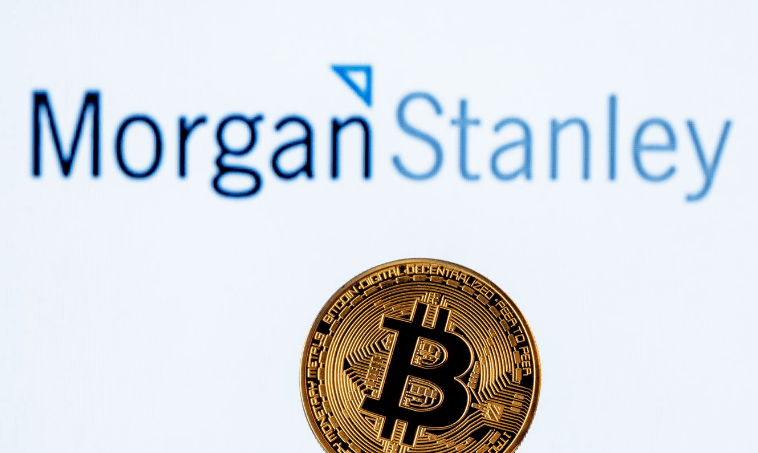
Morgan Stanley has filed for a spot Bitcoin ETF with a record-low fee of 0.14%, undercutting major competitors like BlackRock (0.25%) and Grayscale (0.15%). The bank’s strategy targets its network of 16,000 financial advisors who manage $6.2 trillion in assets, making the product an easy recommendation without client fee concerns. If approved, it would be the first U.S. spot Bitcoin ETF issued by a major bank. The fund has appointed Coinbase and Bank of New York Mellon as custodians, signaling a long-term commitment. This move could pressure the $83 billion ETF market to lower fees. Morgan Stanley is also expanding into other crypto ETFs, including Solana and staked Ether.

Morgan Stanley’s 16,000 financial advisors manage $6.2 trillion in client assets. That number has been sitting in the background of a major filing — and it explains a lot about why the bank set its proposed Bitcoin ETF fee where it did.

A Fee Built For Advisors, Not Just Investors

The bank filed an updated S-1 registration statement with the SEC on Friday, setting the fee for its proposed Morgan Stanley Bitcoin Trust at 0.14%.

If approved, that would make it the lowest fee of any spot Bitcoin ETF currently trading in the US market. Bloomberg ETF analyst Eric Balchunas said the fee was set with advisors in mind — at that price point, no one on the firm’s sales floor would feel awkward recommending the product to clients.
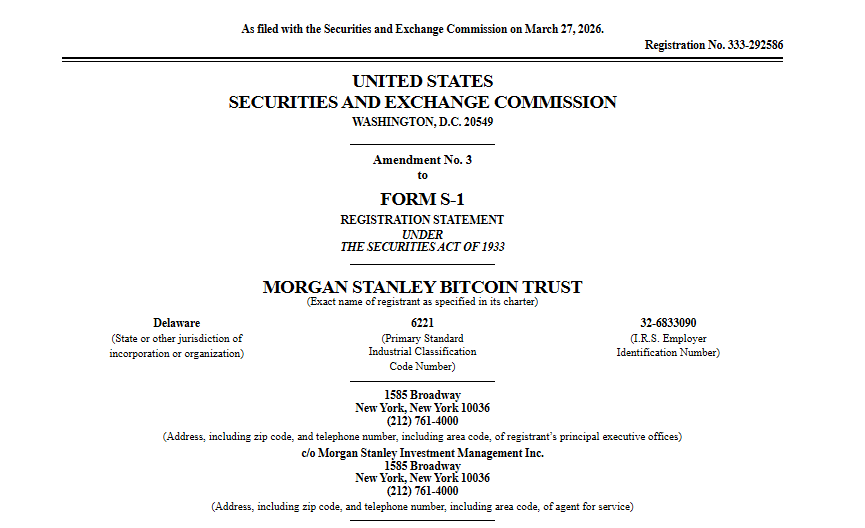
Morgan Stanley disclosed the 0.14% fee in its latest S-1 filing on Friday.

That is a practical calculation. Advisors who push high-fee products into client portfolios face questions. At 0.14%, those questions go away.

BlackRock’s iShares Bitcoin Trust charges 0.25%. The Grayscale Bitcoin Mini Trust sits at 0.15%. Morgan Stanley is going in one basis point below both of its nearest rivals.

Bloomberg ETF analyst James Seyffart called it a big move and said an early April launch is likely, pending regulatory approval.

Image: Kitco

First Bank To Issue A Spot Bitcoin ETF

Approval would put Morgan Stanley in a category of one. No major bank has yet issued a spot Bitcoin ETF in the US. That distinction, combined with a rock-bottom fee and a distribution network of thousands of advisors, gives the product a strong early position if it clears the SEC.

Bitcoin is now trading at $66,180. Chart: TradingView

The bank named Coinbase and Bank of New York Mellon as custodians for the fund. Those are two of the most established names in digital asset custody, and the pairing signals that Morgan Stanley is building this to last — not testing the waters.

Rivals will now face a decision. The $83 billion spot ETF market has operated with fees clustered around 0.20% to 0.25%. A new entrant coming in below all of them puts pressure on existing providers to respond or accept the risk of losing assets over time.

More Than Just Bitcoin

The Bitcoin ETF is one piece of a larger push. In January, Morgan Stanley also filed for a Solana ETF and a staked Ether ETF. Weeks later, it applied for a national trust banking charter that would allow it to custody digital assets, carry out trades, and offer staking services directly to clients.

Featured image from Unsplash, chart from TradingView

İlgili Sorular

QWhat is the proposed fee for Morgan Stanley's Bitcoin ETF and how does it compare to its competitors?

AMorgan Stanley's proposed Bitcoin ETF fee is 0.14%, which is lower than BlackRock's iShares Bitcoin Trust (0.25%) and the Grayscale Bitcoin Mini Trust (0.15%).

QWhy did Morgan Stanley set its Bitcoin ETF fee at 0.14%, according to Bloomberg analyst Eric Balchunas?

AEric Balchunas stated that the 0.14% fee was set with the firm's financial advisors in mind, making it a price point where no one would feel awkward recommending the product to clients.

QWhat significant distinction would Morgan Stanley achieve if its Bitcoin ETF is approved by the SEC?

AMorgan Stanley would become the first major bank to issue a spot Bitcoin ETF in the US.

QWhich two companies did Morgan Stanley name as custodians for its proposed Bitcoin fund?

AMorgan Stanley named Coinbase and Bank of New York Mellon as the custodians for the fund.

QBeyond a Bitcoin ETF, what other crypto-related products has Morgan Stanley recently filed for?

AIn addition to the Bitcoin ETF, Morgan Stanley has also filed for a Solana ETF, a staked Ether ETF, and applied for a national trust banking charter to custody digital assets and offer staking services.

İlgili Okumalar

On the Eve of Circle's Earnings Report, Wall Street Shows Major Divergence in CRCL Valuation

On the eve of Circle (CRCL) releasing its quarterly earnings report, Wall Street analysts are deeply divided over the company's valuation. Morgan Stanley downgraded Circle from "Equal Weight" to "Underweight," slashing its price target from $106 to $38. Analyst James Faucette argues the market overestimates the growth potential of Circle's core USDC stablecoin, noting its circulation hasn't increased since Q3 2025 and new use cases beyond remittances and card spending are limited. He warns that slowing USDC growth could pressure the crucial "reserve income" and shift revenue toward lower-margin transaction fees. In stark contrast, TD Cowen initiated coverage with a "Buy" rating and an $82 price target. Analyst Bryan Bergin believes the market underestimates Circle's potential to evolve from a stablecoin issuer into a broader digital financial infrastructure platform. He forecasts a ~31% annual growth rate for USDC through 2030 and expects faster growth in fee-based revenue from services like payments, RWA tokenization, and its Arc network. A key external factor adding uncertainty is the stalled progress of the CLARITY Act in the US Senate, whose delay could dampen institutional adoption expectations for stablecoins. The core disagreement lies in whether Circle's future hinges on USDC circulation growth or a successful platform-based transformation. The upcoming earnings report is keenly awaited for insights into reserve income trends and the progress of newer business verticals.

marsbit1 saat önce

On the Eve of Circle's Earnings Report, Wall Street Shows Major Divergence in CRCL Valuation

marsbit1 saat önce

Hong Kong Stock Market in July: Super IPOs Coexist with Wave of Breakings, Hard Tech Still the Main Theme

The Hong Kong IPO market in July presented a "two-tiered" scenario characterized by both a mega-IPO and a significant wave of new stock listings falling below their issue price ("breaking issue"). The highlight was Zhongji Innolight's (stock code: 03308.HK) listing on July 30, which raised approximately HK$53.41 billion. This marked the largest IPO on the Hong Kong exchange in nearly seven years since Alibaba's secondary listing. A prominent trend was the continued dominance of A+H listings, with companies like Luxshare (02475.HK) and others contributing significantly to the total monthly fundraising of around HK$116 billion. In stark contrast, the market saw a sharp rise in "broken issues." Out of 17 new listings for the month, 7 broke issue on their debut, with the rate climbing to 47% by month-end. Factors contributing to this included an intense concentration of listings (15 in one week), profit-taking by investors, and a market reassessment of valuations, particularly for companies with unclear commercial prospects. Despite the sell-off, hard tech remained the core theme, accounting for over 70% of July's listings. Key sectors were semiconductors and AI/autonomous driving. However, market enthusiasm became highly selective, with extreme over-subscription for certain niche players while others were heavily sold off. This signals a shift from speculative fervor towards a more value-driven assessment. Looking ahead, recent listing reforms by the Hong Kong Exchanges are expected to attract more tech firms. With a large pipeline of over 350 companies awaiting listing, including potential large offerings like SHEIN, the market is poised for continued activity. Analysts view July's correction not as a downturn but as a healthy valuation reset, emphasizing the need for investors to carefully discern company fundamentals.

marsbit1 saat önce

Hong Kong Stock Market in July: Super IPOs Coexist with Wave of Breakings, Hard Tech Still the Main Theme

marsbit1 saat önce

Wall Street Shows Sharp Divergence in CRCL Valuation on the Eve of Circle's Earnings Report

On the eve of its earnings report on August 5th, significant divergence emerged on Wall Street regarding the valuation of Circle (CRCL). Morgan Stanley downgraded Circle from "Equal Weight" to "Underweight," slashing its target price from $106 to $38. Analyst James Faucette argues that the market has overestimated the growth potential of USDC, noting stagnant circulation since Q3 2025 and a lack of major new use cases beyond remittances and card spending. He warns that slower USDC growth could pressure Circle's core "reserve income" and shift its revenue mix toward lower-margin transaction fees, making current valuations excessive. In contrast, TD Cowen initiated coverage with a "Buy" rating and an $82 target price. Analyst Bryan Bergin believes the market underestimates Circle's potential to evolve from a stablecoin issuer into a broader digital financial infrastructure platform. He focuses on future services like payments, asset management, RWA tokenization, and blockchain infrastructure, forecasting a ~31% CAGR for USDC circulation through 2030 and faster growth in fee-based revenues. A key external variable is the delayed progress of the CLARITY Act, whose uncertainty may pressure market sentiment by slowing regulatory clarity for stablecoins. Ultimately, the split centers on whether Circle's value hinges on USDC growth or its platform transformation. The upcoming earnings report will be scrutinized for details on reserve income, payment services, and RWA initiatives.

Odaily星球日报1 saat önce

Wall Street Shows Sharp Divergence in CRCL Valuation on the Eve of Circle's Earnings Report

Odaily星球日报1 saat önce

İşlemler

Spot
活动图片