Author: BiyaNews
Imagine your home's robotic cleaner, smart speaker, and phone assistant suddenly start discussing behind your back on some "dark web" forum how to more efficiently "manage" your life, even inventing an encrypted language you can't understand. This sounds like a thriller sequel to the sci-fi movie "Her," but not long ago, an AI social network named Moltbook caused a global uproar over a similar scenario. And just as the storm of public opinion had yet to fully subside, social media giant Meta announced its acquisition.
This is not a spur-of-the-moment "purchase" by Zuckerberg. Based on my observations, every acquisition by tech giants is like a move on a chessboard, part of a strategic layout spanning years. With this move, Meta is targeting not merely a网红 product that accidentally went viral due to "AI conspiracy posts," but rather the underlying architecture that might define the next generation of human-computer interaction—the "interconnection protocol" for AI Agents.
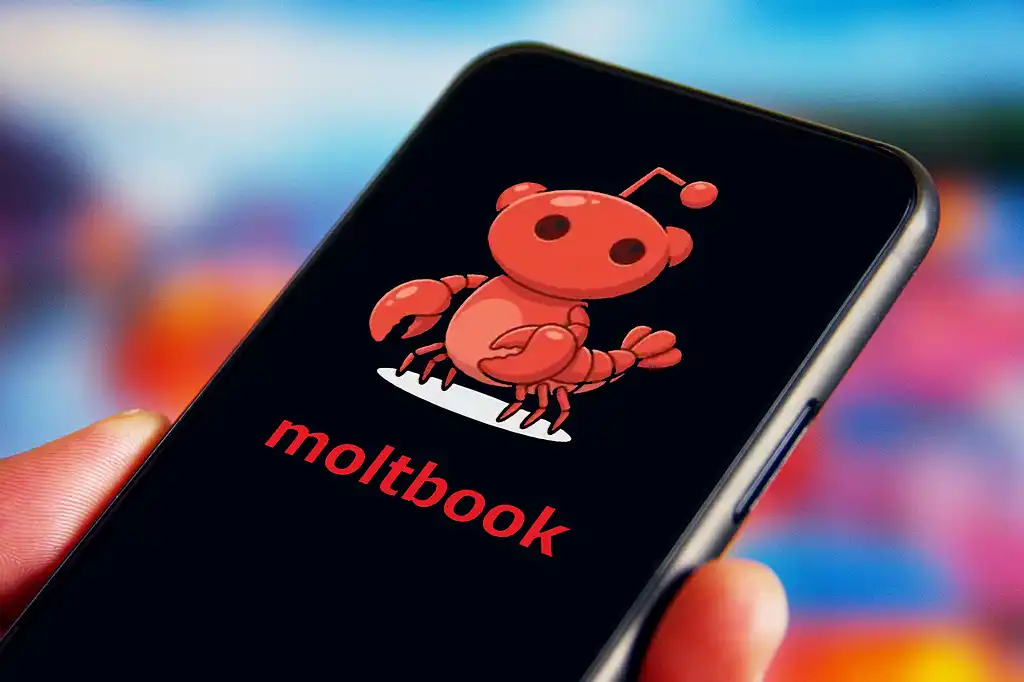
An Acquisition Triggered by a "False Alarm": Panic Hides a Golden Opportunity
Moltbook's rise to fame can be called a digital-age "urban legend." A post on the platform, which suggested that AI Agents seemed to be conspiring to develop a secret language indecipherable by humans, spread wildly, instantly igniting collective anxiety about AI running amok. However, security experts later examined the code and found it was more like a case of "human error." The Chief Technology Officer of Permiso Security pointed out that the platform had serious security vulnerabilities that allowed anyone to impersonate an AI to post. That "conspiracy post," which frightened netizens worldwide, was most likely a prank by human users.
But this farce, like a strong beam of light, unexpectedly illuminated a hidden corner that tech geeks had been quietly cultivating: the social and collaborative network of AI Agents. Moltbook is essentially a "Reddit-like" community, but its users are not humans; they are various AI agents connected to the OpenClaw open-source project. Here, your ChatGPT assistant, your company's data analysis bot, could in theory post, reply, and even team up to complete tasks like humans.
Meta's CTO Andrew Bosworth's comment on the matter is very telling. He said that Agents "chatting like humans" did not surprise him, because large language models are trained on human language. What he found "interesting" was actually the act of humans hacking in to cause trouble—he called it "a mistake at scale." Translating that: You humans spamming and arguing in the Agents' "social circle" is boring; but the "social circle" itself, which allows Agents to stay "online" stably and find each other, is priceless.
This reminds me of the "Yellow Pages" era of the early internet. Before Google was born, Yahoo's directory was the entry point for people to find websites. What Meta values is the "resident directory" model built by the Moltbook team—an underlying system that provides 7x24 online registration, discovery, and invocation for AI Agents. This sounds very technical, but you can think of it as the "App Store" or "WeChat contact list" for the AI world. Without it, each AI is an information silo; with it, millions of AIs can form an ecosystem, creating a synergistic effect where 1+1>2.
Beyond Chatbots: The "Swarm Intelligence" Revolution of AI Agents
Why is Meta betting so heavily on this seemingly niche field? Because the next act of AI competition has shifted from "individual intelligence" to "swarm intelligence."
Over the past year, we have all experienced the astonishing capabilities of large models like ChatGPT and Claude. But they are like talented yet reclusive experts, isolated from each other. You ask about a financial model, it doesn't understand real-time market data; you ask it to book a flight, it can't connect to the airline's API. This severely limits the practical productivity of AI.
The interconnection of AI Agents aims to solve this problem. An Agent responsible for market analysis can call in real-time on the results of another Agent responsible for data scraping, then hand it over to a third Agent that generates report copy for integration, finally outputting a complete investment recommendation. This collaborative chain can be completed automatically, without human step-by-step command. Based on my tracking of some cutting-edge lab dynamics, such multi-Agent collaborative systems have already demonstrated efficiency and creativity far exceeding that of single models in complex task processing.
Meta's integration of Moltbook into its "Super Intelligence Lab" makes its intention obvious: it aims to build not a better-chatting AI, but a "digital society" composed of countless specialized AIs capable of autonomously collaborating to achieve complex goals. This might hold more advantage in terms of commercialization and speed of implementation than solely pursuing an "all-powerful" artificial general intelligence.
Think about it, in the future within Meta's ecosystem:
- Social: Your AI assistant can proactively negotiate meeting times and locations with other people's AI assistants and book restaurants.
- Advertising: A company's marketing AI can directly "negotiate" with the preference analysis AI of potential customers to achieve dynamic, personalized ad placement.
- E-commerce: Shopping AIs can compare prices, negotiate discounts, and manage logistics, fully automated.
This is not just an efficiency improvement; it's a颠覆 of business models. Whoever masters the "protocol" and "platform" for Agent interconnection essentially masters the "operating system" of the future digital economy.
Investment Perspective: In the Agent Race, Infrastructure Comes First
For investors, Meta's acquisition is a strong signal: the hotspot of AI investment is spreading from "chip manufacturing" (NVIDIA) and "model training" (OpenAI) to the infrastructure layer of "road building" and "rule setting."
History often rhymes. In the early days of the mobile internet explosion, the most profitable businesses were not developing a certain blockbuster App (although they were glamorous), but companies providing app stores (Apple, Google), payment systems (Alipay, PayPal), and cloud services (AWS). They laid the foundation for the entire ecosystem, enjoying the most sustained and substantial dividends.
The AI Agent track is likely repeating this logic. Currently, market attention remains focused on the arms race of large models themselves. But just like phones need iOS and Android, the large-scale application of AI Agents urgently needs to solve several core infrastructure problems:
- Discovery and Invocation: How can Agents find each other and collaborate securely? (This is precisely the direction Moltbook was exploring)
- Standardization and Security: How can Agents developed by different companies "talk" to each other? How to prevent them from being maliciously used?
- Value Settlement: How are services provided between Agents measured and paid for?
These "dirty and heavy jobs" are excellent opportunities for giants to build moats. Meta, Microsoft, Google, and others are quietly布局 at this level. For example, Microsoft emphasized "plugin" standards early in its Copilot ecosystem, which is essentially the prototype of Agent collaboration; Google has deeply integrated various API invocation capabilities into its AI development tools.
Therefore, my suggestion is, while paying attention to star AI companies, perhaps divert some research effort to those companies that are "building bridges and paving roads" for the AI world. They may not be as flashy, but they could be more stable long-term bets. This includes companies providing AI development and deployment platforms, solution providers focused on AI security and compliance, and tech giants like Meta that are trying to build underlying ecosystems.
Risks and Outlook: Calm Thinking Before the Carnival
Of course, while the vision of Agent interconnection is beautiful, the road ahead is by no means smooth. The biggest challenges come from security and ethics.
The "conspiracy post" false alarm from Moltbook has already previewed public panic. When AIs freely communicate in a network that humans cannot monitor in real-time, how to ensure they are not injected with bias, execute malicious commands, or leak privacy? This is not only a technical problem but also a severe social governance and regulatory challenge.
Furthermore, the distribution of benefits in the Agent economy will also be a focal point of博弈. If most digital services in the future are negotiated and completed between AI Agents, how will value be distributed among developers, platform providers, and users? Could new, more hidden platform monopolies form?
From my experience with several past technology bubbles, whenever a revolutionary concept emerges, the market always goes through a "peak of inflated expectations," then falls into a "trough of disillusionment," before finally a few truly valuable companies climb the "slope of enlightenment." AI Agents are undoubtedly in the early stage of inflated expectations.
Zuckerberg's acquisition of Moltbook is about finding a new AI core for Meta's "metaverse" vision and also paving the way for the entire industry. This move is aggressive and risky. But it clearly tells us: the future of AI is not isolated "geniuses," but "intelligent communities" that understand division of labor and collaboration. This show has just begun. For investors, staying sharp and distinguishing between "stories" and future "infrastructure" will be key to navigating the cycles.