Matrixdock FRS Standard: From Gold to Silver, How Is the On-Chain Reserve Asset System Evolving?

marsbit2026-03-19 tarihinde yayınlandı2026-03-19 tarihinde güncellendi

Özet

The article discusses the evolution of on-chain real-world assets (RWA), shifting focus from simple asset tokenization to establishing sustainable and verifiable operational frameworks for long-term on-chain existence. It introduces Matrixdock’s FRS (Fungible Reserve Standard), a mechanism that encodes the economic attributes of reserve assets—like custody and operational costs—directly into the token structure. Unlike traditional mapping approaches, FRS maintains a deterministic relationship between the reserve asset, token supply, and operational costs over time. It adjusts the quantity of underlying assets per token to reflect costs structurally, without charging external fees or extracting profits. The piece highlights the extension from gold—a stable reserve asset—to more volatile and cyclical silver, demonstrating how FRS provides a consistent operational framework regardless of asset type. Matrixdock’s XAGm, a silver-backed token, is presented as a practical implementation of FRS, using LBMA-standard silver bars held in institutional vaults. Finally, the article introduces the concept of a “Reserve Layer”—a structured system of diverse, high-quality assets operating under a unified mechanism to support on-chain finance. The broader implication is that RWA’s future depends not on tokenization alone, but on robust, verifiable, and sustainable on-chain operational frameworks.

In recent times, discussions around RWA (Real World Assets) being brought on-chain have primarily revolved around one question: which assets can be introduced to the blockchain. Whether it's gold, government bonds, or various real-world assets, the core logic centers on "mapping"—converting real assets into on-chain certificates. However, as the market gradually advances, a more specific issue has begun to emerge: can these assets exist on-chain in the long term and operate in a verifiable manner over time?

When assets are no longer short-term holding instruments but need to form long-term structures on-chain, mere "mapping" is no longer sufficient. The clarity of reserve status, how token supply changes, and how custody and operational costs are reflected have become critical factors affecting asset stability.

Against this backdrop, mechanism frameworks built around "how assets operate on-chain" are becoming an important component of RWA infrastructure. Among these, the FRS (Fungible Reserve Standard) developed by Matrixdock is a structural response to this very issue.

FRS: A Mechanism Framework for Encoding the Economic Attributes of Assets

FRS is not a single product issuance model but a mechanism framework that encodes the economic attributes of reserve assets into the token structure. Its focus is not on "how to issue tokens" but on continuously maintaining a deterministic relationship between reserve assets, token supply, and operational costs on-chain.

In the FRS framework:

  • The correspondence between tokens and the underlying reserve assets is explicitly defined at the mechanism level and is verifiable
  • The economic attributes of the assets (including custody and operational costs) are continuously reflected on-chain through systematic mechanisms
  • Costs are structurally reflected on-chain according to established rules, rather than being charged separately as external fees
  • The overall structure does not include management fees or profit extraction, only reflecting the actual costs incurred from asset custody and operations

Specifically, this mechanism adjusts "the amount of asset corresponding to each unit token" so that asset costs are continuously reflected over time, thereby reflecting holding costs without changing the quantity held by users. This design transforms on-chain assets from static "mapping results" into a structured system that operates continuously according to established rules. In this sense, FRS is closer to a standardized operating mechanism for on-chain reserve assets, rather than a single product framework.

From Gold to Silver: The Logic Behind Asset Expansion

In the traditional financial system, gold has long played a central role as a reserve asset, and its value-anchoring properties have made it one of the first precious metals to enter the on-chain structure.

In contrast, silver is influenced by both investment demand and industrial cycles, exhibiting more pronounced volatility and cyclical characteristics. This also means that, in the absence of a unified mechanism, the on-chain representation of such assets often faces higher uncertainty. The stronger the asset volatility, the greater the demand for constraints and verification mechanisms in its on-chain structure.

The role of FRS is to provide a unified structural foundation in this process: regardless of how asset characteristics change, their operational logic on-chain remains consistent. Under this framework, asset expansion is no longer merely an increase in underlying assets but:

  • Introducing reserve assets with different attributes under a unified mechanism
  • Enhancing the diversity of asset portfolios while maintaining structural consistency

Therefore, the evolution from gold to silver is not just an expansion at the asset level but also a continuation at the mechanism level.

XAGm: An Implementation of FRS for Silver Assets

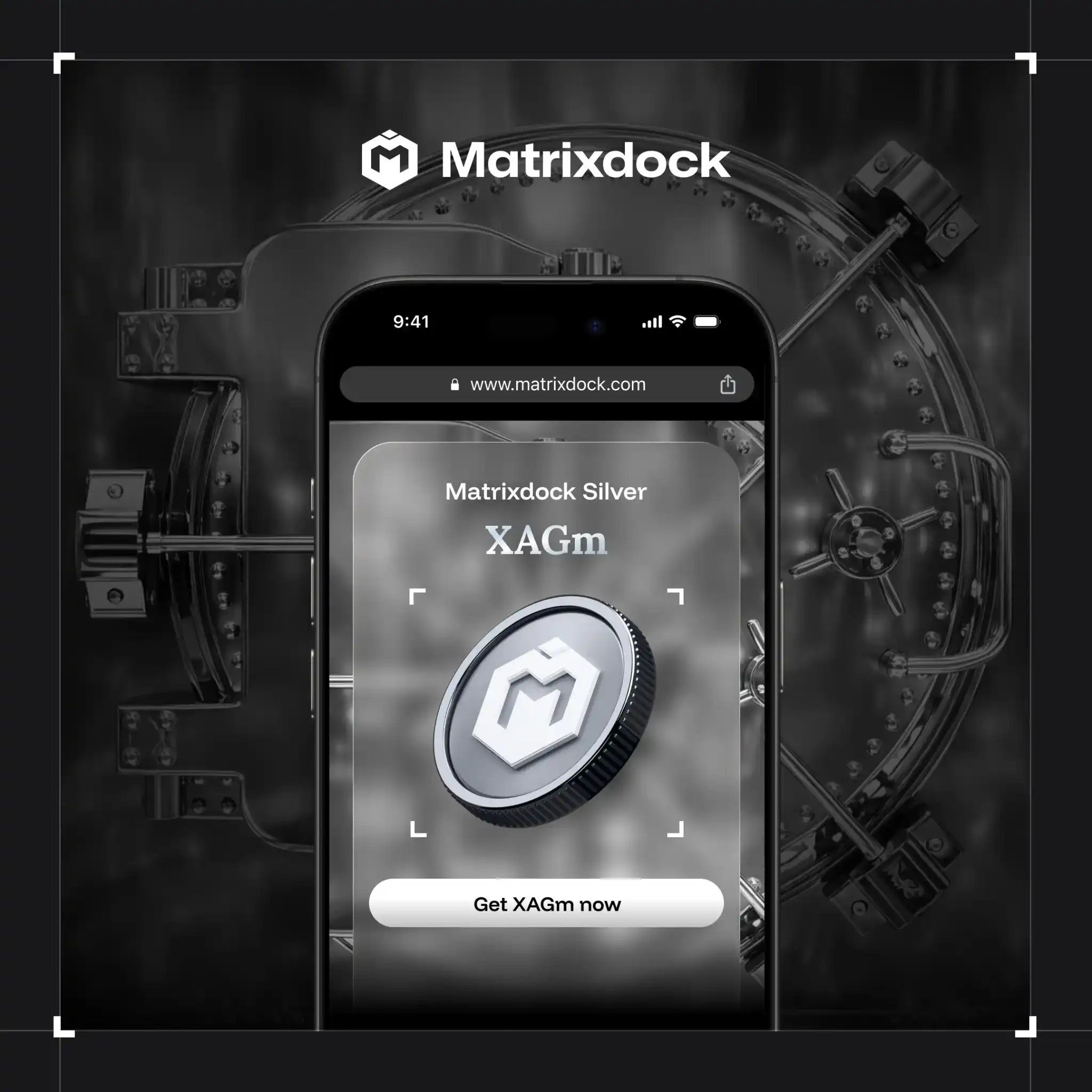
Under the FRS framework, Matrixdock has launched the silver token XAGm, representing a further application of this mechanism to precious metal assets.

From a practical perspective, XAGm operates silver assets within the FRS mechanism, rather than merely mapping physical silver on-chain. Its underlying assets are fully physically allocated silver, using LBMA Good Delivery standard silver bars, and are custodied by institutional-grade vaults. However, within the FRS framework, the key aspect of silver is not just "being put on-chain" but how its economic attributes are continuously encoded into the on-chain structure.

In this mechanism, the operation of silver assets is manifested as:

  • The configuration status of reserve assets has clear boundaries on-chain and can be independently verified through established methods
  • The amount of silver corresponding to each unit token adjusts over time according to established rules, ensuring asset costs are continuously reflected over time
  • The total token supply is adjusted mechanistically to maintain a deterministic relationship with the underlying silver reserves
  • Custody and operational costs for silver are not charged as external fees but are continuously reflected on-chain through preset rules

In this process, silver is not just represented as an on-chain asset; its economic attributes are continuously reflected within the mechanism. Therefore, the significance of XAGm is not only in bringing silver on-chain but also in providing a specific paradigm for how silver assets can be structurally organized and operated under the FRS mechanism.

Reserve Layer: From Asset Collection to Structural System

Under the FRS framework, reserve assets no longer exist as "single assets" but gradually form a structural system with internal logic.

This system (referred to by Matrixdock as the Reserve Layer) can be understood as:

  • Comprising multiple high-quality reserve assets
  • Operating under a unified mechanism
  • Collectively providing value support and a liquidity foundation for on-chain financial activities

Within this structure:

  • Gold serves a relatively stable value-anchoring function
  • Silver introduces cyclicality and trading activity
  • Different assets are organized into a portfolio with consistent operational logic through the FRS mechanism

This shift means that the significance of reserve assets lies not only in "the assets themselves" but also in their structural position and mode of operation.

RWA development is entering a new stage. The act of bringing assets on-chain is no longer the main hurdle; the real challenge lies in: how to ensure these assets can exist on-chain in the long term and operate in a verifiable manner continuously.

FRS, as a mechanism framework built by Matrixdock, provides a path to transform real-world assets into structural units on-chain. As more assets are introduced onto the chain under this framework, a reserve asset system based on "mechanisms" is gradually taking shape.


İlgili Sorular

QWhat is the core focus of the FRS (Fungible Reserve Standard) framework developed by Matrixdock?

AThe core focus of the FRS framework is not on 'how to issue tokens,' but on continuously maintaining a deterministic relationship between reserve assets, token supply, and operational costs on the blockchain in a verifiable manner.

QHow does the FRS mechanism handle the costs associated with holding a reserve-backed asset like XAGm?

AThe FRS mechanism handles costs by systematically adjusting the 'amount of asset corresponding to each unit of token' over time. This reflects custody and operational costs within the token's structure itself, rather than charging them as separate, external fees.

QWhat key challenge in the RWA (Real World Asset) sector does the FRS framework aim to address?

AThe FRS framework aims to address the challenge of how to make real-world assets exist long-term on the blockchain and operate continuously in a verifiable way, moving beyond simple asset 'mapping' to a structured, rules-based system.

QWhat is the significance of expanding from gold to silver within the FRS framework, according to the article?

AThe expansion from gold to silver is significant because it demonstrates the framework's ability to incorporate assets with different attributes (like silver's higher volatility and cyclical nature) under a unified, consistent operational mechanism, thereby increasing portfolio diversity.

QHow does the article define the 'Reserve Layer' that is formed under the FRS framework?

AThe 'Reserve Layer' is defined as a structural system composed of multiple high-quality reserve assets (like gold and silver) that run under a unified mechanism (FRS) to collectively provide value support and a liquidity foundation for on-chain financial activities.

İlgili Okumalar

Super-Rich Hoarded Record Cash in February, Stock Market Hit New Highs Four Months Later: Who's Getting Fooled?

In February, the total assets in US money market funds reached a record high of approximately $8.25 trillion, a trend highlighted by high-net-worth individuals increasing their cash holdings. Notably, Warren Buffett's Berkshire Hathaway amassed a $381.7 billion cash pile ahead of his 2025 retirement, while other prominent figures like Peter Thiel sold tech stocks, fueling narratives of wealthy investors seeking safety. However, by June, the trend reversed. Money market fund assets fell to around $7.87 trillion, indicating a flow of capital back into equities. Concurrently, the S&P 500 and Nasdaq reached all-time highs, with the S&P 500 surpassing 7600 points. This market surge occurred despite the earlier defensive moves, highlighting a potential opportunity cost for those who retreated to cash. Analysis shows that since early 2022, the S&P 500's total return significantly outpaced that of prime money market funds. The capital shifted from equities appears to have been partly reallocated into alternative investments like real estate, art, and private credit, especially among ultra-high-net-worth individuals. Meanwhile, major investment banks like Goldman Sachs and Morgan Stanley have raised their year-end targets for the S&P 500, citing AI-driven earnings growth, while also cautioning about risks including market concentration and economic fragility beneath the surface rally.

marsbit15 dk önce

Super-Rich Hoarded Record Cash in February, Stock Market Hit New Highs Four Months Later: Who's Getting Fooled?

marsbit15 dk önce

Robot Vacuums Have Been Competing for 20 Years, So Why Are 90% of Chinese Households Still Hesitant?

The article explores why over 90% of Chinese households are still hesitant to adopt robotic vacuum cleaners despite two decades of industry development, identifying a core "trust gap" as the primary barrier. The central issue is not a lack of need, but user concerns about reliability in dynamic, real-world home environments. Common anxieties include the robot dragging pet waste, colliding with transparent objects, tangling in cords, scattering cat litter, getting stuck on thresholds, missing corners under furniture, and requiring high-maintenance bases that develop odors. The industry's past focus on competing on technical specs (suction power, mopping functions) has not adequately addressed these practical usability and trust problems. The piece then examines DJI's entry into the market with its ROMO 2 model as a potential new approach. Leveraging its expertise in spatial perception and obstacle avoidance from drones, DJI's solution emphasizes "less intervention" through three key principles: less manual re-cleaning, less user rescue missions, and less maintenance. Specific ROMO 2 features highlighted include advanced obstacle recognition (handling transparent objects and small items), adaptive leg mechanisms for climbing thresholds (up to 8.5cm), an extendable arm for reaching under furniture, AI for identifying and appropriately handling different mess types (e.g., avoiding scattering dry debris), and a self-cleaning base designed to minimize user upkeep. The article argues the next phase of competition should shift from a "parameter race" to a "trust race." It draws a parallel to the iPhone's simplification of the smartphone, suggesting that focusing on a reliable, low-hassle user experience—where people feel confident leaving their floors to the machine—is what's needed to finally convince the vast majority of观望ing families. The ultimate test for products like the ROMO 2 will be long-term user adoption, retention, and口碑, not just technical specifications.

marsbit15 dk önce

Robot Vacuums Have Been Competing for 20 Years, So Why Are 90% of Chinese Households Still Hesitant?

marsbit15 dk önce

The Unclear American Economy: Resilient or Cooling Down?

**U.S. Economic Outlook: Resilient or Cooling Down?** This analysis examines whether the U.S. economy is heading towards a recession. While still growing, the economy shows significant signs of strain. Key data points include Q1 2026 GDP growth of 1.6% and Q1 PCE inflation at 4.5% (annualized), more than double the Fed's target. The labor market remains resilient but is softening, with unemployment at 4.3%. Critical recession indicators present a mixed picture: the yield curve has normalized after a prolonged inversion (historically a late-cycle signal), and the Conference Board's Leading Economic Index has been declining. Current recession probability for 2026 is estimated at 19%, but rises to 41% for 2027, indicating heightened delayed risks. Major pressures are building: a wall of corporate debt refinancing at higher rates, depleted consumer savings, a contracting housing sector, and an energy price shock. The economy exhibits stagflationary characteristics—high inflation alongside slowing growth—which constrains the Federal Reserve's policy options. Historical patterns show recessions are often preceded by Fed tightening and yield curve inversions. If a recession occurs, it is expected to be mild, similar to 2001 rather than 2008. For investors, a defensive portfolio shift toward staples, healthcare, and short-term high-quality bonds may be prudent, while maintaining a long-term, diversified perspective. Key developments to monitor include upcoming GDP, employment, and inflation data, as well as policy signals from the new Fed Chair.

marsbit23 dk önce

The Unclear American Economy: Resilient or Cooling Down?

marsbit23 dk önce

The Most Advanced Large Models Are Now Subject to Export Controls Like Enriched Uranium

In an unprecedented move mirroring the control of enriched uranium, the US Commerce Department has imposed an export control ban on Anthropic's advanced AI models, Fable 5 and Mythos 5, forcing their global shutdown. This marks the first time a purely digital entity—a set of neural network weights—has been subjected to such hardware-like strategic export restrictions, based not on physical scarcity but on its concentrated "capability density." The article draws a direct parallel to the historical control of nuclear technology, arguing that just as uranium ore becomes a controlled substance only when enriched to a critical threshold, AI capabilities become subject to regulation when compressed into a single, potent, and easily accessible interface. This "enriched AI" is seen as crossing a threshold where its aggregated power poses a potential threat. The author predicts three major consequences over the next decade. First, capability auditing will become institutionalized, with governments setting compliance checklists and thresholds for model power, triggering automatic export controls. Second, jurisdictional boundaries will blur as US export controls extend their reach globally, governing any user of American AI services regardless of location, forcing non-US entities to reconsider their AI supply chain dependencies. Third, a technological bifurcation will occur, splitting the AI landscape into a restricted, high-risk track of advanced US proprietary models and a more reliable track of open-source or locally developed alternatives, where guaranteed access may outweigh raw performance. The core crisis exposed is the lack of a legal property rights framework for AI "intelligence." While companies invest heavily in integrating these models into their production systems, legally they only purchase a service that can be revoked at any time, leaving them with no recourse for their sunk investments. The conclusion warns of a permanently fractured digital world where the most capable models may not be the most usable, and clear, unassailable ownership of technology will become paramount.

marsbit35 dk önce

The Most Advanced Large Models Are Now Subject to Export Controls Like Enriched Uranium

marsbit35 dk önce

İşlemler

Spot
Futures
活动图片




