Market Divergence: SOL Becomes Institutional Darling, Terra Ecosystem Completely Collapses, ZEC Shorts Forced to 'Hold the Bag' by Whales?

金色财经2025-12-12 tarihinde yayınlandı2025-12-12 tarihinde güncellendi

Özet

The cryptocurrency market is currently experiencing significant divergence, with some assets surging while others face severe downturns. Bitcoin (BTC) is testing a critical resistance zone between $92,000 and $94,000. A successful breakout could propel it toward $100,000, while failure may lead to a pullback below $90,000. Similarly, Ethereum (ETH) is approaching its key level at $3,400. Holding above this could push it to $3,700-$3,800, otherwise a retest of $3,000 support is likely. Solana (SOL) has emerged as a major institutional favorite. Despite market volatility, SOL ETFs continue seeing consistent inflows. Support from major platforms like Coinbase, which integrated Solana DEX functionality, and growing adoption by traditional finance giants like JPMorgan and Nasdaq, highlight strong fundamental strength. Accumulating SOL gradually is recommended. In contrast, the Terra ecosystem (LUNA, LUNC, USTC) has effectively collapsed. Founder Do Kwon received a 15-year prison sentence, and the project's $40 billion collapse triggered a broader market crisis. These assets are considered uninvestable. Zcash (ZEC) presents a cautionary tale for short sellers. Many are trapped in losing positions as large holders (whales) maintain price range, collecting funding rates systematically. This strategy allows whales to profit from perpetual funding while gradually squeezing shorts. The lesson: take profits quickly when shorting ZEC and avoid greed. Overall strategy: Wait for BTC/E...

The crypto space is truly a case of "some rejoice while others mourn"! Some coins are being frantically bought by institutions, some have been handed a death sentence, and others are leaving short sellers crying in the bathroom — this article breaks down the trading logic of the hot coins clearly. Save it now!

BTC/ETH: Stuck at Key Levels, Only a Breakout Brings Opportunity!

BTC: The $92k-$94k Line is a Matter of Life and Death

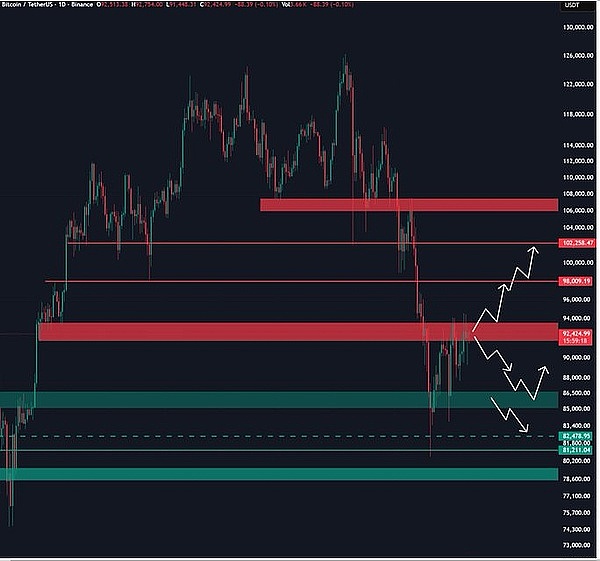
Big Brother Bitcoin is back in the $92,000-$94,000 resistance zone! Now it's up to the bulls: if they can break through this range, the next target is directly aiming for $100,000; if they can't break through, it will likely fall back below $90,000. This back-and-forth is so tedious~
ETH: $3400 Determines the Direction

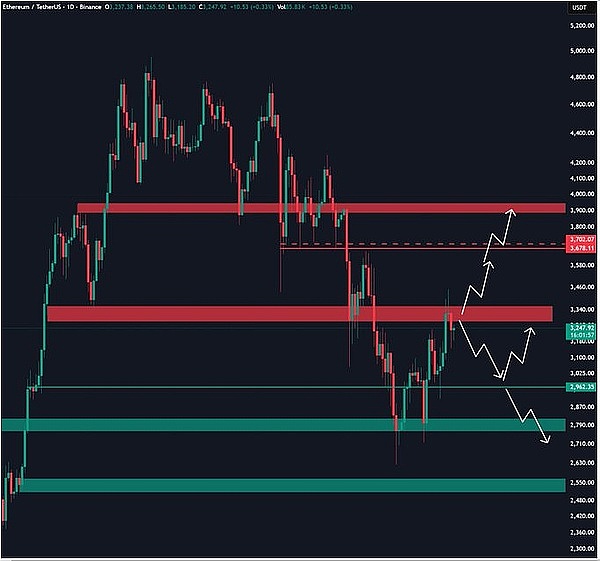
Ethereum is charging at the resistance level again! The key is to see if the daily chart can hold firmly above $3400: if it holds, it will run towards $3700-$3800; if it fails to hold, it will have to go back and test the $3000 support. Don't blindly chase the high, wait for a clear direction before acting!
SOL: The 'Potential Stock' Frenziedly Bought by Institutions, Buying a Little Daily is Worth It!

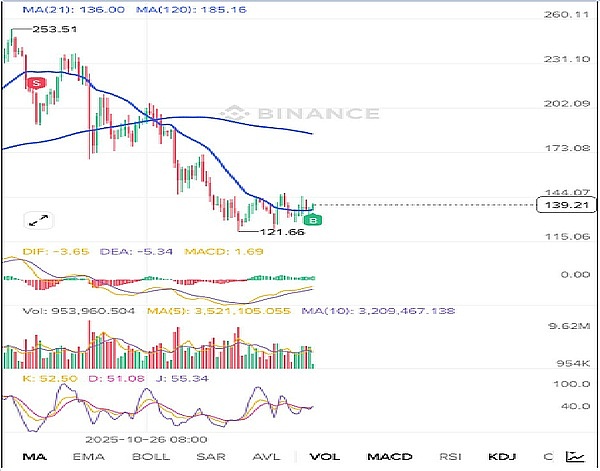
If we're talking about the altcoin most favored by institutions right now, SOL definitely takes first place! Its fund flows are too strong:

  • It's been almost two months since the ETF approval, and no matter how much the market falls, funds have been quietly adding to their positions, completely unfazed;

  • Coinbase directly added DEX trading functionality for the Solana ecosystem in its official App, essentially opening a "green channel" for SOL;

  • From JPMorgan to Nasdaq, traditional finance bigwigs are building on the Solana chain, making the ecosystem increasingly stable!

Remember: follow the market funds, don't be swayed by various bull/bear news! SOL is currently a key target for institutional布局 (layout). Buy a little bit daily and accumulate slowly, making money is just a matter of time~
Terra Ecosystem (LUNA/LUNC/USTC): Game Over! Founder Sentenced, Paying for the $40 Billion Loss

The Terra ecosystem is completely finished! Founder Do Kwon has been sentenced to 15 years in prison. The "crash disaster" he created back then directly evaporated $40 billion and triggered a chain reaction: FTX collapsed next, trust in algorithmic stablecoins completely crumbled, and the crypto market went into winter~

LUNA, LUNC, and USTC are now completely battered by the fall. This isn't a simple pullback; it's the complete landing of negative news. There's little chance of a comeback later. Don't even think about buying the dip, don't touch them!

ZEC: Stubborn Shorts Get Trapped, Whales Profit by 'Sideways Movement'!

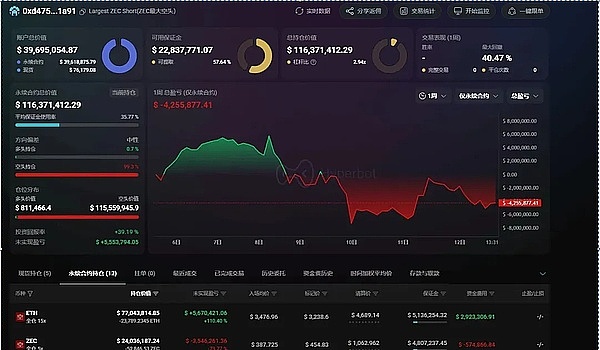
ZEC short sellers have had it rough lately! Many opened short positions hoping to make a profit, but ended up getting trapped deeper, and some fearless ones kept charging in, being extremely stubborn~

Especially the "top short seller" with the largest position, who was already profitable but didn't close the position, is now back in the red! Although they reduced their position a bit when the price dropped to the 300s, most of the position is still there. Fortunately, the whale has sufficient margin, with a liquidation point at $1057U, so they are safe for now, but the后续 (follow-up) is even more uncomfortable:

The whales have no intention of making big pumps or dumps; they just maintain the current price sideways, making money daily by collecting funding fees! Even though it's collected only every 8 hours, the large position size means they earn a significant amount~ They can even use the collected funding fees to slowly pump the price, wearing down these short sellers!

So ZEC isn't impossible to short, the key is to know when to stop, take profits and run quickly when you have them, don't linger. Money in hand is real money!
Summary: Wait for a breakout before acting on BTC/ETH, SOL can be accumulated daily with small positions, blacklist the Terra ecosystem entirely, don't be greedy when shorting ZEC.


Trend Kriptolar

İlgili Sorular

QWhat is the key resistance range for Bitcoin (BTC) according to the article?

AThe key resistance range for Bitcoin (BTC) is $92,000 to $94,000. A successful break above this range could target $100,000, while a failure could see the price drop back below $90,000.

QWhy is Solana (SOL) considered a favorite among institutions?

ASolana (SOL) is favored by institutions because its ETFs have seen consistent capital inflows for nearly two months, Coinbase has integrated Solana ecosystem DEX trading, and major traditional finance players like JPMorgan and Nasdaq are building on its blockchain, indicating strong and stable ecosystem growth.

QWhat was the outcome for Terra's founder, Do Kwon, and its ecosystem tokens?

ATerra's founder, Do Kwon, was sentenced to 15 years in prison. The Terra ecosystem tokens (LUNA, LUNC, USTC) have crashed significantly following the $40 billion collapse, and the article advises against any investment in them as they are considered to have no recovery potential.

QWhat is the current trading strategy suggested for ZEC based on the article?

AThe article suggests that shorting ZEC can be done but advises taking profits quickly and not being greedy. It highlights that large holders (whales) are maintaining a sideways price action to collect funding fees from over-leveraged short sellers, making it risky to hold short positions for too long.

QWhat is the critical price level that Ethereum (ETH) needs to hold on a daily close for a bullish move?

AEthereum (ETH) needs to achieve a daily close above $3,400 to potentially move towards the $3,700-$3,800 range. If it fails to hold this level, it may fall back to test support at $3,000.

İlgili Okumalar

Shanghai's $10 Billion Unicorn Is About to Go Public

Shanghai-based automotive-grade millimeter-wave radar chip unicorn Calterah Microelectronics Technology (Shanghai) Co., Ltd. has filed for an IPO on Shanghai's STAR Market, aiming to raise 3.49 billion yuan. Founded in 2014 by Chen Jiashu, a UC Berkeley PhD graduate, and his professor Ali Niknejad, Calterah pioneered CMOS technology for 77GHz radar chips, breaking the decades-long monopoly of international giants like Texas Instruments. Its low-cost, highly integrated solutions enabled millimeter-wave radar to move from luxury to mass-market vehicles. By 2025, Calterah captured a 31.1% share in China's automotive millimeter-wave radar chip market (second domestically, fourth globally), with cumulative shipments exceeding 30 million units. Its client list includes BYD, Geely, Nio, and Volvo. The company has undergone 11 funding rounds, attracting high-profile investors such as the National Integrated Circuit Industry Investment Fund Phase II, China Capital Management, and GD Capital. Its valuation has reached tens of billions of yuan, with a projected post-IPO valuation of approximately 14 billion yuan. Despite rapid revenue growth—increasing from 206 million yuan in 2023 to 632 million yuan in 2025 with a 75.28% CAGR—Calterah remains unprofitable. It reported net losses of 323 million yuan, 334 million yuan, and 193 million yuan from 2023 to 2025, accumulating over 900 million yuan in losses over three and a half years. These losses are primarily attributed to heavy R&D investment, which totaled over 1.039 billion yuan in the reporting period, often exceeding annual revenue. The company faces significant risks, including high customer concentration (its top five customers accounted for over 99% of revenue from 2023-2025, with BYD alone representing over 50% in 2025) and supply chain concentration. Revenue pressure from key customers and dependencies on overseas suppliers for EDA tools and IP pose challenges to sustainable growth. The IPO is seen as crucial for securing capital to expand production, diversify its customer base, and reduce supply chain dependencies.

marsbit15 dk önce

Shanghai's $10 Billion Unicorn Is About to Go Public

marsbit15 dk önce

Ray Dalio's Latest Macro Analysis Full Text: Buy More Gold, Add Some Bitcoin

In his latest macro analysis, Ray Dalio applies his framework from "How Countries Go Broke: The Big Cycle" to the current global debt environment. He highlights recent events like Japan selling U.S. Treasuries and rising U.S. long-term yields as signs of an unsustainable debt dynamic. Dalio explains that excessive government debt leads to either unacceptably high interest rates, severe economic downturns, or significant currency debasement through central bank money printing. He summarizes the U.S. fiscal situation: with $5.5 trillion in revenue, $7.5 trillion in spending, a $2 trillion deficit, and total debt at six times annual revenue, debt servicing costs are immense. Without correction, U.S. debt could reach $55-$60 trillion in a decade. Dalio proposes a "3% Three-Way" solution: reducing the budget deficit to 3% of GDP through balanced spending cuts, tax increases, and interest rate reductions to avoid a traumatic adjustment. In response to FAQs, he argues that the risk of a U.S. debt crisis is high and could materialize within a few years if the current path continues. He dismisses the notion that the dollar's reserve status makes the U.S. immune, citing historical precedents of reserve currency declines. He is also unconvinced by Japan's high-debt stability, noting poor returns for yen-denominated assets. For investors, Dalio recommends diversifying globally, underweighting bonds, and overweighting assets like gold and a small allocation to Bitcoin (around 10-15% to gold) to hedge against currency debasement and poor debt returns.

marsbit1 saat önce

Ray Dalio's Latest Macro Analysis Full Text: Buy More Gold, Add Some Bitcoin

marsbit1 saat önce

Stripe’s 16-Year Chronicle: From 7 Lines of Code to a $100 Billion Valuation

Stripe's 16-year journey began with a simple promise: "7 lines of code to accept payments." Founded by Patrick and John Collison, the company started by hiding the complexity of bank integrations and merchant accounts behind a clean API, initially targeting developers at startups. This early focus on user experience and technical simplicity fueled rapid adoption. A key early milestone was establishing vital bank partnerships, a challenge overcome by hiring Billy Alvarado, who brought crucial institutional relationship skills. From this foundation, Stripe systematically expanded its product boundaries. It launched Connect for platform payments, Atlas for company formation, Radar for fraud prevention, and Billing for subscriptions. This transformed Stripe from a payment processor into a broader financial infrastructure suite for internet businesses. The COVID-19 pandemic accelerated growth but also led to over-hiring. A 14% layoff in 2022 marked a period of organizational correction. Subsequently, Stripe shifted its growth strategy towards strategic acquisitions to enter new domains quickly. It acquired Bridge (stablecoin infrastructure), Privy (wallet infrastructure), Metronome (usage-based billing), and agreed to buy OpenRouter (AI model routing). These moves signal Stripe's ambition to build a "programmable money system" for the emerging AI and agent-based economy, managing not just currency flows but also the measurement and pricing of computational resources like AI tokens. Internally, Stripe leverages AI agents (like "Minions") to boost engineering productivity. Despite scaling to nearly 8,000 employees and processing $1.9 trillion in payment volume annually, the company remains private. A recent employee tender offer valued it at $159 billion. The core question for Stripe's future is whether it can successfully integrate its expanding product matrix—spanning payments, crypto, and AI infrastructure—into a cohesive platform, positioning itself as the foundational economic layer for autonomous software agents.

marsbit1 saat önce

Stripe’s 16-Year Chronicle: From 7 Lines of Code to a $100 Billion Valuation

marsbit1 saat önce

Treasury Secretary's Move to Suppress Treasury Yields Ignites 'Currency Debasement Trade'! Gold Hits Three-Month High, Bitcoin Surges Over 25% in a Single Week

US Treasury Secretary Besant's efforts to lower long-term Treasury yields by announcing expanded buybacks had only a brief market impact. However, this move fueled a "currency devaluation trade," weakening the US dollar while boosting both gold (to a three-month high) and Bitcoin (up over 25% for the week). Analysts attribute this reaction to deepening market concerns over the massive US fiscal deficit and structural pressures keeping long-term rates elevated, including fierce competition for capital from global government borrowing and massive AI sector financing. Despite the Treasury's actions, fundamental forces like growth, inflation, and capital demand are seen as limiting its ability to sustainably suppress yields. Bitcoin's strong positive correlation with gold has reinforced its narrative as a hedge against devaluation. While equity markets have shown resilience, some strategists warn that Treasury yields nearing 5% increase pressure on the dollar and high-leverage assets. Figures like Ray Dalio have advised reducing bond exposure in favor of gold and some Bitcoin, citing US debt risks. Market opinions are divided on the sustainability of the devaluation trade, with some noting the lack of a near-term catalyst for its next leg higher. The underlying tension between the Treasury's desire for lower borrowing costs and the Federal Reserve's focus on inflation and reducing market intervention remains a key theme. Upcoming events like Nvidia's earnings and the Jackson Hole symposium will test whether AI profits can continue supporting stocks and if the Fed aligns more with Washington's preference for easier financial conditions.

华尔街日报3 saat önce

Treasury Secretary's Move to Suppress Treasury Yields Ignites 'Currency Debasement Trade'! Gold Hits Three-Month High, Bitcoin Surges Over 25% in a Single Week

华尔街日报3 saat önce

İşlemler

Spot

Popüler Makaleler

ZEC Nasıl Satın Alınır

HTX.com’a hoş geldiniz! Zcash (ZEC) satın alma işlemlerini basit ve kullanışlı bir hâle getirdik. Adım adım açıkladığımız rehberimizi takip ederek kripto yolculuğunuza başlayın. 1. Adım: HTX Hesabınızı OluşturunHTX'te ücretsiz bir hesap açmak için e-posta adresinizi veya telefon numaranızı kullanın. Sorunsuzca kaydolun ve tüm özelliklerin kilidini açın. Hesabımı Aç2. Adım: Kripto Satın Al Bölümüne Gidin ve Ödeme Yönteminizi SeçinKredi/Banka Kartı: Visa veya Mastercard'ınızı kullanarak anında Zcash (ZEC) satın alın.Bakiye: Sorunsuz bir şekilde işlem yapmak için HTX hesap bakiyenizdeki fonları kullanın.Üçüncü Taraflar: Kullanımı kolaylaştırmak için Google Pay ve Apple Pay gibi popüler ödeme yöntemlerini ekledik.P2P: HTX'teki diğer kullanıcılarla doğrudan işlem yapın.Borsa Dışı (OTC): Yatırımcılar için kişiye özel hizmetler ve rekabetçi döviz kurları sunuyoruz.3. Adım: Zcash (ZEC) Varlıklarınızı SaklayınZcash (ZEC) satın aldıktan sonra HTX hesabınızda saklayın. Alternatif olarak, blok zinciri transferi yoluyla başka bir yere gönderebilir veya diğer kripto para birimlerini takas etmek için kullanabilirsiniz.4. Adım: Zcash (ZEC) Varlıklarınızla İşlem YapınHTX'in spot piyasasında Zcash (ZEC) ile kolayca işlemler yapın.Hesabınıza erişin, işlem çiftinizi seçin, işlemlerinizi gerçekleştirin ve gerçek zamanlı olarak izleyin. Hem yeni başlayanlar hem de deneyimli yatırımcılar için kullanıcı dostu bir deneyim sunuyoruz.

781 Toplam GörüntülenmeYayınlanma 2024.12.12Güncellenme 2026.06.02

ZEC Nasıl Satın Alınır

Tartışmalar

HTX Topluluğuna hoş geldiniz. Burada, en son platform gelişmeleri hakkında bilgi sahibi olabilir ve profesyonel piyasa görüşlerine erişebilirsiniz. Kullanıcıların ZEC (ZEC) fiyatı hakkındaki görüşleri aşağıda sunulmaktadır.

活动图片