Mapping why DASH’s pullback may not be just another dip

ambcrypto2026-01-22 tarihinde yayınlandı2026-01-22 tarihinde güncellendi

Özet

DASH's recent pullback from its 100% surge may signal more than a typical dip. The rally has lost momentum, with key indicators like RSI cooling and MACD fading. Open Interest has flattened around $90 million as traders close positions, and negative Funding Rates indicate persistent short selling. Participation is drying up, suggesting a loss of market attention. Alarmingly, long-dormant coins suddenly moved in November, a pattern historically associated with market tops and the start of extended distribution phases. Although activity has since calmed, the reactivation of untouched supply and the flatlining of lost coins add late-cycle downward pressure. Combined with fading interest, these factors tilt DASH price risk firmly to the downside.

Dash [DASH] is slipping, and this time it doesn’t look like a routine pullback. The market feels quieter than it should during a healthy dip.

Meanwhile, some long-dormant coins have started to move again, which has so far only happened during uncomfortable moments in past cycles.

Is the tone around DASH changing?

DASH gets nudged out of the spotlight

Only a week after its mammoth 100%+ surge, DASH slid toward the $69 level after failing to hold recent highs. On the daily chart, DASH was above its longer-term MAs at press time, but the rally lost strength.

The RSI went from overheated to near neutral, while the MACD histogram began to fade. The possibilities of upside are decreasing.

Aggregated Open Interest flattened at around $90 million; traders are closing positions instead of adding bets. At the same time, Funding Rates were negative, so short sellers were still willing to pay to stay in their trades.

Considering the data, it looks like participation is clearly drying up. DASH is losing attention, and its huge rise and quick fall in the last week is a cause for concern.

Older coins are awake!

There was a spike in Dash’s CDD Multiple in November, which means that coins inactive for years suddenly moved.

Per Joao Wedson, CEO, Alphractal, these surges tend to appear close to market tops, and are the start of longer distribution phases.

Activity has calmed since, but the alarm itself is still relevant considering how long-term holders usually move late in the cycle.

The stock of lost coins has gone flat after years of growth, so previously untouched supply is re-entering circulation.

As Wedson noted in his X post, this process can stretch over weeks or months. But when you consider the loss in interest, it tilts risk to the downside.


Final Thoughts

  • DASH price risk is rising.
  • Long-dormant DASH coins moving again adds late-cycle pressure.

Trend Kriptolar

İlgili Sorular

QWhy does the article suggest that DASH's recent pullback might not be just a routine dip?

AThe article suggests it's not a routine dip because market participation is drying up, Open Interest has flattened, Funding Rates are negative, and long-dormant coins have started moving, which historically signals late-cycle pressure and potential distribution phases.

QWhat technical indicators showed a loss of strength in DASH's rally?

AThe RSI moved from overheated to near neutral, and the MACD histogram began to fade, indicating decreasing possibilities of upside momentum.

QWhat does the spike in Dash's CDD Multiple in November indicate, according to the article?

AThe spike in the CDD Multiple indicates that coins that had been inactive for years suddenly moved, which often occurs close to market tops and marks the start of longer distribution phase.

QHow has trader sentiment changed based on derivatives data like Open Interest and Funding Rates?

AAggregated Open Interest flattened around $90 million, showing traders are closing positions instead of adding new bets, and negative Funding Rates indicate that short sellers are willing to pay to maintain their positions.

QWhat is the significance of the stock of lost coins going flat after years of growth?

AIt signifies that previously untouched or 'lost' supply is re-entering circulation, which adds to the selling pressure and increases downside risk, as it often happens later in market cycles.

İlgili Okumalar

Goldman Sachs: July Smashes Through Crowded Trades, U.S. Stock Bull Market Not Broken but Harder to Navigate

Goldman Sachs: July Sees Crowded Trades Unwound, U.S. Bull Market Intact but Getting Tougher. The U.S. stock market in July did not see an index-level crash, but rather a significant unwinding of speculative positions. While the S&P 500 remained stable—trading within a narrow 3.5% range and staying within 2% of its high—underlying market dynamics were volatile. Heavily crowded trades, particularly in high-momentum tech, AI-linked stocks, and Asian strategies, faced severe pressure and forced deleveraging. Data indicates this was a meaningful cleanse, not a minor adjustment. Global tech exposure saw its largest sell-off in over five years, leverage in Korean equity ETFs plummeted, and Goldman's prime brokerage recorded the largest gross exposure reduction since late 2022. Leverage on momentum factors among fundamental long/short clients fell to the 28th percentile of its one-year range. The AI trade narrative shifted from pure potential to a focus on tangible returns. While Meta failed to show clear AI monetization, Microsoft and Amazon provided evidence that massive capital expenditure is translating into scalable revenue and product growth, preventing a blanket sell-off of the AI sector. The Federal Reserve's more opaque communication style and volatility in long-end Treasury yields have introduced new friction, particularly for rate-sensitive growth and tech stocks. The broader outlook for U.S. equities remains favorable, supported by a strong economy, robust earnings, and substantial AI capital expenditure. However, risk/reward is no longer cheap, and the market's upward elasticity has weakened. The Nasdaq 100's trajectory—up 12% year-to-date despite significant pullbacks—illustrates that the bull trend persists but the path is becoming more difficult. The key lesson from July is that the market no longer rewards crowded, highly leveraged trades, requiring more disciplined and liquid portfolio approaches.

marsbit1 saat önce

Goldman Sachs: July Smashes Through Crowded Trades, U.S. Stock Bull Market Not Broken but Harder to Navigate

marsbit1 saat önce

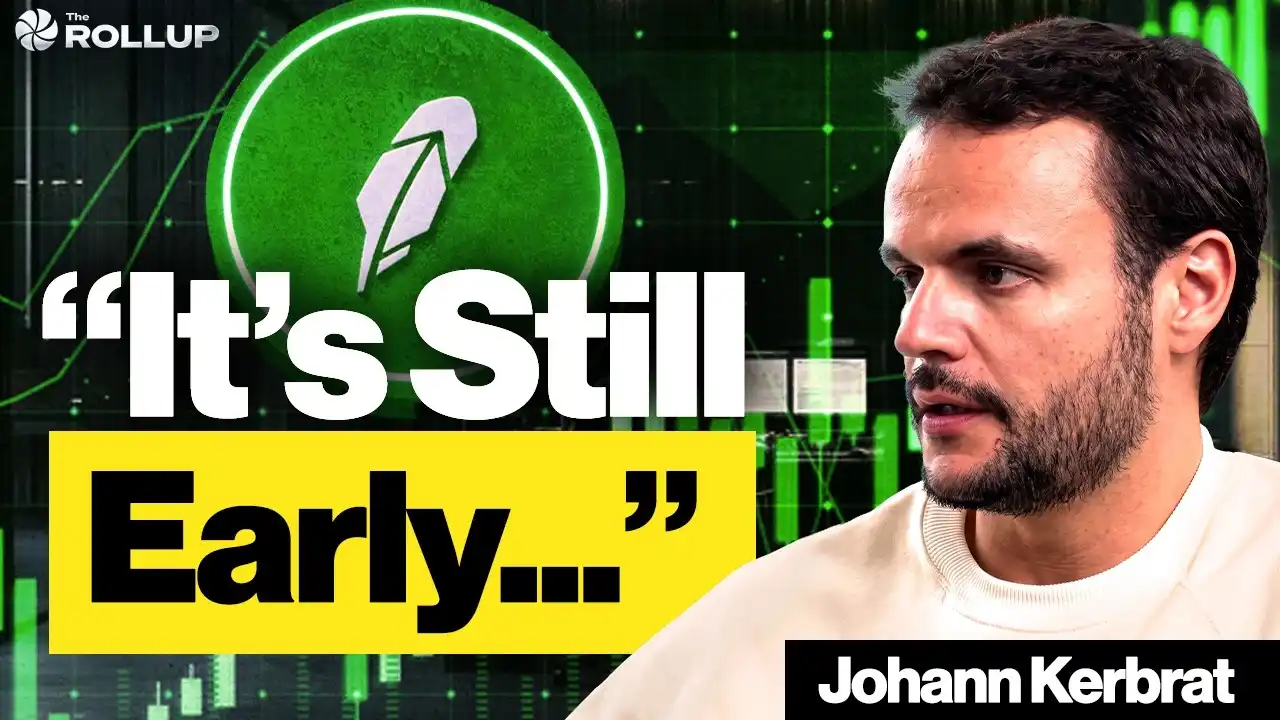
Interview with Robinhood Executive: Meme + Tokenized US Stocks as "Barbell" Customer Acquisition Strategy, All Business Lines Achieve Hundreds of Millions in Revenue

Interview with Robinhood executive Johann Kerbrat reveals the company's "barbell" customer acquisition strategy for its new Robinhood Chain, combining meme tokens with tokenized stocks. Three weeks after mainnet launch, the chain has seen over $3B in weekly DEX volume and 105M transactions. Kerbrat explains the logic behind the permissionless chain: meme tokens attract DeFi users, while tokenized real-world assets (RWA), currently over 90 US stocks and ETFs accessible in 120+ countries, serve global users. The goal is to bring Robinhood's 27 million funded accounts on-chain by simplifying DeFi with a user-friendly interface, exemplified by features like Robinhood Earn which offers yield without requiring wallet management. Built on Arbitrum's technology stack for its speed, low cost, and Ethereum's security, the chain focuses on financial products like Earn, spot trading, and perpetuals. Kerbrat downplays direct competition with platforms like Base, emphasizing the goal of expanding the overall market for on-chain assets. He details selective partnerships (e.g., Morpho, Lighter) based on compliance, unique UX, and differentiation. While regulatory clarity is pending for US perpetuals, the expansion continues via Bitstamp in Europe. Finally, Kerbrat positions Robinhood as a "super app" integrating stocks, options, crypto, banking, and AI trading, with all major business lines generating hundreds of millions in revenue. For the chain, current priority is driving adoption over maximizing gas fee revenue.

marsbit3 saat önce

Interview with Robinhood Executive: Meme + Tokenized US Stocks as "Barbell" Customer Acquisition Strategy, All Business Lines Achieve Hundreds of Millions in Revenue

marsbit3 saat önce

İşlemler

Spot

Popüler Makaleler

DASH Nasıl Satın Alınır

HTX.com’a hoş geldiniz! DASH (DASH) satın alma işlemlerini basit ve kullanışlı bir hâle getirdik. Adım adım açıkladığımız rehberimizi takip ederek kripto yolculuğunuza başlayın. 1. Adım: HTX Hesabınızı OluşturunHTX'te ücretsiz bir hesap açmak için e-posta adresinizi veya telefon numaranızı kullanın. Sorunsuzca kaydolun ve tüm özelliklerin kilidini açın. Hesabımı Aç2. Adım: Kripto Satın Al Bölümüne Gidin ve Ödeme Yönteminizi SeçinKredi/Banka Kartı: Visa veya Mastercard'ınızı kullanarak anında DASH (DASH) satın alın.Bakiye: Sorunsuz bir şekilde işlem yapmak için HTX hesap bakiyenizdeki fonları kullanın.Üçüncü Taraflar: Kullanımı kolaylaştırmak için Google Pay ve Apple Pay gibi popüler ödeme yöntemlerini ekledik.P2P: HTX'teki diğer kullanıcılarla doğrudan işlem yapın.Borsa Dışı (OTC): Yatırımcılar için kişiye özel hizmetler ve rekabetçi döviz kurları sunuyoruz.3. Adım: DASH (DASH) Varlıklarınızı SaklayınDASH (DASH) satın aldıktan sonra HTX hesabınızda saklayın. Alternatif olarak, blok zinciri transferi yoluyla başka bir yere gönderebilir veya diğer kripto para birimlerini takas etmek için kullanabilirsiniz.4. Adım: DASH (DASH) Varlıklarınızla İşlem YapınHTX'in spot piyasasında DASH (DASH) ile kolayca işlemler yapın.Hesabınıza erişin, işlem çiftinizi seçin, işlemlerinizi gerçekleştirin ve gerçek zamanlı olarak izleyin. Hem yeni başlayanlar hem de deneyimli yatırımcılar için kullanıcı dostu bir deneyim sunuyoruz.

263 Toplam GörüntülenmeYayınlanma 2024.12.13Güncellenme 2026.06.02

DASH Nasıl Satın Alınır

Tartışmalar

HTX Topluluğuna hoş geldiniz. Burada, en son platform gelişmeleri hakkında bilgi sahibi olabilir ve profesyonel piyasa görüşlerine erişebilirsiniz. Kullanıcıların DASH (DASH) fiyatı hakkındaki görüşleri aşağıda sunulmaktadır.

活动图片