Looking at the Answers Before Submitting the Test? Google Engineer Entangled in Polymarket Insider Trading Case

Odaily星球日报2026-05-28 tarihinde yayınlandı2026-05-28 tarihinde güncellendi

Özet

A Google security engineer, Michele Spagnuolo, has been arrested and charged with commodities fraud, wire fraud, and money laundering. He is accused of using internal Google tools to access non-public data on search trends for 2025's most-searched personalities and then trading on that information via an associated account ("AlphaRaccoon") on the prediction market platform Polymarket, netting over $1.2 million in profits. A key example involved trading on the rising search popularity of singer D4vd hours after viewing the internal data. Prosecutors traced the funds from the Polymarket account through cryptocurrency swaps and privacy tools, with some proceeds eventually reaching an Italian payment account opened with Spagnuolo's identification. Google stated it is cooperating with authorities and has suspended the employee, noting the misuse of confidential information is a serious policy violation. The case highlights deeper regulatory challenges for Polymarket, which faces scrutiny over user identification and the integrity of trades based on non-public information. Polymarket has stated it is cooperating with U.S. investigators and emphasized the traceability of blockchain transactions.

Original | Odaily Planet Daily (@OdailyChina)

Author | Asher (@Asher_ 0210)
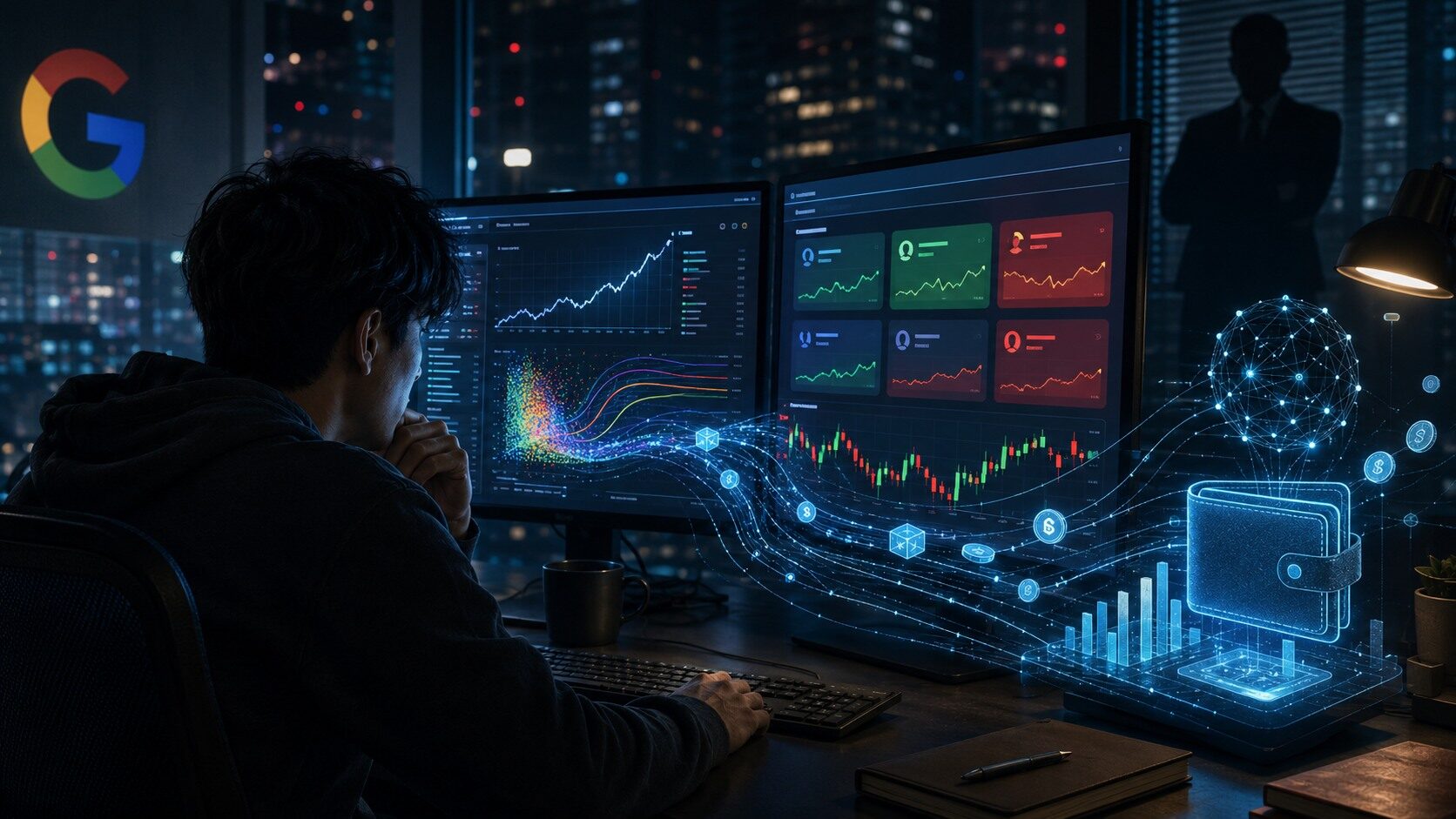
The biggest fear in prediction markets isn't someone making an accurate bet, but someone knowing the answer in advance.

Recently, prosecutors from the Southern District of New York announced in court documents that Google security engineer Michele Spagnuolo is suspected of using internal company tools to view data related to the most searched people in 2025, and trading in corresponding markets on Polymarket via associated accounts, ultimately profiting over $1.2 million. Spagnuolo has been arrested and charged, facing counts including commodities fraud, wire fraud, and money laundering.

A Google Employee Targets the Search Ranking Market

The starting point of this case is the prediction markets on Polymarket related to Google search results. These markets predict whether certain individuals will appear on the list of the most searched people in 2025. For ordinary traders, this is a true/false question about trends and popularity, but Spagnuolo's position made the matter sensitive.

Court documents show that Spagnuolo, a Google security engineer, had access to internal tools for viewing relevant search data. Subsequently, an associated account named AlphaRaccoon began buying on Polymarket. This account transferred approximately 3.8 million USDC to a Polymarket address and participated in several prediction markets related to Google search results.

The most crucial transaction involved the singer D4vd. Spagnuolo had seen through Google's internal tools that D4vd's search popularity was rising. Several hours later, the AlphaRaccoon account traded on Polymarket, betting that D4vd would become one of the most searched people in late November.

This is also the core of the prosecution's case. An ordinary user buying D4vd is betting on news trends and social media buzz; but if a trader has just viewed Google's internal search data before trading in the corresponding market, that trade is no longer just about spotting a trend. Prosecutors argue that Spagnuolo used material non-public information to participate in trading and profited over $1.2 million through related operations.

From Polymarket to an Italian Account, the Money Trail Emerges

After the trading profits were made, the flow of funds also came under prosecutorial scrutiny.

Court documents indicate that AlphaRaccoon subsequently transferred 5 million USDC.e from the Polymarket account to a wallet. The funds were then moved through exchange services and privacy tools, with part of the funds ultimately entering an account at a payment processing institution in Italy. Prosecutors state that this account was opened using Spagnuolo's own identification documents.

In other words, the prosecution didn't just discover an account with abnormal profits on Polymarket; they have connected the internal tool access logs, trading times, on-chain transfer paths, use of privacy tools, and the real-world account that ultimately received the funds.

Google Responds: Cooperating with Investigation, Spagnuolo Suspended

Google subsequently responded, stating the company is cooperating with law enforcement's investigation and has suspended Spagnuolo.

A Google spokesperson said the employee used a tool accessible to company employees to view relevant marketing materials, but using such confidential information for trading is a serious violation of company policy, and the company will take appropriate action.

Prosecutors further allege in the court documents that Spagnuolo not only used material non-public information to participate in Polymarket trading but also attempted to conceal the source and ownership of the proceeds by transferring funds through wallets, exchange services, and privacy tools after profiting.

Polymarket's Compliance Pressure Enters Deeper Waters

The impact of this case extends beyond the arrest of one Google engineer.

Recently, Polymarket has faced more controversy regarding regional access and regulatory classification. The Spanish government issued a preventive blocking order against Polymarket, citing that the platform was suspected of operating without a gambling license. Indonesia's Ministry of Communication and Information Technology also blocked Polymarket, labeling it an illegal online gambling platform.

Now, the pressure is shifting to the trades themselves. According to a report by The Information, Polymarket is pushing traders to undergo KYC identity verification to reduce potential sanctions and legal risks. Meanwhile, some users still participate in trading through automated trading bots, Telegram tools, and gray channels, making it increasingly difficult for the platform to avoid one question—who exactly is behind these trades.

Faced with regulatory scrutiny, Polymarket's response emphasizes cooperation and traceability. The platform stated that it has cooperated with US prosecutors and the CFTC, and highlighted that blockchain transactions are transparent and traceable.

In this context, the Spagnuolo case is more like a signal. The risk for prediction markets is no longer just "whether users can trade on a particular event," but whether the platform has the ability to prove that the source of trades, fund paths, and information sources can withstand scrutiny as the market grows larger and traders become more complex.

Polymarket can still tell the story of "trading probability," but regulators are now asking a more specific question: behind the probability, who is trading, and with what information.

İlgili Sorular

QWho is the Google engineer accused of insider trading on Polymarket, and what were the specific charges against them?

AThe engineer is Michele Spagnuolo. He faces charges including commodities fraud, wire fraud, and money laundering.

QWhat specific non-public information did the Google engineer allegedly use to make profitable trades on Polymarket?

AHe allegedly used Google's internal tools to access search data, specifically seeing that singer D4vd's search popularity was rising, before trading on Polymarket markets predicting D4vd's appearance on the 'most searched people' list.

QWhat was the total profit the engineer allegedly made from these trades, and what name was associated with the Polymarket trading account?

AThe alleged profit exceeded $1.2 million. The associated Polymarket account was named 'AlphaRaccoon'.

QHow did the authorities trace the funds from the Polymarket trades back to the engineer?

AThey traced a transfer of 5 million USDC.e from the AlphaRaccoon account to a wallet. The funds were then moved through exchange services and privacy tools, with some eventually reaching an account at an Italian payment processor opened using Spagnuolo's own identification documents.

QHow is this case connected to broader regulatory pressures facing prediction markets like Polymarket?

AThe case highlights pressure on platforms to prove the legitimacy of trades. It raises questions about traders' identities, information sources, and fund flows. In response, Polymarket is implementing KYC checks and emphasizes its cooperation with authorities and the traceability of blockchain transactions.

İlgili Okumalar

Bitcoin Mining Farms Are Becoming AI Factories

Bitcoin mines are transforming into AI factories. This shift is driven by the convergence of three key assets from the previous crypto cycle: infrastructure, talent, and capital. Crypto mining companies like Crusoe, CoreWeave, and Bitdeer are repurposing their core competency—securing power, land, and grid connections in remote locations—to build data centers for AI clients. These firms are signing multi-billion dollar, long-term contracts with companies like Anthropic, AWS, and Microsoft, as AI's demand for reliable, high-capacity compute surpasses the profitability of Bitcoin mining. Simultaneously, crypto entrepreneurs and engineers are applying their skills to new AI ventures. Examples include OpenSea's co-founder launching OpenRouter (an AI model aggregator), and former Coinbase engineers building Fal.ai (a generative media infrastructure platform). Their experience in building scalable, global software networks translates effectively to the AI space. Furthermore, capital accumulated during the crypto boom is now fueling AI. Figures like Jed McCaleb (co-founder of Ripple) funded Voltage Park, a large-scale GPU cloud provider. Notably, some crypto investments, like FTX's early bets on Anthropic and Cursor, have generated astronomical paper returns, demonstrating how high-risk crypto capital flowed into AI before it became mainstream. The transition is not just about repurposing hardware, but about redirecting critical resources—power infrastructure, distributed systems expertise, and venture funding—to the next technological frontier: artificial intelligence.

链捕手1 saat önce

Bitcoin Mining Farms Are Becoming AI Factories

链捕手1 saat önce

Morpho Launches Fixed-Rate Product Midnight: Lenders and Borrowers Set Their Own Rates, Ending the Era of Interest Rate Models

Morpho Launches Fixed-Rate Product Midnight: Lenders and Borrowers Set Their Own Rates, Ending the Era of Algorithmic Interest Models On-chain lending has grown to $60 billion but remains minuscule compared to traditional finance's $200 trillion annual credit volume. Morpho identifies the lack of fixed rates and maturity dates as key bottlenecks. Institutions need predictability, not the passive floating rates set by algorithmic models. Midnight allows lenders and borrowers to directly quote rates, set terms, and become price makers, not takers. Fixed-rate lending is now viable due to cheaper, faster blockchains and the entry of institutions demanding control and certainty over returns, costs, and duration. Morpho Blue previously gave users control over risk; Midnight adds control over interest rates. Past attempts at on-chain fixed-rate lending failed primarily because they were built on top of floating-rate pools (creating unpredictability) or lacked sufficient active participants. Midnight avoids these pitfalls as a standalone primitive with fixed rates at its core, built upon Morpho Blue's existing large and active user base. Midnight offers distinct value: institutions gain predictable term structures and full control; fintech companies can offer tailored fixed-rate products; lenders/borrowers achieve predictability and efficiency; and curators can now differentiate by configuring both risk and interest rates. Morpho Midnight is not a replacement for Morpho Blue. The Morpho network will now feature two complementary market structures: floating-rate/open-term (Blue) for flexibility and fixed-rate/fixed-term (Midnight) for predictability. Liquidity can flow between them. The launch will be gradual, prioritizing security. Initially, it will support direct lending on Base network with one trading pair (cbBTC/USDC) and limited maturity dates. Advanced features like auto-rollovers will be introduced later.

marsbit1 saat önce

Morpho Launches Fixed-Rate Product Midnight: Lenders and Borrowers Set Their Own Rates, Ending the Era of Interest Rate Models

marsbit1 saat önce

İşlemler

Spot
活动图片