Kospi Index Drops Below 5,600 Mark Amid Record-Breaking Double Trigger of Circuit Breaker, While Bitcoin Price Surpasses $64,000

cryptonews.ru2026-07-29 tarihinde yayınlandı2026-07-29 tarihinde güncellendi

Özet

South Korea's stock market experienced unprecedented volatility as both the Kospi and Kosdaq indices triggered circuit breakers for two consecutive days. The Kospi plunged over 8% on Wednesday, falling below 5,600 points, following an over 8% drop the previous day. This historic dual halt was primarily driven by massive sell-offs in heavyweight semiconductor stocks like Samsung Electronics and SK Hynix. The selling pressure persisted despite SK Hynix reporting a 557% surge in quarterly profit, as the results failed to meet inflated market expectations fueled by AI-driven demand, highlighting a disconnect between stock valuations and fundamentals. In contrast, Bitcoin diverged from the equity market downturn. After initially dipping to around $63,000 amid the Kospi's fall and broader macroeconomic concerns, it rebounded to surpass $64,400 within 24 hours, even as South Korea's second circuit breaker was triggered. This marks a second instance in a week where Bitcoin held ground during an AI-related stock sell-off, suggesting its previously tight correlation with semiconductor and tech stocks may be weakening. Analysts note the relationship is complex and driven by shared investor bases rather than direct causality. The ongoing pressure on chip stocks, which dominate the Kospi index, raises the risk of further market halts before stability can return.

The Korea Exchange halted trading on both the Kospi and the smaller Kosdaq indices for 20 minutes — a mechanism that automatically freezes the entire market for a fixed period once an index falls by a set percentage in a single trading session. The first to trigger the trading halt was the Kosdaq: at 12:19 local time, the index fell by 56.85 points, or 8.05%, to 649.00. Thirteen minutes later, the Kospi followed, dropping 491.33 points, or 8.15%, from Tuesday's closing level (6,023.66), reaching 5,532.33 at 12:32.

This marked the first time in the history of the Korean market that an index triggered the circuit breaker mechanism for two consecutive trading days. This collapse followed the eighth circuit breaker activation of the year on Tuesday, when the Kospi plummeted 8.02% intraday and closed down 10.8% after news broke that a Chinese company had begun mass production of its own deep ultraviolet (DUV) lithography equipment, threatening the dominant position of Samsung Electronics and SK Hynix in the memory chip export market.

Local media attributed Wednesday's continued sell-off to the persistent weakness in shares of major semiconductor manufacturers, active selling by foreign investors, and ongoing concerns about supply and demand pressure from leveraged single-stock exchange-traded funds (ETFs), whose volumes surged sharply earlier this year.

Earnings Beat That Wasn't Enough

The sell-off intensified even as SK Hynix reported record profits. The chipmaker's shares plunged sharply on Wednesday despite a 557% surge in quarterly profit — a result that still failed to meet the elevated expectations investors on Wall Street and in Seoul had built for the stock after months of AI-driven demand for memory chips.
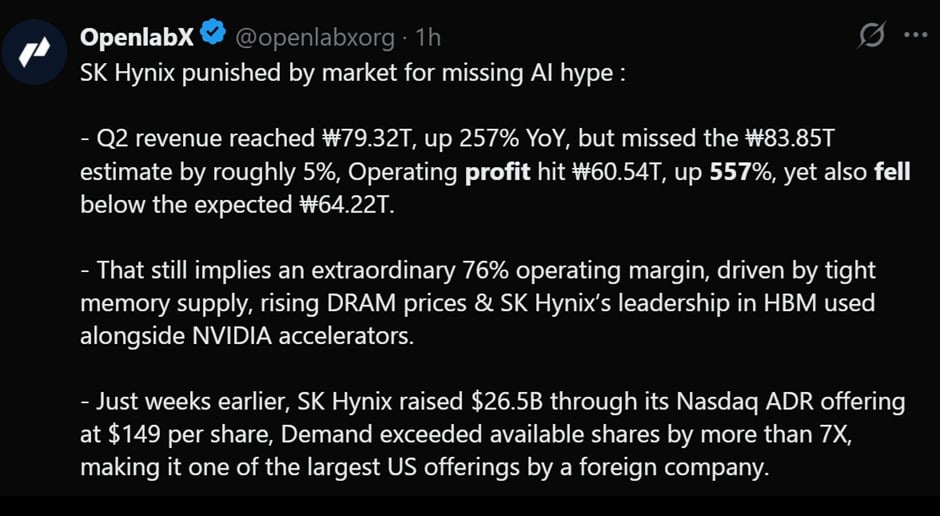
This mismatch once again highlighted how far ahead of fundamentals valuations for semiconductor stocks across Asia have run, leaving little room for the market to be satisfied unless results are simply spectacular.

Bitcoin Bucks the Trend

On Tuesday, bitcoin closely tracked the sell-off in the Korean market, falling roughly 2.7% to around $63,000, as the initial Kospi drop coincided with rising odds of a Federal Reserve rate hike and the delayed passage of the CLARITY Act, contributing to a wave of cryptocurrency liquidations. Subsequently, over the past 24 hours, the asset has climbed above $64,400, even as South Korea triggered its second consecutive 'circuit breaker'.
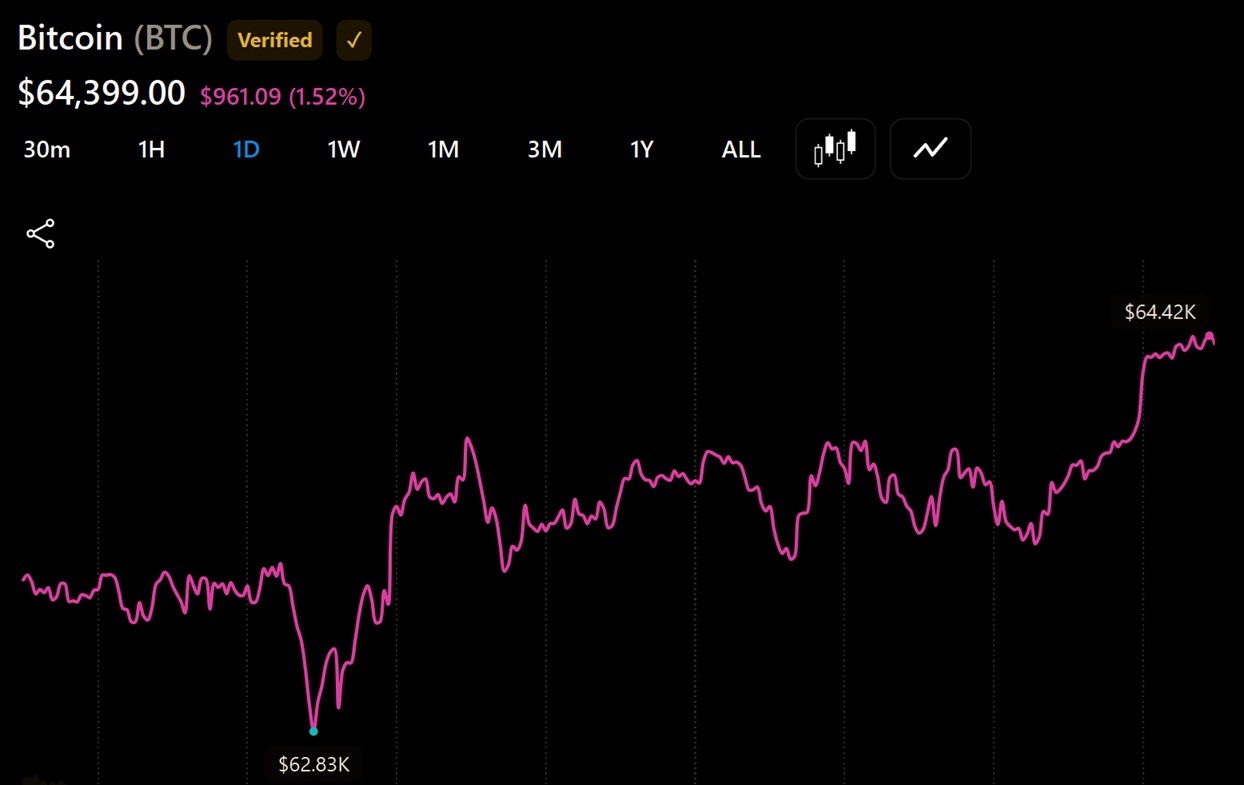
Meanwhile, Senate Majority Leader John Thune made it clear that the CLARITY Act bill would not pass the chamber before the August recess, after which the price recovered along with the broader crypto market.

Wednesday marked the second time in a week that the cryptocurrency held its ground amid a sharp sell-off in AI-related stocks — a trend suggesting the tight correlation bitcoin had with semiconductor and AI company stocks may be weakening. Analysts typically describe the link between KOSPI swings and bitcoin's movements as a correlation driven by a common investor base rather than a causal one — and the divergence seen on Wednesday complicates that picture without providing a complete answer.

Samsung Electronics and SK Hynix remain the two stocks with the highest weighting in the index, meaning another leg down in chipmaker shares could easily trigger another circuit breaker before Korean markets get a chance to stabilize.

end-content
İlgili Sorular

QWhat triggered the consecutive trading halts in the Korean stock market, and which indexes were involved?

AThe Korean stock exchange triggered a circuit breaker mechanism for the second consecutive day, halting trading for 20 minutes on both the Kospi and Kosdaq indexes. This occurs when an index falls by a set percentage in a single session. First, the Kosdaq fell 8.05% at 12:19 local time. Thirteen minutes later, the Kospi fell 8.15% from Tuesday's close.

QWhat was the main reason cited for the initial sharp sell-off in the Kospi index on Tuesday?

AThe initial sharp sell-off on Tuesday, where Kospi fell 8.02% intraday, was triggered by news that a Chinese company had begun mass production of its own deep ultraviolet (DUV) lithography equipment, threatening the dominant market position of Samsung Electronics and SK Hynix in memory chip exports.

QWhy did SK Hynix's stock price fall sharply despite reporting a 557% quarterly profit increase?

ASK Hynix's stock price fell sharply because the record 557% quarterly profit increase still failed to meet the exceedingly high expectations investors from Wall Street and Seoul had built up after months of AI-driven demand for memory chips.

QHow did Bitcoin's price action differ from the Korean stock market's performance on Wednesday?

AWhile the Korean stock market experienced a second consecutive day of severe sell-offs triggering circuit breakers, Bitcoin's price recovered, rising above $64,400 in the last 24 hours. This divergence suggests its tight correlation with semiconductor and AI-related stocks may be weakening.

QWhat factor contributed to Bitcoin's recovery mentioned in the article, separate from the Korean market events?

ABitcoin's recovery was partly attributed to comments from Senate Majority Leader John Thune, who indicated the CLARITY Act bill would not pass the House before the August recess. This eased regulatory concerns and supported a broader cryptocurrency market recovery.

İlgili Okumalar

After the Fed's Interest Rate Decision and Comments from Kevin Walsh, Experts Gathered and Shared Their Latest Insights!

Following the Fed's decision to hold interest rates steady, experts highlight a potential shift towards more independent policymaking within the FOMC, as three members dissented. Market strategists note the slight decline in bond yields and a weaker dollar post-announcement, but caution that a rate hike in September remains possible. Experts like Mark Hackett point to the three dissenting votes as a sign of growing committee independence. While markets initially rallied in relief, the final direction hinges on Fed Chair Kevin Warsh's upcoming press conference. Analysts, including Audrey Childs-Freeman, interpret the dissent as the Fed maintaining a hawkish stance. They suggest the Fed will continue monitoring data, with a summer scenario of high bond yields supporting the dollar still in play. Chris Anstey emphasizes that markets will closely watch the 10-year Treasury yield during Warsh's conference. A continued rise could signal investor fears that the Fed is not acting aggressively enough on inflation, posing a challenge for the Chair. The long-term yield is also viewed as critical for mortgages and economic management. Diane Swonk of KPMG argues a September rate hike is likely, stating that an increase now would have been more appropriate given nearly five years of high inflation. She warns that prolonged high prices risk becoming embedded in the economic system. *This is not investment advice.

cryptonews.ru2 saat önce

After the Fed's Interest Rate Decision and Comments from Kevin Walsh, Experts Gathered and Shared Their Latest Insights!

cryptonews.ru2 saat önce

İşlemler

Spot
活动图片