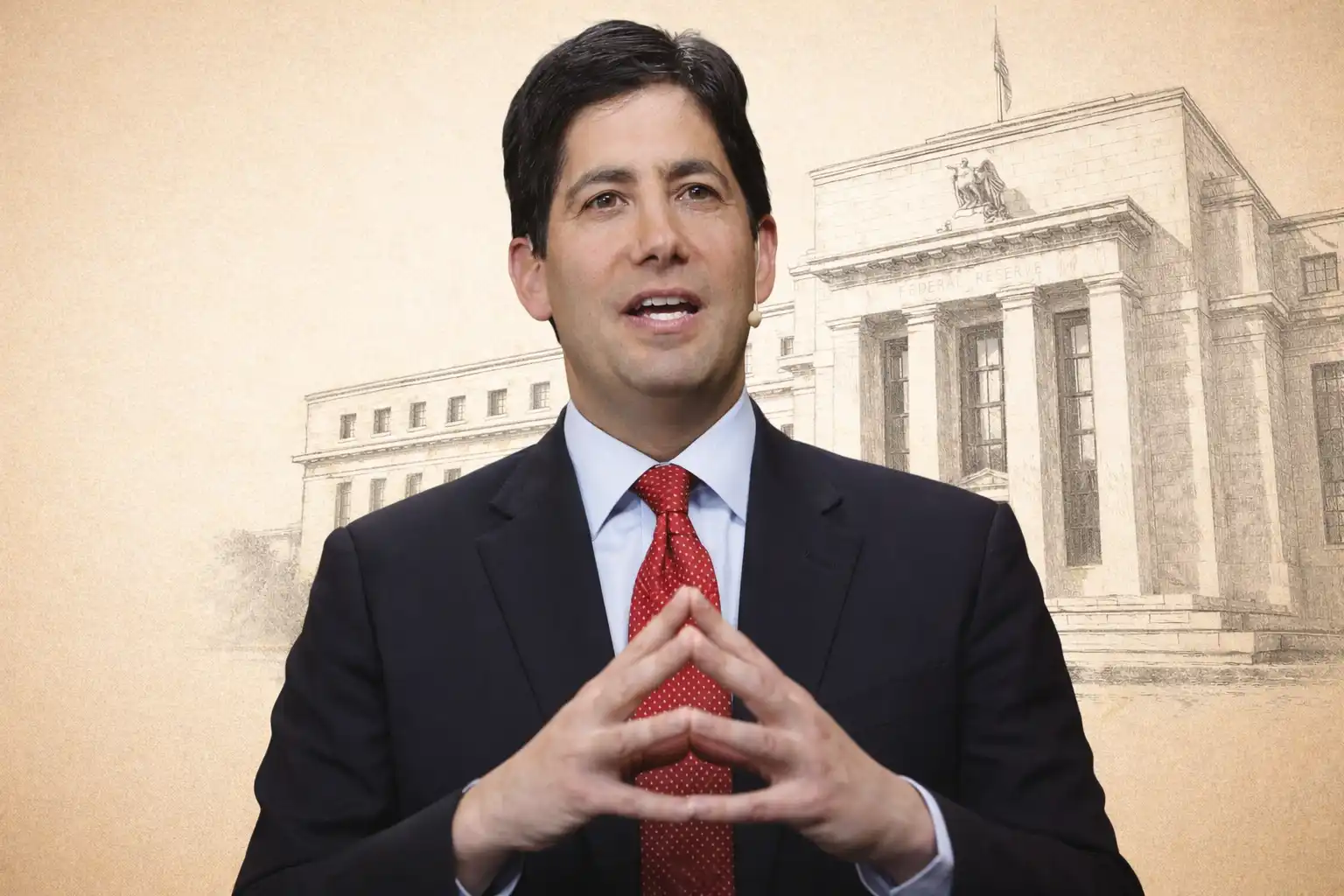
Kevin Warsh Emerges as a Surprise Contender: How Did an Inflation Hawk Become a Top Candidate for Fed Chair?

marsbit2025-12-18 tarihinde yayınlandı2025-12-18 tarihinde güncellendi

Özet

Kevin Warsh, a former Federal Reserve governor known for his hawkish stance on inflation, has unexpectedly re-emerged as a top contender for the next Fed chair, competing against Trump’s longtime economic advisor Kevin Hassett. President Trump has indicated his next Fed pick will aggressively cut interest rates, a priority for his administration. Warsh brings a blend of Wall Street experience, academic credentials, and prior Fed service during the 2008 financial crisis. Despite his historical skepticism toward quantitative easing and concerns over inflation, Warsh has recently signaled openness to rate cuts, aligning with Trump’s demands. He has proposed a “rate cuts plus balance sheet reduction” strategy to reconcile stimulus with inflation control. Hassett, by contrast, is seen as a loyalist who would more directly implement Trump’s preference for looser monetary policy. However, some within Trump’s circle question his technical competence compared to Warsh’s deeper central banking experience. The competition reflects a broader tension between professional independence and political alignment. Warsh is viewed as more institutionally cautious, while demonstrating recent flexibility, whereas Hassett advocates for a Fed more directly responsive to the White House. The outcome will significantly influence the Fed’s future direction and perceived independence.

Author: Zen, PANews

Trump recently stated that he will announce the next Federal Reserve Chair "soon" and emphasized that the new chair would significantly lower interest rates. Trump's final selection is expected to be announced in early 2026. As the White House's screening for the next Fed Chair enters its final stage, former Federal Reserve Governor Kevin Warsh has unexpectedly re-emerged as a core candidate.

Against the backdrop of the Trump team publicly advocating for faster and deeper rate cuts, Warsh's return has drawn attention. He possesses both the central banking experience of participating in decision-making during the financial crisis and a long-standing critique of the Fed's excessive balance sheet expansion and policy direction shifts.

Now, Warsh, who is poised to potentially unseat the "shadow chair," faces a more practical test: how to meet the White House's expectations for low interest rates while simultaneously ensuring market confidence in the Fed's independence.

The Making of an "Inflation Hawk"

Kevin Warsh was born in 1970 and grew up in New York State in a business-oriented family. He graduated from Stanford University and earned a Juris Doctor degree from Harvard Law School. After completing his studies, Warsh embarked on a Wall Street career, working for years in Morgan Stanley's investment banking division, specializing in mergers and acquisitions and rising to the position of Executive Director. This Wall Street experience gave him a deep understanding of financial market operations, which proved highly valuable later when he entered public service.

In 2002, Warsh left Wall Street and turned to politics. He joined the team of then-President George W. Bush, serving as Special Assistant to the President for Economic Policy and working on domestic financial and capital market policies. In 2006, at just 35 years old, Warsh was nominated by President Bush to the Board of Governors of the Federal Reserve System, becoming one of the youngest Fed governors in history.

During his tenure at the Fed, he was responsible for liaising with international entities like the G20, accumulating extensive monetary policy experience. During the 2008 financial crisis, Governor Warsh worked closely with then-Chairman Ben Bernanke and New York Fed President Tim Geithner to help financial institutions weather the storm and participated in decisions regarding the Fed's launch of unconventional measures like quantitative easing (QE).

However, Warsh consistently maintained a cautious stance towards overly accommodative monetary policy, worrying that QE could lead to inflationary risks. Shortly after the launch of the second round of QE, he resigned from the Board prematurely in March 2011, a move widely seen as related to his concerns about QE and inflation risks. Warsh's demonstration of principled independence also earned him a reputation as an "inflation hawk" in financial circles.

After leaving the Fed, Warsh returned to his roots, shifting towards academia and think tanks, remaining active on the forefront of economic policy discussions. He became a Distinguished Visiting Fellow at the Hoover Institution at Stanford University and taught at the business school, focusing his research on monetary policy and financial stability. Simultaneously, Warsh was invited to join influential institutions like the Group of Thirty, frequently authoring media articles criticizing the Fed's overly loose policy orientation.

It is worth noting that Warsh also boasts prominent connections: his wife is from the renowned Estée Lauder family, and his father-in-law, Ronald Lauder, is an old friend and major supporter of President Trump. This provides Warsh with unique networking resources in both political and business circles. Tempered by experiences in government, Wall Street, and academia, Warsh has gradually built an image combining policy expertise and market insight, laying a solid foundation for his bid for higher office.

How Did Warsh Break Through Mid-Race?

After Trump's return to the White House, the new administration began the process of identifying a successor to Jerome Powell as the next Fed Chair. Initially, it was widely believed that Trump's chief economic advisor, Kevin Hassett, had the best chances. Hassett served as Chairman of the Council of Economic Advisers during Trump's first term, had long followed Trump's lead, was seen as a close confidant of the president, and was dubbed the "shadow chair" by outsiders.

However, Warsh unexpectedly emerged mid-race as a candidate, winning the favor of Trump's team. In early December, Trump revealed that his choice for Fed Chair had narrowed down to "two Kevins"—Hassett and Warsh. Warsh's strong rise has elevated him to a position where he can rival Hassett. Trump stated, "I think both Kevins are excellent," hinting that the final choice would be between the two.

Warsh's ability to catch up is closely tied to his active efforts. Trump disclosed that he had met with Warsh at the White House in mid-December, during which Warsh directly expressed support for rate cuts. Trump claimed that Warsh believed current rates "should be lower," a view aligning with his own demand for a more accommodative monetary environment. Having both professional background and a willingness to align with policy direction, particularly迎合 (catering to) the White House's demands on interest rates, this somewhat alleviated Trump's previous concerns about his hawkish stance.

Furthermore, Warsh's network of connections also played a role. Wall Street heavyweights like JPMorgan Chase CEO Jamie Dimon expressed support for Warsh leading the Fed. Dimon indicated in private settings that while Hassett might cut rates more aggressively in the short term, Warsh, with his richer central banking experience, was the steadier choice in the long run.

Moreover, changing evaluations of the candidates within Trump's inner circle contributed to Warsh's breakthrough. Media reports disclosed that some Trump administration officials privately expressed concerns about Hassett's capabilities. These insiders believed that during his tenure as Director of the National Economic Council, Hassett had no outstanding practical decision-making ability beyond promoting Trump's policies. Such reservations led some Trump aides to question whether Hassett was suited for the highly technical role of Fed Chair.

In contrast, Warsh, with his experience as a Fed governor and market expertise, was deemed more competent. This tension between "loyalty" and "expertise" created a博弈 (game) within Trump's team: on one hand, the president's political advisors valued Hassett's absolute loyalty to Trump; on the other hand, economic officials like Treasury Secretary Scott Bessent leaned towards Warsh, who possessed professional credibility.

Mid-December reports indicated that Trump had personally interviewed Warsh; it was uncertain if he would meet other candidates. However, mainstream analysis suggested the competition had increasingly focused on the "two Kevins" by year-end. The process of breaking through mid-race also shows that Warsh is adept at strategizing, mobilizing connections, and flexibly adjusting his stance according to the situation. For the Trump camp, he brings both professional credibility and political flexibility, which is precisely why he has become a top contender for the 2025 Fed Chair position.

The Battle of the Two Kevins

Due to differences in background and orientation, the economic policy proposals and approaches of the "two Kevins" also show distinct variations.

On monetary policy, Warsh has long been known as an "inflation hawk,"始终保持警惕 (always maintaining vigilance) towards measures like quantitative easing. He strongly focuses on long-term inflation risks, emphasizing the central bank must maintain resolve in controlling prices. Hassett, coming from an academic economic advisory background and not a career central banker, has a stance on monetary policy that changes more with political needs.

Under Trump's influence, Hassett's recent remarks have trended dovish, publicly calling for the Fed to increase the pace of rate cuts to stimulate growth. Comparing the two, Warsh's image is more that of a traditional central banker, cautious and focused on long-term stability; Hassett appears more as a strategist灵活迎合 (flexibly catering to) political intentions. As JPMorgan CEO Dimon evaluated, Hassett might cut rates more aggressively in the short term, while Wash embodies deeper policy expertise and a steadier立场 (stance).

However, it is noteworthy that Warsh has recently adjusted his policy proposals to move closer to Trump. In a Wall Street Journal op-ed published in November, Warsh proposed simultaneously cutting interest rates and significantly shrinking the Fed's balance sheet, thereby兼顾 (balancing) stimulating the economy and guarding against inflation. This combination of "rate cuts + balance sheet reduction" is seen as a concession and adaptation of his traditional hawkish stance: allowing rates to fall first but回收流动性 (mopping up liquidity) by reducing the scale of bonds held by the Fed to prevent inflation from rising. In contrast, Hassett has not proposed similar technical balancing measures; he prefers direct and sweeping rate cuts, believing this can immediately boost economic growth.

There are also clear differences in their attitudes towards curbing inflation. Warsh has bluntly criticized the Powell-led Fed for "making unwise mistakes in dealing with inflation." He proposes that "inflation is a choice," arguing that the high inflation in recent years was largely due to Fed policy errors, not an unavoidable force. Therefore, Warsh advocates that the new chair must strictly adhere to the price stability goal, prioritizing inflation control.

Based on this理念 (philosophy), he opposes simply attributing economic overheating and a tight labor market as causes of inflation, criticizing the Fed's past "dogma" of blaming inflation on excessive economic growth. Instead, Warsh believes that by increasing productivity and理顺供给 (smoothing out supply), higher growth and employment can be achieved without triggering inflation. Unlike Warsh's emphasis on the Fed's own responsibility, Hassett's stance on inflation is more politically colored.

The issue of the Fed's independence and political neutrality is a point of particular external concern. The differences in their concepts will not only reflect their personal styles but also profoundly impact the reputation and functional positioning of the Federal Reserve as an institution in the coming years.

Warsh, as a former Fed official,深知 (is deeply aware of) the value of central bank independence. He emphasized professional integrity during his 2017 bid for the chair nomination and demonstrated a degree of independent principle by resigning due to policy disagreements. Even though he has compromised somewhat this time to meet Trump's demand for lower rates, Warsh is still seen as a member of the financial elite, relatively reserved and steady in style. Trump has privately expressed不完全信任 (incomplete trust) in "Bush-era elites" like Warsh, worrying that he might be too independent and too polished to be fully controllable.

In comparison, Hassett has publicly argued that the Fed has become "politicized" and needs new leadership to align with the president's agenda. Even though Hassett has recently begun to constantly emphasize that he would ensure central bank independence upon taking office, he实质上仍主张 (still essentially advocates) for monetary policy to be more closely serve the goals of the administration. This aligns highly with Trump's public demands: Trump has repeatedly stated that the next Fed Chair "should listen to me" and demanded that his opinion be sought before interest rate decisions.

In summary, Kevin Warsh,凭借 (relying on) his unique resume and flexible strategy during the selection process, has successfully跻身 (joined the ranks of) the top candidates for the 2025 Fed Chair. His experiences in government, Wall Street, and academia add significant weight, and his interactions with President Trump's camp also demonstrate a pragmatic side. In comparison with his main competitor, Kevin Hassett, Wash demonstrates stronger professional independence and monetary policy experience, while Hassett excels in loyalty and political acumen. Their分歧 (divergences) on core economic policies reflect the different paths the Fed might face in the future: adhering to the independence and steadiness of a traditional central bank, or迎合 (catering to) political demands for looser policy and growth.

In the analysis and reporting of mainstream media, this contest between the "two Kevins" is not just a personnel battle but also a博弈 (game) concerning the Fed's independence and policy orientation. Regardless of who ultimately wins, investors in the US and globally are closely watching how the final victor of this tug-of-war will define the next chapter of the Federal Reserve.


Trend Kriptolar

İlgili Sorular

QWho are the two main candidates for the next Federal Reserve Chairman as mentioned in the article, and what are their respective backgrounds?

AThe two main candidates are Kevin Warsh and Kevin Hassett. Kevin Warsh is a former Federal Reserve Governor with a background in Wall Street (Morgan Stanley) and served in the Bush administration. Kevin Hassett is Trump's former chief economic advisor and former Chairman of the Council of Economic Advisers, known for his close alignment with Trump.

QWhy is Kevin Warsh, historically known as an inflation hawk, considered a candidate despite Trump's desire for lower interest rates?

ADespite his hawkish reputation, Warsh has recently adjusted his stance to align with Trump by expressing support for lower interest rates. He proposed a combination of 'rate cuts + balance sheet reduction' to stimulate the economy while controlling inflation, demonstrating flexibility that appealed to Trump's team.

QWhat role did Kevin Warsh play during the 2008 financial crisis?

ADuring the 2008 financial crisis, Kevin Warsh, as a Federal Reserve Governor, worked closely with Chairman Ben Bernanke and New York Fed President Tim Geithner. He helped financial institutions navigate the crisis and participated in decisions to implement unconventional measures like quantitative easing.

QWhat are the key differences in policy approach between Kevin Warsh and Kevin Hassett regarding the Federal Reserve's independence?

AKevin Warsh, as a former Fed official, values central bank independence and has a reputation for professional integrity. Kevin Hassett, however, has argued that the Fed has become too political and should align more closely with the presidential agenda, which matches Trump's desire for a chairman who would 'listen to him'.

QHow did Kevin Warsh's personal connections and Wall Street support influence his candidacy?

AWarsh's wife is from the Estée Lauder family, and his father-in-law, Ronald Lauder, is a longtime friend and supporter of Trump, providing valuable political and business connections. Additionally, Wall Street figures like JPMorgan CEO Jamie Dimon expressed support for Warsh, citing his extensive central banking experience as a稳健 choice.

İlgili Okumalar

Must-Watch Events Next Week|CLARITY Act Could Face Senate Vote; SpaceX, Circle to Report Earnings (8.3-8.9)

**Summary: Key Events and Developments to Watch (August 3-9)** The upcoming week is marked by significant financial disclosures, key legislative deadlines, and notable product updates. **Major Financial Events:** Several companies are scheduled to release their Q2 2026 earnings. American Bitcoin (ABTC) will report on August 3, followed by SpaceX and Hut 8 Mining Corp. on August 4, and Circle on August 5. Notably, a significant portion of SpaceX shares (up to 12% of total shares) will be unlocked on August 6 following their earnings release. **Key Legislative Deadline:** The U.S. Senate faces an August 7 deadline to secure 60 votes for the CLARITY Act, a bipartisan bill aiming to establish a federal regulatory framework for cryptocurrencies. The Senate may hold a full vote on the bill during the week. **Economic Data:** The U.S. July Non-Farm Payrolls report will be released on August 7, providing crucial labor market data. **Technology & Product Updates:** * **Shutdowns:** DeFi portfolio tracker Zapper and wallet app Ctrl Wallet will cease operations on August 3. * **Upgrades:** LayerZero will deprecate its v1 relayers on August 3. XRP Ledger's new version 3.3.0, featuring five new functions, is expected next week. * **AI:** Elon Musk announced that the advanced Grok 4.6 AI model is set for release around August 7. * **Bitcoin:** The BIP-110 forced signaling for a potential Bitcoin network change is scheduled to begin around August 8. **Other Notable Events:** Chinese robotics firm Unitree Tech has set its preliminary price inquiry for its IPO for August 5. South Korean exchange Upbit will delist AQT and AERGO tokens on August 3.

marsbit1 saat önce

Must-Watch Events Next Week|CLARITY Act Could Face Senate Vote; SpaceX, Circle to Report Earnings (8.3-8.9)

marsbit1 saat önce

Stocks Are Plummeting More Sharply Than Cryptocurrencies. Where Has the Money Gone?

Stock Markets Plunge Deeper Than Cryptocurrencies: Where Did the Money Go? In late July, Seoul's Kospi index triggered circuit breakers for two consecutive days, plummeting over 40% from its June high. The collapse was led by heavyweight stocks like SK Hynix, whose record profits still disappointed investors, and devastating leveraged ETFs, with one major product losing over 83% of its value. This signaled a global, forced deleveraging targeting the most crowded trades. Interestingly, while stocks exhibited extreme volatility akin to crypto markets, Bitcoin rose nearly 15% in July after a prior steep drop. Analysis shows the money fleeing equities did not flow into Bitcoin. Instead, Bitcoin had already absorbed its sell-off in May-June, when U.S. spot Bitcoin ETFs saw historic outflows. The true safe-haven beneficiary was gold, whose price rose over 20% year-on-year, highlighting a decoupling between Bitcoin and gold as "digital gold." The sell-off was a targeted unwinding of leveraged positions in tech and semiconductors, accelerated by broker-dealer risk management and shifts in the AI narrative, including new competition from Chinese memory chipmakers. The retreat path was clear: from high-valuation tech stocks to cash and U.S. Treasuries, then to gold. For Bitcoin to attract sustained institutional inflows, conditions like eased global liquidity pressure, a "soft-landing" Fed rate cut, and U.S. regulatory clarity via legislation like the stalled CLARITY Act are needed. Currently, Bitcoin is not a safe haven but an already-cleared asset. Its low correlation with tech stocks, however, makes it a potential diversification play for institutional portfolios once the storm passes. The money isn't here yet, but the positioning is underway.

marsbit1 saat önce

Stocks Are Plummeting More Sharply Than Cryptocurrencies. Where Has the Money Gone?

marsbit1 saat önce

In Conversation with Ray Dalio: We Are Currently in an AI Bubble, with 1% of My Portfolio in Bitcoin

Ray Dalio, founder of Bridgewater Associates, warns in an interview that the current AI boom shows classic bubble characteristics, which could lead to significant economic downturns as seen in past cycles like 1929 or 2000. He explains that speculative enthusiasm, fueled by debt and overvaluation, often precedes a crash when rising rates or taxation force asset sales, causing widespread losses and recession. Dalio also outlines his "Big Cycle" theory, describing an approximate 80-year pattern where widening wealth gaps, massive government deficits, and shifting geopolitical power (like China's rise) create internal conflict and global instability. He emphasizes that we are in a late-cycle, transitional phase where traditional powers like the US and UK face decline. For personal wealth protection, Dalio advises diversification beyond cash into assets like stocks, bonds, real estate, and particularly gold, which he prefers over Bitcoin. While he holds about 1% of his portfolio in Bitcoin as a non-printable hard asset, he views gold as more secure from technological or governmental threats. Regarding AI's impact, Dalio believes it will disproportionately benefit capital owners, worsening inequality by replacing both physical and cognitive labor. He suggests that human intuition and emotional intelligence, combined with AI, will be key for future workers. On taxation, Dalio argues that wealth taxes are impractical and risk triggering asset sell-offs, reducing productive investment. He points to the UK as a cautionary example of debt, low productivity, and political strife. Geopolitically, Dalio foresees a more regionalized world, with the US showing weakness in prolonged conflicts like with Iran, akin to past imperial declines. The ideal outcome, he suggests, is coexisting powerful blocs (e.g., Americas, China-Asia Pacific) without major war.

marsbit5 saat önce

In Conversation with Ray Dalio: We Are Currently in an AI Bubble, with 1% of My Portfolio in Bitcoin

marsbit5 saat önce

İşlemler

Spot

Popüler Makaleler

O Nasıl Satın Alınır

HTX.com’a hoş geldiniz! O1 exchange (O) satın alma işlemlerini basit ve kullanışlı bir hâle getirdik. Adım adım açıkladığımız rehberimizi takip ederek kripto yolculuğunuza başlayın. 1. Adım: HTX Hesabınızı OluşturunHTX'te ücretsiz bir hesap açmak için e-posta adresinizi veya telefon numaranızı kullanın. Sorunsuzca kaydolun ve tüm özelliklerin kilidini açın. Hesabımı Aç2. Adım: Kripto Satın Al Bölümüne Gidin ve Ödeme Yönteminizi SeçinKredi/Banka Kartı: Visa veya Mastercard'ınızı kullanarak anında O1 exchange (O) satın alın.Bakiye: Sorunsuz bir şekilde işlem yapmak için HTX hesap bakiyenizdeki fonları kullanın.Üçüncü Taraflar: Kullanımı kolaylaştırmak için Google Pay ve Apple Pay gibi popüler ödeme yöntemlerini ekledik.P2P: HTX'teki diğer kullanıcılarla doğrudan işlem yapın.Borsa Dışı (OTC): Yatırımcılar için kişiye özel hizmetler ve rekabetçi döviz kurları sunuyoruz.3. Adım: O1 exchange (O) Varlıklarınızı SaklayınO1 exchange (O) satın aldıktan sonra HTX hesabınızda saklayın. Alternatif olarak, blok zinciri transferi yoluyla başka bir yere gönderebilir veya diğer kripto para birimlerini takas etmek için kullanabilirsiniz.4. Adım: O1 exchange (O) Varlıklarınızla İşlem YapınHTX'in spot piyasasında O1 exchange (O) ile kolayca işlemler yapın.Hesabınıza erişin, işlem çiftinizi seçin, işlemlerinizi gerçekleştirin ve gerçek zamanlı olarak izleyin. Hem yeni başlayanlar hem de deneyimli yatırımcılar için kullanıcı dostu bir deneyim sunuyoruz.

425 Toplam GörüntülenmeYayınlanma 2026.06.19Güncellenme 2026.06.29

O Nasıl Satın Alınır

PROS Nasıl Satın Alınır

HTX.com’a hoş geldiniz! Pharos (PROS) satın alma işlemlerini basit ve kullanışlı bir hâle getirdik. Adım adım açıkladığımız rehberimizi takip ederek kripto yolculuğunuza başlayın. 1. Adım: HTX Hesabınızı OluşturunHTX'te ücretsiz bir hesap açmak için e-posta adresinizi veya telefon numaranızı kullanın. Sorunsuzca kaydolun ve tüm özelliklerin kilidini açın. Hesabımı Aç2. Adım: Kripto Satın Al Bölümüne Gidin ve Ödeme Yönteminizi SeçinKredi/Banka Kartı: Visa veya Mastercard'ınızı kullanarak anında Pharos (PROS) satın alın.Bakiye: Sorunsuz bir şekilde işlem yapmak için HTX hesap bakiyenizdeki fonları kullanın.Üçüncü Taraflar: Kullanımı kolaylaştırmak için Google Pay ve Apple Pay gibi popüler ödeme yöntemlerini ekledik.P2P: HTX'teki diğer kullanıcılarla doğrudan işlem yapın.Borsa Dışı (OTC): Yatırımcılar için kişiye özel hizmetler ve rekabetçi döviz kurları sunuyoruz.3. Adım: Pharos (PROS) Varlıklarınızı SaklayınPharos (PROS) satın aldıktan sonra HTX hesabınızda saklayın. Alternatif olarak, blok zinciri transferi yoluyla başka bir yere gönderebilir veya diğer kripto para birimlerini takas etmek için kullanabilirsiniz.4. Adım: Pharos (PROS) Varlıklarınızla İşlem YapınHTX'in spot piyasasında Pharos (PROS) ile kolayca işlemler yapın.Hesabınıza erişin, işlem çiftinizi seçin, işlemlerinizi gerçekleştirin ve gerçek zamanlı olarak izleyin. Hem yeni başlayanlar hem de deneyimli yatırımcılar için kullanıcı dostu bir deneyim sunuyoruz.

417 Toplam GörüntülenmeYayınlanma 2026.06.22Güncellenme 2026.06.29

PROS Nasıl Satın Alınır

VERONA Nedir

I. Proje Tanıtımı VERONA, zincir soyutlaması aracılığıyla herkes için, her yerde inşa edilmiş bir blok zinciridir. Genel Soyutlama katmanını kullanarak, VERONA, hesaplar, imzalar ve birlikte çalışabilirlik gibi karmaşık blok zinciri işlevlerini doğrudan protokol seviyesinde entegre ederek kendini ayırt eder. Bu yaklaşım, temel teknolojileri anlamaya gerek kalmadan blok zinciri uygulamalarıyla etkileşimde bulunmayı sağlar.1) Temel Bilgiler İsim: VERONA (VERONA)III. İlgili Bağlantılar Resmi web sitesi bağlantısı: https://xion.burnt.com/ Whitepaper: https://xion.burnt.com/whitepaper.pdf Keşif Araçları: https://explorer.burnt.com/ Sosyal Medya: https://x.com/burnt_xion Not: Proje tanıtımı, resmi proje ekibi tarafından yayımlanan veya sağlanan materyallerden alınmıştır, yalnızca referans içindir ve yatırım tavsiyesi teşkil etmez. HTX, ortaya çıkan doğrudan veya dolaylı kayıplardan sorumluluk kabul etmez.

374 Toplam GörüntülenmeYayınlanma 2026.06.22Güncellenme 2026.06.22

VERONA Nedir

Tartışmalar

HTX Topluluğuna hoş geldiniz. Burada, en son platform gelişmeleri hakkında bilgi sahibi olabilir ve profesyonel piyasa görüşlerine erişebilirsiniz. Kullanıcıların A (A) fiyatı hakkındaki görüşleri aşağıda sunulmaktadır.

活动图片













