Kelp DAO Vulnerability Triggers Exodus of Hundreds of Billions; Two Major DeFi Lending Pathologies Clash Head-On

marsbit2026-05-29 tarihinde yayınlandı2026-05-29 tarihinde güncellendi

Özet

Title: Kelp DAO Exploit Triggers $15 Billion Exodus, Exposing a Clash Between Two DeFi Lending Models. In April 2026, a hacker exploited a LayerZero bridge vulnerability in the Kelp DAO project, minting $292 million in fake rsETH tokens. These were deposited into Aave as collateral to borrow real Ethereum, draining the protocol's liquidity. Within three and a half days, Aave saw $15 billion in deposits flee, forcing a costly $160 million bailout. The root cause was identified as Aave's governance, which had previously voted to set rsETH's loan-to-value ratio to a risky 93%, leaving minimal safety margin. This incident starkly contrasts with the experience of Morpho, the second-largest DeFi lending protocol. Some fake rsETH also flowed into Morpho, but the exposure was limited to $1 million across isolated, pre-configured markets, preventing systemic contagion. The event highlights a fundamental divergence in DeFi lending architectures. Aave employs a shared liquidity pool model, where all deposits back all approved collateral assets, governed by DAO vote. This creates systemic risk, as seen when even users who never interacted with rsETH faced frozen funds. Furthermore, Aave's governance, influenced by leveraged borrowers, prioritized their interests during the crisis, even lowering borrowing rates for frozen markets at the expense of safer depositors. Its supplemental insurance mechanism, Umbrella, also failed as providers withdrew capital when needed. Morpho operates on...

Author: Vaidik Mandloi

Compilation: Saoirse, Foresight News

The underlying principles of all lending protocols in DeFi are largely similar: users deposit stablecoins or Ethereum into a shared liquidity pool, and borrowers draw funds from it after pledging assets; decentralized autonomous organizations (DAOs) vote to decide which assets can serve as collateral and their corresponding loan-to-value (LTV) ratios. Aave has developed a deposit scale of $500 billion precisely by relying on this model. For most of DeFi's development, this has been the industry's sole operating model, and its rationality has never been truly questioned.

However, on April 18, 2026, a hacker exploited a vulnerability in the LayerZero cross-chain bridge of the Kelp DAO project to forge rsETH tokens worth $292 million. The hacker deposited these counterfeit tokens into Aave as collateral to borrow real Ethereum. Within hours, the utilization rates of Aave's major mainstream lending markets reached 100%, meaning all available funds within the protocol had been fully borrowed. Over the next three and a half days, the platform lost $15 billion in deposits. Ultimately, Aave had to collaborate with various ecosystem parties to conduct a rescue, raising $160 million to cover the losses.

Although this vulnerability originated from the Kelp DAO project, the root cause of such massive losses lies in Aave's governance mechanism. As early as January of this year, a community vote decided to raise the collateral factor for rsETH to 93%, leaving only a 7% safety margin for such assets. It was this single decision that brewed one of the largest bank runs in the history of DeFi lending.

On the same day, some of the forged rsETH tokens also flowed into Morpho, the second-largest DeFi lending protocol. However, the risk exposure was only $1 million and dispersed across two independent, small isolated markets, failing to trigger a chain-reaction crisis.

Upon conducting in-depth research into this incident, I discovered that behind this event lies far more than a simple security attack.

Core Differences Between the Two Models

To understand why Aave hemorrhaged billions while Morpho remained largely unscathed, we must first clarify the fund placement and operational logic of the two protocol types.

When you deposit USDC into Aave, the funds flow into a single master liquidity pool, supporting lending activities for all community-approved assets like Ethereum and staked tokens. Depositors cannot choose the type of collateral asset their funds correspond to; all related rules are set by DAO votes. Therefore, when rsETH faced collapse risk, even ordinary users who had only deposited USDC and never touched rsETH found their assets frozen—everyone's funds were in the same risk pool, suffering collective losses.
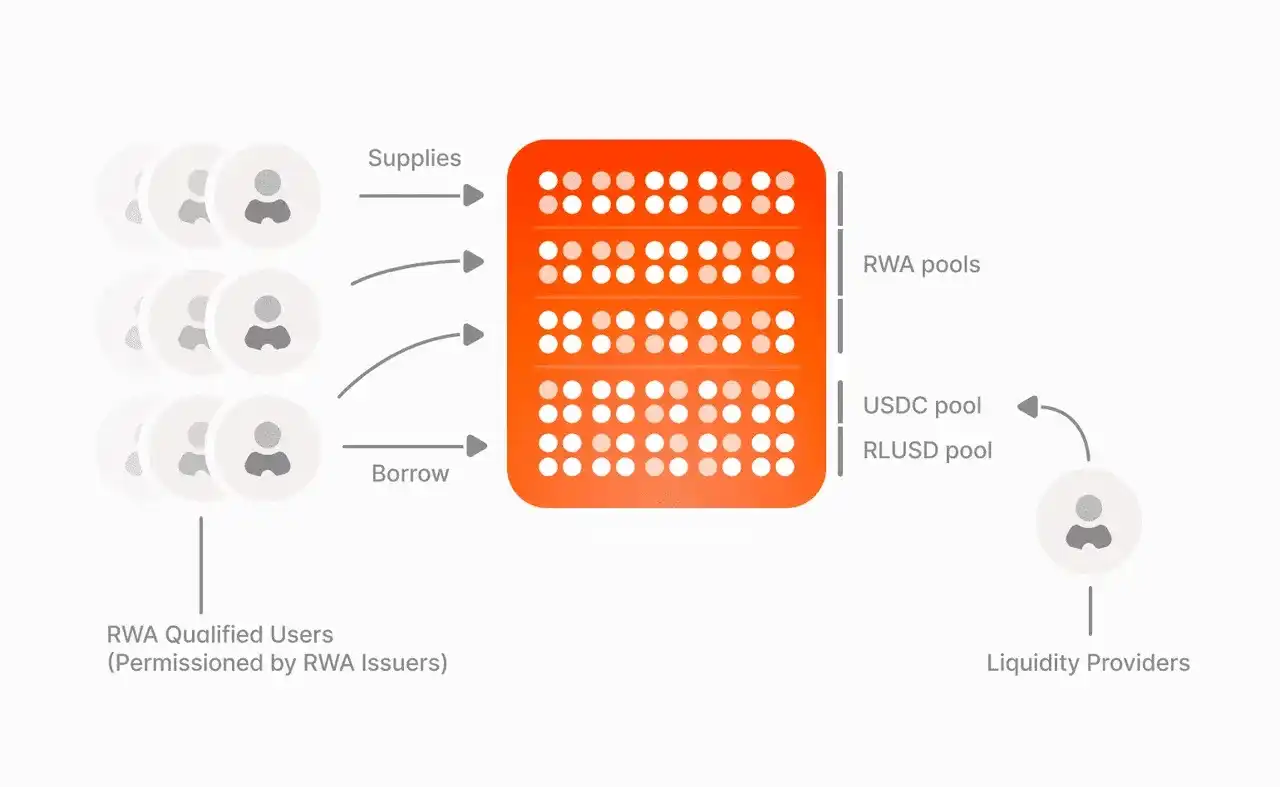
Source: BingX

More critically, while the market was halted and users couldn't withdraw, Aave's governance layer actually lowered the borrowing rates for the frozen Ethereum markets, aiming to protect borrowers who had leveraged rsETH. Since deposit rates are directly linked to borrowing rates, depositors with the lowest risk and principal security saw their deposit yields shrink further.

In traditional credit systems, lenders with the lowest risk enjoy priority in repayment. However, Aave completely inverted this rule. The reason is that borrowers engaged in rsETH leveraged trading are also the most active voting group in community governance. When risk erupts, high-risk participants holding governance power naturally prioritize protecting their own interests.

Aave launched an insurance mechanism called Umbrella in late 2025, attempting to address such bad debt risks. Users could stake Ethereum; if the protocol incurred bad debts, the staked assets would be used for compensation. However, after the Kelp DAO crisis erupted, 18,922 out of 23,507 staked aWETH positions entered an unstaking waiting period, with nearly 80% of the insurance pool's funds withdrawing collectively.

This mechanism ultimately failed completely. On-chain insurance relies on voluntary user participation, and capital providers inevitably choose to exit when real risk materializes—after all, their assets only face substantial loss when a crisis occurs. This leads to such insurance often existing during peaceful times but becoming ineffective precisely when protection is needed.

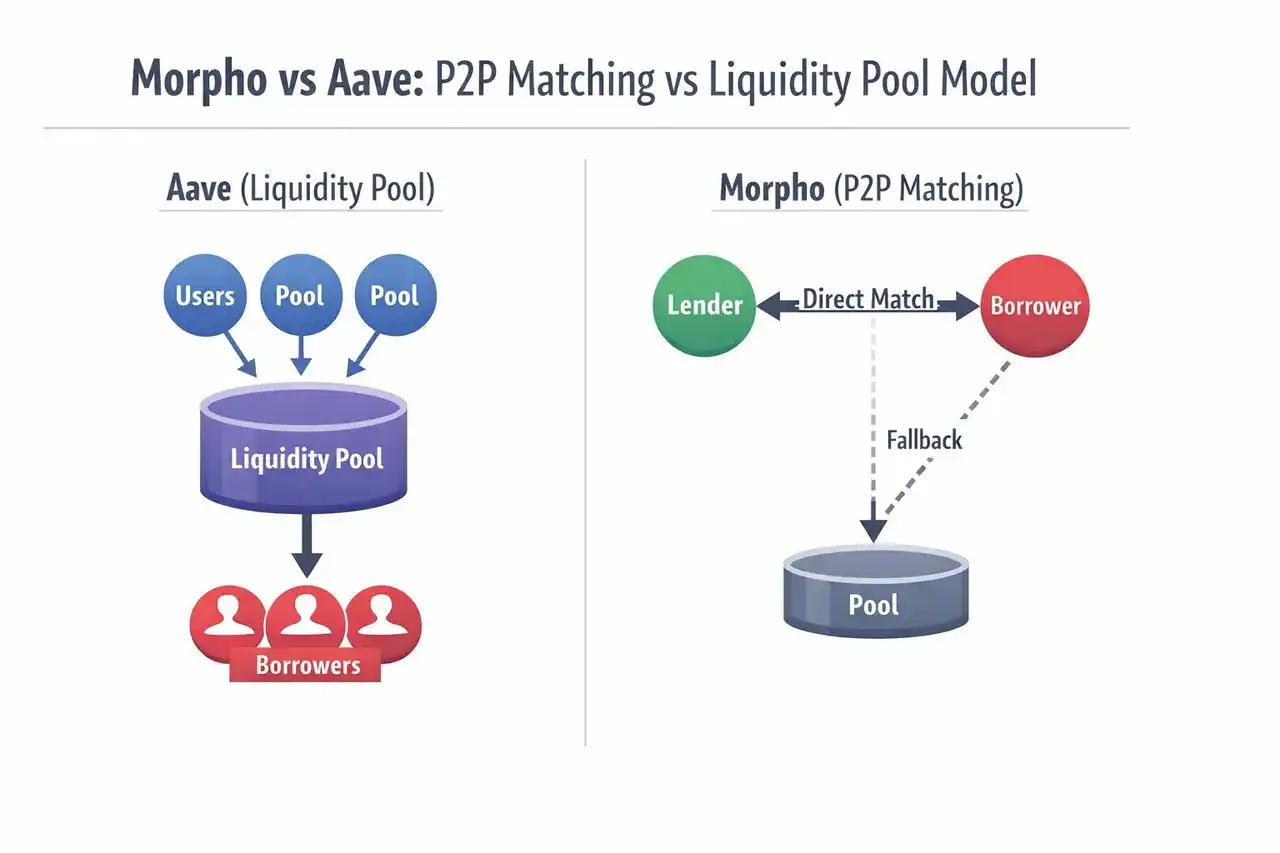
Morpho's operational model is entirely different. It abandons the unified shared liquidity pool. Anyone can create an independent, isolated lending market, pre-setting the loan asset, collateral asset, price oracle, and interest rate model. Once parameters are deployed, they cannot be modified. To adjust risk levels, one can only create a new market.
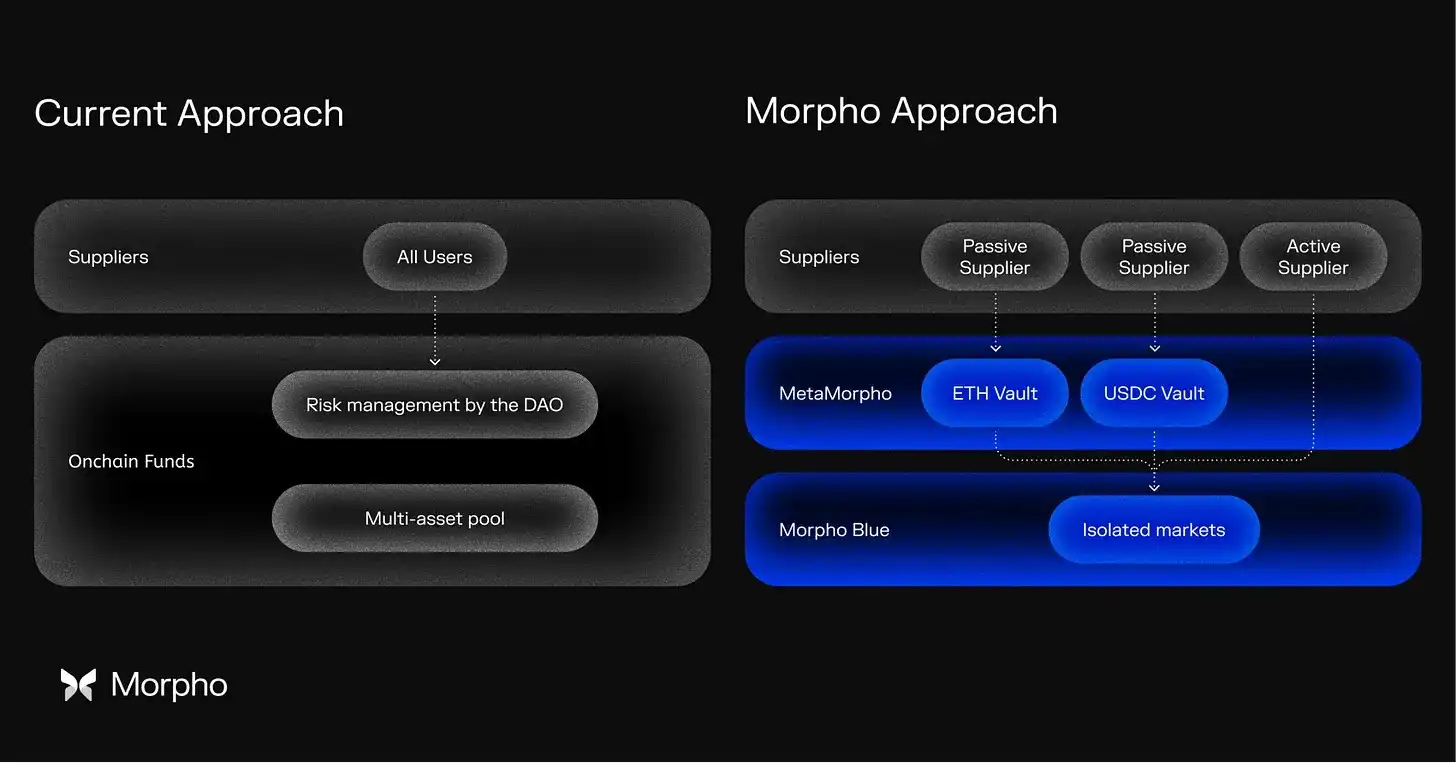
Differences in underlying architecture between the traditional DeFi lending model (represented by Aave) and Morpho's "Morphological" model.

Furthermore, Morpho introduces independent risk management institutions (Stewards), such as Gauntlet and Steakhouse Financial. These entities establish vaults, allocate funds to different markets based on their own analysis, and charge performance fees; if losses occur, they are confined within their own vaults. Gauntlet also provided risk advice for Aave, but in Aave's system, its professional opinions were often overruled by token holders seeking high yields through voting, a situation Morpho prevents at its root.

The Overlooked Hidden Cost

Aave and Morpho are currently the two most widely applied lending models in the crypto space: Aave uses the shared liquidity pool model where all deposits are aggregated, with risk rules set by community votes; Morpho advocates the isolated market model, where each lending pair is independent, with risks managed autonomously by professional institutions.

The Kelp DAO vulnerability exposed the flaws and weaknesses of the shared pool model. But even during stable periods without security incidents, this model harbors a long-overlooked hidden cost. Aave's three core markets on Ethereum (Ethereum, USDT, USDC) contribute 89% of the platform's lending volume. In these three markets, deposit rates are consistently 25% to 35% lower than borrowing rates. This spread essentially represents idle funds lying dormant in the liquidity pool; depositors cannot profit from them, yet borrowers still bear the full borrowing cost.

The interest rate mechanism adjusted based on utilization rates can push rates higher when risk increases but cannot activate idle funds when lending demand is low, leaving large amounts of assets stranded in the pool generating no yield. In these three markets alone, the annual value erosion due to idle funds amounts to approximately $52 million, close to a quarter of Aave's annualized revenue for one quarter. Even zeroing out the reserve ratio and canceling platform fees cannot solve the idle fund issue—it's an inherent shortcoming of the shared pool architecture.

Morpho's interest rate model aims to maintain a utilization rate of around 90%, significantly higher than Aave's 60% to 80% range. This model can sustain high utilization because deposits within the platform are not re-used as collateral for other loans, avoiding chain-liquidation risks at the source and thus eliminating the need to reserve large amounts of capital as a risk buffer. When lending demand is strong and funds are heavily borrowed, rates automatically increase, attracting more depositors; when lending demand is weak, rates decrease, stimulating borrowing. The entire system achieves dynamic balance without requiring community votes.
Source: Gate.com

Actual data confirms its advantage: even after deducting Steward fees, the yield offered to depositors by Morpho's top USDC vaults still exceeds that of Aave and Compound. Currently, Morpho's deposit-to-loan ratio is 41%, while Aave's is 39%, and the former's scale reaches tens of billions of dollars, meaning the yield advantage benefits all depositors on the platform day after day.

Institutional Choice: Which is More Trustworthy?

Surprisingly, all of Coinbase's crypto asset lending services are built on Morpho. The related loan scale has now surpassed $2 billion, and over 100 million platform users are indirectly enjoying the returns provided by Morpho.

Most users aren't even aware they are using DeFi services. Coinbase did not develop its own lending system nor choose another platform. The core reason is that Morpho's underlying architecture allows the platform to independently set risk parameters, select partner risk institutions, and maintain full control over the entire product experience.

Apollo Global Management, a global asset manager with over $1 trillion in assets under management and 30 years of experience in private credit, recently signed a four-year cooperation agreement, planning to acquire up to 90 million MORPHO tokens, accounting for 9% of the total token supply. The institution is connecting its tokenized fund assets to Morpho as collateral, with Gauntlet responsible for vault management and market stress testing.

Beyond that, Anchorage Digital, the first federally chartered native crypto bank in the US, has connected its institutional clients managing hundreds of billions to Morpho vaults; SG-FORGE, the compliant arm of French banking giant Société Générale, is the first licensed bank to implement DeFi lending business through Morpho.

These heavily regulated traditional financial institutions collectively chose Morpho, with a highly consistent core demand: the isolated market model allows them to meet their own compliance and risk control requirements without relying on DAO decisions. In contrast, all market rules in Aave inevitably involve community voting, completely incompatible with institutions' need for autonomous control.

Changes in the regulatory environment have further amplified this trend. The US "GENIUS Act" stipulates that stablecoin issuers cannot directly distribute investment returns, meaning stablecoin institutions require neutral underlying infrastructure to activate vast amounts of idle assets. US-related projections show that by 2028, the scale of stablecoin reserves invested in US Treasury bonds will surge from the current $120 billion to over $1 trillion. This massive pool of capital urgently needs a lending foundation that allows asset custodians to control their own risks, and Morpho is currently the most fitting choice.

Trend Kriptolar

İlgili Sorular

QWhat was the root cause of the massive $15 billion deposit outflow from Aave following the Kelp DAO exploit?

AThe root cause was Aave's governance mechanism. Earlier, the community had voted to increase the loan-to-value (LTV) ratio for rsETH to 93%, leaving a very thin safety margin of 7%. When fake rsETH tokens were deposited as collateral, it quickly drained the shared liquidity pool, causing the massive withdrawal.

QWhat is the fundamental difference in the operational models between Aave and Morpho as described in the article?

AAave uses a shared liquidity pool model where all deposits are pooled together to back all approved assets, with rules set by DAO governance. Morpho uses an isolated market model, where each lending market is separate with its own parameters set at creation, managed independently by professional risk stewards.

QWhy did Aave's Umbrella insurance mechanism fail during the crisis, according to the article?

AThe mechanism failed because it relies on voluntary participation. When the crisis hit, nearly 80% of the staked insurance funds (aWETH) entered the unstaking period and were withdrawn. Participants were incentivized to leave to avoid losses, rendering the insurance pool ineffective when it was needed most.

QWhat 'hidden cost' does the shared pool model like Aave's incur during normal market conditions?

AA significant hidden cost is idle capital due to low capital efficiency. In Aave's top three markets, the spread between deposit and borrow rates (25-35%) represents idle funds that earn no yield for depositors but whose cost is still borne by borrowers, leading to an estimated annual value drain of $52 million.

QWhy are regulated traditional financial institutions like Coinbase and Apollo Global Management choosing Morpho over Aave for their DeFi lending operations?

AThey choose Morpho because its isolated market model allows them to set their own risk parameters and choose their risk stewards, giving them full control and compliance. This is essential for meeting regulatory requirements, unlike Aave's model where all market rules are subject to community DAO votes.

İlgili Okumalar

Senior Trader's Confession: How to Trade Market's False Expectations?

Veteran trader's case study: trading the market's "wrong expectations". This trade centered on a textbook "expectation error" after a weak CPI report. While the market initially priced in broad monetary easing (sending Nasdaq to 30,060), the crucial 30-year real yield hit a 20-year high. This signaled a fractured transmission mechanism: short-term rates eased, but long-term funding costs (vital for tech valuations) refused to fall. The trader executed five short positions on the Nasdaq (NQ) as it fell from 30,060 to 28,768. The core methodology: don't just trade the data, but analyze the market's implied causal chain and identify where it breaks. In this case, the chain was: Weak CPI → Policy Easing → Lower Long-Term Funding Costs → NQ Valuation Expansion. The break occurred between policy easing and long-term rates. The "veto variable" – long-term real yields – refused to confirm the bullish narrative. Trades were structured around "fast variables" (price) temporarily repairing while "slow variables" (funding conditions) remained broken. The article outlines a repeatable framework: 1) Map the market's implied causal chain. 2) Identify the veto variable. 3) Observe if it rejects the narrative. 4) Enter when price still follows the old script. 5) Choose the cleanest asset expression (e.g., short NQ, not broad S&P). 6) Define both invalidation and fulfillment exit conditions. The key insight: Alpha often comes not from an information edge, but from a "reaction function edge" – recognizing when the market is applying an outdated causal logic to new data. The critical question: What causal chain is the market's first reaction relying on, and is that chain still valid today?

marsbit25 dk önce

Senior Trader's Confession: How to Trade Market's False Expectations?

marsbit25 dk önce

Opinion: The Hedging Relationship Between U.S. Treasuries and Stocks Has Broken Down, and BTC, as a Risk Asset, Is Under Dual Pressure

For the past 20 years, U.S. investors relied on a free insurance policy: when stocks fell, bonds rose, cushioning portfolio losses. This reliable inverse correlation underpinned entire financial strategies. However, this mechanism broke down around 2020 and has not recovered. Currently, the two-month rolling correlation between the S&P 500 and 10-year Treasury yields is at -0.69, its lowest level since 1996, indicating stocks and bonds are moving in sync to an unprecedented degree, eliminating the traditional portfolio shock absorber. The失效 of this hedge is not simply due to lost confidence in U.S. debt. The key driver is the shift from growth-dominated to inflation-dominated market narratives. When growth fears prevail, stocks and bonds move inversely. Since 2022, persistent inflation volatility has been the dominant factor, causing both asset classes to suffer simultaneously from higher inflation expectations. Investors now seek safety without duration risk, favoring cash, dollars, and short-term Treasuries while selling long-duration bonds. Record U.S. deficits, rising net interest payments, and waning foreign demand (e.g., from Japan) are pressuring long-term yields, with the 30-year yield surpassing 5%. This environment places Bitcoin, as a risk asset on the far end of the risk curve, under dual pressure. Higher risk-free rates increase the opportunity cost of holding non-yielding assets like Bitcoin, while falling equities reduce overall risk appetite. Bitcoin's performance has become highly sensitive to macro conditions such as real yields, dollar strength, and financial conditions. While its long-term thesis as a fixed-supply asset outside the sovereign credit system is strengthened by these fiscal trends, the same conditions hurt it in the short term. The return of bonds as a effective hedge requires inflation volatility to subside, growth risks to retake dominance, and the Fed to have room to ease policy. Until then, Bitcoin trades in a market where the deepest asset class no longer absorbs shocks, removing the safety floor for all risk assets, especially those that pay nothing to wait.

marsbit26 dk önce

Opinion: The Hedging Relationship Between U.S. Treasuries and Stocks Has Broken Down, and BTC, as a Risk Asset, Is Under Dual Pressure

marsbit26 dk önce

Funding Weekly | Crypto.com Secures $400M Investment, CeFi and Stablecoin Sectors Continue to Attract Capital

Crypto Weekly Investment Recap: Funds Converge on CeFi, Stablecoins, and AI Last week's crypto and AI investment landscape saw significant capital concentration, with a few large deals dominating. **Crypto/Web3 Highlights (July 13-19):** Total investment exceeded **$812 million** across 17 deals. Key trends: * **Centralized Finance (CeFi) & Stablecoins** remained a major magnet, led by **Crypto.com**'s massive **$400 million** raise from Citadel Securities, valuing the exchange at $20B. * **Infrastructure & Tools** saw 7 deals, including **Cyclops** ($20M for stablecoin payments) and **ADI Chain** ($50M for stablecoin settlement infrastructure). * **DeFi** had 2 deals, such as AI-native DEX **Quote Trade** ($4M). * Other notable raises: API broker **Alpaca** ($135M), cross-border platform **Flex** ($70M), treasury firm **ORANGE JUICE** ($40M), and prediction market **Pascal** ($9M). * **Acquisitions:** Keyrock bought BlockFills' trading unit, SBI Holdings acquired Singapore exchange Coinhako, and MoonPay bought startup Glide. **AI & Robotics Highlights:** Investment momentum in AI remained very strong. * Nvidia-backed AI cloud service **Fireworks** raised a massive **$1.5 billion** at a $17.5B valuation. * In robotics, **Walden Robotics** (spun out from Toyota) secured **$300 million**, and Chinese humanoid firm ****逐际动力** **(Climax Dynamics) raised nearly **$200 million** in a Pre-IPO round. * Other significant AI raises included Indian programming platform **Emergent** ($130M) and drone company **Brinc** ($125M), backed by Sam Altman. Overall, the trend shows capital flowing heavily into established crypto financial services, stablecoin infrastructure, and large-scale AI/robotics commercialization.

marsbit1 saat önce

Funding Weekly | Crypto.com Secures $400M Investment, CeFi and Stablecoin Sectors Continue to Attract Capital

marsbit1 saat önce

The Gentlest Bear Market? BTC Bears Exit, ARK and Bitwise Collectively Bullish

**Title: The Mildest Bear Market? BTC Shorts Exit, ARK and Bitwise Collectively Bullish** Bitcoin continues to consolidate around $75,000 while Ethereum struggles near $1,900. Market data shows $116 million in liquidations over 24 hours, with $62.7 million from short positions, and the Fear & Greed Index remains at 35 (Fear). According to Polymarket, there's a 33% probability BTC falls below $50,000 this year. ARK Invest's Q2 2026 Bitcoin report notes technical weakness but identifies potential bottoming signals, including a record high in long-term holder supply, suggesting selling exhaustion. Bitwise's Juan Leon calls this the "structurally mildest bear market" on record, with a ~50% drawdown from highs, less severe than past cycles. He highlights institutional accumulation and a shift in investor dialogue from survival to entry points. Technical analysis from Bit suggests a potential C-wave low may have formed, with an ideal bottoming range between $50,000-$55,000. However, glassnode's CryptoVizArt warns that failure to break $66,000 could signal a local top, as new buyer accumulation is concentrated there. Analyst Darkfost identifies a critical support band between $59,000-$70,000, where 50% of BTC's circulating supply has changed hands. Notably, trader Doctor Profit announced closing all crypto short positions—including BTC shorts from $115k-$125k and over 100 altcoin shorts—for significant profit. He has begun a phased accumulation of Bitcoin spot starting at $64,000, reversing his previous $40k-$50k target, citing structural positives like regulatory clarity and institutional adoption. He argues the anticipated September/October bottom may arrive earlier than the herd expects.

Foresight News2 saat önce

The Gentlest Bear Market? BTC Bears Exit, ARK and Bitwise Collectively Bullish

Foresight News2 saat önce

İşlemler

Spot

Popüler Makaleler

DAO Nasıl Satın Alınır

HTX.com’a hoş geldiniz! DAO Maker (DAO) satın alma işlemlerini basit ve kullanışlı bir hâle getirdik. Adım adım açıkladığımız rehberimizi takip ederek kripto yolculuğunuza başlayın. 1. Adım: HTX Hesabınızı OluşturunHTX'te ücretsiz bir hesap açmak için e-posta adresinizi veya telefon numaranızı kullanın. Sorunsuzca kaydolun ve tüm özelliklerin kilidini açın. Hesabımı Aç2. Adım: Kripto Satın Al Bölümüne Gidin ve Ödeme Yönteminizi SeçinKredi/Banka Kartı: Visa veya Mastercard'ınızı kullanarak anında DAO Maker (DAO) satın alın.Bakiye: Sorunsuz bir şekilde işlem yapmak için HTX hesap bakiyenizdeki fonları kullanın.Üçüncü Taraflar: Kullanımı kolaylaştırmak için Google Pay ve Apple Pay gibi popüler ödeme yöntemlerini ekledik.P2P: HTX'teki diğer kullanıcılarla doğrudan işlem yapın.Borsa Dışı (OTC): Yatırımcılar için kişiye özel hizmetler ve rekabetçi döviz kurları sunuyoruz.3. Adım: DAO Maker (DAO) Varlıklarınızı SaklayınDAO Maker (DAO) satın aldıktan sonra HTX hesabınızda saklayın. Alternatif olarak, blok zinciri transferi yoluyla başka bir yere gönderebilir veya diğer kripto para birimlerini takas etmek için kullanabilirsiniz.4. Adım: DAO Maker (DAO) Varlıklarınızla İşlem YapınHTX'in spot piyasasında DAO Maker (DAO) ile kolayca işlemler yapın.Hesabınıza erişin, işlem çiftinizi seçin, işlemlerinizi gerçekleştirin ve gerçek zamanlı olarak izleyin. Hem yeni başlayanlar hem de deneyimli yatırımcılar için kullanıcı dostu bir deneyim sunuyoruz.

221 Toplam GörüntülenmeYayınlanma 2024.12.11Güncellenme 2026.06.02

DAO Nasıl Satın Alınır

Tartışmalar

HTX Topluluğuna hoş geldiniz. Burada, en son platform gelişmeleri hakkında bilgi sahibi olabilir ve profesyonel piyasa görüşlerine erişebilirsiniz. Kullanıcıların DAO (DAO) fiyatı hakkındaki görüşleri aşağıda sunulmaktadır.

活动图片