"Kalshi" Removes All Sports Event Options Amidst CFTC Investigation

cryptonews.ru2026-08-15 tarihinde yayınlandı2026-08-15 tarihinde güncellendi

Özet

"Kalshi" has removed all of its sports-related event options amid an investigation launched by the U.S. Commodity Futures Trading Commission (CFTC), according to an NPR report citing anonymous sources. Federal regulators are scrutinizing "mention markets," with sources indicating these markets are potentially highly susceptible to manipulation. A court order from Washington State's King County also compels Kalshi to cease marketing or offering contracts related to sports, elections, politics, entertainment, and mentions, citing violations of gambling laws and high fraud risks. The order prohibits Kalshi from advertising such bets to Washington consumers. This follows a high-profile incident where a former Trump teleprompter operator allegedly used advance access to speeches for mention market trades. Kalshi froze approximately $90,000 of his profits and reported the activity to the CFTC. The company, which has positioned itself as a "prediction market," is facing a complex and rapidly evolving legal landscape with differing state-level rulings on its contracts.

Federal regulators have launched an investigation into prediction markets, and Kalshi removed all its sports-related offerings in the course of the probe, NPR reports, citing two informed sources who spoke anonymously as they were not authorized to speak publicly. Kalshi and the CFTC declined to comment, and the commission has not published any materials describing the review. Sports bets account for the lion's share of the billions that flow through the Kalshi platform weekly.

Under the Commodity Exchange Act, only contracts that are not susceptible to manipulation can be listed on designated contract markets, and one of NPR's sources said that prediction markets are "potentially very susceptible to manipulation, so the CFTC is carefully studying whether some of them make sense." A second source, a former Kalshi employee, told the outlet that the exchange's own lawyers share this concern, as the nature of some markets attracts people capable of influencing the outcome. According to the former employee, inside Kalshi, employees discussed the usefulness of this category, with co-founder Luana Lopes Lara defending it.

As of Friday, our analysis shows that the "Predictions" section of Kalshi lacks a sports filter altogether: the only subcategories are earnings reports, politicians, Trump, and a section dedicated to public companies. At least 216 individual contracts remain across 12 market groups: prediction markets on earnings reports for Klarna, Walmart, Target, Home Depot, John Deere, Toll Brothers, Futu, and Amer Sports are scheduled to open next week, along with a NASA press conference and a Massachusetts state Senate debate. Polymarket also offers prediction markets, but only on its overseas platform, which is not regulated by the CFTC. They are not currently available on its smaller US-based exchange.

In a Washington state court, King County Superior Court Judge John McHale in his revised injunction orders Kalshi to cease marketing, offering, or accepting contracts related to sports, elections, politics, entertainment, culture, technology and science, as well as predictions. Commodity, climate, economy, and financial markets may continue operating. The state Attorney General's office announced this ruling on Thursday, simultaneously imposing a series of restrictions based on a geographical limitation. Besides violating gambling laws, the Attorney General stated that "this type of betting carries a high risk of fraud by persons close to the source of information. Such bets are particularly unfair to consumers."

The ruling also prohibits Kalshi from advertising the specified bets to consumers in Washington state, as it was found that "Kalshi's provision, promotion, and advertising of illegal gambling activity constitutes unfair and/or deceptive acts or practices." The Attorney General's office cited a Kalshi advertisement in which one person writes to another that they "found a way to bet on the NFL, even though we live in Washington state." Furthermore, the ruling notes that Kalshi had previously positioned itself as a service allowing consumers to "bet on anything," calling its activities a "prediction market," not gambling.

This decision is based on a preliminary injunction issued by McHale in July, which found that Washington state would likely be able to prove its case, and that without intervention, "significant harm to Washington state consumers" was likely. Kalshi appealed to the Court of Appeals to stay this injunction, but the court denied the request.

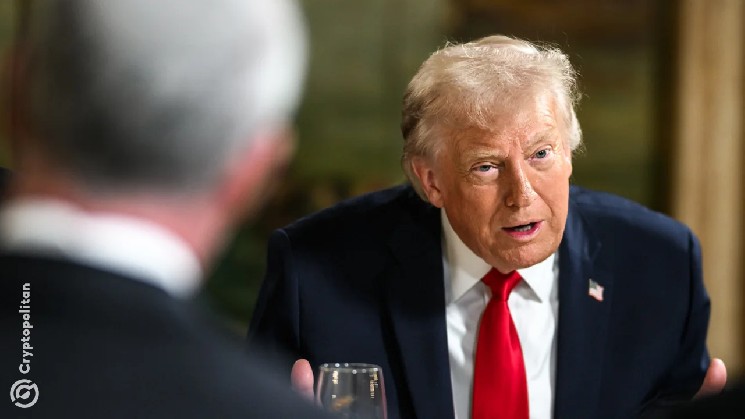
A recent high-profile scandal involving prediction markets reached the White House. Gabriel Perez, a teleprompter operator for Trump, allegedly used advance access to prepared speeches to trade on prediction markets. Kalshi froze approximately $90,000 of his profits and passed information about these trades to the Commodity Futures Trading Commission (CFTC) after its oversight team identified them. NPR reported that traders who view prediction markets as a full-time job set up television antennas to gain fractions of a second when watching live broadcasts, and that Trump's rambling speech style causes sharp price swings as traders try to guess which topic he will turn to next.

Events in the legal arena are developing rapidly. The CFTC is attempting to defend Kalshi based on an emergency ruling in New York, and a judge in Connecticut ruled that its sports contracts were never swaps—just a few of many recent examples of diverging actions by different states.


İlgili Sorular

QWhy did Kalshi remove all its sports-related prediction markets?

AKalshi removed all its sports-related prediction markets in response to an investigation launched by the Commodity Futures Trading Commission (CFTC) into 'mentions' markets, amid concerns that such markets are potentially very easy to manipulate.

QWhat legal action did a Washington state court take against Kalshi?

AA Washington state court issued a revised preliminary injunction ordering Kalshi to stop marketing, offering, or accepting contracts related to sports, elections, politics, entertainment, culture, technology, science, and mentions markets. Only commodities, climate, economic, and financial markets are allowed to continue.

QWhat specific concern did the Washington Attorney General cite regarding Kalshi's markets?

AThe Washington Attorney General stated that this type of betting carries a high risk of fraud from individuals close to the information source and is particularly unfair to consumers. They also found Kalshi's provision, promotion, and advertising of illegal gambling activity to be unfair and/or deceptive acts or practices.

QHow did a recent scandal involving 'mentions' markets implicate the White House?

AGabriel Perez, an operator of former President Trump's teleprompter, allegedly used advance access to prepared speeches to trade on mentions markets. Kalshi froze approximately $90,000 of his profits and reported the trades to the CFTC after its surveillance team identified them.

QHow do traders reportedly attempt to gain an advantage on 'mentions' markets during live events?

AAccording to the article, traders who treat mentions markets as a full-time job set up TV antennas to gain fractions of a second advantage when watching live broadcasts. Former President Trump's discursive speaking style also causes sharp price fluctuations as traders try to guess which topic he will mention next.

İlgili Okumalar

Grayscale Forecasts Increase in Scarcity for Ethereum and Solana

Grayscale Research predicts that Ethereum (ETH) and Solana (SOL) could become scarcer assets due to proposed tokenomics changes in their respective blockchains. According to analyst Zach Pandl, both networks are considering protocol adjustments that would reduce the annual issuance rate of their native tokens. The report compares projected annual supply inflation over the next five years, estimating it could fall to around 0.4% for Ethereum and 1.1% for Solana by 2031, lower than gold's estimated 1.8% annual supply growth. Pandl notes that while the changes are still under community discussion, Solana's proposals have broader support and a higher chance of implementation. Reduced inflation would directly impact network stakers, as their rewards are funded by new token issuance. While stakers would receive fewer new tokens, the potential scarcity could support the market price of ETH and SOL. Non-staking holders could benefit directly from the decreased supply. For Ethereum, the debate on scarcity includes proposals like EIP-8363, which would burn a portion of staking rewards. Pandl concludes that the proposed changes would increase the scarcity of both assets and could create upward pressure on their prices. The analysis also notes Solana's ongoing infrastructure development, including the Alpenglow upgrade to speed up transaction finalization and significant growth in its tokenized asset ecosystem.

cryptonews.ru1 saat önce

Grayscale Forecasts Increase in Scarcity for Ethereum and Solana

cryptonews.ru1 saat önce

İşlemler

Spot
活动图片