Kalshi and Coinbase Receive CFTC Approval, Ushering in the Most Regulation-Friendly Era for the Crypto Industry?

marsbit2026-05-30 tarihinde yayınlandı2026-05-30 tarihinde güncellendi

Özet

The U.S. Commodity Futures Trading Commission (CFTC) took two landmark actions on May 29. It approved Kalshi's application to list a Bitcoin perpetual futures contract and issued a no-action letter to Coinbase Financial Markets. This allows Coinbase to offer certain perpetual futures products to U.S. customers through a subsidiary, with digital assets permitted as collateral. These moves, coupled with a new CFTC policy statement, provide a clearer regulatory pathway for perpetual contracts in the U.S., moving them from a regulatory gray area. CFTC Chair Mike Selig stated this is a key step for U.S. crypto leadership but noted the policy is not yet permanent. The article explains that CFTC's previous reluctance stemmed from legal ambiguities, as perpetual contracts lack an expiration date. However, such contracts dominate global crypto derivatives, accounting for ~78% of centralized exchange volume in 2025, forcing U.S. regulators to adapt to competition from offshore platforms like Hyperliquid. The approvals offer two compliance paths: Kalshi's direct listing and Coinbase's model using foreign futures. This is expected to attract institutional capital back to regulated U.S. venues, stimulate the launch of more products like ETH perpetuals, and enhance U.S. competitiveness in the global crypto derivatives market. The author suggests this may signal a "regulatorily friendly" era for crypto.

Author: Ma He, Foresight News

On May 29th, the U.S. Commodity Futures Trading Commission (CFTC) announced two landmark actions on the same day: it formally approved the Bitcoin perpetual contract submitted by KalshiEX, LLC (Kalshi). Additionally, the CFTC issued a no-action letter to Coinbase, allowing Coinbase to offer certain perpetual futures products to U.S. customers through its subsidiary.

The CFTC also released a "Policy Statement on the Listing of Perpetual Contracts," providing a clear guidance framework for the listing of perpetual products on regulated markets. This combination of actions signifies a crucial step away from the longstanding regulatory gray area for U.S. crypto derivatives, moving toward a compliant path for genuine perpetual contracts.

Kalshi and Coinbase Both Receive Regulatory Approval

The CFTC's review determined that Kalshi's Bitcoin perpetual contract complies with the core principles of the Commodity Exchange Act and Designated Contract Market (DCM) regulations, including the depth and liquidity of the underlying Bitcoin spot market, contract design, and risk management capabilities. The approval order requires Kalshi to maintain ongoing compliance and clarifies that the perpetual contract design "may not be suitable for all asset classes," encouraging other market participants to engage with regulators and submit formal applications for perpetual products based on different underlying assets.

Furthermore, the CFTC's Division of Market Participants issued an interpretive letter and a no-action letter to the registered futures commission merchant Coinbase Financial Markets (CFM), permitting it to offer crypto options and perpetual contracts listed on Deribit to U.S. users. The letter confirms that these perpetual contracts can be classified as foreign futures under CFTC Regulation 30.1. Under specified conditions, the CFTC stated it would not recommend enforcement action against CFM for transferring customer-held digital commodities and payment stablecoins to its foreign broker affiliate for margin purposes, where the affiliate may exercise rehypothecation rights over such customer assets.

Previously, the U.S. market lacked genuine perpetual contracts (with no expiration date). Coinbase Derivatives had self-certified and launched "perpetual-style" futures in July 2025 (with contract terms up to 5 years), designed to mimic perpetual economic characteristics but still retaining an expiration date. Today's approval and no-action letters provide a dual compliance pathway for "true perpetuals": Kalshi follows the standard DCM futures route, while Coinbase reaches U.S. customers via the foreign futures + crypto collateral route.
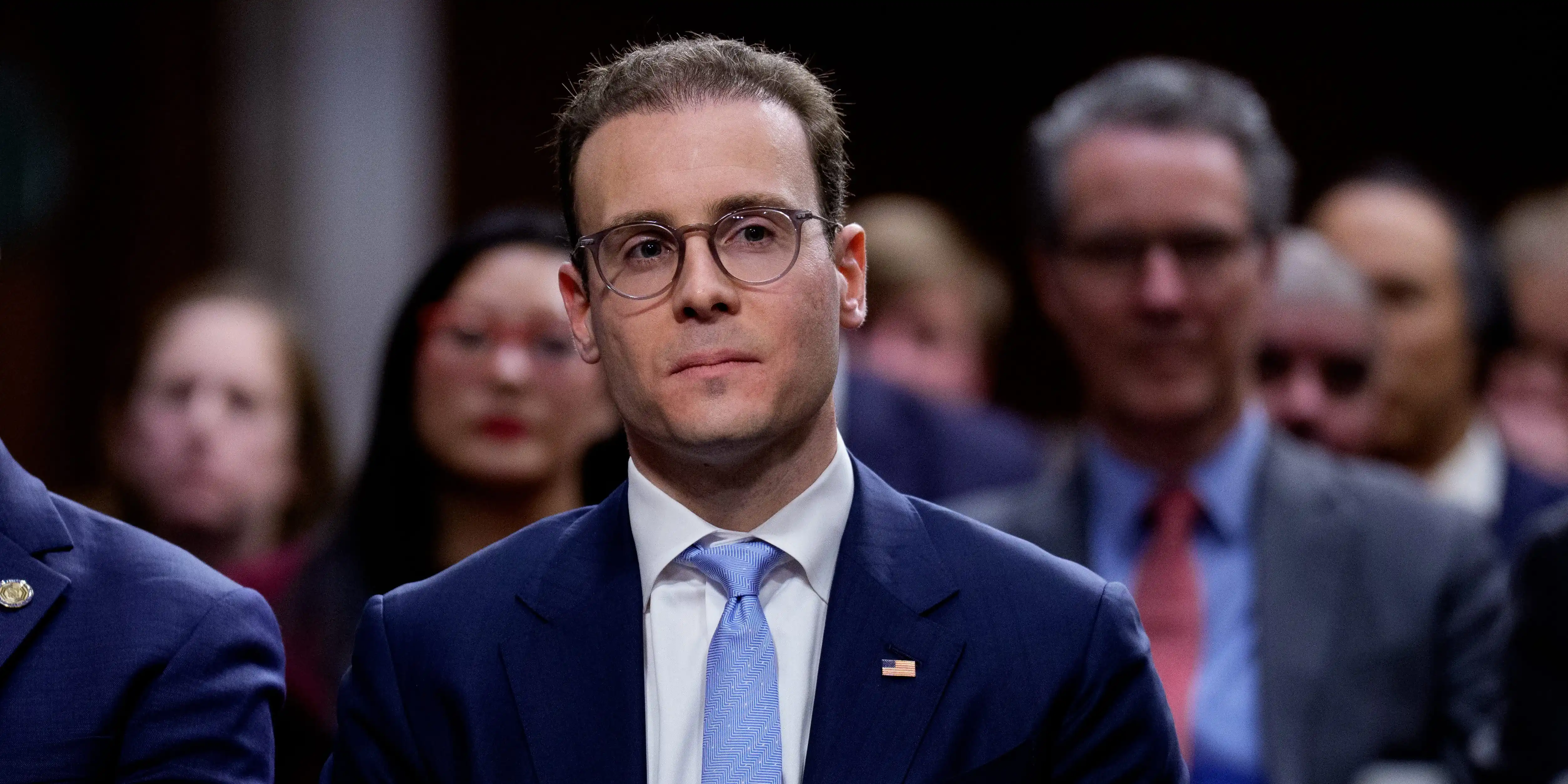
Mike Selig

CFTC Chairman Mike Selig emphasized in his statement that perpetual contracts are important tools for risk management and price discovery in the global crypto asset market. Introducing true perpetual contracts in the U.S. is a significant step toward establishing the U.S. as a global crypto hub. He noted that the CFTC has established a workable regulatory framework for crypto asset perpetual contracts and will maintain market integrity by limiting excessive leverage, market volatility, and systemic risk.

Selig also acknowledged that the CFTC's current regulatory stance has not yet been formalized into a permanent rule, and future policies may adjust as the regulatory environment evolves.

The Trillion-Dollar Market Opportunity

So, why had the CFTC not approved true Bitcoin perpetual contracts until now?

Perpetual contracts were considered a "novel" product within the traditional commodity futures framework. They lack an expiration date and final settlement, which conflicts with the conventional understanding under the Commodity Exchange Act that traditional futures "must have an expiration date and a convergence mechanism." The CFTC internally debated whether to classify them as futures or swaps, as different classifications entail entirely different regulatory requirements (including clearing, margin, reporting obligations, etc.). This legal ambiguity made it difficult for platforms to secure a solid compliance path.

Furthermore, concerns about their high leverage and speculative nature, along with fears of market manipulation, have kept the CFTC's approach cautious.

BTCPERP, as a perpetual contract tracking the Bitcoin spot price, has no fixed expiration date. It uses a funding rate mechanism for periodic settlements between long and short positions to maintain a tight peg between the contract price and the spot price.

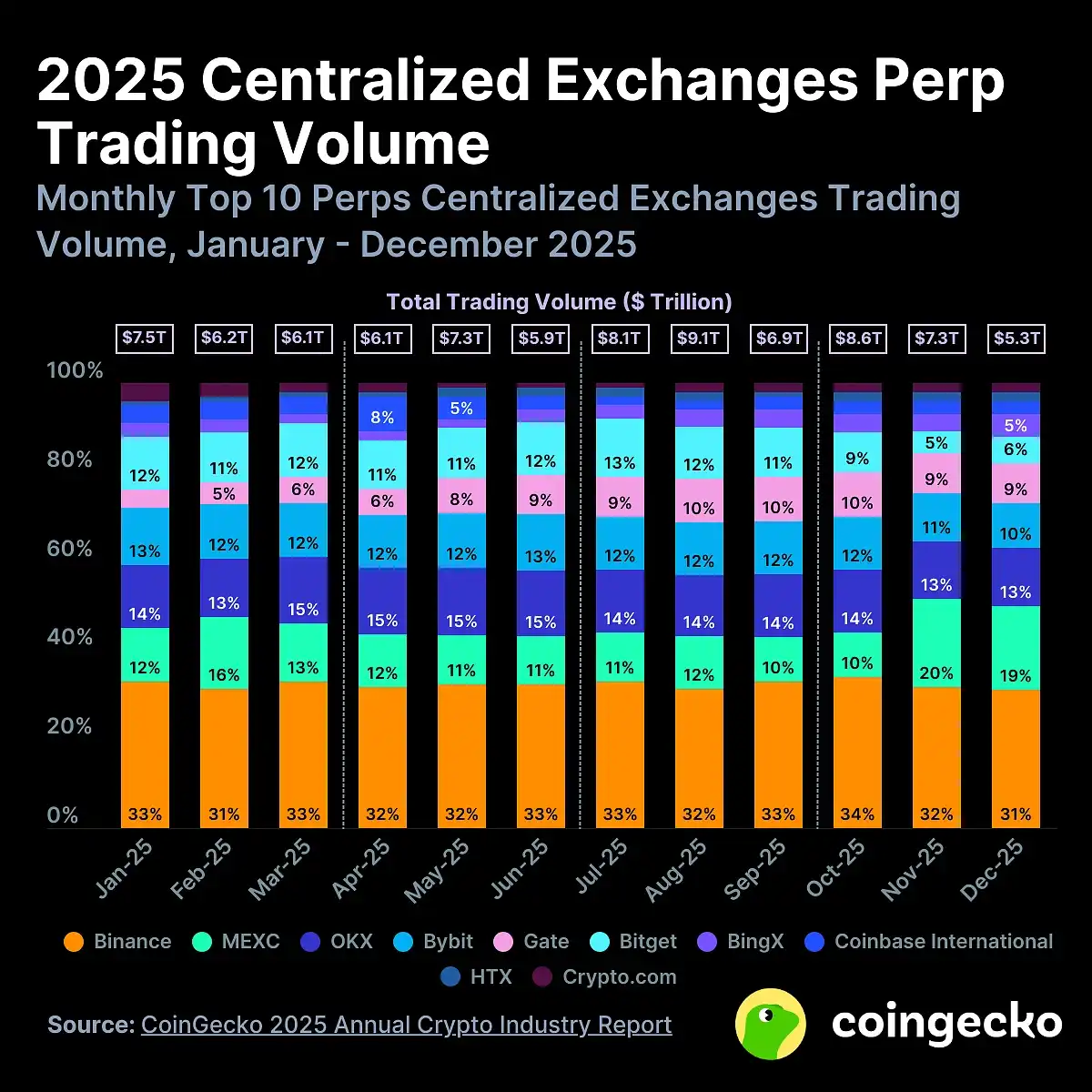
Perpetual contracts have long dominated the global crypto derivatives market. According to CoinGecko's 2025 annual report, the cumulative trading volume of crypto derivatives on centralized exchanges globally was approximately $85.7 trillion, with perpetual contracts accounting for about 78%. In 2025, the cumulative volume of perpetual contracts on decentralized exchanges reached about $6.7 trillion (a 346% year-over-year increase).
Ironically, while traditionalist regulators in Washington debated compliance, offshore decentralized perpetual platforms like Hyperliquid had already extended their reach to S&P 500, crude oil, and gold through on-chain synthetic assets. By the end of May 2026, Hyperliquid's perpetual trading volume had risen to $586.12 billion, and according to Allium on-chain data, the total open interest for Hyperliquid's network-wide derivatives also hit a record high of nearly $60 billion at the end of May. An increasing number of individuals and institutions are choosing to trade on its platform.
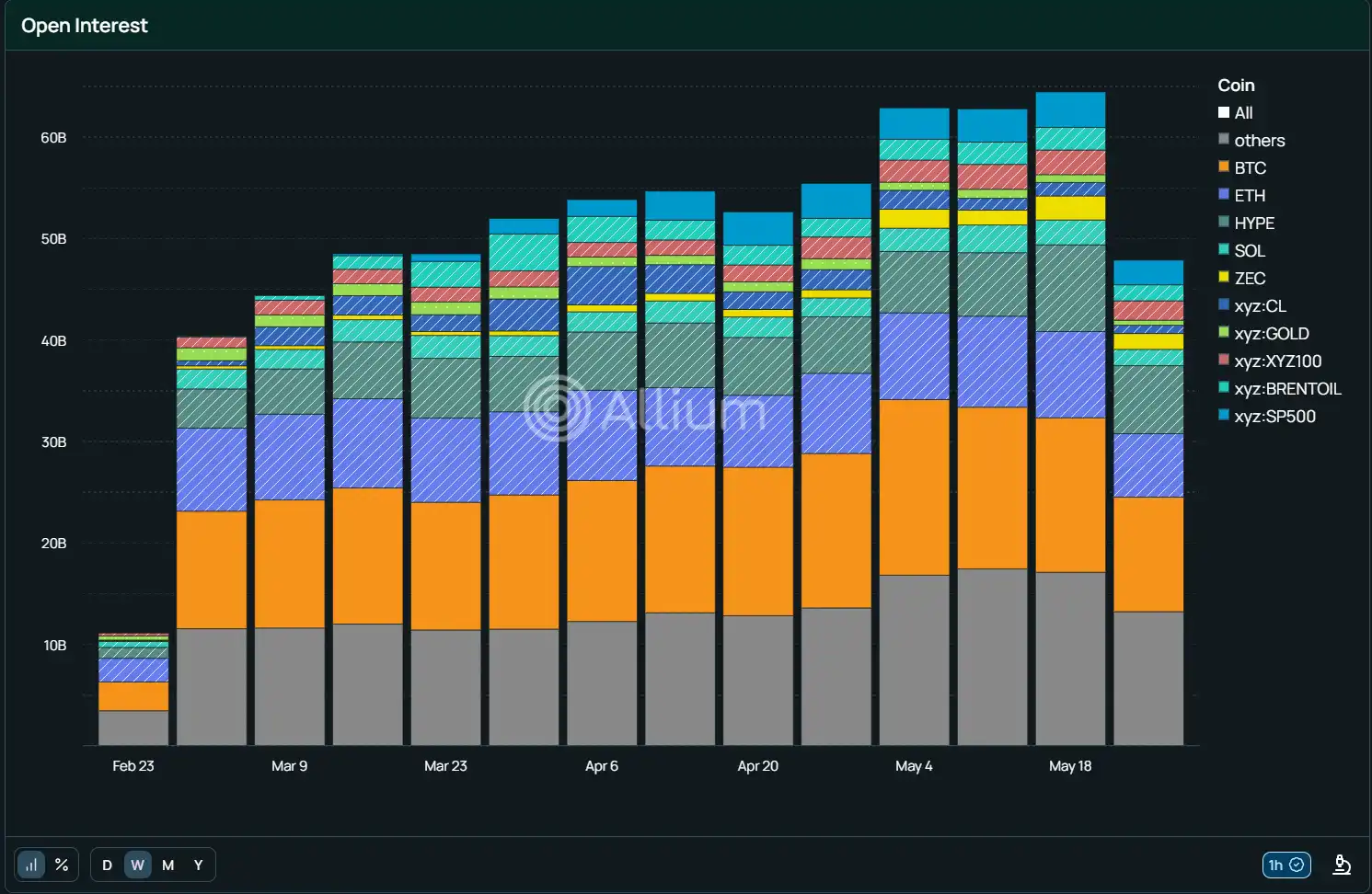
Hyperliquid Latest Open Interest

This unprecedented approval by the CFTC is not just an accommodation to the crypto market; it is a necessary "onshore defense battle" forced upon the compliant world by the innovative pressure from offshore "everything-as-a-perpetual-asset."

In contrast, while regulated Bitcoin futures like those on CME provide stable hedging tools for institutions, their leverage and trading characteristics differ from the perpetual products favored by retail/professional traders.

This approval by the CFTC undoubtedly opens a new battleground for Kalshi in the prediction market. The boundary between prediction markets and traditional crypto derivatives markets has completely blurred; Kalshi can leverage its compliant event-settlement logic to tap into the perpetual capital pool originally belonging to centralized exchanges. For Coinbase, the trading volume and revenue from its perpetual contracts will likely be reflected concretely in its next financial report.

U.S. traders previously relied heavily on offshore platforms, facing custody risks, regulatory uncertainty, and barriers to institutional access. The release of this regulatory policy, which supports crypto collateral, will attract traditional institutions like hedge funds and family offices to participate. Traders can hold leveraged positions long-term to hedge spot exposure without frequent operations; it will also attract some offshore traffic back to U.S. compliant channels.

Simultaneously, the approval for Kalshi and Coinbase will stimulate the accelerated launch of other products like ETH perpetuals, forming a more complete crypto derivatives matrix. In the long term, this policy may enhance the U.S.'s competitiveness in the global crypto derivatives ecosystem, attracting more capital, talent, and infrastructure, creating favorable conditions for deeper integration between crypto assets and traditional finance.

Now may indeed be the most regulation-friendly era for the crypto industry.

İlgili Sorular

QWhat were the two major actions taken by the CFTC on May 29th regarding crypto derivatives?

AOn May 29th, the CFTC officially approved Kalshi's application to list a Bitcoin perpetual contract, and issued a no-action letter to Coinbase Financial Markets, allowing it to offer certain perpetual futures products to U.S. customers through a foreign affiliate.

QWhy was the approval of a 'true' Bitcoin perpetual contract in the U.S. considered a significant step?

AIt was significant because, under the traditional Commodity Exchange Act framework, perpetual contracts (with no expiry date) conflicted with the conventional definition of futures. The approval moves crypto derivatives from a regulatory gray area towards a clear, compliant path for truly perpetual products within the U.S.

QAccording to the article, what percentage of global centralized crypto derivatives trading volume do perpetual contracts represent?

AAccording to CoinGecko's 2025 annual report data cited in the article, perpetual contracts accounted for approximately 78% of the cumulative trading volume on global centralized crypto derivatives exchanges.

QWhat does CFTC Chairman Mike Selig say is an important step in making the U.S. a global crypto hub?

ACFTC Chairman Mike Selig stated that introducing true perpetual contracts in the United States is an important step in advancing the U.S. as a global crypto hub.

QHow does the article characterize the CFTC's approval in relation to offshore platforms like Hyperliquid?

AThe article characterizes the CFTC's approval as a defensive move 'onshore,' a compromise by the regulated world in response to the innovation and growth of offshore platforms that have already popularized perpetual contracts for a wide range of assets, including traditional ones like the S&P 500.

İlgili Okumalar

Fei-Fei Li's Team Clarifies the Concept of 'World Models', Sora Merely a Renderer

"World Models" has become a widely used yet confusing term in AI. To address this, a team led by Fei-Fei Li and World Labs proposed a functional taxonomy based on the Partially Observable Markov Decision Process framework. This taxonomy categorizes systems called "world models" into three distinct projections: Renderers, Simulators, and Planners. Renderers, like OpenAI's Sora and other video generation models, focus on producing photorealistic visual outputs for human perception. They prioritize visual fidelity over physical accuracy. Simulators, such as NVIDIA Omniverse, aim to compute precise future environmental states for computational tasks like engineering analysis or digital twins. Planners, like Vision-Language-Action models, take in observations and goals to output executable actions for robots or agents. The article clarifies that most current "world models," including Sora, are primarily Renderers. They generate convincing visuals but lack the core ability to simulate state transitions based on actions, a key requirement for a true world model in classic reinforcement learning definitions. This conceptual confusion has practical implications, leading to potential misalignment in technology selection, investment, and public understanding of AI capabilities. Clear categorization is crucial. It helps enterprises avoid costly mistakes (e.g., using a renderer for robot training), allows investors to accurately assess markets, and enables researchers to build comparable benchmarks. While future systems may integrate these functions, recognizing current boundaries is essential for honest assessment and progress.

marsbit1 saat önce

Fei-Fei Li's Team Clarifies the Concept of 'World Models', Sora Merely a Renderer

marsbit1 saat önce

Bloomberg Uncovered: How Do China's Wealthy Circumvent the Annual $50,000 Limit to Transfer Assets?

**Summary: How Wealthy Chinese Circumvent $50,000 Annual Foreign Exchange Limits** Despite China's strict capital controls, including an annual $50,000 per person foreign exchange quota, an estimated $150 billion in funds still leaves the country annually via various gray and underground channels. This report outlines the evolution of China's "capital wall" and the methods used to bypass it. **The Evolving Capital Controls:** * **Foundation (1994):** The system of "current account convertibility with strict capital account controls" was established. * **Quota Set (2007):** The $50,000 individual annual forex purchase limit was formalized. * **Crackdown Begins (2015-2017):** Following market volatility, enforcement tightened. Banks were required to scrutinize transactions, and channels like using UnionPay cards for Hong Kong insurance premiums or buying overseas property were blocked. * **Digital & Legal Upgrades (2024-2026):** Enhanced algorithms now flag suspicious patterns (e.g., "smurfing"). The Common Reporting Standard (CRS) provides Chinese tax authorities with data on citizens' offshore accounts. Unlicensed cross-border brokers have been targeted. **Five Primary Methods for Moving Capital:** 1. **Underground Banking / "Hawala" (Duiqiao):** The largest-scale method. No money crosses borders. Clients pay RMB to a domestic account; an overseas associate deposits equivalent foreign currency into the client's offshore account. Risks include high fees, account freezes, and legal penalties. 2. **"Smurfing" or "Ant Moving":** Using multiple individuals' $50,000 quotas to pool funds for one offshore recipient. Increasingly detected by anti-money laundering algorithms. 3. **Trade Invoice Manipulation:** Businesses over-invoice imports or under-invoice exports via offshore shell companies, creating a pretext to transfer excess funds abroad under the guise of trade. 4. **Channel Migration:** After a crackdown on internet brokers, funds flow toward more compliant but costly channels like major banks' cross-border wealth management services or Qualified Domestic Institutional Investor (QDII) quotas. 5. **Structural Arrangements:** High-net-worth individuals use complex, high-cost legal structures involving offshore trusts, insurance, and investment migration programs to transfer asset ownership. **Regulatory Response: Focusing on People, Not Just Money** The current strategy extends oversight from enterprises to **individual residents**. Tools like CRS allow retroactive visibility into offshore assets. Cryptocurrencies, once seen as a potential loophole, are now actively monitored and prosecuted as an illegal channel. The underlying driver remains: with significant wealth concentrated among millions of affluent households seeking diversification amid domestic economic shifts, the incentive to move assets offshore persists despite regulatory barriers.

marsbit1 saat önce

Bloomberg Uncovered: How Do China's Wealthy Circumvent the Annual $50,000 Limit to Transfer Assets?

marsbit1 saat önce

İşlemler

Spot
Futures

Popüler Makaleler

ERA Nasıl Satın Alınır

HTX.com’a hoş geldiniz! Caldera (ERA) satın alma işlemlerini basit ve kullanışlı bir hâle getirdik. Adım adım açıkladığımız rehberimizi takip ederek kripto yolculuğunuza başlayın. 1. Adım: HTX Hesabınızı OluşturunHTX'te ücretsiz bir hesap açmak için e-posta adresinizi veya telefon numaranızı kullanın. Sorunsuzca kaydolun ve tüm özelliklerin kilidini açın. Hesabımı Aç2. Adım: Kripto Satın Al Bölümüne Gidin ve Ödeme Yönteminizi SeçinKredi/Banka Kartı: Visa veya Mastercard'ınızı kullanarak anında Caldera (ERA) satın alın.Bakiye: Sorunsuz bir şekilde işlem yapmak için HTX hesap bakiyenizdeki fonları kullanın.Üçüncü Taraflar: Kullanımı kolaylaştırmak için Google Pay ve Apple Pay gibi popüler ödeme yöntemlerini ekledik.P2P: HTX'teki diğer kullanıcılarla doğrudan işlem yapın.Borsa Dışı (OTC): Yatırımcılar için kişiye özel hizmetler ve rekabetçi döviz kurları sunuyoruz.3. Adım: Caldera (ERA) Varlıklarınızı SaklayınCaldera (ERA) satın aldıktan sonra HTX hesabınızda saklayın. Alternatif olarak, blok zinciri transferi yoluyla başka bir yere gönderebilir veya diğer kripto para birimlerini takas etmek için kullanabilirsiniz.4. Adım: Caldera (ERA) Varlıklarınızla İşlem YapınHTX'in spot piyasasında Caldera (ERA) ile kolayca işlemler yapın.Hesabınıza erişin, işlem çiftinizi seçin, işlemlerinizi gerçekleştirin ve gerçek zamanlı olarak izleyin. Hem yeni başlayanlar hem de deneyimli yatırımcılar için kullanıcı dostu bir deneyim sunuyoruz.

475 Toplam GörüntülenmeYayınlanma 2025.07.17Güncellenme 2026.06.02

ERA Nasıl Satın Alınır

Tartışmalar

HTX Topluluğuna hoş geldiniz. Burada, en son platform gelişmeleri hakkında bilgi sahibi olabilir ve profesyonel piyasa görüşlerine erişebilirsiniz. Kullanıcıların ERA (ERA) fiyatı hakkındaki görüşleri aşağıda sunulmaktadır.

活动图片