JustLend DAO's Second JST Buyback and Burn: Cumulative 10.96% of Total Supply Destroyed, Accelerating Entry into a New Era of Value Growth

marsbit2026-01-16 tarihinde yayınlandı2026-01-16 tarihinde güncellendi

Özet

JustLend DAO has executed its second major JST token buyback and burn, permanently removing 525 million JST (5.3% of total supply) from circulation. This brings the cumulative burned amount to over 1.08 billion JST, representing 10.96% of the total supply, significantly accelerating JST’s deflationary trajectory. The burn was funded by $10.19 million from Q4 2025 net profits and $10.34 million from accumulated reserve earnings, demonstrating the protocol’s strong financial health and sustainable revenue model. Key drivers include JustLend’s TVL surpassing $7.08 billion, robust growth in sTRX staking (over 9.3 billion TRX staked), and widespread adoption of GasFree smart wallets, which have facilitated over $46 billion in transactions and saved users $36.25 million in fees. Additionally, USDD’s multi-chain ecosystem reached a milestone with TVL exceeding $1 billion, further supporting JST’s value accrual mechanism. This burn reinforces JST’s transition from a governance token to a yield-backed asset tied to ecosystem cash flow. Market response has been positive, with JST’s market cap breaking $400 million and trading volume rising 21.92% amid a 10.82% monthly price increase. The recurring burn mechanism establishes a deflationary model that enhances scarcity, governance weight per token, and long-term value alignment with holders, setting a new standard for sustainable tokenomics in DeFi.

JustLend DAO Launches Second Round of Buyback and Burn: 525 Million JST Permanently Destroyed, Deflation Engine Continues to Accelerate

525 Million JST Burn Executed! JustLend DAO's Deflation Mechanism Fulfilled Again

Summary: Profit returns and transparent burns form a closed loop for JST value growth, providing a new paradigm for the DeFi market driven by real yield for token value.

January 15, 2026 - The JST token has officially completed its second large-scale buyback and burn. This burn action not only demonstrates the project's firm commitment to its deflation mechanism but also, with the scale of 525,000,000 JST burned (5.3% of the total supply), showcases the strong profitability and financial health of the JUST ecosystem to the entire cryptocurrency market.

According to the official JustLend DAO announcement, the estimated value corresponding to this burn exceeds $21 million USD. Combined with the amount from the first JST burn, the cumulative number of JST tokens burned has reached 1,084,890,753, accounting for 10.96% of the total supply. This means that in less than three months, JST has achieved the permanent removal of over one-tenth of its total supply, a remarkable deflation speed.

From a broader perspective, this burn marks a fundamental evolution in JST's value narrative. It is transitioning from a governance token to an equity asset anchored to the growth of the ecosystem's cash flow. This process not only enhances the scarcity and value foundation of the JST token but also provides a clear, traceable, practical path for the decentralized finance sector—one driven by real yield for token value—demonstrating a transparent and sustainable new paradigm for deflation.

Strong JustLend DAO Ecosystem Performance Forms the Financial Cornerstone for Large-Scale Buybacks

Such a large-scale buyback and burn necessarily requires a solid financial foundation as support. The announcement clearly reveals the dual pillars of the funding source: $10,192,875 came from JustLend DAO's net profit in Q4 2025, while another $10,340,249 originated from the project's accumulated retained earnings reserve. These two figures are, in themselves, the most powerful proof of performance. They collectively point to one core fact: the JustLend DAO ecosystem not only possesses strong immediate profitability but also boasts a robust financial structure and sustainable cash flow, which is the solid foundation supporting its commitment to buybacks and its deflation strategy.

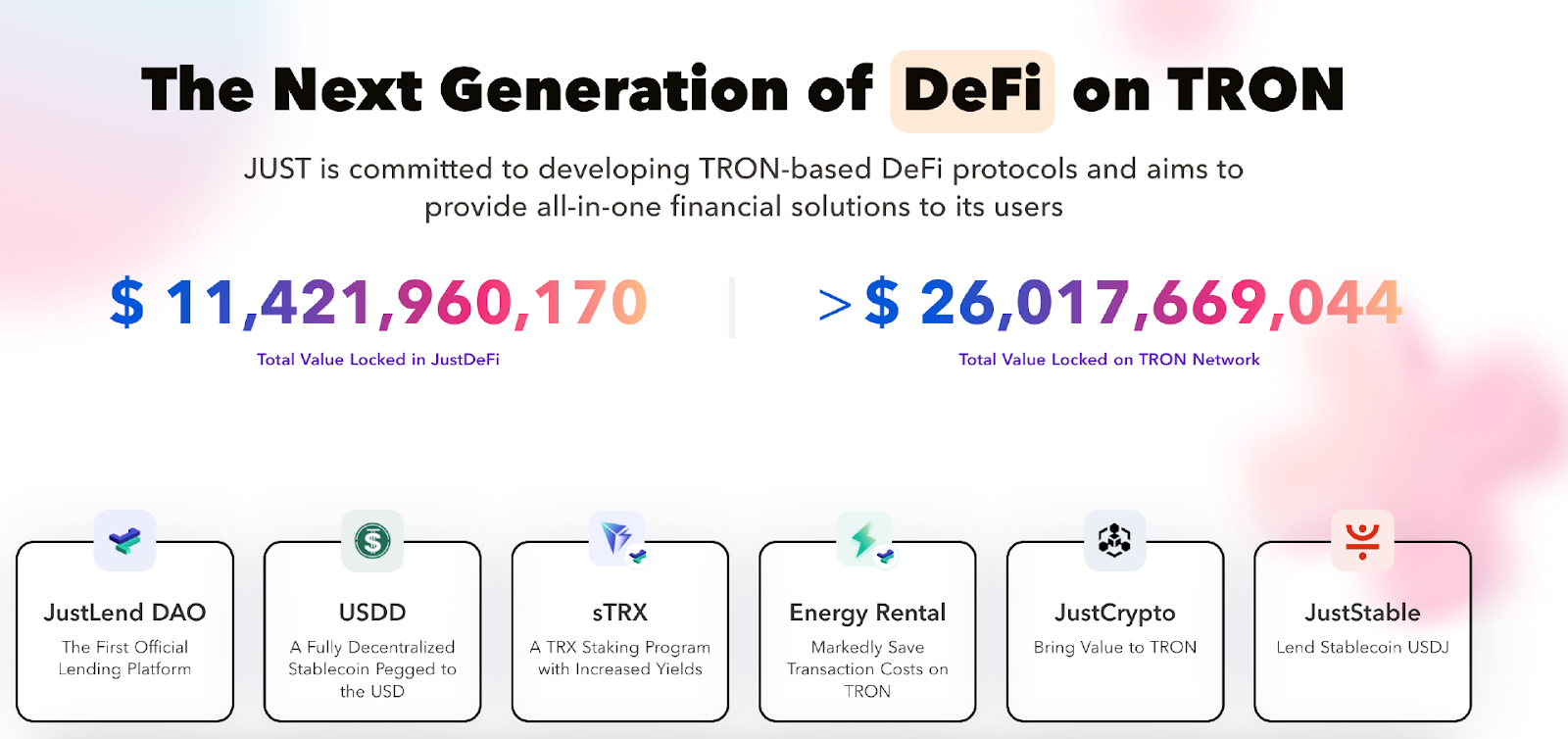
A deep dive into JustLend DAO's Q4 2025 performance reveals clear growth trajectories. First, as the flagship lending protocol of the JUST ecosystem, JustLend DAO benefits from the continuous improvement of the TRON infrastructure, with its Total Value Locked (TVL) breaking through the $7.08 billion mark in the fourth quarter, consistently ranking among the top three in the lending market, and the lending activity in its SBM market also climbed to a new cycle high.

It is worth noting that the source of the $10,340,249 in retained earnings, which forms a significant part of this buyback fund, can be traced back to the revenue generated from the reserve capital deposited into the SBM USDT market during the first JST buyback. The增值 process of this capital is itself the most direct proof of the SBM market's strong profitability. It demonstrates JustLend DAO's sophisticated financial operation model: strategically redeploying ecological profits for regenerative use within the protocol, allowing them to continue "self-generating blood," thereby providing an endogenous, sustainable source of funding for subsequent value returns.

On this basis, JustLend DAO's revenue structure shows a trend of diversification. While the traditional lending market, its fundamental business, maintains steady growth, JustLend DAO has innovatively built a product matrix including sTRX (Staked TRX) and Energy Rental, greatly expanding the boundaries and depth of its value capture.

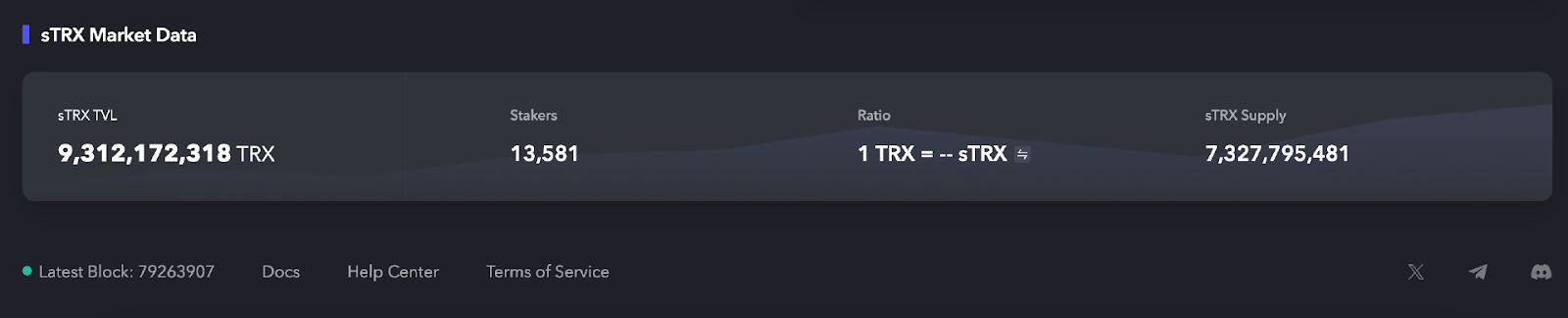
Among these, the sTRX service allows users to stake TRX to earn rewards while still flexibly participating in other DeFi activities. This innovative design significantly improves capital efficiency and user stickiness. As of January 15th, the platform's TRX staking volume has surpassed 9.3 billion tokens. This staggering figure not only reflects the community's high recognition of the sTRX product but also brings considerable and sustainable service revenue.
At the same time, the "Energy Rental" service, designed to reduce user on-chain operation costs, has also demonstrated strong market appeal through active rate optimization. Since September 2025, the base fee rate for this service was significantly reduced from 15% to a more competitive 8%. The fee optimization directly stimulated market demand and transaction frequency, thereby creating steady incremental revenue for the protocol through more active leasing business.

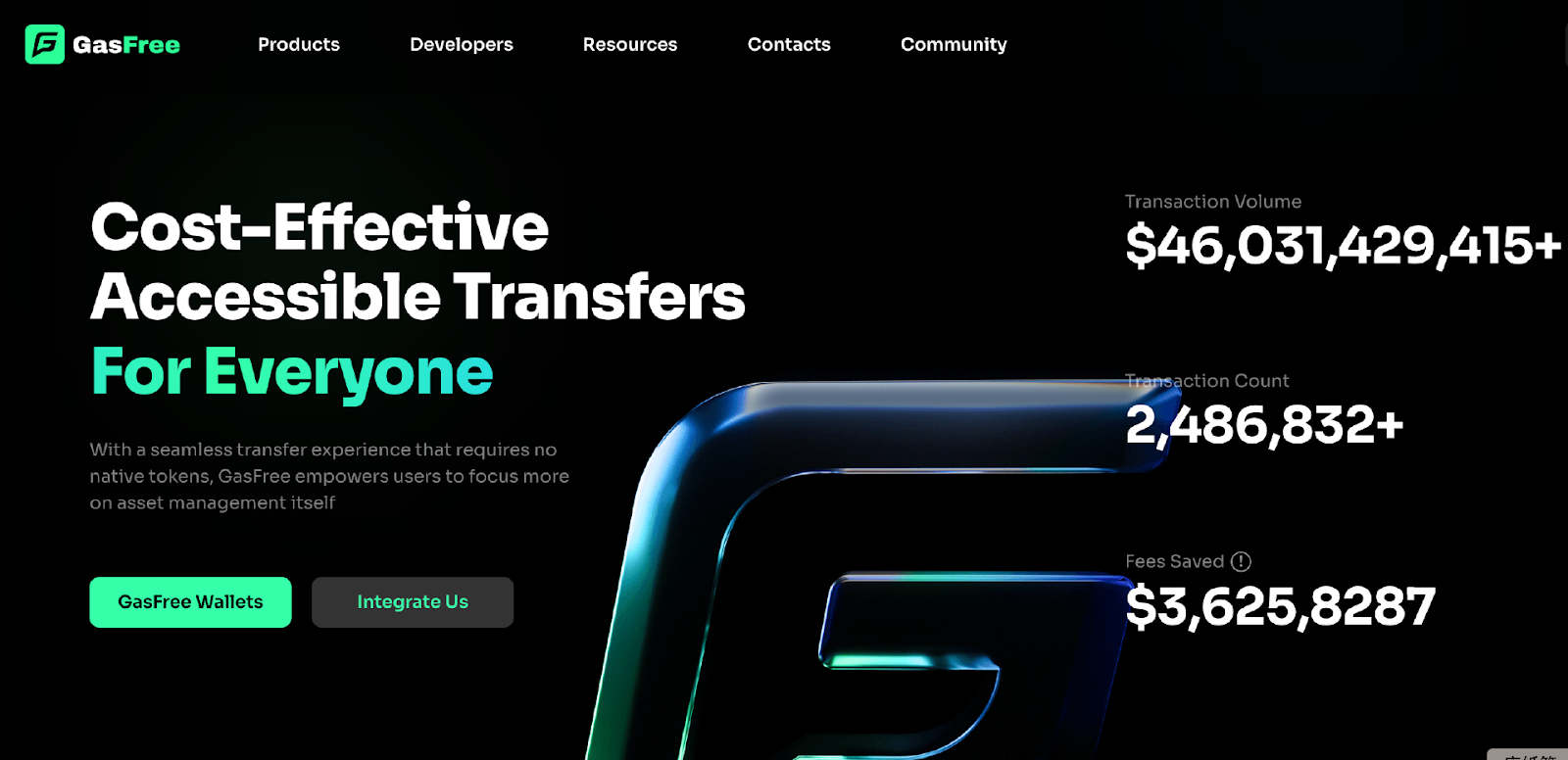
While the core product matrix continues to exert force, JustLend DAO, focusing on lowering the participation barrier for general users, innovatively launched the GasFree smart wallet in March 2025. This feature completely breaks the long-standing barrier for new users of having to pre-hold native tokens (TRX) to pay transaction fees. It allows users to deduct and pay the required network fees directly from the token assets they are transferring (e.g., USDT). This design not only achieves ultimate operational convenience but also fundamentally broadens the accessibility of blockchain finance.

To accelerate the adoption of this innovative feature, JustLend DAO simultaneously launched a highly attractive 90% transfer fee subsidy campaign. With this support, users using the GasFree function for USDT transfers only need to pay an extremely low fee of about 1 USDT. This combined strategy quickly ignited market demand. As of January 15th, the total transaction volume driven by the GasFree smart wallet has surpassed $46 billion. This staggering scale not only validates the market's strong desire for a frictionless transaction experience but also directly saved users a cumulative total of over $36.25 million in network fee costs. This innovation, by significantly reducing actual usage costs and cognitive barriers, has introduced massive incremental users and capital flow into the ecosystem, constituting another strong growth pole for the platform's network effects and revenue potential.
Meanwhile, another funding channel in the buyback and burn plan, the incremental revenue from the USDD multi-chain ecosystem (the portion exceeding $10 million), also constitutes a significant source. USDD, as the core decentralized stablecoin of the TRON ecosystem, has seen fruitful results from its multi-chain expansion strategy. It has been successfully deployed on mainstream public chains like Ethereum and BNB Chain, broadening its application scenarios and user base.

Its ecosystem value recently achieved a milestone breakthrough. On January 14th, USDD's TVL historically broke through the $1 billion mark. This means that in less than two months, USDD's TVL scale achieved an astonishing 100% growth, its expansion speed and market acceptance fully confirming the strong momentum and deep asset appeal of this stablecoin in the multi-chain ecosystem. The rapid growth of its TVL and the continued prosperity of its ecosystem significantly enhance the potential scale of this funding channel, providing an anticipated value source for JST's buyback and burn plans in subsequent quarters.

Through deep integration with various DeFi protocols, USDD not only consolidates its peg stability but also creates continuous value inflow for the entire ecosystem. The inclusion of USDD ecosystem's excess income in the JST buyback and burn plan builds a value closed loop of "stablecoin + lending protocol + governance token". In this model, the expansion and prosperity of USDD and JustLend DAO directly power JST's deflation, while the increase in JST's value in turn enhances the attractiveness and cohesion of the entire TRON DeFi ecosystem, creating a powerful internal synergy and value feedback effect.

Deepening Deflation Mechanism: Revolutionary Reshaping of JST's Value Foundation

In summary, the significance of this buyback and burn extends far beyond mere price support; it is triggering a series of profound structural changes. Most fundamentally, it completes the reshaping of JST's value support logic. JST is no longer merely a "utility token" for paying network fees or participating in governance votes; it has evolved into an "equity asset" directly anchored to the cash flow performance of JustLend DAO, USDD, and associated ecosystems.


Through the buyback and burn mechanism, the profit growth of the ecosystem is continuously injected into the value foundation of the JST token. This makes holding JST equivalent to holding an equity certificate that shares in the future profit growth of the ecosystem. On January 8th, CoinMarketCap data showed that JST market cap historically broke through the $400 million mark. This is not just a numerical leap but substantial market recognition of its new positioning. Along with the rising market cap came increased fund activity. On January 8th, its 24-hour trading volume significantly increased by 21.92%, reaching $31.49 million, and its price had also risen steadily by 10.82% over the past month, with a daily increase of 3.1%.

The synchronous expansion of trading volume and market cap at key junctures is not accidental market fluctuation but a clear "vote of confidence" from capital in response to the positive fundamentals of the JUST ecosystem, particularly the profitability and value return mechanism demonstrated by the buyback and burn.

Secondly, the JST buyback and burn also brings substantial增值 in governance power. As the total token supply is irreversibly reduced, the governance weight in the protocol represented by each remaining JST in the market will increase accordingly. This means long-term holders not only enjoy the economic benefits of value appreciation but also see their voice in key community decisions (such as parameter adjustments, new product launches, treasury fund usage, etc.) amplified simultaneously. This design deeply binds the interests of core community members to the long-term success of the protocol, greatly enhancing community stability and sense of participation.

From a broader industry perspective, JST's buyback and burn practice provides a clear, referable new paradigm for token economics in the DeFi field. Removing 10.96% of the total supply through two burns in a very short time not only demonstrates efficient execution but, more profoundly, deeply binds the protocol's financial success to the interests of token holders, thereby setting a benchmark for a virtuous cycle of "value creation - value return".

This model fundamentally shifts the old logic of token value relying on speculative narratives towards a sustainable path driven by the protocol's fundamental cash flow, providing a solid and credible case study for the industry on how to build economic models with substantial value support.

Looking ahead, with quarterly JST buyback and burn becoming the norm, a clear, predictable deflation path has been laid out. The scarcity of JST will be a certain narrative that strengthens over time. Each quarterly report disclosure and the subsequent burn will serve as a catalyst for reassessing its intrinsic value. This burn is not an endpoint but the beginning of a more magnificent chapter of value accumulation. A value revolution, supported by ecological profits and driven by product synergy, has already pressed the accelerator.


Trend Kriptolar

İlgili Sorular

QWhat was the total amount of JST tokens burned in the second round of JustLend DAO's buyback and burn, and what percentage of the total supply does this represent?

A525,000,000 JST tokens were burned in the second round, representing 5.3% of the total supply.

QWhat are the two main sources of funding for the JST buyback and burn initiative as detailed in the announcement?

AThe two main sources are $10,192,875 from JustLend DAO's net profit in Q4 2025 and $10,340,249 from the project's accumulated reserve earnings.

QWhat significant milestone did the Total Value Locked (TVL) of JustLend DAO achieve in the fourth quarter of 2025?

AJustLend DAO's Total Value Locked (TVL) surpassed $7.08 billion in Q4 2025.

QWhat is the name of the innovative, gas-free smart wallet feature launched by JustLend DAO, and what was the total transaction volume it facilitated by January 15th?

AThe feature is called the GasFree smart wallet, and it had facilitated a total transaction volume exceeding $46 billion by January 15th.

QWhat major milestone did the USDD ecosystem achieve on January 14th, and what does this signify for its growth?

AOn January 14th, the USDD ecosystem's TVL historically broke through the $1 billion mark, signifying a 100% growth in less than two months and demonstrating its rapid expansion and market adoption.

İlgili Okumalar

Must-Watch Events Next Week|CLARITY Act Could Face Senate Vote; SpaceX, Circle to Report Earnings (8.3-8.9)

**Summary: Key Events and Developments to Watch (August 3-9)** The upcoming week is marked by significant financial disclosures, key legislative deadlines, and notable product updates. **Major Financial Events:** Several companies are scheduled to release their Q2 2026 earnings. American Bitcoin (ABTC) will report on August 3, followed by SpaceX and Hut 8 Mining Corp. on August 4, and Circle on August 5. Notably, a significant portion of SpaceX shares (up to 12% of total shares) will be unlocked on August 6 following their earnings release. **Key Legislative Deadline:** The U.S. Senate faces an August 7 deadline to secure 60 votes for the CLARITY Act, a bipartisan bill aiming to establish a federal regulatory framework for cryptocurrencies. The Senate may hold a full vote on the bill during the week. **Economic Data:** The U.S. July Non-Farm Payrolls report will be released on August 7, providing crucial labor market data. **Technology & Product Updates:** * **Shutdowns:** DeFi portfolio tracker Zapper and wallet app Ctrl Wallet will cease operations on August 3. * **Upgrades:** LayerZero will deprecate its v1 relayers on August 3. XRP Ledger's new version 3.3.0, featuring five new functions, is expected next week. * **AI:** Elon Musk announced that the advanced Grok 4.6 AI model is set for release around August 7. * **Bitcoin:** The BIP-110 forced signaling for a potential Bitcoin network change is scheduled to begin around August 8. **Other Notable Events:** Chinese robotics firm Unitree Tech has set its preliminary price inquiry for its IPO for August 5. South Korean exchange Upbit will delist AQT and AERGO tokens on August 3.

marsbit31 dk önce

Must-Watch Events Next Week|CLARITY Act Could Face Senate Vote; SpaceX, Circle to Report Earnings (8.3-8.9)

marsbit31 dk önce

Stocks Are Plummeting More Sharply Than Cryptocurrencies. Where Has the Money Gone?

Stock Markets Plunge Deeper Than Cryptocurrencies: Where Did the Money Go? In late July, Seoul's Kospi index triggered circuit breakers for two consecutive days, plummeting over 40% from its June high. The collapse was led by heavyweight stocks like SK Hynix, whose record profits still disappointed investors, and devastating leveraged ETFs, with one major product losing over 83% of its value. This signaled a global, forced deleveraging targeting the most crowded trades. Interestingly, while stocks exhibited extreme volatility akin to crypto markets, Bitcoin rose nearly 15% in July after a prior steep drop. Analysis shows the money fleeing equities did not flow into Bitcoin. Instead, Bitcoin had already absorbed its sell-off in May-June, when U.S. spot Bitcoin ETFs saw historic outflows. The true safe-haven beneficiary was gold, whose price rose over 20% year-on-year, highlighting a decoupling between Bitcoin and gold as "digital gold." The sell-off was a targeted unwinding of leveraged positions in tech and semiconductors, accelerated by broker-dealer risk management and shifts in the AI narrative, including new competition from Chinese memory chipmakers. The retreat path was clear: from high-valuation tech stocks to cash and U.S. Treasuries, then to gold. For Bitcoin to attract sustained institutional inflows, conditions like eased global liquidity pressure, a "soft-landing" Fed rate cut, and U.S. regulatory clarity via legislation like the stalled CLARITY Act are needed. Currently, Bitcoin is not a safe haven but an already-cleared asset. Its low correlation with tech stocks, however, makes it a potential diversification play for institutional portfolios once the storm passes. The money isn't here yet, but the positioning is underway.

marsbit32 dk önce

Stocks Are Plummeting More Sharply Than Cryptocurrencies. Where Has the Money Gone?

marsbit32 dk önce

In Conversation with Ray Dalio: We Are Currently in an AI Bubble, with 1% of My Portfolio in Bitcoin

Ray Dalio, founder of Bridgewater Associates, warns in an interview that the current AI boom shows classic bubble characteristics, which could lead to significant economic downturns as seen in past cycles like 1929 or 2000. He explains that speculative enthusiasm, fueled by debt and overvaluation, often precedes a crash when rising rates or taxation force asset sales, causing widespread losses and recession. Dalio also outlines his "Big Cycle" theory, describing an approximate 80-year pattern where widening wealth gaps, massive government deficits, and shifting geopolitical power (like China's rise) create internal conflict and global instability. He emphasizes that we are in a late-cycle, transitional phase where traditional powers like the US and UK face decline. For personal wealth protection, Dalio advises diversification beyond cash into assets like stocks, bonds, real estate, and particularly gold, which he prefers over Bitcoin. While he holds about 1% of his portfolio in Bitcoin as a non-printable hard asset, he views gold as more secure from technological or governmental threats. Regarding AI's impact, Dalio believes it will disproportionately benefit capital owners, worsening inequality by replacing both physical and cognitive labor. He suggests that human intuition and emotional intelligence, combined with AI, will be key for future workers. On taxation, Dalio argues that wealth taxes are impractical and risk triggering asset sell-offs, reducing productive investment. He points to the UK as a cautionary example of debt, low productivity, and political strife. Geopolitically, Dalio foresees a more regionalized world, with the US showing weakness in prolonged conflicts like with Iran, akin to past imperial declines. The ideal outcome, he suggests, is coexisting powerful blocs (e.g., Americas, China-Asia Pacific) without major war.

marsbit4 saat önce

In Conversation with Ray Dalio: We Are Currently in an AI Bubble, with 1% of My Portfolio in Bitcoin

marsbit4 saat önce

Daily 7.2 Trillion KRW: Foreign Capital's Record Net Buying on Friday! Wall Street Says Headwinds for Korean Stock Fund Flows Have Subsided

South Korean stock market sees a dramatic shift in fund flows. On July 31, foreign investors made a record net purchase of approximately KRW 7.2 trillion in KOSPI stocks, marking a fundamental reversal from the persistent large-scale net outflows seen in previous months. This contributed to a significant narrowing of foreign net selling in July to KRW 9.8 trillion, down sharply from KRW 48.4 trillion in June and KRW 44.5 trillion in May. Simultaneously, domestic institutional pressure eased. South Korean pension funds and asset managers turned to a net buying position in July, purchasing KRW 1.0 trillion worth of KOSPI shares, contrasting with net sales in May and June. Market volatility is expected to be dampened by new financial regulations. Effective July 31, the Financial Services Commission tightened access for retail investors to single-stock leveraged ETFs by raising the minimum cash deposit requirement. Trading volumes for these products subsequently dropped to about 50% of their monthly average. Citigroup Research maintains its year-end KOSPI target of 10,000 points. The firm cites several supportive factors: the substantial easing of headwinds from capital outflows, a robust fundamental outlook for the semiconductor sector, historically low market valuations, strong economic fundamentals, and the potential for policy support from financial authorities if needed.

marsbit4 saat önce

Daily 7.2 Trillion KRW: Foreign Capital's Record Net Buying on Friday! Wall Street Says Headwinds for Korean Stock Fund Flows Have Subsided

marsbit4 saat önce

İşlemler

Spot

Popüler Makaleler

DAO Nasıl Satın Alınır

HTX.com’a hoş geldiniz! DAO Maker (DAO) satın alma işlemlerini basit ve kullanışlı bir hâle getirdik. Adım adım açıkladığımız rehberimizi takip ederek kripto yolculuğunuza başlayın. 1. Adım: HTX Hesabınızı OluşturunHTX'te ücretsiz bir hesap açmak için e-posta adresinizi veya telefon numaranızı kullanın. Sorunsuzca kaydolun ve tüm özelliklerin kilidini açın. Hesabımı Aç2. Adım: Kripto Satın Al Bölümüne Gidin ve Ödeme Yönteminizi SeçinKredi/Banka Kartı: Visa veya Mastercard'ınızı kullanarak anında DAO Maker (DAO) satın alın.Bakiye: Sorunsuz bir şekilde işlem yapmak için HTX hesap bakiyenizdeki fonları kullanın.Üçüncü Taraflar: Kullanımı kolaylaştırmak için Google Pay ve Apple Pay gibi popüler ödeme yöntemlerini ekledik.P2P: HTX'teki diğer kullanıcılarla doğrudan işlem yapın.Borsa Dışı (OTC): Yatırımcılar için kişiye özel hizmetler ve rekabetçi döviz kurları sunuyoruz.3. Adım: DAO Maker (DAO) Varlıklarınızı SaklayınDAO Maker (DAO) satın aldıktan sonra HTX hesabınızda saklayın. Alternatif olarak, blok zinciri transferi yoluyla başka bir yere gönderebilir veya diğer kripto para birimlerini takas etmek için kullanabilirsiniz.4. Adım: DAO Maker (DAO) Varlıklarınızla İşlem YapınHTX'in spot piyasasında DAO Maker (DAO) ile kolayca işlemler yapın.Hesabınıza erişin, işlem çiftinizi seçin, işlemlerinizi gerçekleştirin ve gerçek zamanlı olarak izleyin. Hem yeni başlayanlar hem de deneyimli yatırımcılar için kullanıcı dostu bir deneyim sunuyoruz.

238 Toplam GörüntülenmeYayınlanma 2024.12.11Güncellenme 2026.06.02

DAO Nasıl Satın Alınır

Tartışmalar

HTX Topluluğuna hoş geldiniz. Burada, en son platform gelişmeleri hakkında bilgi sahibi olabilir ve profesyonel piyasa görüşlerine erişebilirsiniz. Kullanıcıların DAO (DAO) fiyatı hakkındaki görüşleri aşağıda sunulmaktadır.

活动图片