Just One Step Away, What's Really Holding Up the Clarity Act?

marsbit2026-07-28 tarihinde yayınlandı2026-07-28 tarihinde güncellendi

Özet

The "Clarity Act," a major U.S. digital asset market structure bill, faces a critical hurdle with Congress's summer recess approaching on August 7. While the White House agreed to add an "ethics provision" targeting officials' crypto dealings—seen as a concession from Republicans—significant disagreements remain, causing analysts to lower its 2026 passage probability to 30%. The core dispute centers on the ethics clause's details. Democrats object to its enforcement being solely under the Department of Justice (DOJ), led by an ex-Trump lawyer, demanding independent oversight. They also oppose a sunset clause making the rules expire in 2029 (coinciding with a potential Trump term end) and argue restrictions on officials' family members are insufficient. Seven key Democratic senators negotiating the bill have called the current text inadequate. Republicans show little sign of further compromise, with a White House advisor stating the President has already made historic concessions. Time is running out. The Senate has postponed the bill to prioritize other matters, with only a few days left before recess. It must also compete for floor time with other contentious bills like Russia sanctions. The final push for the Clarity Act hinges on resolving these last-minute ethical and procedural disputes.

Author|Azuma(@azuma_eth)
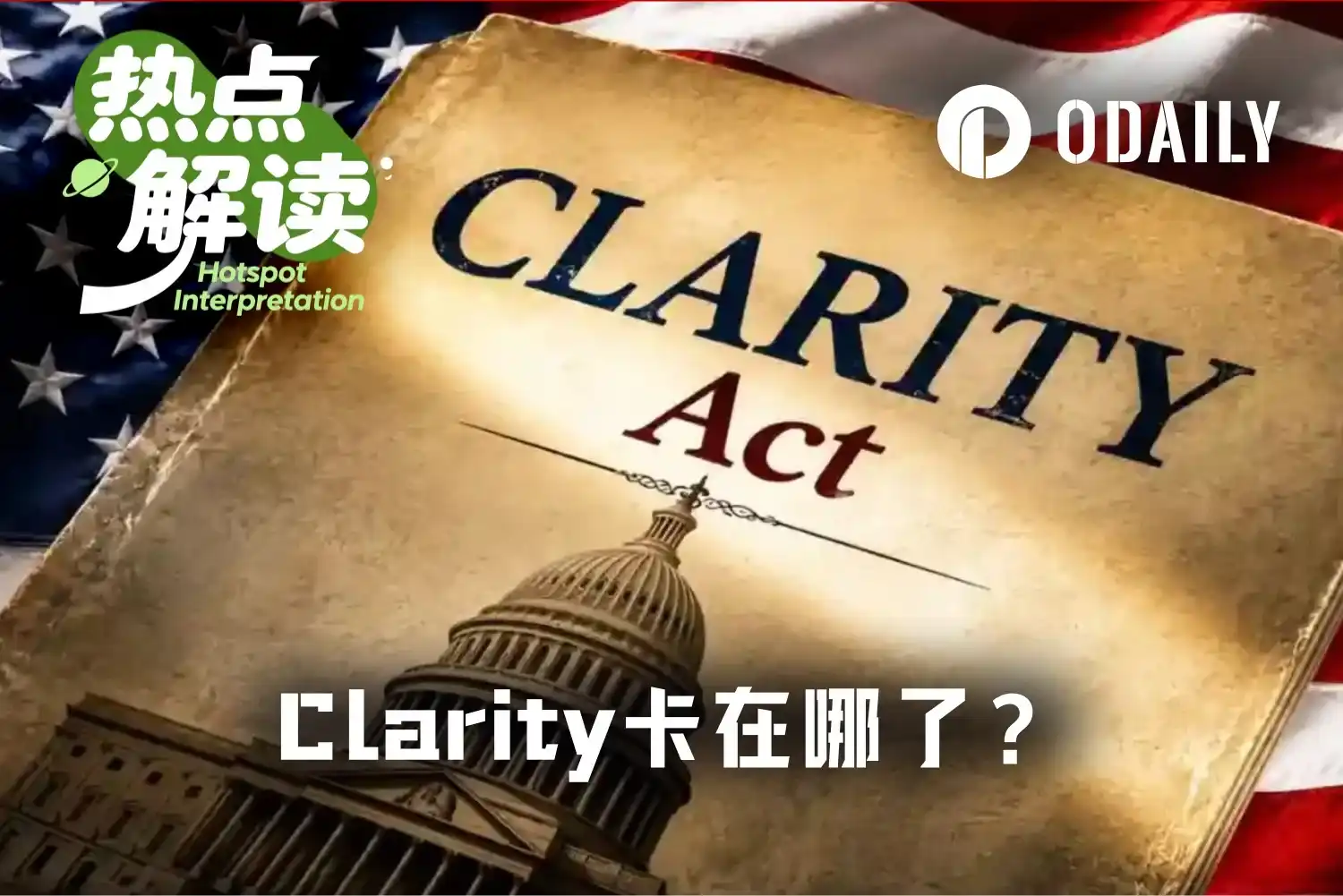
With only a few working days left before the U.S. Congress enters its summer recess (scheduled to begin on August 7th), time is running out for the "Digital Asset Market Structure Act" (hereinafter referred to as the Clarity Act) to pass through the Senate.

Last week, the White House agreed to add an "ethics provision" to the Clarity Act, aimed at restricting the president, vice president, members of Congress, and other federal officials from profiting from digital assets while in office. This was widely interpreted by the market as a sign that Trump and the Republicans had expressed a willingness to compromise, ready to reach a consensus with Democratic senators on the last major point of contention: the ethics issue.

However, as the amended details of the Clarity Act were released, the market discovered the situation is far more complicated than imagined.

Alex Thorn, head of research at Galaxy, posted over the weekend that the Clarity Act has reached the final "one-yard line." Just like in American football, that last yard can be the hardest yard on the field; politically, it's a battle where every inch is contested... Considering the limited time left and the strong opposition from the Democratic senators involved in the negotiations to the current wording of the ethics provision, the probability of the Act being enacted in 2026 has been downgraded to 30%.

The Biggest Disagreement Lies in the Details of the Ethics Provision

In his post, Alex Thorn summarized that several areas of disagreement remain in the Clarity Act, including developer protections, the regulatory boundary for DeFi, stablecoin yield restrictions, the CFTC registration mechanism, and newly added enforcement provisions.

However, the prevailing consensus in the market is that the biggest obstacle currently hindering the bill's progress remains the ethics provision, which was once interpreted as a concession Trump and the Republicans were willing to make.

According to the latest consolidated Senate text, the Clarity Act spans 616 pages. The newly added content related to the ethics provision is primarily used to restrict the president, vice president, members of Congress, and other senior federal officials from engaging in digital asset-related activities. This includes prohibiting such officials and their spouses from issuing or promoting digital assets while in office, restricting the listing of related assets on regulated platforms, requiring financial interest disclosures, and introducing a blind trust mechanism. The provision also stipulates that enforcement authority lies with the Department of Justice (DOJ) and that it will automatically expire on January 20, 2029, after the end of Trump's term.

The problem is that Democrats believe the current version of the ethics provision has significant shortcomings.

  • First, Democrats argue that vesting enforcement authority solely with the DOJ lacks sufficient independence. As the DOJ is part of the executive branch, and the current Acting Attorney General, Todd Blanche, is also a former personal lawyer for Trump, doubts exist about the effectiveness of internal oversight when the targets of restriction involve the president or senior executive officials. Therefore, Democrats are demanding that enforcement authority be given to various inspectors general.
  • Second, the automatic expiration clause in 2029 has drawn strong opposition and criticism from Democrats. This date coincides precisely with the end of Trump's current presidential term. This means that after Trump leaves the presidency, there would be no legal basis for his successors to investigate Trump's past actions. Democrats argue that if the goal of the Clarity Act is to establish a long-term digital asset regulatory framework, then ethical norms should also become a permanent institution, not one that terminates with Trump's presidency.
  • Furthermore, Democrats are concerned that the current scope of restrictions is still limited. The current version mainly targets direct activities like issuing or promoting digital assets. However, it lacks clear restrictions on involvement in crypto profit-seeking through affiliated businesses, family members, or other indirect means. Especially considering that several of Trump's sons are deeply involved in the cryptocurrency industry, questions remain about whether the current version provides adequate coverage.

Democratic Senator Elizabeth Warren, a consistent and strong critic of the bill, issued a formal statement last week attacking the "DOJ-only enforcement" mechanism in the ethics provision, stating the bill "ought to be dead on arrival."

More impactful for vote counting, the seven Democrats (Senators Mark Warner, Angela Alsobrooks, Cory Booker, Catherine Cortez Masto, Ruben Gallego, John Hickenlooper, Raphael Warnock) who have been negotiating with Republicans also issued a joint statement, saying the current text "falls short."

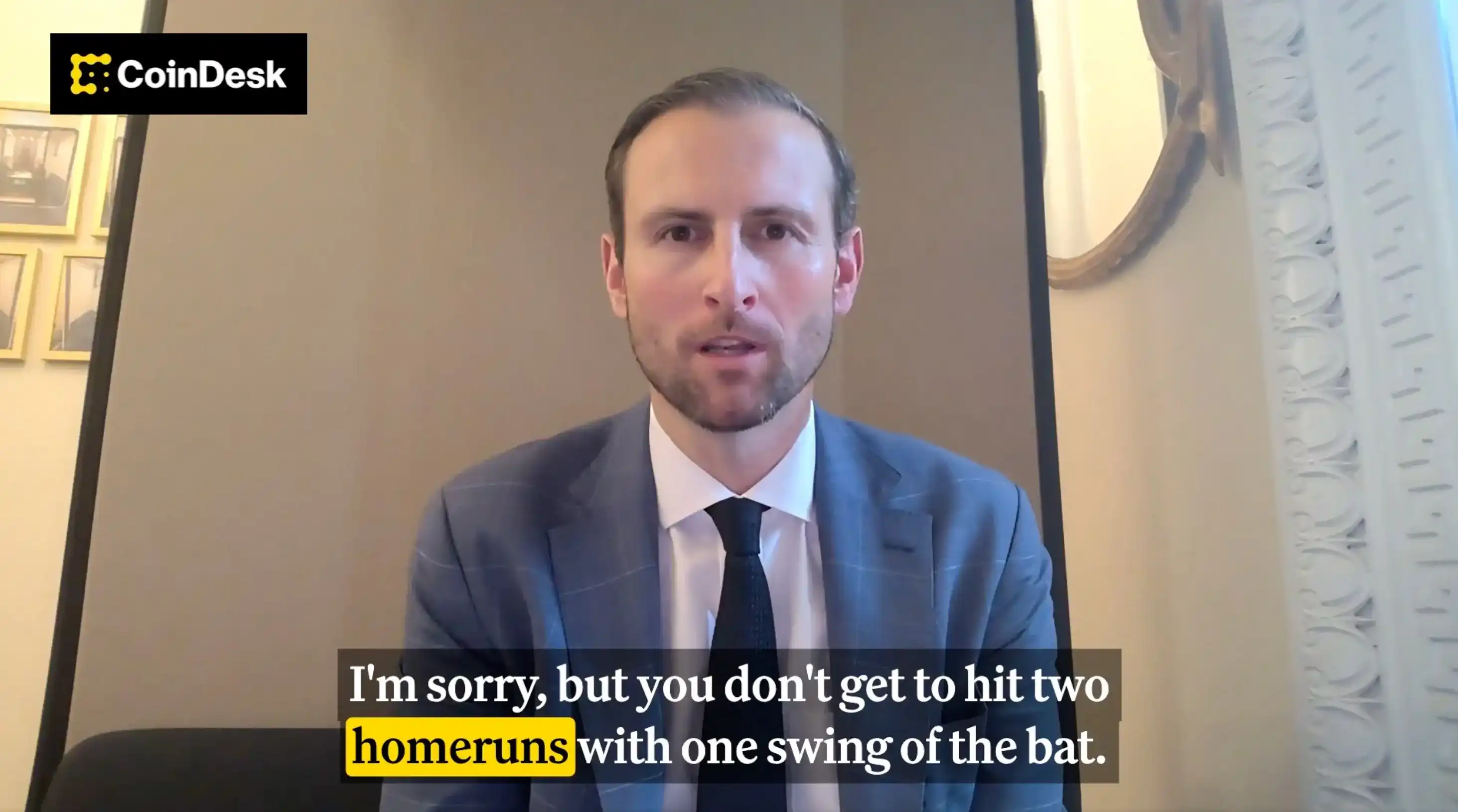
As for the Republican side, they appear to show no immediate signs of further concession in response to the strong Democratic pushback. Patrick Witt, Executive Director of the White House Digital Assets Advisory Council, responded firmly, stating the President has made a historic concession, and Democrats are still not satisfied — "You can't get two home runs with one swing."
How Much Time Window Remains?

Early this morning, Senate Majority Leader John Thune indicated that the Clarity Act would be temporarily set aside to prioritize government official nomination confirmations and the Russia sanctions bill. Additionally, the Senate will lose Tuesday and Wednesday this week due to the funeral of the late Senator Lindsey Graham.

This means the time available for the Clarity Act to advance before the summer recess has been further compressed. Current market expectations suggest the Clarity Act might not enter the voting process until next week at the earliest, the final few days before the Senate recess.

Former Senate staffer Anne Kelley also posted on X today that, according to Senate rules, once a cloture motion is filed on a major, controversial bill, that bill becomes the Senate's top priority agenda item — until the amendment process is completed, a second cloture motion is filed, and up to 30 hours of formal debate are exhausted, it is very difficult for the Senate to simultaneously advance another major, controversial bill.

This means the Clarity Act not only faces the challenge of resolving its own differences in time but also must compete for the Senate's already limited voting time with other still-controversial bills like the Russia sanctions bill, appropriations bills, and the SAVE Act.

This is why, despite initial market hopes that the Clarity Act could pass before the recess, an increasing number of Washington observers are lowering their expectations.

For the crypto industry, this protracted legislative battle is now in its final stage. The regulatory framework is just "one step away" from being enacted. But whether that step will be taken in the coming days or deferred to an uncertain future will be revealed very soon.


Trend Kriptolar

İlgili Sorular

QWhat is the Clarity Act and what is its current status in the U.S. legislative process?

AThe Clarity Act refers to the 'digital asset market structure bill.' It is currently in the final stages of negotiation in the U.S. Senate, with efforts to pass it before the summer recess scheduled to begin around August 7. However, significant disagreements remain, particularly over the ethics provision, making its passage uncertain.

QWhat is the 'ethics provision' added to the Clarity Act, and why has it become a major point of contention?

AThe 'ethics provision' is a clause aimed at preventing the President, Vice President, members of Congress, and other senior federal officials from profiting from digital assets while in office. It includes bans on issuing or promoting digital assets, disclosure requirements, and a blind trust mechanism. It has become a major point of contention because Democrats argue its current wording has flaws, including assigning enforcement solely to the Department of Justice (DOJ) and an automatic sunset clause that coincides with the end of a potential Trump presidency, which they believe undermines its effectiveness and permanence.

QWhat are the main objections raised by Democrats regarding the current version of the ethics provision?

ADemocrats have three main objections: 1) Enforcement authority is given solely to the Department of Justice, which they argue lacks independence, especially since the Acting Attorney General was once Trump's personal lawyer. They prefer inspectors general to have this role. 2) The provision includes a sunset clause set for January 20, 2029, which would exempt former officials like Trump from its rules after leaving office. Democrats want it to be permanent. 3) They believe the restriction scope is too narrow and does not adequately cover indirect involvement through family members or associated businesses, noting that Trump's sons are deeply involved in the crypto industry.

QAccording to the article, what is the predicted probability of the Clarity Act becoming law in 2026, and why was it adjusted?

AGalaxy research head Alex Thorn adjusted the predicted probability of the Clarity Act becoming law in 2026 down to 30%. This adjustment was made due to the limited time remaining before the summer recess and the strong opposition from Democratic negotiators to the current wording of the ethics provision, indicating significant hurdles remain.

QWhat are the key logistical challenges the Clarity Act faces in the Senate before the summer recess?

AThe Clarity Act faces several logistical challenges: 1) Limited time before the summer recess begins. 2) The Senate has prioritized other business, like government nominations and a Russia sanctions bill, pushing the Clarity Act down the agenda. 3) Senate rules dictate that once a cloture motion is filed on a contentious bill like this, it becomes the primary agenda item, requiring time for amendments and debate, thereby competing with other urgent bills for the Senate's limited remaining floor time.

İlgili Okumalar

In Conversation with Ray Dalio: We Are Currently in an AI Bubble, with 1% of My Portfolio in Bitcoin

Ray Dalio, founder of Bridgewater Associates, warns in an interview that the current AI boom shows classic bubble characteristics, which could lead to significant economic downturns as seen in past cycles like 1929 or 2000. He explains that speculative enthusiasm, fueled by debt and overvaluation, often precedes a crash when rising rates or taxation force asset sales, causing widespread losses and recession. Dalio also outlines his "Big Cycle" theory, describing an approximate 80-year pattern where widening wealth gaps, massive government deficits, and shifting geopolitical power (like China's rise) create internal conflict and global instability. He emphasizes that we are in a late-cycle, transitional phase where traditional powers like the US and UK face decline. For personal wealth protection, Dalio advises diversification beyond cash into assets like stocks, bonds, real estate, and particularly gold, which he prefers over Bitcoin. While he holds about 1% of his portfolio in Bitcoin as a non-printable hard asset, he views gold as more secure from technological or governmental threats. Regarding AI's impact, Dalio believes it will disproportionately benefit capital owners, worsening inequality by replacing both physical and cognitive labor. He suggests that human intuition and emotional intelligence, combined with AI, will be key for future workers. On taxation, Dalio argues that wealth taxes are impractical and risk triggering asset sell-offs, reducing productive investment. He points to the UK as a cautionary example of debt, low productivity, and political strife. Geopolitically, Dalio foresees a more regionalized world, with the US showing weakness in prolonged conflicts like with Iran, akin to past imperial declines. The ideal outcome, he suggests, is coexisting powerful blocs (e.g., Americas, China-Asia Pacific) without major war.

marsbit1 saat önce

In Conversation with Ray Dalio: We Are Currently in an AI Bubble, with 1% of My Portfolio in Bitcoin

marsbit1 saat önce

Daily 7.2 Trillion KRW: Foreign Capital's Record Net Buying on Friday! Wall Street Says Headwinds for Korean Stock Fund Flows Have Subsided

South Korean stock market sees a dramatic shift in fund flows. On July 31, foreign investors made a record net purchase of approximately KRW 7.2 trillion in KOSPI stocks, marking a fundamental reversal from the persistent large-scale net outflows seen in previous months. This contributed to a significant narrowing of foreign net selling in July to KRW 9.8 trillion, down sharply from KRW 48.4 trillion in June and KRW 44.5 trillion in May. Simultaneously, domestic institutional pressure eased. South Korean pension funds and asset managers turned to a net buying position in July, purchasing KRW 1.0 trillion worth of KOSPI shares, contrasting with net sales in May and June. Market volatility is expected to be dampened by new financial regulations. Effective July 31, the Financial Services Commission tightened access for retail investors to single-stock leveraged ETFs by raising the minimum cash deposit requirement. Trading volumes for these products subsequently dropped to about 50% of their monthly average. Citigroup Research maintains its year-end KOSPI target of 10,000 points. The firm cites several supportive factors: the substantial easing of headwinds from capital outflows, a robust fundamental outlook for the semiconductor sector, historically low market valuations, strong economic fundamentals, and the potential for policy support from financial authorities if needed.

marsbit1 saat önce

Daily 7.2 Trillion KRW: Foreign Capital's Record Net Buying on Friday! Wall Street Says Headwinds for Korean Stock Fund Flows Have Subsided

marsbit1 saat önce

Thanks to Dice Rolls, Bitcoin Keys Are Stored Offline, But Not Everyone Will Do It

The article discusses using dice rolls to generate secure Bitcoin wallet seeds, providing entropy independent of potentially flawed hardware random number generators. It explains that each fair dice roll offers about 2.585 bits of entropy, with around 50 rolls needed for a standard 12-word seed phrase and 99+ recommended for higher security. This method gained attention after a vulnerability was revealed in some Coldcard hardware wallets, where a faulty firmware RNG (dating back to 2021) compromised generated keys. The analysis notes that while a dice-generated main seed was safe from this specific flaw, other Coldcard functions (like creating paper wallets, backup keys, or passwords) could still be vulnerable if they used the defective RNG. The piece argues that while dice-based entropy is technically robust, the manual process is error-prone, tedious, and unrealistic for most new users, who might make mistakes in recording or inputting rolls. It concludes that while manual entropy generation should remain an option for advanced users, the long-term goal is to develop reliable, user-friendly hardware and software that securely generates randomness without requiring specialized knowledge. Coldcard users are advised to check their firmware version and replace any secondary secrets (like paper wallet keys) created with vulnerable devices, while also considering multi-signature setups with devices from different manufacturers for added security.

cryptonews.ru6 saat önce

Thanks to Dice Rolls, Bitcoin Keys Are Stored Offline, But Not Everyone Will Do It

cryptonews.ru6 saat önce

İşlemler

Spot

Popüler Makaleler

ONE Nasıl Satın Alınır

HTX.com’a hoş geldiniz! Harmony (ONE) satın alma işlemlerini basit ve kullanışlı bir hâle getirdik. Adım adım açıkladığımız rehberimizi takip ederek kripto yolculuğunuza başlayın. 1. Adım: HTX Hesabınızı OluşturunHTX'te ücretsiz bir hesap açmak için e-posta adresinizi veya telefon numaranızı kullanın. Sorunsuzca kaydolun ve tüm özelliklerin kilidini açın. Hesabımı Aç2. Adım: Kripto Satın Al Bölümüne Gidin ve Ödeme Yönteminizi SeçinKredi/Banka Kartı: Visa veya Mastercard'ınızı kullanarak anında Harmony (ONE) satın alın.Bakiye: Sorunsuz bir şekilde işlem yapmak için HTX hesap bakiyenizdeki fonları kullanın.Üçüncü Taraflar: Kullanımı kolaylaştırmak için Google Pay ve Apple Pay gibi popüler ödeme yöntemlerini ekledik.P2P: HTX'teki diğer kullanıcılarla doğrudan işlem yapın.Borsa Dışı (OTC): Yatırımcılar için kişiye özel hizmetler ve rekabetçi döviz kurları sunuyoruz.3. Adım: Harmony (ONE) Varlıklarınızı SaklayınHarmony (ONE) satın aldıktan sonra HTX hesabınızda saklayın. Alternatif olarak, blok zinciri transferi yoluyla başka bir yere gönderebilir veya diğer kripto para birimlerini takas etmek için kullanabilirsiniz.4. Adım: Harmony (ONE) Varlıklarınızla İşlem YapınHTX'in spot piyasasında Harmony (ONE) ile kolayca işlemler yapın.Hesabınıza erişin, işlem çiftinizi seçin, işlemlerinizi gerçekleştirin ve gerçek zamanlı olarak izleyin. Hem yeni başlayanlar hem de deneyimli yatırımcılar için kullanıcı dostu bir deneyim sunuyoruz.

603 Toplam GörüntülenmeYayınlanma 2024.12.12Güncellenme 2026.06.02

ONE Nasıl Satın Alınır

Tartışmalar

HTX Topluluğuna hoş geldiniz. Burada, en son platform gelişmeleri hakkında bilgi sahibi olabilir ve profesyonel piyasa görüşlerine erişebilirsiniz. Kullanıcıların ONE (ONE) fiyatı hakkındaki görüşleri aşağıda sunulmaktadır.

活动图片












