Just Now, OpenAI's Chief Futurist Departed, Once Called a Jackass by Musk

marsbit2026-07-08 tarihinde yayınlandı2026-07-08 tarihinde güncellendi

Özet

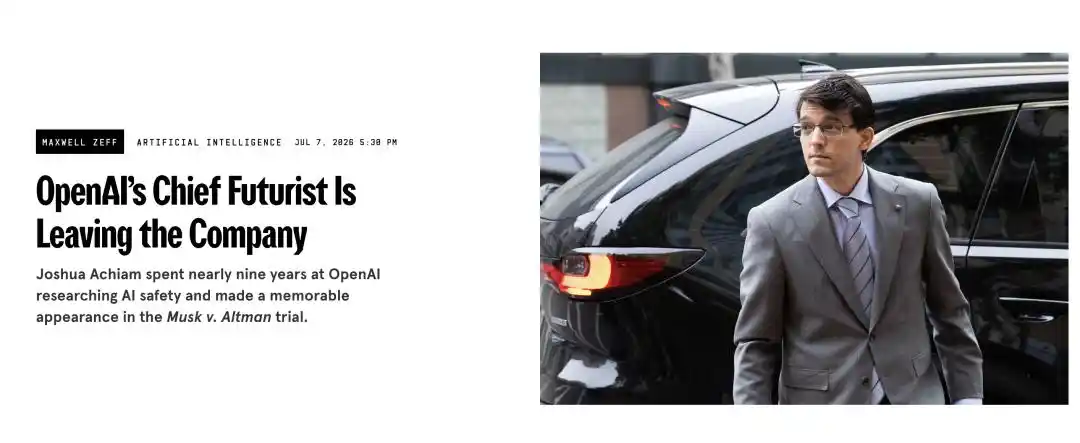
Just now, OpenAI's Chief Futurist, Joshua Achiam, announced his departure from the company via X. Having joined as a 25-year-old intern in 2017, he spent nine years at OpenAI, evolving from an AI safety research scientist to leading the Mission Alignment team. Earlier this year, that team was dissolved, and Achiam transitioned to the newly created role of Chief Futurist, positioned at the intersection of AI safety and policy to study AGI's long-term risks and opportunities. In his departure statement, Achiam called his time a "graduation," reflecting on the immense progress from AI that couldn't converse to systems solving scientific problems. He expressed optimism about a future of peace, prosperity, and possibility, closing with "To safe AGI." His tenure was notably marked by a 2018 incident where he publicly challenged Elon Musk—then still with OpenAI—on safety compromises if Musk pursued AGI at Tesla, leading Musk to call him a "jackass." This became an internal legend, with colleagues later giving him a trophy inscribed, "To safety, never stop being that jackass." Achiam's exit follows a pattern of prominent safety and alignment experts leaving OpenAI, including Jan Leike and others who joined rivals like Anthropic or started non-profits. His departure coincides with OpenAI's internal efforts to more tightly integrate its research and policy teams, and the recent hiring of former White House AI advisor Dean Ball. Achiam did not cite a specific reason for leaving but ...

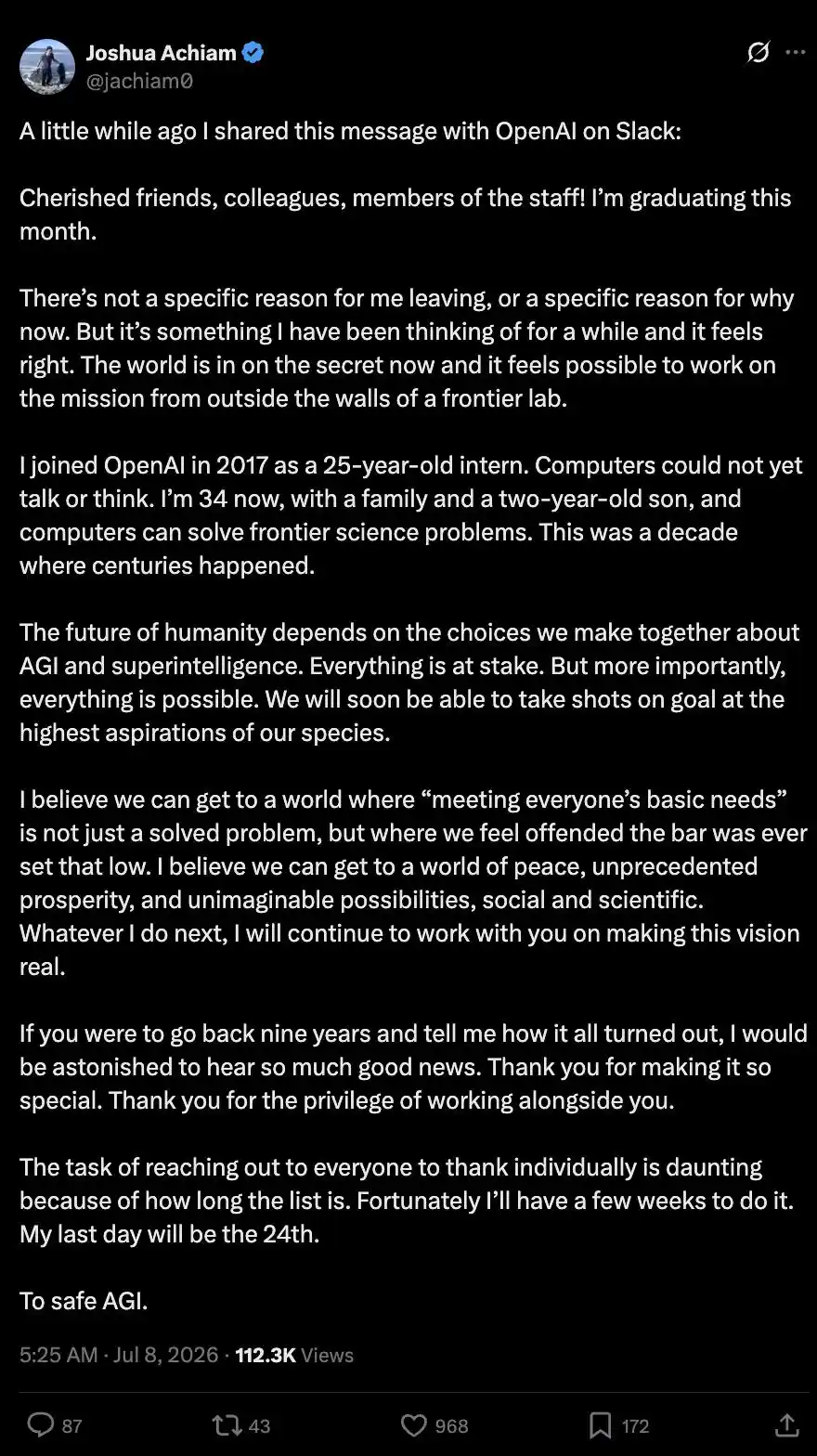
Just now, OpenAI's Chief Futurist Joshua Achiam announced his departure on X.
This is not an ordinary employee turnover.

Within OpenAI, the position of Chief Futurist sits between AI safety, policy, and the company's mission, responsible for studying the risks and opportunities that a continuously strengthening AI might bring to the world.

And Joshua Achiam was one of the key figures on OpenAI's safety and mission line.

Nine years ago in 2017, he joined OpenAI as an intern. In the early days, he was a research scientist focused on AI safety, conducting research on safety constraints in deep reinforcement learning.

Later, he led OpenAI's Mission Alignment team, responsible for upholding the company's original mission statement:

Ensure that AGI benefits all of humanity.

In February of this year, OpenAI disbanded the Mission Alignment team, and Joshua transitioned to the role of the company's Chief Futurist.
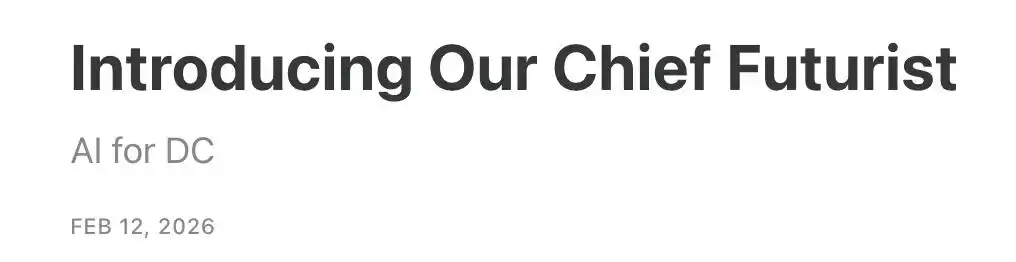
However, just five months later, Joshua announced that he would officially leave the company on July 24, after nine years.

As for the reason for his departure, Joshua did not reveal much.

He only stated that his departure was not due to a specific incident or a spur-of-the-moment decision, but something he had been contemplating for a long time.

For Safe AGI

In a long post on X, Joshua described this departure as "graduation."

He wrote that he joined OpenAI in 2017 as a 25-year-old intern (a graduate of UC Berkeley). At that time, computers could not truly converse with people, let alone think.

Now, he is 34, a father of a 2-year-old, and computers have begun solving cutting-edge scientific problems.

Joshua likened these nine years to "a decade where centuries of change happened."

Regarding the future, he remains optimistic.

I believe we can create a world where 'meeting everyone's basic needs' is no longer a problem to solve; instead, we would feel ashamed for setting the standard so low. I believe we can achieve a world filled with peace, unprecedented prosperity, and all sorts of unimaginable social and scientific possibilities. Whatever I do next, I will continue to work alongside you to make this vision a reality.

Finally, he concluded with a phrase:

To safe AGI.

This phrase also resonates with his position at OpenAI over the past nine years.

According to WIRED, OpenAI has not yet announced who will succeed Joshua. This position sits at the intersection of the company's AI safety and policy teams, with work including researching the potential harms and benefits of the rise of AI.

Previously, Joshua had also collaborated with senior leaders like OpenAI's Head of Global Affairs, Chris Lehane, to promote government regulation aligned with OpenAI's mission.

In other words, he was not just a "futurist" who made predictions.

More accurately, he was doing something else within OpenAI: constantly reminding the company of that old question as model capabilities charge forward.

Where exactly is this road ultimately leading?

The Man Who Interrupted Musk

Looking back at Joshua's OpenAI career, the most dramatic moment occurred in 2018.

During the global court case between Musk and OpenAI in April-May of this year, Joshua testified, recalling a farewell speech Musk gave in 2018 before leaving OpenAI:

At that time, he had interrupted Musk, pointing out that if planning to develop AGI at Tesla, it might come at the cost of safety.

It is said that Musk immediately called him a "jackass."

Later, this incident became something of an "urban legend" within OpenAI.

Dario Amodei, now CEO of Anthropic, and David Luan, who later became head of Amazon's AGI lab, even gifted Achiam a golden trophy engraved with the words:

"For safety, never stop being that jackass."

Whenever a Safety Leader Departs, OpenAI...?

On Reddit, users quickly placed this event into OpenAI's "safety lead departure list."

Someone joked:

Ilya left, Jan left, and now Joshua left. Every time the person responsible for alignment leaves, something seems to happen at OpenAI.
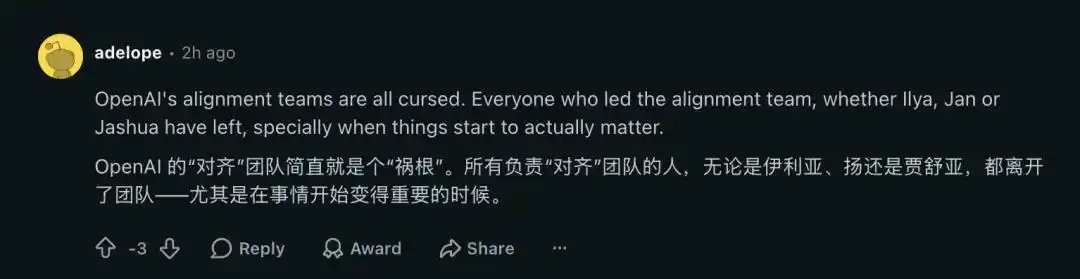
This meme is certainly an exaggeration.

But over the past two years, there have indeed been many changes in OpenAI's safety line.

The Jan mentioned by the netizen is Jan Leike, who co-led OpenAI's Superalignment team, researching how to keep advanced AI models under human control. In 2024, he left OpenAI to join Anthropic.
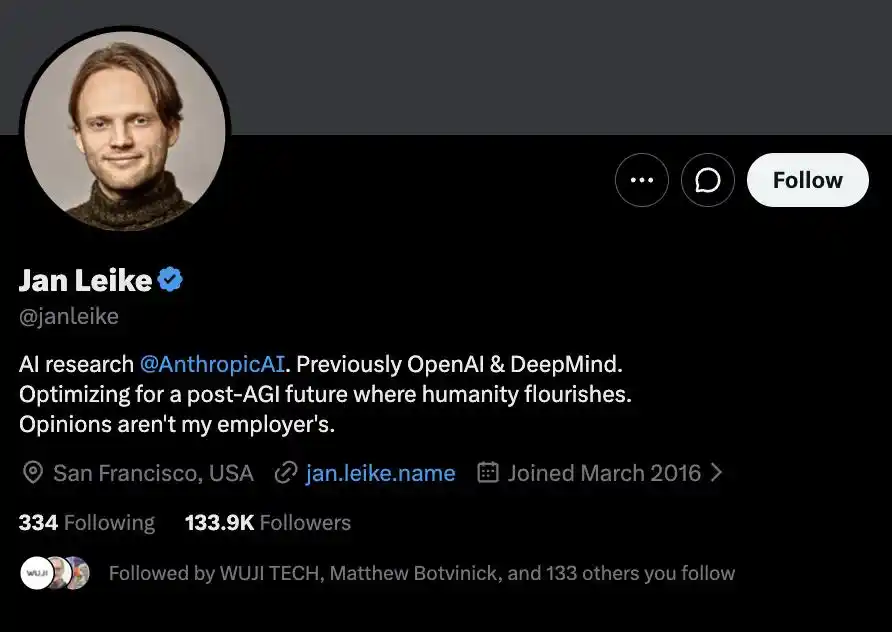
In the same year, OpenAI's Policy Research Lead Miles Brundage, and Steven Adler, who had been responsible for researching dangerous capabilities of AI models, also left one after another, going on to found non-profit organizations pushing for stricter safety and security standards for AI labs.

Andrea Vallone, who was responsible for researching how ChatGPT responds to users in psychological or emotional distress, also left OpenAI at the end of 2025, joining A Corp, the team where her former colleague Jan Leike works.

Joshua is the latest name on this chain of departures.

Meanwhile, OpenAI itself is also adjusting the relationship between safety, research, and policy.

WIRED mentions that over the past year, OpenAI has been trying to bring AI research teams and policy teams closer together, hoping to develop rules and standards that better anticipate technological development. Some researchers, including Boaz Barak, Noam Brown, and Adrien Ecoffet, have also started participating more in policy-related work.
On another front, former White House AI advisor Dean Ball joined OpenAI this week as the company's Head of Strategic Futures. He will have a brief handover with Joshua and is also expected to continue collaborating with researchers and policy leads.

This makes Joshua's departure even more微妙 (subtle/delicate).

On one hand, OpenAI is tightening the bond between "safety" and "policy"; on the other hand, the person who once led Mission Alignment and later served as Chief Futurist chooses to walk out of the lab at this moment.

Joshua wrote in his departure letter: The world already knows the secret (of achieving AGI). Now, it is possible to advance this mission from outside the walls of the frontier lab.

This might be the most intriguing sentence in the whole affair.

Over the past decade, the pace of AI development has indeed been exhilarating. OpenAI has long ceased to be just that small research lab, transforming into a new kind of institution that must simultaneously face products, capital, policy, courts, and the public.

But ultimately, the past decade is just a small segment in the journey of AI. The road ahead may be even longer.

Long enough to grind any Goliath down to a dwarf.

Reference Links

[1]https://x.com/jachiam0/status/2074605703281693175

[2]https://www.wired.com/story/openai-chief-futurist-joshua-achiam-is-leaving-the-company/

This article is from the WeChat public account "Quantum Bit", author: henry

Trend Kriptolar

İlgili Sorular

QWho is Joshua Achiam and what was his role at OpenAI?

AJoshua Achiam was the Chief Futurist at OpenAI. He previously led the Mission Alignment team and was a key figure in AI safety and policy, responsible for studying the risks and opportunities of advanced AI.

QWhat was the most dramatic incident involving Joshua Achiam and Elon Musk?

AIn 2018, during a farewell speech before Elon Musk left OpenAI, Joshua Achiam interrupted him, pointing out that developing AGI at Tesla might compromise safety. Musk reportedly called him a 'jackass' in response.

QWhat is the significance of the 'jackass' incident within OpenAI?

AThe incident became an internal legend at OpenAI. Dario Amodei and David Luan even gave Achiam a golden trophy inscribed with: 'For safety, never stop being that jackass,' highlighting a culture that valued challenging assumptions for safety's sake.

QAccording to the article, what pattern is observed when OpenAI's safety leaders leave?

AThe article mentions a pattern, albeit exaggerated, where significant events at OpenAI seem to follow the departure of key alignment and safety figures, such as Ilya Sutskever, Jan Leike, and now Joshua Achiam.

QHow did Joshua Achiam describe his departure and his outlook on the future of AI?

AJoshua Achiam described his departure as a 'graduation.' He expressed optimism about creating a future of peace, prosperity, and scientific possibilities, ending his statement with 'To safe AGI.'

İlgili Okumalar

Bitcoin Withdrawals Continue: 8 Years of Storage in a Coldcard Cold Wallet Ended in Zero

Coldcard Hardware Wallet Hacked: Losses Mount Due to Vulnerable Seed Generation A critical vulnerability in Coldcard hardware wallets has led to a continued wave of fund thefts. According to Galaxy Research, the total stolen has reached 1,367.05 BTC (approx. $88.6 million) from 4,585 addresses, a significant increase from the initial 594.5 BTC reported on July 30, 2026. Most of the stolen funds remain on the attackers' addresses. The issue is not with the current firmware, which Coinkite has updated, but with seed phrases generated on vulnerable devices between March 2021 and the release of fixed firmware versions. Due to a programmer error, devices switched from using a hardware random number generator to the software-based Yasmarang generator, which was initialized with publicly accessible data like the chip's serial number. This made the seed phrases predictable through offline brute-force attacks, meaning wallets remain at risk until funds are moved to a new wallet generated with the patched firmware. Affected devices include Mk2/Mk3 with firmware 4.0.1–4.1.9 (and up to 5.0.3), Mk4/Mk5 up to version 5.6.0, and Q models up to 1.5.0Q. The only exceptions are seeds created with a high-entropy method like at least 50 independent dice rolls or a strong unique BIP-39 passphrase. All other owners must generate a new seed on the fixed firmware and transfer their assets. A case highlighting the human impact involves a 39-year-old long-term investor who lost 2 BTC (approx. $130,000) in minutes. He had accumulated the Bitcoin over eight years through physical labor, viewing it as a financial lifeline and a retirement plan in a country suffering from hyperinflation. His story underscores that even conservative "buy and hold in cold storage" strategies can be compromised by such underlying technical flaws. From a technical perspective, this incident echoes historical failures where weak random number generators undermined cryptographic security, challenging the assumption that offline storage is automatically foolproof.

cryptonews.ru3 saat önce

Bitcoin Withdrawals Continue: 8 Years of Storage in a Coldcard Cold Wallet Ended in Zero

cryptonews.ru3 saat önce

İşlemler

Spot

Popüler Makaleler

T Nasıl Satın Alınır

HTX.com’a hoş geldiniz! Threshold Network Token (T) satın alma işlemlerini basit ve kullanışlı bir hâle getirdik. Adım adım açıkladığımız rehberimizi takip ederek kripto yolculuğunuza başlayın. 1. Adım: HTX Hesabınızı OluşturunHTX'te ücretsiz bir hesap açmak için e-posta adresinizi veya telefon numaranızı kullanın. Sorunsuzca kaydolun ve tüm özelliklerin kilidini açın. Hesabımı Aç2. Adım: Kripto Satın Al Bölümüne Gidin ve Ödeme Yönteminizi SeçinKredi/Banka Kartı: Visa veya Mastercard'ınızı kullanarak anında Threshold Network Token (T) satın alın.Bakiye: Sorunsuz bir şekilde işlem yapmak için HTX hesap bakiyenizdeki fonları kullanın.Üçüncü Taraflar: Kullanımı kolaylaştırmak için Google Pay ve Apple Pay gibi popüler ödeme yöntemlerini ekledik.P2P: HTX'teki diğer kullanıcılarla doğrudan işlem yapın.Borsa Dışı (OTC): Yatırımcılar için kişiye özel hizmetler ve rekabetçi döviz kurları sunuyoruz.3. Adım: Threshold Network Token (T) Varlıklarınızı SaklayınThreshold Network Token (T) satın aldıktan sonra HTX hesabınızda saklayın. Alternatif olarak, blok zinciri transferi yoluyla başka bir yere gönderebilir veya diğer kripto para birimlerini takas etmek için kullanabilirsiniz.4. Adım: Threshold Network Token (T) Varlıklarınızla İşlem YapınHTX'in spot piyasasında Threshold Network Token (T) ile kolayca işlemler yapın.Hesabınıza erişin, işlem çiftinizi seçin, işlemlerinizi gerçekleştirin ve gerçek zamanlı olarak izleyin. Hem yeni başlayanlar hem de deneyimli yatırımcılar için kullanıcı dostu bir deneyim sunuyoruz.

701 Toplam GörüntülenmeYayınlanma 2024.12.10Güncellenme 2026.06.02

T Nasıl Satın Alınır

Tartışmalar

HTX Topluluğuna hoş geldiniz. Burada, en son platform gelişmeleri hakkında bilgi sahibi olabilir ve profesyonel piyasa görüşlerine erişebilirsiniz. Kullanıcıların T (T) fiyatı hakkındaki görüşleri aşağıda sunulmaktadır.

活动图片