JST Embarks on Its Second Buyback and Burn: Cumulative 10.96% of Total Supply Destroyed, Accelerating Entry into a New Era of Value Growth

marsbit2026-01-16 tarihinde yayınlandı2026-01-16 tarihinde güncellendi

Özet

JST, the token of the JUST ecosystem, has completed its second major buyback and burn event on January 15, 2026, permanently removing 525 million JST (5.3% of total supply) worth over $21 million. Combined with the first burn, a total of 10.96% of JST's supply has been destroyed, accelerating its deflationary trajectory and reinforcing its value proposition. The buyback was funded by $10.19 million from JustLend DAO's Q4 2025 net profits and $10.34 million from accumulated reserve earnings, demonstrating the ecosystem's strong profitability and financial health. Key drivers include JustLend DAO's robust performance, with Total Value Locked (TVL) exceeding $7.08 billion, innovative products like sTRX (with over 9.3 billion TRX staked), and the widely adopted GasFree smart wallet, which has facilitated over $46 billion in transactions and saved users $36.25 million in fees. Additionally, growth from the USDD decentralized stablecoin ecosystem, which recently surpassed $1 billion in TVL, contributed significant incremental revenue. This burn signifies a fundamental shift for JST from a utility governance token to a yield-backed asset, directly tethering its value to the ecosystem's cash flow. The reduced supply increases scarcity, enhances per-token governance power for holders, and establishes a sustainable, transparent deflation model for DeFi. With a market cap surpassing $400 million and growing trading volume, JST is positioned for continued value appreciation driven by r...

On January 15, 2026, the JST token officially completed its second large-scale buyback and burn. This burn action not only demonstrates the project's firm commitment to its deflationary mechanism but also showcases the robust profitability and financial health of the JUST ecosystem to the entire cryptocurrency market with the destruction of 525,000,000 JST (5.3% of the total supply).

According to the JustLend DAO official announcement, the estimated value corresponding to this burn exceeds 21 million US dollars. Combined with the amount burned in the first round, the cumulative number of JST tokens burned has reached 1,084,890,753, accounting for 10.96% of the total supply. This means that in less than three months, JST has permanently removed over one-tenth of its total supply, a remarkable pace of deflation.

From a broader perspective, this burn marks a fundamental evolution in JST's value narrative. It is transitioning from a governance token to an equity asset anchored to the growth of the ecosystem's cash flow. This process not only enhances the scarcity and value foundation of the JST token but also provides a clear, practical path for the decentralized finance (DeFi) sector—one driven by real yield to fuel token value—demonstrating a transparent and sustainable new paradigm of deflation.

Strong Performance of JustLend DAO Ecosystem Forges the Financial Cornerstone for Large-Scale Buyback

Such a large-scale buyback and burn necessarily requires a solid financial foundation. The announcement clearly reveals the dual pillars of the funding source: $10,192,875 came from JustLend DAO's net profit in the fourth quarter of 2025, while another $10,340,249 originated from the project's accumulated stock of reserve earnings. These figures themselves are the most powerful proof of performance; they collectively point to a core fact: the JustLend DAO ecosystem not only possesses strong immediate profitability but also boasts a robust financial structure and sustainable cash flow, which form the solid foundation supporting its commitment to buybacks and its deflation strategy.

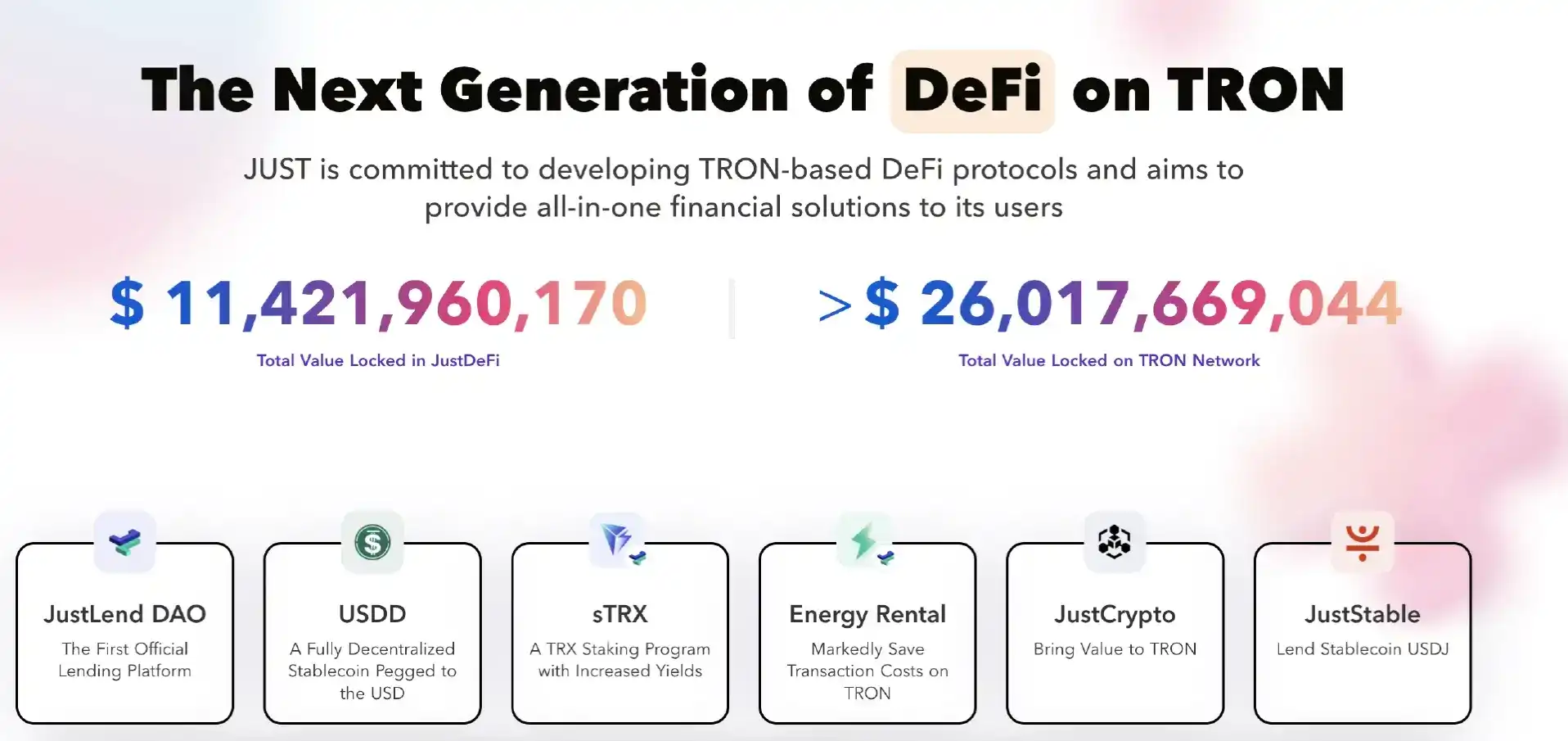
A deeper analysis of JustLend DAO's performance in Q4 2025 reveals clear growth trajectories. Firstly, as the flagship lending protocol of the JUST ecosystem, JustLend DAO benefits from the continuous improvement of the TRON infrastructure. Its Total Value Locked (TVL) broke through the $7.08 billion mark in the fourth quarter and has long been ranked among the top three in the lending market, with lending activity in its SBM market also climbing to a new cycle high.

It is worth noting that the $10,340,249 in stock earnings, which formed an important part of this buyback fund, can be traced back to the earnings from the reserve capital deposited in the SBM USDT market during the first JST buyback. The appreciation process of this capital is itself the most direct proof of the SBM market's strong profitability. It showcases JustLend DAO's sophisticated financial operation model: strategically reinvesting ecosystem profits for "self-regeneration" within the protocol, thereby providing an endogenous and sustainable source of funding for subsequent value returns.

On this basis, JustLend DAO's revenue structure is also showing a trend of diversification. While the traditional lending market, its core business, maintains steady growth, JustLend DAO has innovatively built a product matrix including sTRX (Staked TRX) and Energy Rental, greatly expanding the boundaries and depth of its value capture.

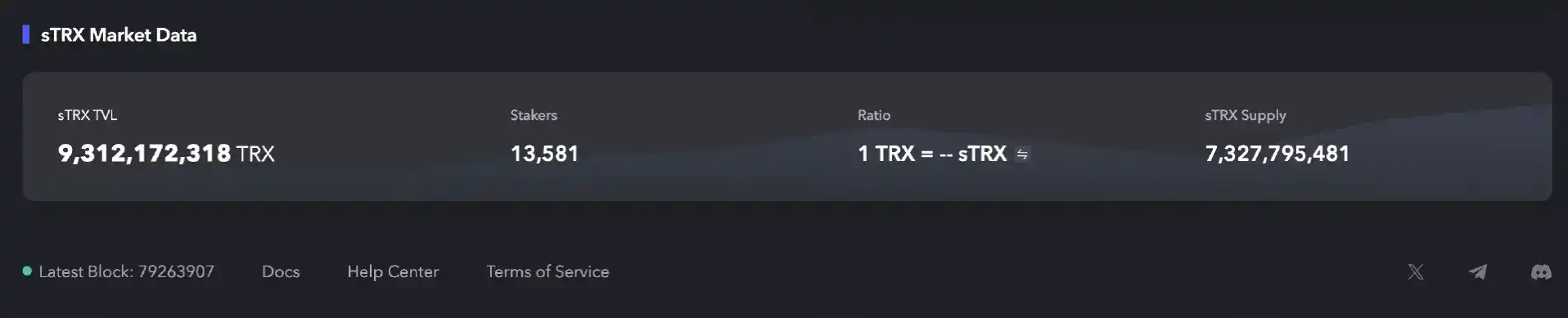
Among these, the sTRX service allows users to stake TRX to earn rewards while still flexibly participating in other DeFi activities. This innovative design significantly improves capital efficiency and user stickiness. As of January 15, the amount of TRX staked on the platform has surpassed 9.3 billion tokens. This staggering figure not only reflects the community's high recognition of the sTRX product but also generates considerable and sustainable service revenue.
Meanwhile, the "Energy Rental" service, designed to reduce users' on-chain operation costs, has also demonstrated strong market appeal through active rate optimization. Since September 2025, the base rate for this service was significantly reduced from 15% to a more competitive 8%. The rate optimization directly stimulated market demand and transaction frequency, thereby creating steady incremental revenue for the protocol through more active leasing business.

While the core product matrix continues to perform strongly, JustLend DAO, focusing on lowering the participation threshold for the general user, innovatively launched the GasFree smart wallet in March 2025. This feature彻底打破了用户必须预先持有原生代币(TRX)以支付手续费这一长期困扰新手用户的壁垒 (completely breaks down the long-standing barrier for new users of having to hold the native token (TRX) in advance to pay transaction fees), allowing users to directly deduct and pay the required network fees from the token assets they are transferring (e.g., USDT). This design not only achieves ultimate operational convenience but also fundamentally broadens the accessibility of blockchain finance.

To accelerate the adoption of this innovative feature, JustLend DAO simultaneously launched a highly attractive 90% transfer fee subsidy campaign. With this support, users only need to pay an extremely low fee of approximately 1 USDT when using the GasFree function for USDT transfers. This combined strategy quickly ignited market demand. As of January 15, the total transaction volume driven by the GasFree smart wallet has exceeded $46 billion. This astonishing scale not only validates the market's strong desire for a frictionless transaction experience but has also directly saved users a cumulative total of over $36.25 million in network fee costs. This innovation, by significantly reducing actual usage costs and cognitive barriers, has introduced massive incremental users and capital flow into the ecosystem, constituting another powerful growth pole for the platform's network effects and revenue potential.

Meanwhile, another funding channel in the buyback and burn plan, namely the incremental revenue from the USDD multi-chain ecosystem (the portion exceeding $10 million), also constitutes a significant source of value. USDD, as the core decentralized stablecoin of the TRON ecosystem, has seen remarkable results from its multi-chain expansion strategy. It has been successfully deployed on mainstream public chains like Ethereum and BNB Chain, broadening its application scenarios and user base.

Its ecosystem value recently achieved a milestone breakthrough. On January 14, USDD's TVL historically surpassed the $1 billion mark. This means that in less than two months, USDD's TVL规模实现了惊人的100%增长 (achieved an astonishing 100% growth), its expansion speed and market acceptance fully confirming the strong momentum and deep asset appeal of this stablecoin within the multi-chain ecosystem. The rapid growth of its TVL and the continuous prosperity of its ecosystem significantly enhance the potential scale of this funding channel, providing an anticipated source of value for JST's subsequent quarterly buyback and burn plans.

Through deep integration with various DeFi protocols, USDD not only consolidates its peg stability but also creates continuous value inflow for the entire ecosystem. The inclusion of USDD ecosystem's excess income in the JST buyback and burn plan builds a value闭环 (closed loop) of "stablecoin + lending protocol + governance token". In this model, the expansion and prosperity of USDD and JustLend DAO directly power the deflation of JST, while the increase in JST's value in turn enhances the attractiveness and cohesion of the entire TRON DeFi ecosystem, creating a powerful internal synergy and value feedback effect.

Deepening Deflation Mechanism: Revolutionary Reshaping of JST's Value Foundation

In summary, the significance of this buyback and burn早已超越了单纯的价格支撑范畴 (has long surpassed the scope of mere price support); it is triggering a series of profound structural changes. Most fundamentally, it has completed the reshaping of JST's value support logic. JST is no longer merely a "utility token" for paying network fees or participating in governance votes; it has evolved into an "equity asset" directly anchored to the cash flow performance of JustLend DAO, USDD, and associated ecosystems.
Through the buyback and burn mechanism, the profit growth of the ecosystem is continuously injected into the value foundation of the JST token, making holding JST equivalent to holding an equity certificate that shares in the future profit growth of the ecosystem. On January 8, CoinMarketCap data showed that JST's market cap historically broke through the $400 million mark. This is not just a numerical leap but substantial market recognition of its new positioning. Accompanying the rising market cap was increased activity of funds. On January 8, its 24-hour trading volume significantly increased by 21.92%, reaching $31.49 million, and its price had also risen 10.82% steadily over the past month, with a daily increase of 3.1%.

The synchronous expansion of trading volume and market cap at key junctures is not偶然的市场波动 (an accidental market fluctuation) but a clear "vote of confidence" from the capital markets in response to the improving fundamentals of the JUST ecosystem, particularly the profitability and value return mechanism demonstrated by the buyback and burn.

Secondly, the JST buyback and burn also带来治理权力的实质性增值 (brings substantial增值 to governance power). As the total token supply is irreversibly reduced, the governance weight in the protocol represented by each remaining JST in the market will increase accordingly. This means that long-term holders not only enjoy the economic benefits of value appreciation but also see their voice in key community decisions (such as parameter adjustments, new product launches, treasury fund usage, etc.) amplified simultaneously. This design deeply binds the interests of core community members to the long-term success of the protocol,极大地增强了社区的稳定性和参与感 (greatly enhancing community stability and sense of participation).

From a broader industry perspective, JST's buyback and burn practice provides a clear and借鉴的新范式 (new paradigm to emulate) for token economics in the DeFi field. Removing 10.96% of the total supply through two rounds of burns in an extremely short time not only demonstrates efficient execution but, more profoundly, deeply binds the protocol's financial success to the interests of token holders, thereby establishing a良性循环典范 (exemplary virtuous cycle) of "value creation - value return".

This model fundamentally reverses the old logic where token value relied on speculative narratives,转向由协议基本面现金流驱动的可持续路径 (turning towards a sustainable path driven by the protocol's fundamental cash flow), providing a solid and credible case study for the industry on how to build economic models with substantial value support.

Looking ahead, with JST buyback and burn becoming a quarterly routine, a clear, predictable deflation path has been laid out. The scarcity of JST will be a certain narrative that strengthens over time. Each quarterly report disclosure and the subsequent burn will serve as a catalyst for reassessing its intrinsic value. This burn is not an endpoint but the beginning of a more恢弘的价值累积篇章 grand chapter of value accumulation). A value revolution, supported by ecosystem profitability and driven by product synergy, has already pressed the accelerator.


Trend Kriptolar

İlgili Sorular

QWhat was the total amount of JST tokens burned in the second buyback and what percentage of the total supply did it represent?

A525,000,000 JST tokens were burned, representing 5.3% of the total supply.

QWhat is the cumulative amount and percentage of JST tokens burned so far through the two buyback events?

AThe cumulative amount burned is 1,084,890,753 JST tokens, which is 10.96% of the total supply.

QWhat were the two main financial pillars that funded the buyback and burn initiative?

AThe funding came from JustLend DAO's Q4 2025 net revenue of $10,192,875 and a reserve of accumulated earnings of $10,340,249.

QWhat innovative product significantly lowered the barrier to entry for new users by eliminating the need to hold TRX for gas fees?

AThe GasFree Smart Wallet, which allows users to pay network fees directly from the tokens being transferred (like USDT).

QWhat major milestone did the USDD ecosystem achieve recently, and what does it signify for the JST buyback mechanism?

AThe USDD ecosystem's Total Value Locked (TVL) historically surpassed $1 billion, signifying rapid growth and providing a substantial, predictable value source for future JST buyback and burn plans.

İlgili Okumalar

After Three Consecutive Quarters of Decline, Can the Crypto Market Find a Window for Stabilization in Q3?

The cryptocurrency market has just concluded its worst-performing quarter since 2022, with total capitalization dropping 12.6% to $2.1 trillion. All core metrics indicate capital is leaving the sector, not just rotating within it. Bitcoin fell 14.2% and Ethereum dropped 25.4% in Q2, breaking their previous correlation with US tech stocks. A key driver is the reversal in US spot Bitcoin ETF flows, which saw a net outflow of approximately $4.67 billion in Q2, including a record monthly outflow near $4.5 billion in June. While recent data suggests long-term holders are accumulating again, sustained ETF outflows mean continued selling pressure. Market focus is now singularly on the Federal Reserve. The upcoming July FOMC meeting is seen as the most critical event for Q3. A dovish signal could support Bitcoin reclaiming a $68,000-$84,000 range, while a hawkish stance might establish a new trading band around $50,000-$56,000. Additionally, regulatory uncertainty persists, with the progress of the crucial *CLARITY Act* stalling in the Senate, reducing its perceived 2026 passage probability to 40-45%. Despite the broad downturn, a few sectors showed growth. Prediction markets saw nominal volume surge 48.7% year-over-year to $113.8 billion, and tokenized collectibles transaction volume rose 143% quarterly to $1.4 billion. The Real-World Asset (RWA) tokenization sector also continued steady growth, now representing ~$28.1 billion in on-chain value. The market's foundation for an extreme crash appears limited, with Bitcoin price hovering near its 200-week moving average. However, the trading paradigm has shifted from narrative-driven speculation to decisions based on price action, policy developments, and interest rate expectations, making a broad sentiment-driven rally unlikely in the near term.

marsbit10 saat önce

After Three Consecutive Quarters of Decline, Can the Crypto Market Find a Window for Stabilization in Q3?

marsbit10 saat önce

BIT Trading Moment: BTC Still Suppressed by Weekly 200 EMA, Rejection May Restart Decline; Storage and Semiconductors that Surged Last Night Begin Falling in Evening Trading

**Crypto & Stock Market Wrap: Bitcoin Tests Resistance, Stocks Retreat After AI Surge** Bitcoin consolidates around $66,000, facing key resistance near $68,000—an area seen as a major psychological and technical hurdle where previous rallies have failed. Analysts note the cryptocurrency is caught between its 200-week moving average (~$63,333) and 200-week EMA (~$68,328). A clear break above $68k is needed to signal a stronger bullish trend, while a rejection could lead to a retest of $63k support. Market sentiment remains cautious, with low futures open interest pointing to a low-liquidity rebound rather than a full bull market. Bitcoin spot ETFs saw another $203 million inflow. US stock futures pointed lower after a strong Tuesday session led by a massive rebound in semiconductors and memory stocks. The rally was fueled by renewed optimism about AI-driven hardware demand, with Micron, SanDisk, and SK Hynix surging. However, those gains reversed in pre-market trading. Super Micro Computer (SMCI) soared over 20% after hours on strong guidance and a record backlog. Other standouts included Rocket Lab and nuclear energy plays Oklo and X-Energy. Rising oil prices (Brent above $91) and climbing Treasury yields (10-year near 4.64%), however, are reigniting inflation concerns and acting as a headwind for equities. In Asia, markets were mixed. South Korea's KOSPI pared early gains to close slightly higher as semiconductor stocks like SK Hynix gave back initial surges. Japan's Nikkei edged lower as the yen hit a fresh 38-year low against the dollar, raising fears of potential market intervention. Key events to watch include the Samsung Galaxy launch, AMD's AI event, and a slew of major tech earnings from Alphabet, Tesla, and IBM after the close on Wednesday, followed by the ECB meeting and Intel's earnings on Thursday.

marsbit10 saat önce

BIT Trading Moment: BTC Still Suppressed by Weekly 200 EMA, Rejection May Restart Decline; Storage and Semiconductors that Surged Last Night Begin Falling in Evening Trading

marsbit10 saat önce

Former CFTC Chairman, Circle President Tarbert: Preaching Long-Termism While Cashing Out $30 Million Himself

Former CFTC Chairman and Circle President Heath Tarbert has consistently advocated for a long-term vision in public, urging patience from investors as Circle’s stock price has fallen significantly from its peak. However, it has been revealed that since Circle’s IPO, Tarbert has continuously sold his CRCL shares through pre-arranged trading plans, cashing out approximately $30 million, without making any public market purchases. This contrast between his public messaging and personal actions has drawn criticism. Tarbert joined Circle in July 2023 as Chief Legal Officer, leveraging his regulatory experience to help guide the company through its IPO and expansion. Despite promoting stablecoins as long-term infrastructure, he established a 10b5-1 trading plan just before Circle went public, leading to substantial stock sales over the following year. In March 2026, he initiated another plan to sell more shares. His career trajectory highlights a pattern of moving between high-level regulatory roles and influential positions in the financial sector. After resigning as CFTC Chairman in early 2021, he joined Citadel Securities as Chief Legal Officer just 27 days later, during a period of intense regulatory scrutiny for the firm. He later joined Circle, aiding its efforts to navigate regulatory challenges for its public listing. While Tarbert's expertise in policy and compliance is valuable to companies like Circle, his actions—advocating long-term confidence while personally divesting—raise questions about the alignment between his public statements and his private financial decisions, leaving investors who followed his advice to bear the market risks.

marsbit10 saat önce

Former CFTC Chairman, Circle President Tarbert: Preaching Long-Termism While Cashing Out $30 Million Himself

marsbit10 saat önce

Gate Research Institute: The 'Wall Street-ization' Wave of Crypto Financial Products – Competition or Integration?

The article titled "Gate Research Institute: Are Crypto Financial Products Sparking a 'Wall Street' Wave—Competition or Convergence?" explores the evolving relationship between the crypto ecosystem and traditional finance (TradFi). The piece begins by reflecting on Bitcoin's original 2009 vision of decentralization, disintermediation, and moving away from banks. It then contrasts this with the 2024 landscape, where key crypto assets like Bitcoin are increasingly held through Wall Street products like ETFs issued by giants like BlackRock. The article questions whether this signifies that TradFi is systematically taking over the rights to issue, price, custody, and distribute crypto financial assets. The core argument is that this is not a zero-sum takeover but rather a bidirectional convergence where each side addresses the other's weaknesses. Crypto offers 24/7 global markets, programmable settlement, and open access but lacks compliant channels, institutional-grade custody, deep fiat liquidity, and mainstream distribution. TradFi possesses these but is constrained by legacy systems, limited operating hours, and slow settlement. Two primary convergence paths are highlighted: * **Path A (CEX to TradFi):** Exemplified by Gate, which has progressed from offering tokenized stocks and CFDs to providing direct, real stock trading (US, Hong Kong, South Korea) within its platform, using USDT. * **Path B (TradFi to Crypto):** Exemplified by Robinhood, which has integrated crypto trading, acquired exchanges like Bitstamp, and is moving traditional assets like stocks onto the blockchain via tokenization and its own Layer 2. Both paths are ultimately competing to become the next-generation, unified financial account—a "super account" where users can seamlessly trade cryptocurrencies, stocks, ETFs, RWA (Real World Assets), and tokenized treasury products in one interface. The growth of RWA and tokenized treasuries (e.g., BlackRock's BUIDL) is presented as the asset-layer fusion, providing stable, yield-bearing assets on-chain and acting as a bridge between the two worlds. In conclusion, the "Wall Street-ization" of crypto is framed as a mutual transformation. Decentralized ideals persist in the protocol layer, while at the application layer, a more efficient, global, and accessible unified capital market is emerging from this convergence. The future competition lies not between crypto exchanges and stockbrokers, but between platforms vying to offer the most comprehensive asset coverage, liquidity, and user experience within a single account.

marsbit11 saat önce

Gate Research Institute: The 'Wall Street-ization' Wave of Crypto Financial Products – Competition or Integration?

marsbit11 saat önce

İşlemler

Spot

Popüler Makaleler

JST Nasıl Satın Alınır

HTX.com’a hoş geldiniz! JUST (JST) satın alma işlemlerini basit ve kullanışlı bir hâle getirdik. Adım adım açıkladığımız rehberimizi takip ederek kripto yolculuğunuza başlayın. 1. Adım: HTX Hesabınızı OluşturunHTX'te ücretsiz bir hesap açmak için e-posta adresinizi veya telefon numaranızı kullanın. Sorunsuzca kaydolun ve tüm özelliklerin kilidini açın. Hesabımı Aç2. Adım: Kripto Satın Al Bölümüne Gidin ve Ödeme Yönteminizi SeçinKredi/Banka Kartı: Visa veya Mastercard'ınızı kullanarak anında JUST (JST) satın alın.Bakiye: Sorunsuz bir şekilde işlem yapmak için HTX hesap bakiyenizdeki fonları kullanın.Üçüncü Taraflar: Kullanımı kolaylaştırmak için Google Pay ve Apple Pay gibi popüler ödeme yöntemlerini ekledik.P2P: HTX'teki diğer kullanıcılarla doğrudan işlem yapın.Borsa Dışı (OTC): Yatırımcılar için kişiye özel hizmetler ve rekabetçi döviz kurları sunuyoruz.3. Adım: JUST (JST) Varlıklarınızı SaklayınJUST (JST) satın aldıktan sonra HTX hesabınızda saklayın. Alternatif olarak, blok zinciri transferi yoluyla başka bir yere gönderebilir veya diğer kripto para birimlerini takas etmek için kullanabilirsiniz.4. Adım: JUST (JST) Varlıklarınızla İşlem YapınHTX'in spot piyasasında JUST (JST) ile kolayca işlemler yapın.Hesabınıza erişin, işlem çiftinizi seçin, işlemlerinizi gerçekleştirin ve gerçek zamanlı olarak izleyin. Hem yeni başlayanlar hem de deneyimli yatırımcılar için kullanıcı dostu bir deneyim sunuyoruz.

436 Toplam GörüntülenmeYayınlanma 2024.12.11Güncellenme 2025.03.21

JST Nasıl Satın Alınır

Tartışmalar

HTX Topluluğuna hoş geldiniz. Burada, en son platform gelişmeleri hakkında bilgi sahibi olabilir ve profesyonel piyasa görüşlerine erişebilirsiniz. Kullanıcıların JST (JST) fiyatı hakkındaki görüşleri aşağıda sunulmaktadır.

活动图片













