Japan’s Largest Banks Eye FY2026 Stablecoin Rollout Amid Regulatory Push

bitcoinist2026-06-11 tarihinde yayınlandı2026-06-11 tarihinde güncellendi

Özet

Japan's three largest banks—MUFG Bank, Sumitomo Mitsui Banking Corp., and Mizuho Bank—are advancing plans to launch a jointly-issued yen-pegged stablecoin by the end of fiscal year 2026 (March 31, 2027). They have established a voluntary council to develop the operational framework, governance, and issuance infrastructure for the token, which will be issued under a trust agreement. The move aligns with Japan's regulatory push to expand its yen-based digital asset market, following 2022 amendments to the Payment Services Act that restrict stablecoin issuance to licensed entities like banks and trust companies. The banks, which began exploring this initiative in late 2025, aim to support a wide range of use cases and are considering future collaborations with other financial institutions. This development occurs alongside other yen-stablecoin launches and recent political proposals to promote such tokens for settlement in Asia.

As Japanese financial authorities push to expand the yen-based digital asset market, three megabanks have advanced their joint stablecoin plans by establishing a council to develop the framework for issuing the token this fiscal year.

Megabanks Advance Joint Stablecoin Plans

The three largest Japanese banks, Mitsubishi UFJ Financial Group (MUFG) Bank, Sumitomo Mitsui Banking Corp., and Mizuho Bank, are preparing to launch their jointly issued stablecoin by the end of the 2026 fiscal year (FY2026).

In a Wednesday statement, the megabanks revealed their plan to conduct commercial transactions during FY2026 using a stablecoin issued under a trust agreement, where the three banks will serve as joint settlors and a trust bank or similar entity will act as trustee.

The banks announced they have signed a memorandum of understanding (MoU) to form a joint voluntary council to review operational frameworks, governance, and related issues to support the token’s practical implementation.

“The Council will serve as a framework for examining the potential development of an issuance infrastructure related to the Subject Stablecoin, as well as the design of systems, schemes, and governance structures,” the statement read.

The three banks will also accelerate their efforts to support the potential use of these tokens across a wide range of use cases, aiming to launch live transactions of the joint stablecoin before March 31, 2027, when the current fiscal year ends. In addition, the council will also consider collaborations with financial institutions and other relevant stakeholders that may join the project in the future.

Notably, the megabanks, which serve over 300,000 companies combined, began exploring the launch of a joint stablecoin in late 2025, with initial reports suggesting plans to debut the token within FY2025.

In November, the banks announced a pilot project under the Financial Services Agency’s (FSA) Payment Innovation Project. The pilot used the infrastructure of Tokyo-based fintech company Progmat and aimed to gather “practical knowledge” on the joint issuance of a stablecoin and advanced cross-border payments.

Japan’s Regulatory Push For Yen-Backed Tokens

In 2022, Japanese authorities amended the Payment Services Act to establish a legal framework for stablecoins. Under the new regime, only licensed money transfer companies, trust companies, and banks are allowed to issue yen-denominated tokens.

Tokyo fintech company JPYC launched the first yen-pegged token, JPYC, in October, backed by yen reserves, including bank deposits and government bonds. Earlier this year, SBI Holdings partnered with Startale Group for JPYSC, a trust bank-backed yen stablecoin for institutional and cross-border use cases.

Last week, Japan’s Liberal Democratic Party (LDP) called for the creation of rules for crypto exchange-traded funds (ETFs) and the promotion of yen-denominated stablecoins in the region in a new proposal to the government.

Junichi Kanda, a lawmaker on the ruling party’s panel, affirmed that the LDP pushed the government to boost the use of yen stablecoins in the region. “We urged the government to take steps to promote ​yen stablecoins for settlement in Asia in the future,” he stated.

The lawmaker also said that Japan could promote yen-based tokens and blockchain innovation next year, when the country hosts the Asian Development Bank’s annual meeting.

Meanwhile, the FSA recently expanded the Cabinet Office Ordinance to recognize certain trust-type stablecoins issued by foreign trust banks and similar entities as electronic payment instruments under the Payment Services Act.
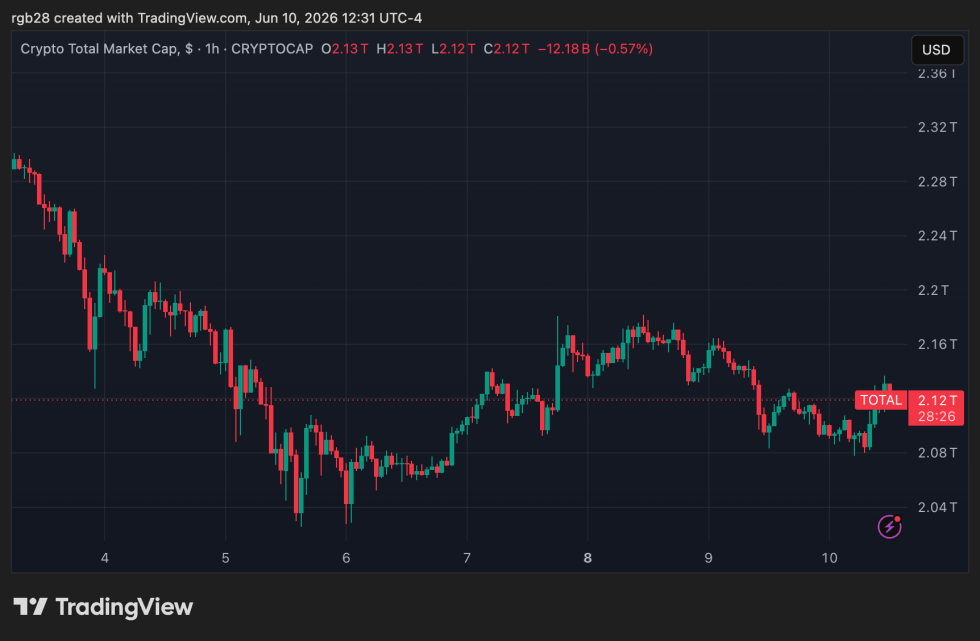
The total crypto market capitalization is at $2.12 trillion in the one-week chart. Source: TOTAL on TradingView


Trend Kriptolar

İlgili Sorular

QWhat is the target fiscal year for Japan's three megabanks to roll out their jointly issued stablecoin?

AThe target fiscal year is FY2026, aiming for launch before March 31, 2027.

QWhich three Japanese megabanks are collaborating on the joint stablecoin project?

AThe three banks are Mitsubishi UFJ Financial Group (MUFG) Bank, Sumitomo Mitsui Banking Corp., and Mizuho Bank.

QWhat recent regulatory change in Japan created a legal framework for stablecoin issuance?

AIn 2022, Japanese authorities amended the Payment Services Act to establish a legal framework, allowing only licensed money transfer companies, trust companies, and banks to issue yen-denominated stablecoins.

QWhat is the purpose of the voluntary council formed by the three megabanks?

AThe council's purpose is to examine the development of an issuance infrastructure, as well as the design of systems, schemes, and governance structures to support the practical implementation of their joint stablecoin.

QHow does Japan's ruling Liberal Democratic Party (LDP) intend to promote yen stablecoins according to the article?

AThe LDP, through a lawmaker on its panel, urged the government to promote yen stablecoins for settlement in Asia, potentially leveraging events like next year's Asian Development Bank annual meeting which Japan will host.

İlgili Okumalar

7 Months After the Collapse of Huiwang, Southeast Asia's Escrow Platforms Undergo a Major Reshuffle

Following the collapse of Huione Pay—dubbed the "Alipay of Southeast Asia"—seven months ago, the region's underground financial guarantee platform sector is undergoing a significant reshuffle. This power vacuum has been swiftly filled by emerging platforms such as XinBi, Tiger/Navigator, JinBei (renamed JinBo), Dali/Tiancheng, and FullyLight. These platforms, operating largely via Telegram and offering services like escrow for illicit transactions, have absorbed the vast user base and markets left behind by Huione. While positioning themselves as "trust intermediaries," their primary clientele consists of networks involved in online scams, money laundering, illegal gambling, and even human trafficking. For instance, the Tiger/Navigator platform explicitly provides "escrow" services for kidnapping-for-ransom operations ("强押车交易"). Data underscores the immense scale: Huione alone processed over $103 billion in cryptocurrency payments and facilitated over $31 billion through its escrow market before its downfall, linking it to Cambodia's notorious Prince Group. Since its collapse, competitors have seen explosive growth. For example, the XinBi platform has accumulated over $1.6 billion in total USDT revenue, while platforms like NewPay, OkPay (under Dali), and FullyLight Wallet collectively processed over $4.8 billion in USDT in a single year. This ecosystem thrives in regions like Cambodia and Myanmar, where regulatory gaps allow these platforms to act as critical financial infrastructure for sprawling cybercrime industries, from scam compounds to online casinos. The article concludes that the moniker "Southeast Asian Alipay" is a misnomer, obscuring the platforms' fundamental role in enabling serious criminal enterprises rather than representing legitimate financial innovation.

Odaily星球日报19 dk önce

7 Months After the Collapse of Huiwang, Southeast Asia's Escrow Platforms Undergo a Major Reshuffle

Odaily星球日报19 dk önce

The Changing Landscape: What Are Crypto VCs Experiencing?

Title: The Shifting Landscape of Crypto Venture Capital The era of dedicated crypto venture capital funds is undergoing a significant transformation. Once essential for navigating the sector's complexity and high risk, these specialized funds are now facing an identity crisis as the market matures. This shift mirrors historical patterns in other specialized investment classes like cleantech and SPACs, where initial information advantages dissipate as technologies become mainstream and integrated into existing industry frameworks. The article argues that crypto is reaching a critical inflection point, transitioning from a "building phase" to an "integration phase." Major players like Stripe, BlackRock, and Visa now engage with crypto not for its novel mechanics but as a foundational financial infrastructure. Their needs—regulatory compliance, banking partnerships, distribution channels—align with traditional fintech, a domain easily understood by large, generalist funds like Sequoia and Founders Fund. This evolution creates a "barbell effect" within the VC landscape. On one end are massive, diversified platforms that can incorporate crypto as one vertical among many. On the other are small, nimble funds focused on niche, experimental projects. The middle ground—medium-sized dedicated crypto funds—is being squeezed out. Their typical fund size makes it impossible to generate sufficient returns solely from early-stage crypto bets, yet they cannot compete with giants for later-stage deals. Consequently, leading crypto-native firms like Paradigm and Framework Ventures are expanding into AI, robotics, and other sectors, driven partly by LP pressure for better returns amid a broader VC DPI crisis. Others, like Dragonfly and a16z, have narrowed their crypto focus predominantly to financial infrastructure like stablecoins, reframing the sector's core narrative. For crypto entrepreneurs, this consolidation presents challenges. While generalist funds offer larger checks and broader resources, crypto projects now compete fiercely with AI for attention and capital within these firms. Furthermore, the long-term, non-commercial foundational work that built the ecosystem—funded by dedicated crypto VCs—is less likely to attract generalist capital focused on direct returns. The conclusion is that "crypto investor" as a standalone category is becoming obsolete, akin to "internet investor." Crypto is becoming a baseline infrastructure layer. The future will see a barbell structure: large-scale growth financing handled by generalist funds, while pioneering, speculative projects are funded by small, specialized vehicles. The dedicated crypto funds of the 2017-2021 boom, which incubated core infrastructure, are giving way to this new, bifurcated reality.

Foresight News37 dk önce

The Changing Landscape: What Are Crypto VCs Experiencing?

Foresight News37 dk önce

As Consensus Accelerates, What Are Young Investors Betting On?

Title: As Consensus Forms Faster, What Are Young Investors Betting On? In the rapid evolution of tech investment, a new generation of young investors is navigating a landscape where AI, robotics, commercial aerospace, and quantum computing are advancing simultaneously. Traditional investment logic based on financial models is giving way to a need for deep technical understanding and the ability to act before industry consensus forms. An analysis of trends from the "WAIC FUTURE TECH" list of young investment leaders reveals key shifts in focus. The first major trend is the movement of AI from the digital screen into the physical world. Investment is shifting from large language models and chatbots towards embodied AI, robotics, AI hardware, and edge computing. While demonstrations generate excitement, the real challenge lies in achieving scalable, reliable, and cost-effective delivery in complex real-world environments like factories and logistics. Success depends not just on algorithms but on the integration of sensors, actuators, and control systems. Second, the competitive focus for large models is moving beyond raw capability toward building an "intelligence flywheel." The goal is to create self-reinforcing systems where user interaction generates data, improving the model, which in turn enhances the user experience and attracts more engagement. Companies that successfully embed AI into workflows to create these closed-loop systems can build lasting value that isn't easily erased by the next model upgrade. Third, facing a potential bottleneck in high-quality human-generated data, investors are looking at new underlying technologies. Reinforcement learning and self-play, as demonstrated by AlphaGo Zero, offer paths for AI to generate its own experience. Scientific foundation models, which aim to build general AI capabilities for fields like life sciences and materials discovery, represent a non-consensus direction that could unlock new frontiers of knowledge and data. Finally, in deep-tech areas like quantum computing, commercial aerospace, and space-based infrastructure, patient capital is essential. These fields have long, uncertain development and validation cycles involving complex engineering, supply chains, and regulations. Investment here requires a long-term view, focusing on foundational team capabilities and the eventual emergence of market demand, even if commercial returns are distant. Collectively, these trends illustrate how young investors are adapting to a new era. They are learning to make earlier, technically-informed judgments, balance hype with real-world viability, and provide the patient capital needed to build the deep-tech foundations of the future.

marsbit1 saat önce

As Consensus Accelerates, What Are Young Investors Betting On?

marsbit1 saat önce

İşlemler

Spot

Popüler Makaleler

PUSH Nasıl Satın Alınır

HTX.com’a hoş geldiniz! Push Protocol (PUSH) satın alma işlemlerini basit ve kullanışlı bir hâle getirdik. Adım adım açıkladığımız rehberimizi takip ederek kripto yolculuğunuza başlayın. 1. Adım: HTX Hesabınızı OluşturunHTX'te ücretsiz bir hesap açmak için e-posta adresinizi veya telefon numaranızı kullanın. Sorunsuzca kaydolun ve tüm özelliklerin kilidini açın. Hesabımı Aç2. Adım: Kripto Satın Al Bölümüne Gidin ve Ödeme Yönteminizi SeçinKredi/Banka Kartı: Visa veya Mastercard'ınızı kullanarak anında Push Protocol (PUSH) satın alın.Bakiye: Sorunsuz bir şekilde işlem yapmak için HTX hesap bakiyenizdeki fonları kullanın.Üçüncü Taraflar: Kullanımı kolaylaştırmak için Google Pay ve Apple Pay gibi popüler ödeme yöntemlerini ekledik.P2P: HTX'teki diğer kullanıcılarla doğrudan işlem yapın.Borsa Dışı (OTC): Yatırımcılar için kişiye özel hizmetler ve rekabetçi döviz kurları sunuyoruz.3. Adım: Push Protocol (PUSH) Varlıklarınızı SaklayınPush Protocol (PUSH) satın aldıktan sonra HTX hesabınızda saklayın. Alternatif olarak, blok zinciri transferi yoluyla başka bir yere gönderebilir veya diğer kripto para birimlerini takas etmek için kullanabilirsiniz.4. Adım: Push Protocol (PUSH) Varlıklarınızla İşlem YapınHTX'in spot piyasasında Push Protocol (PUSH) ile kolayca işlemler yapın.Hesabınıza erişin, işlem çiftinizi seçin, işlemlerinizi gerçekleştirin ve gerçek zamanlı olarak izleyin. Hem yeni başlayanlar hem de deneyimli yatırımcılar için kullanıcı dostu bir deneyim sunuyoruz.

700 Toplam GörüntülenmeYayınlanma 2024.12.13Güncellenme 2026.06.02

PUSH Nasıl Satın Alınır

Tartışmalar

HTX Topluluğuna hoş geldiniz. Burada, en son platform gelişmeleri hakkında bilgi sahibi olabilir ve profesyonel piyasa görüşlerine erişebilirsiniz. Kullanıcıların PUSH (PUSH) fiyatı hakkındaki görüşleri aşağıda sunulmaktadır.

活动图片












