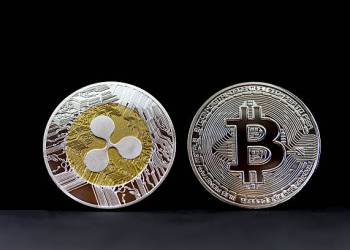
Japan Targets First Crypto ETFs Approval by 2028

TheNewsCrypto2026-01-26 tarihinde yayınlandı2026-01-26 tarihinde güncellendi

Özet

Japan's Financial Services Agency is working to approve the country's first cryptocurrency exchange-traded funds (ETFs) by 2028 as part of efforts to modernize its financial markets under a regulated framework. Major institutions like Nomura and SBI Holdings are expected to lead the launches, providing investors exposure to crypto through the Tokyo Stock Exchange. This move aligns with global trends, following the success of U.S. Bitcoin ETFs, and aims to address investor concerns over security and custody risks. Japan also faces regional competition from Hong Kong and South Korea, which are advancing their own crypto ETF and stablecoin initiatives. The gradual rollout reflects Japan’s cautious yet strategic approach to integrating digital assets into its financial system.

Japan is set to make a significant move towards regulated digital asset investment as financial regulators are working to approve the first cryptocurrency exchange-traded funds in the country by 2028. This move is part of Tokyo’s efforts to modernize its financial markets while maintaining tight regulation.

As reported by Nikkei Asia, the Financial Services Agency of Japan is going to include cryptocurrencies in the list of assets that can be used as the basis for exchange-traded funds. However, the regulators also plan to improve the framework of investor protection.

If the plan moves forward on schedule, Nomura Holdings and SBI Holdings, two of Japan’s largest financial institutions, will likely spearhead the first crypto ETF launches. These products could be listed on the Tokyo Stock Exchange, giving institutional and retail investors exposure to digital assets through familiar market structures.

Japan follows global ETF momentum

Japan’s decision does not happen in isolation. U.S. crypto ETFs have already reshaped global market access. Spot Bitcoin ETFs in the United States now manage over $115 billion in assets, representing a significant share of Bitcoin’s market capitalization. These products have attracted pension funds, endowments, and traditional asset managers who had not invested in Bitcoin before.

This success story has had an influence on regulators across the globe. Japan is now trying to achieve the same level of accessibility as ETFs while still retaining its cautious approach to regulation. The regulators feel that ETFs can alleviate fears of hacking, private key management, and custody risks that make many people reluctant to invest in crypto directly.

Regional competition accelerates

Japan is also under competitive pressure from neighboring financial centers. Hong Kong has already launched its own crypto ETFs and allows in-kind subscription and redemption, which means that investors can exchange underlying assets directly for ETF shares. This is very attractive to sophisticated investors.

Meanwhile, South Korea is drafting its Digital Asset Basic Act. Lawmakers expect the framework to clear a path for local spot crypto ETFs once finalized. These parallel moves signal a regional race to attract digital asset capital flows and position Asia as a major center for regulated crypto finance.

Stablecoins and broader integration

Crypto ETFs form only part of the picture. Japan, Hong Kong, and South Korea all work to establish stablecoins as a standard part of financial systems. Japan approved a yen-pegged stablecoin last year. Hong Kong prepares to issue licenses under its stablecoin regime. South Korea aims to support a won-based stablecoin market through upcoming legislation.

The combined efforts of these initiatives demonstrate that Asian regulators now consider digital assets to be essential infrastructure, rather than mere speculative assets. Japan’s ETF schedule demonstrates its preferred method, which permits the slow introduction of new technologies instead of instant deployment.

Japan uses 2028 as its target date to demonstrate its dedication to crypto finance while using that period to develop security measures. That strategy could help Tokyo attract institutional capital without undermining its reputation for regulatory discipline.

Highlighted Crypto News:

Las Vegas Businesses Use Bitcoin as a Mainstream Payment to Avoid High Credit Card Fees

Tagsasian marketBitcoin ETFcrypto etfsFSAJapan

İlgili Sorular

QWhat is Japan's target year for approving its first cryptocurrency exchange-traded funds (ETFs)?

AJapan is targeting to approve its first cryptocurrency exchange-traded funds by 2028.

QWhich two major Japanese financial institutions are likely to lead the first crypto ETF launches?

ANomura Holdings and SBI Holdings, two of Japan's largest financial institutions, are likely to spearhead the first crypto ETF launches.

QWhat is one of the main reasons Japanese regulators believe ETFs can help with crypto investment?

AJapanese regulators believe that ETFs can alleviate fears of hacking, private key management, and custody risks that make many people reluctant to invest in crypto directly.

QHow does Hong Kong's approach to crypto ETFs differ, making it attractive to sophisticated investors?

AHong Kong allows in-kind subscription and redemption for its crypto ETFs, meaning investors can exchange underlying assets directly for ETF shares, which is very attractive to sophisticated investors.

QBesides crypto ETFs, what other digital asset initiative are Japan, Hong Kong, and South Korea working on?

AJapan, Hong Kong, and South Korea are all working to establish stablecoins as a standard part of their financial systems.

İlgili Okumalar

Google and Amazon Simultaneously Invest Heavily in a Competitor: The Most Absurd Business Logic of the AI Era Is Becoming Reality

In a span of four days, Amazon announced an additional $25 billion investment, and Google pledged up to $40 billion—both direct competitors pouring over $65 billion into the same AI startup, Anthropic. Rather than a typical venture capital move, this signals the latest escalation in the cloud wars. The core of the deal is not equity but compute pre-orders: Anthropic must spend the majority of these funds on AWS and Google Cloud services and chips, effectively locking in massive future compute consumption. This reflects a shift in cloud market dynamics—enterprises now choose cloud providers based on which hosts the best AI models, not just price or stability. With OpenAI deeply tied to Microsoft, Anthropic’s Claude has become the only viable strategic asset for Google and Amazon to remain competitive. Anthropic’s annualized revenue has surged to $30 billion, and it is expanding into verticals like biotech, positioning itself as a cross-industry AI infrastructure layer. However, this funding comes with constraints: Anthropic’s independence is challenged as it balances two rival investors, its safety-first narrative faces pressure from regulatory scrutiny, and its path to IPO introduces new financial pressures. Globally, this accelerates a "tri-polar" closed-loop structure in AI infrastructure, with Microsoft-OpenAI, Google-Anthropic, and Amazon-Anthropic forming exclusive model-cloud alliances. In contrast, China’s landscape differs—investments like Alibaba and Tencent backing open-source model firm DeepSeek reflect a more decoupled approach, though closed-source models from major cloud providers still dominate. The $65 billion bet is ultimately about securing a seat at the table in an AI-defined future—where missing the model layer means losing the cloud war.

marsbit3 saat önce

Google and Amazon Simultaneously Invest Heavily in a Competitor: The Most Absurd Business Logic of the AI Era Is Becoming Reality

marsbit3 saat önce

Computing Power Constrained, Why Did DeepSeek-V4 Open Source?

DeepSeek-V4 has been released as a preview open-source model, featuring 1 million tokens of context length as a baseline capability—previously a premium feature locked behind enterprise paywalls by major overseas AI firms. The official announcement, however, openly acknowledges computational constraints, particularly limited service throughput for the high-end DeepSeek-V4-Pro version due to restricted high-end computing power. Rather than competing on pure scale, DeepSeek adopts a pragmatic approach that balances algorithmic innovation with hardware realities in China’s AI ecosystem. The V4-Pro model uses a highly sparse architecture with 1.6T total parameters but only activates 49B during inference. It performs strongly in agentic coding, knowledge-intensive tasks, and STEM reasoning, competing closely with top-tier closed models like Gemini Pro 3.1 and Claude Opus 4.6 in certain scenarios. A key strategic product is the Flash edition, with 284B total parameters but only 13B activated—making it cost-effective and accessible for mid- and low-tier hardware, including domestic AI chips from Huawei (Ascend), Cambricon, and Hygon. This design supports broader adoption across developers and SMEs while stimulating China's domestic semiconductor ecosystem. Despite facing talent outflow and intense competition in user traffic—with rivals like Doubao and Qianwen leading in monthly active users—DeepSeek has maintained technical momentum. The release also comes amid reports of a new funding round targeting a valuation exceeding $10 billion, potentially setting a new record in China’s LLM sector. Ultimately, DeepSeek-V4 represents a shift toward open yet realistic infrastructure development in the constrained compute landscape of Chinese AI, emphasizing engineering efficiency and domestic hardware compatibility over pure model scale.

marsbit4 saat önce

Computing Power Constrained, Why Did DeepSeek-V4 Open Source?

marsbit4 saat önce

İşlemler

Spot
Futures

Popüler Makaleler

MOVE Nasıl Satın Alınır

HTX.com’a hoş geldiniz! Movement (MOVE) satın alma işlemlerini basit ve kullanışlı bir hâle getirdik. Adım adım açıkladığımız rehberimizi takip ederek kripto yolculuğunuza başlayın. 1. Adım: HTX Hesabınızı OluşturunHTX'te ücretsiz bir hesap açmak için e-posta adresinizi veya telefon numaranızı kullanın. Sorunsuzca kaydolun ve tüm özelliklerin kilidini açın. Hesabımı Aç2. Adım: Kripto Satın Al Bölümüne Gidin ve Ödeme Yönteminizi SeçinKredi/Banka Kartı: Visa veya Mastercard'ınızı kullanarak anında Movement (MOVE) satın alın.Bakiye: Sorunsuz bir şekilde işlem yapmak için HTX hesap bakiyenizdeki fonları kullanın.Üçüncü Taraflar: Kullanımı kolaylaştırmak için Google Pay ve Apple Pay gibi popüler ödeme yöntemlerini ekledik.P2P: HTX'teki diğer kullanıcılarla doğrudan işlem yapın.Borsa Dışı (OTC): Yatırımcılar için kişiye özel hizmetler ve rekabetçi döviz kurları sunuyoruz.3. Adım: Movement (MOVE) Varlıklarınızı SaklayınMovement (MOVE) satın aldıktan sonra HTX hesabınızda saklayın. Alternatif olarak, blok zinciri transferi yoluyla başka bir yere gönderebilir veya diğer kripto para birimlerini takas etmek için kullanabilirsiniz.4. Adım: Movement (MOVE) Varlıklarınızla İşlem YapınHTX'in spot piyasasında Movement (MOVE) ile kolayca işlemler yapın.Hesabınıza erişin, işlem çiftinizi seçin, işlemlerinizi gerçekleştirin ve gerçek zamanlı olarak izleyin. Hem yeni başlayanlar hem de deneyimli yatırımcılar için kullanıcı dostu bir deneyim sunuyoruz.

250 Toplam GörüntülenmeYayınlanma 2024.12.13Güncellenme 2025.03.21

MOVE Nasıl Satın Alınır

Tartışmalar

HTX Topluluğuna hoş geldiniz. Burada, en son platform gelişmeleri hakkında bilgi sahibi olabilir ve profesyonel piyasa görüşlerine erişebilirsiniz. Kullanıcıların MOVE (MOVE) fiyatı hakkındaki görüşleri aşağıda sunulmaktadır.

活动图片