Japan Moves Crypto Under Financial Law, Toughens Penalties For Fraud

bitcoinist2026-04-11 tarihinde yayınlandı2026-04-11 tarihinde güncellendi

Özet

Japan has officially shifted its regulatory approach to cryptocurrencies by approving an amendment to the Financial Instruments and Exchange Act (FIEA), moving crypto from the Payment Services Act to be treated as financial products, similar to stocks and bonds. This change introduces stricter rules, mandatory disclosures, explicit bans on insider trading, and enhanced investor protections. Penalties for unlicensed operators are significantly toughened, with prison terms increasing from up to three years to ten years and fines rising from ¥3 million to ¥10 million. The new law, which renames registered firms as "crypto asset trading operators," is expected to take effect in fiscal 2027 if passed in the current parliamentary session.

Japan had over 13 million crypto accounts when its financial regulator started fielding more than 350 fraud complaints every month. Those numbers helped push the government toward a major regulatory overhaul — one that officially cleared the cabinet this week.

A Shift Away From Payment Rules

For years, crypto in Japan was governed under the Payment Services Act, a framework built around digital money and transactions rather than investment activity.

That changes under the newly approved amendment to the Financial Instruments and Exchange Act, known as the FIEA.
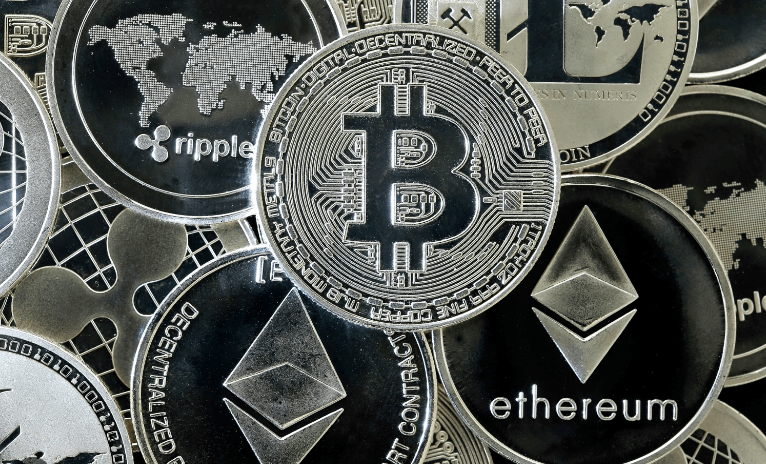
Image: Chesnot/Getty Images

The revision treats crypto assets the same way the law treats stocks and bonds — as financial products subject to stricter rules, required disclosures, and explicit prohibitions on insider trading.

Finance Minister Satsuki Katayama addressed reporters after the cabinet approved the bill. “In response to changes in financial and capital markets, we will expand the supply of growth capital while ensuring market fairness, transparency, and investor protection,” she said.

The Financial Services Agency had been signaling this shift since late 2025. The cabinet’s approval this week moves that plan out of the proposal stage and into formal legislation.

Penalties Rise Sharply For Unlicensed Operators

The new law carries real consequences for bad actors. Prison sentences for unlicensed crypto operators would jump from a maximum of three years to 10. Fines would increase from ¥3 million to ¥10 million.

Trading on undisclosed information — insider trading — would be explicitly banned under the FIEA framework, a prohibition that did not exist under the old payment services rules.

The changes also come with new paperwork requirements. Issuers will be required to file annual disclosures, bringing them closer in line with publicly listed companies.

BTCUSD trading at $72,727 on the 24-hour chart: TradingView

Registered firms will also be renamed, from “crypto asset exchange operators” to “crypto asset trading operators” — a small change in language that reflects the larger shift in how the government now views the industry.

Timeline Depends On Parliamentary Session

Whether the law takes effect in fiscal year 2027 depends on the current parliamentary session. If passed during the ongoing session, that timeline holds. Reports indicate the FSA has been laying the groundwork for this transition for months.

Japan has long been one of the more active countries in setting rules for digital assets. This latest move brings its regulatory approach closer to the standards applied to traditional financial markets, covering investor protections, market oversight, and criminal penalties in one consolidated framework.

Featured image from PlanetofHotels.com, chart from TradingView

İlgili Sorular

QWhat was the previous legal framework governing crypto in Japan, and what has it been replaced with?

ACrypto in Japan was previously governed under the Payment Services Act. It has now been replaced by an amendment to the Financial Instruments and Exchange Act (FIEA).

QHow does the new law change the classification and treatment of crypto assets?

AThe new law treats crypto assets the same way as stocks and bonds, classifying them as financial products subject to stricter rules, required disclosures, and explicit prohibitions on insider trading.

QWhat are the new maximum penalties for unlicensed crypto operators under the revised law?

AThe maximum prison sentence for unlicensed crypto operators increases from 3 years to 10 years, and the maximum fine increases from ¥3 million to ¥10 million.

QWhat new requirement is placed on crypto issuers under the amended FIEA?

AIssuers are required to file annual disclosures, bringing them closer in line with the reporting requirements of publicly listed companies.

QWhat is the new official name for registered crypto firms, and what does this change signify?

ARegistered firms are renamed from 'crypto asset exchange operators' to 'crypto asset trading operators,' reflecting the government's larger shift in viewing the industry as part of the financial markets.

İlgili Okumalar

Missed Out on SpaceX's IPO? Take a Look at SpaceX's Complete Supply Chain

SpaceX is now public, but its high valuation and losses may deter some investors. However, the real opportunity, as seen with Apple, Tesla, and Nvidia, may lie in its extensive supply chain. SpaceX, funded primarily by its profitable Starlink service, spends hundreds of billions annually on components for its rockets, satellites, and planned orbital AI data centers, creating significant revenue streams for suppliers. Key suppliers are categorized by their indispensability. The first group includes irreplaceable players like **NVIDIA** (GPUs for AI supercomputers), **Eutelsat (SATS)** (spectrum rights), **Filtronic** (millimeter-wave amplifiers), **Materion (MTRN)** (beryllium alloys), and **STMicroelectronics (STM)** (phased array chips). The second category comprises suppliers costly to replace due to long certification cycles or deep integration, such as **Honeywell (HON)** (flight controls), **Carpenter Technology (CRS)** (specialty steel), **Hexcel (HXL)** (carbon fiber), **Broadcom (AVGO)** (data switching), and **Linde** (industrial gases). The third group involves high-volume, cost-critical manufacturers for mass-produced items like Starlink terminals. Major players here include Taiwanese contract manufacturer **Wistron NeWeb (6285)** and several Chinese-listed firms: **Sunway Communication (300136)**, **Parker Advanced Materials (605123)**, **Western Superconducting (002149)**, and **Yingliu Co., Ltd. (603308)**. Other niche providers include **Tianyin Electromechanical**, **Tongyu Communication**, **Trimble (TRMB)**, **Astronics (ATRO)**, and **CTSH**. The timing is now relevant because: 1) SpaceX's procurement is accelerating with plans for 100 launches in 2026, 30 million Starlink terminals, and orbital data centers. 2) Its IPO has brought unprecedented transparency to its supply chain. 3) This phase mirrors early days of the Tesla supply chain boom. The investment thesis shifts from betting on SpaceX's stock to betting on the steady, order-book-driven revenues of its essential suppliers. Risks remain, such as commodity cycles, geopolitical factors, and technological shifts, but the supply chain offers a potentially less speculative path to participate in SpaceX's growth.

marsbit10 dk önce

Missed Out on SpaceX's IPO? Take a Look at SpaceX's Complete Supply Chain

marsbit10 dk önce

Jane Street: The Most Powerful Behind-the-Scenes Operator in the Crypto Industry

Jane Street: Crypto's Most Powerful Behind-the-Scenes Operator A recent 13F filing revealed Jane Street, the secretive Wall Street quant giant, drastically reduced its Bitcoin ETF holdings while increasing stakes in Ethereum ETFs. This move highlights its role not as a directional investor, but as a critical infrastructure player extracting "tolls" from crypto's institutionalization. The firm, founded in 2000 and famously lacking a CEO, has systematically embedded itself across crypto markets. It acts as a key Authorized Participant (AP) and market maker for major Bitcoin and Ethereum ETFs, profiting from arbitrage between ETF shares and underlying assets. Its approach combines quantitative prowess with a willingness to hold positions for structural arbitrage, differing from pure high-frequency traders. Jane Street faces allegations related to the 2022 Terra (LUNA) collapse. A lawsuit claims it used non-public information to withdraw $85 million in UST minutes before a critical withdrawal by Terraform Labs, allegedly exacerbating the crash and avoiding over $200 million in losses. The company denies the claims. Further indicating its reach, a wallet suspected to be operated by Jane Street ("JaneStreetIndia") was identified on the prediction market Polymarket. This bot executed over 11,000 high-frequency trades on short-term crypto price movements with a near-perfect win rate, showcasing a套利 strategy divorced from traditional prediction. Beyond trading, Jane Street holds equity in crypto infrastructure like Kraken, 1inch, and Arbitrum, and mining stocks. Its strategy is clear: avoid betting on winners, but secure a position in the market's essential plumbing. By becoming a ubiquitous part of the liquidity infrastructure—from ETFs to OTC trading and potentially链上 markets—Jane Street operates as a market force itself, raising questions about whether crypto's decentralized,散户-friendly alpha is being permanently eroded by traditional finance's most sophisticated players.

Foresight News14 dk önce

Jane Street: The Most Powerful Behind-the-Scenes Operator in the Crypto Industry

Foresight News14 dk önce

U.S.-Iran Ceasefire: How Much of a Bitcoin Rally Can a Truce Agreement Support?

Headline: "U.S.-Iran Truce: How Much Can a Ceasefire Agreement Propel Bitcoin's Rebound?" On June 15th, Bitcoin rebounded to around $67,255, marking its first return to the $67,000 level since falling below $60,000 earlier in June. Ethereum and Solana also saw significant gains. The immediate driver for this market-wide recovery in crypto and global risk assets was the signing of a U.S.-Iran ceasefire memorandum, with a formal ceremony scheduled for June 19th. The agreement, which includes reopening the Strait of Hormuz, caused oil prices to plunge roughly 5%, easing inflation expectations and boosting prospects for Federal Reserve rate cuts. This macroeconomic shift fueled a rally in U.S. equities, with the Dow Jones hitting a record high. SpaceX's spectacular post-IPO performance further energized market sentiment. However, on-chain and derivatives data from Glassnode suggest this move is more indicative of a technical rebound from deeply oversold conditions rather than a confirmed trend reversal. The crypto market is undergoing noticeable capital rotation. While Bitcoin ETFs recently saw their worst outflows on record, the bleeding has slowed significantly. Meanwhile, new altcoin ETFs for assets like XRP and Solana are attracting substantial inflows, causing Bitcoin's market dominance to drop to 58%. Despite the rebound, the Crypto Fear & Greed Index remains in "Extreme Fear" territory at 22. The price quickly retreated after touching the $67,000 resistance level, indicating selling pressure persists. Analysis shows short-term speculative supply has been heavily washed out, with holder structure shifting toward a more long-term profile. While panic is subsiding and some on-chain metrics point to accumulation at lower prices, the market currently lacks the strong, sustained institutional buying needed to establish a new bullish trend.

Foresight News30 dk önce

U.S.-Iran Ceasefire: How Much of a Bitcoin Rally Can a Truce Agreement Support?

Foresight News30 dk önce

Copper, the Gold of 2026

Copper: The New Gold for 2026? Market focus has shifted from AI chips to underlying infrastructure, with copper emerging as a key narrative. Its role is evolving beyond "Dr. Copper"—a traditional indicator of economic cycles—due to structural demand growth from AI data centers (requiring massive electrical infrastructure), grid expansion, EVs, and re-industrialization. Estimates suggest data centers alone could require 300,000 tons of copper by 2050. The core bullish thesis is not just demand but a severe supply constraint. New copper mines take ~17 years to develop, while ore grades are declining and new discoveries are scarce, potentially leading to a 30% supply deficit by 2035. This supply rigidity, coupled with strategic importance, is giving copper a "gold-like" scarcity narrative. Major macro investors, including Stanley Druckenmiller, are allocating to copper as a hedge against dollar weakness and for its exposure to energy transition and geopolitics. Traders like Pierre Andurand have projected prices could reach $40,000/ton. Capital inflows are visible in surging futures trading volumes. Copper mining stocks act as leveraged plays on copper prices. Companies like Freeport-McMoRan (FCX) and Southern Copper (SCCO), as well as Chinese miners like CMOC, have seen significant volatility, offering high upside but also steep drawdowns, reflecting operational and geopolitical risks. While copper remains cyclical and won't fully replicate gold's monetary role, its long-term fundamentals have shifted. Its new scarcity premium, driven by a tightening supply structure and expanding electrical demand, suggests its "goldification" is just beginning.

marsbit37 dk önce

Copper, the Gold of 2026

marsbit37 dk önce

İşlemler

Spot
Futures

Popüler Makaleler

F Nasıl Satın Alınır

HTX.com’a hoş geldiniz! Synfutures (F) satın alma işlemlerini basit ve kullanışlı bir hâle getirdik. Adım adım açıkladığımız rehberimizi takip ederek kripto yolculuğunuza başlayın. 1. Adım: HTX Hesabınızı OluşturunHTX'te ücretsiz bir hesap açmak için e-posta adresinizi veya telefon numaranızı kullanın. Sorunsuzca kaydolun ve tüm özelliklerin kilidini açın. Hesabımı Aç2. Adım: Kripto Satın Al Bölümüne Gidin ve Ödeme Yönteminizi SeçinKredi/Banka Kartı: Visa veya Mastercard'ınızı kullanarak anında Synfutures (F) satın alın.Bakiye: Sorunsuz bir şekilde işlem yapmak için HTX hesap bakiyenizdeki fonları kullanın.Üçüncü Taraflar: Kullanımı kolaylaştırmak için Google Pay ve Apple Pay gibi popüler ödeme yöntemlerini ekledik.P2P: HTX'teki diğer kullanıcılarla doğrudan işlem yapın.Borsa Dışı (OTC): Yatırımcılar için kişiye özel hizmetler ve rekabetçi döviz kurları sunuyoruz.3. Adım: Synfutures (F) Varlıklarınızı SaklayınSynfutures (F) satın aldıktan sonra HTX hesabınızda saklayın. Alternatif olarak, blok zinciri transferi yoluyla başka bir yere gönderebilir veya diğer kripto para birimlerini takas etmek için kullanabilirsiniz.4. Adım: Synfutures (F) Varlıklarınızla İşlem YapınHTX'in spot piyasasında Synfutures (F) ile kolayca işlemler yapın.Hesabınıza erişin, işlem çiftinizi seçin, işlemlerinizi gerçekleştirin ve gerçek zamanlı olarak izleyin. Hem yeni başlayanlar hem de deneyimli yatırımcılar için kullanıcı dostu bir deneyim sunuyoruz.

211 Toplam GörüntülenmeYayınlanma 2024.12.21Güncellenme 2026.06.02

F Nasıl Satın Alınır

Tartışmalar

HTX Topluluğuna hoş geldiniz. Burada, en son platform gelişmeleri hakkında bilgi sahibi olabilir ve profesyonel piyasa görüşlerine erişebilirsiniz. Kullanıcıların F (F) fiyatı hakkındaki görüşleri aşağıda sunulmaktadır.

活动图片













