Author: Pink Brains
Compiled by: Deep Tide TechFlow
Original title: It's 2026 Already, DAOs Should Have Matured by Now
Deep Tide Guide: 2025 was a critical inflection point for decentralized governance (DAO). After years of idealistic experimentation, mainstream protocols began to seriously address core pain points such as power distribution, accountability mechanisms, and sustainability. This article is written by veteran DAO delegate Pink Brains, based on their practical experience of casting 725 votes in top protocols like Aave, Lido, and Gnosis. It provides an in-depth analysis of the shift in DAOs from "community autonomy" to a "hybrid operation" model.
The author points out that governance tokens alone are no longer sustainable. In the future, DAOs will evolve towards economic alignment, legal entity formation, and AI-assisted decision-making. This is not just a review of governance; it's a prophecy book for the evolution of Web3 organizational structures in 2026.
Full text below:
2025 marked a turning point for decentralized governance.
After years of experimentation, major protocols began confronting fundamental questions about power distribution, accountability, and sustainability.
The answers weren't always pleasant, but they were necessary.
What We Achieved in 2025
2025 was also the first year of our operation as an active DAO Delegate.
-
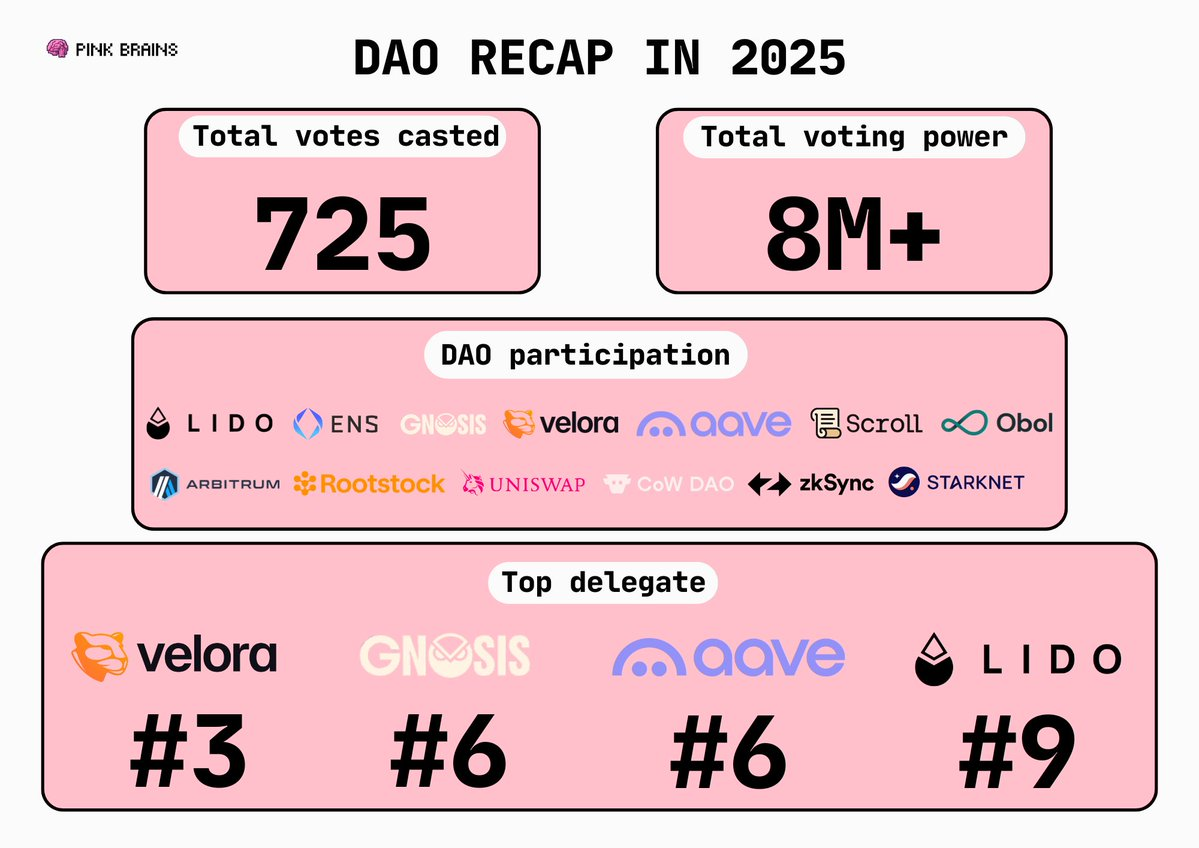
Casted 725 votes across 18 protocols
-
Held over 8 million in voting power
-
Top 10 delegate in Aave and Lido
-
Top 3 delegate in Velodrome
-
Top 6 delegate in Gnosis
This perspective, grounded in actual governance work, gave us clear insight into the patterns reshaping DAOs in 2025 and defined their trajectory entering 2026.
Changes in DAOs in 2025
Shift in Operational Model: From Pure Community Governance to Hybrid Control
The most notable change in 2025 was the shift from purely community-based governance towards hybrid models with clearer operational control.
-
@arbitrum introduced an Operating Company (OpCo), channeling all DAO operations through a unified structure.
-
@JupiterExchange completely paused governance for nearly six months to reassess its approach.
-
@Uniswap launched the DUNI framework, centralizing operational authority.
-
@Gnosis's DAO executed a hard fork amidst reduced community engagement. Scroll transitioned to a CEO-led structure.
-
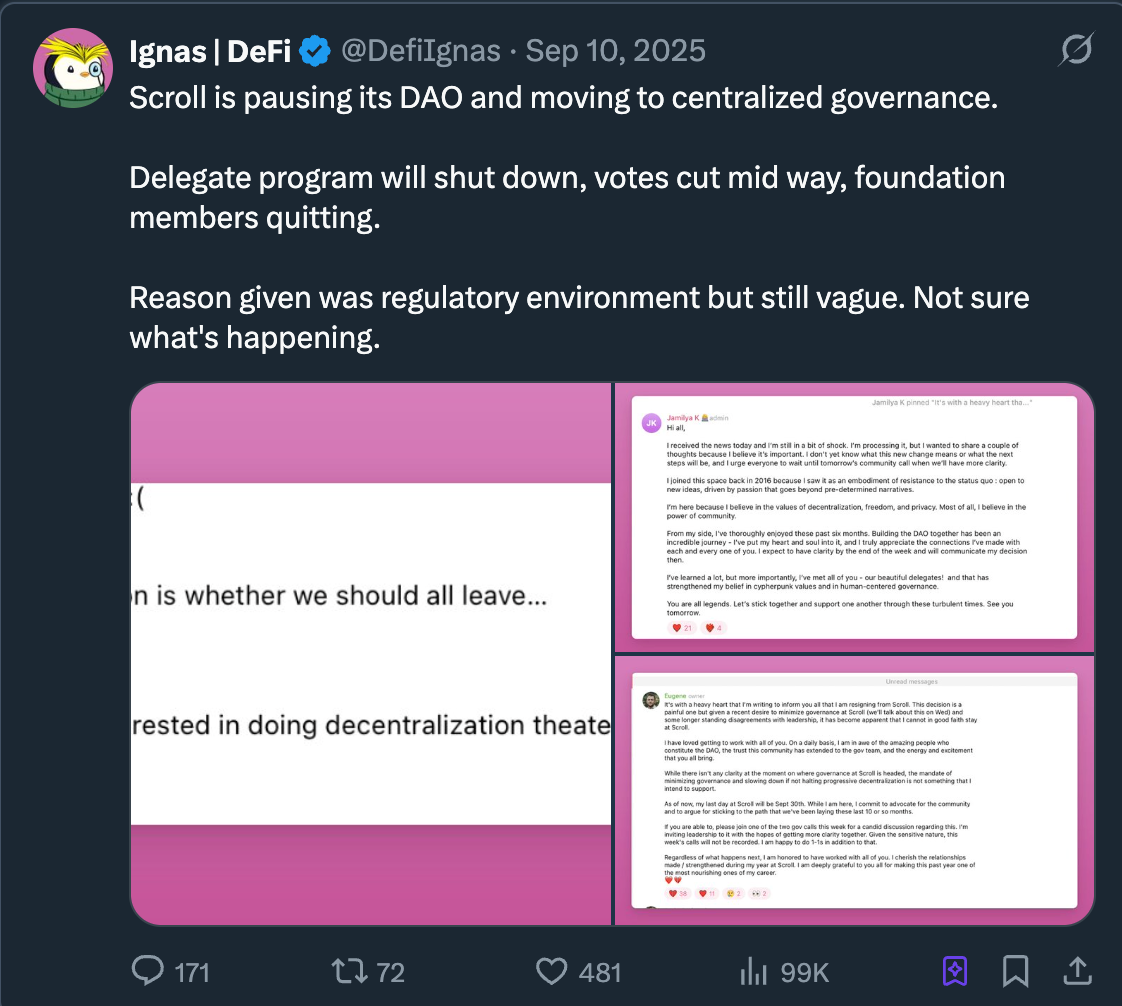
@Scroll_ZKP suspended its DAO, shifting focus to centralized governance.
-
Recently, the Celo Foundation merged with @cLabs into a unified core contributor organization.
The motivation for this shift was DAOs hitting scaling limits. Execution became the bottleneck. Full-community votes were often too slow for operations, too noisy for technical nuances, and too vulnerable for security-sensitive actions.
Consequently, governance power concentrated towards smaller, high-context groups, while the broader community shifted towards oversight functions, as seen in the next section.
Fewer Voters, But More Concentrated Power
In 2025, the number of proposals and participating voters dropped significantly across major DAOs. However, the voting power behind each proposal remained strong.
-
Lido saw an increase in participation after adopting a dual governance framework.
-
Arbitrum and Uniswap still had the highest overall participation, but both saw a decrease in the number of voters.
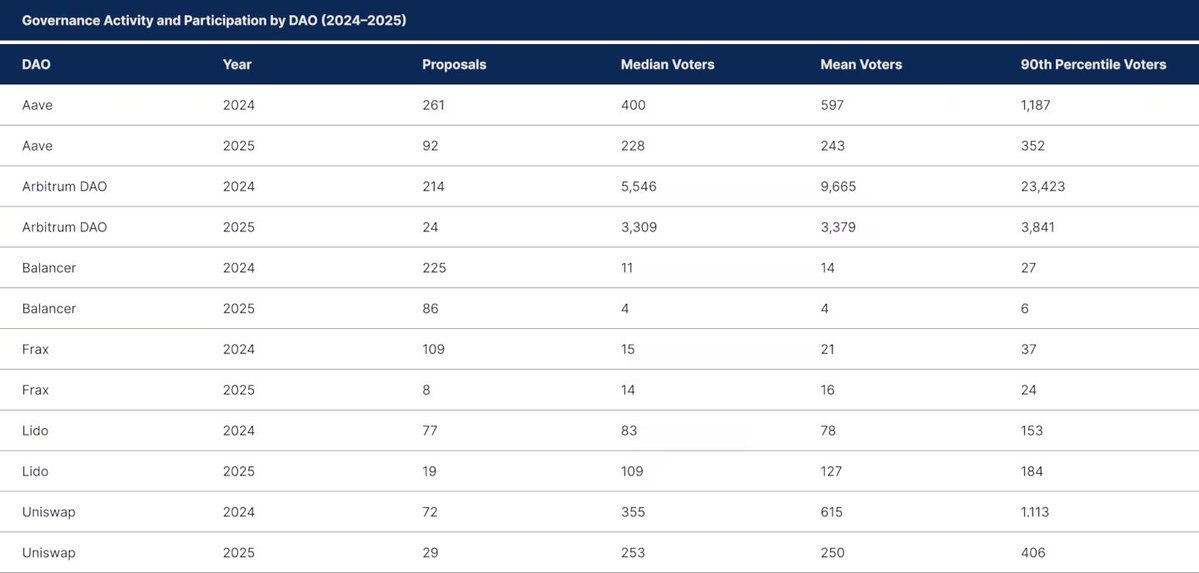
Caption: From DeFiLlama's State of DeFi 2025 Report
This does not signal the failure of governance. Instead, governance became more bundled, more operationally abstract, and less frequent.
Governance influence migrated to a small number of highly active Delegates and heavily capitalized participants.
Value Accrual for Token Holders
"Token buyback," "buyback and burn," and "fee switch" became central themes in 2025.
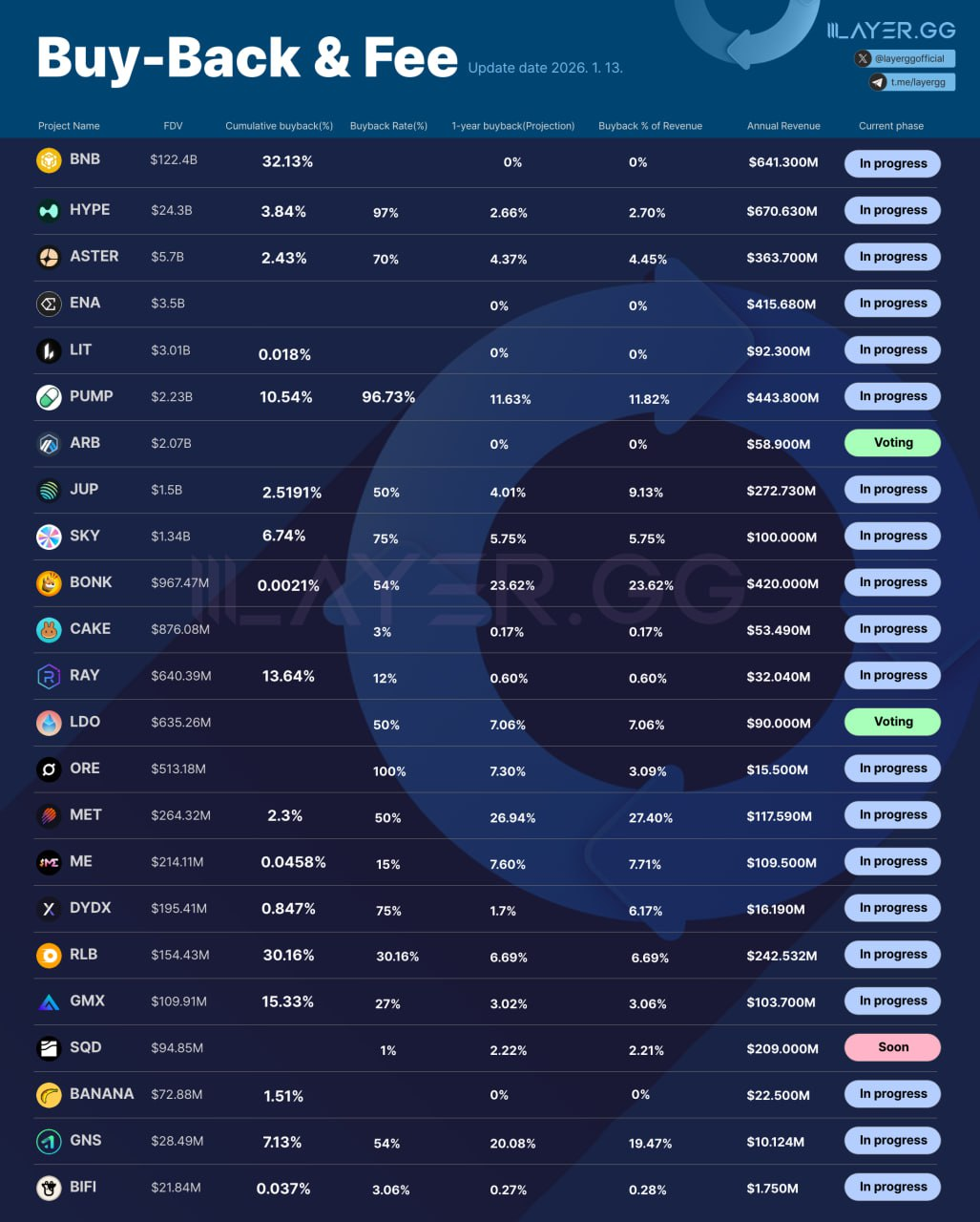
For years, token utility revolved around voting rights and incentive distribution, but offered minimal economic value to token holders. 2025 changed this equation.
-
Lido adopted a buyback framework.
-
Uniswap DAO activated the long-awaited fee switch, pledging to burn nearly $600 million worth of UNI tokens.
-
Aave implemented a token buyback mechanism. Optimism launched a buyback program.
-
CoW Protocol increased solver profitability in a way that benefits token holders.
This trend addresses a key challenge in tokenomics. Buybacks and burns reduce circulating supply, making the token more scarce. If demand holds steady, the price strengthens. When token holders can actually benefit from the protocol's success, they are more incentivized to buy, hold, and participate in governance decisions long-term.
Who Really Owns the DAO?
Two major controversies forced DAOs to confront structural flaws.
-
Gnosis voted to terminate Karpatkey's treasury mandate due to fee disputes, underperformance, and a ~$700k loss related to a liquidity issue.
-
Tensions between Aave DAO and Aave Labs escalated when it was discovered that ~$10 million annually in swap fees from the CoW Swap integration were flowing to Aave Labs instead of the DAO. A vote on brand ownership failed, and the controversy left a harder question: what does "DAO-owned" really mean when the core team controls development and distribution?
These conflicts forced protocols to fill the gaps in accountability and governance structures.
Legal Infrastructure is Adapting to DAOs
Despite DeFi's growth, most DAOs still lack clear legal structures, creating liability and regulatory risks as protocols scale.
While jurisdictions like Wyoming have introduced DAO LLC frameworks, and Switzerland offers mature legal pathways, most DAOs remain in a legal gray area.
2026 Trend Predictions
Centralized DAOs as a New Practice
Protocols will develop clear frameworks to delineate "community decisions" from "operational decisions," moving beyond the false binary of "fully decentralized" or "fully centralized."
-
Operational Execution: Will be handled by Labs teams, not foundations.
-
Community Oversight: DAO delegates and the community will be responsible for treasury strategy, long-term direction, and major structural decisions.
Governance Shifts Towards Risk Management Infrastructure
The DAO of the future will be less like a forum full of chatter. More teams will bifurcate decisions into concave decisions and convex decisions.
Concave problems require:
-
Pre-approved guardrails and automated execution.
-
Professional oversight (risk services, auditors, security teams).
-
Rapid response frameworks for emergencies and market shocks.
-
Fewer proposals, but each decision carries higher economic impact.
Convex problems (like product direction) require decisive leadership, where the DAO acts as a "brake" or "checkpoint," not a "steering wheel."
By 2026, this will be standard for lending, stablecoins, perps, and any protocol where financial risk can compound quickly.
The End of Governance Tokens? Value Capture is a Must
Continuing into 2026, tokens with only governance functions will struggle to maintain long-term engagement.
Delegates, whales, and strategic holders won't consistently provide protection for the system without seeing a return profile. Protocols will increasingly adopt at least one value accrual path:
-
Token buyback frameworks.
-
Fee diversion or revenue sharing.
-
Staking tied to protocol cash flows.
-
Treasury strategies aimed at supporting token value.
When holders gain economically from the protocol's success, they are incentivized to stay attentive, participate, and protect the system.
Legal Structures Shift from Optional to Necessary
Regulatory pressure and real-world legal challenges will push DAOs towards formal entity formation, seeking a balance between decentralized governance and legal clarity.
Professional Delegation
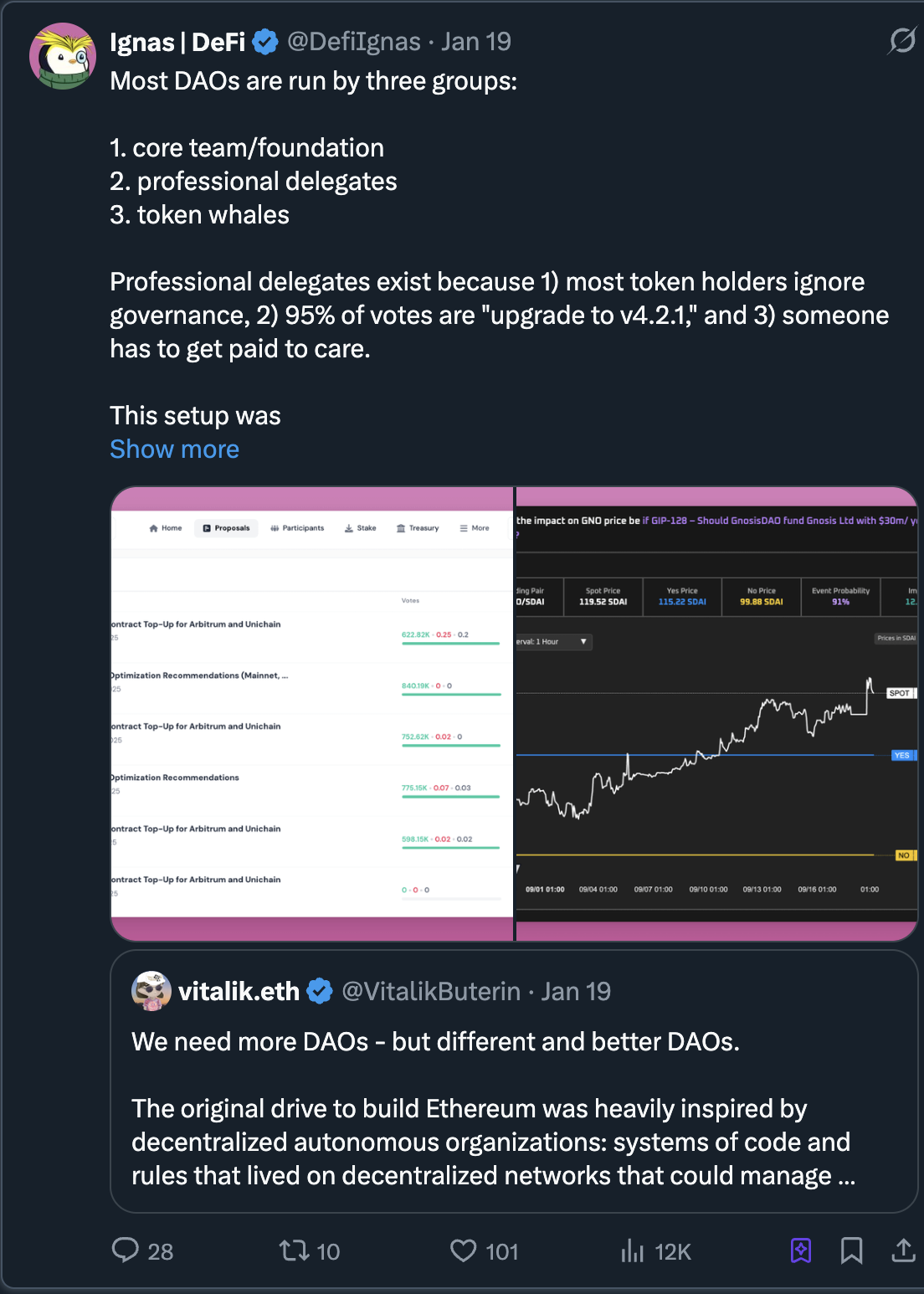
As governance complexity increases, token holders will increasingly delegate to full-time professional delegates. While this concentrates voting power, it may improve decision quality. Meanwhile, weaker delegate institutions that cannot financially sustain themselves will fold, as governance work becomes more professional, political, and costly.
Privacy, AI & Futarchy
Public governance is a social game. When every vote is publicly visible, decisions are influenced by reputation, pressure, and alliances, rather than purely the protocol's best interest. Therefore, governance privacy will become more important in the future.
AI will address decision fatigue. It can assist in analyzing proposals and auto-voting on routine upgrades based on user-defined preferences, requiring human intervention only for disputes or high-impact matters.
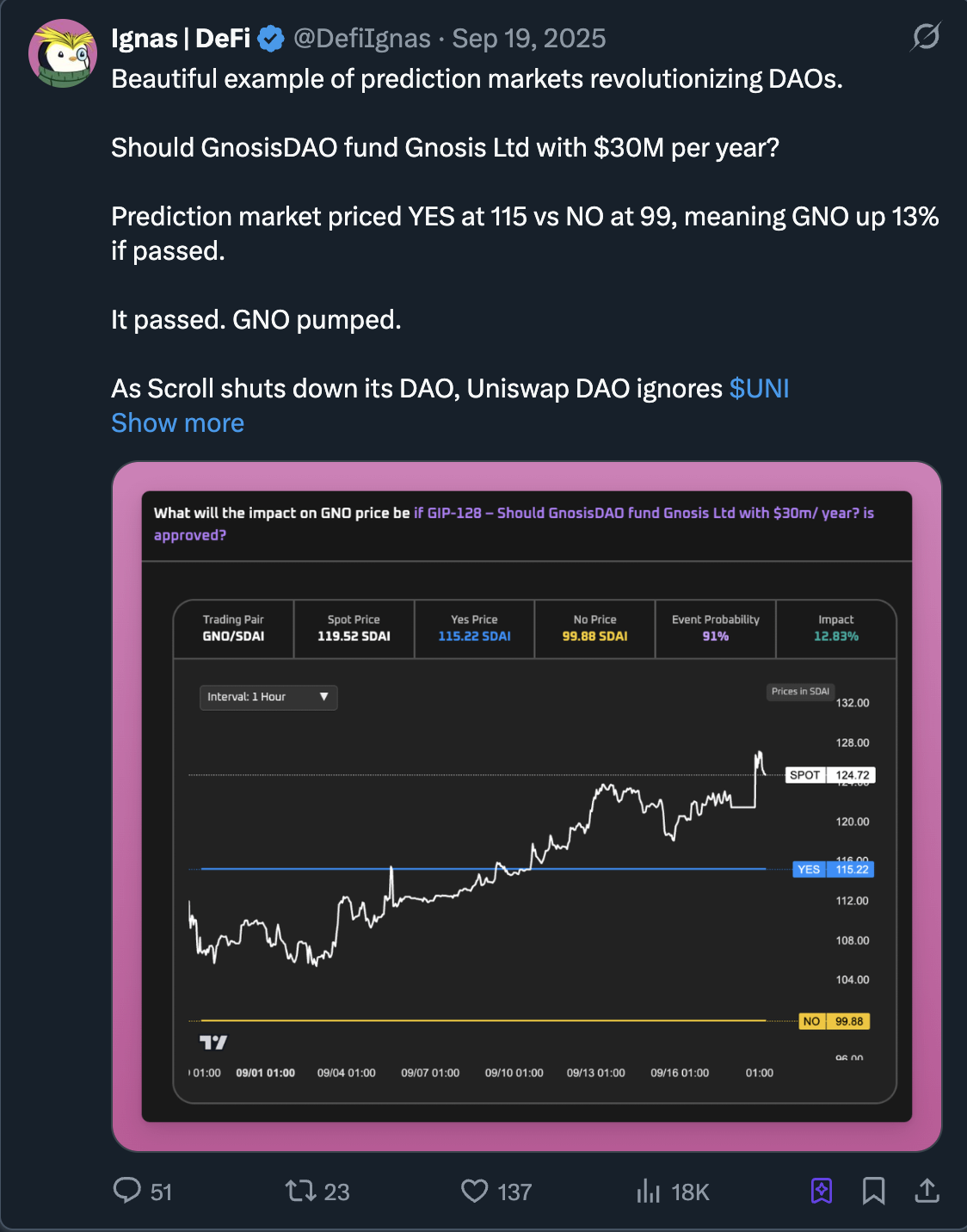
Futarchy markets will also play a larger role in DAOs. They let market signals predict which option might create value. Gnosis is testing this model, using retail prediction markets to reflect sentiment on proposals.
Crypto is Maturing, and So Are DAOs
The shifts we see in DAO operations, economic alignment, accountability conflicts, and professionalization represent maturation, not the end of DAOs.
DAOs are evolving from ideological experiment to organizational architecture that balances "decentralized oversight" with "proven operational efficiency." We believe DAO governance becomes meaningful if teams can align with community interests: moving fast when action is needed, letting growth benefit token holders, and holding all participants—core teams and delegates alike—accountable.
As Vitalik said: We need more DAOs, but different and better DAOs.
If you believe in the value of DAOs, we can be your voice.
Effective delegation is more than just casting a vote; it means doing the actual work: reading proposals, being active on forums, understanding risks, and voting against bad decisions, even when it's not the popular choice.
This is how we operate as delegates: through clear communication and educational content, helping the protocol grow while staying aligned with community incentives.
Twitter:https://twitter.com/BitpushNewsCN
BitPush TG Discussion Group:https://t.me/BitPushCommunity
BitPush TG Subscription: https://t.me/bitpush






