Is the U.S. Stock Market Also at Risk of a Crash Tonight?

marsbit2026-02-02 tarihinde yayınlandı2026-02-02 tarihinde güncellendi

Özet

U.S. markets face heightened risk as Nasdaq futures drop nearly 1% and the S&P 500 retreats from highs, with VIX rising to 17.44. Technical analysis shows Nasdaq breaking a key upward trendline, potentially signaling a larger downtrend. Political uncertainty surrounds Trump’s potential Fed chair nominee Kevin Warsh, named in Epstein files, raising fears of hawkish policies and abrupt monetary tightening. Commodities saw a sharp sell-off, with gold down 12% and silver crashing 36%, triggering margin calls and cross-market contagion. Asian equities fell, and Bitcoin dropped below $75k. Economic vulnerabilities include rising Treasury yields, potential recession signals, and cracks in the AI-driven tech rally. Geopolitical tensions—such as potential U.S.-Iran conflict—and stagflation risks echo the 1979 crisis, suggesting possible aggressive Fed action and a major market correction. Investors are advised to prepare for increased volatility.

Following the plunge in gold and silver, the U.S. stock market is also under pressure. On February 2, Nasdaq index futures fell nearly 1% in pre-market trading, the S&P 500 index has retreated 0.43% from its high, and the fear index VIX surged to 17.44, indicating a clear shift toward caution in market sentiment.

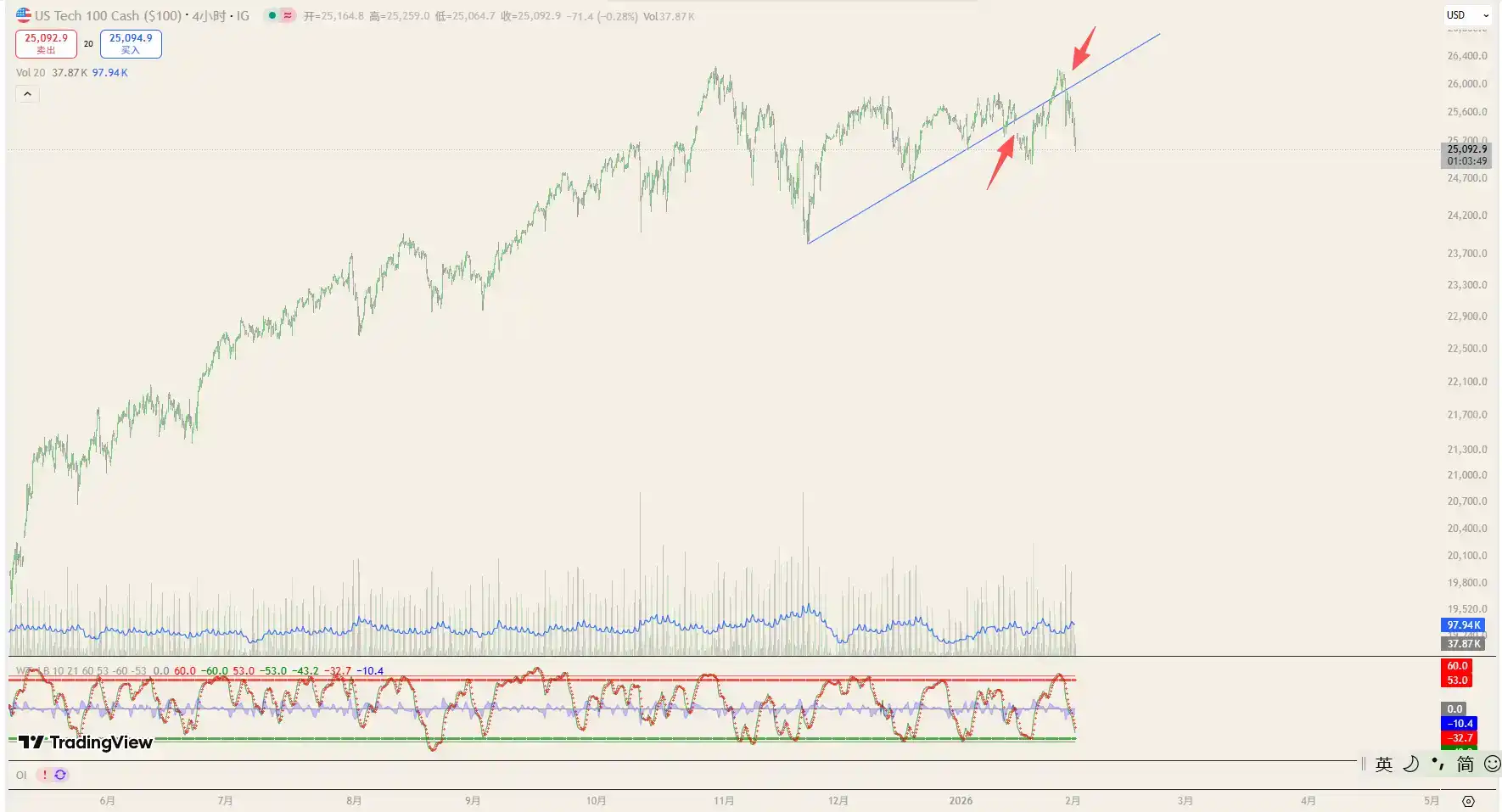
From a technical perspective, the Nasdaq index has been oscillating at high levels for three months, forming a rising wedge pattern. Now, this key upward trend line has been effectively broken for the second time, dealing a significant blow to market confidence.

If tonight's closing price falls below the previous low, forming a "Lower Low," a larger-scale downtrend may begin.
Adding to market unease is the ongoing fallout from the "Epstein Files" over the weekend. These archives, comprising over 3 million pages, have implicated Kevin Warsh, the Trump administration's nominee for the next Federal Reserve Chair.

His name appeared on the guest email list for the "St. Barts Christmas Party" in 2010. This distant political gossip has now become a real risk looming over the market.

Escalating Political Risks


Market panic stems primarily from a reassessment of policy uncertainties in the potential "Trump 2.0" era. Warsh is a staunch hawk, and his nomination almost signals the end of the low-interest-rate era.

Warsh has long been an outspoken critic of the Fed, advocating for an "institutional shift." He publicly criticized the Fed for cutting rates by a full percentage point in 2024 when inflation was above target and then hesitating, damaging its credibility.
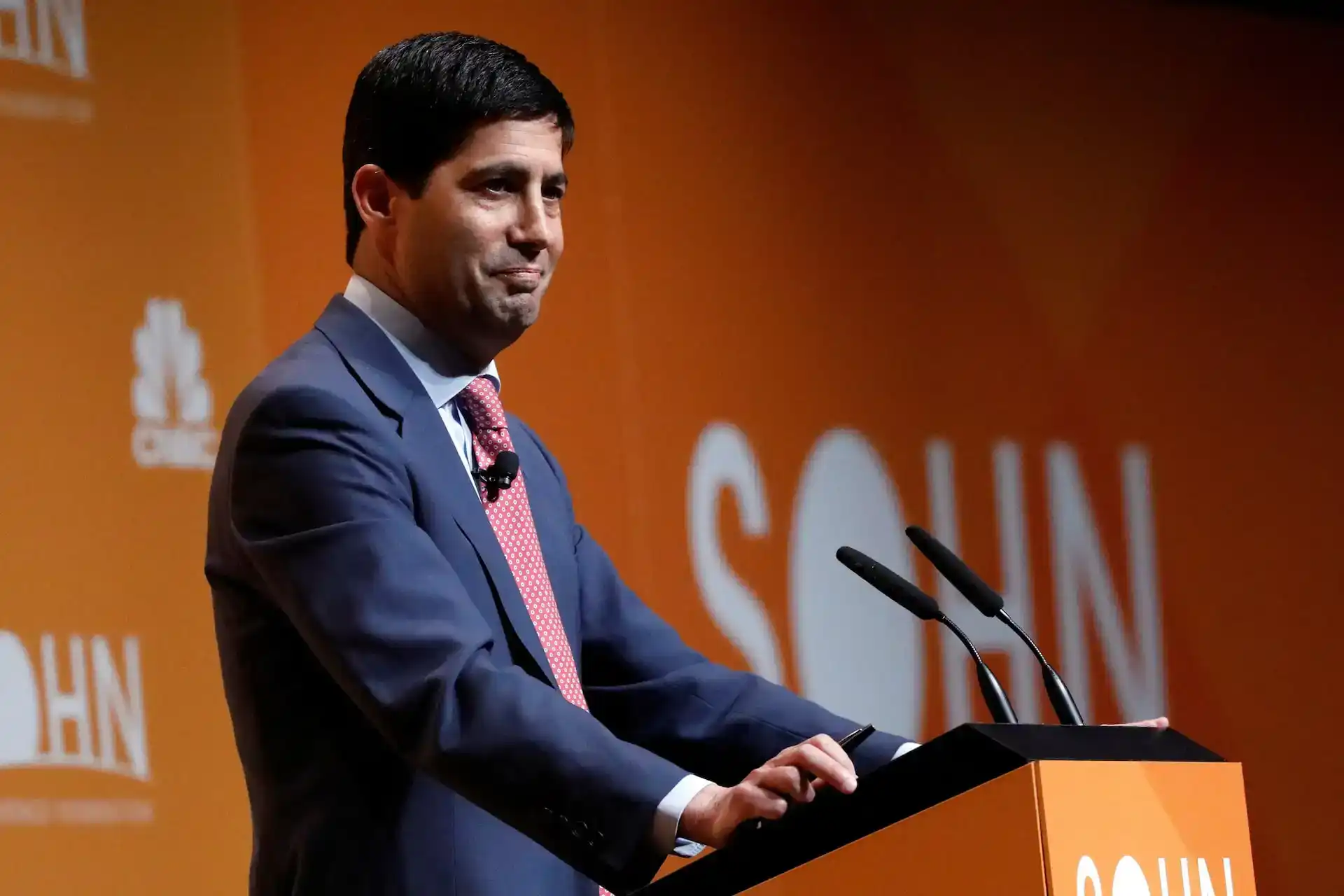
Warsh's core argument is that the Fed's massive balance sheet distorts the healthy functioning of the economy and fuels asset bubbles. He advocates for reducing the balance sheet, even if it requires tightening policies. This combination of "hawkish rate cuts" has raised concerns about a potential sharp tightening of monetary policy.

The release of the Epstein files has exposed the market to significant, unpredictable political risks. Although there is currently no evidence of Warsh's involvement in illegal activities, his association with this century's scandal itself constitutes a major political liability, making the already contentious nomination even more difficult.

Additionally, the uncertainty surrounding the Trump administration's signature tariff policies is also worrying the market. If the new round of tariffs expands in scope, it could not only hurt consumer confidence and corporate profits but also further inflate the already massive fiscal deficit.

It is projected that the U.S. fiscal deficit will reach $601 billion in the first three months of 2026 alone. This fiscal outlook, combined with the political trust crisis exposed by the Epstein files, creates an extremely fragile market environment.

Global Market and Commodity "Bloodbath"

The commodity market was the first to trigger a "long squeeze" stampede. Traditional safe-haven assets like gold and silver experienced an epic collapse, with gold prices falling by 12% at one point and silver plummeting by 36%. After ETF orders reached 30B in a single day, silver recorded its largest one-day drop since 1980, with highly leveraged long positions being liquidated en masse in a short period.

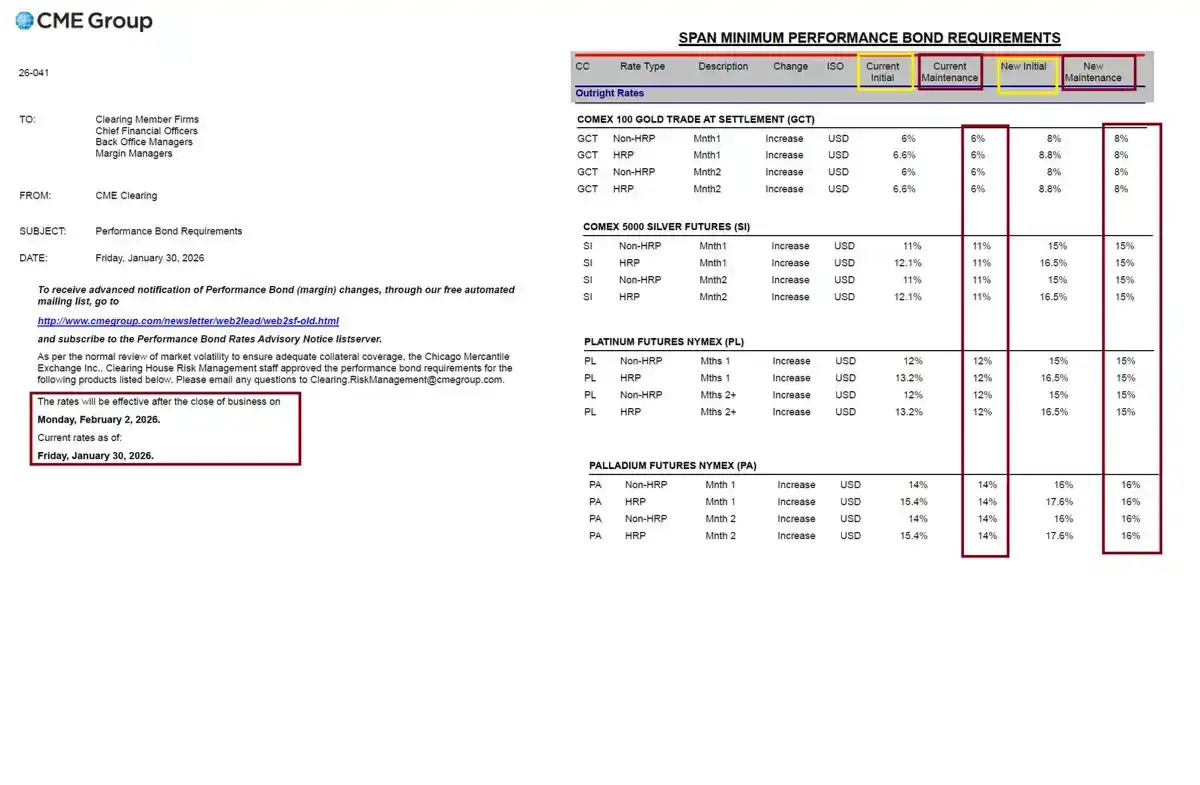
As prices fell, the Chicago Mercantile Exchange (CME) quickly raised margin requirements for gold and silver futures. For example, the margin ratio for non-high-risk silver futures accounts increased from 11% to 15%. This forced many underfunded long traders to be liquidated, with selling pressure further crushing prices and creating a vicious cycle. According to statistics, the liquidation amount for tokenized futures alone reached $140 million within 24 hours.

The storm also spread domestically, with several gold shops in Shenzhen's Shuibei district "exploding" due to participation in unqualified gold futures betting trades, involving up to 10 billion yuan and affecting thousands of investors.

Crude oil prices were not spared either, falling 5.51% to $61.62 per barrel. Weakness in Asian stock markets had already sounded the alarm, with the Nikkei index falling 1.11% and the Hang Seng Index plunging 3.15%. Bitcoin, a barometer of risk assets, also fell below the psychological threshold of $75,000. Behind this series of chain reactions may be a global deleveraging event unfolding.

When investors are forced to liquidate positions in one market (e.g., commodity futures) due to high leverage, they have to sell assets in other markets (e.g., Asian stocks, Bitcoin) to raise margin, triggering cross-market risk contagion. If this liquidity drought continues, the next target for selling could be U.S. stocks, which are currently at high valuations.

Economic Data and AI Bubble

Cracks in the economic landscape are also becoming clearer. The upcoming employment report has become the focus of market attention. If the data shows an unexpectedly cooling labor market, concerns about an economic recession will quickly intensify. The Fed is currently keeping rates unchanged, but facing persistently high inflation, its policy space is extremely limited. If inflation does not fall as expected, future rate hikes will be inevitable.

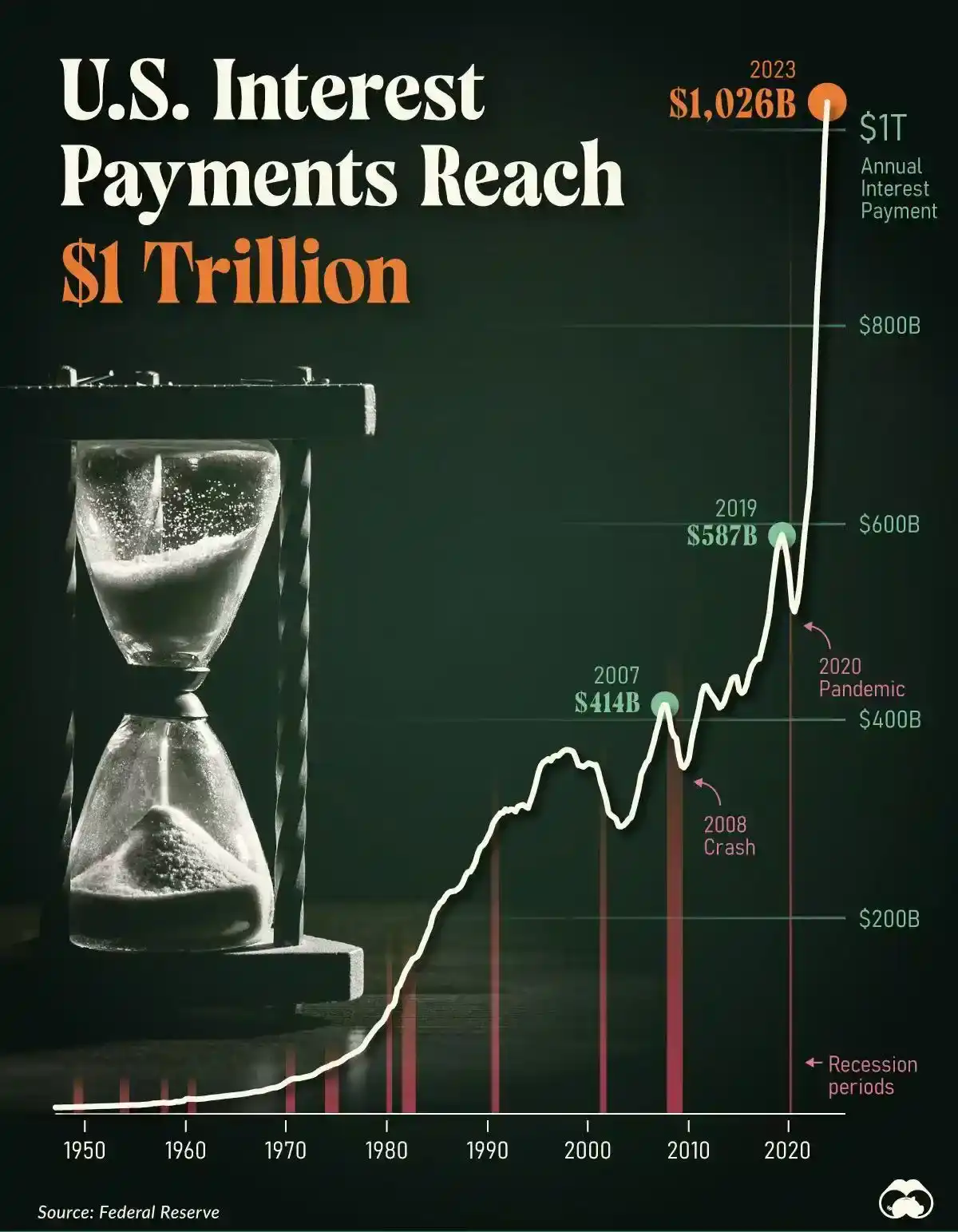
The 10-year U.S. Treasury yield has climbed to 4.218%, and the massive annual interest payments on U.S. government debt are adding to the fiscal woes. Historically, an inverted yield curve has been a reliable leading indicator of economic recessions, and the market is once again approaching this dangerous edge.
Meanwhile, the AI narrative that supported the market boom in 2025 is also showing cracks. The recent weakness in the Nasdaq index, particularly with software stocks becoming the most oversold sector in the S&P 500, indicates that market enthusiasm for AI is cooling.

Investors are beginning to realize that the commercialization and profit realization of AI are far more prolonged and challenging than imagined.

The upcoming corporate profit season, especially the earnings reports of tech giants like Amazon and Alphabet, will serve as a "litmus test" for AI. If the reports fall short of expectations, a large-scale sell-off may be inevitable.

The Ghost of 1979

The current geopolitical and macroeconomic environment bears a remarkable resemblance to 1979, which makes many seasoned investors uneasy.

1979 marked the end of the Cold War détente. In December of that year, the Soviet invasion of Afghanistan led to a sharp deterioration in U.S.-Soviet relations, pushing global geopolitical tensions to a peak.

Almost simultaneously, the Iranian Revolution triggered the second oil crisis, causing oil prices to soar and the global economy to fall into the mire of "stagflation" (economic stagnation coupled with high inflation). At the time, the Fed, under political pressure, failed to take decisive action promptly, leading to失控 inflation. It eventually took the appointment of new Chair Paul Volcker and his "shock therapy" of sharp rate hikes to curb it, but at the cost of a deep recession.

Today, we are once again facing a similar situation: heightened geopolitical tensions in the Middle East. According to data from prediction market Polymarket, as of February 2, the market believes there is a 31% probability of the U.S. striking Iran by the end of the month, with insider whales making huge bets on Khamenei's ouster.
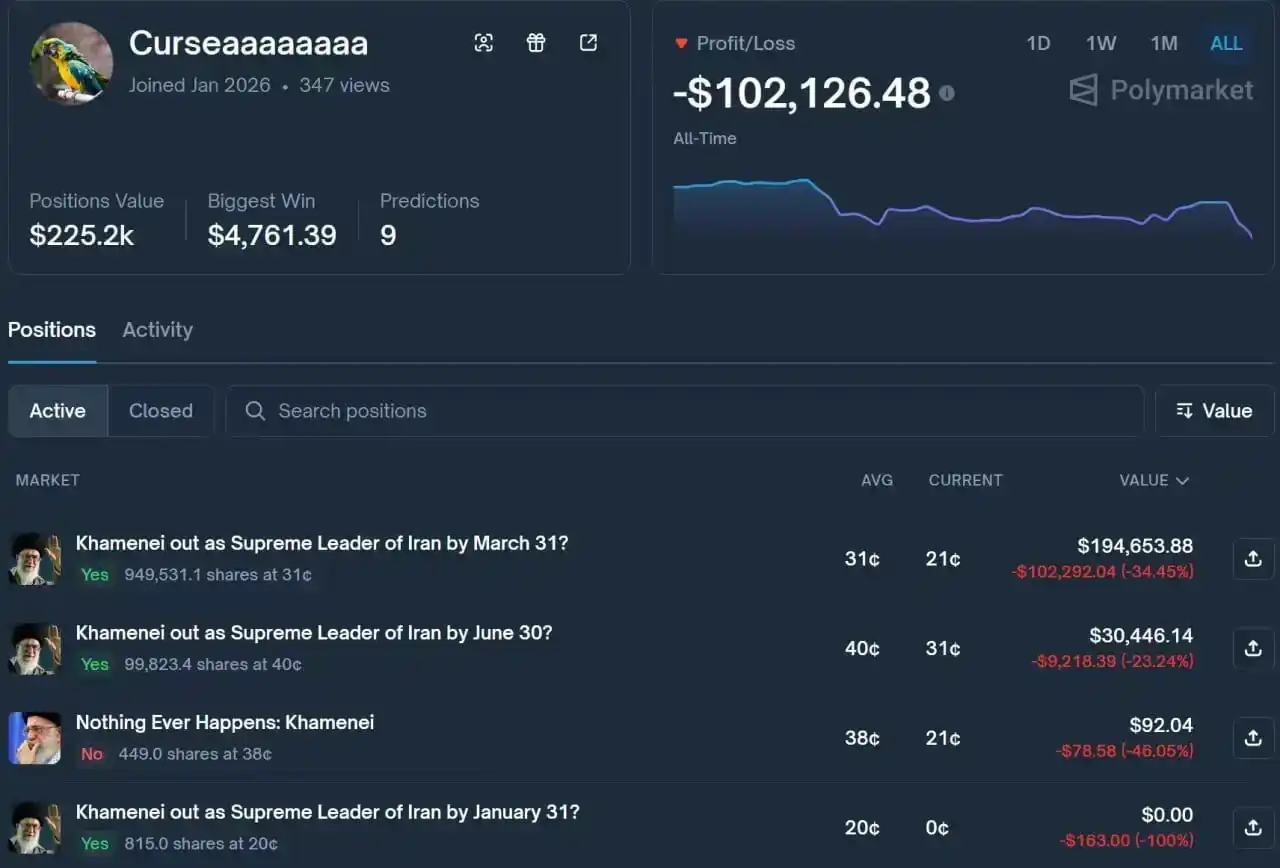

Meanwhile, energy prices are highly volatile, and global inflationary pressures remain high. The potential interference of the Trump administration with Fed independence, coupled with the nomination of a hawk like Warsh, recalls the risks of policy errors under political pressure.

If history repeats itself, aggressive tightening policies adopted to control inflation could end this artificially prolonged bull market, triggering a dollar confidence crisis and a significant correction in U.S. stocks similar to the late 1970s and early 1980s.

For investors who have been riding high on the狂欢 of 2025, it may be time to reassess risks and prepare for potential market volatility.


İlgili Sorular

QWhat technical pattern has the Nasdaq index formed, and why is its recent break significant?

AThe Nasdaq index has formed a rising wedge pattern over the past three months. The recent break below the key rising trendline for the second time is significant because it damages market confidence and could signal the start of a larger downtrend if the daily close is below the previous low, forming a 'Lower Low'.

QWho is Kevin Warsh and why is his potential nomination as Fed Chair causing market concern?

AKevin Warsh is a noted hawkish figure and a vocal critic of the Federal Reserve. His potential nomination is causing market concern because he advocates for an end to the low-interest era, a significant reduction of the Fed's balance sheet, and tighter monetary policy, even if combined with rate cuts ('hawkish easing'), which could lead to a sharp tightening of financial conditions.

QWhat event triggered a 'long squeeze' in the commodity markets, and what was the result?

AA 'long squeeze' was triggered in the commodity markets, leading to an epic crash where gold prices fell 12% and silver plummeted 36%, its largest single-day drop since 1980. The CME raised margin requirements, forcing highly leveraged long positions to be liquidated, which created a vicious cycle of selling and further price declines.

QWhat macroeconomic period from history does the article compare the current situation to, and why?

AThe article compares the current situation to 1979, a period marked by the end of Cold War détente, the Soviet invasion of Afghanistan, the Iranian Revolution, the second oil crisis, and global stagflation. The similarity lies in heightened geopolitical tensions, volatile energy prices, high inflation, and the risk of political pressure leading to monetary policy errors.

QWhat is putting the AI narrative that fueled the 2025 market rally under pressure?

AThe AI narrative is under pressure because the Nasdaq's recent weakness shows market enthusiasm is cooling. Investors are realizing that the commercialization and profit realization of AI is taking longer and is more difficult than anticipated. Upcoming earnings reports from tech giants like Amazon and Alphabet will be a key test; if they disappoint, it could trigger a major sell-off.

İlgili Okumalar

From South Korea to the United States: Blue-Collar Jobs Are Becoming Increasingly Popular, Thanks to AI

AI is reshaping the labor market's value proposition. The traditional four-year college degree is losing its appeal as a guaranteed career path, while skilled blue-collar trades like electricians, welders, and plumbers are experiencing historic demand and wage premiums. This shift is driven by dual pressures: AI's displacement of certain white-collar roles and a booming need for physical infrastructure and data center construction. Data confirms the trend. In the U.S., vocational school revenue surged, and a significant portion of recent layoffs are AI-related. Surveys show a majority of Gen Z adults plan to pursue blue-collar work, citing better job security against AI automation. Vocational education interest has exploded recently. Experts cite a psychological shift as younger generations seek tangible, AI-resistant careers and avoid high student debt. In many cases, salaries for skilled trades now match or exceed those requiring a bachelor's degree. In South Korea, semiconductor vocational high schools boast near-total employment, with graduates securing high-paying roles at companies like Samsung. The shortage is structural, exacerbated by a retiring baby boomer workforce and massive infrastructure projects. Companies like JPMorgan Chase, Meta, and Lowe's are investing heavily in training programs. However, overcoming historical stigma and a "perception gap" around trade careers remains a key challenge to closing the talent gap.

marsbit22 dk önce

From South Korea to the United States: Blue-Collar Jobs Are Becoming Increasingly Popular, Thanks to AI

marsbit22 dk önce

Qualcomm: AI Hype Subsides, When Will Smartphones Emerge from the Gloom?

Qualcomm reported its Q3 FY2026 results (ending June 2026), with revenue of $9.95B, down 4% YoY but above expectations. Gross margin declined to 53.1%, pressured by rising costs across manufacturing and memory. Key business segments showed mixed performance: Handset revenue fell 19.6% YoY to $5.09B, dragged by an 11% decline in non-Apple Android shipments and weaker high-end mix. Conversely, Automotive revenue surged 61% to $1.59B, and IoT grew 9% to $1.83B. Core operating profit dropped 41% YoY due to margin compression and higher expenses. Management's Q4 FY2026 guidance projects revenue of $9.7B-$10.5B, in line with consensus, but Non-GAAP EPS guidance of $2.05-$2.25 fell short of expectations. Amidst persistent weakness in its core handset market, Qualcomm is pursuing growth in AI, focusing on Edge AI (smartphones, PCs, automotive) and Data Center AI. Its data center strategy includes four pillars: AI accelerators (e.g., AI200), commercial CPUs (Dragonfly C1000), custom silicon, and connectivity solutions. While these initiatives initially boosted its stock, concerns over AI capital expenditure sustainability have since erased those gains. The company targets $5B in data center revenue for FY2027 and $15B for FY2029. The report concludes that with the traditional handset business still under pressure, the data center opportunity is currently viewed as a longer-term option, and a more conservative valuation based on core operations may be warranted until AI contributions materialize.

marsbit27 dk önce

Qualcomm: AI Hype Subsides, When Will Smartphones Emerge from the Gloom?

marsbit27 dk önce

From TPU to Self-Evolving Agents: How Jeff Dean Predicts the Next Step in AI

At the 2026 YC Startup School, Jeff Dean outlined his vision for AI's next phase, shifting focus from simply scaling models to building intelligent, autonomous systems. He believes AI's progress is no longer just about creating smarter models, but about integrating them into systems capable of long-term, iterative work, automated experimentation, and continuous learning. This evolution moves the competition from "who has the bigger model" to "who can best organize intelligence." Dean suggests AI capabilities are now comparable to a junior engineer, enabling the automation of complex workflows. However, the true challenge and opportunity lie in managing these AI "workers" at scale. He emphasizes the importance of **context engineering**—structuring tools, memory, and feedback loops—over raw model power. For startups, this means building deep expertise in niche domains where general models currently fail (near 0-1% success rates), leveraging proprietary data, specialized tools, and domain-specific evaluators. A recurring theme is re-examining fundamental constraints. Dean's past work, like moving Google's search index to memory or creating the TPU, stemmed from questioning outdated assumptions about hardware and cost. He sees similar inflection points today, particularly in **specialized inference hardware** to drastically reduce latency and energy consumption for real-time Agent operation. Notably, he points out that in modern AI systems, the dominant cost is often not computation but **data movement**. Reliable, long-running Agents require robust system design, borrowing concepts from distributed computing like checkpointing, state management, and parallel exploration to handle failures and maintain progress over days or weeks. As AI automates execution, the scarcest human skills will shift to **defining clear specifications**, **judging what problems are worth solving** (taste), and designing effective feedback loops. Ultimately, Dean's framework prioritizes understanding the problem deeply, identifying the true bottlenecks, and systematically building closed-loop systems where AI can not only perform tasks but also improve AI itself.

marsbit27 dk önce

From TPU to Self-Evolving Agents: How Jeff Dean Predicts the Next Step in AI

marsbit27 dk önce

İşlemler

Spot
活动图片




