Is crypto heading for another Q1-style sell-off amid macro FUD?

ambcrypto2026-07-08 tarihinde yayınlandı2026-07-08 tarihinde güncellendi

Özet

Amid renewed macro concerns, including rising oil prices due to U.S. sanctions on Iran, the crypto market faces the risk of another Q1-style sell-off. Recent macro-driven volatility saw over $1 trillion erased from risk assets, mirroring earlier patterns where surging oil prices coincided with crypto market declines. Technical indicators show significant downside liquidity, with billions in potential Bitcoin liquidations if prices fall further. While Bitcoin ETF inflows hint at recovering institutional demand, they remain insufficient to offset recent outflows, leaving the market vulnerable. With weakening sentiment and growing macro pressure, the conditions for a sustained risk-off rotation in crypto are increasingly present.

Market FUD is back in focus, even though broader sentiment hasn’t fully priced it in yet.

From a macro perspective, the U.S. is revoking Iran’s newly issued general license to export oil after Iran reportedly struck three commercial vessels in the Strait of Hormuz. The U.S. called Iran’s actions “wholly unacceptable” and warned it would respond with consequences.

Naturally, this puts oil supply back in focus, raises the risk of higher crude prices, and adds another macro headwind for the crypto market, setting up conditions similar to the early Q1 risk-off rotation. Notably, the technicals are already hinting that this rotation may be underway.
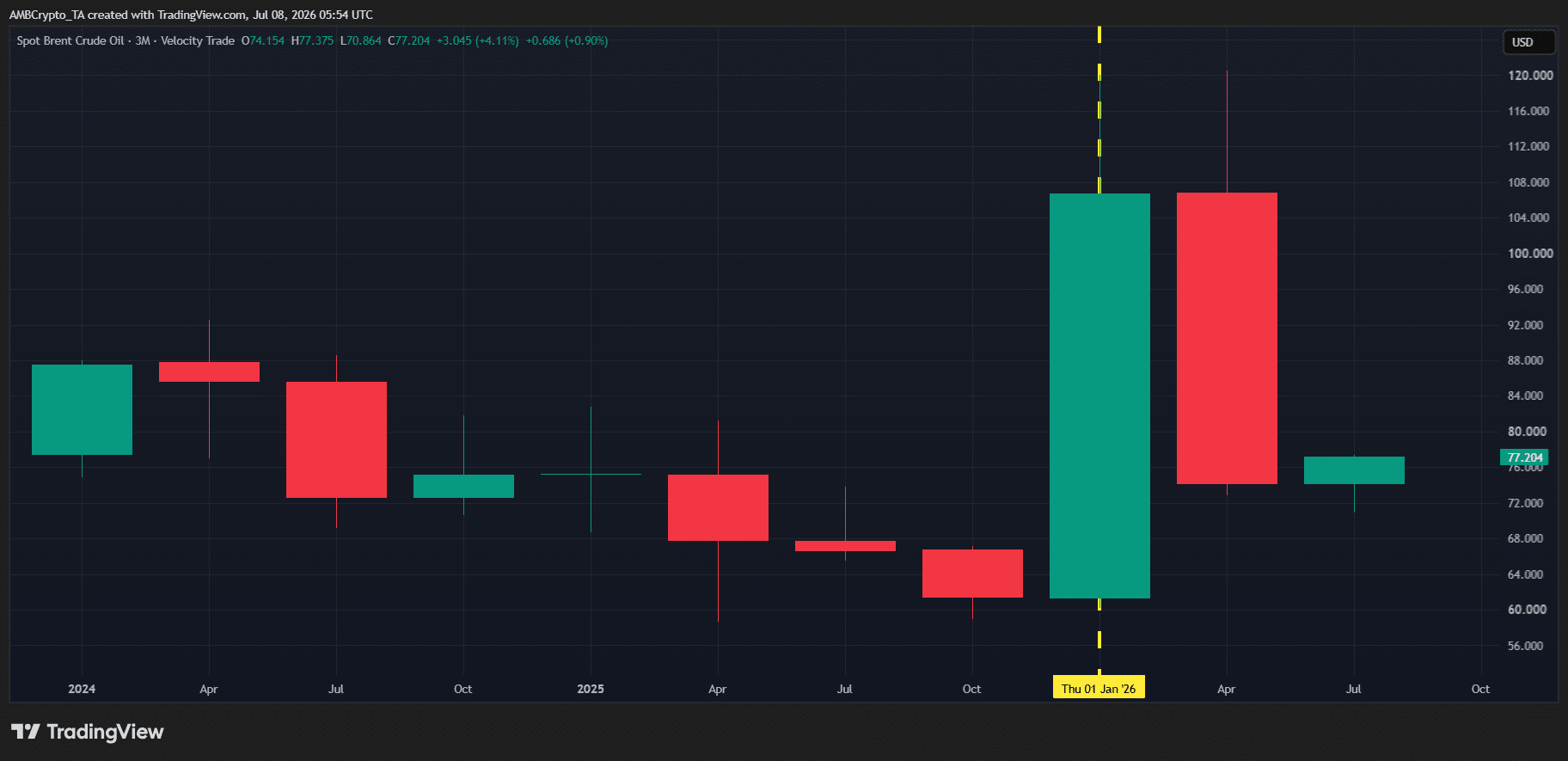
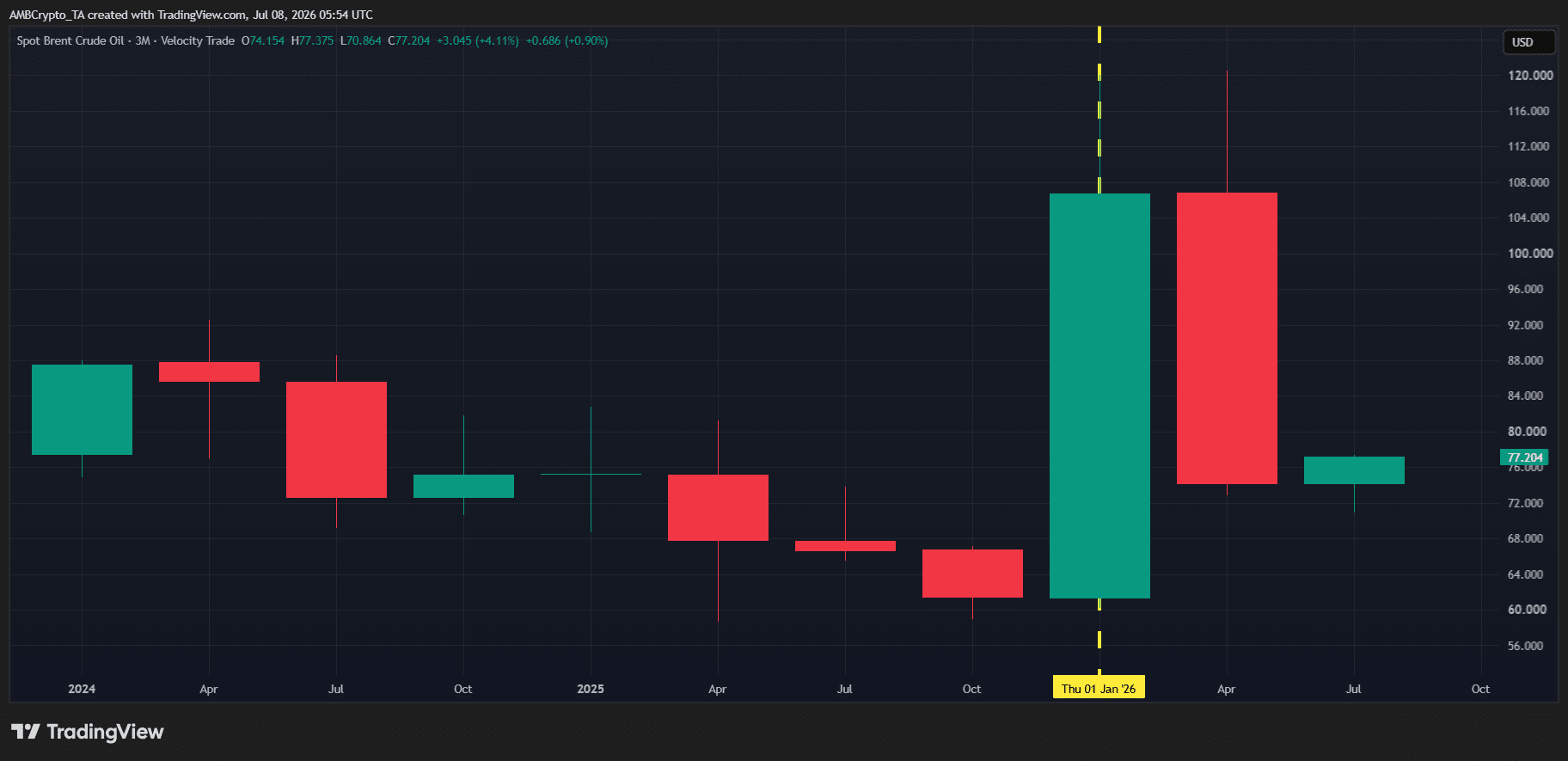
Source: TradingView (TOTAL/USDT)

As the chart above shows, Brent crude has jumped 6%+ in less than 48 hours, while the crypto market has shed around $50 billion in market cap. We’ve seen this setup before. In Q1, Brent rallied 73%+ over the quarter, while the total crypto market cap dropped 20%+ as macro FUD pushed capital out of risk assets.

Naturally, the question is: Is crypto setting up for another Q3 risk-off move?

For starters, the latest sell-off wasn’t just a crypto event. The U.S. erased more than $1 trillion from stocks, precious metals, and crypto within 30 minutes when it announced the revocation of Iran’s oil export license. That tells us the move was macro-driven, not “crypto-specific.” That said, with markets now starting to price in longer-term macro risks, the current setup still leaves room for another Q1-style rotation.

Macro pressure meets weak crypto market structure

Currently, calling the crypto market stable would be a stretch.

From a technical standpoint, the ongoing capital outflows are already showing up in sentiment. The Crypto Fear & Greed Index has rolled over sharply. Sure, it hasn’t reached the extreme fear levels seen in Q1, but with the current fragile market structure, that scenario is still on the table as investors start pricing in the longer-term impact of higher oil prices.

ETF flows tell the story: Bitcoin ETFs have already seen over $200 million in July inflows, signaling a return of institutional demand. But those inflows barely dent the more than $6 billion in outflows over the past two months. In other words, institutional positioning has improved, but it hasn’t fully recovered, leaving crypto vulnerable if macro pressure continues to build.
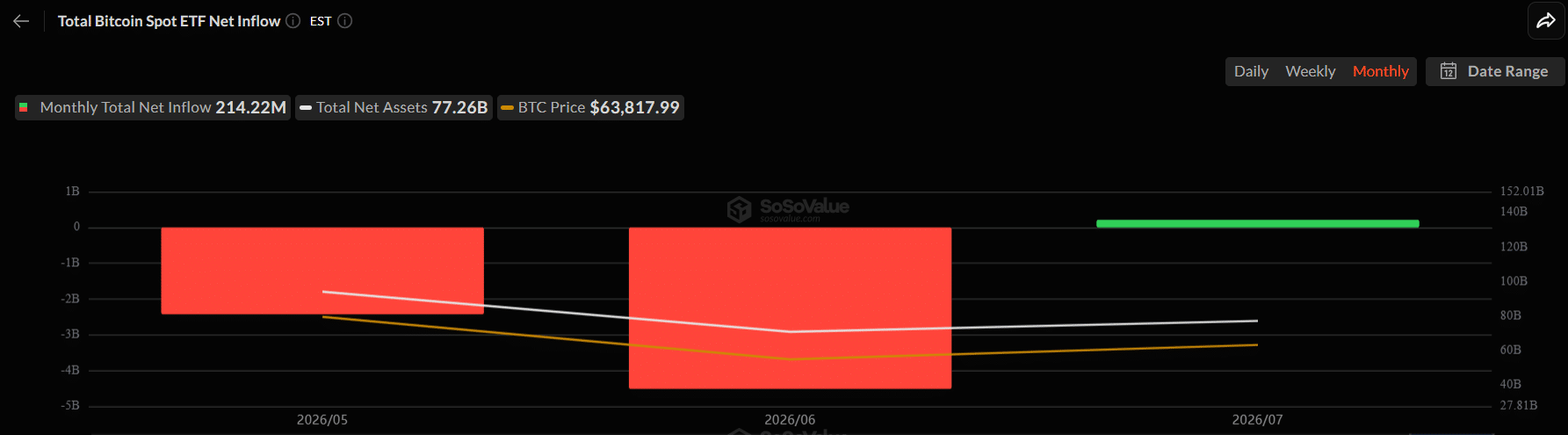
Source: SoSoValue

To make matters worse, the recent consolidation has stacked a huge amount of liquidity below price.

According to analysts, around $1.4 billion in Bitcoin long positions would be liquidated if BTC drops to $53,500, roughly 15% below the current spot price. That’s a massive long liquidity cluster, meaning sellers still have plenty of downside liquidity to target if macro sentiment deteriorates.

Against this backdrop, the crypto market sits at a critical inflection point. Macro risks are building, sentiment is weakening, and downside liquidity continues to grow. Unless ETF demand accelerates enough to absorb the selling pressure, the odds of another Q1-style risk-off rotation will remain firmly on the table.


Final Summary

  • Rising oil prices and macro FUD could trigger another Q1-style risk-off move for crypto.
  • ETF inflows are recovering, but downside liquidity still leaves Bitcoin vulnerable to another sell-off.


Trend Kriptolar

İlgili Sorular

QAccording to the article, what specific macro event is creating FUD and risk-off sentiment similar to early Q1?

AThe U.S. revoking Iran's oil export license after Iran reportedly struck vessels in the Strait of Hormuz, which puts oil supply back in focus and raises the risk of higher crude prices.

QWhat evidence from ETF flows does the article provide about the current state of institutional demand for Bitcoin?

ABitcoin ETFs have seen over $200 million in inflows in July, signaling a return of institutional demand. However, these inflows are small compared to the more than $6 billion in outflows over the past two months, indicating positioning has improved but not fully recovered.

QWhat is the significant technical downside risk mentioned for Bitcoin if macro sentiment deteriorates?

AAnalysts state that approximately $1.4 billion in Bitcoin long positions would be liquidated if the price of BTC drops to around $53,500, representing a massive long liquidity cluster that sellers could target.

QHow does the article describe the relationship between the rise in Brent crude oil prices and the crypto market cap in Q1?

AIn Q1, Brent crude rallied over 73%, while the total cryptocurrency market cap dropped over 20% as macro FUD pushed capital out of risk assets like crypto.

QWhat key condition does the article suggest is necessary to prevent another Q1-style risk-off rotation in crypto?

AETF demand would need to accelerate enough to absorb the selling pressure created by macro risks and the large amount of downside liquidity.

İlgili Okumalar

The Danger of Old Bookmarks: How an Expired Tornado Cash Domain Cost a User 1,000 ETH

A user lost over 1,010 ETH (worth millions) due to a phishing attack via an expired official domain of the Tornado Cash protocol. As reported on August 20, 2026, the domain `tornado.cash` was not renewed by the original developers amid U.S. OFAC sanctions and was subsequently registered by malicious actors. They deployed a fake frontend mimicking the legitimate Tornado Cash interface. Through this site, the attackers gained access to the user's deposit notes—the data required to withdraw funds from the protocol's pools—and drained the ETH within 12 hours. On-chain data shows the stolen funds (e.g., wallet 0xd8B356...) were withdrawn from Tornado Cash pools. However, on-chain analyst Specter cast doubt on the victim's story. He suggested the individual might be involved in illicit activity, noting that a large sum of BTC was received from a coin-mixing service (Whirlpool) and converted to ETH before being sent to the fake Tornado Cash site. The victim's explanation of urgently moving funds due to a compromised hardware wallet was questioned, as the fund trail indicated deliberate obfuscation. Specter speculated this might be a conflict between malicious actors rather than a simple phishing case. The incident highlights the danger of expired domains for major protocols, where old bookmarks can lead to compromised sites. WHOIS records show the domain was registered in March 2025. Broader analysis notes that in 2025, over $1.8 billion was lost to scams and exploits, largely through social engineering like phishing via familiar but hijacked links. This case underscores the persistent risk when a domain's legal status changes but user trust and search engine reputation remain.

cryptonews.ru42 dk önce

The Danger of Old Bookmarks: How an Expired Tornado Cash Domain Cost a User 1,000 ETH

cryptonews.ru42 dk önce

You'll Be Surprised How Much WeChat's Architecture Differs from Telegram's

An article compares the core architectural philosophies of WeChat and Telegram, highlighting fundamental differences in data storage, monetization, and developer ecosystems. **Data Storage:** Telegram offers unlimited, synchronized cloud storage for seamless access across all devices. In contrast, WeChat stores chat history locally on each device, requiring a manual migration process for transfer and tethering desktop sessions to an active smartphone. **Features & Ecosystem:** Telegram's open Bot API allows for easy, free bot creation, while WeChat's massive ecosystem of over 4.8 million "mini-programs" operates within a closed, curated, and more regulated platform. Commenting also differs: Telegram uses integrated discussion threads for channels, whereas WeChat relies on pre-moderated comments for official accounts and separate chats for interaction. **File Sharing & Payments:** Telegram supports large file transfers (up to 4GB for Premium), while WeChat limits most files to 200MB. A key divergence is in payments: WeChat Pay is deeply integrated into daily life and commerce in China, whereas Telegram lacks a comparable built-in fiat payment system, focusing instead on third-party bots and crypto. **Analysis:** The comparison reveals two distinct models: WeChat is a tightly integrated, closed ecosystem deeply embedded in the real economy, while Telegram prioritizes open protocols, flexible data handling, and low barriers for developers. An added perspective notes that WeChat's fusion of messaging and payments in a single interface without end-to-end encryption for chats potentially broadens the attack surface, raising security questions as more functions converge.

cryptonews.ru6 saat önce

You'll Be Surprised How Much WeChat's Architecture Differs from Telegram's

cryptonews.ru6 saat önce

İşlemler

Spot

Popüler Makaleler

T Nasıl Satın Alınır

HTX.com’a hoş geldiniz! Threshold Network Token (T) satın alma işlemlerini basit ve kullanışlı bir hâle getirdik. Adım adım açıkladığımız rehberimizi takip ederek kripto yolculuğunuza başlayın. 1. Adım: HTX Hesabınızı OluşturunHTX'te ücretsiz bir hesap açmak için e-posta adresinizi veya telefon numaranızı kullanın. Sorunsuzca kaydolun ve tüm özelliklerin kilidini açın. Hesabımı Aç2. Adım: Kripto Satın Al Bölümüne Gidin ve Ödeme Yönteminizi SeçinKredi/Banka Kartı: Visa veya Mastercard'ınızı kullanarak anında Threshold Network Token (T) satın alın.Bakiye: Sorunsuz bir şekilde işlem yapmak için HTX hesap bakiyenizdeki fonları kullanın.Üçüncü Taraflar: Kullanımı kolaylaştırmak için Google Pay ve Apple Pay gibi popüler ödeme yöntemlerini ekledik.P2P: HTX'teki diğer kullanıcılarla doğrudan işlem yapın.Borsa Dışı (OTC): Yatırımcılar için kişiye özel hizmetler ve rekabetçi döviz kurları sunuyoruz.3. Adım: Threshold Network Token (T) Varlıklarınızı SaklayınThreshold Network Token (T) satın aldıktan sonra HTX hesabınızda saklayın. Alternatif olarak, blok zinciri transferi yoluyla başka bir yere gönderebilir veya diğer kripto para birimlerini takas etmek için kullanabilirsiniz.4. Adım: Threshold Network Token (T) Varlıklarınızla İşlem YapınHTX'in spot piyasasında Threshold Network Token (T) ile kolayca işlemler yapın.Hesabınıza erişin, işlem çiftinizi seçin, işlemlerinizi gerçekleştirin ve gerçek zamanlı olarak izleyin. Hem yeni başlayanlar hem de deneyimli yatırımcılar için kullanıcı dostu bir deneyim sunuyoruz.

829 Toplam GörüntülenmeYayınlanma 2024.12.10Güncellenme 2026.06.02

T Nasıl Satın Alınır

Tartışmalar

HTX Topluluğuna hoş geldiniz. Burada, en son platform gelişmeleri hakkında bilgi sahibi olabilir ve profesyonel piyasa görüşlerine erişebilirsiniz. Kullanıcıların T (T) fiyatı hakkındaki görüşleri aşağıda sunulmaktadır.

活动图片