Is CFTC ‘ready to take responsibility’ for $3T crypto market?

ambcrypto2026-04-02 tarihinde yayınlandı2026-04-02 tarihinde güncellendi

Özet

The U.S. Commodity Futures Trading Commission (CFTC) is positioning itself as a leading regulator for the $3 trillion cryptocurrency market. Chair Michael Selig stated the agency is prepared to take on this responsibility and is working with the SEC to harmonize federal oversight. This shift comes amid broader U.S. regulatory improvements, which have supported significant market growth, including a stablecoin market cap exceeding $319 billion. The CFTC has taken steps like publishing a crypto-asset system and offering regulatory relief to developers. However, key legislation, such as the CLARITY Act, remains stalled in Congress. A clearer regulatory framework is seen as crucial for further industry expansion.

Cryptocurrency adoption has accelerated in recent years, prompting governments to develop clearer regulatory frameworks. The United States leads in public adoption and maintains a relatively strong regulatory environment, with scores of 7.7 and 6.2 out of 10, respectively.
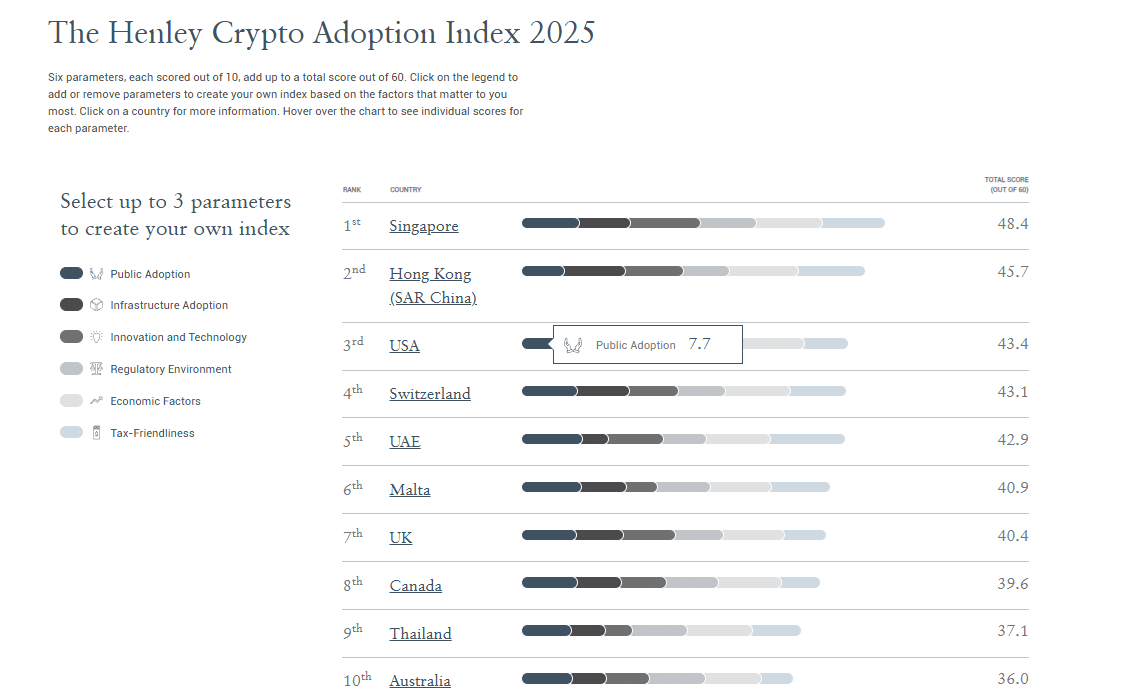
Source: Henley Global

A more favorable regulatory tone, particularly during the Trump administration, has strengthened its position. As the sector expands, the Commodity Futures Trading Commission [CFTC] has taken on a more prominent role, aiming to reduce regulatory burdens and support industry growth.

CFTC signals readiness to oversee crypto market

CFTC Chair Michael Selig said the agency is well prepared to regulate the crypto industry. As part of a summary marking his 100 days in the office, Selig stated,

CFTC is ready to take responsibility for a $3 trillion crypto asset market.

In his statement, he reported that the CFTC and the SEC have formed a joint effort to harmonize federal oversight of the crypto asset market. However, he did not provide a timeline for when Congress might pass a formal market structure bill.

The recent remarks came as the United States Senate continued to review the CLARITY Act. The bill has stalled in the committee amid a dispute over stablecoin yield and related provisions.

Easing crypto regulation accelerates growth.

Besides CFTC’s willingness to lead the crypto industry, the Chair noted major regulatory steps taken to caution the sector.

Selig criticized the prior administration over the use of enforcement in crypto regulation. In doing so, he stated that the agency had improved the regulatory environment by providing no-action relief to digital wallet software developers.

The CFTC published the Taxonomy, the first crypto-asset classification system, which distinguishes digital securities from commodities. Also, the agency argued that it had addressed clarity concerns over tokenized collateral and had launched an innovation task force.

Notably, improvements in regulatory environments, especially with the passage of the GENIUS Act, strengthened market adoption. In fact, stablecoins have grown substantially, exceeding $319 billion in market cap and over $100 billion in trading volume.
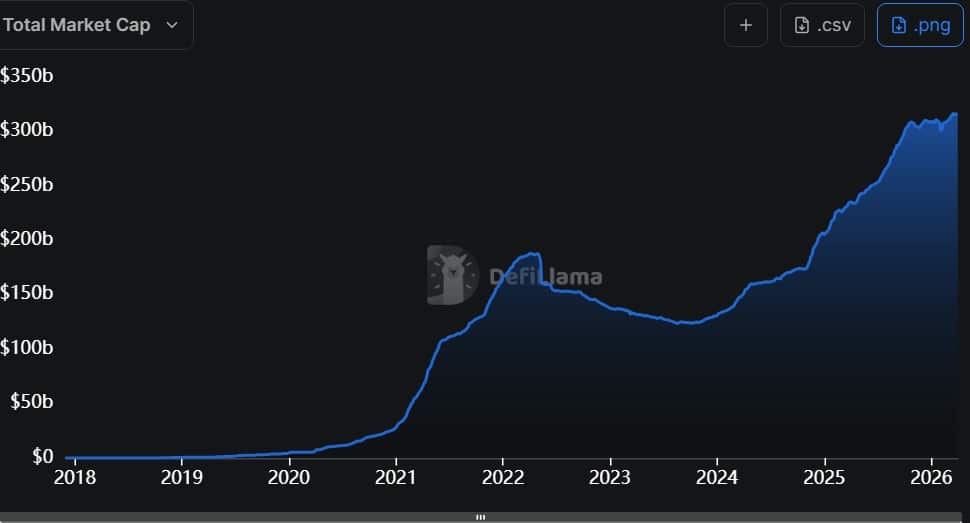
Source: DeFiLlama

The sector’s growth underscores the need for legal clarity, and if properly enacted, the entire crypto market could grow further. Thus, improving regulatory conditions is good news for the broader crypto market and could significantly boost the market if further progress is made.


Final Summary

  • The Commodity Futures Trading Commission is emerging as a key regulator, signaling readiness to oversee a $3 trillion crypto asset market.
  • CFTC Chair Michael Selig confirmed coordination with the Securities and Exchange Commission to align federal oversight.


İlgili Sorular

QWhat is the CFTC's stated readiness regarding the crypto market, and what specific market size was mentioned?

ACFTC Chair Michael Selig stated that the agency is ready to take responsibility for a $3 trillion crypto asset market.

QWhich two US agencies have formed a joint effort to harmonize federal oversight of the crypto market?

AThe Commodity Futures Trading Commission (CFTC) and the Securities and Exchange Commission (SEC) have formed a joint effort for this purpose.

QWhat major legislative act is currently stalled in the US Senate, and what is the primary dispute causing the delay?

AThe CLARITY Act is stalled in committee, primarily due to a dispute over stablecoin yield and related provisions.

QWhat specific action did the CFTC take to improve the regulatory environment for digital wallet software developers?

AThe CFTC provided no-action relief to digital wallet software developers.

QWhat is the name of the first crypto-asset classification system published by the CFTC, and what is its primary function?

AThe CFTC published the Taxonomy, which is the first crypto-asset classification system designed to distinguish digital securities from commodities.

İlgili Okumalar

Bitcoin Withdrawals Continue: 8 Years of Storage in a Coldcard Cold Wallet Ended in Zero

Coldcard Hardware Wallet Hacked: Losses Mount Due to Vulnerable Seed Generation A critical vulnerability in Coldcard hardware wallets has led to a continued wave of fund thefts. According to Galaxy Research, the total stolen has reached 1,367.05 BTC (approx. $88.6 million) from 4,585 addresses, a significant increase from the initial 594.5 BTC reported on July 30, 2026. Most of the stolen funds remain on the attackers' addresses. The issue is not with the current firmware, which Coinkite has updated, but with seed phrases generated on vulnerable devices between March 2021 and the release of fixed firmware versions. Due to a programmer error, devices switched from using a hardware random number generator to the software-based Yasmarang generator, which was initialized with publicly accessible data like the chip's serial number. This made the seed phrases predictable through offline brute-force attacks, meaning wallets remain at risk until funds are moved to a new wallet generated with the patched firmware. Affected devices include Mk2/Mk3 with firmware 4.0.1–4.1.9 (and up to 5.0.3), Mk4/Mk5 up to version 5.6.0, and Q models up to 1.5.0Q. The only exceptions are seeds created with a high-entropy method like at least 50 independent dice rolls or a strong unique BIP-39 passphrase. All other owners must generate a new seed on the fixed firmware and transfer their assets. A case highlighting the human impact involves a 39-year-old long-term investor who lost 2 BTC (approx. $130,000) in minutes. He had accumulated the Bitcoin over eight years through physical labor, viewing it as a financial lifeline and a retirement plan in a country suffering from hyperinflation. His story underscores that even conservative "buy and hold in cold storage" strategies can be compromised by such underlying technical flaws. From a technical perspective, this incident echoes historical failures where weak random number generators undermined cryptographic security, challenging the assumption that offline storage is automatically foolproof.

cryptonews.ru49 dk önce

Bitcoin Withdrawals Continue: 8 Years of Storage in a Coldcard Cold Wallet Ended in Zero

cryptonews.ru49 dk önce

İşlemler

Spot
活动图片




