Is CFTC ‘ready to take responsibility’ for $3T crypto market?

ambcrypto2026-04-02 tarihinde yayınlandı2026-04-02 tarihinde güncellendi

Özet

The U.S. Commodity Futures Trading Commission (CFTC) is positioning itself as a leading regulator for the $3 trillion cryptocurrency market. Chair Michael Selig stated the agency is prepared to take on this responsibility and is working with the SEC to harmonize federal oversight. This shift comes amid broader U.S. regulatory improvements, which have supported significant market growth, including a stablecoin market cap exceeding $319 billion. The CFTC has taken steps like publishing a crypto-asset system and offering regulatory relief to developers. However, key legislation, such as the CLARITY Act, remains stalled in Congress. A clearer regulatory framework is seen as crucial for further industry expansion.

Cryptocurrency adoption has accelerated in recent years, prompting governments to develop clearer regulatory frameworks. The United States leads in public adoption and maintains a relatively strong regulatory environment, with scores of 7.7 and 6.2 out of 10, respectively.
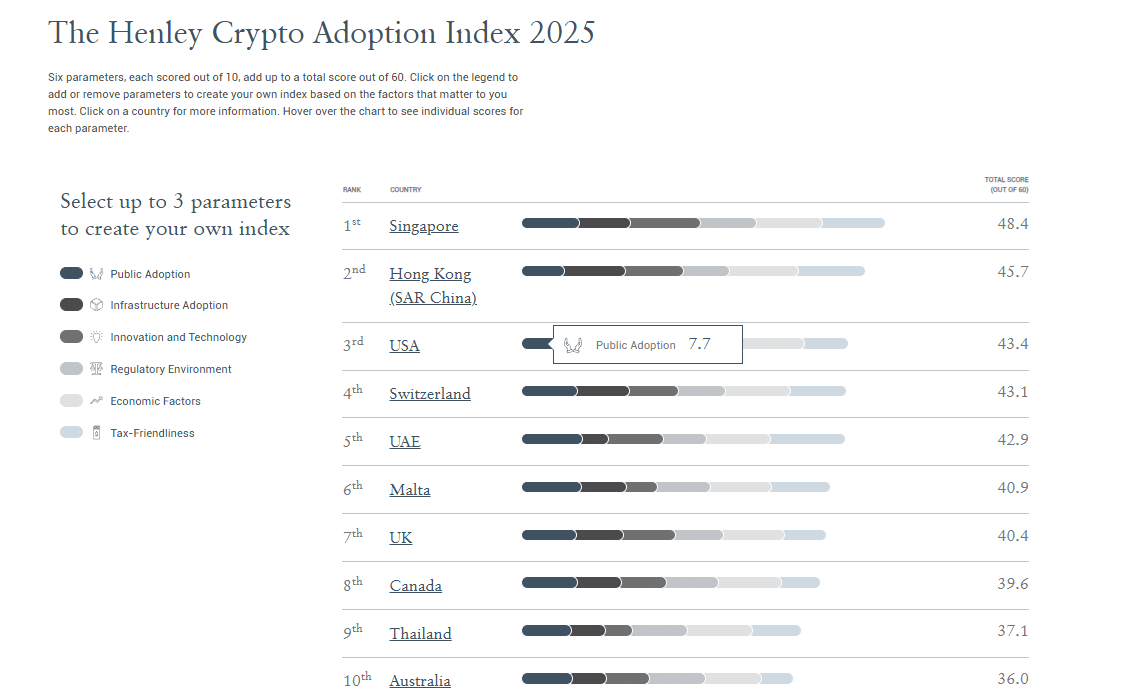
Source: Henley Global

A more favorable regulatory tone, particularly during the Trump administration, has strengthened its position. As the sector expands, the Commodity Futures Trading Commission [CFTC] has taken on a more prominent role, aiming to reduce regulatory burdens and support industry growth.

CFTC signals readiness to oversee crypto market

CFTC Chair Michael Selig said the agency is well prepared to regulate the crypto industry. As part of a summary marking his 100 days in the office, Selig stated,

CFTC is ready to take responsibility for a $3 trillion crypto asset market.

In his statement, he reported that the CFTC and the SEC have formed a joint effort to harmonize federal oversight of the crypto asset market. However, he did not provide a timeline for when Congress might pass a formal market structure bill.

The recent remarks came as the United States Senate continued to review the CLARITY Act. The bill has stalled in the committee amid a dispute over stablecoin yield and related provisions.

Easing crypto regulation accelerates growth.

Besides CFTC’s willingness to lead the crypto industry, the Chair noted major regulatory steps taken to caution the sector.

Selig criticized the prior administration over the use of enforcement in crypto regulation. In doing so, he stated that the agency had improved the regulatory environment by providing no-action relief to digital wallet software developers.

The CFTC published the Taxonomy, the first crypto-asset classification system, which distinguishes digital securities from commodities. Also, the agency argued that it had addressed clarity concerns over tokenized collateral and had launched an innovation task force.

Notably, improvements in regulatory environments, especially with the passage of the GENIUS Act, strengthened market adoption. In fact, stablecoins have grown substantially, exceeding $319 billion in market cap and over $100 billion in trading volume.
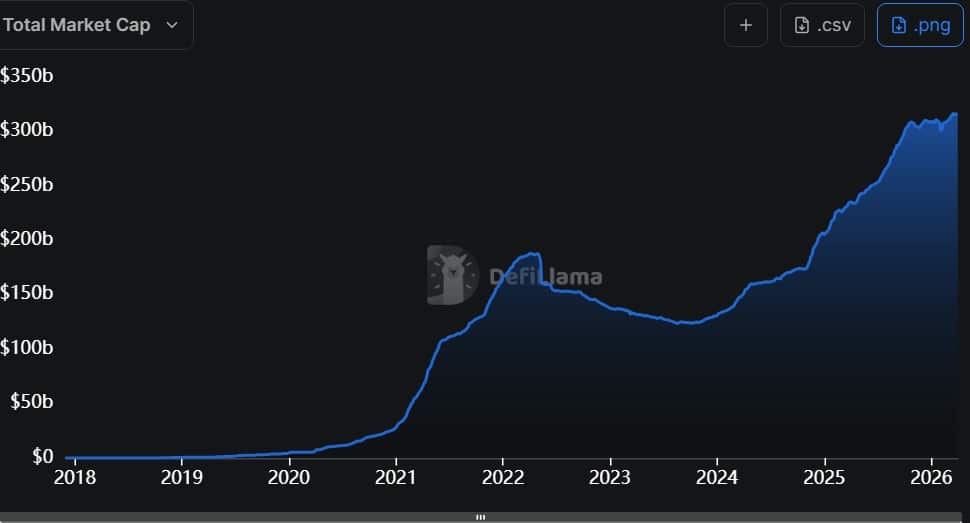
Source: DeFiLlama

The sector’s growth underscores the need for legal clarity, and if properly enacted, the entire crypto market could grow further. Thus, improving regulatory conditions is good news for the broader crypto market and could significantly boost the market if further progress is made.


Final Summary

  • The Commodity Futures Trading Commission is emerging as a key regulator, signaling readiness to oversee a $3 trillion crypto asset market.
  • CFTC Chair Michael Selig confirmed coordination with the Securities and Exchange Commission to align federal oversight.


İlgili Sorular

QWhat is the CFTC's stated readiness regarding the crypto market, and what specific market size was mentioned?

ACFTC Chair Michael Selig stated that the agency is ready to take responsibility for a $3 trillion crypto asset market.

QWhich two US agencies have formed a joint effort to harmonize federal oversight of the crypto market?

AThe Commodity Futures Trading Commission (CFTC) and the Securities and Exchange Commission (SEC) have formed a joint effort for this purpose.

QWhat major legislative act is currently stalled in the US Senate, and what is the primary dispute causing the delay?

AThe CLARITY Act is stalled in committee, primarily due to a dispute over stablecoin yield and related provisions.

QWhat specific action did the CFTC take to improve the regulatory environment for digital wallet software developers?

AThe CFTC provided no-action relief to digital wallet software developers.

QWhat is the name of the first crypto-asset classification system published by the CFTC, and what is its primary function?

AThe CFTC published the Taxonomy, which is the first crypto-asset classification system designed to distinguish digital securities from commodities.

İlgili Okumalar

Investors Begin 'Switching Tables'

Investors Begin to “Change Tables” A notable shift is occurring in China's venture capital landscape. While the hard tech sector, especially AI, experiences a funding frenzy with record-breaking investment rounds, many investors are opting to leave traditional investment firms to join portfolio companies. This movement, termed "changing tables," marks a departure from past downturns where such moves were often a last resort. Currently, the trend is driven by proactive choice. Seasoned investors, including partners and managing directors, are being lured by attractive salaries, equity incentives, and core roles like VP, General Manager, or even co-founder at fast-growing startups in hot sectors like AI, embodied intelligence, and aerospace. This "going ashore" to companies is seen as a strategic career move. The shift is a two-way street. Booming fundraising and feverish investment activity have created intense competition among VCs for a narrow set of "star projects." Simultaneously, these high-flying tech companies, engaged in rapid, multi-round financing, urgently need talent with deep capital market expertise and institutional connections to manage their complex funding needs. Companies like Zhiyuan Robot, MoonDark AI, and MiniMax are actively recruiting from investment firms. For investors, the move also reflects concerns about the sustainability of the current market. Risks like valuation inversion between primary and secondary markets, high IPO破发 rates, increased regulatory scrutiny, and the uncertainty of eventual exits are prompting a reevaluation of the traditional VC path. While this transition offers new opportunities, it is not without challenges. Success requires adapting from evaluating companies to operating within one, focusing on execution over analysis. Nevertheless, this trend underscores the expanding career boundaries and fluidity within China's innovation ecosystem.

marsbit21 dk önce

Investors Begin 'Switching Tables'

marsbit21 dk önce

Ethereum Community in Uproar! Whose Cake is EIP-8363 Cutting Into?

**Ethereum Community Debates Controversial Staking Proposal EIP-8363** A new Ethereum proposal, EIP-8363, dubbed "Tapered Issuance Burn," has ignited heated debate within the community. The core idea is to reduce and eventually eliminate new issuance rewards for validators as the total amount of staked ETH approaches 50% of the total supply (around 60.25 million ETH). The authors, including EthCC founder Jérôme de Tychey and Ethereum Foundation researcher Justin Drake, argue the current system perpetually incentivizes more staking, potentially leading to centralization as stake flows to large custodians and liquid staking tokens (LSTs). They also aim to reduce dilution pressure on non-staking ETH holders. Under the proposal, validator rewards from consensus-layer issuance would be partially burned based on a formula tied to the total staked amount. Net rewards would gradually approach zero as staking nears the 50% threshold. Notably, execution-layer rewards (tips, MEV) are unaffected. A proposed 18-month transition period would soften the initial impact. The community reaction has been predominantly critical. Key concerns include: * **Centralization Risk:** Critics like Obol's Oisín Kyne argue very low rewards could drive out solo stakers and smaller operators, leaving only large, cost-insensitive institutions, thus increasing validator centralization. * **Ecosystem Impact:** Aave's Stani Kulechov warns it could hurt ETH's predictable yield appeal for institutions and compress yields for LST-based DeFi strategies (e.g., recursive lending). * **Process & Timing:** Some, like ether.fi's Mike Silagadze, criticize the proposal's late submission ahead of a key upgrade deadline, limiting discussion time. Supporters believe the change is necessary to maintain ETH as a neutral reserve asset and avoid excessive security costs and holder dilution. If implemented, solo stakers would face higher relative operational costs and longer recovery times from penalties. LST yields would converge with native ETH, challenging their value proposition. The entire DeFi interest rate ecosystem, built around staking yield, could be pressured. While all ETH holders would benefit from reduced dilution, the net effect on ETH's price and adoption remains uncertain due to potential demand-side impacts from lower yields. The proposal is currently an early-stage draft and has not been officially slated for inclusion in any upcoming network upgrade.

marsbit51 dk önce

Ethereum Community in Uproar! Whose Cake is EIP-8363 Cutting Into?

marsbit51 dk önce

İşlemler

Spot
活动图片