Iran Launches Bitcoin-Based Maritime Insurance Platform 'HormuzSafe', Claims Annual Revenue Could Exceed $100 Billion

marsbit2026-05-20 tarihinde yayınlandı2026-05-20 tarihinde güncellendi

Özet

Iran has launched "HormuzSafe," a Bitcoin-based maritime insurance platform for shipping through the Strait of Hormuz, aiming for potential annual revenue exceeding $10 billion. The platform, announced by Iranian semi-official media, offers "cryptographically verifiable insurance policies" settled in Bitcoin for Iranian shippers and cargo owners. However, its operational status is unconfirmed, and analysts highlight significant challenges including Bitcoin's price volatility, risks of violating U.S. sanctions, and the controversial background of some involved figures. This initiative is part of Iran's broader strategy to institutionalize control over the critical waterway—which handles roughly 20% of global seaborne oil trade—following its closure after U.S.-Israel airstrikes in late February. Iran has also established the Persian Gulf Strait Authority (PGSA) to manage traffic and fees. While positioning Bitcoin as a sanctions-resistant settlement layer, the platform faces skepticism regarding its technical feasibility, user adoption, and the potential for it to be confused with existing crypto-related shipping scams.

Shenchao Digest: Iran's Ministry of Economy has launched a Bitcoin-settled maritime insurance platform called 'Hormuz Safe', targeting Iranian shipowners and cargo owners transiting the Strait of Hormuz with 'cryptographically verifiable insurance policies'. Iranian state media claims the platform could generate over $100 billion in annual revenue.

However, independent verification of whether the platform is actually operational has not been obtained. Its feasibility faces severe challenges due to Bitcoin's high volatility, compliance risks from US sanctions, and the controversial background of its alleged backer, Babak Zanjani. This represents Iran's most prominent attempt to convert its military control over the Strait of Hormuz into a crypto-financial product.

Iran is attempting to turn one of the world's most critical maritime chokepoints into a Bitcoin-settled insurance market.

According to a Bloomberg report on May 18, Iran's semi-official Fars news agency, citing documents from the country's Ministry of Economic Affairs and Finance, reported that Iran has launched a Bitcoin-backed maritime insurance service named 'Hormuz Safe' for Iranian shipping companies and cargo owners wishing to pass through the Strait of Hormuz.

Fars stated that the plan could generate over $100 billion in revenue for Iran but did not provide a timeframe or operational details.

Since the US and Israeli airstrikes on Iran on February 28, Iran has effectively closed the Strait of Hormuz. In peacetime, the strait handles about 20% of global seaborne oil trade and 20% of liquefied natural gas exports.

The Iranian government and the Islamic Revolutionary Guard Corps (IRGC) have since sought to formalize control over the waterway, including charging tolls and other fees. The insurance service is the latest link in its chain of revenue-generating tools.

Crypto-Verified Policies, Bitcoin Instant Settlement

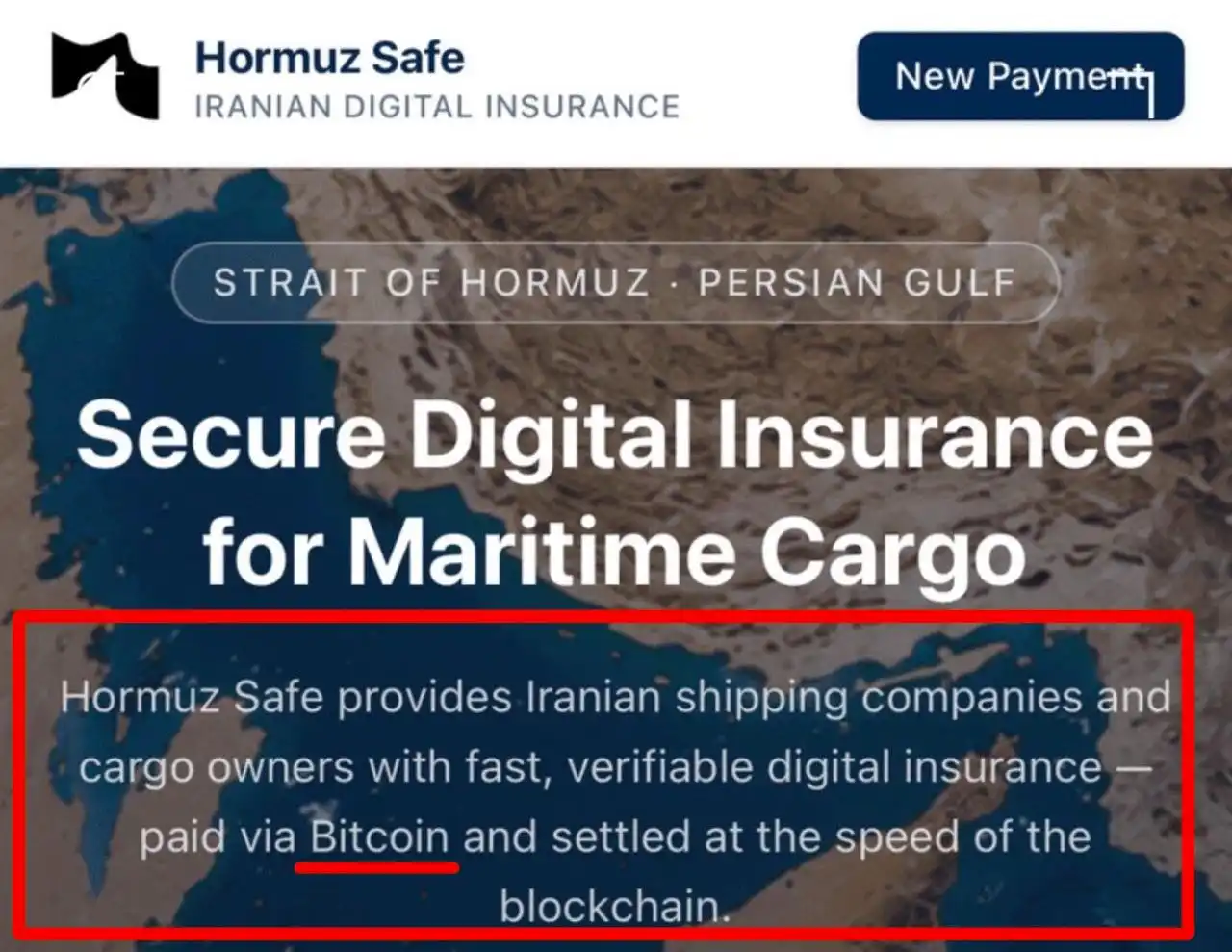
According to a screenshot of the 'Hormuz Safe' website shared by Fars, the platform claims to provide Iranian shipping companies and cargo owners with 'fast, verifiable digital insurance'. As reported by Bitcoin Magazine, coverage includes risks such as vessel inspection, seizure, and confiscation, but war damage claims are excluded.

Fars quoted the description from the website hormuzsafe.ir, stating that the platform will provide 'cryptographically verifiable insurance policies' for cargo transiting the Persian Gulf, the Strait of Hormuz, and surrounding waters, with payments settled in Bitcoin. Coverage begins the moment the cargo is confirmed on the blockchain, and the cargo owner will receive a signed receipt. The website currently appears inaccessible outside Iran.
According to Bitcoin Magazine, Iran's Ministry of Economy began advancing this insurance plan from late April (early Ordibehesht in the Persian calendar). In April, Hamid Hosseini, spokesman for the Iranian Oil, Gas, and Petrochemical Products Exporters Union, told the Financial Times that shipping companies could settle Strait of Hormuz passage fees using non-dollar currencies like Bitcoin or Chinese Yuan.

Accelerating Institutionalization: From Tolls to Insurance Platform

Hormuz Safe is not an isolated move but the latest component of an entire institutional framework Iran is building around the Strait of Hormuz.

According to Bitcoin Magazine, in March 2026, the Iranian parliament passed the 'Strait of Hormuz Management Plan', formalizing into law the toll system operated by the IRGC since mid-March. Under this framework, the IRGC charges fees to ships passing through the strait; operators must submit information on vessel ownership, cargo type, destination, and crew to obtain a passage permit code.

Fees start at about $1 per barrel of oil, with fully loaded oil tankers facing charges up to $2 million, payable in Chinese Yuan.

On May 18, Iran's Supreme National Security Council announced the formal establishment of the 'Persian Gulf Strait Authority' (PGSA) and opened an official account on X.
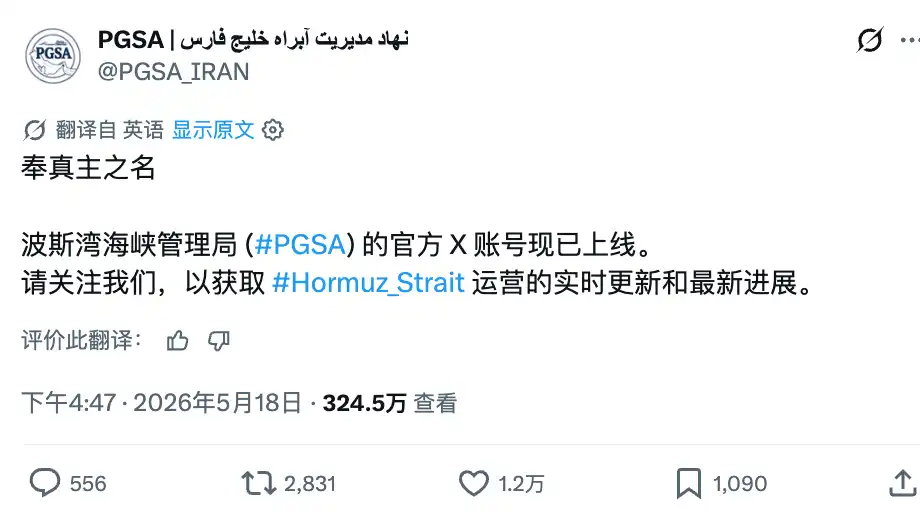
According to Euronews, the agency is positioned as an administrative entity to manage Strait of Hormuz traffic and collect tolls, operating in coordination with the IRGC Navy.

Ships must submit complete information, including ownership, insurance, crew lists, cargo declarations, and planned routes, via the PGSA's official email for approval and payment before receiving passage permits.

Ebrahim Azizi, chairman of the National Security and Foreign Policy Committee of the Iranian parliament, stated on X that only commercial vessels cooperating with Iran will benefit from this mechanism, and parties involved in US-Israeli military operations will be banned from using the route.

According to Windward intelligence analysis, as of May 18, strait traffic remains only about 38% of pre-conflict levels, with central Qeshm-Larak anchorage showing fixed dark vessel positioning for six consecutive days. Approximately 369 IRGC fast boats are concentrated in a single area about 30 nautical miles northeast of Khasab, shifting from coastal patrols to a presence in the main body of the strait.

Volatility, Sanctions Risks, and Shadow of Fraud

Several analysts have expressed skepticism about the practical feasibility of Hormuz Safe.

Bloomberg points out that, unlike stablecoins pegged to the US dollar, Bitcoin's price is highly volatile, limiting its adoption as a payment method. Foreign shipowners may be reluctant to use the mechanism for fear of violating US sanctions against Iran.

Ryan Yoon, senior analyst at Tiger Research, told Decrypt that the platform's technical and legal feasibility is 'highly questionable'; despite the announcement of its launch, no actual users have been confirmed. Shipping companies using Hormuz Safe would face the risk of 'immediate expulsion from the global financial system'.

Cake Wallet CEO Vikrant Sharma told BeInCrypto that Bitcoin can reduce some payment friction but is not a clean path to bypass the sanctions system. Liquidity at the scale of maritime insurance is a limiting factor. Activity on public blockchains can be monitored, and any exchange, broker, custodian, or counterparty tied to the US dollar brings compliance risks.

Sam Lyman, Research Director at the Bitcoin Policy Institute, explained Iran's logic from another angle: Bitcoin's core appeal lies in the fact that 'no one can freeze it'.

According to Decrypt, since the war began, crypto 'safe passage fee' scams have proliferated. Scammers impersonate Iranian authorities, demanding Bitcoin or USDT from ship operators. Hormuz Safe appears to be an independent national-level plan, but the line between genuine and fake is extremely blurred in the current environment.

The Bigger Picture: Iran Building a De-dollarized Maritime Financial System

According to Bitcoin Magazine data, Iran's crypto ecosystem was estimated at $7.8 billion in 2025, with IRGC-linked transactions accounting for about 50% of the country's total crypto volume (as of Q4 2025). The Iranian government has reportedly used mined Bitcoin to fund imports and hedge against oil revenue losses, with a stated national mining cost of about $1,300 per coin.

CoinDesk's analysis was quite precise: an insurance structure is more sophisticated than directly charging tolls. On paper, cargo owners are not paying for passage but purchasing insurance and financial responsibility certificates for sailing in waters that Tehran claims it can secure. This allows Iran to monetize its geographical advantage in a more palatable way.

A comment by Hacker News user everdrive received high votes in the tech community: The post-WWII US-led world order was partly built on the premise that the US military kept international waters open. Iran challenging the US at this level is astonishing. Everyone knew Iran had the capacity to close the strait if backed into a corner, but the arrival of this outcome still exposes serious policy-level miscalculations.

Regardless of whether Hormuz Safe ultimately operates at scale, the signal it sends is clear: Iran is building a complete set of administrative governance and financial infrastructure around the Strait of Hormuz, converting military blockade into a sustainable sovereign revenue mechanism, with Bitcoin serving as the settlement layer for this system.


Trend Kriptolar

İlgili Sorular

QWhat is 'Hormuz Safe' and what is its primary purpose?

A'Hormuz Safe' is a Bitcoin-based maritime insurance platform launched by Iran's Ministry of Economy. Its primary purpose is to offer 'cryptographically verifiable insurance policies' to Iranian shipping companies and cargo owners for voyages passing through the Strait of Hormuz, with settlements to be made in Bitcoin.

QWhat are the main challenges and risks associated with the 'Hormuz Safe' platform, according to the article?

AThe main challenges and risks include: Bitcoin's high price volatility making it an unstable payment method; the risk of users violating US sanctions against Iran, potentially leading to exclusion from the global financial system; unconfirmed operational status and user adoption; and concerns about the feasibility of its legal and technical framework.

QWhat institutional frameworks is Iran building around the Strait of Hormuz alongside the 'Hormuz Safe' platform?

AIran is building a broader institutional framework for the Strait of Hormuz, including the passage of the 'Strait of Hormuz Management Plan' in March 2026 to formalize transit fees, and the establishment of the 'Persian Gulf Strait Authority' (PGSA) in May 2026 to manage traffic and collect fees, operating alongside the Islamic Revolutionary Guard Corps (IRGC) Navy.

QHow is Iran reportedly using Bitcoin within its national economy according to the article?

AThe article states that Iran's crypto ecosystem was estimated at $7.8 billion in 2025, with IRGC-linked transactions accounting for about 50% of the country's total crypto volume. The government reportedly uses Bitcoin mined domestically (at a cost of around $1,300 per coin) to fund imports and hedge against losses in oil revenues.

QBeyond simple transit fees, what strategic advantage does the 'Hormuz Safe' insurance model offer Iran, according to analysts?

AAnalysts, such as from CoinDesk, note that the insurance model is more sophisticated than direct transit fees. It allows Iran to monetize its geographic control by having cargo owners pay for insurance and financial responsibility certificates for sailing in waters Tehran claims to secure, rather than directly paying a toll. This makes the revenue stream more palatable and packageable internationally.

İlgili Okumalar

Pacific 'Fever': How Extreme Weather Becomes Wall Street's Cash Machine?

"Pacific Fever": How Extreme Weather Becomes Wall Street's ATM? The summer of 2026 sees unusually fierce weather across China and globally. The common driver behind this global pattern is a powerful El Niño event, potentially the strongest since 1950, as declared by NOAA. This phenomenon, characterized by warming central/eastern Pacific waters, disrupts global atmospheric circulation, raising risks of floods, droughts, and heatwaves, further intensified by climate change. For financial markets, especially commodities, El Niño is not just weather but a major trading theme. History shows its price impact is profound. In the 1970s, El Niño-driven anchovy collapse in Peru fueled a soybean boom, giving Richard Dennis his first million. Anthony Ward's cocoa empire was built on superior weather intelligence. Most recently in 2024, West African droughts caused cocoa prices to soar over 400%, delivering huge gains for trend-following hedge funds. In 2026, markets are again pricing in future El Niño-induced supply shocks. Despite high current inventories, prices for palm oil, rubber, and sugar have rallied on anticipation of upcoming Southeast Asian droughts and weak Indian monsoons. Analysts identify key indicators to watch: the Niño3.4 index, Indian monsoon rainfall, Malaysian palm oil stocks, and the fundraising scale of specialized weather funds like Moreton Capital. Beyond trading opportunities, a concerning narrative is gaining traction online, linking El Niño with fertilizer shortages and energy supply disruptions to warn of potential global food crises within months. While alarmist, it highlights a deeper truth: the cascading effects of climate-driven weather extremes ultimately translate into higher costs of living for everyone, far beyond the trading floor.

marsbit4 dk önce

Pacific 'Fever': How Extreme Weather Becomes Wall Street's Cash Machine?

marsbit4 dk önce

Pacific 'Fever': How Extreme Weather Becomes Wall Street's ATM?

"Pacific 'Fever': How Extreme Weather Becomes Wall Street's Piggy Bank" The article examines how the 2026-2027 El Niño, potentially the strongest since 1950, is not only disrupting global weather but also creating major financial opportunities. It links recent extreme events in China and worldwide to this climate phenomenon, which alters atmospheric patterns, increasing risks of floods, droughts, and heatwaves. The core narrative explores how financial markets capitalize on these disruptions. A hedge fund is raising $500 million specifically to bet on El Niño-affected crops like South African corn and Malaysian palm oil. Historically, such strategies have yielded massive profits. Examples include Richard Dennis ("Turtle Trader") making his first fortune in the 1970s soy boom triggered by El Niño's impact on Peruvian anchovies (a key fishmeal source), and Anthony Ward's cocoa empire built on superior weather intelligence. The 2024 cocoa price surge, driven by West African drought, enriched quantitative trend-following funds. Currently, markets are preemptively bidding up palm oil, rubber, and sugar futures based on anticipated future supply shocks, despite high current inventories. The article details El Niño's asymmetric global impacts: causing drought in Southeast Asia (hurting palm oil/rubber) and India (affecting sugar/cotton), but bringing beneficial rains to South American soy and sugarcane. Key metrics to watch include the Niño3.4 index, Indian monsoon data, and Malaysian palm oil stocks. The true price effects often materialize *after* the El Niño peaks, suggesting 2027 may see the real volatility. The conclusion warns that beyond trading gains, the convergence of El Niño, energy shortages, and fertilizer scarcity poses a systemic risk, potentially raising the cost of living for everyone, turning a climate event into a global economic story.

链捕手13 dk önce

Pacific 'Fever': How Extreme Weather Becomes Wall Street's ATM?

链捕手13 dk önce

Just Now, OpenAI's Chief Futurist Departed, Once Called a Jackass by Musk

Just now, OpenAI's Chief Futurist, Joshua Achiam, announced his departure from the company via X. Having joined as a 25-year-old intern in 2017, he spent nine years at OpenAI, evolving from an AI safety research scientist to leading the Mission Alignment team. Earlier this year, that team was dissolved, and Achiam transitioned to the newly created role of Chief Futurist, positioned at the intersection of AI safety and policy to study AGI's long-term risks and opportunities. In his departure statement, Achiam called his time a "graduation," reflecting on the immense progress from AI that couldn't converse to systems solving scientific problems. He expressed optimism about a future of peace, prosperity, and possibility, closing with "To safe AGI." His tenure was notably marked by a 2018 incident where he publicly challenged Elon Musk—then still with OpenAI—on safety compromises if Musk pursued AGI at Tesla, leading Musk to call him a "jackass." This became an internal legend, with colleagues later giving him a trophy inscribed, "To safety, never stop being that jackass." Achiam's exit follows a pattern of prominent safety and alignment experts leaving OpenAI, including Jan Leike and others who joined rivals like Anthropic or started non-profits. His departure coincides with OpenAI's internal efforts to more tightly integrate its research and policy teams, and the recent hiring of former White House AI advisor Dean Ball. Achiam did not cite a specific reason for leaving but indicated it was a long-considered decision, stating the mission to ensure AGI benefits humanity can now be advanced beyond the "frontier lab's" walls.

marsbit15 dk önce

Just Now, OpenAI's Chief Futurist Departed, Once Called a Jackass by Musk

marsbit15 dk önce

Anthropic Drops $19 Billion to 'Sponsor' a Bitcoin Miner

On July 6, 2026, Bitcoin mining company TeraWulf (NASDAQ: WULF) saw its stock surge 15% pre-market following the announcement of a landmark 20-year agreement with AI giant Anthropic. The deal grants Anthropic 401 MW of IT load capacity at TeraWulf's "Justified Data" campus in Kentucky and is projected to generate approximately $19 billion in contracted revenue for the miner over its duration. On the same day, TeraWulf also sold its 50.1% stake in a Texas joint venture for about $530 million. This dual move signals a strategic pivot: divesting non-core assets to fund its fully-owned Kentucky project and shifting focus from cryptocurrency mining to becoming a specialized infrastructure provider for AI. The agreement highlights a key advantage for Bitcoin miners transitioning to AI: their pre-existing access to land and critical power grid capacity, which is becoming a major bottleneck for data center expansion. Unlike peers who operate AI clouds, TeraWulf is adopting a "landlord" model, leasing only the physical space and power for clients' own servers. However, a significant gap exists between the deal's announcement and revenue generation, with the first phase of the Kentucky site not operational until late 2027. The $19 billion figure represents a long-term bet on both TeraWulf's execution and Anthropic's financial durability in the capital-intensive AI race. The market's positive reaction reflects the growing value of fundamental infrastructure—secured land and reliable electricity—in the era of AI compute scarcity.

marsbit19 dk önce

Anthropic Drops $19 Billion to 'Sponsor' a Bitcoin Miner

marsbit19 dk önce

Securitize Drops 40% in First Week of Trading as Tokenization Industry Enters Patent Wars

The article discusses the recent stock performance of Securitize (NYSE: SECZ) and a looming patent war in the tokenization industry. Securitize, a leading tokenization platform and transfer agent for BlackRock's BUIDL fund, debuted on the NYSE via a SPAC merger on July 2. After an initial rise, its stock plummeted nearly 40% within a week, closing at $8.06 on July 7. Analysts attribute the sharp decline largely to typical post-SPAC investor turnover and broader pressure on crypto-related stocks, rather than fundamental business deterioration. Concurrently, Securitize faces significant legal challenges. On June 15, infrastructure rival tZERO accused Securitize of patent infringement concerning its core DS Protocol and Vault Registrar products. Securitize preemptively filed a lawsuit on June 22 seeking a declaratory judgment of non-infringement. tZERO, holding 105 patents, has indicated it has identified at least six other market participants for potential infringement actions, signaling a broader industry-wide patent conflict. A separate lawsuit was also filed by Liquid Rarity Exchange. The article concludes that while Securitize's stock drop may be a temporary SPAC-related correction, the patent disputes initiated by tZERO represent a more profound, long-term risk for the entire tokenization sector, potentially shifting competitive dynamics from business execution to intellectual property litigation.

Foresight News48 dk önce

Securitize Drops 40% in First Week of Trading as Tokenization Industry Enters Patent Wars

Foresight News48 dk önce

İşlemler

Spot

Popüler Makaleler

BITCOIN Nedir

HarryPotterObamaSonic10Inu (ERC-20)'yu ve Kripto Alanındaki Yerini Anlamak Son yıllarda, kripto para piyasası, hem ticaret yapanların hem de topluluk etkileşimi ve eğlence değeri arayanların ilgisini çeken meme coin'lerin popülaritesinde bir artış gördü. Bu benzersiz token'lar arasında, kripto para dokusuna kültürel referansları harmanlayan ilginç bir proje olan HarryPotterObamaSonic10Inu (ERC-20) bulunmaktadır. Bu makale, HarryPotterObamaSonic10Inu'nun temel yönlerini, mekanizmalarını, topluluk odaklı ethosunu ve daha geniş kripto manzarasıyla etkileşimini incelemektedir. HarryPotterObamaSonic10Inu (ERC-20) Nedir? Adından da anlaşılacağı gibi, HarryPotterObamaSonic10Inu, Ethereum blok zinciri üzerinde inşa edilen bir meme coin'dir ve ERC-20 standardı altında sınıflandırılmaktadır. Geleneksel kripto paraların pratik kullanılabilirlik veya yatırım potansiyeline odaklandığı durumların aksine, bu token eğlence değeri ve topluluğunun gücü üzerine kuruludur. Proje, bağlı kullanıcıların bir araya gelebileceği, fikirlerini paylaşabileceği ve çeşitli kültürel fenomenlerden ilham alan etkinliklere katılabileceği bir ortam yaratmayı hedeflemektedir. HarryPotterObamaSonic10Inu'nun dikkate değer özelliklerinden biri işlemlerde sıfır vergi olmasıdır. Bu çekici unsur, küçük ölçekli yatırımcıları caydırabilecek ek ücretlerden yoksun olarak ticareti ve topluluk katılımını teşvik etmeyi amaçlamaktadır. Coin'in toplam arzı bir milyar token olarak belirlenmiştir; bu, topluluk içinde önemli bir dolaşım sağlama niyetini göstermektedir. HarryPotterObamaSonic10Inu (ERC-20) Yaratıcısı HarryPotterObamaSonic10Inu'nun kökenleri bir miktar gizemlidir; yaratıcısı hakkında spesifik bilgilerin ne olduğu bilinmemektedir. Bu token'ın geliştirilmesi, belirli bir ekip veya açık bir plan eksikliği ile gerçekleşmiştir; bu durum, meme coin sektöründe oldukça yaygındır. Proje, topluluğunun heyecanı ve katılımına dayalı olarak organik bir şekilde ortaya çıkmıştır. HarryPotterObamaSonic10Inu (ERC-20) Yatırımcıları Dış yatırımlar ve destekler söz konusu olduğunda, HarryPotterObamaSonic10Inu da belirsiz kalmaktadır. Token, bilinen herhangi bir yatırım fonunu veya önemli bir kurumsal desteği listelememektedir. Bunun yerine, projenin can damarı, kolektif eylem ve kripto alanındaki katılım yoluyla büyüme ve sürdürülebilirlik sağlayan temel topluluğudur. HarryPotterObamaSonic10Inu (ERC-20) Nasıl Çalışır? Bir meme coin olarak, HarryPotterObamaSonic10Inu, genellikle varlık değerini yöneten geleneksel çerçevelerin dışında çalışmaktadır. Projenin nasıl çalıştığını tanımlayan birkaç özelliği vardır: Sıfır Vergi İşlemleri: İşlemlerde vergi ücreti olmadan, kullanıcılar gizli maliyet endişesi olmadan token'ı serbestçe alıp satabilirler. Topluluk Etkileşimi: Proje, topluluk etkileşimi üzerine kuruludur ve sosyal medya platformlarını kullanarak heyecan yaratarak katılımı kolaylaştırır. Tartışmalar, içerik paylaşımı ve katılım, projenin erişimini genişletmeye ve destekleyiciler arasında sadakat oluşturmaya yardımcı olan kritik unsurlardır. Pratik Kullanılabilirlik Yok: HarryPotterObamaSonic10Inu'nun mali ekosistem içinde somut bir kullanılabilirlik sunmadığı belirtilmelidir. Daha ziyade, eğlence ve topluluk etkinlikleri için bir token olarak sınıflandırılmaktadır. Kültürel Referans: Token, popüler kültürden unsurları zekice harmanlayarak ilgi çekmektedir ve hem meme meraklıları hem de kripto takipçileriyle bağlantı kurmaktadır. HarryPotterObamaSonic10Inu, meme coin'lerin, daha geleneksel kripto para projelerinden nasıl farklı çalıştığını örneklendirmektedir; bu projeler, utilitarist varlıklar yerine yenilikçi sosyal yapıların bir parçası olarak piyasaya girmektedir. HarryPotterObamaSonic10Inu (ERC-20) Zaman Çizelgesi HarryPotterObamaSonic10Inu'nun tarihi, birkaç dikkate değer kilometre taşı ile işaretlenmiştir: Oluşum: Token, birçok kripto meraklısının hayal gücünü yakalayan bir viral meme'den ortaya çıkmıştır. Spesifik yaratım tarihleri mevcut değildir ve bu onun organik yükselişini vurgulamaktadır. Borsa Listelemeleri: HarryPotterObamaSonic10Inu, topluluğun daha kolay erişim ve ticaret yapabilmesini sağlamak için çeşitli borsalarda yer bulmuştur. Topluluk Katılım İnisiyatifleri: Yarışmalar, sosyal medya kampanyaları ve hayranlar ile destekçilerden içerik üretimini içeren topluluk etkileşimini artırmayı amaçlayan devam eden etkinlikler. Gelecek Genişleme Planları: Projenin yol haritası, kültürel temalarına ilişkin bir NFT koleksiyonu, ticari ürünler ve bir e-ticaret sitesi başlatılmasını içermektedir; bu da topluluğun daha fazla katılımını sağlamayı ve ekosistemine daha fazla boyut kazandırmayı hedeflemektedir. HarryPotterObamaSonic10Inu (ERC-20) Hakkında Kilit Noktalar Topluluk Odaklı Doğası: Proje, kullanıcı katılımını geliştirme önceliği taşır ve böylece kullanıcıların sürecin en önünde yer almasını sağlar. Meme Coin Sınıflandırması: Eğlenceye dayalı kripto paranın doruk noktasıdır ve geleneksel yatırım araçlarından ayrılmaktadır. Bitcoin ile Doğrudan İlişki Yok: Ticker ismindeki benzeliğe rağmen, HarryPotterObamaSonic10Inu ayırt edicidir ve Bitcoin veya diğer yerleşik kripto paralarla herhangi bir ilişkisi yoktur. İşbirliğine Odaklanma: HarryPotterObamaSonic10Inu, sahipleri arasında işbirliği ve hikaye paylaşımı için bir alan oluşturmak üzere tasarlanmıştır ve bu da yaratıcılık ve topluluk bağlarını sağlamaktadır. Gelecek Beklentileri: Başlangıçta belirlendiği temalardan NFTs ve ticari ürünlere genişleme arzusu, projenin dijital kültürde daha ana akıma girebilmesi için bir yol haritası çizmektedir. Meme coin'ler, kripto para topluluğunun hayal gücünü çalmaya devam ederken, HarryPotterObamaSonic10Inu (ERC-20), kültürel bağları ve topluluk merkezli yaklaşımıyla öne çıkmaktadır. Geleneksel bir hizmet odaklı token modeliyle uyumlu olmasa da, özünde destekçileri arasında sağlanan neşe ve dostluğu vurgulayarak, giderek dijitalleşen bir çağda kripto paraların evrilen doğasını göstermektedir. Proje gelişmeye devam ettikçe, topluluk dinamiklerinin blockchain teknolojisi dünyasındaki seyrini nasıl etkilediğini izlemek önemli olacaktır.

2.1k Toplam GörüntülenmeYayınlanma 2024.04.01Güncellenme 2024.12.03

BITCOIN Nedir

BTC Nasıl Satın Alınır

HTX.com’a hoş geldiniz! Bitcoin (BTC) satın alma işlemlerini basit ve kullanışlı bir hâle getirdik. Adım adım açıkladığımız rehberimizi takip ederek kripto yolculuğunuza başlayın. 1. Adım: HTX Hesabınızı OluşturunHTX'te ücretsiz bir hesap açmak için e-posta adresinizi veya telefon numaranızı kullanın. Sorunsuzca kaydolun ve tüm özelliklerin kilidini açın. Hesabımı Aç2. Adım: Kripto Satın Al Bölümüne Gidin ve Ödeme Yönteminizi SeçinKredi/Banka Kartı: Visa veya Mastercard'ınızı kullanarak anında Bitcoin (BTC) satın alın.Bakiye: Sorunsuz bir şekilde işlem yapmak için HTX hesap bakiyenizdeki fonları kullanın.Üçüncü Taraflar: Kullanımı kolaylaştırmak için Google Pay ve Apple Pay gibi popüler ödeme yöntemlerini ekledik.P2P: HTX'teki diğer kullanıcılarla doğrudan işlem yapın.Borsa Dışı (OTC): Yatırımcılar için kişiye özel hizmetler ve rekabetçi döviz kurları sunuyoruz.3. Adım: Bitcoin (BTC) Varlıklarınızı SaklayınBitcoin (BTC) satın aldıktan sonra HTX hesabınızda saklayın. Alternatif olarak, blok zinciri transferi yoluyla başka bir yere gönderebilir veya diğer kripto para birimlerini takas etmek için kullanabilirsiniz.4. Adım: Bitcoin (BTC) Varlıklarınızla İşlem YapınHTX'in spot piyasasında Bitcoin (BTC) ile kolayca işlemler yapın.Hesabınıza erişin, işlem çiftinizi seçin, işlemlerinizi gerçekleştirin ve gerçek zamanlı olarak izleyin. Hem yeni başlayanlar hem de deneyimli yatırımcılar için kullanıcı dostu bir deneyim sunuyoruz.

8.0k Toplam GörüntülenmeYayınlanma 2024.12.12Güncellenme 2026.06.02

BTC Nasıl Satın Alınır

$BITCOIN Nedir

DİJİTAL ALTIN ($BITCOIN): Kapsamlı Bir Analiz DİJİTAL ALTIN ($BITCOIN) Tanıtımı DİJİTAL ALTIN ($BITCOIN), geleneksel değerli metallerin özelliklerini merkeziyetsiz teknolojilerin yeniliği ile birleştirmeyi amaçlayan Solana ağı üzerinde çalışan blockchain tabanlı bir projedir. Bitcoin ile aynı isme sahip olmasına rağmen, genellikle bir değer saklama aracı olarak algılandığı için “dijital altın” olarak anılmaktadır; DİJİTAL ALTIN, Web3 ortamında benzersiz bir ekosistem yaratmak için tasarlanmış ayrı bir tokendir. Hedefi, uygulanabilir bir alternatif dijital varlık olarak kendini konumlandırmaktır, ancak uygulamaları ve işlevleri ile ilgili ayrıntılar hala gelişmektedir. DİJİTAL ALTIN ($BITCOIN) Nedir? DİJİTAL ALTIN ($BITCOIN), Solana blockchain'inde kullanılmak üzere açıkça tasarlanmış bir kripto para tokenidir. Bitcoin'in yaygın olarak tanınan bir değer saklama rolü sağlamasının aksine, bu token daha geniş uygulamalara ve özelliklere odaklanıyor gibi görünmektedir. Dikkate değer yönler şunlardır: Blockchain Altyapısı: Token, yüksek hızlı ve düşük maliyetli işlemleri yönetme kapasitesi ile bilinen Solana blockchain'inde inşa edilmiştir. Arz Dinamikleri: DİJİTAL ALTIN'ın maksimum arzı 100 katrilyon token (100P $BITCOIN) ile sınırlıdır, ancak dolaşımdaki arzı ile ilgili ayrıntılar şu anda açıklanmamıştır. Kullanım Alanı: Kesin işlevler açıkça belirtilmemiş olsa da, token'ın merkeziyetsiz uygulamalar (dApps) veya varlık tokenizasyon stratejileri ile ilgili çeşitli uygulamalar için kullanılabileceğine dair işaretler bulunmaktadır. DİJİTAL ALTIN ($BITCOIN) Yaratıcısı Kimdir? Şu anda, DİJİTAL ALTIN ($BITCOIN) arkasındaki yaratıcıların ve geliştirme ekibinin kimliği bilinmemektedir. Bu durum, merkeziyetsiz finans ve meme coin fenomenleriyle uyumlu olan birçok yenilikçi proje arasında yaygındır. Böyle bir anonimlik, topluluk odaklı bir kültürü teşvik edebilirken, yönetişim ve hesap verebilirlik konusundaki endişeleri artırmaktadır. DİJİTAL ALTIN ($BITCOIN) Yatırımcıları Kimlerdir? Mevcut bilgiler, DİJİTAL ALTIN ($BITCOIN) için bilinen herhangi bir kurumsal destekçi veya önde gelen risk sermayesi yatırımı olmadığını göstermektedir. Proje, geleneksel finansman yolları yerine topluluk desteği ve benimsemeye odaklanan bir eşler arası modelde çalışıyor gibi görünmektedir. Faaliyetleri ve likiditesi esas olarak PumpSwap gibi merkeziyetsiz borsalarda (DEX'ler) yer almakta olup, bu da onun taban hareketine vurgu yapmaktadır. DİJİTAL ALTIN ($BITCOIN) Nasıl Çalışır DİJİTAL ALTIN ($BITCOIN) 'ın operasyonel mekanikleri, blockchain tasarımı ve ağ özellikleri temelinde açıklanabilir: Konsensüs Mekanizması: Solana'nın benzersiz tarih kanıtı (PoH) ile bir hisse kanıtı (PoS) modelini birleştirerek, proje ağın yüksek performansına katkıda bulunan verimli işlem doğrulamasını sağlar. Tokenomik: Belirli deflasyonist mekanizmalar kapsamlı bir şekilde detaylandırılmamış olsa da, geniş maksimum token arzı, henüz tanımlanmamış mikro işlemler veya niş kullanım durumlarına hitap edebileceğini ima etmektedir. Etkileşim: Solana'nın daha geniş ekosistemi ile entegrasyon potansiyeli bulunmaktadır; bu, çeşitli merkeziyetsiz finans (DeFi) platformlarını içermektedir. Ancak, belirli entegrasyonlarla ilgili ayrıntılar belirtilmemiştir. Önemli Olayların Zaman Çizelgesi DİJİTAL ALTIN ($BITCOIN) ile ilgili önemli kilometre taşlarını vurgulayan bir zaman çizelgesi: 2023: Token'ın Solana blockchain'inde ilk dağıtımı, sözleşme adresi ile işaretlenmiştir. 2024: DİJİTAL ALTIN, PumpSwap gibi merkeziyetsiz borsalarda işlem görmeye başladıkça görünürlük kazanır ve kullanıcıların bunu SOL karşısında ticaret yapmasına olanak tanır. 2025: Proje, topluluk odaklı etkileşimlere yönelik potansiyel ilgi ve ara sıra ticaret faaliyetleri görür, ancak şu ana kadar dikkate değer ortaklıklar veya teknik ilerlemeler belgelenmemiştir. Kritik Analiz Güçlü Yönler Ölçeklenebilirlik: Temel Solana altyapısı, yüksek işlem hacimlerini destekleyerek $BITCOIN'in çeşitli işlem senaryolarındaki faydasını artırabilir. Erişilebilirlik: Token başına potansiyel düşük ticaret fiyatı, perakende yatırımcıları çekebilir ve parçalı mülkiyet fırsatları sayesinde daha geniş katılımı kolaylaştırabilir. Riskler Şeffaflık Eksikliği: Kamuya açık olarak bilinen destekçilerin, geliştiricilerin veya bir denetim sürecinin olmaması, projenin sürdürülebilirliği ve güvenilirliği konusunda şüpheler doğurabilir. Piyasa Volatilitesi: Ticaret faaliyeti büyük ölçüde spekülatif davranışa dayanmakta olup, bu da yatırımcılar için önemli fiyat dalgalanmalarına ve belirsizliklere yol açabilir. Sonuç DİJİTAL ALTIN ($BITCOIN), hızla gelişen Solana ekosisteminde ilginç ama belirsiz bir proje olarak ortaya çıkmaktadır. “Dijital altın” anlatısını kullanmaya çalışırken, Bitcoin'in değer saklama rolünden ayrılması, amaçlanan faydasının ve yönetişim yapısının daha net bir şekilde tanımlanması gerekliliğini vurgulamaktadır. Gelecekteki kabul ve benimseme, mevcut belirsizliklerin giderilmesine ve operasyonel ile ekonomik stratejilerinin daha açık bir şekilde tanımlanmasına bağlı olacaktır. Not: Bu rapor, Ekim 2023 itibarıyla mevcut olan sentezlenmiş bilgileri kapsamaktadır ve araştırma döneminin ötesinde gelişmeler yaşanmış olabilir.

167 Toplam GörüntülenmeYayınlanma 2025.05.13Güncellenme 2025.05.13

$BITCOIN Nedir

Tartışmalar

HTX Topluluğuna hoş geldiniz. Burada, en son platform gelişmeleri hakkında bilgi sahibi olabilir ve profesyonel piyasa görüşlerine erişebilirsiniz. Kullanıcıların BTC (BTC) fiyatı hakkındaki görüşleri aşağıda sunulmaktadır.

活动图片