IOSG|A Tale of Two Cities: A Cultural Perspective on BNB Chain and Base

深潮2025-12-30 tarihinde yayınlandı2025-12-30 tarihinde güncellendi

Özet

IOSG's article "A Tale of Two Chains: BNB Chain and Base from a Cultural Perspective" explores the cultural and strategic differences between BNB Chain and Base, framing them as distinct "cities" within the crypto ecosystem. BNB Chain is portrayed as a bustling, efficiency-driven port city, closely tied to Binance. It serves users primarily from emerging markets (e.g., Southeast Asia, the Middle East) who prioritize low gas fees, fast transactions, and quick access to new financial opportunities. Its culture is pragmatic, focused on scalability, high application density, and leveraging Binance's massive user base for rapid ecosystem growth. In contrast, Base is characterized as a new city built with Ethereum’s values, attracting developers, creators, and institutional users from Western markets. It emphasizes compliance, long-term building, developer-friendly tools, and cultural alignment with Ethereum’s decentralized ethos. Base users care deeply about technical design, community, and sustainable ecosystem development. Both chains represent exchange-led vertical integration strategies: Binance uses BNB Chain to create a seamless, closed-loop user experience from exchange to chain, while Coinbase leverages Base to offer a trusted, compliant environment with strong developer support. The article concludes that these chains are not in direct competition but serve different user needs and cultural contexts. BNB Chain excels at scaling Web3 for mass adoption, while Base focus...

Author: Jiawei @IOSG
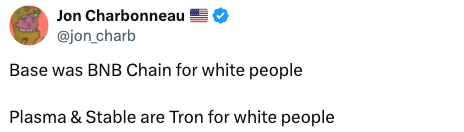
▲ Source: Jon Charbonneau

A while ago, I couldn't help but laugh when I came across this tweet from Jon Charbonneau. When Base is called the "White BNB Chain," what is this joke really saying?

In Haseeb's article "Blockchains are cities," Ethereum and Solana were compared to New York and Los Angeles, respectively. If we use the same analogy:

BNB Chain is a port city that never sleeps, carrying the massive traffic from Binance. Cargo ships come and go, the market is noisy, with street stalls and exchanges side by side. It doesn't matter where you come from, only whether you can participate immediately. Gas is low, the pace is fast, new projects launch every day—some make money, some leave. You don't need to understand urban planning or subscribe to any particular ideology—just know where the action is and where the opportunities lie, and you'll survive.

Base, on the other hand, is a new city built on Ethereum's values, still under rapid construction. Roads are being paved, communities are forming, and rules are being debated. It lacks the hustle and bustle of a port, but it has attracted a large number of engineers, creators, and institutions to settle in early. They're not in a hurry to make quick money but are instead thinking: if truly mass-market on-chain applications emerge in the next decade, where should they be born?

The same crypto world is diverging into different cities, different residents, and different lifestyles.

Understanding the differences between these two cities is perhaps far more important than arguing over which chain is better.

Two Parallel Cultures

If we place BNB Chain and Base on the same map, they appear to be competing; but if we shift our perspective to users and culture, we see that this is more like the parallel growth of two worldviews.

BNB Chain and Base essentially represent two different user structures, traffic sources, and growth logics. The former is rooted in Asian and emerging markets, while the latter has grown out of the Western developer community. Rather than simply understanding them as competitors, it's more accurate to say they are the result of the natural stratification of crypto users.
▲ Source: bnbchain.org

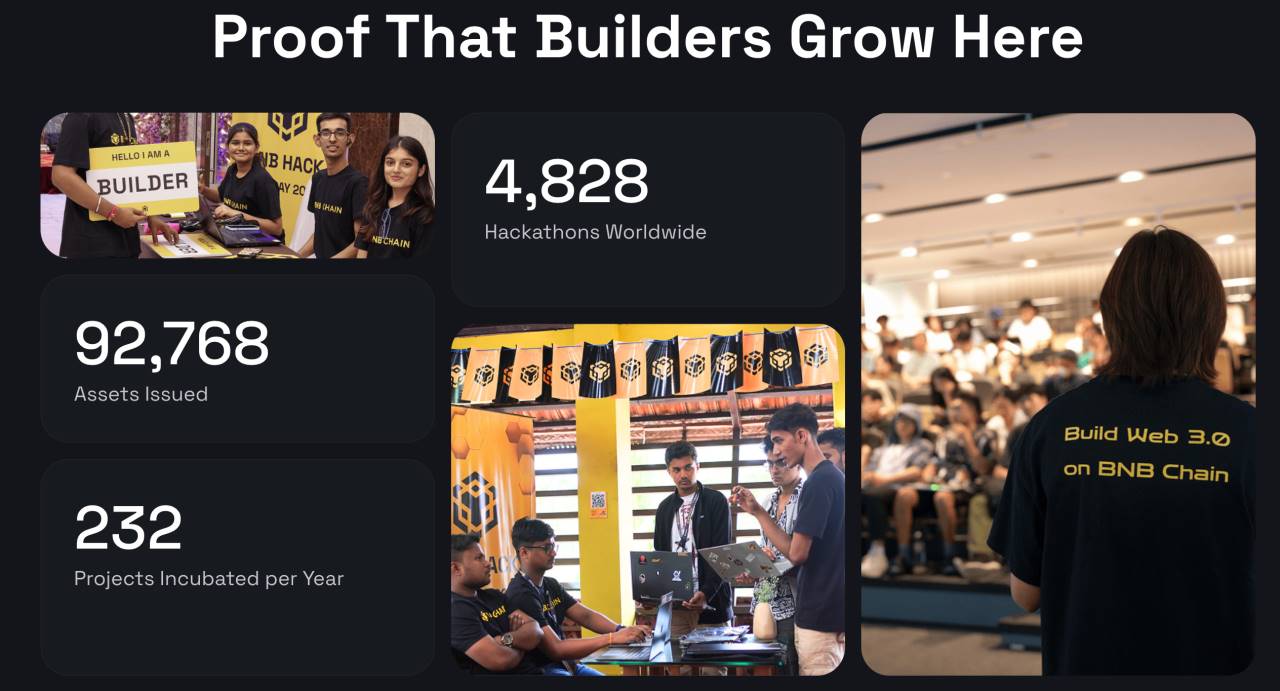
BNB Chain's user profile is very clear.

A large number of users come from Binance's long-accumulated retail base, many of whom are using on-chain products for the first time. They are primarily distributed in emerging markets like Southeast Asia and the Middle East, and they are not fixated on "purity of decentralization." Their focus is extremely pragmatic:

Is the gas low enough? Are transactions fast enough? Can I participate in hot projects as soon as they launch?

For these users, a chain is not an ideology but a tool. As long as it's usable, cheap, and profitable, whether it's centralized or semi-centralized is not a primary concern. This also explains why BNB Chain's ecosystem has always revolved around efficiency, scale, and application density.
▲ Source: base.org

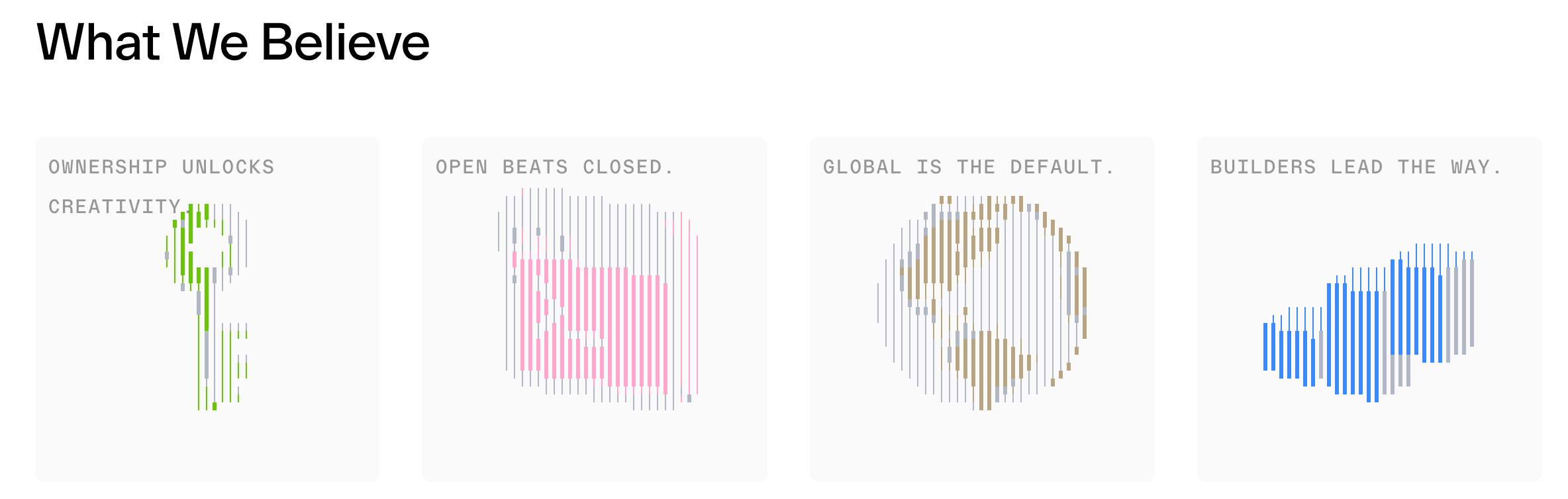
Base's user base is different.

They are more often Coinbase users and "overflow" from the Ethereum ecosystem, with a deeper understanding of blockchain and a greater willingness to discuss underlying design issues. These users care about Base's relationship with the Ethereum mainnet, its degree of decentralization, the technical roadmap of L2, and even the orthodoxy of its culture and narrative.

In their eyes, blockchain is not just a tool for completing transactions but also a space for self-expression, community building, and creative experimentation.

It is this difference in user attributes that profoundly shapes the two chains' distinct cultural genes.

BNB Chain has chosen a path closer to Web2's consumer internet: ecosystem integration, bringing as many functions, applications, and scenarios into the same system as possible. For emerging market users, this "all-in-one" model significantly reduces decision-making costs and learning barriers, making the on-chain experience more similar to the internet products they are familiar with.

Base, on the other hand, is more like an open experimental field, willing to reserve sufficient space and patience for developers and creators. It is not in a hurry to cover all scenarios but prioritizes letting the right culture and tools settle first.

From this perspective, BNB Chain and Base are not competing for the same users but growing in the soil each is best suited for.

They are not opposites but two reasonable answers given by the same industry under different cultural backgrounds.

Similarities and Differences in Vertical Integration

Over the past few years, major exchanges have almost simultaneously done one thing:

No longer satisfied with being just a "platform for matching orders," they have extended their business reach to public chains and wallets, among other deeper layers.

The business logic is actually quite simple.

If an exchange can only engage with users at the single moment of "buying" and "selling," then user value is discrete and temporary; but once an exchange controls the chain and wallet, the user's value path is extended, becoming a lifecycle with multiple touchpoints that can be cycled repeatedly.

When users complete funding, on-chain activities, dApp usage, participation in new projects, and return to the exchange for trading all within the same system, the exchange is no longer just an endpoint but the start and end of the entire on-chain journey. Each additional step increases the user's switching cost and enhances stickiness. This is the real goal of vertical integration: turning one-time transactional relationships into long-term retention relationships.

More importantly, this structure can directly amplify liquidity and trading volume.

The continuous emergence of new tokens and new projects on-chain is essentially a "continuous asset creation" capability. And when an exchange controls both the chain and the listing and pricing power of contracts, this on-chain "coin minting ability" can be seamlessly converted into spot trading pairs and derivative targets, ultimately沉淀 as continuous fee income.

From this perspective, BNB Chain and Base are both typical examples of exchange vertical integration strategies, but they each amplify different strengths.
▲ Source: IOSG

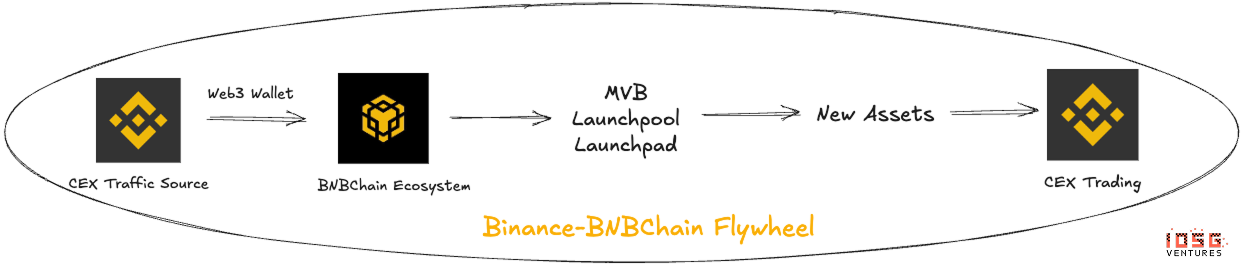
BNB Chain's core competitiveness comes from Binance itself.

As an exchange with one of the largest user bases and trading depths globally, Binance has an unparalleled ability to distribute traffic instantly. New projects launching on BNB Chain don't need to educate the market from scratch and rarely go through long cold-start periods. A large number of users can directly migrate from the exchange to the chain to participate and quickly return to the exchange to trade after completing interactions. This "frictionless back-and-forth" path makes BNB Chain more like a high-speed channel for applications.

Behind this model is Binance's strong exchange DNA:

Quick response to market trends, deep understanding of user behavior, and highly mature traffic operations. BNB Chain does not pursue slow, meticulous ecosystem building but is better at scaling a new narrative to its maximum potential in a short time.
▲ Source: IOSG

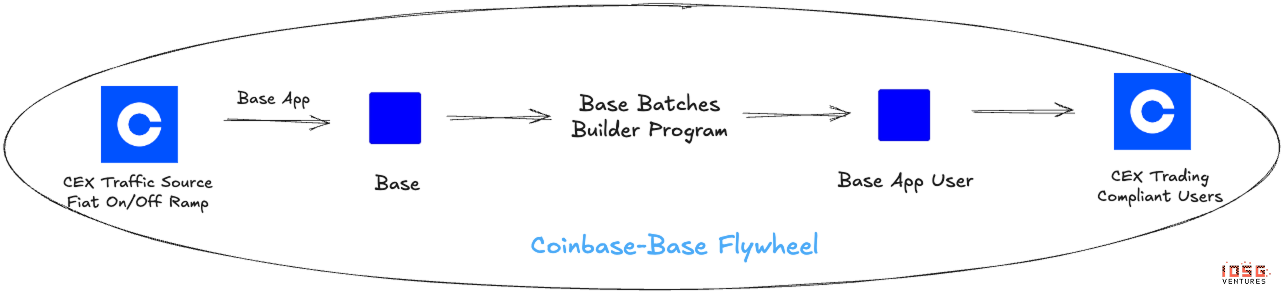
Base's vertical integration path is noticeably different.

It does not attempt to replicate BNB Chain's speed but instead leverages the compliance brand, fiat on-ramps, and institutional credibility that Coinbase has long accumulated in the US market to build a completely different trust structure. As the first US-listed cryptocurrency exchange, Coinbase's experience operating within regulatory frameworks is itself a scarce resource. This also makes Base naturally carry a "institution-friendly" label.

For institutional investors, enterprise applications, and developers sensitive to compliance boundaries, Base provides an environment where they can experiment with confidence and build for the long term. Coupled with Coinbase's long-term deep involvement in the Ethereum ecosystem and continuous investment in developer tools and infrastructure, Base has gradually developed a distinct "builder-friendly" culture.

If BNB Chain is more like an efficient commercialization testing ground, then Base is closer to a future-oriented infrastructure platform.

The former excels at turning traffic into scale quickly, while the latter excels at沉淀 trust into an ecosystem slowly.

From an exchange's perspective, these two paths are not right or wrong; they simply amplify their respective strongest capabilities.

And it is this difference that makes BNB Chain and Base the two most noteworthy and representative samples of exchange vertical integration today.

Wallets—The Final Battle?
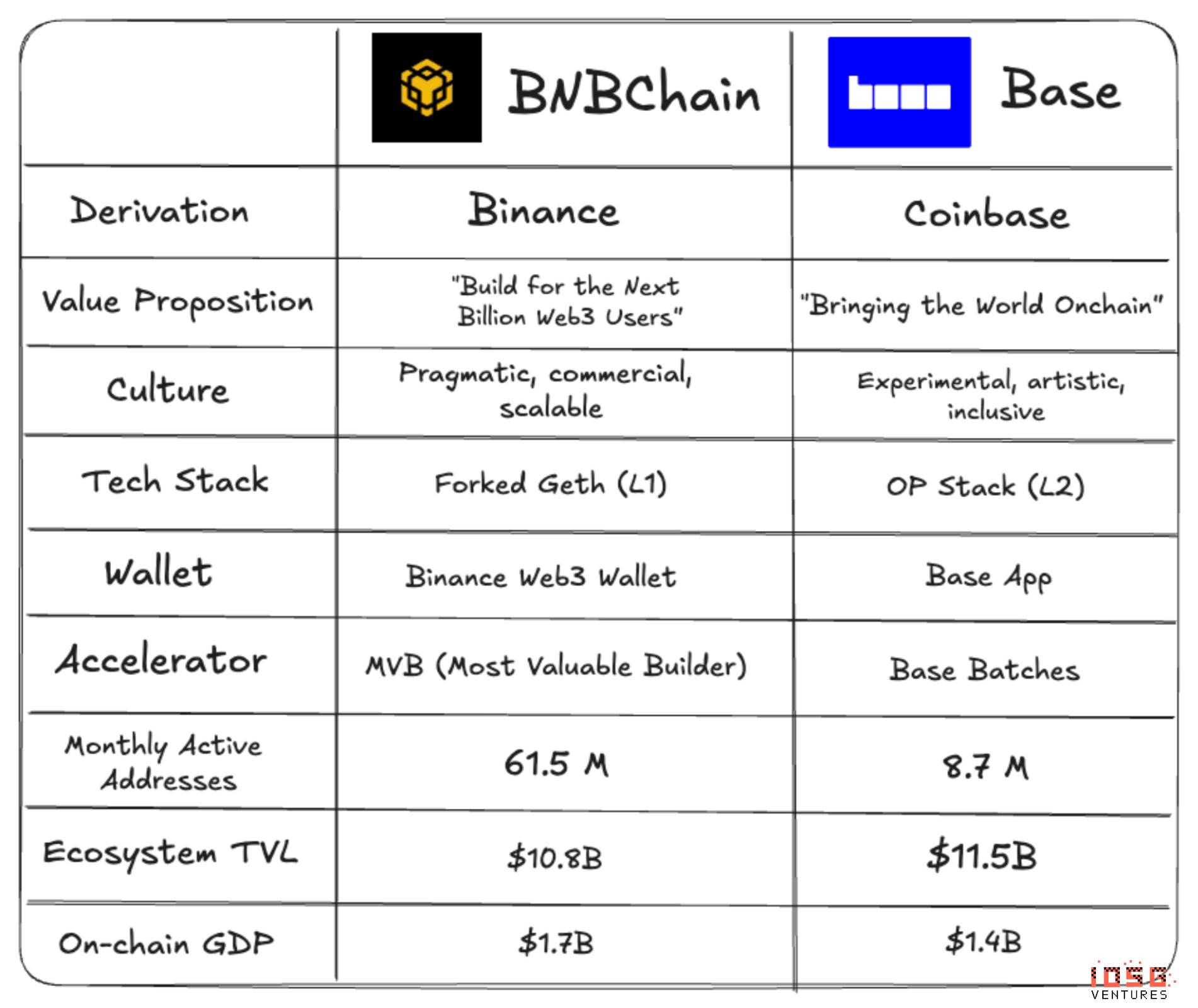
▲ Source: IOSG, TokenTerminal

Judging from community sentiment, the Binance Web3 Wallet is not very popular, but it undeniably leads in top-tier traffic. For many Binance users, the first time they use the Web3 Wallet often comes from a very specific scenario: they want to participate in a new launch, farm an airdrop, or get into a hot project as soon as possible, but it's not yet available on the exchange.

Hence, the exchange's built-in wallet appears.

You don't need a seed phrase, don't need to understand complex account models, and may not even clearly realize, "I'm now using an independent wallet."

The entire process—from funding and swapping to cross-chain, authorization, and interaction—is an incredibly smooth and effortless path.

Behind this is Binance's signature ability: simplifying complex financial operations.

This is also why the Binance Web3 Wallet naturally fits the characteristics of the BNB Chain ecosystem—

Trends emerge quickly, project density is high, and user behavior is highly concentrated in short cycles.

In an on-chain statistic from 2025, the Binance Wallet's daily transaction volume once reached approximately $92.6 million, capturing nearly 57.3% of the decentralized wallet transaction market share—a figure that exceeded the sum of all independent wallets.

Users don't need to remember seed phrases or leave the app to complete cross-chain, swaps, farming, or airdrop participation. This frictionless experience is something many independent wallets cannot easily replicate.

The Coinbase Wallet (Base App) has a completely different vibe. According to the latest market statistics, the Base App user base has reached about 11 million, ranking among the top self-custody wallets globally.

It was designed from the start to be a product that can exist independently of the exchange. This also means the Base App has a noticeably steeper learning curve.

But once this process is complete, the user's mindset shifts: this is "my wallet," not "I'm using Coinbase." This design is highly consistent with Base's overall direction. Base is not in a hurry to quickly funnel all users toward a particular killer app but is more concerned with whether people are willing to stay long-term, using the same wallet and the same address to repeatedly build their on-chain identity.

Thus, you'll see that Base App's power users are often also: early adopters of applications on Base, core participants in NFTs, social, and creator tools, and people more sensitive to product experience and long-term narratives.

Within the Binance Web3 Wallet system, it's easier for applications with strong financial attributes, short cycles, high-frequency interactions, and the ability to quickly absorb exchange traffic to succeed. In the Base App + Base ecosystem, products that are user retention-oriented, more sensitive to UX, community, and long-term relationships, not急于 to monetize but willing to gradually accumulate real users are more likely to thrive.

Conclusion
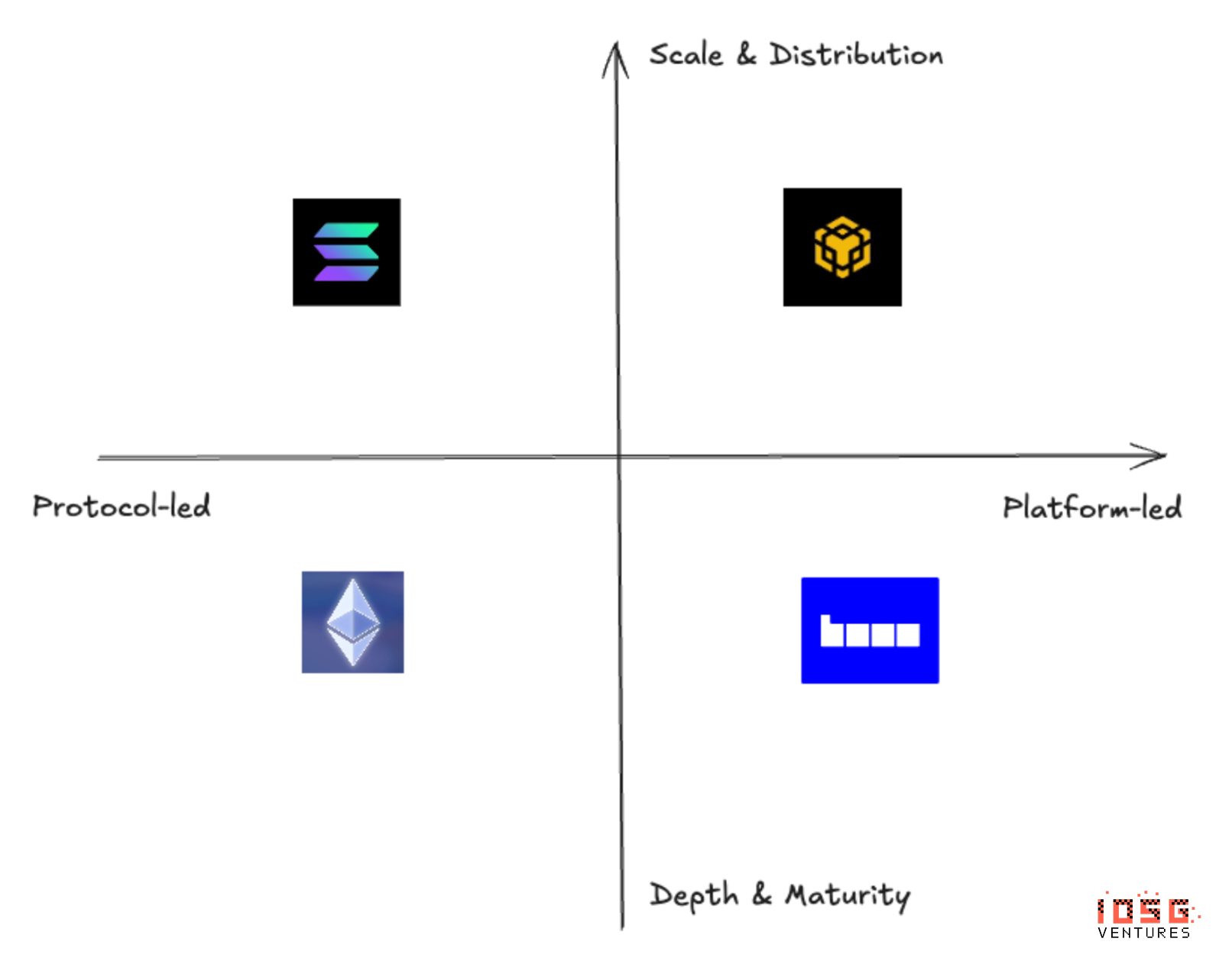
▲ Source: IOSG

The author believes the industry is most likely to see two types of ecosystems in the future:

  • CEX-led super ecosystems (Binance, Coinbase)

  • Community-led large-scale public infrastructure (Ethereum, Solana)

BNB Chain and Base will not replace each other.

The global crypto user base is not homogeneous. Emerging markets need low barriers to entry, high efficiency, and strong applications; Western markets need compliance, developer friendliness, and cultural认同. These two types of demand will not disappear in the foreseeable future.

A more realistic scenario is that infrastructure like wallets, cross-chain, and account abstraction will gradually smooth out usage differences; users will no longer "belong to only one chain" but will flow between different ecosystems.

From this perspective, BNB Chain and Base are more like two nodes in the same system: one responsible for pushing Web3 to a larger scale, the other for pushing Web3 to a more mature form.

If early public chain competition was like fighting for the "only operating system," the current competition is closer to "different platforms jointly building the internet ecosystem."

The real winners may not be a particular chain itself, but rather the applications and teams that can understand both ecosystems and freely switch between them.

Trend Kriptolar

İlgili Sorular

QWhat are the key cultural differences between BNB Chain and Base as described in the article?

ABNB Chain is portrayed as a fast-paced, efficiency-driven ecosystem focused on low costs and high throughput, primarily serving emerging markets with a pragmatic, non-ideological user base. Base, in contrast, is described as a developer-friendly, compliance-oriented ecosystem rooted in Ethereum's values, attracting users who care about decentralization, long-term building, and cultural narrative.

QHow do the user demographics of BNB Chain and Base differ?

ABNB Chain users are largely from emerging markets like Southeast Asia and the Middle East, often first-time on-chain users who prioritize low gas fees, speed, and immediate opportunities. Base users are more likely to be from Western markets, with deeper blockchain understanding, and they value compliance, developer tools, and ecosystem alignment with Ethereum.

QWhat is the vertical integration strategy common to both Binance and Coinbase, and how do they differ in execution?

ABoth Binance and Coinbase extend their reach into public chains and wallets to create longer user lifecycles and increase stickiness. Binance leverages its massive exchange traffic to fuel BNB Chain with high-speed, high-volume applications, while Coinbase uses its regulatory compliance and institutional trust to make Base a platform for long-term, builder-friendly growth.

QHow do the wallet strategies of Binance and Coinbase reflect their overall ecosystem approaches?

ABinance Web3 Wallet is integrated into its exchange app, offering seamless, low-friction access for users to participate in quick, high-frequency financial activities. Coinbase Wallet (Base App) is designed as a standalone self-custody product, emphasizing user ownership, identity, and long-term engagement with the Base ecosystem.

QWhat does the article suggest about the future coexistence of BNB Chain and Base?

AThe article suggests that BNB Chain and Base will coexist by serving different user needs: BNB Chain focuses on scaling Web3 adoption in emerging markets with efficiency and low barriers, while Base focuses on maturing Web3 infrastructure with compliance and developer culture. They are complementary nodes in a broader ecosystem rather than direct competitors.

İlgili Okumalar

After Aave's Exit and TVL's Sharp Fluctuation, Where Does MegaETH's Valuation Anchor Lie?

Following the withdrawal of Aave and a sharp drop in its Total Value Locked (TVL), the valuation of the high-performance DeFi blockchain MegaETH faces scrutiny. Once a highly anticipated project with a fully diluted valuation (FDV) reaching around $2 billion, MegaETH saw its TVL plummet from a May peak of $245 million to just over $30 million in July, a roughly 70% decline. Its native token, MEGA, currently trades around $0.048 with a market cap of approximately $54 million and an FDV of about $480 million. The report identifies a core vulnerability: MegaETH's TVL was heavily dependent on a single protocol, Aave V3, which at its peak contributed around 90% of the chain's TVL. A significant portion of this capital is attributed to leveraged yield-farming strategies involving stablecoins like USDe. When the profitability of these strategies diminished, capital rapidly exited, exposing the lack of diversified, sustainable activity. Three key mismatches between MegaETH's valuation and its fundamentals are highlighted: 1. **Valuation vs. Real Usage:** With an FDV of ~$4.8B but only ~$1M in annualized protocol revenue and ~2,600 daily active addresses, the valuation appears disconnected from current economic activity. 2. **Token Narrative vs. Ecosystem Reality:** Despite its DeFi narrative, nearly 80% of the chain's recent protocol revenue comes from a trading card game, Monster, not from core DeFi applications like Aave. The chain's native stablecoin, USDM, also shows low trading volume and a declining market cap. 3. **Short-Term Hype vs. Long-Term Delivery:** Initial hype from token generation, blue-chip integrations, and influencer support has faded. Major protocols like Uniswap now hold minimal TVL on the chain, indicating that early capital was largely transient and driven by incentives rather than organic demand. The situation reflects a broader market trend where investors are becoming less tolerant of valuations based on inflated TVL and narrative, demanding clearer evidence of sustainable transactions, revenue, and ecosystem development. While MEGA's price may experience short-term rebounds from market sentiment, a fundamental re-rating likely depends on the team's ability to convert its remaining resources into tangible, user-retaining applications and genuine ecosystem growth.

链捕手4 saat önce

After Aave's Exit and TVL's Sharp Fluctuation, Where Does MegaETH's Valuation Anchor Lie?

链捕手4 saat önce

Goldman Sachs In-Depth Report: Who Will Be the Long-Term Winners in China's AI Large Model Industry?

Goldman Sachs Report: China's AI Models at an Inflection Point China's open-source/open-weight large language models (LLMs) have reached performance parity with top global proprietary models, according to a Goldman Sachs report. This is driven by architectural innovations and higher parameter efficiency, allowing Chinese models to achieve comparable capabilities at 2%-10% the parameter size and significantly lower cost. The market is evolving into a two-tiered structure: a high-end segment (e.g., GLM5.2, Qwen3.7 Max) with premium pricing and a low-end, price-sensitive segment for global SMEs and individual users. Key points: * **Cost & Performance:** Innovations like Mixture of Experts (MoE) enable high performance with smaller models. Projects like Meituan's LongCat 2.0, trained on domestic hardware, highlight progress in tech self-sufficiency. * **Open-Source Strategy:** Most Chinese players use open-source/open-weight models for flexibility and ecosystem growth. However, Goldman notes this may underreport actual deployment and revenue. A shift toward "open-weight + community license" models with revenue sharing (e.g., MiniMax) could improve monetization. * **Market Shift & Global Expansion:** Enterprise AI adoption is shifting from "token maximization" to "ROI-first." International expansion, especially in non-US markets, is a major growth driver. Chinese models are increasingly available on global platforms like AWS Bedrock and Microsoft Copilot. * **Competitive Landscape:** Using a framework based on pricing power, cost advantage, and financial strength, Goldman identifies **Zhipu AI and DeepSeek** as the strongest in foundational text models, and **ByteDance** as the leader in multimodal/video generation. The report maintains Buy ratings on MiniMax and Kuaishou. * **Market Growth:** China's AI model API and subscription revenue is projected to grow from an estimated ¥35 billion in 2026 to ¥879 billion by 2030.

marsbit4 saat önce

Goldman Sachs In-Depth Report: Who Will Be the Long-Term Winners in China's AI Large Model Industry?

marsbit4 saat önce

Goldman Sachs Deep Dive Report: Who Will Become the Long-Term Winners in China's AI Large Model Industry?

Goldman Sachs Report: Who Will Be the Long-Term Winners in China's AI Large Model Industry? China's AI large model sector is at a historic inflection point. Goldman Sachs argues that the intelligence of Chinese open-source/open-weight models is approaching top global proprietary models. Rapid adoption by domestic enterprises and global SMEs is creating a data flywheel effect that will further drive model iteration. The evolution is summarized as moving from "DeepSeek's cost-efficiency moment last year to GLM's model-intelligence moment this year." Chinese models achieve near-state-of-the-art performance at significantly lower cost, primarily due to architectural innovations like Mixture of Experts (MoE) and higher parameter efficiency. Models like DeepSeek V4 Pro (1.6T params), GLM5.2 (0.7T), and MiniMax M3 (0.4T) are much smaller than global leaders. Recent advancements in coding capability are attributed to better data curation and RLHF. Landmarks like Meituan's LongCat 2.0, trained fully on domestic AI chips, demonstrate progress in hardware stack independence. The market is forming a "two-tiered structure." The high-end tier (e.g., GLM5.2, Alibaba's Qwen3.7 Max) prices around $1 per million tokens, about 10-25% of US top models, with estimated inference gross margins of 10-20%. The low-end tier (priced as low as $0.06-$0.2 per million tokens) targets price-sensitive global SMEs and individuals. MiniMax derives 60-70% of revenue overseas. Goldman forecasts China's AI model API/subscription revenue to grow from an estimated RMB 35bn in 2026 to RMB 879bn by 2030. Most Chinese players adopt open-source/open-weight strategies for deployment flexibility and community feedback, though this limits monetization as deployments on third-party platforms (e.g., Alibaba Cloud) may not generate direct revenue. A shift towards "open-weight + community license" models with revenue-sharing agreements (like MiniMax's approach) could improve unit economics. International expansion, particularly in non-US markets, is the key growth driver. The global enterprise AI paradigm is shifting from "token maximization" to "ROI prioritization." Chinese models are already hosted on major global platforms like AWS Bedrock and are under consideration for integration into Microsoft Copilot. Using a competitive framework based on pricing power, cost advantage, and financial strength, Goldman identifies the strongest players: In foundational text models, Zhipu AI (initiated coverage) and DeepSeek lead. In multimodal/video generation, ByteDance's Seed is the frontrunner, with Kuaishou's Kling and MiniMax's Hailuo also well-positioned. Goldman maintains a Buy rating on MiniMax, citing its attractive valuation.

链捕手5 saat önce

Goldman Sachs Deep Dive Report: Who Will Become the Long-Term Winners in China's AI Large Model Industry?

链捕手5 saat önce

İşlemler

Spot

Popüler Makaleler

O Nasıl Satın Alınır

HTX.com’a hoş geldiniz! O1 exchange (O) satın alma işlemlerini basit ve kullanışlı bir hâle getirdik. Adım adım açıkladığımız rehberimizi takip ederek kripto yolculuğunuza başlayın. 1. Adım: HTX Hesabınızı OluşturunHTX'te ücretsiz bir hesap açmak için e-posta adresinizi veya telefon numaranızı kullanın. Sorunsuzca kaydolun ve tüm özelliklerin kilidini açın. Hesabımı Aç2. Adım: Kripto Satın Al Bölümüne Gidin ve Ödeme Yönteminizi SeçinKredi/Banka Kartı: Visa veya Mastercard'ınızı kullanarak anında O1 exchange (O) satın alın.Bakiye: Sorunsuz bir şekilde işlem yapmak için HTX hesap bakiyenizdeki fonları kullanın.Üçüncü Taraflar: Kullanımı kolaylaştırmak için Google Pay ve Apple Pay gibi popüler ödeme yöntemlerini ekledik.P2P: HTX'teki diğer kullanıcılarla doğrudan işlem yapın.Borsa Dışı (OTC): Yatırımcılar için kişiye özel hizmetler ve rekabetçi döviz kurları sunuyoruz.3. Adım: O1 exchange (O) Varlıklarınızı SaklayınO1 exchange (O) satın aldıktan sonra HTX hesabınızda saklayın. Alternatif olarak, blok zinciri transferi yoluyla başka bir yere gönderebilir veya diğer kripto para birimlerini takas etmek için kullanabilirsiniz.4. Adım: O1 exchange (O) Varlıklarınızla İşlem YapınHTX'in spot piyasasında O1 exchange (O) ile kolayca işlemler yapın.Hesabınıza erişin, işlem çiftinizi seçin, işlemlerinizi gerçekleştirin ve gerçek zamanlı olarak izleyin. Hem yeni başlayanlar hem de deneyimli yatırımcılar için kullanıcı dostu bir deneyim sunuyoruz.

119 Toplam GörüntülenmeYayınlanma 2026.06.19Güncellenme 2026.06.29

O Nasıl Satın Alınır

PROS Nasıl Satın Alınır

HTX.com’a hoş geldiniz! Pharos (PROS) satın alma işlemlerini basit ve kullanışlı bir hâle getirdik. Adım adım açıkladığımız rehberimizi takip ederek kripto yolculuğunuza başlayın. 1. Adım: HTX Hesabınızı OluşturunHTX'te ücretsiz bir hesap açmak için e-posta adresinizi veya telefon numaranızı kullanın. Sorunsuzca kaydolun ve tüm özelliklerin kilidini açın. Hesabımı Aç2. Adım: Kripto Satın Al Bölümüne Gidin ve Ödeme Yönteminizi SeçinKredi/Banka Kartı: Visa veya Mastercard'ınızı kullanarak anında Pharos (PROS) satın alın.Bakiye: Sorunsuz bir şekilde işlem yapmak için HTX hesap bakiyenizdeki fonları kullanın.Üçüncü Taraflar: Kullanımı kolaylaştırmak için Google Pay ve Apple Pay gibi popüler ödeme yöntemlerini ekledik.P2P: HTX'teki diğer kullanıcılarla doğrudan işlem yapın.Borsa Dışı (OTC): Yatırımcılar için kişiye özel hizmetler ve rekabetçi döviz kurları sunuyoruz.3. Adım: Pharos (PROS) Varlıklarınızı SaklayınPharos (PROS) satın aldıktan sonra HTX hesabınızda saklayın. Alternatif olarak, blok zinciri transferi yoluyla başka bir yere gönderebilir veya diğer kripto para birimlerini takas etmek için kullanabilirsiniz.4. Adım: Pharos (PROS) Varlıklarınızla İşlem YapınHTX'in spot piyasasında Pharos (PROS) ile kolayca işlemler yapın.Hesabınıza erişin, işlem çiftinizi seçin, işlemlerinizi gerçekleştirin ve gerçek zamanlı olarak izleyin. Hem yeni başlayanlar hem de deneyimli yatırımcılar için kullanıcı dostu bir deneyim sunuyoruz.

119 Toplam GörüntülenmeYayınlanma 2026.06.22Güncellenme 2026.06.29

PROS Nasıl Satın Alınır

VERONA Nedir

I. Proje Tanıtımı VERONA, zincir soyutlaması aracılığıyla herkes için, her yerde inşa edilmiş bir blok zinciridir. Genel Soyutlama katmanını kullanarak, VERONA, hesaplar, imzalar ve birlikte çalışabilirlik gibi karmaşık blok zinciri işlevlerini doğrudan protokol seviyesinde entegre ederek kendini ayırt eder. Bu yaklaşım, temel teknolojileri anlamaya gerek kalmadan blok zinciri uygulamalarıyla etkileşimde bulunmayı sağlar.1) Temel Bilgiler İsim: VERONA (VERONA)III. İlgili Bağlantılar Resmi web sitesi bağlantısı: https://xion.burnt.com/ Whitepaper: https://xion.burnt.com/whitepaper.pdf Keşif Araçları: https://explorer.burnt.com/ Sosyal Medya: https://x.com/burnt_xion Not: Proje tanıtımı, resmi proje ekibi tarafından yayımlanan veya sağlanan materyallerden alınmıştır, yalnızca referans içindir ve yatırım tavsiyesi teşkil etmez. HTX, ortaya çıkan doğrudan veya dolaylı kayıplardan sorumluluk kabul etmez.

112 Toplam GörüntülenmeYayınlanma 2026.06.22Güncellenme 2026.06.22

VERONA Nedir

Tartışmalar

HTX Topluluğuna hoş geldiniz. Burada, en son platform gelişmeleri hakkında bilgi sahibi olabilir ve profesyonel piyasa görüşlerine erişebilirsiniz. Kullanıcıların A (A) fiyatı hakkındaki görüşleri aşağıda sunulmaktadır.

活动图片