IOSG | EIP-8363 Quantitative Review: Slashing Staking 'Subsidies'—What Does Ethereum Want in Return?

marsbit2026-08-25 tarihinde yayınlandı2026-08-25 tarihinde güncellendi

Özet

**Title: IOSG | EIP-8363 Quantitative Review: Cutting Staking "Subsidies"—What Does Ethereum Aim to Gain?** **Summary:** EIP-8363 proposes a mechanism to progressively destroy a larger portion of validator rewards as the staking ratio increases, reaching 100% destruction when 50% of ETH supply is staked. This analysis models its impact on issuance, yield, and staking equilibrium, investigates whether ETH's yield truly explains its price, quantifies the on-chain economy's dependence on this yield, and presents conclusions. Key findings: 1. EIP-1559's fee-burn mechanism has become largely ineffective, with burn rates down 98% since 2022. Issuance policy is now Ethereum's primary remaining lever over ETH supply. 2. At the current staking level (~35% of supply), EIP-8363 would cut issuance by ~58.6% and staking APR by ~56.4%, not eliminate it entirely. The mechanism is self-limiting; under reasonable yield thresholds, the system would stabilize at 26–34% staking with 0.3–0.5% annual issuance. 3. No statistically significant correlation exists between historical staking yield changes and ETH price movements. The natural 37% yield decline since 2023 showed no detectable price impact. 4. The on-chain economy's direct dependence on this yield is limited. Liquid staking tokens (LSTs) like wstETH are crucial as collateral (e.g., 34.2% in major lending markets), but their utility persists as long as yield is positive. Staking-focused ETFs represent a tiny fraction (0.19% of supply...

Author:Mario Chow,IOSG

EIP-8363 Proposal: As the staking ratio increases, burn an increasingly larger portion of validator rewards, reaching 100% burn when 50% of the supply is staked. This article models its impact on issuance, yield, and staking equilibrium; examines whether ETH's yield has ever truly explained its price; quantifies how much of the on-chain economy actually relies on this yield; and presents our conclusions.

All calculations are based on on-chain data and the original EIP. The model is independently constructed, with a discrepancy of less than 2% from publicly available third-party data. Data updated as of August 24, 2026.

One-sentence version of the argument
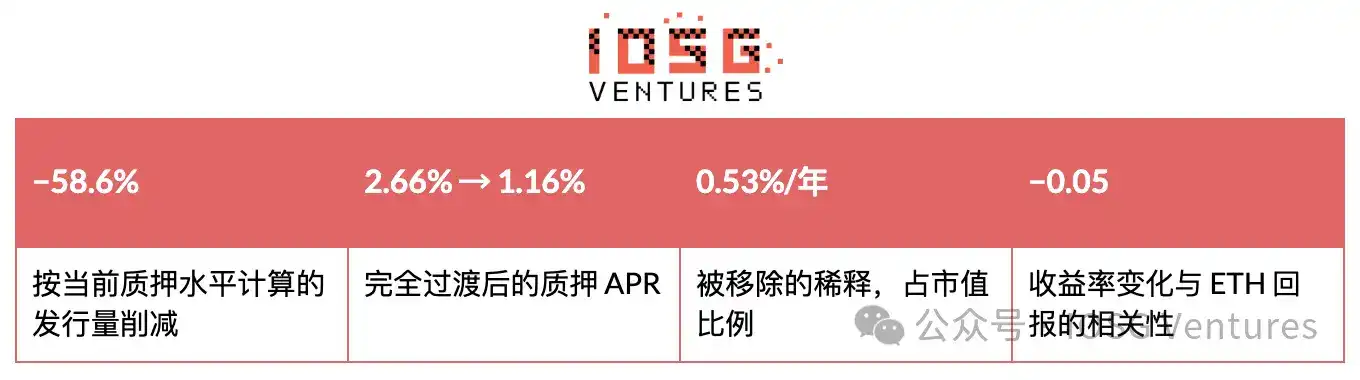
The fee burn is dead, making issuance the only lever Ethereum still has over ETH supply. The proposal halves issuance at current staking levels, not zeroes it; and it's self-limiting: at any reasonable staker hurdle rate, the system ultimately stabilizes with 26–34% of supply staked and issuance at 0.3–0.5%/year. Meanwhile, the portion of yield it cuts shows no detectable relationship with ETH's price.

I. The Burn Mechanism Is Already Broken

EIP-1559 burned 1.48 million ETH in 2022. EIP-1559 burns the base fee, which is essentially congestion pricing; once blobs move rollup data off L1 and the gas limit is raised, congestion disappears: gas usage doubled while the average base fee fell 96%, and burn volume has dropped 98% since 2022. Over the past twelve months, it burned only 25,660 ETH, and the 30-day run rate is even lower: 39 ETH/day, annualized to about 14,300 ETH.
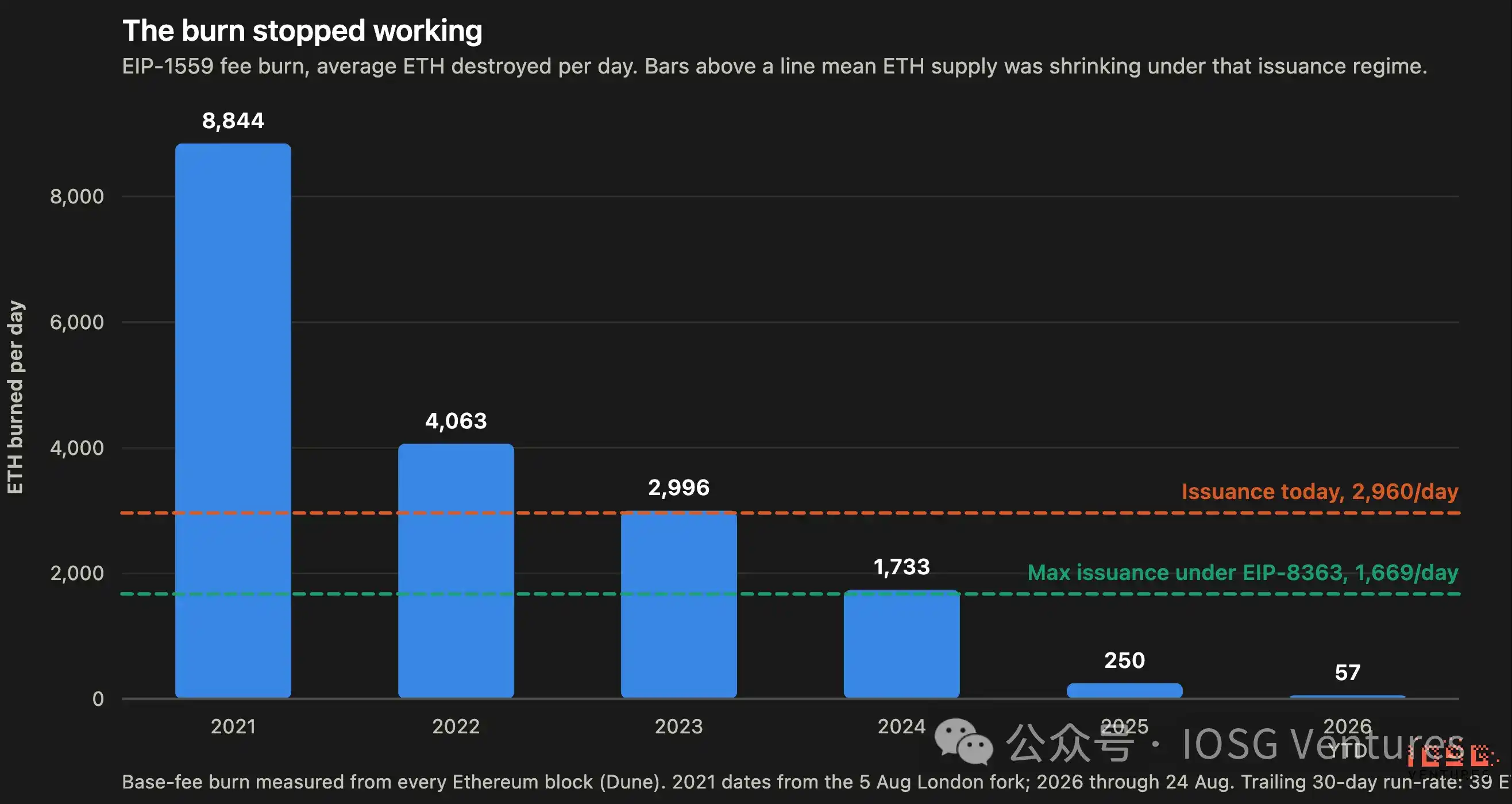
▲ Daily EIP-1559 fee burn volume by year: from 8,844 ETH/day in 2021 to 57 ETH/day in 2026—far below both current issuance and the maximum issuance curve under EIP-8363.

Compared to total issuance of about 1.08 million ETH/year, the burn now offsets only 2.4% of new supply. As a mechanism, "ultrasound money" is over. L2 migration and blob scaling moved the fee base away from L1: L1 gas usage actually doubled over the same period (3.4 billion → 6.7 billion units/month), while the average base fee dropped from 4.00 gwei to 0.17 gwei: this is a price effect, not a demand effect.

Net Issuance: What's Really Happening to Supply

The burn is only half the ledger. Looking at it together with issuance paints a grimmer picture: issuance has never stopped growing, while the offsetting item has vanished beneath it.
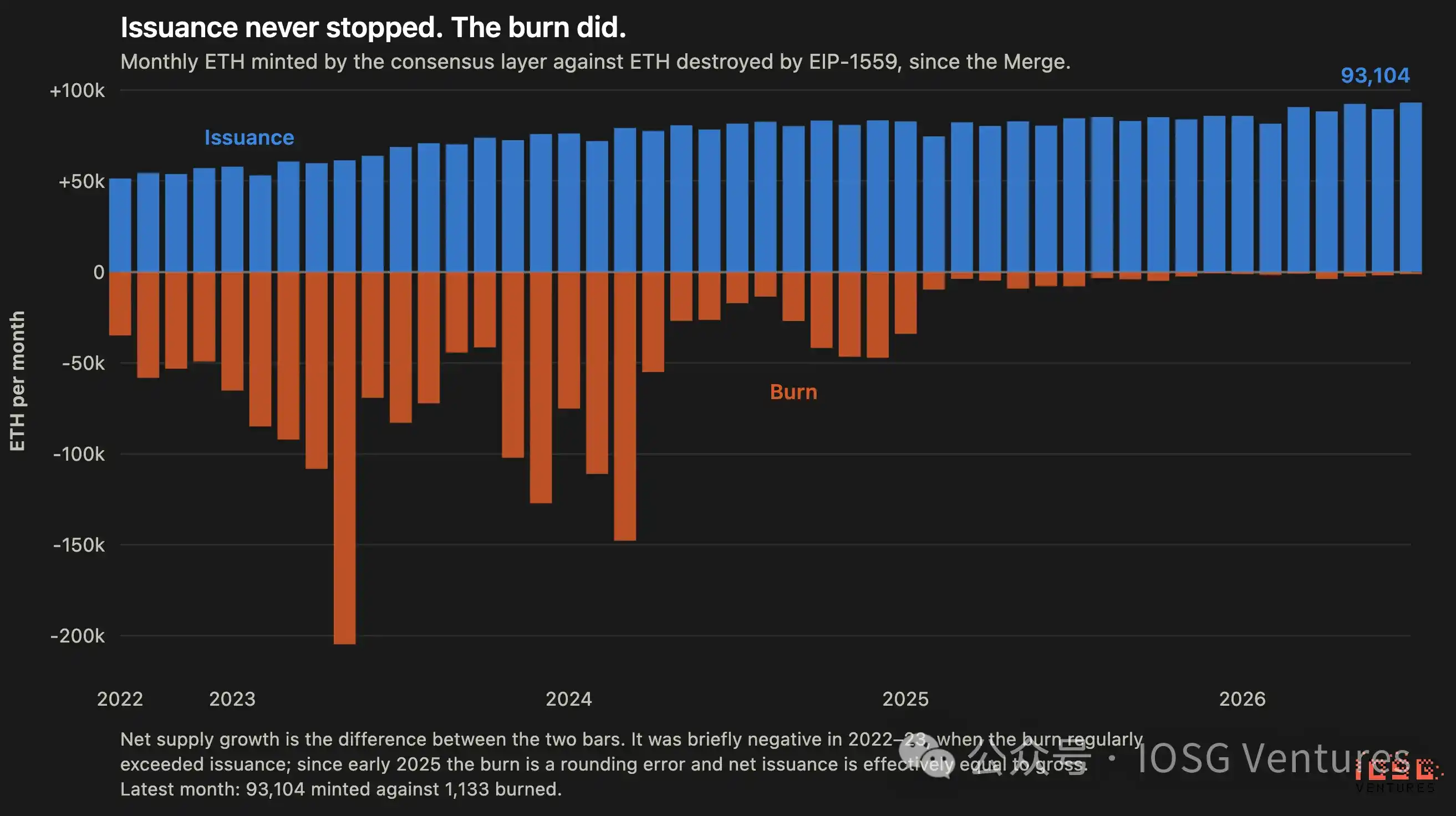
▲ Monthly ETH minted on the consensus layer vs. ETH burned by EIP-1559 since The Merge. Issuance bars have steadily grown; burn bars have shrunk to almost zero by 2025.

Out of the 47 months since The Merge, only 13 were deflationary—the last being March 2024. ETH has been inflationary for 28 consecutive months, and the rate has roughly tripled during this period, from +0.26%/year to +0.87%/year. The reason isn't that issuance increased much (up only 4% since 2024), but that the offset has gone to zero.

This reframes the entire debate. EIP-8363 is often framed as a choice between staking yield and monetary scarcity. But a more accurate understanding is narrower and more forced: issuance policy is now the only lever Ethereum has left over ETH supply, because the demand-driven one no longer works. Whether legislated or not, all supply questions now pass through the issuance curve.

II. What EIP-8363 Actually Does

Before unpacking the mechanism, we need to address the official core motivation: safeguarding network security. The proposal authors believe that once the network staking ratio crosses the 50% red line, Ethereum will lose its 'social layer defense' capability and face systemic parasitic risks from LST oligopolies that are too big to fail. Thus, the proposal attempts to cap staking by forcibly lowering yields. However, grand security philosophies often obscure the real meat on the ledger. Setting aside metaphysical debates about decentralization, what does this mechanism actually mean for the real on-chain economy? Here is a purely quantitative deduction.
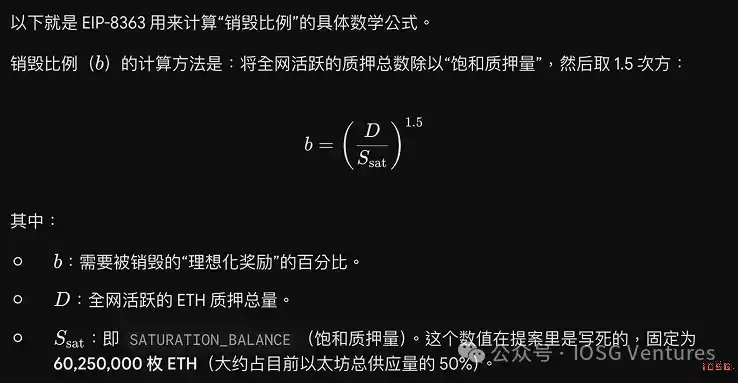
How is the money deducted? (Core Mechanism)

  • Pay first, then burn: Validators initially earn full rewards for all tasks as normal, but the system then directly "burns" a portion of the rewards according to a ratio (assume b).
  • Deduct based on "theoretical full amount," no double penalty: The key here is that the system calculates the burn amount based on the full theoretical reward you should receive, not the actual reward you get. Why? Because if you accidentally go offline, you already don't get the reward; if the system then deducts based on your actual situation, it's too unfair to offline participants. Deducting based on the "theoretical value" ensures motivation to work remains unchanged, and offline participants aren't penalized twice.
  • Extreme case protection: If the Ethereum network experiences severe issues (entering inactivity leak state), this portion of attestation reward burning is paused.
  • Extra income unaffected: This proposal only touches consensus layer rewards. Your side income from running a node—namely, MEV and priority fees—remains completely unaffected.

The two most common misconceptions in the community

Misconception 1: "Ethereum's issuance will be directly cut to zero."

  • Truth: Far from it. At the current staking level of approximately 42.2 million ETH, the burn ratio b is 58.6%.
  • To reduce issuance completely to zero, staked amount would need to surge to 60.25 million ETH (43% higher than current levels). So the accurate statement is: At this stage, the proposal only cuts issuance roughly in half, far from zero.

Misconception 2: "Yields plummet instantly, triggering a DeFi crash on day one."

  • Truth: An 18-month "soft landing" period is officially designed, making the first day almost imperceptible.
  • To prevent sudden shock, upon activation, the proposal will double the base reward factor (the parameter used to calculate rewards) from 64 to 128. This doubling precisely offsets the aforementioned 58.6% burn ratio.
  • In other words, on the first day of the upgrade, net issuance will remain at about 83% of current levels. Over the next 18 months, the parameter will gradually decrease back to the normal 64, with issuance slowly sliding down to 41% of current levels.
  • Summary: Yield decline is spread over a year and a half, not an overnight crash. Arguments fearing an "instant DeFi bubble pop" ignore this buffer mechanism.

III. Baseline: Where Ethereum Actually Is Today
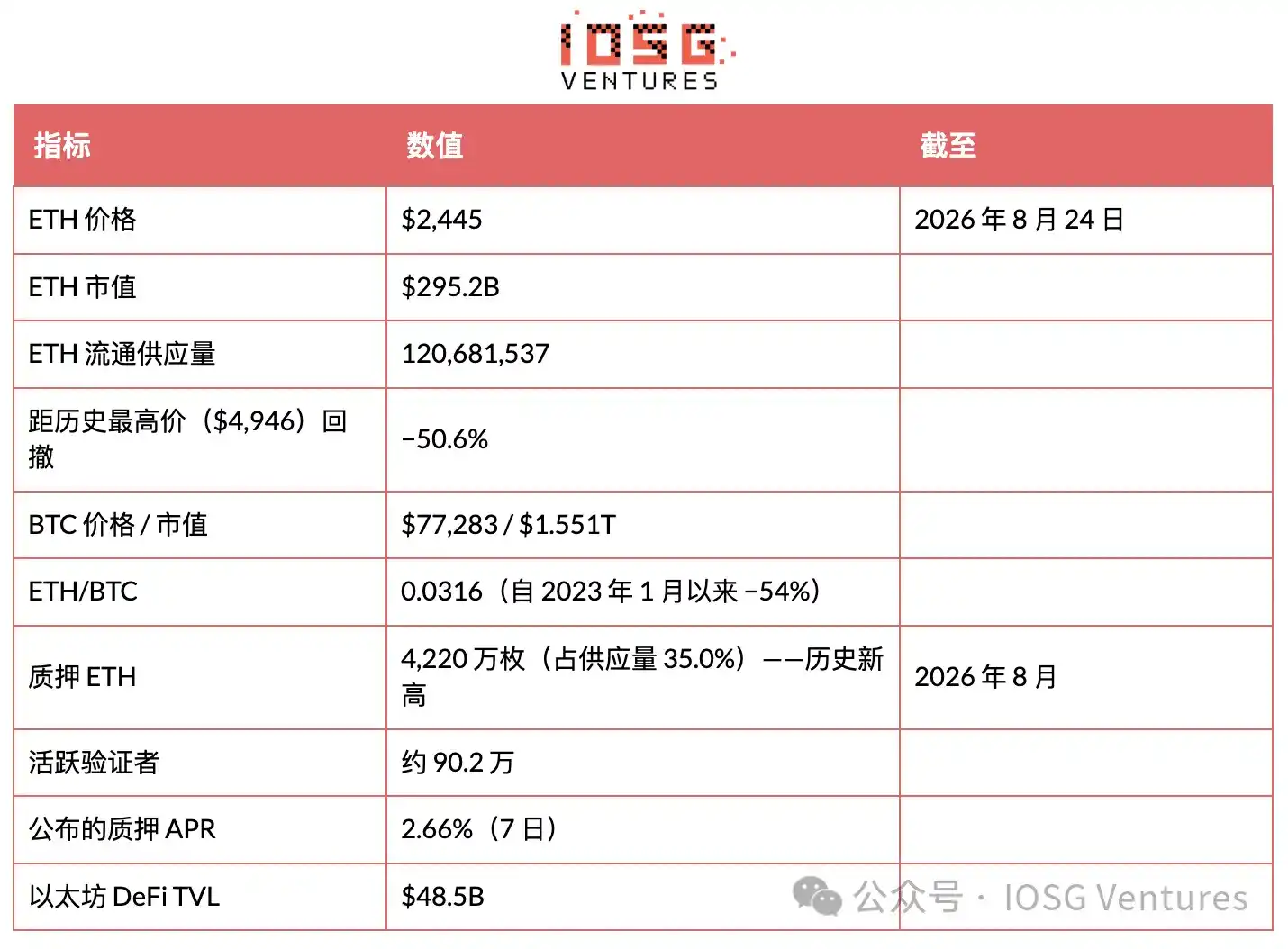
Supply Dynamics
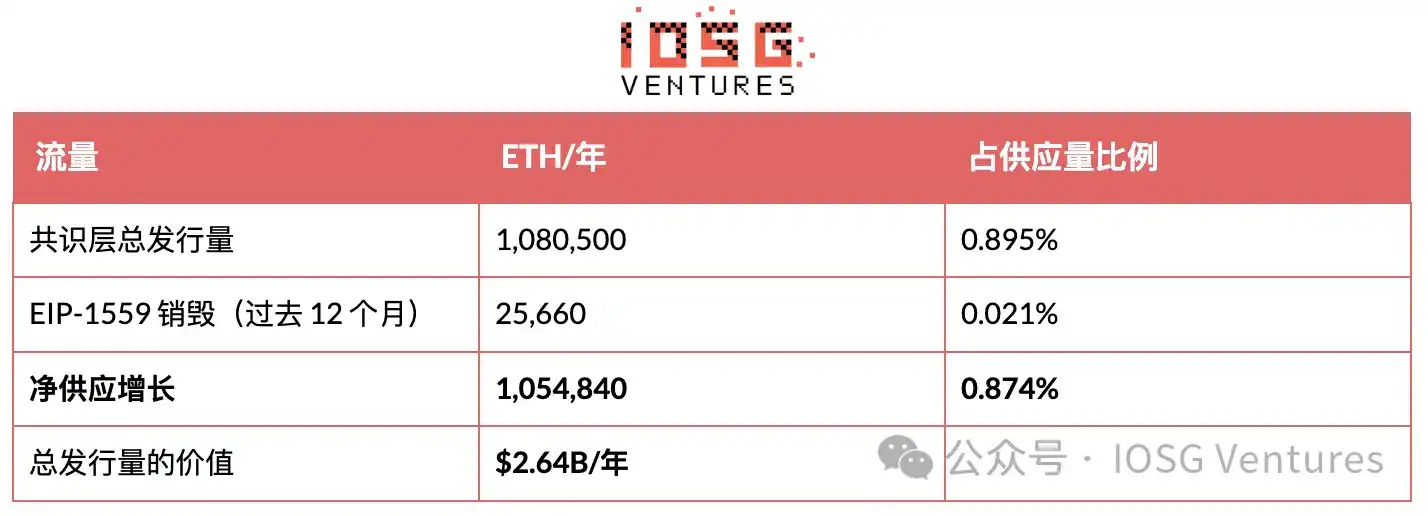
Where Issuance Comes From

All from staking rewards. Post-Merge, new ETH has only one source: payments from the consensus layer to validators, allocated with fixed canonical weights (denominator 64) across three duties: attestation 54/64 (84.4%, 911,672 ETH/year), block proposal 8/64 (12.5%, 135,063), sync committee 2/64 (3.1%, 33,766).

Issuance is modeled as I(S) = 940.9 · √(S/32) ETH/year, i.e., the protocol's own reward curve. At S = 42.2 million, this corresponds to a consensus layer APR of 2.560%. Measured priority fees for the first 23 days of August were 2,623 ETH, annualized to 41.5k ETH: equivalent to 0.098% on the staking base. Summed, this gives 2.658%, almost exactly matching the published 2.66%.

Using measured priority fees, at least 96% of validator income comes from issuance, at most 4% from fees. Proposer payments in MEV-boost beyond direct priority fees are not captured, so the fee share is a lower bound. Regardless, issuance dominates absolutely, and this proportion is key to the entire debate.

IV. Modeling the Proposal

The earliest attempts were to design a whole network around "hiding," not patching an existing one. On this path, two tokens led the way, placing completely opposite bets. The third case was built for banks, not individuals, but belongs to the same family.

Applied at current staking levels, ignoring behavioral response
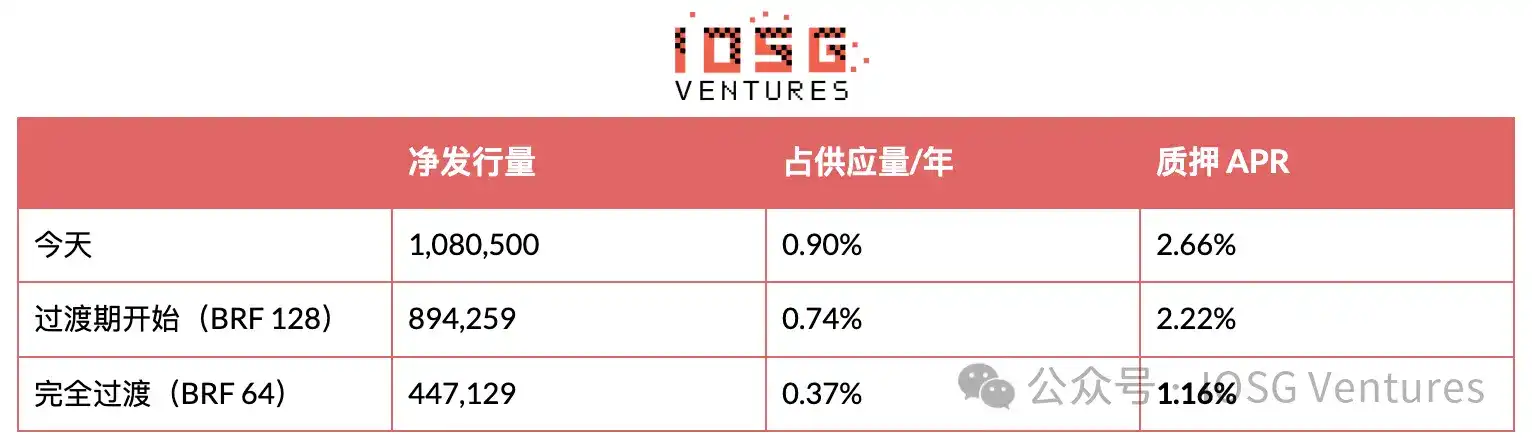
Issuance cut: −58.6%. Staking APR cut: −56.4%. Dilution removed: 633k ETH/year = $1.55B/year = 0.53% of ETH market cap annually.
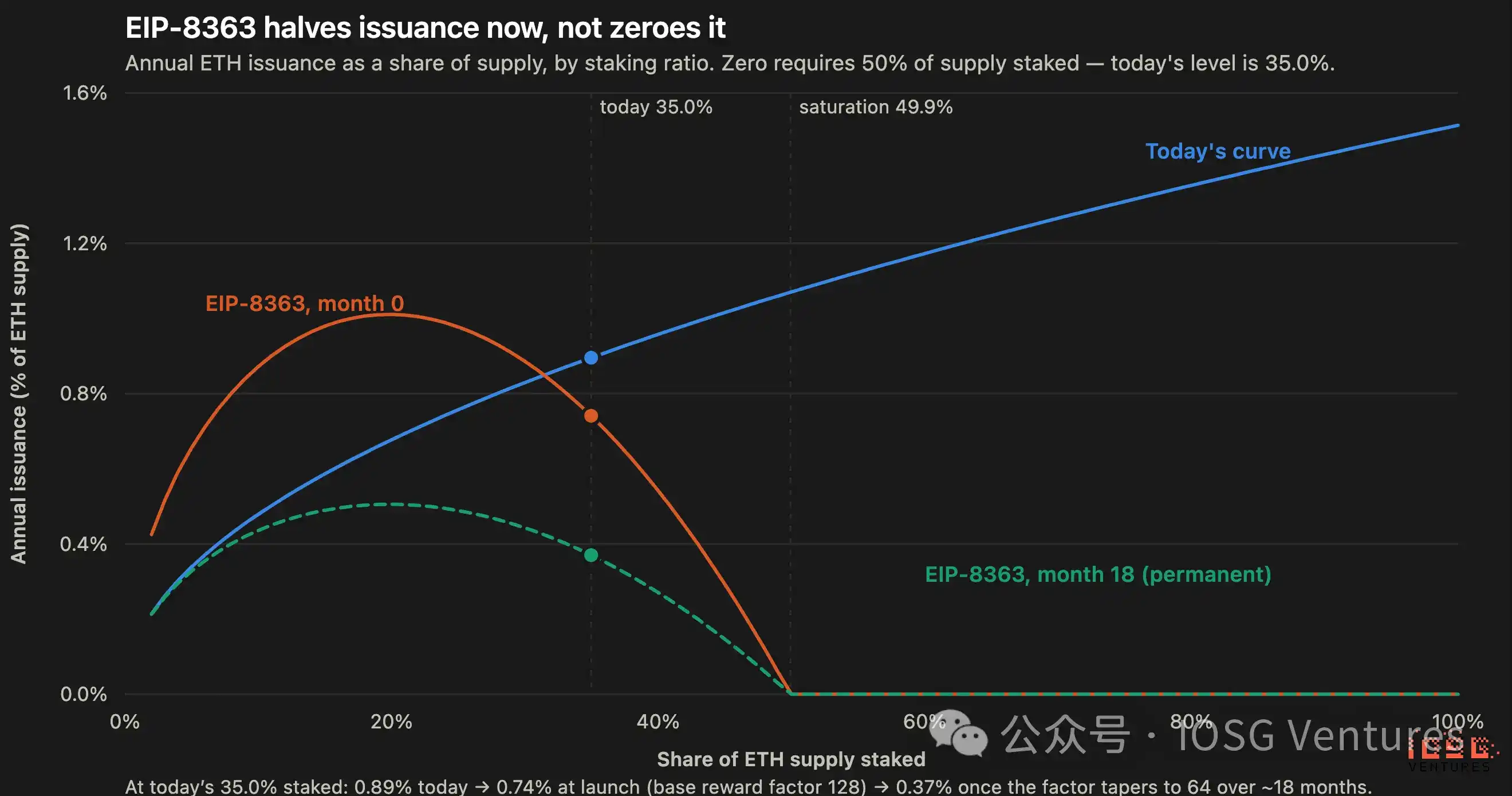
▲ Annual ETH issuance as a percentage of supply vs. staking ratio. Today's curve rises steadily; the EIP-8363 post-activation curve peaks at about 1.0% near 20% staking ratio; the permanent curve peaks at about 0.5%. Both curves drop to zero at 50% staking ratio.

Full curve (after complete transition)
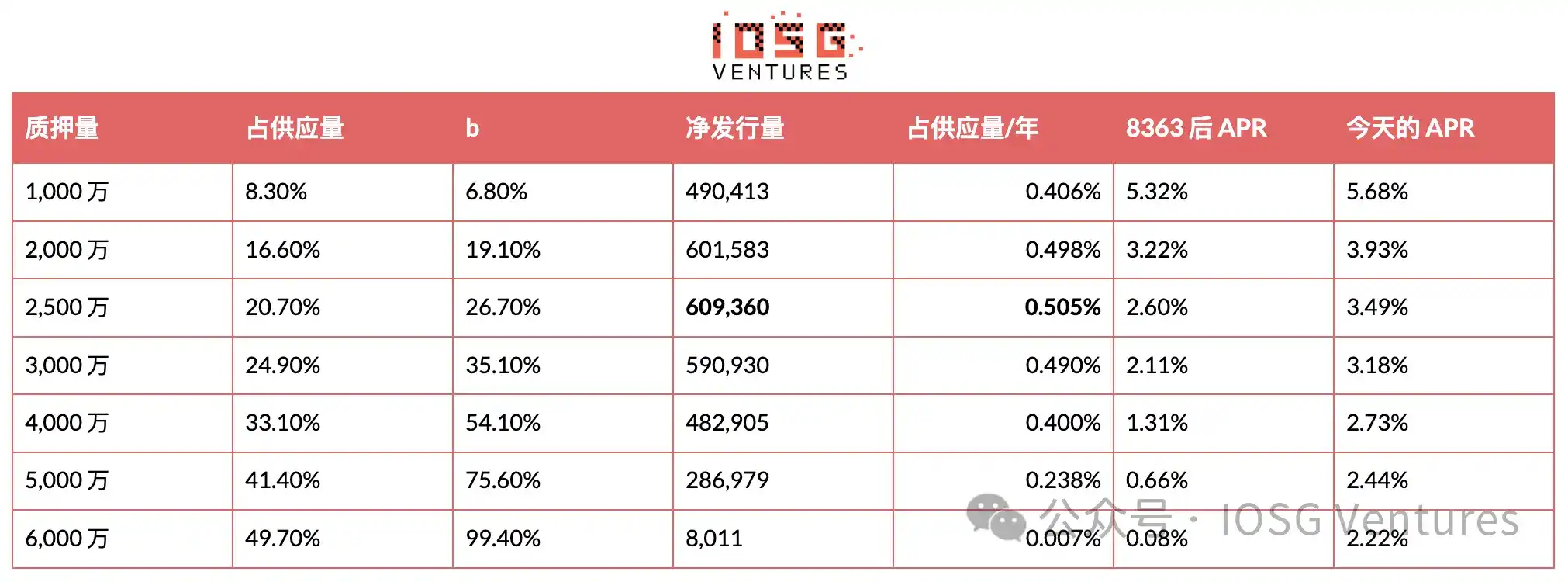
Issuance peaks near 25 million staked, at about 0.505% of supply, then declines—consistent with the EIP's own description.

Equilibrium—The Number That Truly Ends the Debate

Stakers are not passive. If yield falls below their required return, they exit, which both pushes up gross APR and lowers b. Solving for the fixed point:
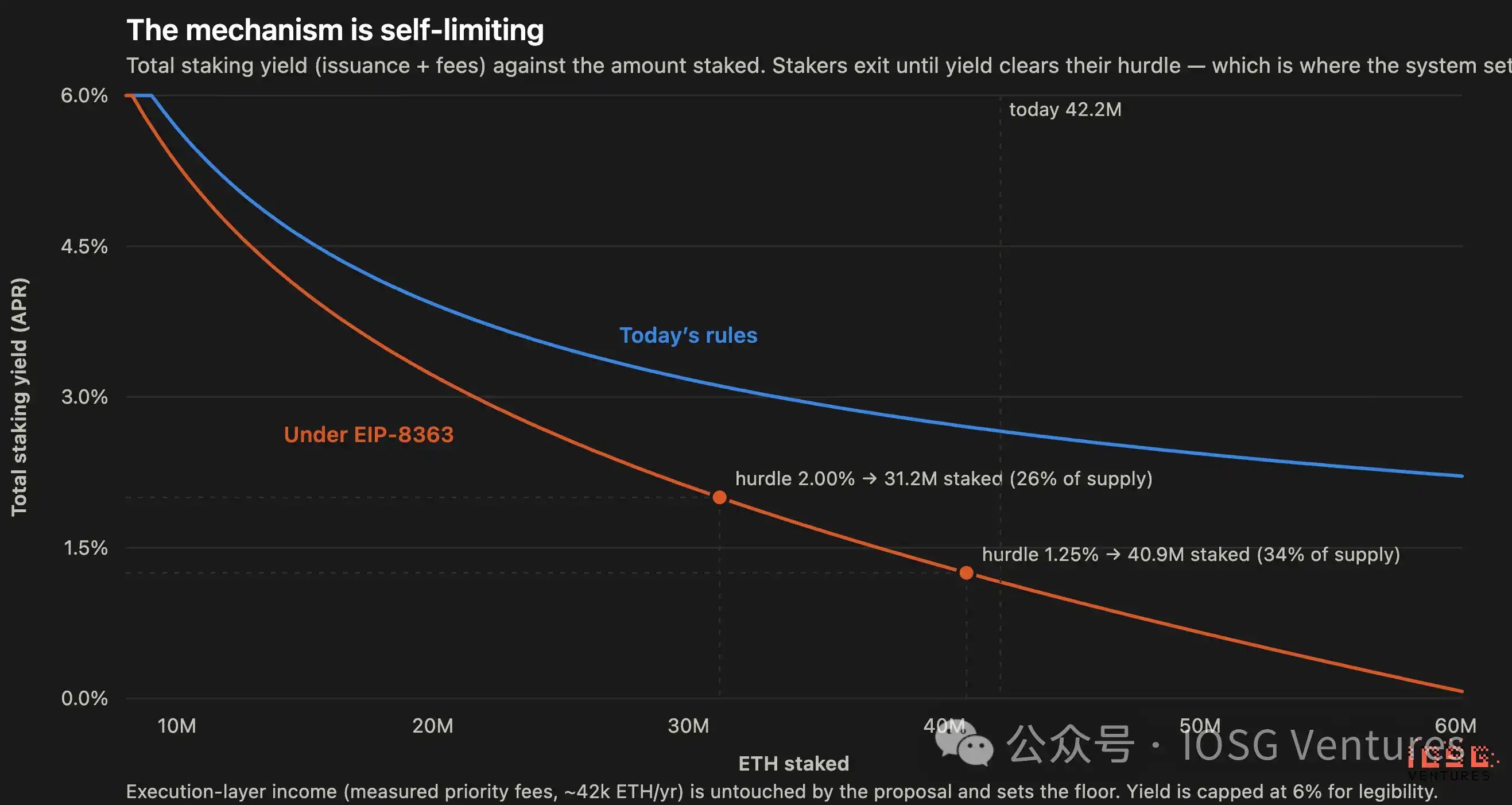
▲ Total staking yield vs. amount of ETH staked under current rules and EIP-8363. The EIP-8363 curve intersects the 2% hurdle at 31.2 million staked and the 1.25% hurdle at 40.9 million.
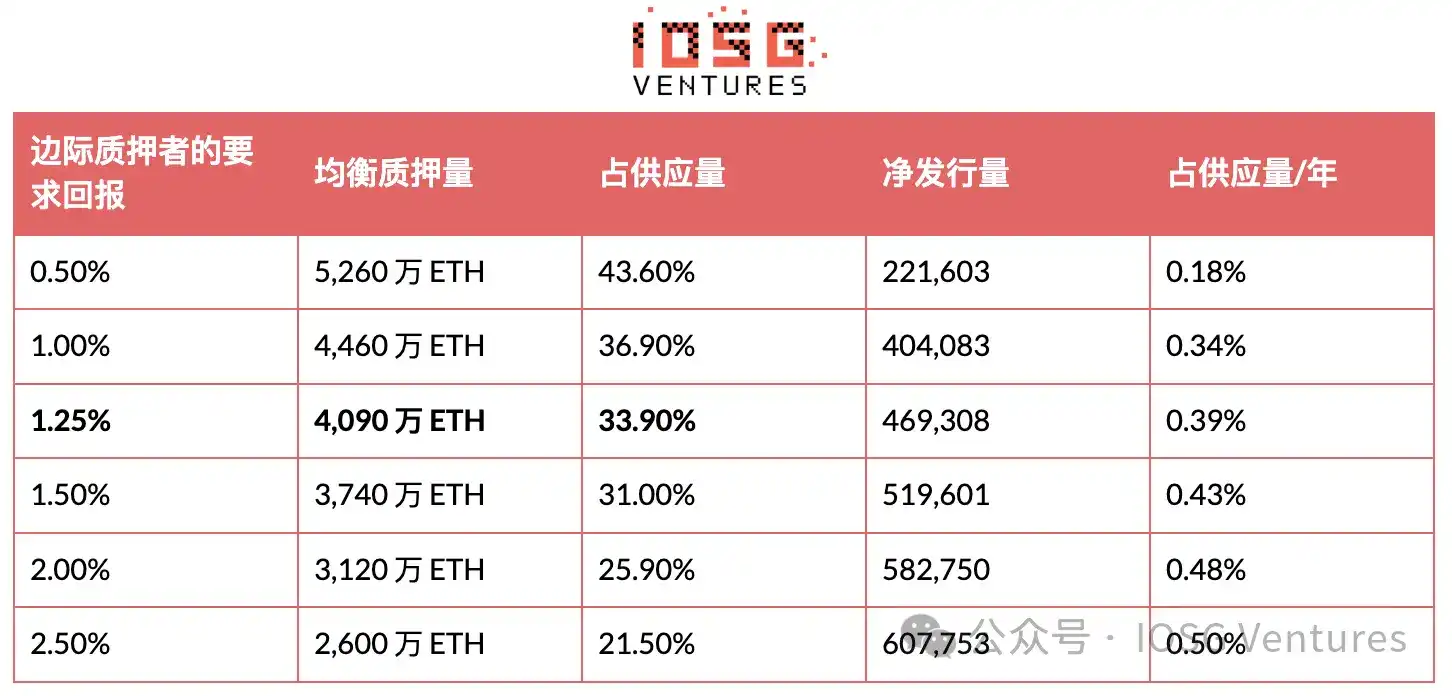
Reading this table against the two loudest claims in the debate:

  • "Issuance will go to zero." Only true if marginal stakers are willing to work for ~0.5% return. At any reasonable required return, ETH still inflates at 0.3–0.5%/year. Supporters exaggerate.
  • "Staking will collapse." At a 2% hurdle, staking stabilizes at 26%: lower than today's 35%, but roughly the level seen throughout 2024. Critics also exaggerate.

This mechanism is self-limiting by design. This is the most interesting property of the design and the least discussed point.

V. Can Staking Yield Explain ETH's Price?

First, address the "question behind the question"

Are staking ratio and yield correlated? Yes: perfectly, and by definition, not observation. This must be clarified first, as it determines what the data can and cannot say.

The reward pool paid by the protocol scales with the square root of the staked balance, so yield per ETH has a closed-form solution:

issuance(S) = 940.9 · √(S/32) ETH/year APR(S) = issuance(S)/S = 166.28 / √S

The more staked, the same pool is divided among more coins. The correlation between staking ratio and issuance yield is −1 by construction. Plotting them together is plotting an identity.

The only free variable is the difference between reported yield and the formula value: fee income. It was about 1.34 percentage points in 2022; today it's 0.10 percentage points.

The correlation itself

Answer: No correlation exists. 43 months, Jan 2023 → Jul 2026. (Data refreshed Aug 24, but this test was not rerun; window ends Jul 2026, price movements after do not affect result.)
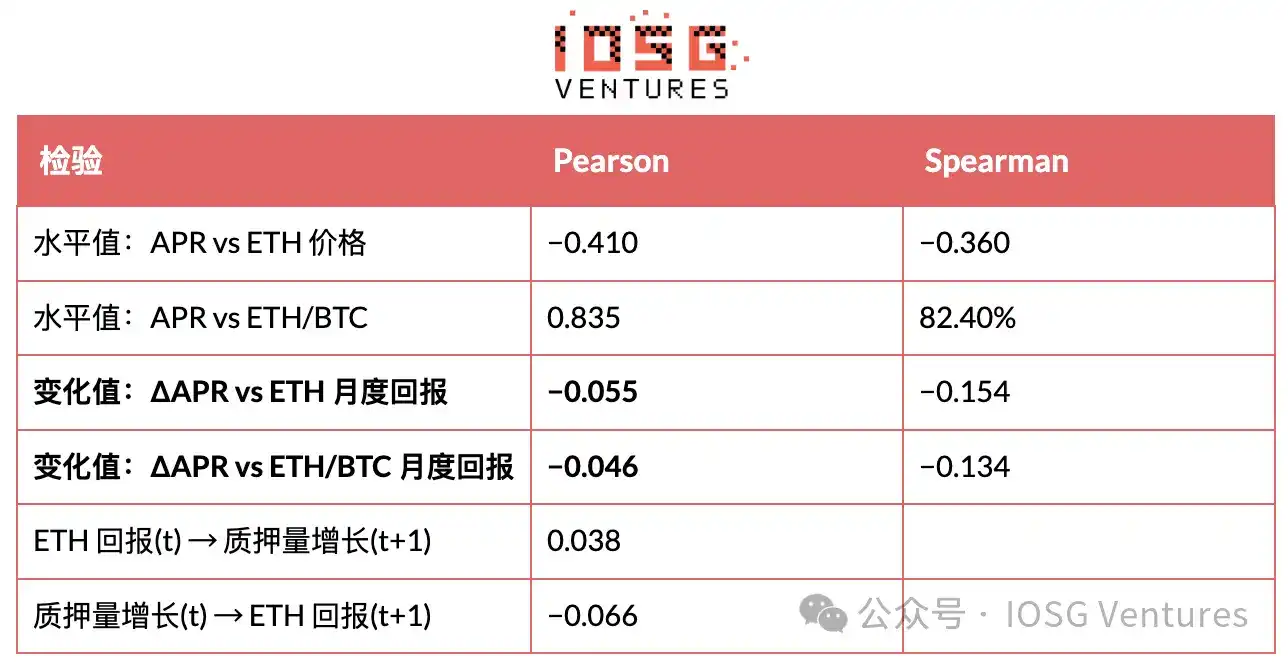
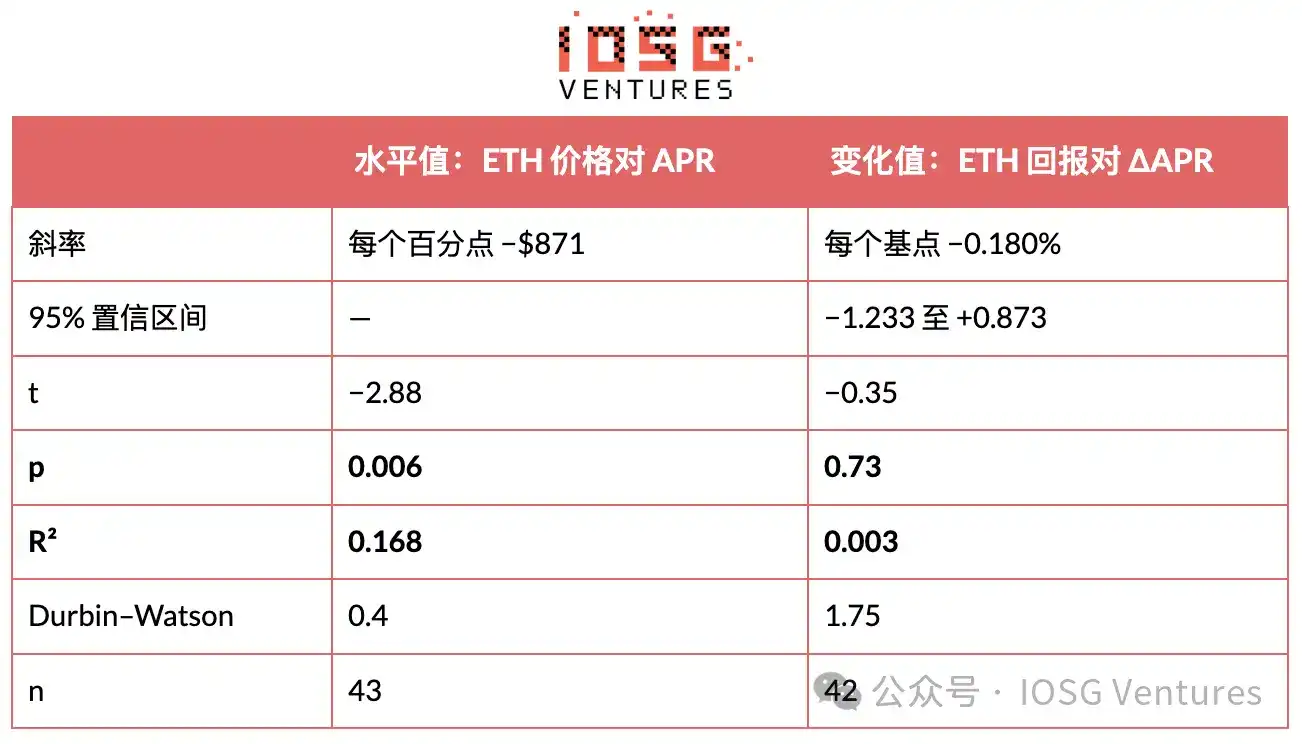
Regression Results
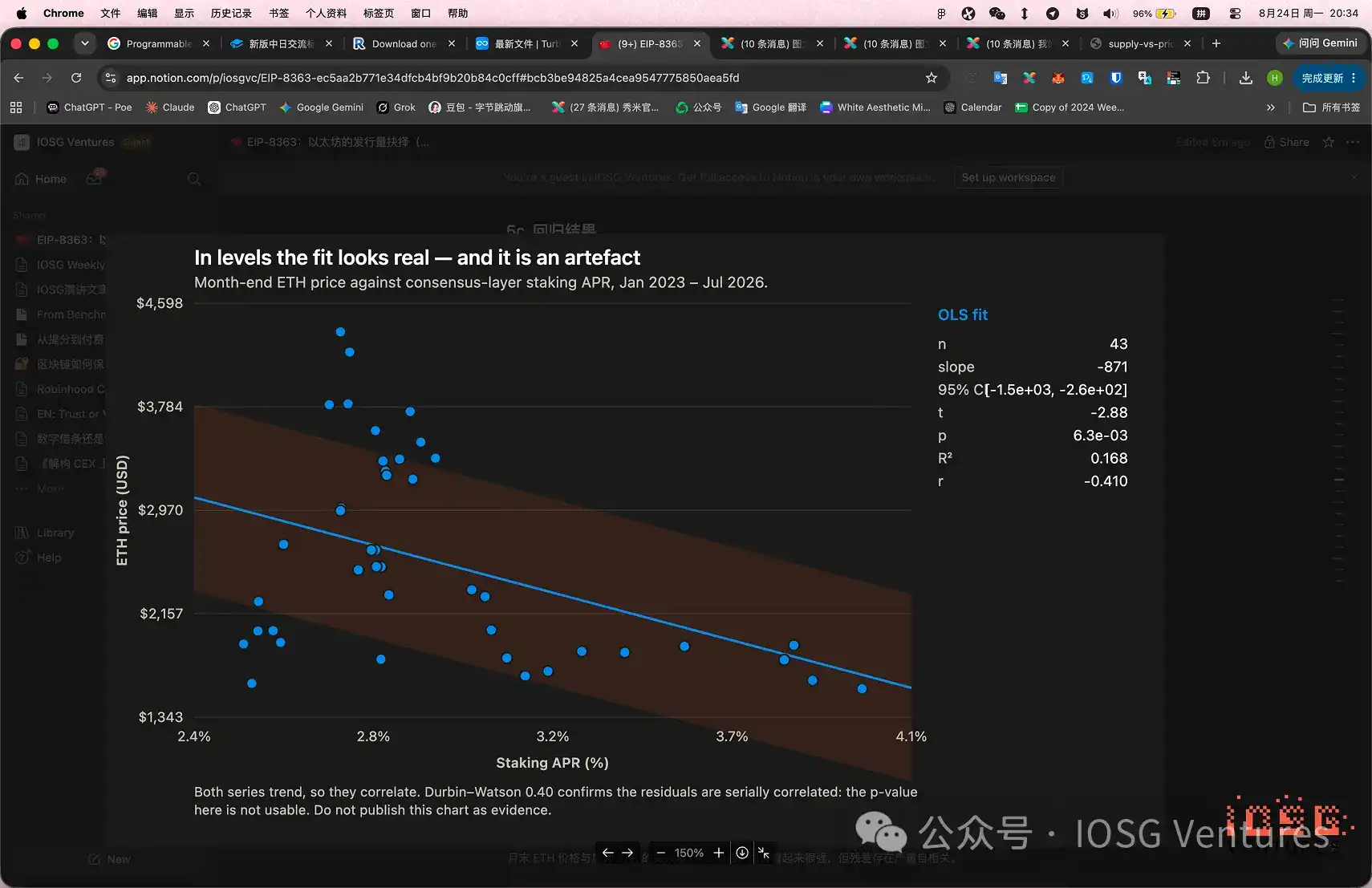
▲ End-of-month ETH price vs. staking APR relationship and OLS fit. The fit looks strong, but residuals show severe autocorrelation.

This level regression is "significant" at p = 0.006—but it's worthless. Durbin–Watson is 0.40, indicating severe serial correlation in residuals, a textbook sign of spurious regression between two trending series. Both variables have trends, so they correlate; standard errors are underestimated, p-values unusable. This chart is kept as a warning, not as evidence.
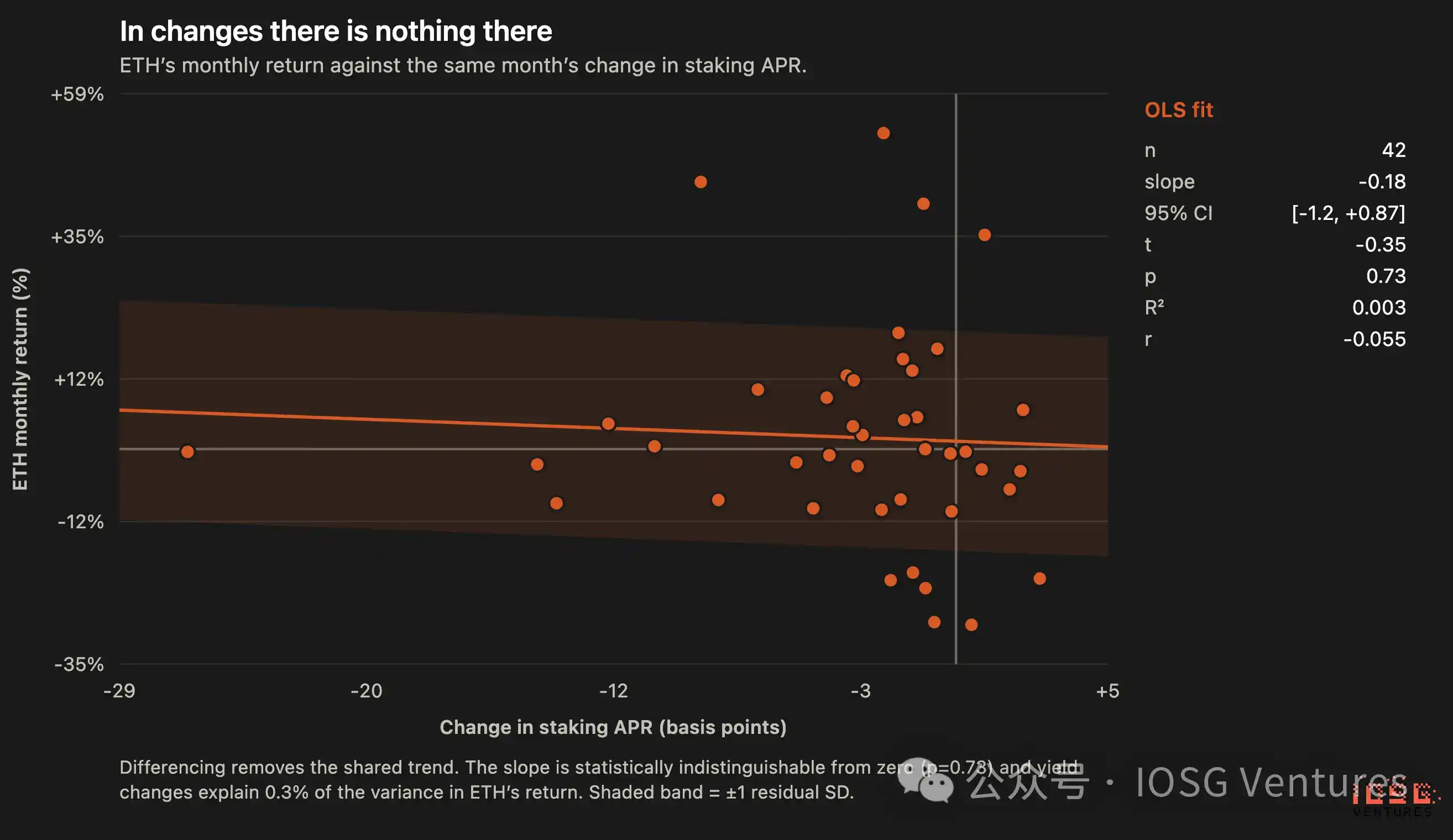
▲ Scatter plot of monthly ETH returns vs. change in monthly staking APR, with near-horizontal OLS fit line and wide residual bands.

After differencing to remove trends, the relationship disappears: p = 0.73, R2 = 0.003. Durbin–Watson is 1.75, indicating a clean setup. The 95% confidence interval comfortably crosses zero in both directions—the data can't even determine the sign of the effect, let alone its magnitude.
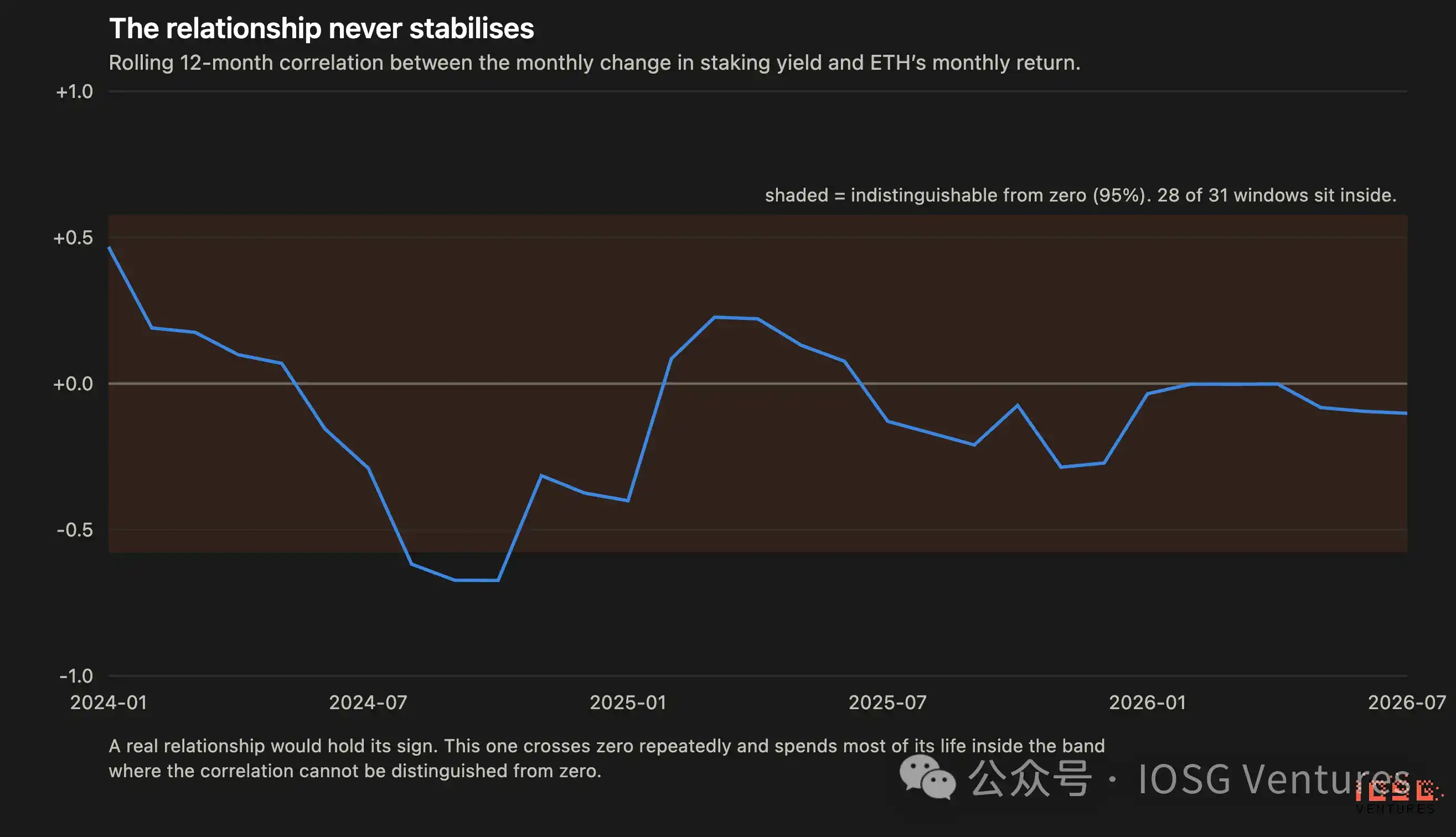
▲ 12-month rolling correlation between changes in staking yield and ETH returns, oscillating around zero and mostly within an interval indistinguishable from zero.

And this isn't a stable relationship hidden in noisy means—the rolling correlation repeatedly crosses zero, spending most of its time in an interval indistinguishable from zero.

From January 2023 to July 2026, ETH's staking yield fell from 3.98% to 2.50%, while ETH/BTC dropped 57%. Over the same window, the monthly correlation between changes in staking yield and ETH returns was −0.05. The yield was always there.

It didn't protect the price, and its compression didn't cause a drop. If a 37% yield reduction brought by the natural existing reward curve had no detectable price effect, the burden of proof lies on anyone claiming "another cut will have an effect."

Caveat: The staking series is reconstructed from on-chain flows, ~5% higher than published data. Direction and shape are reliable, absolute levels not precise.

Supply growth doesn't explain it either

If yield doesn't affect price, what about the actual supply figure this proposal changes? Same test, same window, replacing yield with net supply growth rate.
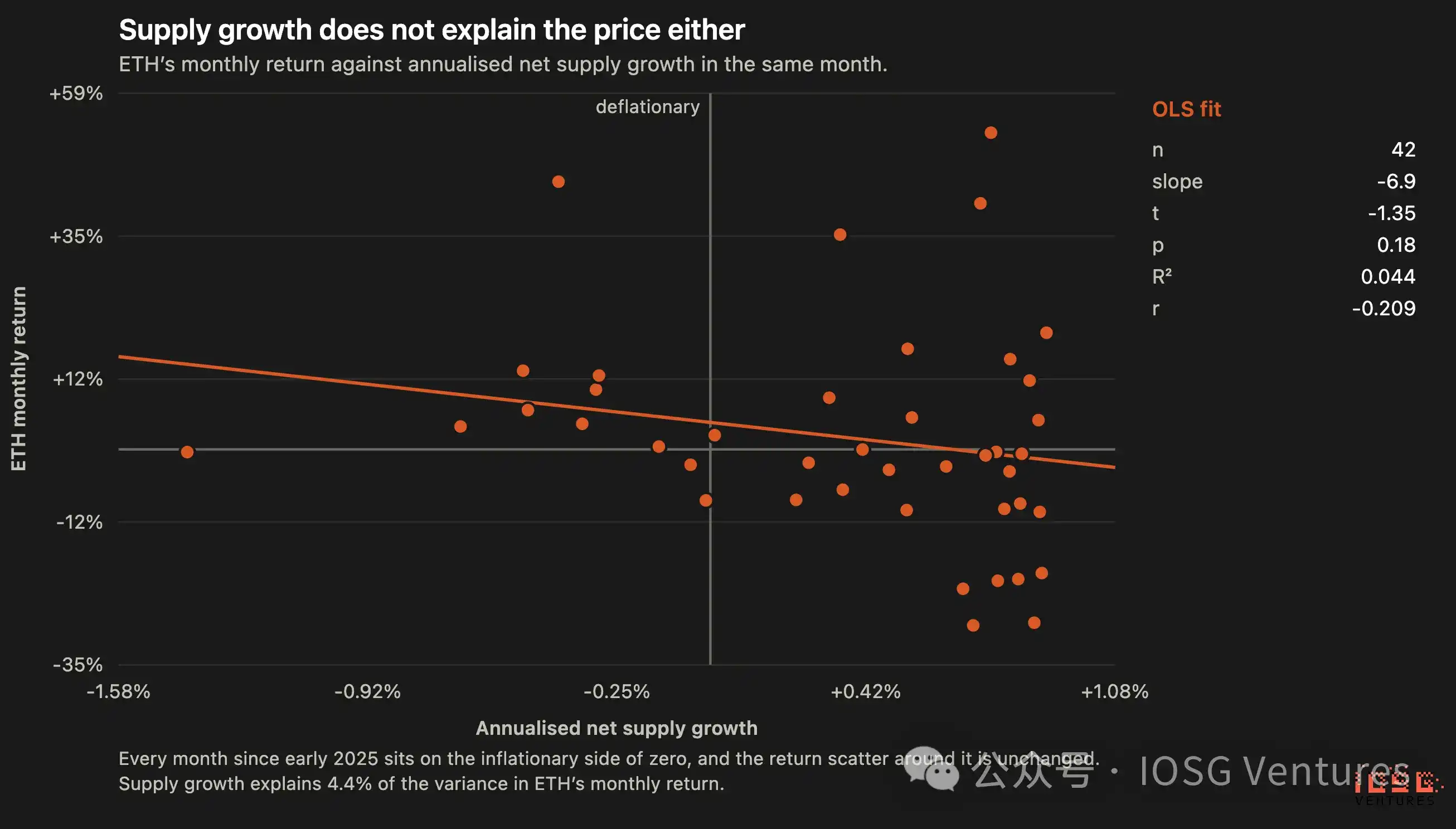
▲ Monthly ETH returns vs. annualized net supply growth rate. The fitted line slopes downward, but scatter is wide, relationship not significant.

Slope −6.9 (each percentage point higher annual supply growth corresponds to 6.9 percentage points lower monthly return), p = 0.18, R2 = 0.044, Durbin–Watson 1.82. 95% interval for slope: −17.1 to +3.4.

Read this result honestly, as it cuts both ways. The relationship is statistically insignificant, interval crosses zero, so it can't serve as evidence that "cutting supply growth boosts price." But it's about fifteen times stronger than the yield relationship (R2 4.4% vs. 0.3%), and the sign matches theoretical prediction. If either variable matters marginally, the data says supply, not yield—and that's precisely the trade EIP-8363 makes.

VI. How Deeply Does the On-Chain Economy Rely on ETH Yield?

Liquid Staking
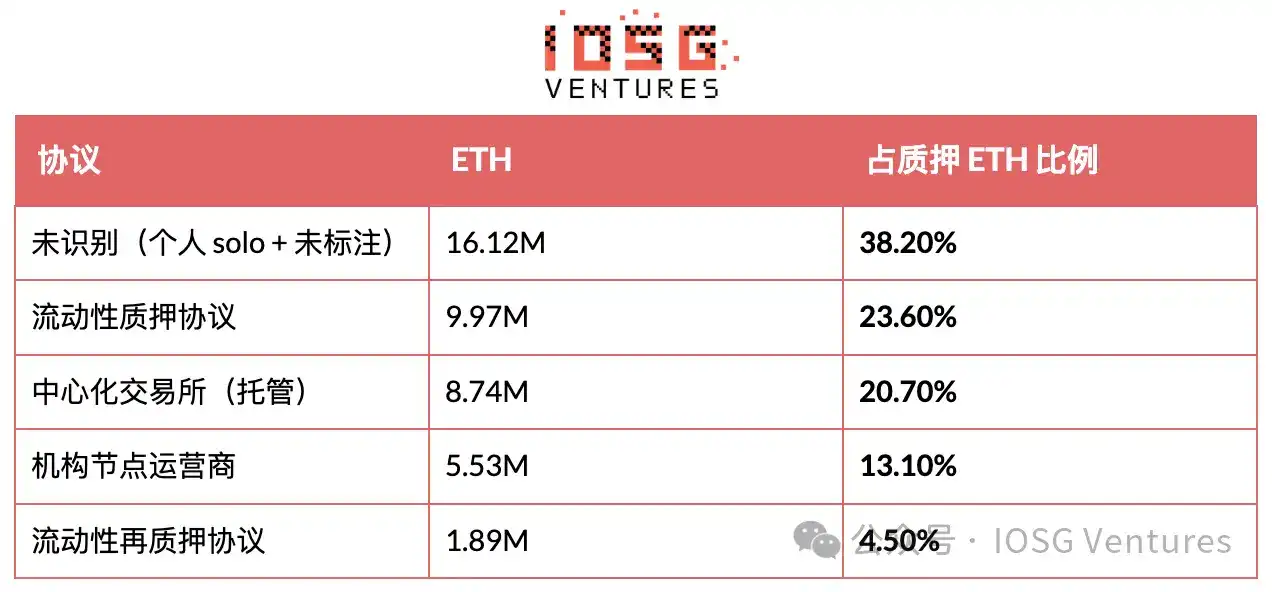
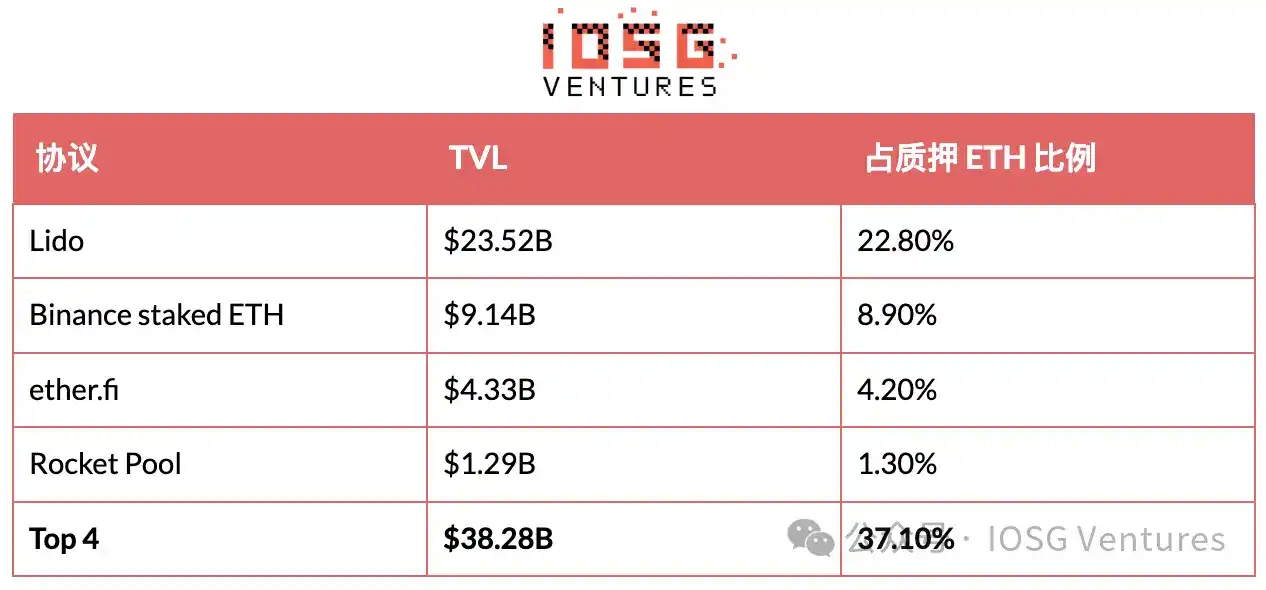
Lido alone accounts for 48% of Ethereum's total $48.5B DeFi TVL. Any claim that "DeFi will be fine" must first withstand this number.

What does the yield cut mean for them respectively?

Liquid staking: Revenue hurt. Lido handles about $602M in staking rewards annually, taking a 10% fee (~$60M/year). Cutting issuance by 58.6% means 633k less ETH in rewards issued per year; at Lido's 22.8% share, that's about $35M less fee income per year: roughly half its income from this segment. Not trivial for Lido, but insignificant at the Ethereum level. And regardless of yield changes, wstETH still beats WETH for any borrower wanting ETH exposure; its role as collateral remains intact.
LSTs as Lending Collateral—The True Dependency
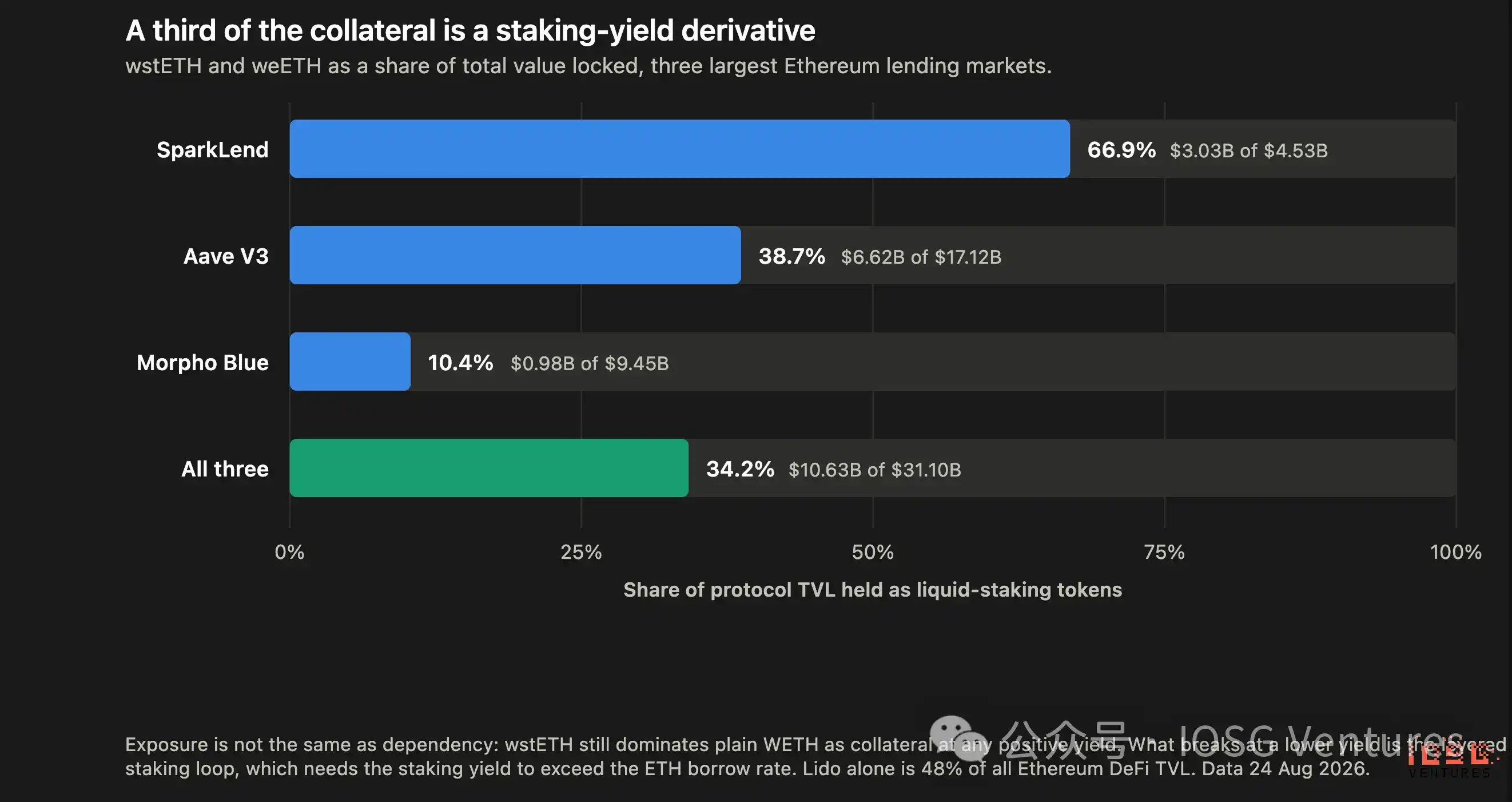
▲ Proportion of liquid staking tokens in TVL: SparkLend 66.9%, Aave V3 38.7%, Morpho Blue 10.4%, combined 34.2%.
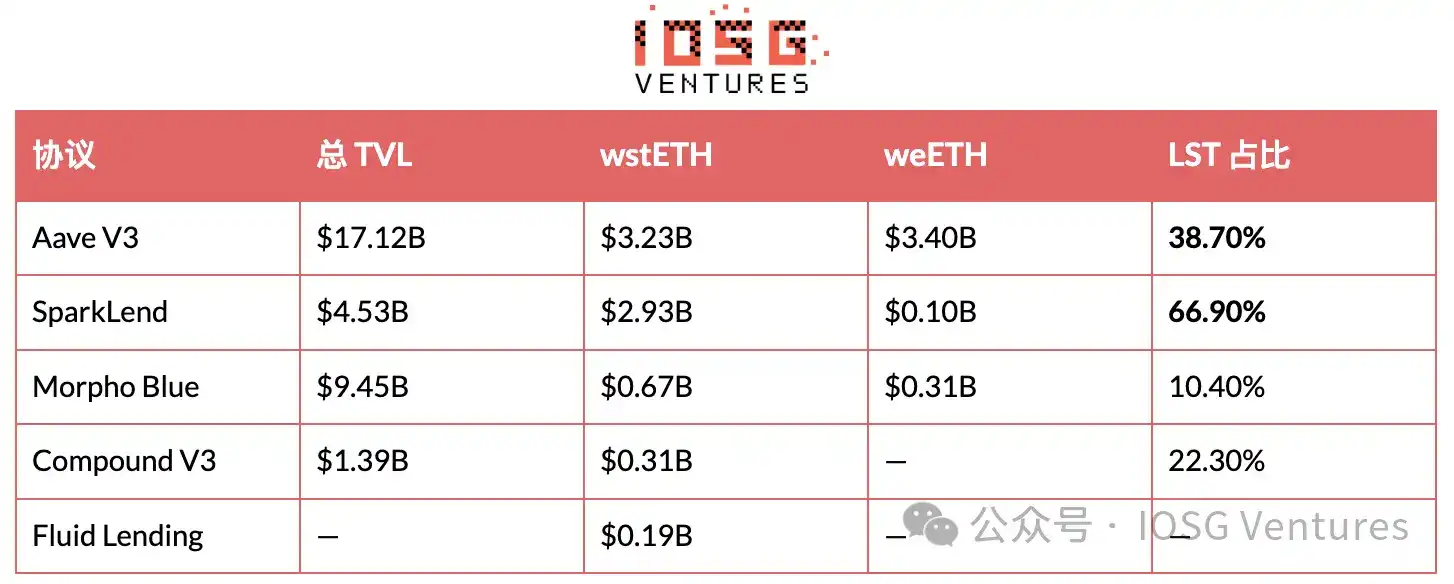
Across Ethereum's three major lending markets, $106.3B out of $311.0B in collateral (34.2%) are staking yield derivatives. SparkLend is a typical single point of failure: two-thirds of that is wstETH.

ETF channel, quantified

The most frequently cited objection: cutting yields will drain institutional buying because staking ETH ETFs market yield to allocators who can't access it directly. This channel is real. But it's also very small today.
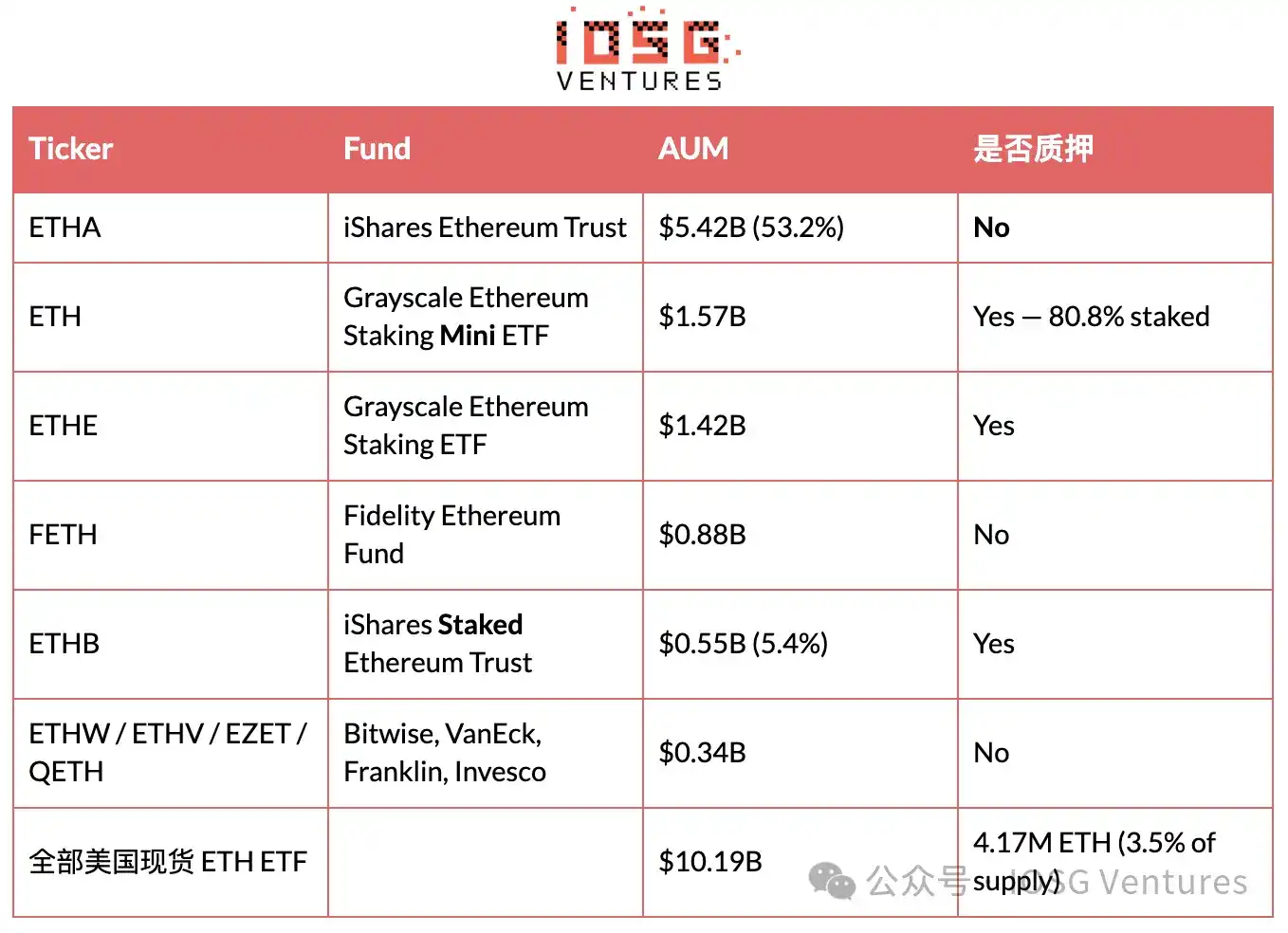
Products that explicitly market yield constitute only 5.4% of ETF assets, 0.53% of all staked ETH, and 0.19% of total ETH supply. BlackRock's non-staking ETH product is ten times its size. Whatever is driving institutional capital into ETH, staking yield is not the main attraction—allocator money overwhelmingly buys non-staking exposure.

Two points prevent this conclusion from being definitive. First, the staking ETF category is still young and growing: Bitwise and Grayscale are now creating staking ETFs for Solana, and Grayscale has one for Hyperliquid, so future risks are larger than current AUM suggests. Second, lower yields will likely slow the conversion of existing non-staking ETF assets into staking share classes, but this is a growth rate impact, not an outflow. Neither changes the order of magnitude: ultimately, this is a $0.5B group arguing over a $1.55B/year redistribution.

VII. Conclusion & Assessment: When "Security Anxiety" Meets "Wealth Redistribution"

First, look beyond the grand security narrative.

We must acknowledge that the core authors of EIP-8363 (like Justin Drake, Jerome) have extremely serious network security motivations. From a game theory perspective, once the network staking ratio crosses the 50% life-or-death line, Ethereum loses its "Social Layer Defense" capability against extreme attacks and faces systemic parasitic risks from LST oligopolies too big to fail. Therefore, the proposal attempts to use economic force—mandatory yield reduction—to lock the staking ratio within a safe zone.

But behind the security philosophy, the reality of on-chain data is even colder.

Since 2022, Ethereum's "Burn" mechanism has existed in name only: burn volume has plummeted 98% and now offsets a mere 2.4% of issuance. Regardless of your stance on the security rationale of EIP-8363, one unavoidable fact is: the old mechanism that "let ETH supply dynamically adjust with market demand" has stalled. In today's L2 economics dominated by Blobs, expecting L1 fee spikes to revive the burn mechanism is wishful thinking. Ethereum's monetary policy is now on "autopilot without a steering wheel," and adjusting issuance is the only lever we can still pull.

Setting aside emotions, the real policy impact lies between the two extreme camps.

Supporters cheer "ending ETH inflation," opponents warn "staking system collapse." Both rhetorics deviate from mathematical reality. At the current staked amount of 42.2 million ETH, the proposal only cuts issuance by ~58.6% and staking APR by ~56%. To reduce issuance completely to zero? That requires staking to surge to 60.25 million ETH (43% higher than now). More importantly, the mechanism has a built-in brake: as yields fall, some stakers exit, and the system eventually stabilizes around "26% staking ratio, 0.48% annual inflation." What it actually delivers is merely halving the dilution rate, not destroying or upending anything.

How important is this saved "half percentage point"? Numbers are more honest than words.

At current prices, cutting 633k ETH of issuance annually is equivalent to preserving $1.55 billion, about 0.53% of the total market cap. Don't dismiss this ratio—it's roughly 5 times the size of Ethereum's entire current L1 fee economy (~0.10%/year). For an asset whose fee revenue has dried up, plugging a 0.5% annual structural bleed isn't a "rounding error"—it's the biggest economic lever currently available.

So what's the cost? Will DeFi really collapse? Risks do exist.

Opponents often cite collateral, like SparkLend being two-thirds wstETH. But we need to distinguish between "exposure" and "dependence": as long as wstETH has positive yield, it will always be superior to plain WETH as collateral—that foundation is solid. What EIP-8363 would truly break is the "leveraged staking loop." When the base staking yield falls below ~1.16%, unable to cover the interest on borrowed ETH, that portion of capital engaged in leveraged arbitrage will unwind. In other words, it's the leverage bubble that would shrink, not the collateral system itself. As for direct protocol losses, Lido would lose about $35 million annually: roughly half its fee income.

The fear that "cutting yield will crash the market" already has an answer from the market.

Over 43 months of data, no significant correlation exists between changes in staking yield and ETH's price performance (p = 0.73, R2 = 0.003). Staking yield fell from 3.98% to 2.50%, yet couldn't stop ETH/BTC from plummeting 57% by July 2026. Yield was neither a price moat, nor did its compression trigger a sell-off. If the previous 37% yield slide made no splash in price, those claiming "another cut will crash Ethereum" need harder evidence.

Why is this debate so fierce?

Because it's a zero-sum game with "highly concentrated losses and extremely diffuse benefits."

Stripping away obscure jargon and grand security rhetoric, EIP-8363 is essentially a crude wealth redistribution: currently, stakers take 100% of newly issued ETH, but they only hold 35% of the network's tokens. This means they offload the inflation cost onto the other 65% of holders. Cutting this $1.55B of issuance is equivalent to forcibly returning $1B in implicit wealth annually from stakers (intermediaries) to all non-staking ETH holders.

This is the real reason everyone is up in arms:

  • The losing side is extremely concentrated: Lido, LST issuers, restaking protocols, leverage players. This is a small, well-funded, highly organized interest group. They know exactly how much real money this proposal takes from their pockets (Lido loses half its profit directly, leverage loops die outright).
  • The benefiting side is extremely diffuse: ordinary holders with 65% of the supply. They suffer 0.5% less dilution annually, but spread across a ~$300B market cap, it's imperceptible—no one will march in the streets for it.

This explains why the current debate is full of "big, empty" slogans. When an interest group can't openly say "this will take $1B in annual profit from us," they raise the shield of "this will destroy DeFi"; and when researchers want to forcibly reclaim the money-printing faucet, the most politically correct weapon is "defending network security." Interpret the volume of opposition and support as the concentration of interest distribution, not the mathematical right or wrong of the proposal itself.

Our Final Assessment

Strategy: Mildly bullish on ETH in ETH terms, explicitly bearish on staking intermediaries/infrastructure. And the proposal is highly likely to be rejected.

  • At the asset level, we are bullish not because of a "scarcity myth," but based on common sense: when the only lever to adjust supply is broken, removing a structural sell pressure of $1.55B annually (paid to those who aren't truly paying for the yield) is a high-value trade. It might not be a game-changer, but the compounding effect is not negligible.
  • For the intermediary system, the logic is airtight. The core valuation logic for Lido, LSTs, LRTs is entirely built on that "staking yield" about to be cut in half. This isn't emotional panic; it's a direct 58.6% shrinkage of the profit sheet.
  • As for the proposal's fate? The probability of passing is very low. In decentralized governance, "concentrated losses vs. diffuse benefits" is the standard script for killing a good proposal. Economically correct, but politically difficult—this is our baseline expectation.

Conditions that would trigger us to change our view (falsification indicators):

  1. On-chain data proves "issuance is reinvested, not sold": If fund flows show newly minted ETH globally stays in auto-compounding LSTs and doesn't flow to exchanges to be sold, then our sell-pressure assumption is invalid.
  2. Staking ETFs bring massive buying waves: The current $0.5B scale is negligible. But if it grows tenfold, the power of marginal demand would outweigh the significance of inflation reduction.
  3. L1 fees miraculously recover: If the burn mechanism regains dominance over fundamentals, the urgency for artificial issuance intervention vanishes.
  4. The negative correlation between supply and price is empirically confirmed: The current relationship is very weak. If data over the next year proves "reducing supply reliably pushes up price," it would become the most unassailable quantitative pillar for being bullish on ETH.


Trend Kriptolar

İlgili Sorular

QAccording to the article, what is the primary reason EIP-8363 is being considered, given the current state of Ethereum's monetary policy?

AThe primary reason is that the previous demand-driven mechanism for regulating ETH supply, the EIP-1559 burn, has become ineffective (burning only 2.4% of new issuance). With L2 scaling moving transaction fees away from L1, the burn mechanism is 'dead.' Therefore, adjusting the issuance rate via proposals like EIP-8363 is the only remaining lever Ethereum has to control its supply.

QWhat are two common misconceptions about EIP-8363's immediate effects that the article corrects?

A1. That issuance would be cut to zero immediately. In reality, at current staking levels (42.2M ETH staked), the proposal cuts issuance by ~58.6%, not 100%. 2. That staking rewards would instantly crash and trigger a DeFi collapse. The proposal includes an 18-month 'soft landing' phase where the base reward factor is temporarily doubled, making the initial impact on net issuance minimal, with the full reduction phased in gradually.

QWhat does the article's data analysis conclude about the relationship between staking yield and the price of ETH?

AThe data analysis finds no statistically significant relationship between changes in staking yield and ETH price returns over the 43-month period studied. The correlation between the two variables is very weak (p = 0.73, R2 = 0.003). The data suggests that past reductions in staking yield have not had a detectable impact on ETH's price performance.

QHow would EIP-8363's mechanism, once fully transitioned, lead to a self-limiting equilibrium for staking?

AThe mechanism is self-limiting because if the staking yield falls below a staker's required return, they will exit, reducing the total staked amount (S). A lower S increases the gross APR (as rewards are spread over fewer ETH) and also reduces the burn ratio (b). This dynamic creates a natural equilibrium point where the net yield stabilizes at a level that marginal stakers are willing to accept, preventing staking from collapsing to zero or skyrocketing to 50%.

QThe article describes the debate over EIP-8363 as a 'zero-sum game.' According to the author, who are the concentrated losers and the dispersed winners in this wealth redistribution?

AThe concentrated losers are staking intermediaries and leveraged players: entities like Lido, LST/LRT issuers, and users engaged in leverage staking loops. They directly lose a significant portion of their profits (e.g., Lido loses ~half its fee income). The dispersed winners are the 65% of ETH holders who do not stake. They benefit from a reduced annual dilution of ~0.5% (worth ~$1.55B), but this gain is spread thinly across a large, unorganized group.

İlgili Okumalar

Currency & Stock Barometer | Strategy Sells MSTR Stocks for $2.007 Billion; BitMine Increases ETH Holdings by 32,447 Last Week, Asset Scale Reaches $14.9 Billion (August 25)

**Crypto & Stock Market Snapshot: Strategy Sells MSTR Stock for $2.007B; BitMine Adds 32,447 ETH (Aug 25)** Following a bullish crypto market triggered by positive US regulatory signals and political commentary, major crypto-related stocks saw significant rebounds. Data reveals a 1,431.6% weekly increase in net Bitcoin purchases by public companies (excluding miners), reaching $81.48M. Two key developments stood out: **Strategy** sold over 18.2 million shares of MSTR, raising $2.007 billion in cash, though its Bitcoin holdings of 840,447 BTC returned to a profit of ~$2.53B. Concurrently, **BitMine**, an Ethereum-focused firm, added 32,447 ETH last week, bringing its total holdings to ~5.847 million ETH (4.8% of supply) and its total assets under management to ~$14.9B. Chairman Tom Lee expressed strong confidence in Ethereum's future as a leading platform for tokenization and AI. Other notable updates include: **Solmate Infrastructure** increasing its SOL holdings; **AIxCrypto Holdings** planning an exit from crypto assets to pivot to robot leasing; and **Eightco Holdings** maintaining a large WLD treasury while repurchasing shares. Meanwhile, in traditional markets, hedge funds recorded their largest weekly net selling of US stocks since April 2025, particularly in tech and industrial sectors, amid a cooling AI investment narrative and concerns over market concentration risks reminiscent of the dot-com bubble.

marsbit17 dk önce

Currency & Stock Barometer | Strategy Sells MSTR Stocks for $2.007 Billion; BitMine Increases ETH Holdings by 32,447 Last Week, Asset Scale Reaches $14.9 Billion (August 25)

marsbit17 dk önce

Goldman Sachs Bullish on Crypto Brokerage Trading Platforms: Can Prediction Markets Fuel a New Cycle?

Goldman Sachs remains cautiously optimistic about the prospects for crypto and brokerage platforms, forecasting potential for a new cycle driven by structural growth in traditional brokerage and prediction markets, rather than a broad crypto trading recovery alone. While retail stock trading cooled seasonally in July and August, Goldman notes that absolute volumes remain high, and adjusted for account growth, per-account activity is still below the 2021 peak, suggesting room for further expansion. Seasonal recovery and record equity issuance are expected to boost traditional brokerage commissions and trading volumes starting in September. Prediction markets show significant potential for autumn growth, with trading volume up approximately 1160% annually since 2024. Driven by sports, crypto, and political contracts, this segment could see a more pronounced rebound as major US sports seasons resume and election activity increases. The crypto market presents a more cautious picture. Trading volume has declined for about 10 months, exceeding historical median downturns. Although total market cap recently rose ~21%, a sustained price level is needed to drive a meaningful recovery in trading activity. Regulatory progress continues through agency actions, but comprehensive legislation is still seen as key for large-scale institutional adoption. To navigate the crypto trading slump, platforms are diversifying revenues and controlling costs. Goldman's top picks are FIGR (leveraging HELOC growth), HOOD (driven by account growth and business diversification including prediction markets), and IBKR (benefiting from global expansion). COIN is viewed as a play on direct crypto market recovery, given its exposure but also its growing subscription and service revenues. The report's thesis hinges on validating an autumn trading rebound and the sustainability of new revenue streams like prediction markets, rather than assuming a crypto bull market has already resumed.

marsbit22 dk önce

Goldman Sachs Bullish on Crypto Brokerage Trading Platforms: Can Prediction Markets Fuel a New Cycle?

marsbit22 dk önce

İşlemler

Spot

Popüler Makaleler

ETH 2.0 Nedir

ETH 2.0: Ethereum için Yeni Bir Dönem Giriş ETH 2.0, Ethereum 2.0 olarak da bilinir, Ethereum blok zincirinde önemli bir yükseltmeyi işaret eder. Bu geçiş yalnızca bir yüz değiştirme değil; ağın ölçeklenebilirliğini, güvenliğini ve sürdürülebilirliğini temelinden geliştirmeyi hedeflemektedir. Enerji yoğun Proof of Work (PoW) konsensüs mekanizmasından daha verimli olan Proof of Stake (PoS) mekanizmasına geçişle birlikte, ETH 2.0 blok zinciri ekosistemine dönüştürücü bir yaklaşım vaat etmektedir. ETH 2.0 Nedir? ETH 2.0, Ethereum'un yeteneklerini ve performansını optimize etmeye odaklanmış özel, birbirine bağlı güncellemelerin bir derlemesidir. Yenileme, mevcut Ethereum mekanizmasının karşılaştığı kritik zorlukları, özellikle işlem hızı ve ağ tıkanıklığı ile ilgili sorunları ele almak üzere tasarlanmıştır. ETH 2.0'ın Amaçları ETH 2.0'ın ana amaçları, üç temel unsuru geliştirmeye odaklanmaktadır: Ölçeklenebilirlik: Ağın saniye başına işleyebileceği işlem sayısını önemli ölçüde artırmayı hedefleyen ETH 2.0, mevcut yaklaşık 15 işlem/saniye sınırlamasını aşmayı ve potansiyel olarak binlerce işleme ulaşmayı planlamaktadır. Güvenlik: Geliştirilmiş güvenlik önlemleri, özellikle siber saldırılara karşı daha iyi direnç sağlama ve Ethereum'un merkeziyetsiz görünümünü koruma açısından ETH 2.0 için hayati öneme sahiptir. Sürdürülebilirlik: Yeni PoS mekanizması, sadece verimliliği artırmakla kalmayıp aynı zamanda enerji tüketimini de önemli ölçüde azaltma hedefiyle tasarlanmış olup, Ethereum'un operasyonel çerçevesini çevresel kaygılarla uyumlu hale getirmektedir. ETH 2.0'ın Yaratıcısı Kimdir? ETH 2.0'ın yaratılması Ethereum Vakfı'na atfedilebilir. Ethereum'un gelişimini destekleme konusunda kritik bir rol oynayan bu kar amacı gütmeyen kuruluş, dikkat çekici kurucu ortağı Vitalik Buterin tarafından yönetilmektedir. Daha ölçeklenebilir ve sürdürülebilir bir Ethereum vizyonu, bu yükseltmenin arkasındaki itici güç olmuştur ve protokolü geliştirmek için kendini adamış küresel bir geliştici ve meraklı topluluğunun katkılarını içermektedir. ETH 2.0'ın Yatırımcıları Kimlerdir? ETH 2.0 yatırımcıları ile ilgili detaylar kamuoyuna açıklanmamış olsa da, Ethereum Vakfı'nın blok zinciri ve teknoloji alanında çeşitli kuruluşlar ve bireyler tarafından desteklendiği bilinmektedir. Bu ortaklar arasında merkeziyetsiz teknolojilerin ve blok zinciri altyapısının geliştirilmesine karşılıklı ilgi duyan girişim sermayesi şirketleri, teknoloji firmaları ve hayır kurumları yer almaktadır. ETH 2.0 Nasıl Çalışır? ETH 2.0, onu öncüsünden ayıran bir dizi önemli özelliği tanıtmasıyla dikkat çekmektedir. Proof of Stake (PoS) PoS konsensüs mekanizmasına geçiş, ETH 2.0'ın en belirgin değişikliklerinden biridir. İşlem doğrulama için enerji yoğun madenciliğe dayanmak yerine, PoS kullanıcıların ağa yatırdıkları ETH miktarına göre işlemleri doğrulayıp yeni bloklar oluşturmalarına olanak tanır. Bu, enerji verimliliğinin artırılmasına yol açarak tüketimi yaklaşık %99,95 oranında azaltmakta ve Ethereum 2.0'ı önemli ölçüde daha çevre dostu bir alternatif haline getirmektedir. Shard Zincirleri Shard zincirleri, ETH 2.0'ın diğer bir kritik yeniliğidir. Bu daha küçük zincirler, ana Ethereum zinciri ile paralel olarak çalışarak birden fazla işlemin aynı anda işlenmesine olanak tanır. Bu yaklaşım, ağın genel kapasitesini artırarak Ethereum'u rahatsız eden ölçeklenebilirlik sorunlarını ele alır. Beacon Zinciri ETH 2.0'ın temelinde, ağı koordine eden ve PoS protokolünü yöneten Beacon Zinciri yer almaktadır. Bu, bir tür organizatör olarak işlev görür: doğrulayıcıları denetler, shard'ların ağa bağlı kalmasını sağlar ve blok zinciri ekosisteminin genel sağlığını izler. ETH 2.0 Zaman Çizelgesi ETH 2.0'ın yolculuğu, bu önemli yükseltmenin evrimini gösteren birkaç önemli dönüm noktası ile tanımlanmıştır: Aralık 2020: Beacon Zinciri'nin başlatılması, PoS'un tanıtımını işaret etmiş ve ETH 2.0’a geçiş için sahneyi hazırlamıştır. Eylül 2022: "The Merge" tamamlanması, Ethereum ağının başarılı bir şekilde PoW'den PoS çerçevesine geçiş yaptığı kritik bir anı temsil etmekte ve Ethereum için yeni bir dönemi müjdelemektedir. 2023: Shard zincirlerinin beklenen dağıtımı, Ethereum ağının ölçeklenebilirliğini daha da artırmayı hedeflemekte ve ETH 2.0'ı merkeziyetsiz uygulamalar ve hizmetler için sağlam bir platform haline getirmeyi pekiştirmektedir. Ana Özellikler ve Faydalar Geliştirilmiş Ölçeklenebilirlik ETH 2.0'ın en önemli avantajlarından biri, geliştirilmiş ölçeklenebilirliğidir. PoS ve shard zincirlerinin kombinasyonu, ağın kapasitesini artırarak, eski sistemle kıyaslandığında çok daha fazla işlem hacmi karşılayabilmesini sağlamaktadır. Enerji Verimliliği PoS'un uygulanması, blok zinciri teknolojisinde enerji verimliliği yönünde büyük bir adım teşkil etmektedir. Enerji tüketimini ciddi şekilde azaltarak, ETH 2.0 yalnızca işletme maliyetlerini düşürmekle kalmaz, aynı zamanda küresel sürdürülebilirlik hedefleriyle daha yakın bir uyum sağlar. Geliştirilmiş Güvenlik ETH 2.0'ın güncellenmiş mekanizmaları, ağ genelinde güvenliğin artırılmasına katkıda bulunmaktadır. PoS'un uygulanması ve shard zincirleri ile Beacon Zinciri aracılığıyla geliştirilen yenilikçi kontrol önlemleri, potansiyel tehditlere karşı daha yüksek bir koruma sağlar. Kullanıcılar için Düşük Maliyetler Ölçeklenebilirlik geliştikçe, işlem maliyetleri üzerindeki etkiler de belirgin hale gelecektir. Artan kapasite ve azalan tıkanıklığın, kullanıcılar için düşük ücretler anlamına gelmesi beklenmekte ve Ethereum'u günlük işlemler için daha erişilebilir hale getirmektedir. Sonuç ETH 2.0, Ethereum blok zinciri ekosisteminde önemli bir evrimi işaret etmektedir. Ölçeklenebilirlik, enerji tüketimi, işlem verimliliği ve genel güvenlik gibi temel sorunları ele alırken, bu güncellemenin önemi abartılamaz. Proof of Stake'e geçiş, shard zincirlerinin tanıtımı ve Beacon Zinciri'nin altyapı çalışmaları, Ethereum'un merkeziyetsiz piyasalarının artan taleplerini karşılayabileceği bir geleceği göstermektedir. Yenilik ve ilerleme ile şekillenen bir sektörde, ETH 2.0, blok zinciri teknolojisinin daha sürdürülebilir ve verimli bir dijital ekonomi için yol açmadaki yeteneklerinin bir kanıtıdır.

354 Toplam GörüntülenmeYayınlanma 2024.04.04Güncellenme 2024.12.03

ETH 2.0 Nedir

ETH 3.0 Nedir

ETH3.0 ve $eth 3.0: Ethereum'un Geleceği Üzerine Derinlemesine Bir İnceleme Giriş Hızla evrilen kripto para ve blok zinciri teknolojisi ortamında, ETH3.0, sıklıkla $eth 3.0 olarak adlandırılmakta, önemli bir ilgi ve spekülasyon konusu haline gelmiştir. Bu terim, netleştirilmesi gereken iki temel kavramı kapsamaktadır: Ethereum 3.0: Bu, mevcut Ethereum blok zincirinin yeteneklerini artırmayı hedefleyen olası bir gelecekteki güncellemeyi temsil eder, özellikle ölçeklenebilirlik ve performansı iyileştirmeye odaklanmaktadır. ETH3.0 Meme Token: Bu ayrı kripto para projesi, Ethereum blok zincirini kullanarak meme merkezli bir ekosistem oluşturmayı amaçlamakta ve kripto para topluluğu içinde etkileşimi artırmaktadır. ETH3.0'ün bu yönlerini anlamak, yalnızca kripto meraklıları için değil, aynı zamanda dijital alandaki daha geniş teknolojik trendleri gözlemleyenler için de hayati öneme sahiptir. ETH3.0 Nedir? Ethereum 3.0 Ethereum 3.0, zaten kurulmuş olan Ethereum ağına önerilen bir güncelleme olarak duyurulmaktadır; bu ağ, kuruluşundan bu yana birçok merkeziyetsiz uygulamanın (dApp'ler) ve akıllı sözleşmelerin belkemiği olmuştur. Tasarlanan iyileştirmeler, esasen ölçeklenebilirlik üzerine yoğunlaşmakta – shardlama ve sıfır bilgi kanıtları (zk-proofs) gibi ileri teknolojileri entegre etmektedir. Bu teknolojik yenilikler, saniyede eşi benzeri görülmemiş sayıda işlem (TPS) gerçekleştirmeyi kolaylaştırmayı amaçlamakta olup, muhtemelen milyonlara ulaşarak mevcut blok zinciri teknolojisinin karşılaştığı en büyük sınırlamalardan birine çözüm getirmektedir. İyileştirme yalnızca teknik değil, aynı zamanda stratejiktir; Ethereum ağını, merkeziyetsiz çözümlere olan artan talep ile belirginleşen bir geleceğe hazırlamak için tasarlanmıştır. ETH3.0 Meme Token Ethereum 3.0'ın aksine, ETH3.0 Meme Token, internet meme kültürünü kripto para dinamikleriyle birleştirerek daha hafif ve eğlenceli bir alanda hareket etmektedir. Bu proje, kullanıcıların Ethereum blok zincirinde meme alım, satım ve ticaret yapmalarına izin vererek, yaratıcılık ve ortak ilgi alanları aracılığıyla topluluk etkileşimini teşvik eden bir platform sunmaktadır. ETH3.0 Meme Token, blok zinciri teknolojisinin dijital kültürle nasıl kesişebileceğini göstererek, hem eğlenceli hem de finansal olarak sürdürülebilir kullanım senaryoları oluşturmayı hedeflemektedir. ETH3.0'un Yaratıcısı Kimdir? Ethereum 3.0 Ethereum 3.0'a yönelik girişim, esas olarak Ethereum topluluğundaki bir geliştirici ve araştırmacı konsorsiyumu tarafından yönlendirilmektedir ve bunlar arasında Justin Drake de bulunmaktadır. Ethereum'un evrimine yönelik içgörüleri ve katkılarıyla tanınan Drake, Ethereum'u “Beam Chain” olarak adlandırılan yeni bir konsensüs katmanına geçirme konusundaki tartışmalarda öne çıkan bir figür olmuştur. Geliştirmeye yönelik bu iş birliği yaklaşımı, Ethereum 3.0'ın tek bir yaratıcının ürünü olmadığını, aksine blok zinciri teknolojisini ilerletmeye odaklanmış kolektif bir dehanın tezahürü olduğunu göstermektedir. ETH3.0 Meme Token ETH3.0 Meme Token'ın yaratıcısına dair detaylar şu anda izlenemez durumdadır. Meme tokenların doğası, genellikle daha merkeziyetsiz ve topluluk odaklı bir yapıya yol açmakta olup, bu da spesifik bir atıf eksikliğini açıklayabilir. Bu durum, yeniliğin genellikle iş birliği yerine bireysel çabalardan ortaya çıktığı kripto topluluğunun genel felsefesiyle uyumludur. ETH3.0 Yatırımcıları Kimlerdir? Ethereum 3.0 Ethereum 3.0'a olan destek, esasen Ethereum Vakfı ve hevesli bir geliştirici ve yatırımcı topluluğu tarafından sağlanmaktadır. Bu temel birliktelik, yıllar süren ağ operasyonlarıyla inşa edilen güven ve itibarından yararlanarak önemli bir meşruiyet sağlamaktadır. Kripto para dünyasının hızla değişen ikliminde, topluluk desteği, gelişim ve benimsemeyi yönlendirmede kritik bir rol oynamakta ve Ethereum 3.0'ı gelecekteki blok zinciri ilerlemeleri için ciddi bir rakip haline getirmektedir. ETH3.0 Meme Token Mevcut kaynaklar, ETH3.0 Meme Token'ı destekleyen yatırım temelleri veya kuruluşları hakkında net bilgiler sağlamasa da, bu durum meme tokenlar için tipik olan finansman modelini göstermektedir; bu model genellikle tabandan destek ve topluluk katılımına dayanır. Bu tür projelerdeki yatırımcılar genellikle toplum odaklı yenilik potansiyeli ve kripto topluluğunda bulunan iş birliği ruhuyla motive olmuş bireylerden oluşmaktadır. ETH3.0 Nasıl Çalışır? Ethereum 3.0 Ethereum 3.0'ın ayırt edici özellikleri, önerilen shardlama ve zk-proof teknolojisinin uygulanmasında yatmaktadır. Shardlama, blok zincirini daha küçük, yönetilebilir parçalara veya “parçalara” ayırma yöntemidir; bu parçalar işlemleri ardışık değil, eşzamanlı olarak işleyebilir. Bu işlem yükünün merkeziyetsizliği, tıkanıklığı önlemeye yardımcı olur ve ağın yoğun yük altında bile yanıt verebilir olmasını sağlar. Sıfır bilgi kanıtı (zk-proof) teknolojisi, işleme katılan temel verileri ifşa etmeden işlem doğrulaması sağlamasıyla başka bir sofistike katman ekler. Bu yön, sadece gizliliği artırmakla kalmaz, aynı zamanda ağın genel verimliliğini de artırır. Bu güncellemeye, ağın yeteneklerini ve faydasını daha da artırarak sıfır bilgi Ethereum Sanal Makinesi (zkEVM) entegrasyonunun da eklenmesi gündeme gelmektedir. ETH3.0 Meme Token ETH3.0 Meme Token, meme kültürünün popülaritesinden yararlanarak kendini farklılaştırmaktadır. Kullanıcıların sadece eğlence için değil, aynı zamanda potansiyel ekonomik kazançlar için meme ticareti yapmalarına olanak tanıyacak bir pazar yeri oluşturur. Stake etme, likidite sağlama ve yönetim mekanizmaları gibi özelliklerin entegrasyonu sayesinde, proje topluluk etkileşimini ve katılımını teşvik eden bir ortam oluşturur. Eğlence ve ekonomik fırsatların eşsiz bir karışımını sunarak, ETH3.0 Meme Token, kripto tutkunlarından gündelik meme meraklılarına kadar çeşitli bir kitleyi çekmeyi hedeflemektedir. ETH3.0 Zaman Çizelgesi Ethereum 3.0 11 Kasım 2024: Justin Drake, ölçeklenebilirlik iyileştirmeleri etrafında şekillenen yaklaşan ETH 3.0 güncellemesine işaret ediyor. Bu duyuru, Ethereum'un gelecekteki mimarisi hakkında resmi tartışmaların başlangıcını simgeliyor. 12 Kasım 2024: Ethereum 3.0'a yönelik beklenen önerinin, Bangkok'taki Devcon'da açıklanması planlanıyor ve bu, daha geniş topluluk geri bildirimi ve gelişim için olası sonraki adımların zeminini hazırlıyor. ETH3.0 Meme Token 21 Mart 2024: ETH3.0 Meme Token, CoinMarketCap'ta resmi olarak listeleniyor, bu da kamusal kripto alanına adım atarak meme merkezli ekosisteminin görünürlüğünü artırıyor. Ana Noktalar Sonuç olarak, Ethereum 3.0, gelişmiş teknolojiler aracılığıyla ölçeklenebilirlik ve performansla ilgili sınırlamaların üstesinden gelmeye odaklanan Ethereum ağındaki önemli bir evrimi temsil etmektedir. Önerilen güncellemeleri, gelecekteki talepler ve kullanılabilirlik için proaktif bir yaklaşımı yansıtmaktadır. Öte yandan, ETH3.0 Meme Token, kripto para alanındaki topluluk odaklı kültürün özünü kapsamakta, meme kültürünü kullanarak kullanıcı yaratıcılığını ve katılımını teşvik eden etkileşimli platformlar oluşturmayı hedeflemektedir. ETH3.0 ve $eth 3.0'un farklı amaçlarının ve işlevlerinin anlaşılması, kripto alanındaki gelişmeleri takip eden herkes için hayati öneme sahiptir. Her iki girişim de benzersiz yollar çizerek, blok zinciri yeniliğinin dinamik ve çok yönlü doğasını birlikte vurgulamaktadır.

338 Toplam GörüntülenmeYayınlanma 2024.04.04Güncellenme 2024.12.03

ETH 3.0 Nedir

ETH Nasıl Satın Alınır

HTX.com’a hoş geldiniz! Ethereum (ETH) satın alma işlemlerini basit ve kullanışlı bir hâle getirdik. Adım adım açıkladığımız rehberimizi takip ederek kripto yolculuğunuza başlayın. 1. Adım: HTX Hesabınızı OluşturunHTX'te ücretsiz bir hesap açmak için e-posta adresinizi veya telefon numaranızı kullanın. Sorunsuzca kaydolun ve tüm özelliklerin kilidini açın. Hesabımı Aç2. Adım: Kripto Satın Al Bölümüne Gidin ve Ödeme Yönteminizi SeçinKredi/Banka Kartı: Visa veya Mastercard'ınızı kullanarak anında Ethereum (ETH) satın alın.Bakiye: Sorunsuz bir şekilde işlem yapmak için HTX hesap bakiyenizdeki fonları kullanın.Üçüncü Taraflar: Kullanımı kolaylaştırmak için Google Pay ve Apple Pay gibi popüler ödeme yöntemlerini ekledik.P2P: HTX'teki diğer kullanıcılarla doğrudan işlem yapın.Borsa Dışı (OTC): Yatırımcılar için kişiye özel hizmetler ve rekabetçi döviz kurları sunuyoruz.3. Adım: Ethereum (ETH) Varlıklarınızı SaklayınEthereum (ETH) satın aldıktan sonra HTX hesabınızda saklayın. Alternatif olarak, blok zinciri transferi yoluyla başka bir yere gönderebilir veya diğer kripto para birimlerini takas etmek için kullanabilirsiniz.4. Adım: Ethereum (ETH) Varlıklarınızla İşlem YapınHTX'in spot piyasasında Ethereum (ETH) ile kolayca işlemler yapın.Hesabınıza erişin, işlem çiftinizi seçin, işlemlerinizi gerçekleştirin ve gerçek zamanlı olarak izleyin. Hem yeni başlayanlar hem de deneyimli yatırımcılar için kullanıcı dostu bir deneyim sunuyoruz.

4.2k Toplam GörüntülenmeYayınlanma 2024.12.10Güncellenme 2026.06.02

ETH Nasıl Satın Alınır

Tartışmalar

HTX Topluluğuna hoş geldiniz. Burada, en son platform gelişmeleri hakkında bilgi sahibi olabilir ve profesyonel piyasa görüşlerine erişebilirsiniz. Kullanıcıların ETH (ETH) fiyatı hakkındaki görüşleri aşağıda sunulmaktadır.

活动图片