
Investors Are Now Hunting for AI Projects on Bilibili and Xiaohongshu

marsbit2026-06-12 tarihinde yayınlandı2026-06-12 tarihinde güncellendi

Özet

Investors Turn to Bilibili and Xiaohongshu to Source AI Projects The AI hardware boom is in full swing in 2025, with a surge in smart wearables like AI glasses, rings, toys, and companion robots. This frenzy has investors scrambling, not just sifting through business plans, but actively hunting for promising "under-the-radar" projects on youth and tech-enthusiast content platforms like Bilibili and Xiaohongshu. The logic is straightforward: for consumer-facing AI hardware, genuine user demand and potential pitfalls are often revealed earlier in public discussions, comments, and critiques on these communities than in formal pitches. As one industry insider notes, these products must ultimately be tested and understood by real people. This shift highlights a crucial challenge in the sector: user education. The success of AI hardware depends on moving beyond mere efficiency gains to fulfilling higher-order needs like "unleashing personal creativity." Products must convince users they are natural, unobtrusive additions to daily life. Early hype, as seen with devices like the Rabbit R1, often fades if the product fails to clearly solve real-world problems, leading to high return rates and market rejection. The market is now entering a shakeout phase. 2026 is seen as a year of commercial validation. Some projects have already stalled or been canceled due to market resistance, lack of differentiation, or financial woes. However, the long-term opportunity remains vast, with forec...

Author: Investment Community

"In the AI era, all hardware is worth remaking from scratch."

This statement might have sounded somewhat radical in 2024, but in 2025, its credibility has surged significantly—as we are witnessing, the wave of AI hardware entrepreneurship is rising, with financings following one after another. Across the ocean, the smart ring Oura Health has seen its latest valuation soar to a staggering 70 billion yuan.

This frenzy is sweeping up FOMO-stricken investors. This time, aside from sifting through thousands of pitch deck emails, they have strikingly turned their deal-sourcing gaze towards content communities densely populated by tech geeks and young people.

The underlying logic is rather simple: compared to spec sheets and roadshows, the real demand for a consumer-grade AI smart hardware product is often first exposed by whether it can be understood, discussed, and questioned in the public sphere.

Ultimately, all tech products aimed at the masses must go through the test of the crowd.

AI Hardware Explosion, Investors Scramble for Under-the-Radar Projects

We are experiencing a banner year for AI hardware.

Since 2025, extending from the wearable device track, more segmented smart hardware products such as AI glasses, AI toys, AI recording cards, AI rings, AI earphones, companion robots, and Agent Boxes have collectively seen an explosion.

Amid the fervor, certain details reveal the excitement in the investment circle: in the latter half of 2025, we frequently saw several top-tier institutions posting job openings to recruit AI/smart hardware investors, with the job descriptions almost invariably requiring the candidates to be based in Shenzhen, the hardware capital.

Good projects almost require 'repeated visits' and intense competition, especially those still under the radar with valuations not yet sky-high. Investors have even started approaching potential founders who haven't yet left their jobs. For instance, cafes near DJI are packed with VCs and FAs trying to 'persuade people to start a business.'
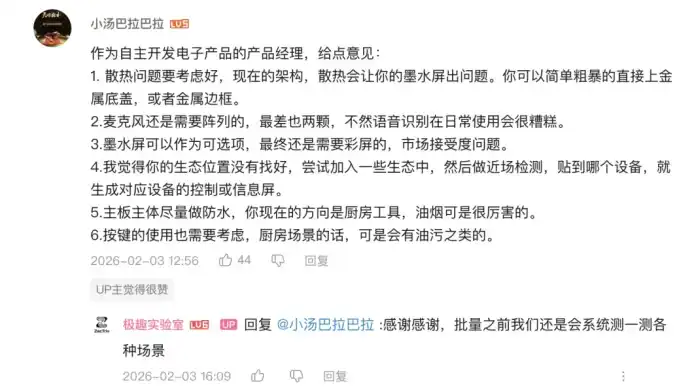
(Comment section of an AI sticky note product pre-sale video)

"After this content was posted, many technical discussion threads appeared in the bullet comments and comment section, and more users began sharing their similar needs: some mentioned frequently attending cross-border exhibitions, others talked about communication barriers when collaborating remotely with overseas teams, and some shared experiences where translation tools were inconvenient when accompanying foreign relatives for medical treatment or handling foreign affairs."

"These feedbacks not only helped us expand the direction for creator content but also directly influenced our thinking about the product line," Wu Zhen said.
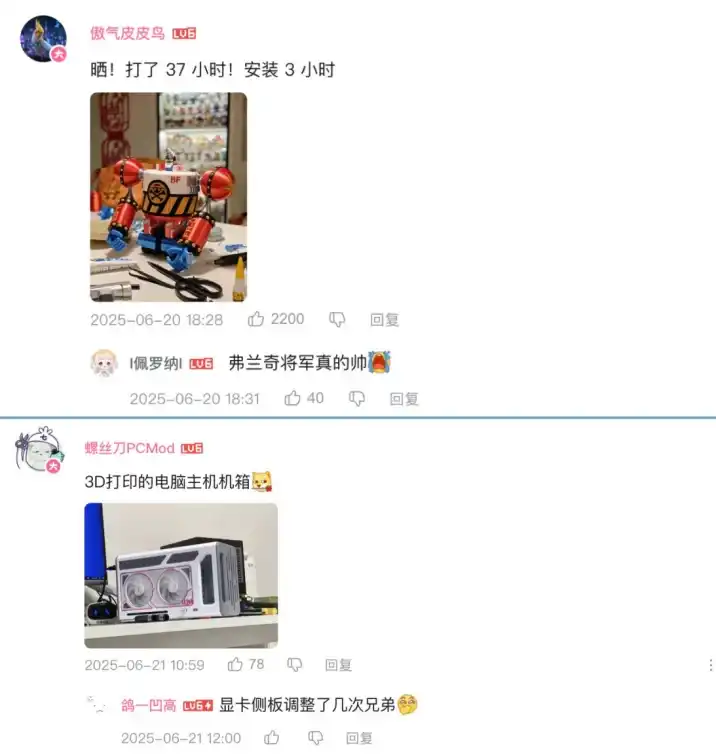
(Comment section of UP主影视飓风's video)

Enthusiasts Gather

Remember January 2024, at CES.

A little orange square box called Rabbit R1, touted as 'the world's first AI hardware device,' stirred a frenzy in the tech world. The market hailed it as the iPhone of the AI era, selling 100,000 units upon launch.

But what followed was not success. On the contrary, skepticism soon arose with comments like 'actually using it is not as good as a phone.' At the time, the high-flying Rabbit R1 failed to adequately explain to users: what exactly can Rabbit R1 do now and in the future? What real user problems does this innovation actually solve?

Even today, user education remains the most critical challenge for AI smart hardware—when AI enters consumer electronics, the product consumption logic is no longer limited to 'improving life efficiency' but also includes higher-dimensional needs like 'unleashing personal creativity' and 'liberating the mind.' In this context, whoever can make users understand, discuss, and pay in real-life scenarios truly crosses the threshold from a tech product to a consumer good.

But this is not easy. Regarding user education for AI glasses, INMO's CMO Wu Zhen told us frankly: This is not simply about conveying product information; it also requires overcoming a psychological barrier. Users must first complete a 'virtual try-on' in their minds, confirming that integrating this device into daily life feels natural and not awkward, before they can proceed to the next step.

In Wu Zhen's view, the process of psychologically preparing users for AI smart hardware might be longer than for most consumer electronics categories. "The day users naturally put on AI glasses to go out without reminding themselves 'I need to use AI glasses today,' this behavioral change might be more convincing than many data points."

Shakeout Begins, Battle for Attention Heats Up

While the frenzy peaks, a shakeout is underway.

There is now market consensus that 2026 will be the year of commercial validation for AI hardware. This also means that trend-chasers and狂热资本 will face rationality and冷静.

A winnowing process is unfolding: At the end of 2025, the AI wearable device Friend AI Necklace stalled after encountering severe market resistance; after its peak appearance in 2024, Rabbit R1, unable to keep up with product expectations amid negative feedback, saw abnormally high return rates, severely damaging its reputation, and ultimately陷入欠薪与现金流枯竭的困境 (fell into困境 of salary arrears and cash flow depletion).

Meanwhile, savvy players are also开始审慎调整和优化决策 (beginning to prudently adjust and optimize decisions). In February 2026, market rumors emerged that the Doubao AI glasses project was suspended; at least within the visible cycle, this product line is no longer considered a direction to pursue. Earlier, in January, smartphone manufacturer vivo halted its AI glasses project, citing the difficulty of achieving differentiation at present.

Such developments are a reflection of industry differentiation.

Nevertheless, it is undeniable that in this trillion-dollar-value赛道 (track), entrepreneurs still possess enormous确定性机会 (deterministic opportunities). According to AICC predictions, by 2030, the global AI-related hardware market will easily surpass several trillion dollars. In China, the industry expects the market size for consumer-grade AI hardware (excluding phones and cars) to突破 (break through) 1.27 trillion yuan in 2026 and reach 2.56 trillion yuan by 2030.

Currently, opportunities for exit and entry coexist. OpenAI just announced it will launch its first AI hardware device in the second half of the year, and Meta plans to double the annual production capacity of its AI smart glasses to 20 million units by the end of 2026. The latest scene domestically: a batch of AI smart terminals from京东 (JD.com), including AI desk lamps, AI cooking machines, AI mattresses, and AI wheelchairs, are酝酿上新售卖 (being酝酿 for launch and sale).

People remain convinced that the battle for入口之争 (portals) behind AI smart hardware will not stop. The AI era is still an era of用户主权 (user sovereignty).

The热浪 (heat wave) will push everyone forward. But when attention, product power, and user perception begin to compete on the same table, the final battle is just beginning.


Trend Kriptolar

İlgili Sorular

QWhat new strategy are venture capitalists adopting to find promising AI hardware projects?

AVenture capitalists are increasingly looking for promising AI hardware projects on youth-focused content communities like Bilibili and Xiaohongshu. They analyze user discussions, comments, and product reviews to gauge genuine market demand and real-world product understanding before these ventures become widely known or receive high valuations.

QWhy is user education considered crucial for AI consumer hardware adoption?

AUser education is crucial because the value proposition of AI hardware often involves higher-level needs like 'unleashing personal creativity' or 'liberating the brain,' not just efficiency. Consumers need to understand and visualize how these devices fit into their daily lives without being intrusive. This mental acceptance and natural integration into routines are considered more important than just product specifications for driving adoption.

QWhat are some examples of AI consumer hardware that faced significant market challenges?

AExamples of AI consumer hardware that faced significant market challenges include the Rabbit R1, which suffered from high return rates and negative feedback regarding its practical utility, leading to cash flow problems. The Friend AI Necklace also encountered severe market resistance and stalled development.

QWhat is the predicted market size for consumer AI hardware in China by 2030?

AIndustry predictions estimate that the market size for consumer AI hardware (excluding smartphones and cars) in China will reach 2.56 trillion yuan by 2030. It is projected to first exceed 1.27 trillion yuan by 2026.

QWhy are some companies adjusting their strategies in the AI hardware market in 2026?

ACompanies are adjusting their strategies because 2026 is widely seen as the 'commercial validation year' for AI hardware. The market is entering a phase of rationalization and consolidation. Projects that fail to demonstrate clear product differentiation, genuine user value, or sustainable business models are being paused or canceled, as seen with Doubao's AI glasses and vivo's AI glasses project, indicating an industry-wide shakeout.

İlgili Okumalar

The Changing Landscape: What Are Crypto VCs Experiencing?

Title: The Shifting Landscape of Crypto Venture Capital The era of dedicated crypto venture capital funds is undergoing a significant transformation. Once essential for navigating the sector's complexity and high risk, these specialized funds are now facing an identity crisis as the market matures. This shift mirrors historical patterns in other specialized investment classes like cleantech and SPACs, where initial information advantages dissipate as technologies become mainstream and integrated into existing industry frameworks. The article argues that crypto is reaching a critical inflection point, transitioning from a "building phase" to an "integration phase." Major players like Stripe, BlackRock, and Visa now engage with crypto not for its novel mechanics but as a foundational financial infrastructure. Their needs—regulatory compliance, banking partnerships, distribution channels—align with traditional fintech, a domain easily understood by large, generalist funds like Sequoia and Founders Fund. This evolution creates a "barbell effect" within the VC landscape. On one end are massive, diversified platforms that can incorporate crypto as one vertical among many. On the other are small, nimble funds focused on niche, experimental projects. The middle ground—medium-sized dedicated crypto funds—is being squeezed out. Their typical fund size makes it impossible to generate sufficient returns solely from early-stage crypto bets, yet they cannot compete with giants for later-stage deals. Consequently, leading crypto-native firms like Paradigm and Framework Ventures are expanding into AI, robotics, and other sectors, driven partly by LP pressure for better returns amid a broader VC DPI crisis. Others, like Dragonfly and a16z, have narrowed their crypto focus predominantly to financial infrastructure like stablecoins, reframing the sector's core narrative. For crypto entrepreneurs, this consolidation presents challenges. While generalist funds offer larger checks and broader resources, crypto projects now compete fiercely with AI for attention and capital within these firms. Furthermore, the long-term, non-commercial foundational work that built the ecosystem—funded by dedicated crypto VCs—is less likely to attract generalist capital focused on direct returns. The conclusion is that "crypto investor" as a standalone category is becoming obsolete, akin to "internet investor." Crypto is becoming a baseline infrastructure layer. The future will see a barbell structure: large-scale growth financing handled by generalist funds, while pioneering, speculative projects are funded by small, specialized vehicles. The dedicated crypto funds of the 2017-2021 boom, which incubated core infrastructure, are giving way to this new, bifurcated reality.

Foresight News15 dk önce

The Changing Landscape: What Are Crypto VCs Experiencing?

Foresight News15 dk önce

As Consensus Accelerates, What Are Young Investors Betting On?

Title: As Consensus Forms Faster, What Are Young Investors Betting On? In the rapid evolution of tech investment, a new generation of young investors is navigating a landscape where AI, robotics, commercial aerospace, and quantum computing are advancing simultaneously. Traditional investment logic based on financial models is giving way to a need for deep technical understanding and the ability to act before industry consensus forms. An analysis of trends from the "WAIC FUTURE TECH" list of young investment leaders reveals key shifts in focus. The first major trend is the movement of AI from the digital screen into the physical world. Investment is shifting from large language models and chatbots towards embodied AI, robotics, AI hardware, and edge computing. While demonstrations generate excitement, the real challenge lies in achieving scalable, reliable, and cost-effective delivery in complex real-world environments like factories and logistics. Success depends not just on algorithms but on the integration of sensors, actuators, and control systems. Second, the competitive focus for large models is moving beyond raw capability toward building an "intelligence flywheel." The goal is to create self-reinforcing systems where user interaction generates data, improving the model, which in turn enhances the user experience and attracts more engagement. Companies that successfully embed AI into workflows to create these closed-loop systems can build lasting value that isn't easily erased by the next model upgrade. Third, facing a potential bottleneck in high-quality human-generated data, investors are looking at new underlying technologies. Reinforcement learning and self-play, as demonstrated by AlphaGo Zero, offer paths for AI to generate its own experience. Scientific foundation models, which aim to build general AI capabilities for fields like life sciences and materials discovery, represent a non-consensus direction that could unlock new frontiers of knowledge and data. Finally, in deep-tech areas like quantum computing, commercial aerospace, and space-based infrastructure, patient capital is essential. These fields have long, uncertain development and validation cycles involving complex engineering, supply chains, and regulations. Investment here requires a long-term view, focusing on foundational team capabilities and the eventual emergence of market demand, even if commercial returns are distant. Collectively, these trends illustrate how young investors are adapting to a new era. They are learning to make earlier, technically-informed judgments, balance hype with real-world viability, and provide the patient capital needed to build the deep-tech foundations of the future.

marsbit43 dk önce

As Consensus Accelerates, What Are Young Investors Betting On?

marsbit43 dk önce

Can Japan Buy Growth with AI? Will the Bond Market Believe It?

Japan's cabinet has introduced the 2026 Basic Policy on Economic and Fiscal Management and Reform, shifting its primary fiscal target. The new framework moves away from the traditional annual primary balance goal and instead prioritizes a stable reduction of the debt-to-GDP ratio. This change is tied to a strategy of increased "responsible proactive fiscal" spending, aiming to boost long-term growth through investments in strategic sectors like AI, semiconductors, energy, and robotics. The government estimates total public and private investment in 62 key technologies could exceed 370 trillion yen by 2040. The market reaction has been mixed and cautious. While equity markets may respond to policy signals, bond markets are focused on fiscal credibility. Concerns center on whether the weakening of the clear primary balance anchor could lead to looser fiscal discipline. If investors doubt that these strategic investments will generate sufficient productivity gains, tax revenue, and nominal growth to outpace rising interest costs, they may demand higher yields on Japanese Government Bonds (JGBs). Recent volatility in the yen and JGB yields, with the 10-year yield briefly reaching 2.9%, reflects this skepticism. The success of this new framework hinges on two factors: whether Japan can achieve a nominal growth rate consistently higher than its long-term interest rates, and whether future budgets demonstrate disciplined control over bond issuance. The government's narrative is that strategic investment is essential to break Japan's cycle of low growth, aging, and labor shortages. However, the bond market will continuously assess the credibility of this plan, pricing the risk that it may represent fiscal expansion rather than a viable growth strategy.

marsbit1 saat önce

Can Japan Buy Growth with AI? Will the Bond Market Believe It?

marsbit1 saat önce

İşlemler

Spot

Popüler Makaleler

ERA Nasıl Satın Alınır

HTX.com’a hoş geldiniz! Caldera (ERA) satın alma işlemlerini basit ve kullanışlı bir hâle getirdik. Adım adım açıkladığımız rehberimizi takip ederek kripto yolculuğunuza başlayın. 1. Adım: HTX Hesabınızı OluşturunHTX'te ücretsiz bir hesap açmak için e-posta adresinizi veya telefon numaranızı kullanın. Sorunsuzca kaydolun ve tüm özelliklerin kilidini açın. Hesabımı Aç2. Adım: Kripto Satın Al Bölümüne Gidin ve Ödeme Yönteminizi SeçinKredi/Banka Kartı: Visa veya Mastercard'ınızı kullanarak anında Caldera (ERA) satın alın.Bakiye: Sorunsuz bir şekilde işlem yapmak için HTX hesap bakiyenizdeki fonları kullanın.Üçüncü Taraflar: Kullanımı kolaylaştırmak için Google Pay ve Apple Pay gibi popüler ödeme yöntemlerini ekledik.P2P: HTX'teki diğer kullanıcılarla doğrudan işlem yapın.Borsa Dışı (OTC): Yatırımcılar için kişiye özel hizmetler ve rekabetçi döviz kurları sunuyoruz.3. Adım: Caldera (ERA) Varlıklarınızı SaklayınCaldera (ERA) satın aldıktan sonra HTX hesabınızda saklayın. Alternatif olarak, blok zinciri transferi yoluyla başka bir yere gönderebilir veya diğer kripto para birimlerini takas etmek için kullanabilirsiniz.4. Adım: Caldera (ERA) Varlıklarınızla İşlem YapınHTX'in spot piyasasında Caldera (ERA) ile kolayca işlemler yapın.Hesabınıza erişin, işlem çiftinizi seçin, işlemlerinizi gerçekleştirin ve gerçek zamanlı olarak izleyin. Hem yeni başlayanlar hem de deneyimli yatırımcılar için kullanıcı dostu bir deneyim sunuyoruz.

581 Toplam GörüntülenmeYayınlanma 2025.07.17Güncellenme 2026.06.02

ERA Nasıl Satın Alınır

Tartışmalar

HTX Topluluğuna hoş geldiniz. Burada, en son platform gelişmeleri hakkında bilgi sahibi olabilir ve profesyonel piyasa görüşlerine erişebilirsiniz. Kullanıcıların ERA (ERA) fiyatı hakkındaki görüşleri aşağıda sunulmaktadır.

活动图片












